Is Painting Brick a Mistake? Pros, Cons & What AI Visualization Reveals Before You Paint
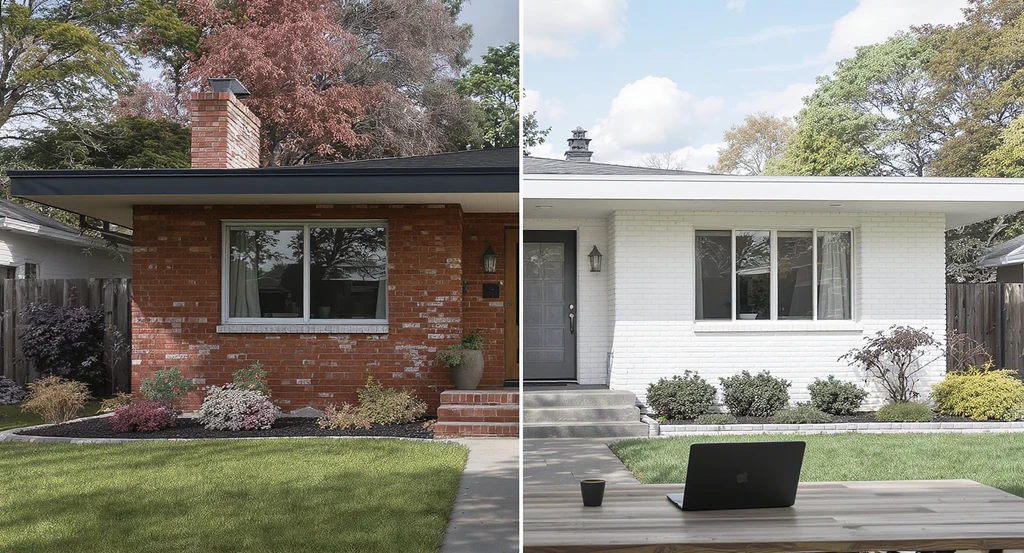
TL;DR
Painting brick isn’t just cosmetic it impacts your home’s durability, maintenance, and resale potential. AI visualization tools allow you to preview paint, trim, and landscaping changes before committing. Often, targeted updates like door color, trim accents, or landscaping layered over original brick enhance curb appeal more safely than full paint.
Why Painting Brick Raises So Many Red Flags
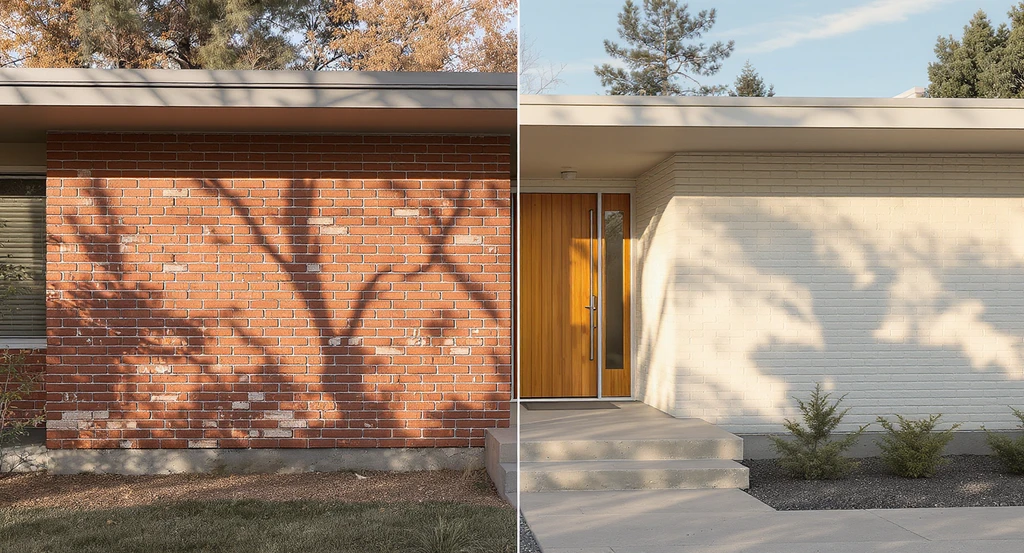
Using AI tools to visualize painted brick allows homeowners to preview how exterior paint colors may alter their mid-century home. Virtual staging AI offers insights into the pros and cons of painting brick, aiding confident exterior renovation decisions.
A decision to paint the brick on your mid-century home might come from a desire to refresh or modernize its look. But why does this single change provoke so much strong advice not just online, but from professionals and homeowners alike? The underlying concern is more than aesthetics; it’s about the lasting impact on your home’s structure, resale value, and emotional atmosphere. If your house feels dated, unsettled, or just not your style, painting the brick can seem like a shortcut to a new identity. However, the trade-offs are real, often irreversible, and sometimes invisible until it’s too late. Let’s step back and examine why the instinct to paint often leads to future regret, and how tools for visualizing changes can reveal solutions you may not have considered.
-
What’s Actually Happening When Brick Is Painted?
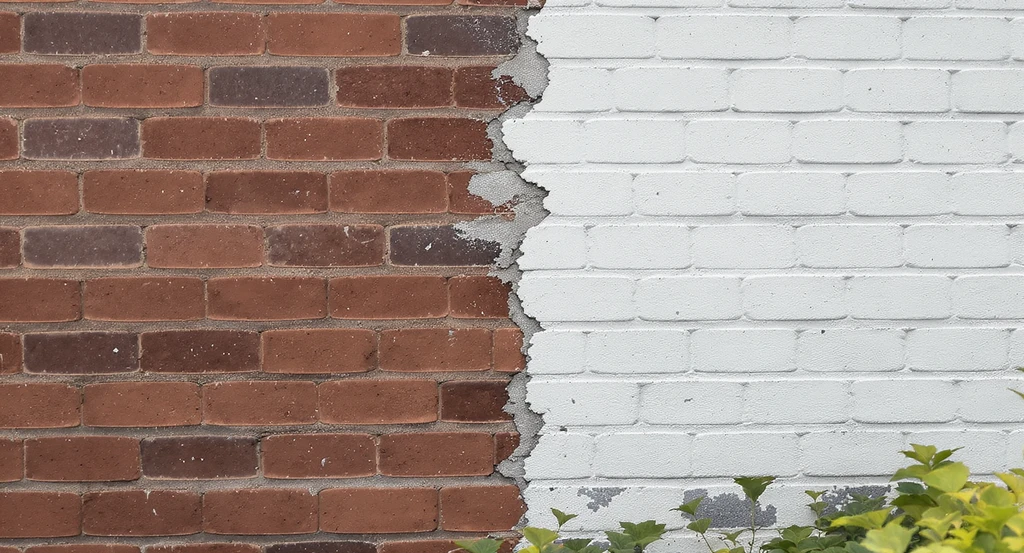
See the pros and cons of painting brick home exteriors: using ai tools to visualize painted brick reveals how sealing affects moisture, highlighted by virtual staging ai for exterior renovations.
Brick is not just a decorative surface—it’s a porous, structural material designed to manage moisture. Painting brick usually means applying a film-forming layer that disrupts this performance. Brick naturally absorbs water, then releases it through evaporation, a property often described as “breathing.” When paint seals the pores, moisture gets trapped, which can lead to spalling, efflorescence, and accelerated breakdown during freeze-thaw cycles. In the building science community, bricks are described as “5 lb sponges.” Sealing them prevents the drying process, increasing the risk of hidden water issues that may only manifest over years. This is why once paint goes on, you not only add ongoing maintenance (repainting every 7-10 years) but you may also shorten the productive life of your exterior walls.
-
Why Does Painting Brick So Often Feel Unsettling Later?
For many, the immediate aftereffect of painted brick feels fresh but underlying unease usually surfaces within a few seasons. One often-missed factor is the loss of natural visual depth: unpainted brick offers shadow, dimension, and rich tone variation that painted finishes flatten. The result can be a facade that seems less grounded or authentic, however modern it initially appears. According to our guide on refreshing dated homes without erasing their character, true curb appeal comes from intentional color layering and material relationships—not from covering original textures. This is especially true for mid-century homes, where the brick texture is a defining element that sets the tone for the entire property.
-
Common Assumptions and Missed Trade-Offs
A frequent assumption is that painting the brick will bring a tired exterior up to date. But as noted by homeowners and designers, what often feels dated is the surrounding paint, trim, or landscaping, not the brick itself. What’s typically overlooked is that painting brick creates a one-way transformation. Once applied, paint is nearly impossible to remove without damaging the brick surface. As explored in our article, seeing the smart move for curb appeal, exterior impact is rarely about a single, sweeping change. Instead, layered, compatible updates (like trim color, upgraded front doors, or strategic landscaping) deliver a sense of freshness and intent, while allowing the home’s individuality to remain—and flex for future tastes.
-
What AI Visualization Reveals Before You Commit
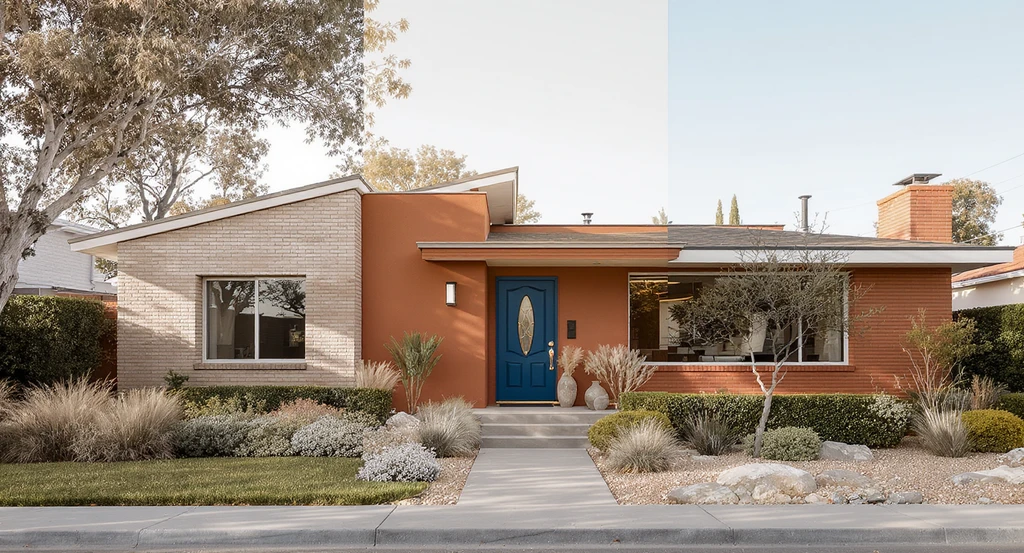
Using AI tools to visualize painted brick lets homeowners preview exterior paint colors and explore virtual staging for exterior renovations. See the pros and cons of painting brick versus making curb appeal upgrades with AI home design tools for mid-century houses.
AI tools now let you preview the impact of painting brick—or alternative upgrades—on photos of your actual home. When you use AI to visualize different external paint colors, trim solutions, and planting schemes, you notice subtle interactions that static inspiration photos often miss. These include how light interacts with brick texture, how new paint shifts the perceived scale of features, or how a bold accent door might refocus attention without touching the brick. This clarity enables you to test multiple scenarios and spot whether a painted facade truly settles the visual tension, or whether a combination of trim, door color, and landscape layers achieves the effect with less risk. According to our hub on visualizing exterior renovations with AI, most homeowners discover that the itch for change can be satisfied by smaller, lower-commitment moves.
-
A Subtle Emotional Trap: Why the Urge Feels Strong
When neighbors modernize or online trends point to a uniform white-and-black palette, it’s easy to question your home’s current state. There’s a subtle perception bias at play: we often equate “old” with “incomplete”—even when the real tension is a mismatch between existing elements. The psychological pull to repaint brick is usually a response to seeing discord between roof color, trim, door, and landscaping, rather than the brick tone itself. This is why so many mid-century houses feel internally conflicted after a paint job. The brick, meant to ground the design, suddenly loses its context. Previewing design changes with AI uncovers the true visual friction, helping homeowners avoid chasing the wrong fix.
-
Grounded Adjustments That Preserve Character
Most design dilemmas that trigger the urge to paint brick can be addressed more safely and reversibly:
- Change trim and siding to a cream, taupe, or sage green that flatters the brick’s undertone, reducing visual dissonance.
- Paint the front door a bold, contrast color for immediate freshness without high commitment.
- Layer landscaping—such as adding a Japanese maple, shrubs of varying height, or flower beds—to soften large areas of exposed brick and add seasonal texture.
- Upgrade house numbers, replace a tired bench, or update exterior lighting for integrated curb appeal.
-
The Underlying Mechanism: Breathability, Light, and Texture
To understand why brick responds so poorly to paint, consider the interplay of material and environment. Unlike film-forming paints, breathable stains and washes allow vapor diffusion, preserving the material’s ability to manage moisture. This distinction matters most in freeze-thaw climates, but it’s relevant everywhere brick is exposed. Visually, unpainted brick’s texture scatters light, generating natural variation in color and shadow that painted finishes erase. This loss of variation is subtle but instantly felt—even if not consciously identified—as a loss of warmth or depth. Paint also changes the apparent scale and visual weight of design features, sometimes making a home look less rooted.
FAQ: Painting Brick and Curb Appeal Decisions
If resale is your priority, painting brick often narrows your buyer pool. Many buyers prefer original finishes for their low maintenance and authenticity. Painted brick can be a deal-breaker, especially for mid-century homes.
What are safer ways to change the appearance of brick?
Stains, lime washes, and mineral paints alter brick color while keeping the material breathable. These treatments avoid trapping moisture and can be sampled on small areas before committing.
How do AI tools help with exterior paint choices?
AI tools using photos of your home allow you to preview changes to trim, doors, brick, and landscaping. This reveals lighting effects, scale shifts, and color interactions before you spend on irreversible changes.
Why does painting brick look “off” on mid-century houses?
Because brick texture, color, and joint pattern are part of your home’s architectural language. Removing visual depth can make the facade feel flat and generic. Enhancing, not erasing, original features usually creates stronger curb appeal.
What’s a common regret after painting brick?
Ongoing maintenance and the inability to reverse the choice are cited most often. Many find the painted finish weathers poorly, requiring frequent touchups and repainting over time.
See Before You Decide—And Avoid Future Regret
Painting brick is not a harmless update; it has irreversible consequences for maintenance, durability, and resale. The initial relief of a "new look" often gives way to upkeep anxieties and a sense of lost character. AI visualization now offers a way to preview alternative solutions—and reveals that focusing on details like paint for trim, doors, and landscaping brings more curb appeal with less risk. Grounded, layered adjustments almost always outperform a sweeping change.
Let your home’s character endure. Visualize before you commit.