Making Odd Living Room Layouts Work: Design Solutions for Awkward Floor Plans
TL;DR
Awkward living room floor plans are more common than you think. With intentional space planning, a focus on circulation, and strategic furnishing, even the oddest layouts can become comfortable and cohesive. Visual tools and a few expert rules help transform a confusing room into a welcoming retreat.
Why Odd Living Room Layouts Are So Common
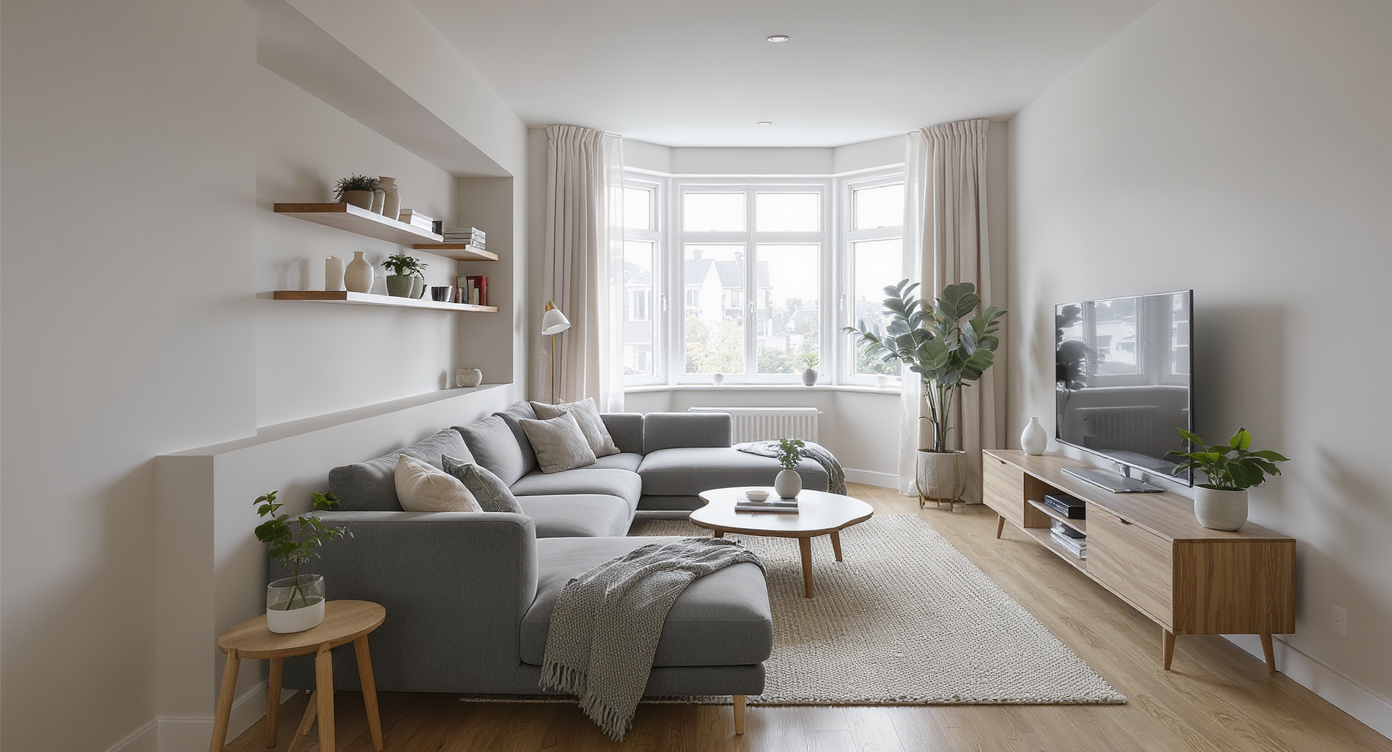
A photorealistic, awkwardly shaped living room with a long layout, bay window, and strange alcove, illustrating real-world design challenges.
Many homeowners are surprised to discover that odd or awkward living room shapes aren’t rare at all. From long and narrow rectangles to square spaces with strange alcoves, modern homes present plenty of layout puzzles. What seems like a quirky design flaw is often the result of maximizing natural light, accommodating family needs, or shifting walls to create open concept areas. But living with an awkward room can make you feel less at home in your own home. The right layout can turn an uncomfortable, confusing living room into an inviting area to relax, entertain, or unwind. Instead of fighting the space, intentional design makes every inch useful. With today’s tools and a better understanding of furniture and flow, even the trickiest room becomes an opportunity for transformation.
-
The Real Reason Some Floor Plans Feel Off
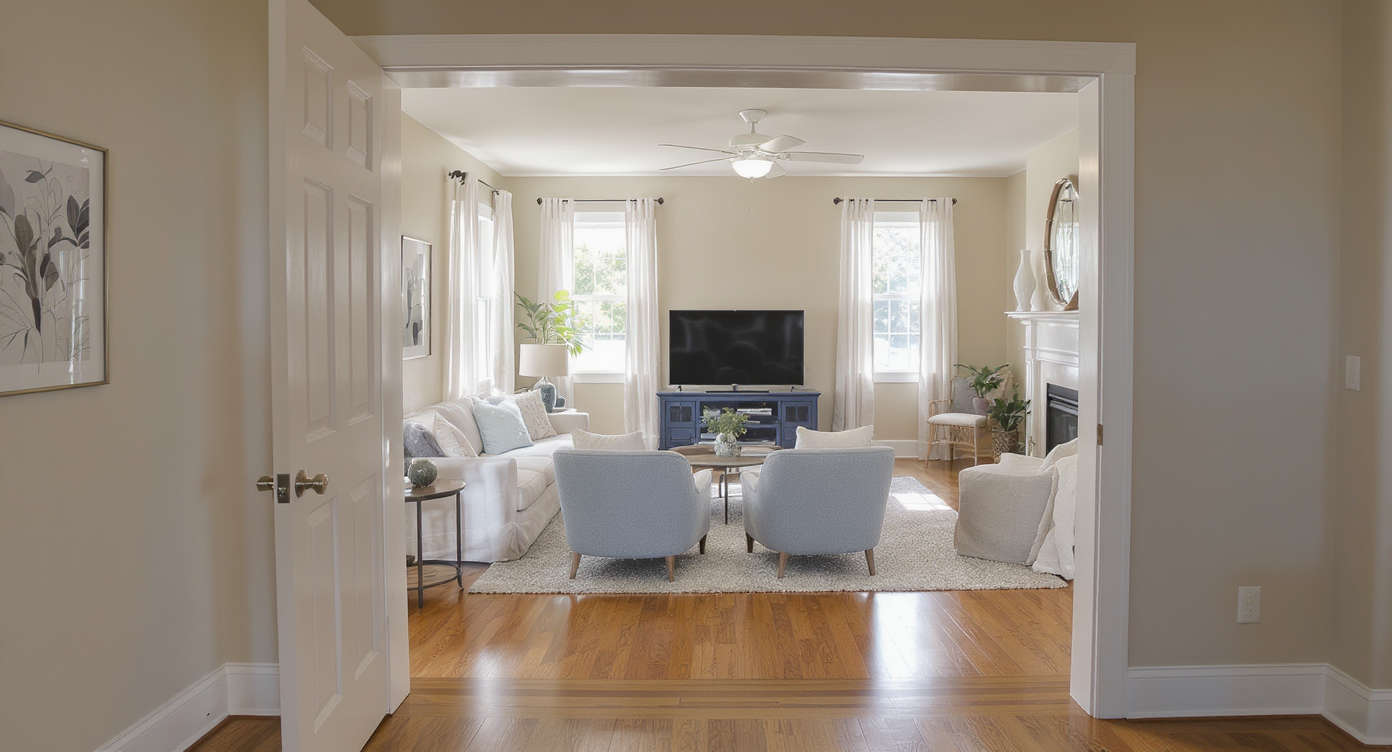
Central furniture grouping with clear circulation paths demonstrates how layout, not just room size, affects living room comfort.
Many people blame the size of the living room, but the discomfort almost always comes down to proportion and flow rather than square footage alone. A popular misconception is that buying smaller furniture will fix everything. In reality, it’s often more about circulation clearance and groupings than about shrinking the sofa or moving the TV. When you have a living room where the door swings into the seating area, or the fireplace is wedged into a corner, it becomes tempting to push everything to the perimeter. But this can make a room feel even more awkward. According to our resource on sofa size vs. living room layout, most fitting problems are, in fact, layout problems. Redefining the furniture groupings and ensuring 30 to 36 inches of clear circulation can go a long way toward solving the discomfort, no matter how unconventional the floor plan.
Expert Insight
In a recently renovated townhome, a homeowner faced a long, corridor-like living room that felt equally tight and underused. Instead of pushing a sofa against each wall, she created a compact seating group centered over an area rug, leaving both ends of the room open. A reading chair and small table filled one alcove, while a plant anchored the opposite corner. Guests now linger in the space, and what once felt awkward is now her favorite spot to unwind.
-
What Happens When Furniture Dominates Odd Spaces
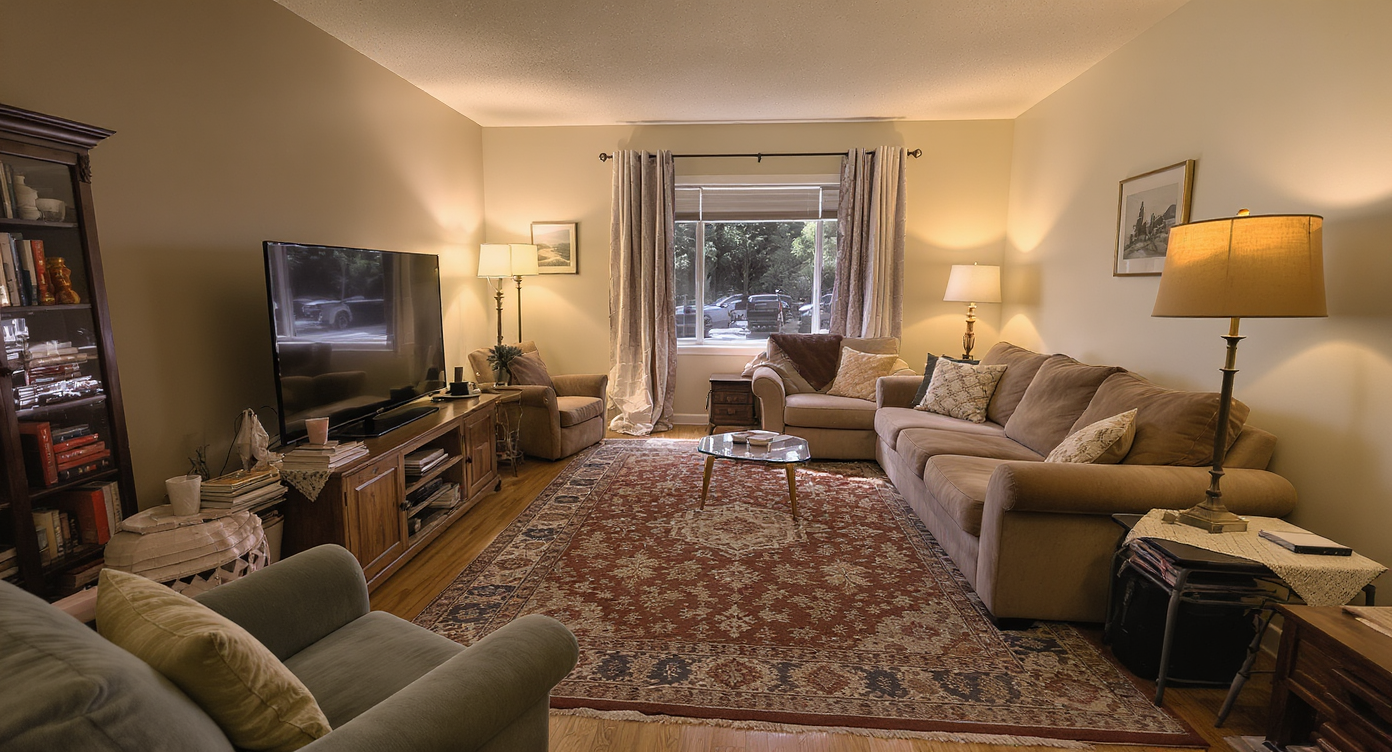
A narrow living room overwhelmed by bulky furniture and excess tables, illustrating how poor layout choices hinder comfort and usability.
A large sectional in a narrow living room, or two sofas facing each other in a small square, can quickly overwhelm a space. This forces walkways into tight, unnatural paths and disrupts both visual and physical flow. Designers often find that awkward living room plans give furniture a starring role for the wrong reasons: instead of drawing people in, the room feels more frustrating than welcoming. Long, narrow living rooms are notorious for this, especially when television viewing and conversation zones compete. Learn more about long, narrow living room dilemmas to see the impact of proportion and scale. Scaling back on visual clutter (too many small tables, extra side chairs) and using right-sized rugs and lighting can shift the focus from the layout challenge to the experience within the room.
-
Visual Planning Tools Change How We Solve Floor Plan Challenges
A decade ago, experimenting with living room layouts required heavy lifting and a lot of guesswork. Now, homeowners can visualize options before moving a single piece. AI and 3D modeling tools offer test grounds for awkward spaces, allowing you to see whether your current sofa actually fits the room or if a new furniture arrangement would help. Design professionals recommend using digital tools to test out furniture groupings or preview a rug size. This makes it easier to make confident decisions about buying or keeping major pieces, as discussed in our in-depth look at furniture arrangement and sofa size. Even with a low-tech approach, sketching the room to scale on paper can offer surprising clarity for tough design decisions.
-
Common Mistakes to Avoid
Pushing everything against the walls: This makes an awkward room feel vacant in the center, breaking the sense of intimacy. Instead, group furniture to create distinct conversation zones. Ignoring walkways: Failing to maintain sufficient clearance leaves the room feeling cramped and uncomfortable. Leave 30–36 inches of path for comfortable movement. Choosing all the same scale: Matching furniture sets can emphasize an odd layout instead of balancing it. Mix heights and depths to guide the eye and add depth. Using oversize rugs or undersized pieces: The wrong rug size can emphasize odd proportions, making a room look off-balance. Consider how a rug anchors your main furniture grouping.
-
Tips and Expert Insights for Odd-Shaped Rooms
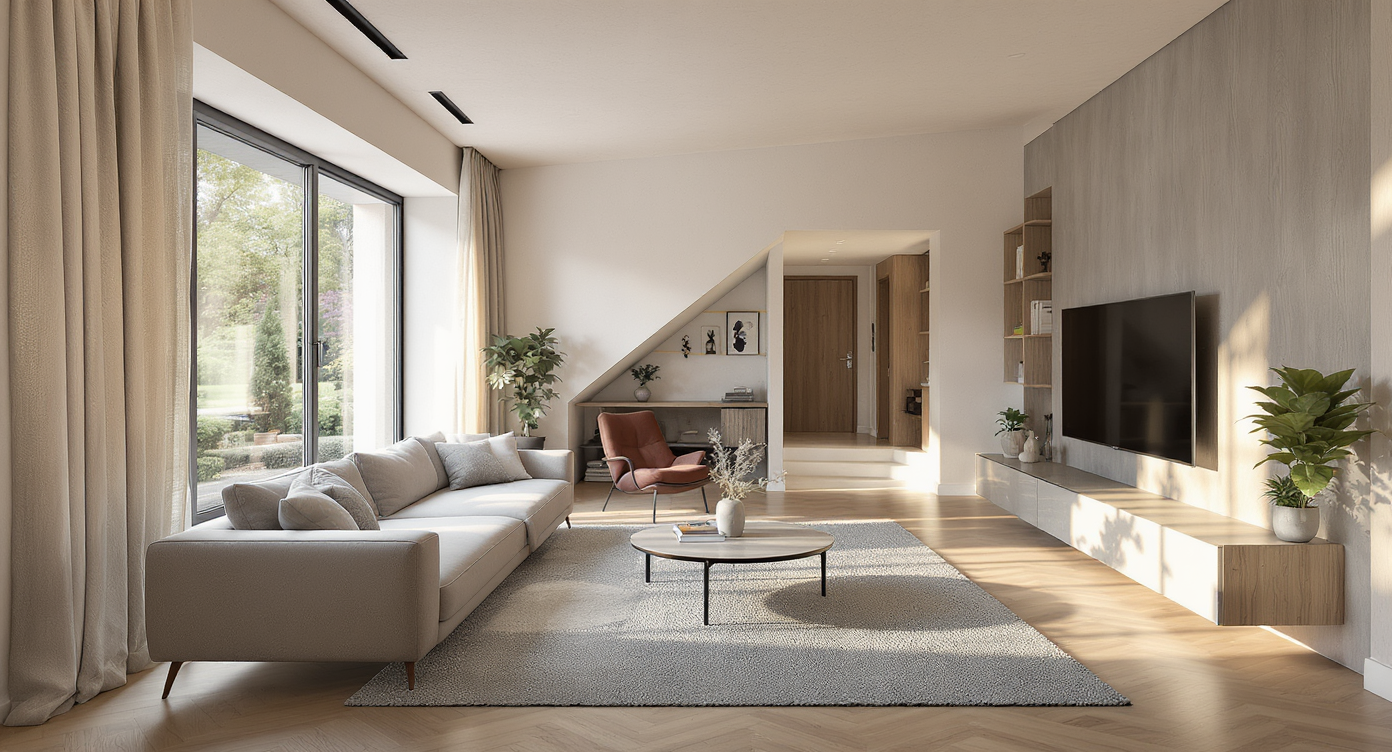
Smartly arranged awkward-shaped living room: L-shaped seating, wall-mounted TV, cozy reading nook, and shelving around the doorway.
Designers often suggest focusing on a single anchor—such as a fireplace, picture window, or feature wall—and arranging core seating around it. In difficult layouts, leaning into asymmetry can make the room feel dynamic rather than off-kilter. Try placing a reading chair or small desk into a challenging niche, or install shelving around a doorway to recapture wasted space. For homes with two sofas in a small living room, rotating the arrangement into an L-shape opens walkways and softens the traffic flow. According to practical fixes for two sofas in a small living room, downsize the coffee table and try wall-mounted media to reclaim space and flexibility.
-
How to Use This in Your Next Design
When faced with a puzzling layout, pause before you buy new furniture. Reimagine the primary function of the room: do you want conversations, TV time, or more storage? Arrange your biggest piece to anchor the main activity, then add supporting elements. If you inherit an awkward nook or partial wall, consider floating a console or adding a plant for balance. For visual unity, layer lighting with floor and table lamps directed at seating areas instead of blank walls. Before finalizing anything, experiment with virtual tools or sketching to avoid costly returns. This approach works whether you are designing an apartment’s peculiar corner or a new-build’s extra-long living room. Each scenario becomes a creative challenge, rather than a roadblock.
Visualization Scenario
Picture an unusually sized living room—maybe square with a diagonal entry or stretched with asymmetrical columns. You test different configurations using a simple digital room planner, seeing instantly how an L-shaped sofa frees up a narrow walkway or a round coffee table restores natural circulation. With each virtual change, the room goes from cramped to cohesive, and it becomes clear how intentional placement, even without new furniture, makes an odd space feel entirely your own.
Frequently Asked Questions
Test out different layouts before making a purchase. Maintain 30–36 inches of clearance and use digital tools to see several arrangement options.
Can I create zones in a single odd-shaped room?
Absolutely. Use rugs, lighting, and furniture placement to define conversation, reading, or entertainment zones even within nontraditional boundaries.
What if my living room has multiple focal points?
Choose one primary feature (a window, fireplace, or TV wall) to anchor your main seating. Use accent chairs or shelves to connect to the secondary focal point.
Do I need custom furniture to fix an unusual floor plan?
No. Standard furniture can often be arranged wisely to make the space feel intentional. Modular pieces and flexible arrangements are especially helpful.
Where can I try out virtual layouts or design tools?
Sites like ReimagineHome.ai let you upload your floor plan or a room photo to experiment with new layouts and furnishings online before moving a thing.
Odd Rooms, Intentional Solutions
There is no need to see an odd living room floor plan as a problem waiting to be solved with a complete renovation. With a focus on function, walkways, and scale, it is possible to create a sense of flow and comfort, even in challenging spaces. Good design thrives on constraints—when you approach your layout like a puzzle, you unlock the quiet beauty and utility in every corner. The future of planning, from virtual visualization to reimagining how we use our rooms, is full of possibility. For anyone facing a tricky living room, exploring solutions and testing layouts online at ReimagineHome.ai can offer surprising, practical results.