9 Lessons Real Estate Professionals Should Know About Virtual Staging AI Tools

TL;DR
Virtual staging AI has become a powerful option for real estate agents, offering lifelike renderings that can stimulate buyer interest when used correctly. Professionals should prioritize MLS compliance, realism, and ethics, recognizing that the best virtual staging tools balance impact with transparency. Choices between free and paid software should factor in both quality and risk.
Understanding the Modern Landscape of Virtual Staging AI
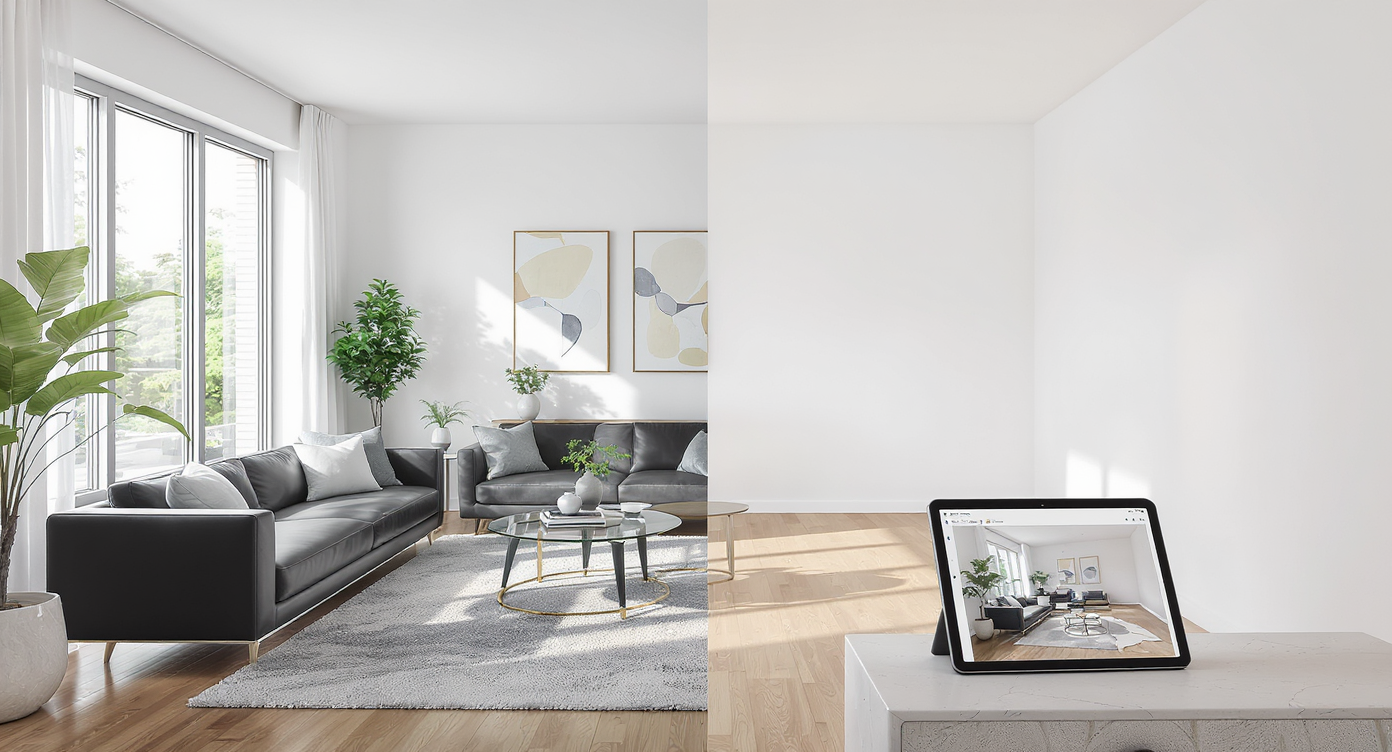
Modern living room showing the contrast between empty space and digitally staged furnishings, plus a tablet with virtual staging software interface.
Virtual staging AI tools allow real estate agents to present properties in their best light by creating digitally furnished photos that help buyers imagine a home’s potential. As technology rapidly advances, the line between marketing magic and misleading manipulation has narrowed, and industry conversations often turn to what constitutes best practice. Both buyer expectations and MLS (Multiple Listing Service) compliance frameworks now demand careful use of virtual staging software, with agents expected to disclose edits and preserve the home’s integrity. For anyone considering a virtual staging tool for MLS compliance or those searching for the best virtual staging software for agents, understanding real-world experiences and regulatory nuances is essential. Mistakes not only jeopardize trust but also put listings at risk of removal or censure. This listicle distills lessons learned from experienced professionals, offering practical guidance to help agents choose and use virtual staging AI tools responsibly and effectively.
-
1. Realism Is Non-Negotiable for Buyer Trust

High-quality virtual staging demonstrates believable, in-scale furniture and accurate lighting, building buyer trust in property listings.
Buyers today expect online listings to reflect reality, with nearly every agent recognizing the harm that poorly executed virtual staging can inflict. Overly artificial, cartoonish, or off-scale furnishings undermine credibility and may even deter showings. Agents often cite the value of virtual staging software that accurately respects lighting, perspective, and local decor trends. As noted in guides to doing virtual staging right, quality and believability are paramount for keeping buyer skepticism at bay and driving strong engagement. Solutions that layer tasteful, scale-appropriate furniture tend to build buyer trust and clarity.
-
2. MLS Compliance Sets Strict Boundaries

Side-by-side view: An empty living room next to its virtually furnished version, illustrating MLS rules against altering permanent features.
Not all virtual staging AI is created equal, particularly when it comes to what’s permissible in online property listings. MLS rules typically prohibit the alteration of permanent home features, such as architectural elements or room dimensions. The best virtual staging tool for MLS compliance is one that furnishes empty rooms without removing or modifying fixed items. As explored in this analysis of legal and misleading edits, tools that overreach by changing walls, flooring, or windows risk both penalties and reputational damage. Professional agents consistently stress the importance of double-checking every AI-edited image against MLS guidelines before publishing.
-
3. Free vs Paid Virtual Staging Software: Weighing Value and Risk

Side-by-side comparison of a living room virtually staged by free and paid AI tools, illustrating quality and realism differences.
The landscape of virtual staging AI includes both free and paid options, but the differences extend well beyond price. Free virtual staging software may provide basic staging capabilities, yet often lacks advanced controls or high-quality rendering engines. Paid solutions, on the other hand, typically offer customization, better integration with real estate workflows, and guarantees for MLS-compliant outputs. For agents, the decision comes down to risk tolerance: free tools might supply a quick fix, but investing in a reputable paid platform often results in more professional-looking results and reduced risk of costly compliance lapses. Evaluating reviews from other professionals and testing outputs using a platform like REimagineHome.ai can help set clear expectations.
-
4. Disclosure and Paired Images Are Essential
Transparency is a critical best practice in virtual staging. Agents are increasingly expected to disclose which photos are virtually staged, both in the image itself and the listing remarks. Side-by-side or before-and-after views allow buyers to distinguish between reality and digital enhancement. According to expert recommendations in this examination of staging ethics, pairing staged with original images and including visible disclosure language strengthens buyer trust, reduces misunderstandings, and clarifies the actual condition of the home.
-
5. Automation vs. Customization

A photorealistic split-view of a living room, contrasting generic automated virtual staging on one side with agent-customized furnishings on the other.
The best virtual staging software for agents offers a balance between automation and user control. While automation increases workflow speed, overly generic AI can introduce furnishings that do not suit the space or market. Customization features, such as selecting furniture styles, adjusting placement, or specifying color palettes, enable agents to tailor staging to target demographics and highlight each property’s unique value. Designers frequently stress that nuanced adjustments can turn average digital staging into an appealing, contextually relevant selling point.
-
6. Understanding the Limits of Editing Power
Powerful AI tools can tempt users to do more than simply add furniture. However, removing clutter, hiding imperfections, or visually altering permanent elements can cross ethical and legal lines. Many agents have learned the hard way that edits which overpromise or conceal defects can lead to buyer disappointment, legal disputes, or MLS penalties. In-depth discussion on the ethical boundary of virtual staging underscores the importance of maintaining honesty and limiting changes to non-permanent, cosmetic details only.
-
7. Supporting Remote and Imaginative Buyers Alike

A high-resolution laptop displays a split view of an empty room and its digitally staged version, showing virtual staging for buyers.
One of the key benefits cited for virtual staging AI is its ability to help buyers who struggle to visualize empty spaces, especially those shopping remotely or out of area. For buyers with difficulty imagining layouts or possibilities, digital staging can provide crucial context. As many agents observe, though, the most useful images focus on presenting potential rather than altering reality. Interactive tools and overlays, such as those achievable on REimagineHome.ai, can further clarify layout choices and finished looks for a diverse buyer pool.
-
8. Workflow Integration and Time Savings
Speed is often a decisive factor in real estate marketing. The most effective virtual staging software fits seamlessly into agents’ existing photo management and listing workflows. Look for tools with batch processing, template saving, and fast turnaround times that do not sacrifice image quality. Integration with MLS upload standards saves agents hours and helps prevent costly errors. Experienced agents note that a frictionless process results in more listings looking polished and market-ready sooner.
-
9. Setting Expectations With Clients

Clear side-by-side presentation of staged and original room photos, with virtual staging tools, in a real estate office meeting room.
Client education is a key responsibility for agents using virtual staging AI. Sellers should be informed about how their home will be presented, and buyers must have clarity on what elements are digitally staged. Professionally managed expectations help prevent surprises at showings and support smoother transactions. Clear communication, paired with honest presentation, is the foundation of sustainable buyer and seller relationships in an era where digital enhancements are increasingly sophisticated.
Frequently Asked Questions: Virtual Staging AI for Real Estate Agents
Virtual staging AI adds digital furnishings to images of a property, clarifying potential uses of rooms. AI-edited listing photos may also alter permanent features, which can risk MLS violations, as explained in this detailed analysis.
Which free virtual staging software offers sufficient quality for listings?
Free options exist but often come with significant trade-offs in realism and compliance. Many agents find that paid solutions deliver more professional, risk-managed results.
How can I check if a virtual staging tool meets MLS compliance?
Look for explicit statements from the software provider about MLS standards. Always verify that the tool does not alter permanent structures or disguise defects, and review your local MLS rules.
Should I disclose to buyers which photos are virtually staged?
Yes. Both ethical practice and MLS guidelines require agents to clearly label staged images and, when possible, provide original photos. This approach is expanded in this article on effective staging methods.
Can virtual staging help with buyer indecision or remote tours?
Absolutely. Virtual staging helps buyers see possibilities, especially when paired with interactive tools and layout planning on platforms such as REimagineHome.ai.
Key Takeaways for Selecting and Using Virtual Staging AI
Virtual staging AI presents a game-changing opportunity for real estate professionals, but only when balanced with transparency, compliance, and authentic representation. The tools chosen should emphasize realism, MLS compliance, and workflow synergy, whether opting for free or paid software. Use disclosure, pair before-and-after images, and maintain a clear line between decor inspiration and deceptive alteration. Before committing, consider test-driving solutions using platforms like REimagineHome.ai to ensure your marketing practices stay both effective and ethical.