11 Smart Ways to Fill the Awkward Space Next to Your Couch
TL;DR
That tricky area beside the couch does not need to remain a dead zone. Some of the most rewarding ideas blend utility and style, creating a seamless transition between lounging and purposeful living. The best solutions focus on compact spaces, thoughtful storage design, and flexible furniture & flow adjustments to complement your main social space.
Why That Couch-Side Void Deserves Attention
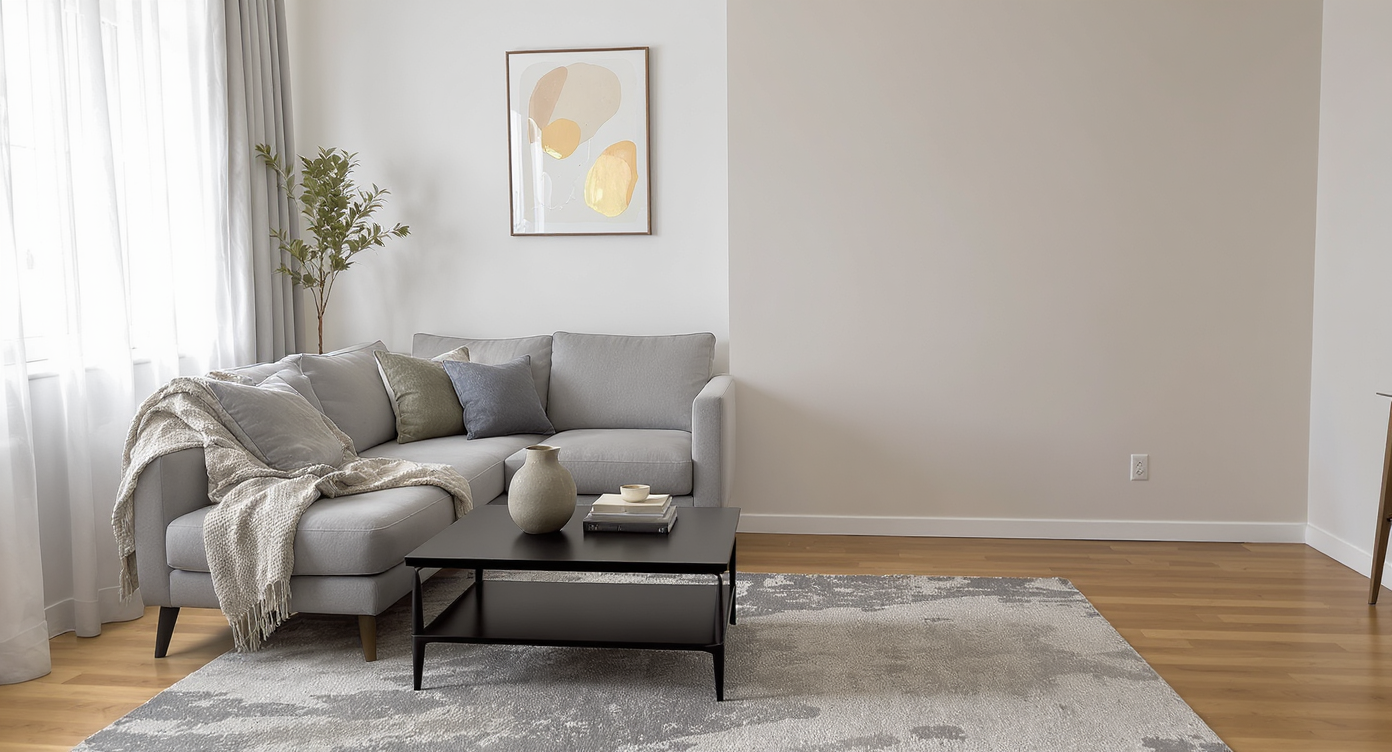
A modern living room reveals an unused patch of floor beside the sofa, illustrating the common awkward gap facing many homeowners.
Many homes, especially compact apartments or open-plan layouts, come with an awkward stretch of floor next to the couch. Left empty, this spot can make your main social space feel unfinished or even sterile. Rather than treating it as wasted square footage, design professionals know it presents a unique opportunity to enhance both the functionality and character of your home. Finding the right use for this zone depends on your lifestyle and the flow of your furniture. A little creativity can turn this empty patch into a visual anchor or a hardworking extension of your daily routine. Whether you crave storage, want extra seating, or hope for a playful feature, the following ideas break down proven approaches for making the most of that elusive gap.
-
1. Cozy Dining Nook for Flexible Living
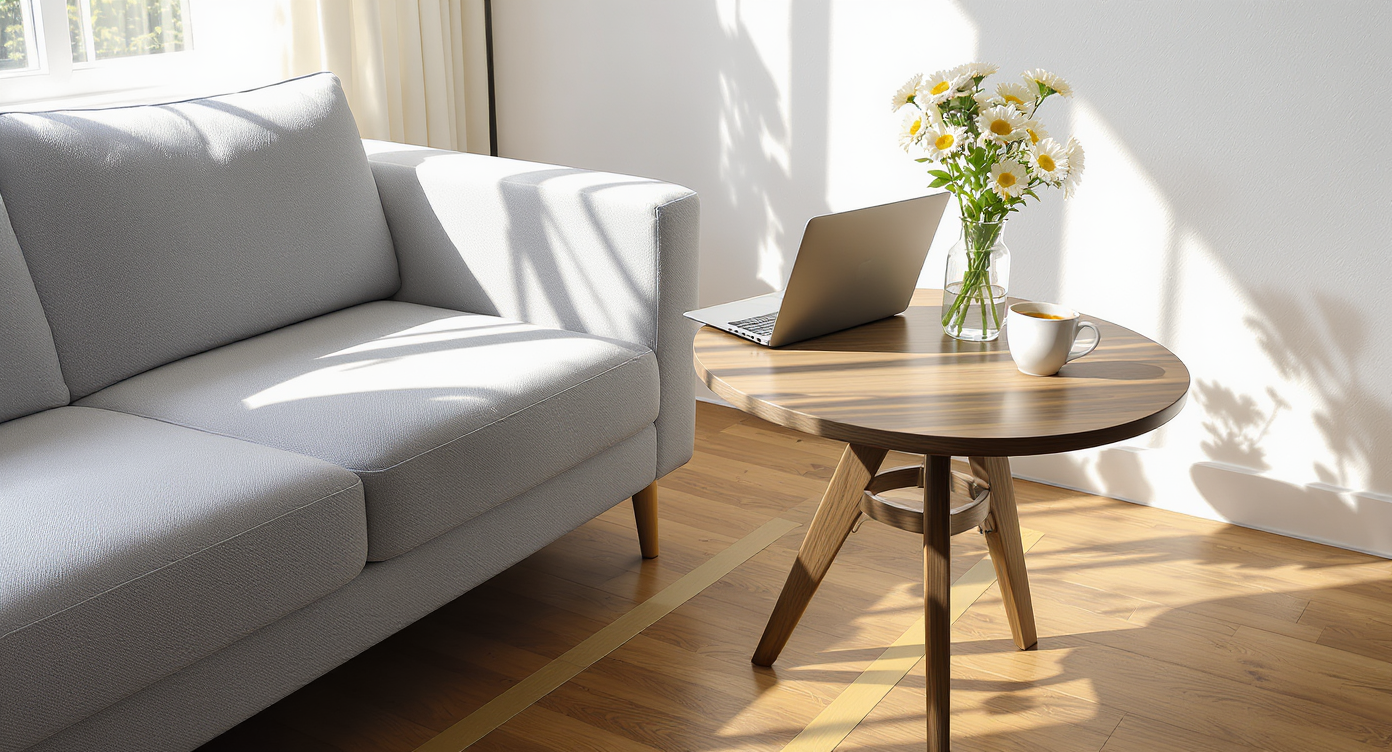
A small bistro table next to a sofa doubles as dining and workspace, with painter’s tape marking another possible arrangement for compact living.
A common hesitation for single residents is whether a dining table justifies the floor space. Yet having a dedicated table, even a compact bistro or drop-leaf style, can transform more than meal times. It doubles as a home office, project space, or a place to host impromptu dinners or board games. This flexibility is invaluable in compact spaces, especially when friends or dates drop by. Design pros often recommend testing a table in different spots beside the couch, using painter’s tape to visualize the footprint (or leveraging virtual staging tools like REimagineHome.ai for layout options). The convenience quickly outweighs any doubts about its place in a single person’s setup.
-
2. Statement Bookshelf or Display Wall
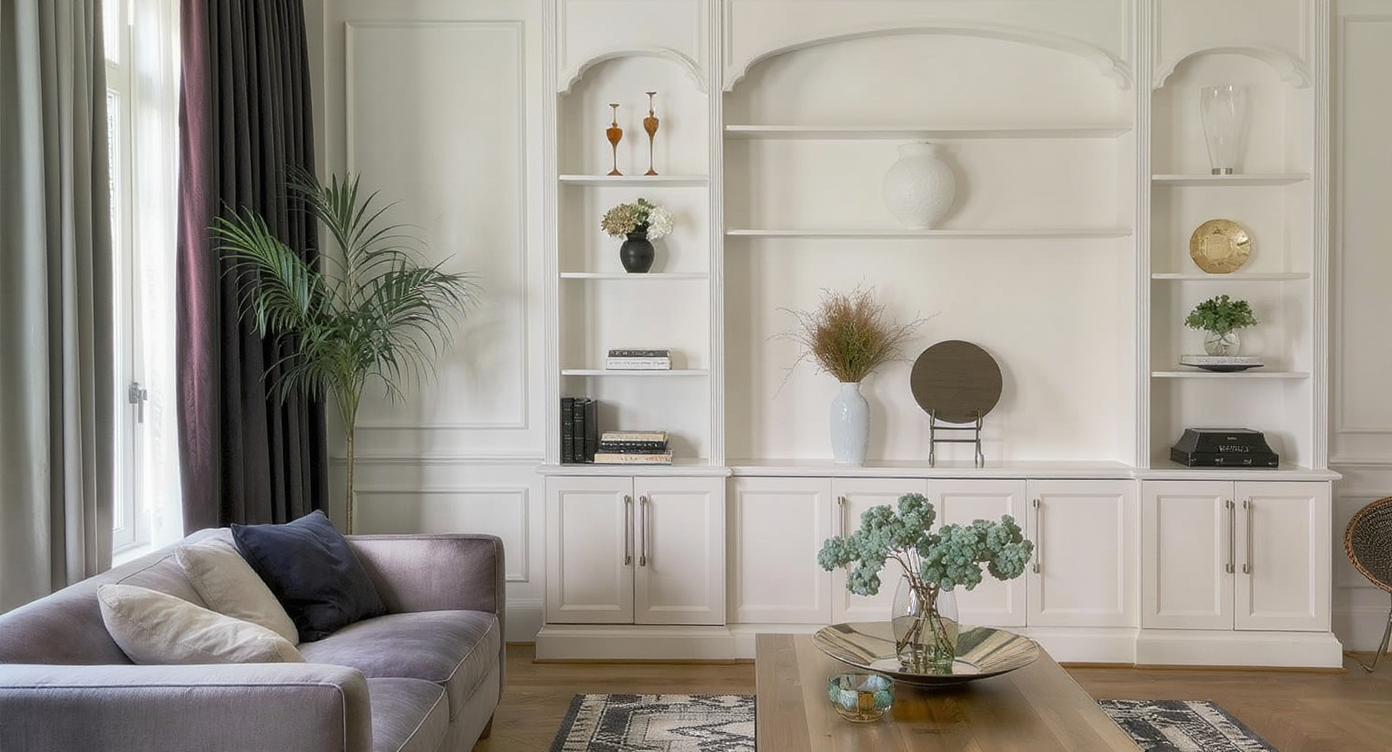
A well-styled bookshelf beside a sofa elegantly fills awkward space and provides storage, subtly dividing an open-plan living room.
Tall bookshelves or low, wide storage units work wonders for empty living room corners. Not only do they address storage design goals by corralling books, collectibles, or vinyl records, but they create a pleasing vertical rhythm that balances furniture & flow. In practice, anchoring a shelf beside the sofa can visually divide living and dining areas in open-plan apartments. As detailed in our guide to decorating empty living room corners, a well-scaled shelving unit also gives you a place to showcase personality without cluttering the main social space.
-
3. Music or Hobby Zone
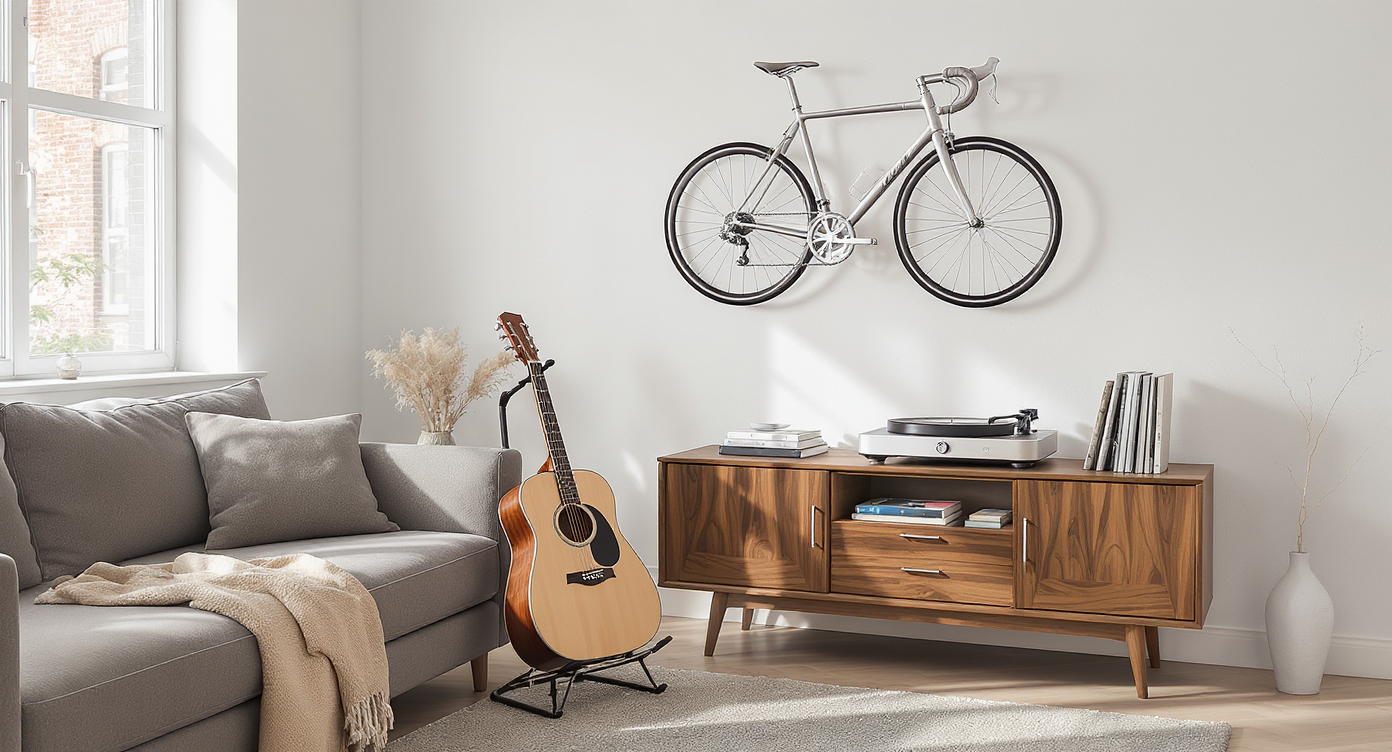
Living room side space with bike storage, guitar stand, and turntable console transforming an awkward area into a personalized hobby zone.
Not all side spaces need to be about storage. Dedicate yours to a visible hobby: a turntable with a record display, a guitar stand, or even wall-mounted bike storage can make the area a focal point. Displaying a prized bike indoors brings artistry to functional storage design, especially if you cycle frequently. Designers often notice how incorporating passion projects into living areas sparks conversation and enriches daily routines, bringing energy to the furniture & flow of compact spaces.
-
4. Flexible Home Office or Study Space
Remote work has turned overlooked corners into productivity hubs. A slim desk and ergonomic chair can fit neatly by the couch, providing a separate work area without overwhelming the main social space. Go for visually light furniture with open legs to prevent blocking natural flow. Storage can be as simple as floating shelves above or a shallow drawer unit. This is ideal in apartments where every square foot must justify itself, turning an often-unused patch into a dynamic, purposeful zone.
-
5. Greenery and Plant Display
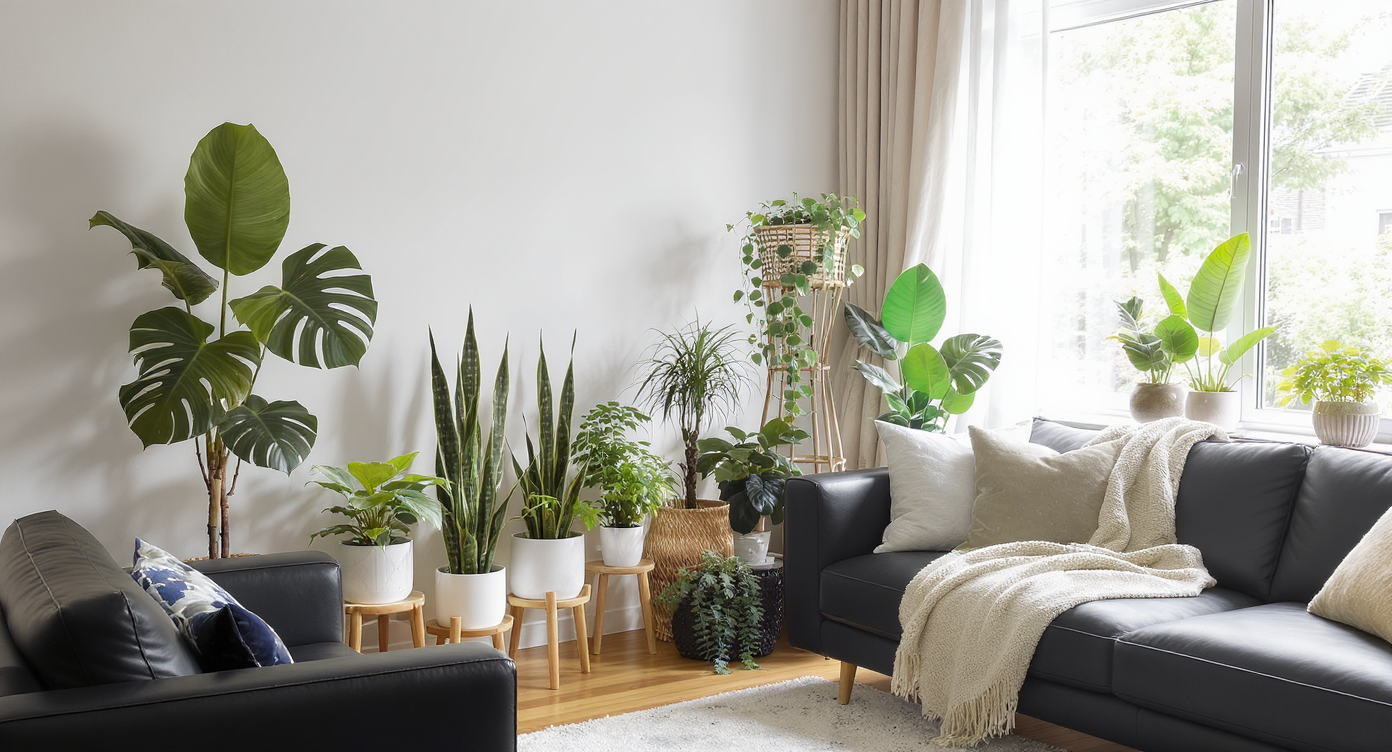
Cluster of tall and cascading indoor plants on stands creates a green, calming focal point next to a modern living room couch.
Indoor plants soften the hard lines of living room furniture and invite a sense of calm. A cluster of tall floor plants can transform an awkward patch into a lush visual divider, as suggested by many designers and highlighted in our rundown of timeless DIY home decor ideas. Opt for statement varieties like monstera, fiddle-leaf fig, or easy-care snake plants. Elevate them on stands or use cascading pots for added interest. This brings biophilic design into the main social space and ensures that a neglected corner becomes a natural focal point.
-
6. Drinks Station or Bar Cart
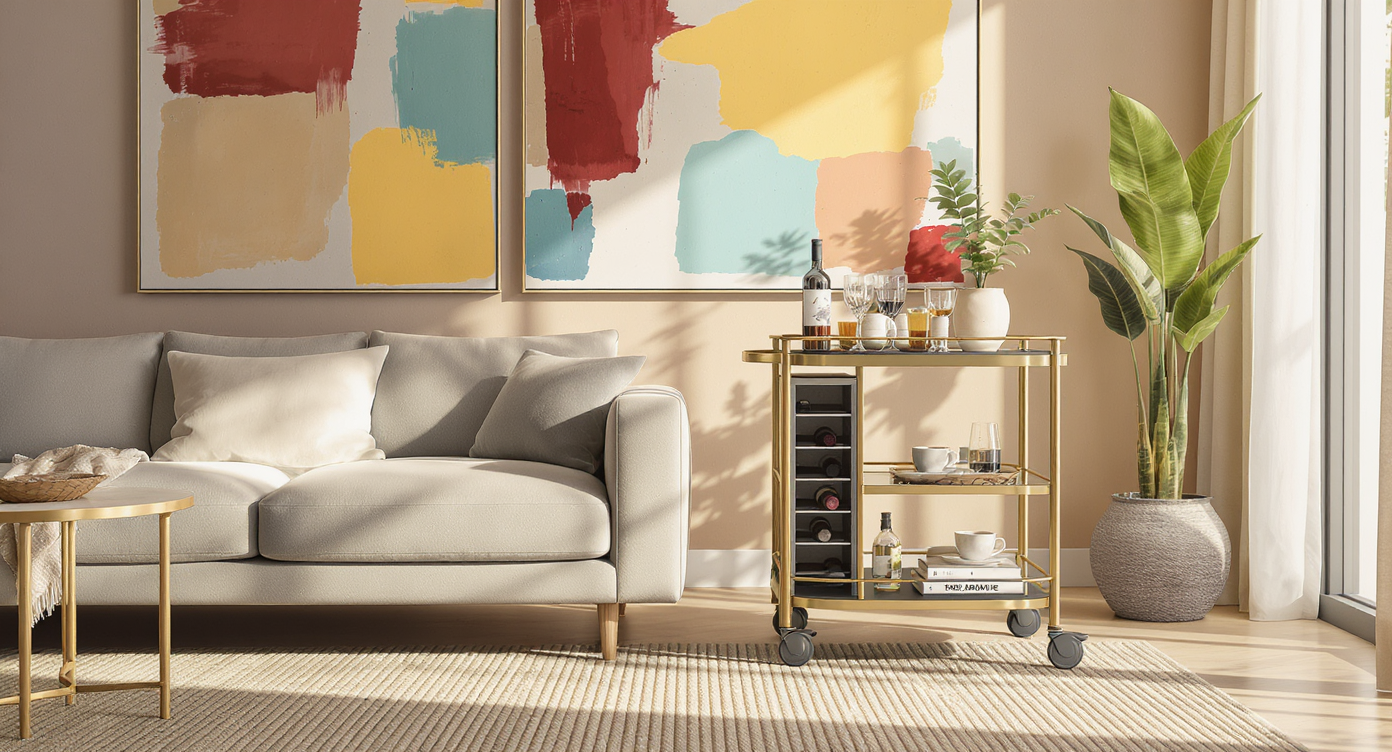
A chic drinks station with a bar cart beside the sofa features space for both cocktail and coffee essentials, topped by bold artwork.
Channel lounge vibes or host friends easily by parking a wheeled bar cart or petite drinks station next to the sofa. These pieces prioritize compact spaces while creating a ready-made spot for coffee, tea, or weekend cocktails. Some prefer a standalone bar cabinet with storage for glassware, bottles, or even a small espresso setup. Designers often layer a mirror or bold artwork above the cart, adding depth and personality. This practical update plays well with social gatherings and brings extra function beyond traditional dining furniture.
-
7. Creative Game or Activity Table
A game table or convertible surface instantly energizes an underused spot in the living area. Whether for poker night, board games, or puzzles, a compact table can draw people together without competing with the main lounging zone. Some choose multi-functional tables—think a pool table with a cover that doubles as dining. Room planners often turn to such hybrid solutions in studio apartments and shared settings since they allow for varied layouts without adding clutter. As explored in our feature on room reuse, adaptable furniture helps rooms flex as needs change.
-
8. Reading Retreat or Lounge Expansion
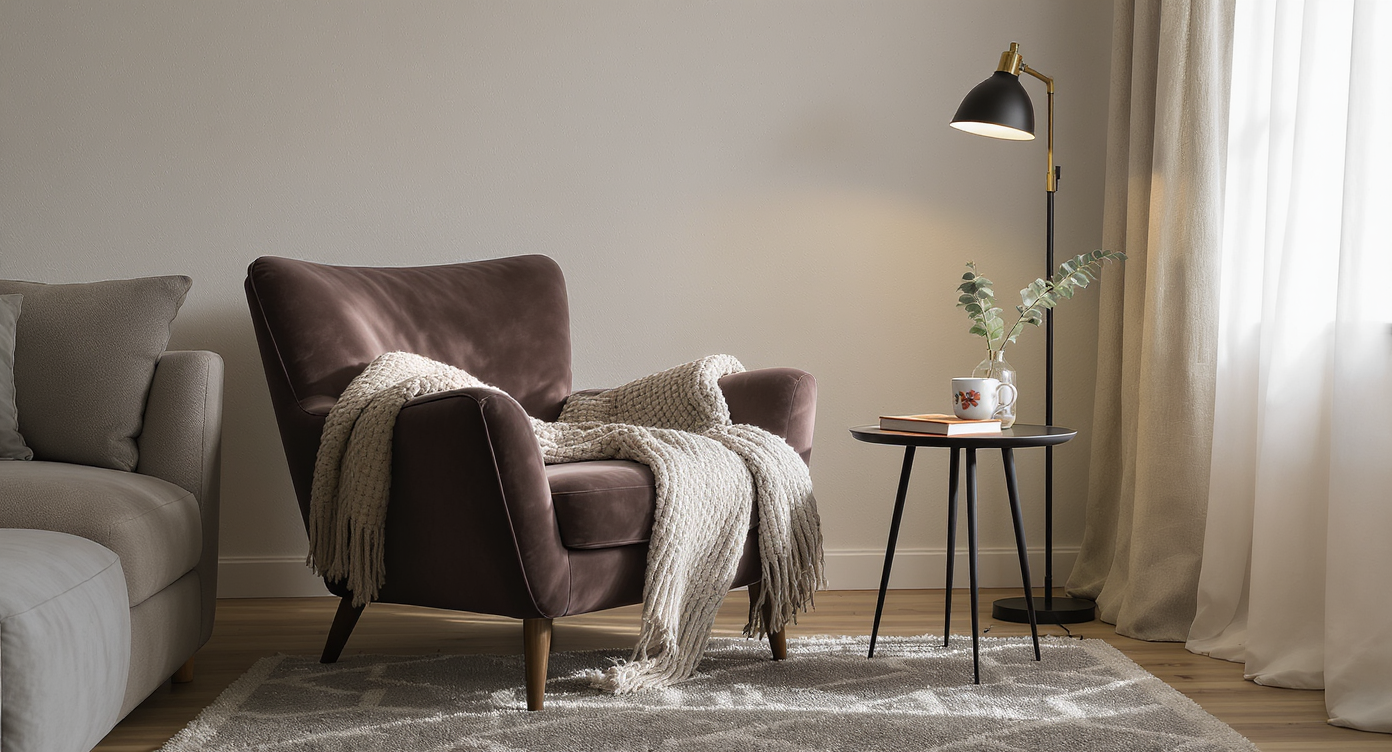
A cozy lounge expansion—armchair, side table, reading lamp, and soft rug—creates a relaxing reading retreat next to the sofa.
Invite relaxation by adding a reading nook or extending your lounge space. A comfy armchair, small side table, and reading lamp create a defined area for escape. Layer in a soft rug or throw for tactile interest. In layouts where space allows, this can also be a good spot for a “chair and a half” or compact loveseat, providing overflow seating for guests and breaking up long, empty walls. Such zones anchor the room while subtly enhancing the flow of furniture.
-
9. Display Cabinet, Aquarium, or Art Feature
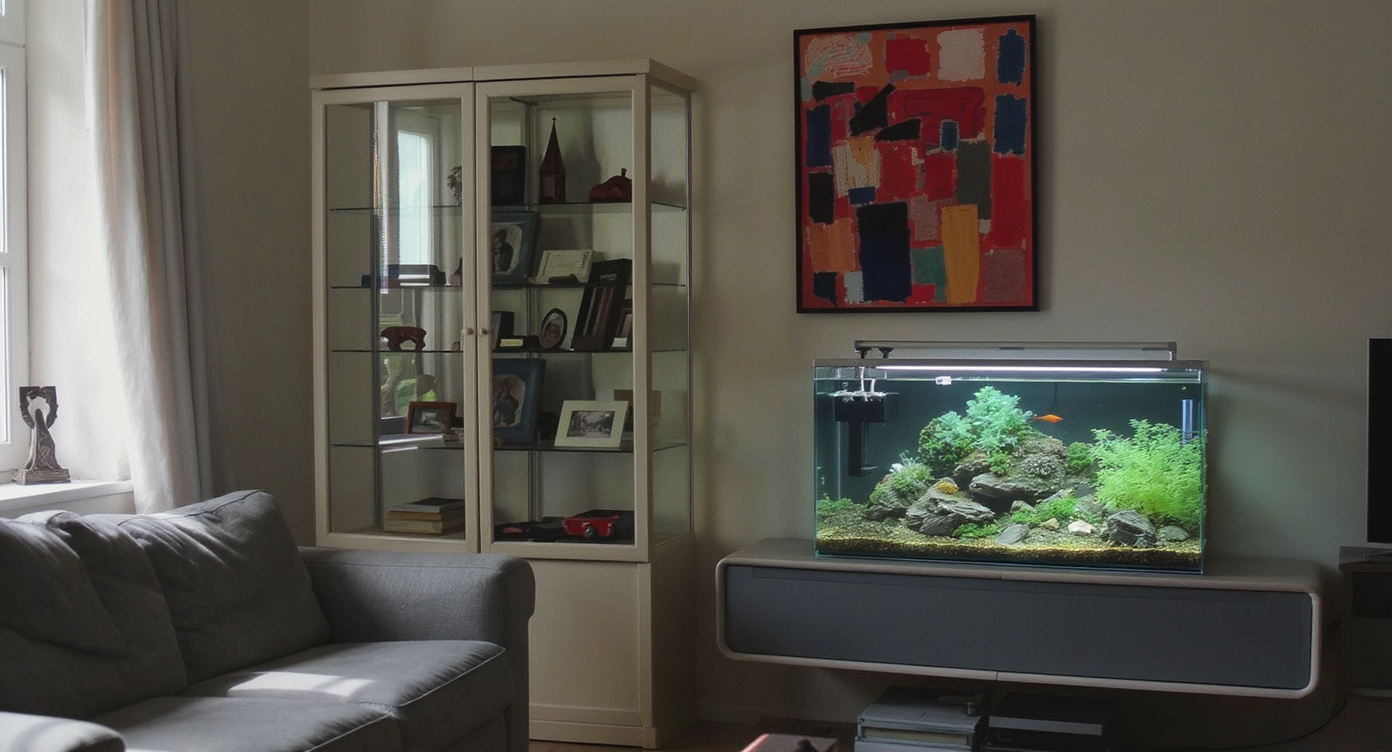
A glass display cabinet, glowing aquarium, and vibrant wall art showcase smart ways to fill the awkward space next to a sofa.
For those who love collectibles, a glass-fronted cabinet can protect and display art, models, or memorabilia without feeling busy. Alternatively, a well-maintained aquarium or terrarium infuses tranquility and movement, serving as living art. Adding a bold piece of artwork or a sculptural lamp can also help balance the visual energy of the living room, especially when decorating corners or architectural nooks. Rotating the decor periodically keeps the space fresh and relevant to your current passions.
-
10. Home Fitness or Mindfulness Corner
In compact spaces, allocating a zone for self-care supports wellness without sacrificing style. A small bench, dumbbell rack, yoga mat, or stylish storage baskets can slot beside the couch. Professionals suggest folding screens or low shelving to subtly separate the exercise space from the lounging area. Including a few accessories, such as a diffuser or foam roller, encourages everyday use without overwhelming visual flow.
-
11. Floating Shelves and Smart Lighting
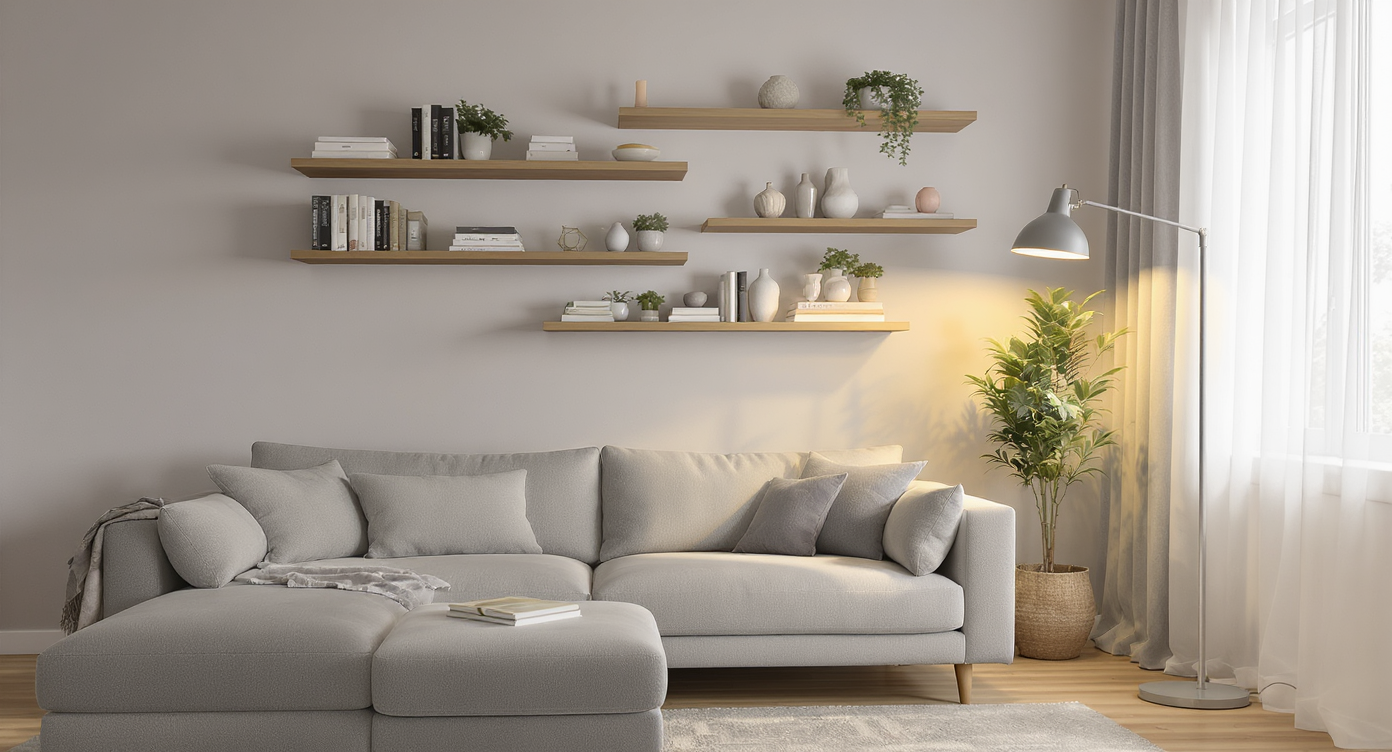
Floating shelves above a clear floor provide storage and display, while a dimmable LED lamp adds flexible lighting next to the sofa.
If you prefer to keep the floor clear, take advantage of vertical real estate. Mount floating shelves for books, small plants, or displays. Integrating adjustable lighting—like a tall floor lamp or sconces—improves both ambiance and function. Consider dimmable LED floor lamps to set a mood for reading, entertaining, or working. As discussed in our exploration of lighting and layout shifts, subtle tweaks here can balance large spaces and tie together mismatched zones without crowding them.
FAQ: Maximizing the Space Beside Your Couch
Try to avoid overcrowding with too many small decor items or inflexible, bulky furniture. Prioritize pieces that serve multiple functions and maintain the flow to the rest of your main social space.
Is a dining table practical for a single person in a small apartment?
Yes, even a small dining table can offer benefits beyond eating, such as extra workspace or a place to host guests. Visual planning tools like REimagineHome.ai can help determine if it fits your habits and square footage.
How do I make compact storage solutions look intentional?
Stick to shelves, cabinets, or containers that match your overall style and avoid filling every surface. Integrate lighting or plants to soften and blend practical storage with decor.
Where can I find more inspiration for underused spaces?
For more detailed layout and styling tips, see our explorations of living room corner design and creative room reuse.
Final Thoughts: Claim the Potential of Every Square Foot
Well-designed compact spaces make the most out of every inch, especially beside the couch. With the right blend of storage design, thoughtful furniture choices, and subtle shifts in layout, this forgotten area becomes a highlight of the main social space. Planning ideas in advance—even visually through platforms like REimagineHome.ai—ensures smart decisions and a truly customized result that elevates both daily enjoyment and long-term value.