5 Interior Design Moves Trending Inside REimagine Home AI for 2026
TL;DR
Homes in 2026 center around five defining design moves: warm neutrals, soft curves, biophilic textures, multi-use spaces, and tech that’s built to disappear. Explore why these shifts matter and how to visualize them in your own rooms using REimagine Home AI.
Why 2026 Interiors Feel Calmer and Smarter
Creating versatile living spaces is essential for contemporary design; comfort meets functionality here.
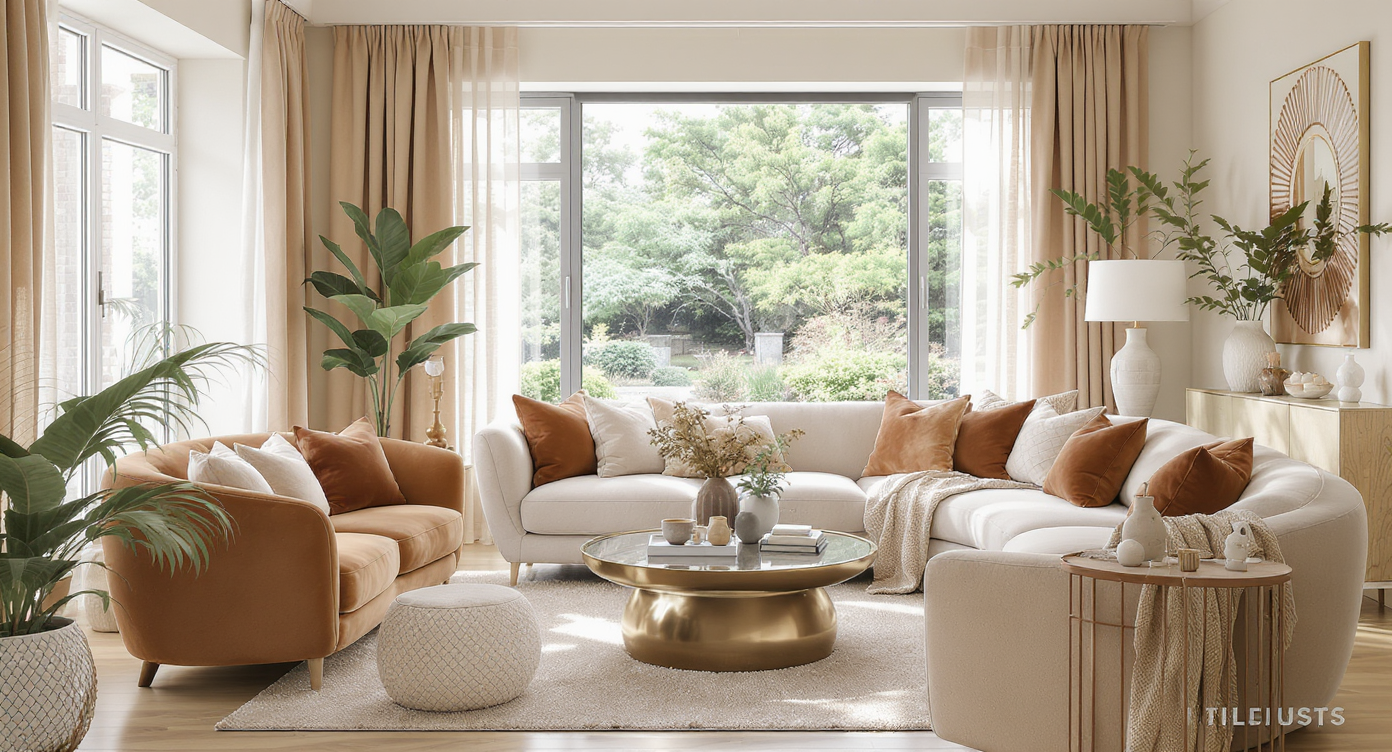
The answer to how to design a multi-purpose living room in 2026 lies in the interplay of warm neutrals, curved furniture, biophilic elements, modular layouts, and discreet smart home upgrades. Designers move away from cool minimalism, preferring tactile finishes and personal layers that foster comfort, connection, and flexibility. These trends favor beauty with intent, creating rooms where you can work, unwind, and host without feeling staged or sterile. In practice, today’s interiors become softer and more personal. Carefully chosen earthy palettes, rounded silhouettes, true natural surfaces, and considered lighting all work to make spaces both inviting and adaptable. The heart of the 2026 trend forecast is not visual drama but understated confidence, homes that evolve with you throughout the day, balancing lived-in ease with new technologies that retreat into the background.
-
1. Warm Neutrals & Earthy Tones Anchor Every Palette
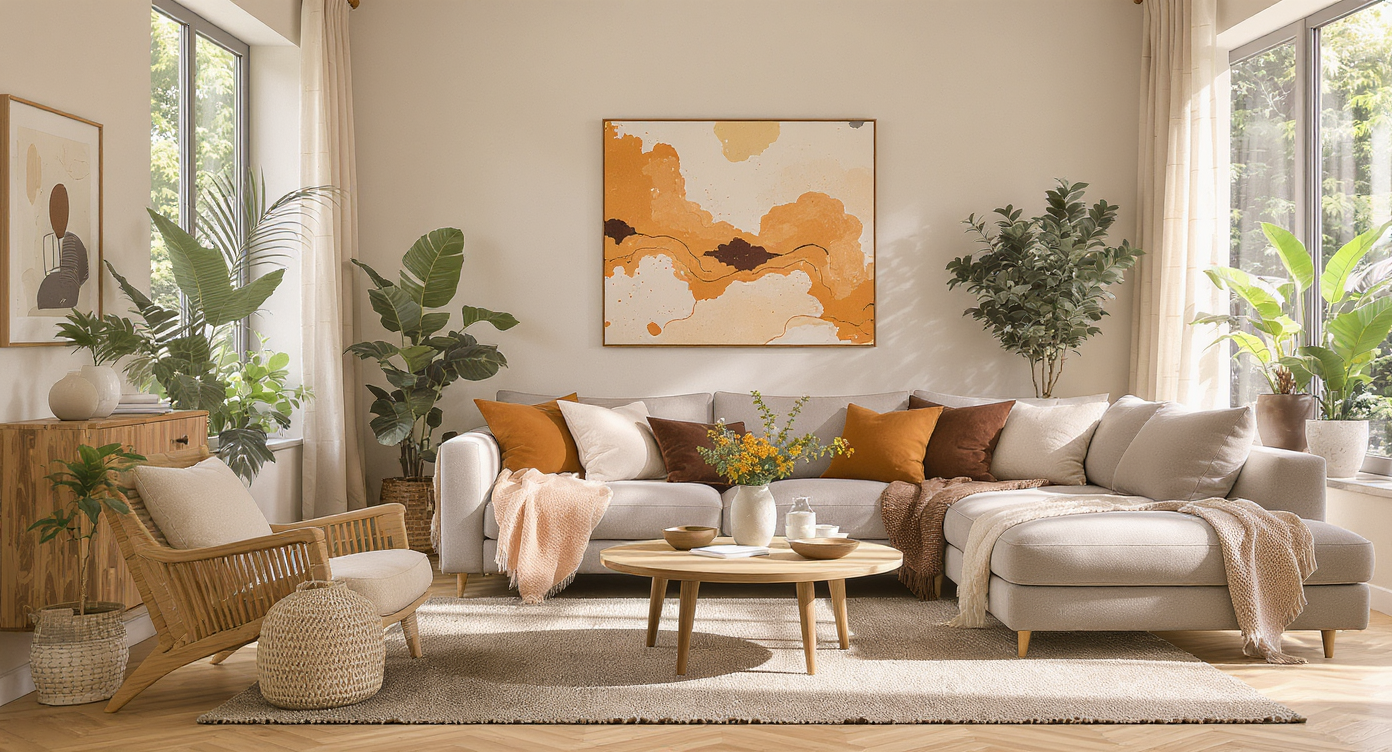
Warm neutrals create an inviting anchor in contemporary interiors, introducing comfort and sophistication.
Warm neutrals are now the backbone of inviting interiors, with camel, taupe, sand, and cocoa setting a sunlit, human baseline. Designers often prescribe the 60-30-10 formula: 60 percent walls and rugs in a dominant neutral, 30 percent supporting shades in upholstery or drapery, and 10 percent reserved for an accent color, a strategy endorsed by color experts and explored in our review of 2026 paint color winners. In real homes, varying finishes and textures, like matte paint, nubby bouclé, or slubbed linen, help keep predominantly neutral rooms from feeling lifeless or monotone. Curated earthy tones, chosen with attention to Light Reflectance Values for maximum brightness, work especially well in small-space living rooms and bedrooms where calm, non-glare contrast is key.
Expert Insight
A couple in a compact apartment transformed their cold, unused living area by layering a soft clay limewash on the walls and swapping a boxy sofa for a curved loveseat. The new setup sparked more conversation and comfort, proving that one curve and one bold texture can revive even the most forgotten rooms.
-
2. Soft Curves & Organic Shapes Redefine Comfort
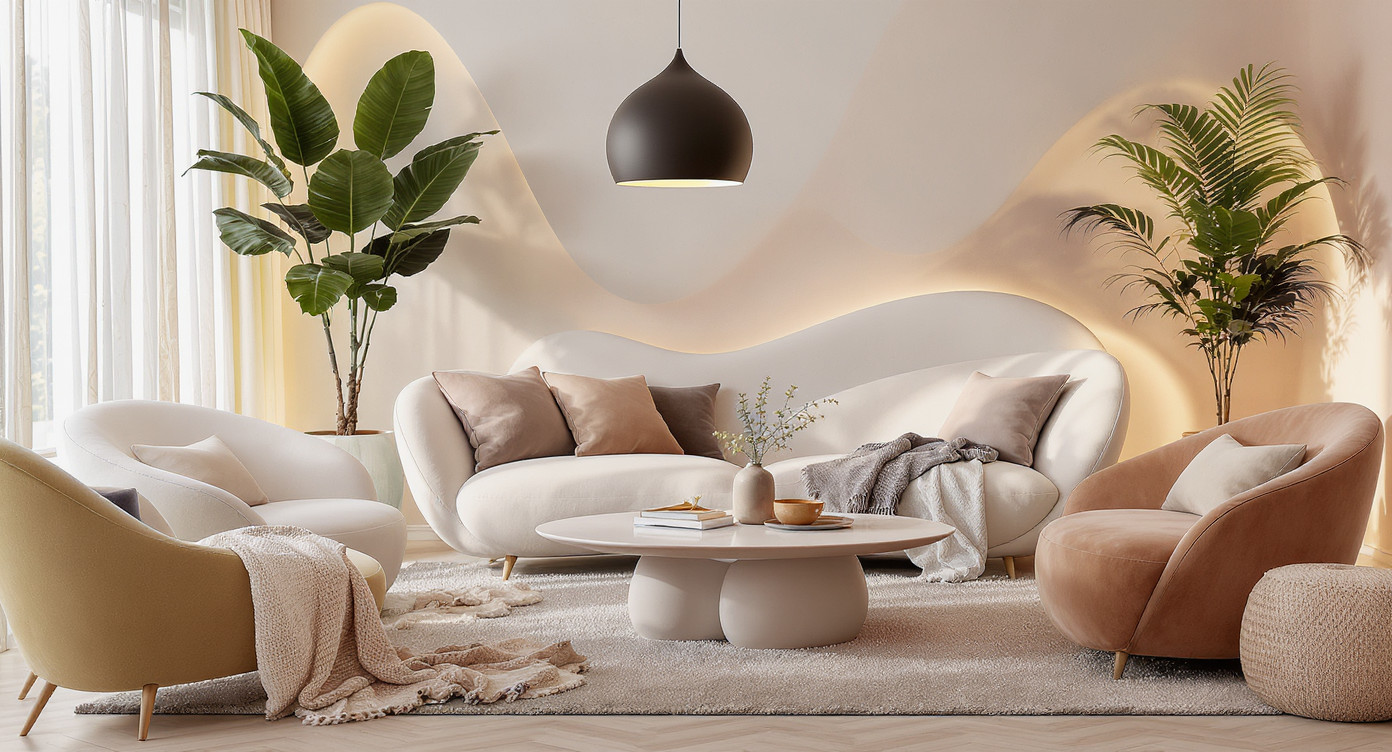
Soft curves redefine comfort, creating spaces that feel welcoming and approachable.
Curved forms and organic shapes disrupt sharp grids, creating rooms that feel more approachable and supportive. Designers recommend floating a curved sofa a few inches off the wall to promote circulation and strategically using round tables, mirrors, and lighting for a restful “echo effect.” Oversaturating a space with curves, however, can quickly tip into gimmick, so balance is essential. For instance, pair a rounded sectional with a sleek console or geometric bookshelf to ground the palette, as shared in this look at next-generation home trends. Soft curves are not just an aesthetic gesture, they recalibrate conversation zones, improve sightlines, and foster a sense of movement that complements both compact city apartments and sprawling family rooms.
-
3. Biophilic Design & Authentic Materials Set the Mood
Biophilic thinking is now a baseline in how to design a multi-purpose living room. Designers advocate for a high share of visible natural surfaces, think oak floors, travertine benches, linen drapes, with a recommended target of at least 50 percent. A window-to-wall ratio of 20–30 percent, softened with sheers, brings daylight further into the space, while adding foliage stabilizes air quality and acoustics. Consistent with findings in our neutral color study for 2026, pairing stone and wood with grounded paint choices produces a restorative mood. Even compact rooms benefit from small moves, like switching out one synthetic top for a reclaimed wood shelf or introducing live plants at a scale that suits both volume and function. The effect: a tangible feeling of calm, connection, and wellness.
-
4. Multi‑Purpose Spaces & Modular Design Boost Function
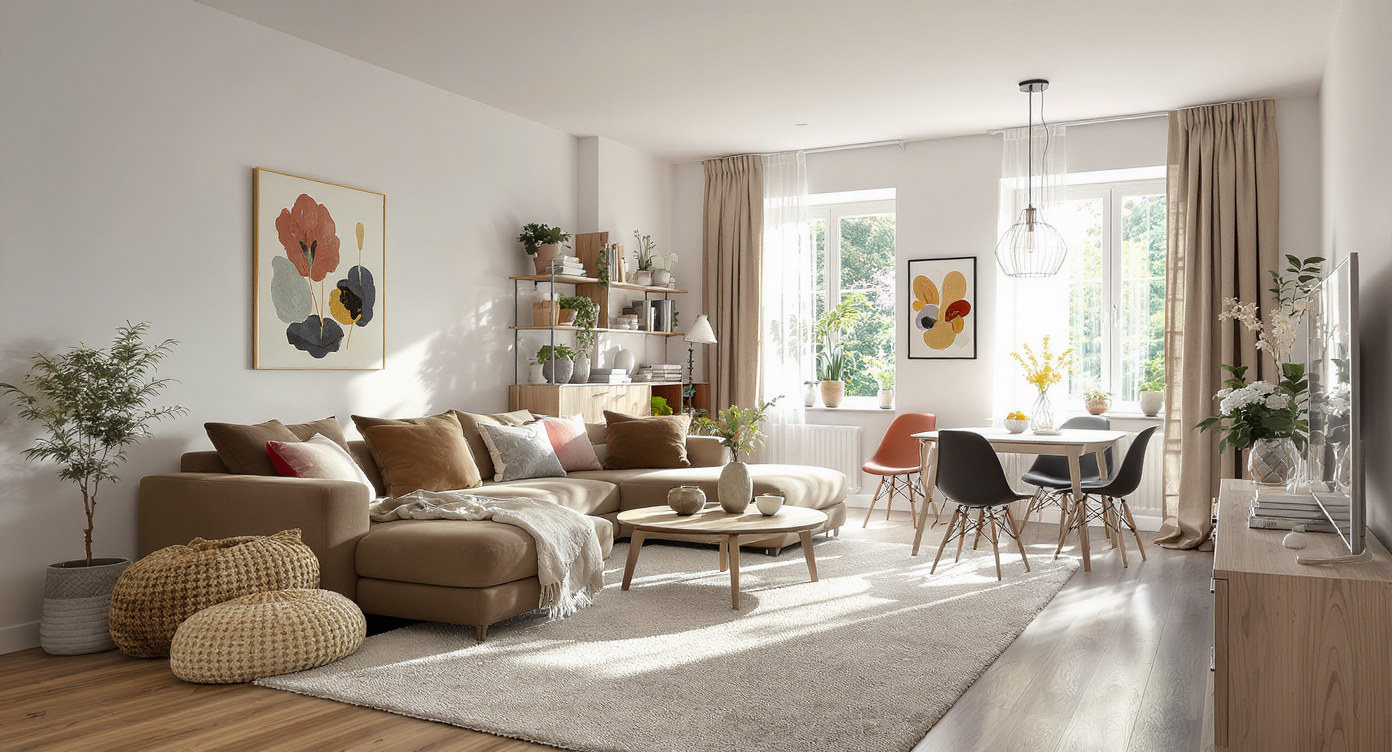
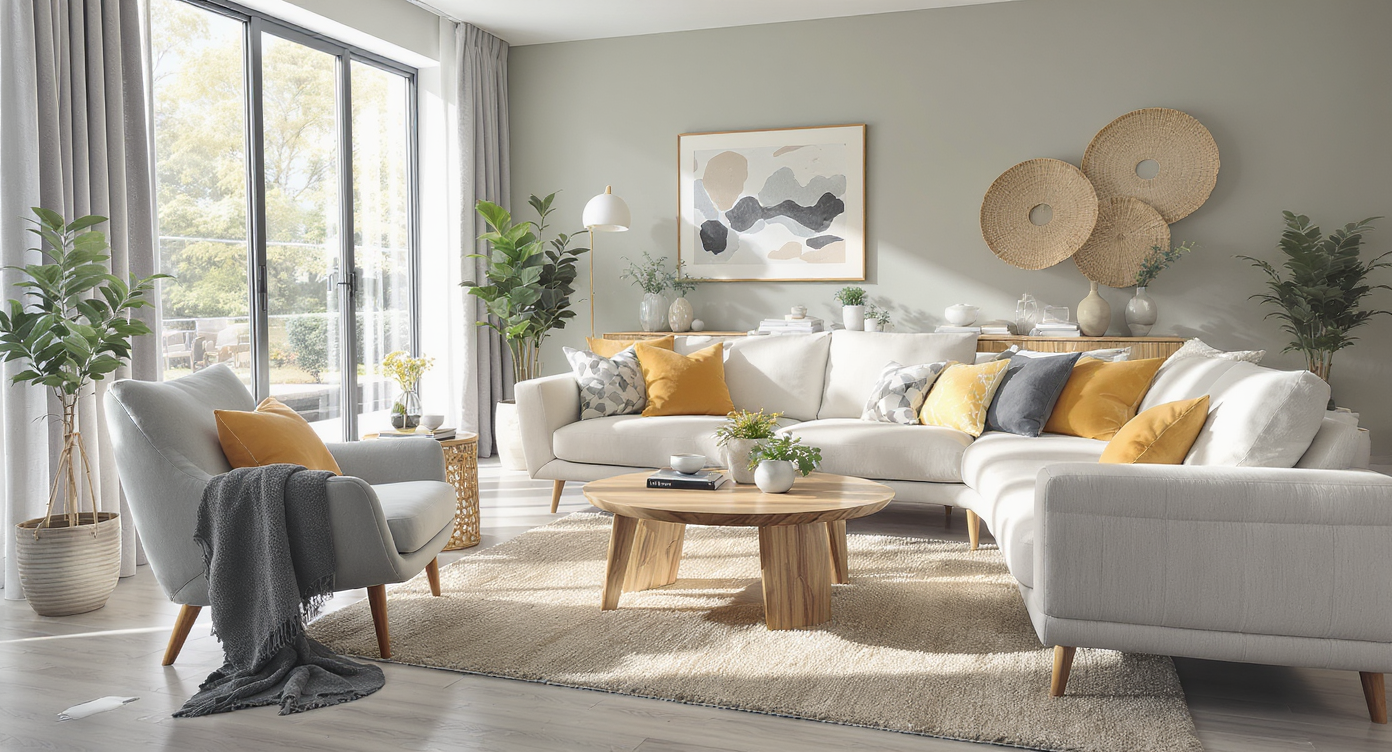
Multi-purpose spaces enhance functionality, embracing adaptability in modern home design.
Multi-functional living spaces are at the center of 2026’s design priorities, especially in open-plan homes and city apartments. Designers encourage thinking in zones, using area rugs, lighting, and flexible furniture, nesting tables, sofa beds, wall-mounted desks, to allow fast mode switches from work to entertaining. Key rules include keeping 30–36 inches of circulation around major furniture, preserving at least two feet of knee space at any desk, and relying on modular storage to support adaptability. Smart scenes programmed for various activities ensure each zone feels distinct, as recommended throughout trend analysis for 2026. This approach prevents rooms from feeling cluttered or makeshift, delivering spaces that flex with everyday life.
-
5. Quiet Tech: Smart Home Design That Disappears
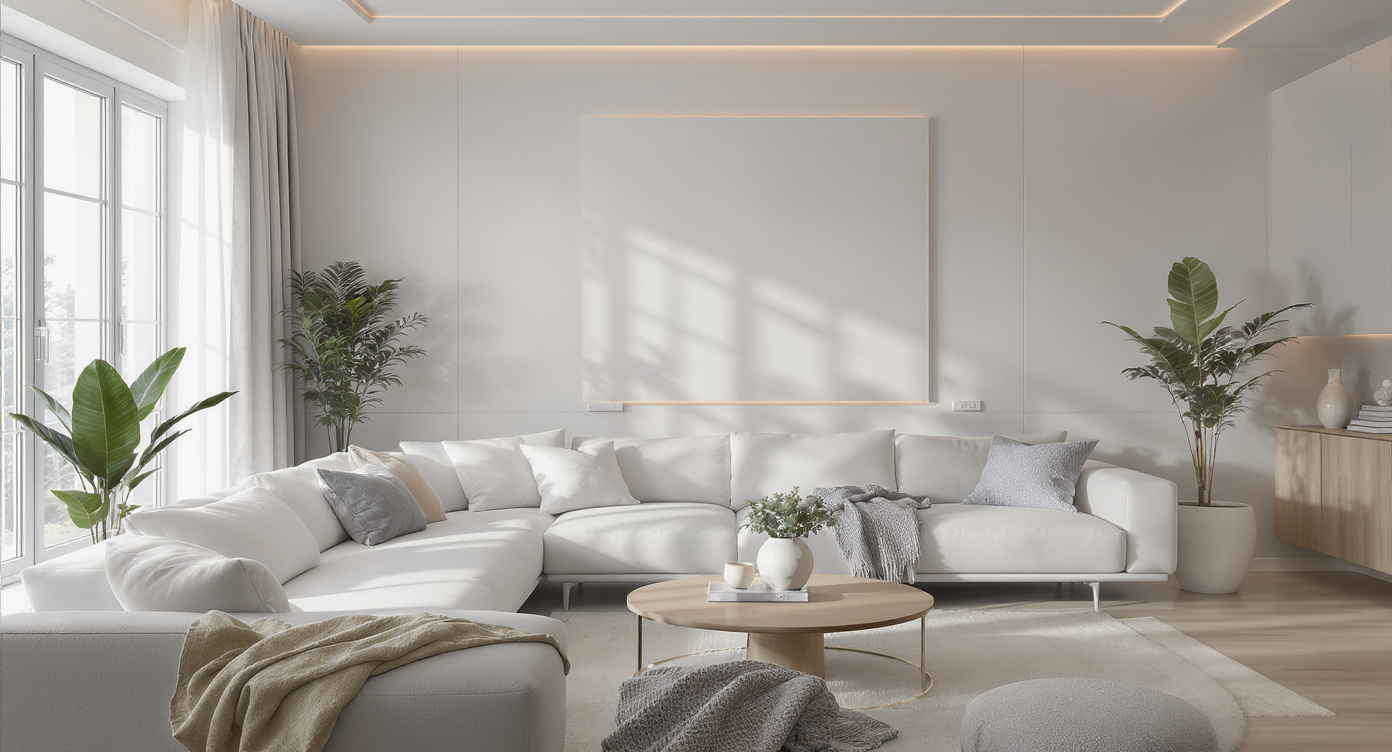
Quiet tech in design delivers seamless integrations, prioritizing functionality without sacrificing aesthetics.
Smart home design this year is all about invisibility and ease, trading showy gadgets for seamless, integrated comfort. Designers favor in-wall raceways, recessed speakers, and hidden charging, houses feel calmest when tech recedes visually. Experts suggest controlling lights, shades, and climate from a single app, using sensors and dim-to-warm LEDs to create soft transitions from work to relaxation. According to latest lighting trend insights, layered sculptural lighting, balanced for mood and task, hits the sweet spot between function and ambiance. In real homes, these upgrades add energy savings and ease, while maintaining the intentional quiet that defines 2026’s best rooms. Smart design should support your life quietly, without overtaking it visually.
Visualization Scenario
Open the REimagineHome workspace, upload a living room photo, and drag in a taupe paint overlay. Place a curved sectional and a low oak table, layer woven drapery at the window, and shift the lighting from bright task to soft ambient mode. Use the platform to compare smart layouts, check furniture clearance, and weigh wood versus stone finishes side by side. Try these ideas in your own space at REimagineHome.
Frequently Asked Questions About 2026 Interior Design Trends
How do I prevent warm neutrals from making my living room feel too bland?
Layer textured textiles, natural woods, and a pop of accent color to add definition. Test options virtually with REimagine Home AI to see what works best for your light and layout.
Are curved sofas suitable for small spaces?
Yes, as long as you allow the necessary clearance. Flow improves when curved silhouettes replace blocky forms, especially in compact rooms.
How can biophilic design improve my home office?
Integrate at least one live plant per 50–75 square feet, maximize daylight, and include natural wood or stone surfaces for better acoustic and visual comfort.
What are the hallmarks of an effective multi-purpose living room?
Clear zoning, modular pieces, and flexible lighting scenes define the most successful multifunctional spaces.
How do I hide tech but keep control over my home features?
Use central apps, recessed fixtures, and concealed wiring to maintain a streamlined look in any room. REimagine Home AI can help visualize these approaches in context.
Design in 2026: Comfort, Adaptability, and Personal Layers
The five core trends for 2026, warm neutrals, soft curves, biophilic materials, multifunctional planning, and nearly invisible tech, are shaping homes that feel considered and personal. By focusing on tactile finishes and careful layouts, designers help spaces become both more resilient and more expressive. Editing down to meaningful furniture and layered textures ensures every room can evolve as lifestyles change, never losing the sense of comfort or clarity. The era of performative, one-note interiors is over; presence and lived-in beauty are in.