Making Your Empty Living Room Feel Like Home: Simple Steps for Affordable Style
TL;DR
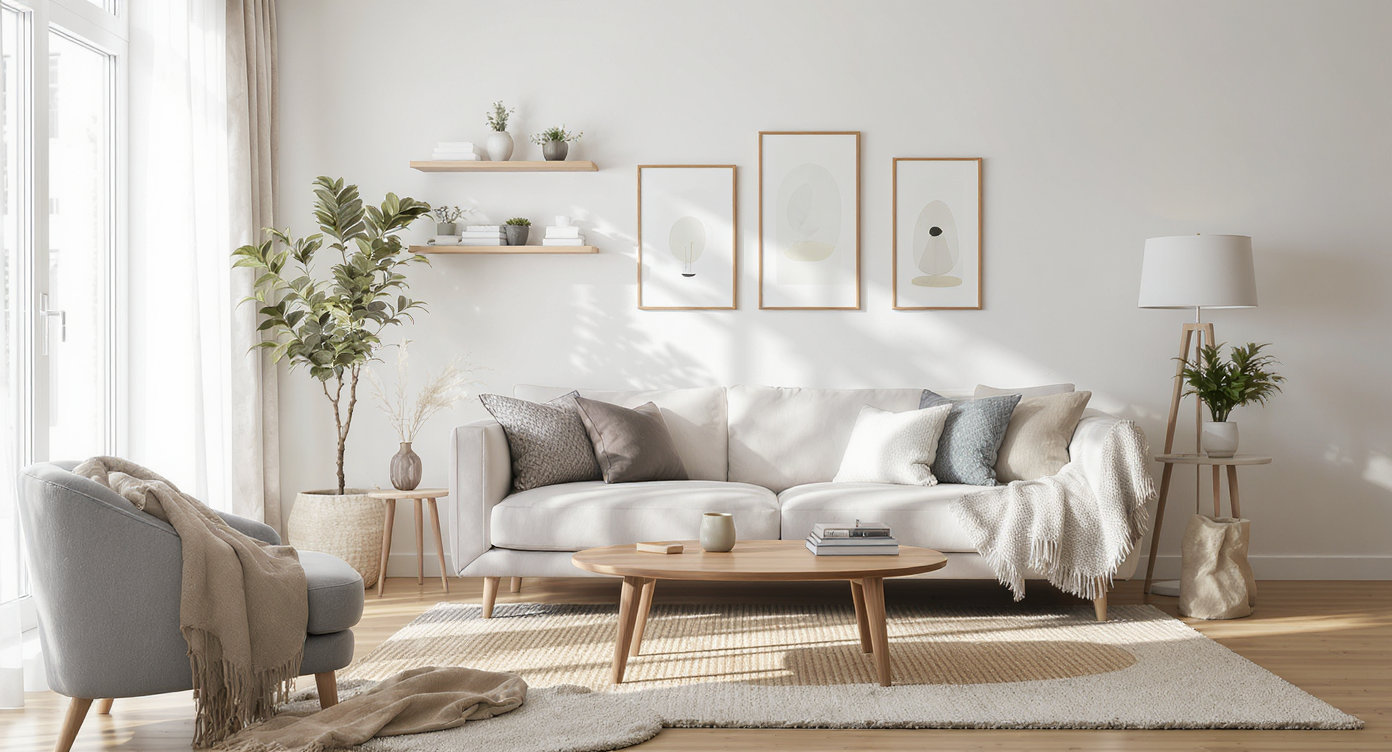
Transforming an empty living room into a comfortable, cohesive space is absolutely possible, even for style beginners. Start by focusing on foundational pieces that make everyday life function smoothly, such as proper seating, a sensibly sized rug for the main social space, and basic lighting. Layer in personal touches over time, using items that appeal to you and drawing cohesion from a central color or pattern. This gradual approach is both budget-friendly and authentic—a formula that helps any first-timer build a home that feels welcoming and truly theirs.
Why an Empty Living Room is the Ultimate Opportunity
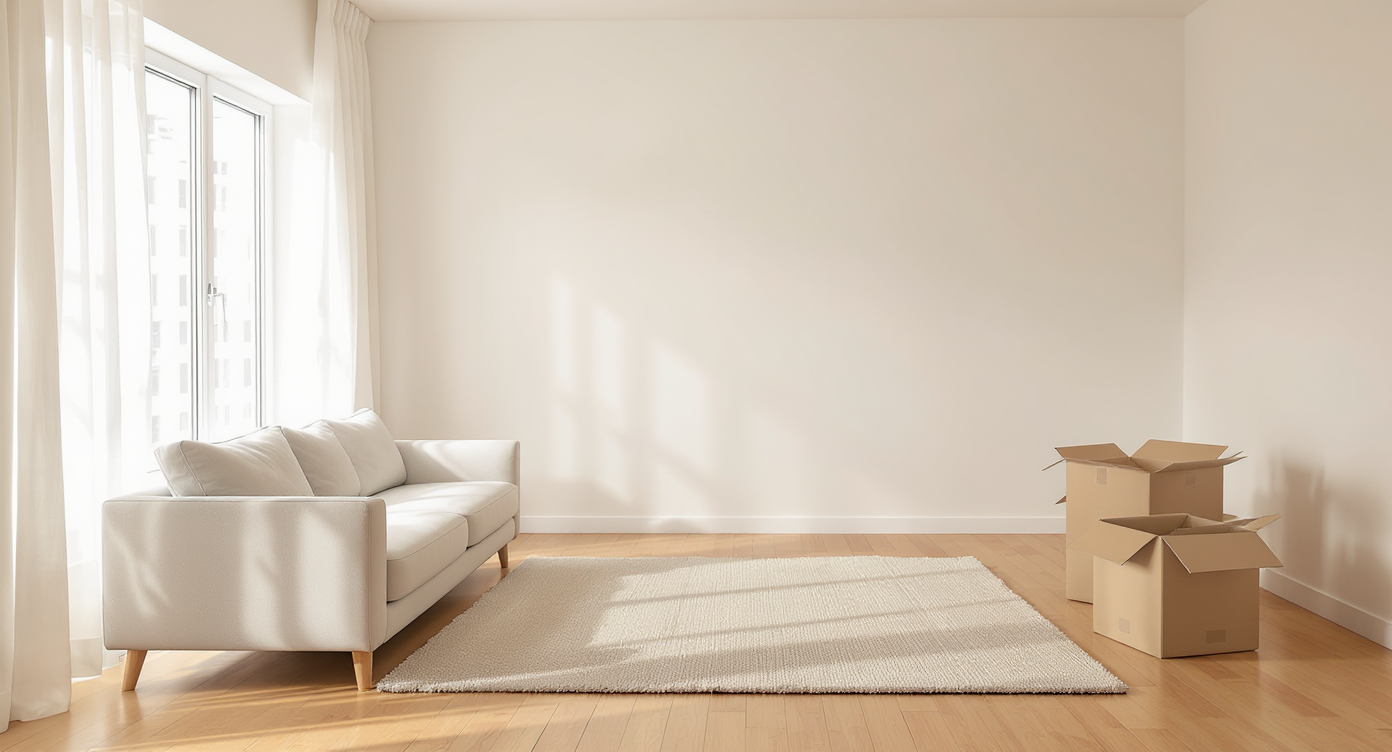
A nearly empty living room with a single sofa, simple rug, and moving boxes, setting the stage for affordable style and personalization.
Stepping into a nearly empty living room, especially as a new homeowner, can feel both intimidating and liberating. While the urge to fill the space quickly is real, an empty room offers a fresh start—a rare chance to shape a main social space that fits your life and your tastes. For many, knowing where to begin is the hardest part, especially when a defined style feels elusive and the budget is tight. Rather than chasing trends or rushing to buy matching sets, successful living room design comes down to prioritizing comfort and flow. With a thoughtful approach, even someone who claims "no sense of style" can create a welcoming and stylish room that works for everyday life and special moments alike. It’s a process that’s less about labels or rules, and more about solving for what makes your space feel right.
-
Focus on Function: Build for Daily Life First
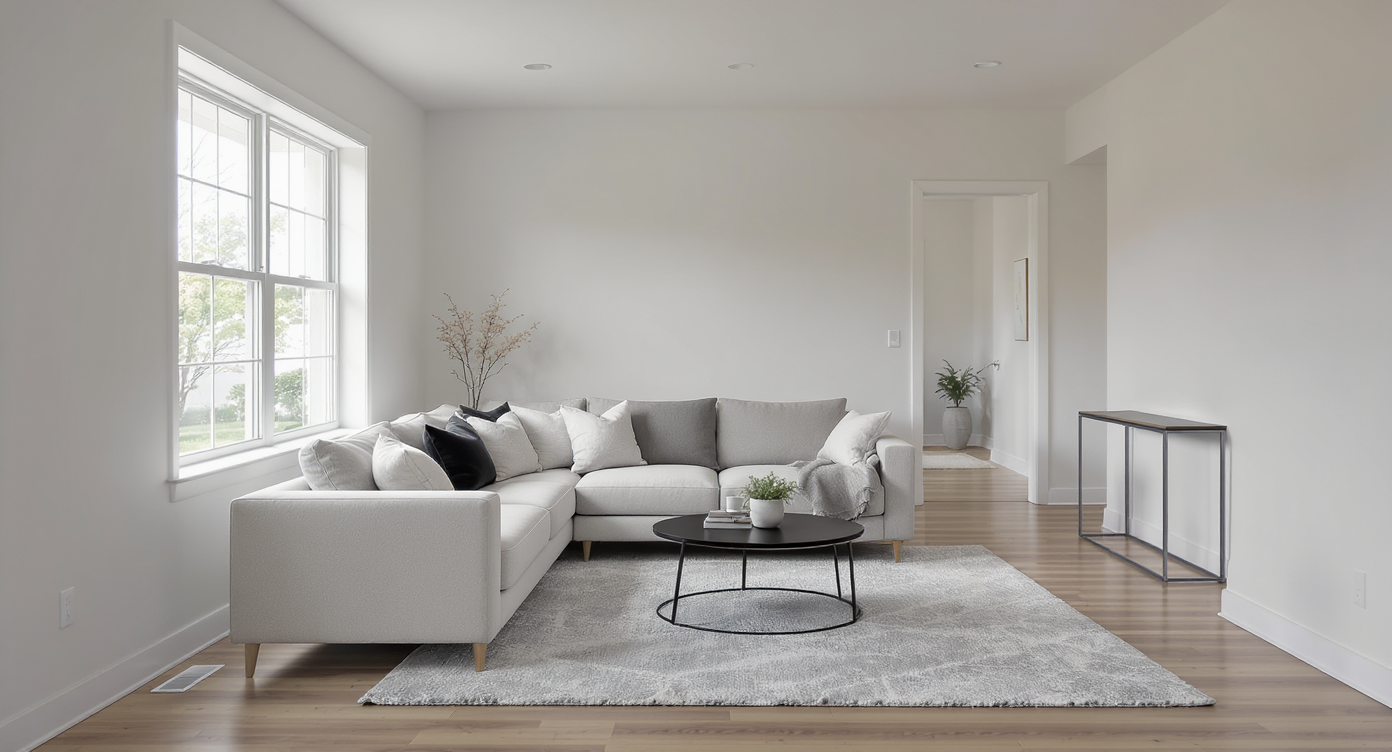
A functional, real-world living room layout with only essential furniture: floating sofa, rug, coffee table, and console table to support daily life.
When starting with an empty living room, the temptation to fill every corner can lead to purchases that feel disconnected later. Experts emphasize that the first priority should be defining how you’ll use the room. Will it primarily be a gathering place for friends, a family hub with kids and toys, or a quiet retreat for reading and movies? Begin by identifying the anchor elements. A comfortable sofa sets the tone, and its placement should make the most of the room’s layout. In open-plan living rooms or those with unusual doorways and flows, floating furniture—meaning pieces pulled away from the walls—can help create distinct zones and better pathways for movement. As outlined in our piece on furniture arrangement and sofa size, a well-placed sofa and an appropriately sized rug are foundational to both comfort and flow. Once your main seating is in place, consider what secondary furniture you genuinely need. Think coffee tables within reach, storage pieces for essentials, and perhaps a console table to help define the entryway if your room connects directly to your home’s entrance. Start with the minimum, and allow your usage patterns to guide later additions.
Expert Insight
A couple, excited to move into their first home, spent weeks staring at their echoing living room—unsure how to start. They decided to buy just one thing: a bold, patterned rug that caught their eye. The room instantly felt warmer and more defined. Using that rug’s colors as their guide, they picked up curtains and a pair of pillows on sale, then rearranged the secondhand sofa to frame the new center. Over months, they added thrifted art and a gently used side table, building a cozy, functional main social space that reflected them perfectly. Their story is proof that a single decision can set off a cascade of comfort and style.
-
Style Without Stress: Layering Texture, Color, and Personality
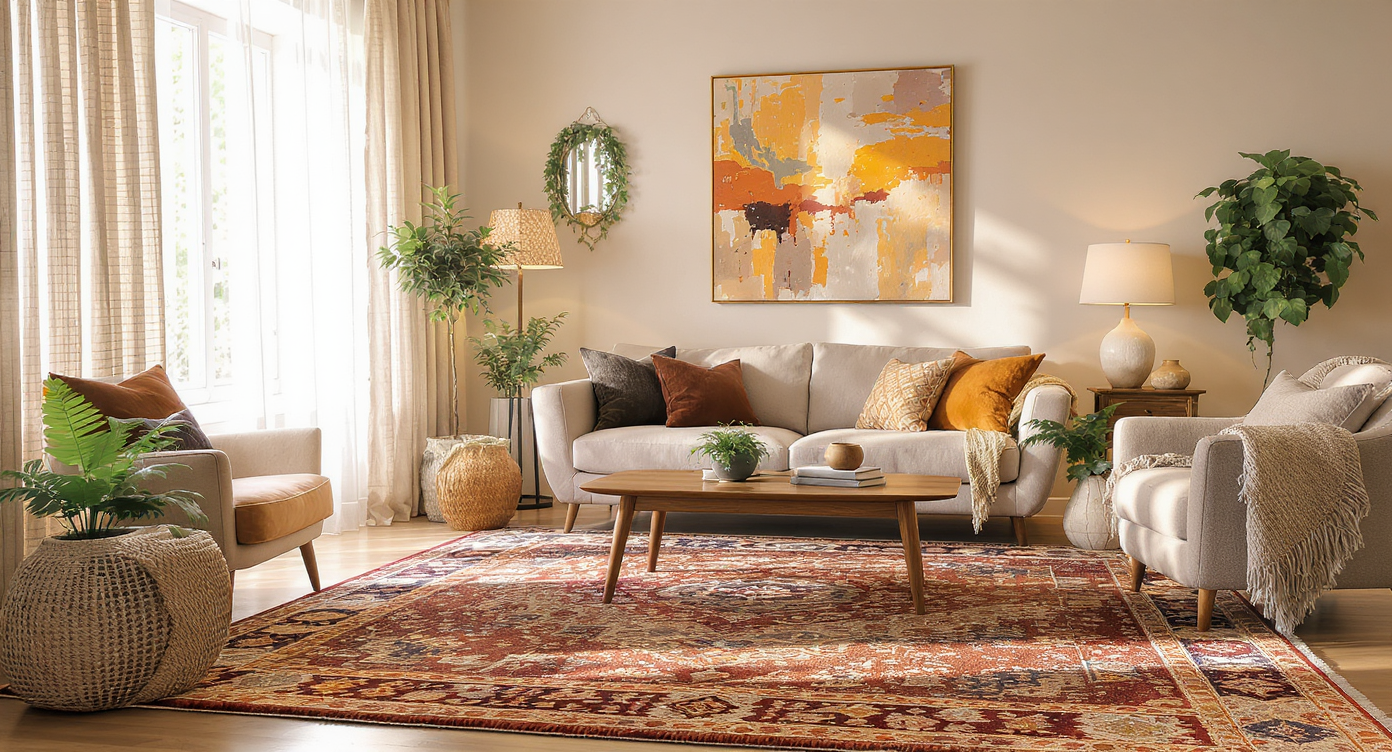
A real-world living room styled with a colorful rug, layered textures, and repeating accents for approachable, stress-free design.
A common concern is feeling lost without a well-defined style. Rather than fixate on labels like "modern" or "boho," let your living room evolve organically. Select one patterned or colorful element—a large rug often works well—and use it as your starting point. As we described in our advice on first home living room decor, a substantial rug can help tie the layout together while providing an easy palette for curtains, pillows, and art. Curating a relaxed, layered look means allowing for color and texture repetition in multiples. Pull two or three shades from your rug or a favorite artwork and repeat them in textiles, accessories, or even planters. Adding curtains high and wide will soften hard lines and draw the eye up, while wall art and mirrors enhance visual interest. Don't be afraid to introduce plants, a variety of lamps, and a handful of books or family photos—these details make the space unique without requiring expert design knowledge. The key principle: spread these accents across the main social space, rather than clustering them in one zone. This approach supports affordable design and ensures your furniture and flow work together harmoniously.
-
Affordability with Intention: Smart Choices and Flexible Growth
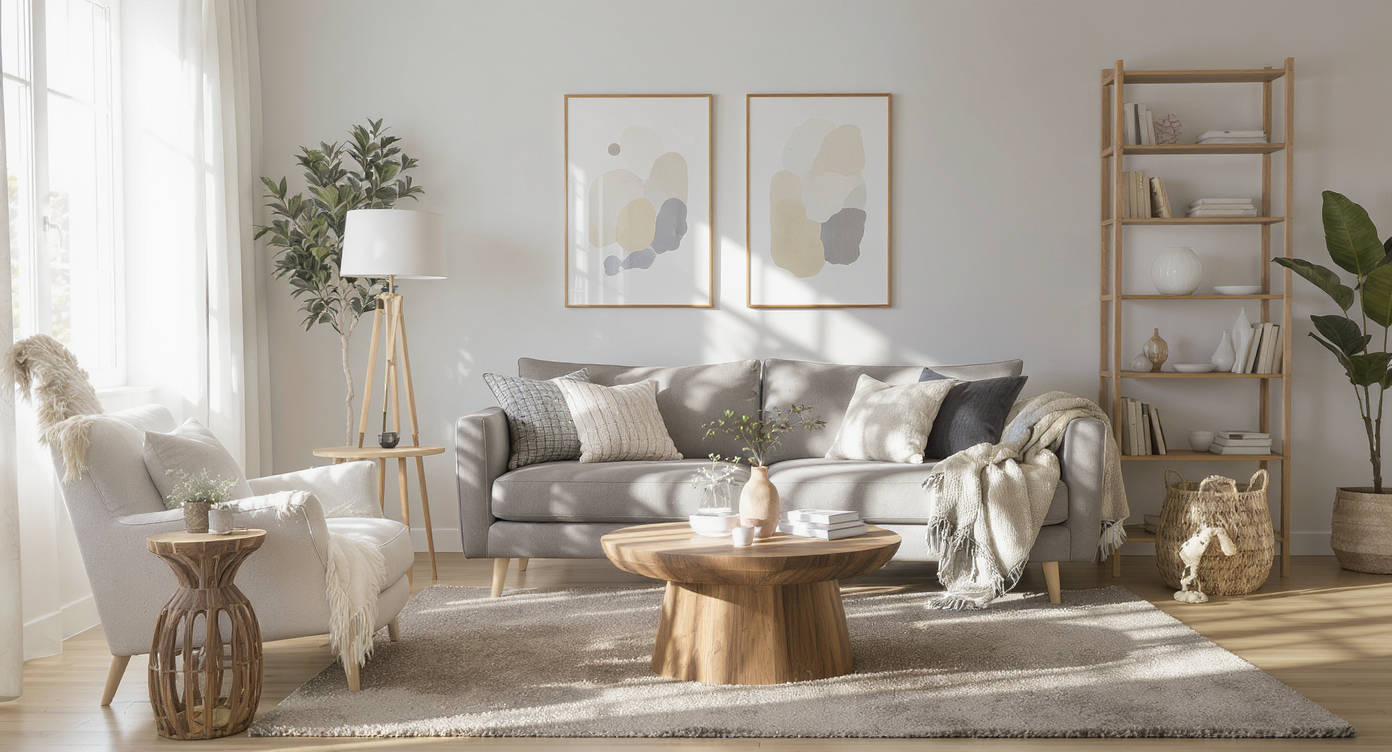
A living room evolves affordably with select investment pieces, thrift finds, and layout changes for comfort, style, and flexible growth.
It is easy to assume that style requires a generous budget, but the most inviting rooms are often built slowly and selectively. Designers suggest prioritizing quality where it matters—think the sofa or well-used storage—and filling in with thrifted, repurposed, or simple finds elsewhere. By resisting the urge to purchase everything at once, you allow your preferences to develop and avoid buyer’s remorse. According to practical advice from budget-friendly furnishing strategies, focus on items that deliver daily comfort first—then layer in art, accent chairs, and organizational touches as funds and inspiration allow. This approach not only helps your wallet but encourages a more personal style story as you collect and display pieces over time. As your needs shift, remain open to moving furniture or changing layouts. Defining separate zones for entry, lounging, and hobbies with area rugs or bookcases helps a multipurpose room feel anchored and intentional. Each new addition should support your main purposes and contribute to the lived-in feel that makes a house a home.
-
Anecdote: The Power of One Piece to Change Everything
A couple, excited to move into their first home, spent weeks staring at their echoing living room—unsure how to start. They decided to buy just one thing: a bold, patterned rug that caught their eye. The room instantly felt warmer and more defined. Using that rug’s colors as their guide, they picked up curtains and a pair of pillows on sale, then rearranged the secondhand sofa to frame the new center. Over months, they added thrifted art and a gently used side table, building a cozy, functional main social space that reflected them perfectly. Their story is proof that a single decision can set off a cascade of comfort and style.
-
Common Mistakes to Avoid
Several missteps frequently stall first-time decorators: choosing a rug that is too small, pushing all furniture against the walls, or placing the TV uncomfortably high. Attempting to match every piece or buying full sets creates a space that lacks personality and flexibility. Another pitfall is rushing to fill an empty room without thinking about flow or daily usage. Experts advise allowing the space to breathe at first, so the main furniture and accessories can be arranged—and rearranged—until daily life feels effortless there. For more about correcting common pitfalls, see the details in our roundup of living room decor fixes.
-
Tips and Expert Insights
Designers often recommend beginning with a core color palette and repeating it through soft furnishings and accessories. Use oversized rugs that at least fit under the front legs of all seating. Float furniture to form conversation-friendly groupings, and use tall bookcases or floor lamps to enhance height and depth. Mini-scenarios for real life: A parent with young kids chooses a coffee table with hidden storage so toys have a dedicated spot at day’s end. A professional who works from home carves out a reading nook by the window with an armchair and small lamp, using the transition between spaces for maximum function. For small budgets, renters upcycle spare stools and stack books as a side table—style grows from utility, not just ornament. These small, considered decisions let the living room evolve along with your lifestyle needs.
-
How to Use This in Your Next Designs
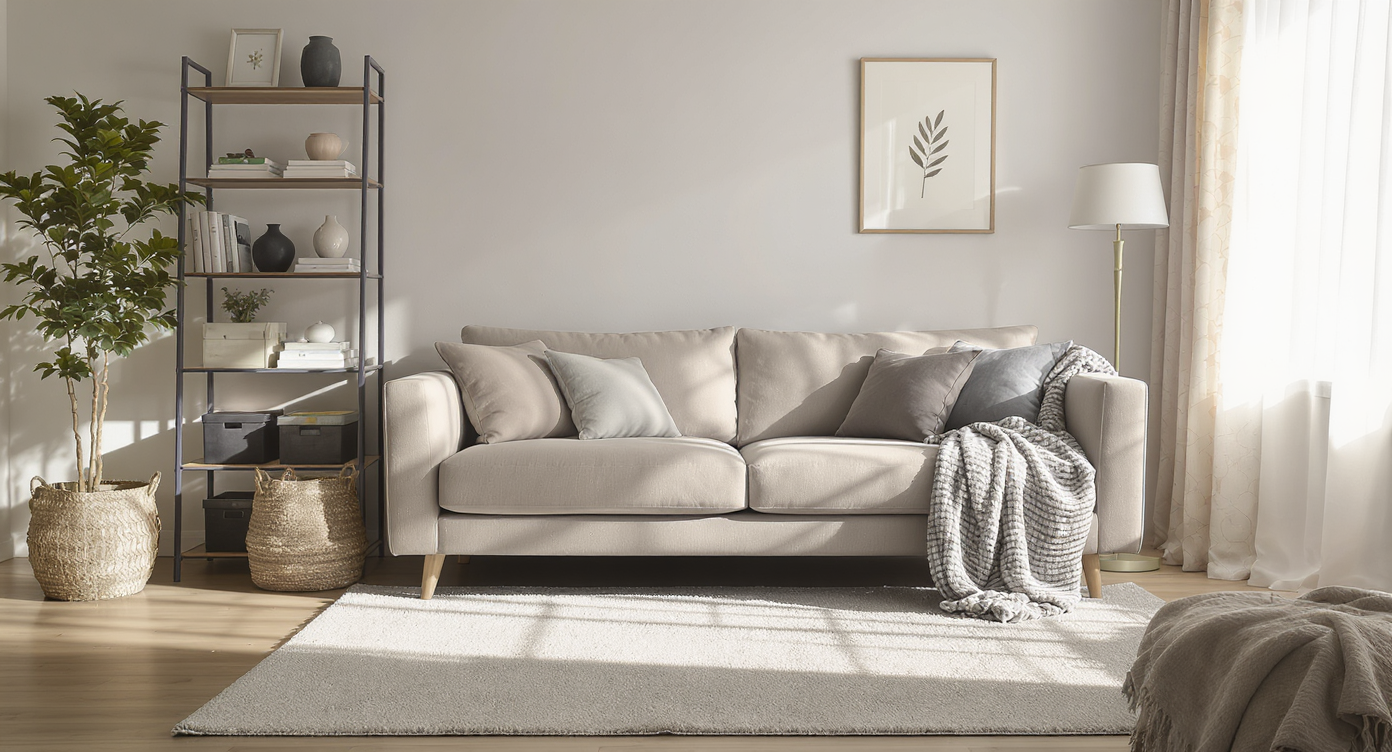
A thoughtfully arranged living room featuring comfortable essentials, layered textures, and personal accents for adaptable, affordable style.
The most valuable takeaway is to treat your living room as a living organism. Begin grounded with pragmatic, comfortable essentials in the main social space, such as the right sofa and rug size. Embrace affordable design by hunting for texture, storage, and accent pieces that express who you are now—not who you think you should be. Pay attention to how your room feels as you introduce new elements, letting patterns and colors build cohesion without strict adherence to trends. As you gain confidence, experiment with shifting layouts or swapping in new finds, always adjusting for better flow and more personal comfort.
-
Visualization: Picture the Transition from Blank to Welcoming
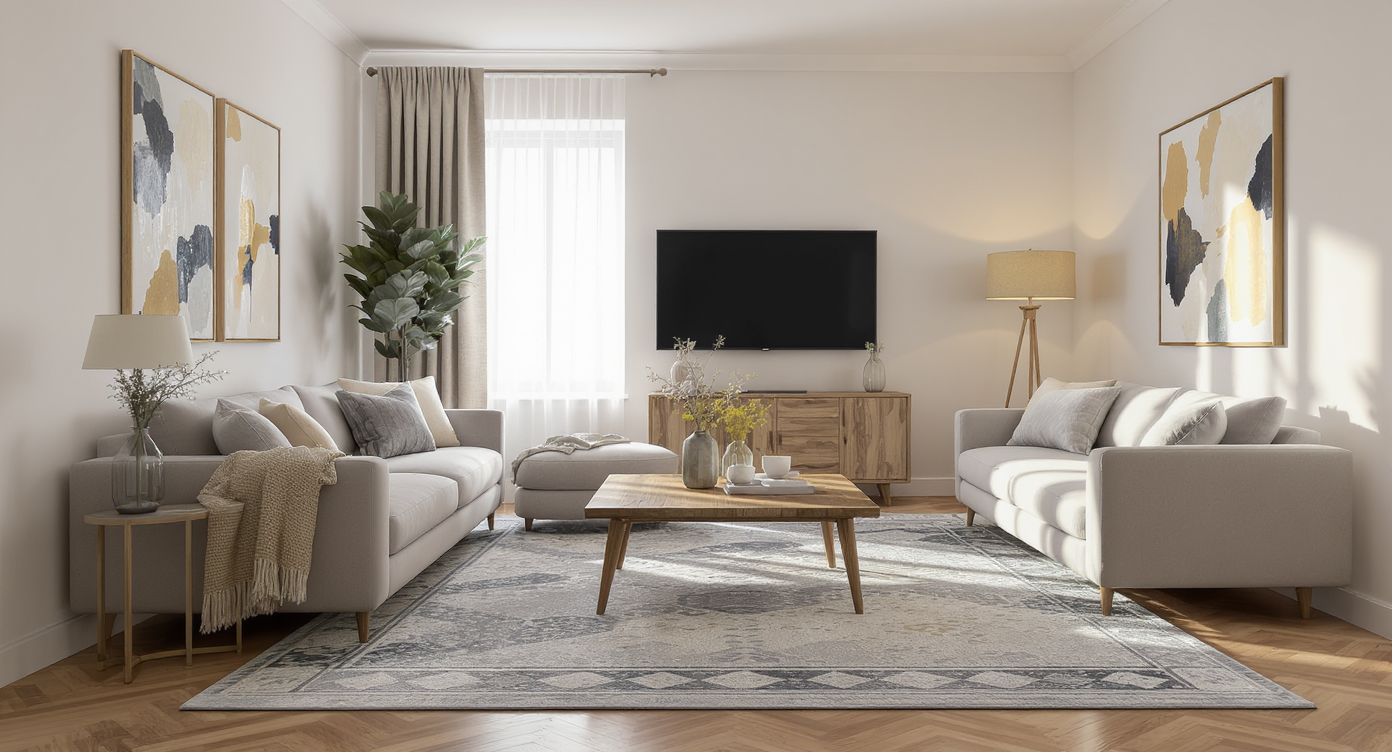
A once-empty living room transforms as a patterned rug, curtains, and meaningful accents define a warm, inviting space over time.
Imagine starting with only a sofa and bare floors in a bright, echoing room. Step one is rolling out a patterned rug so large it neatly collects all seating, instantly defining the main social space. Next, curtains go up, framing the windows and softening sunlight. The TV, once high up, is lowered for comfort, and a reclaimed coffee table sits within easy reach. Over a few weeks, artworks, a leafy plant, and a floor lamp find their places—all in colors inspired by that foundational rug. The room is no longer empty, but lived-in, easy for gatherings or quiet evenings, evidence of a style emerging naturally from your real-life routines.
Visualization Scenario
Imagine starting with only a sofa and bare floors in a bright, echoing room. Step one is rolling out a patterned rug so large it neatly collects all seating, instantly defining the main social space. Next, curtains go up, framing the windows and softening sunlight. The TV, once high up, is lowered for comfort, and a reclaimed coffee table sits within easy reach. Over a few weeks, artworks, a leafy plant, and a floor lamp find their places—all in colors inspired by that foundational rug. The room is no longer empty, but lived-in, easy for gatherings or quiet evenings, evidence of a style emerging naturally from your real-life routines.
FAQ: Making the Most of an Empty Living Room
- How do I choose the first item to buy for an empty living room?
- Pick a foundational piece, such as a large rug or substantial sofa, that feels comfortable and visually anchors your layout. Use its color and texture as a guide for later additions.
- Can I mix new and secondhand pieces?
- Absolutely. Blending new purchases with vintage, thrifted, or repurposed items is a hallmark of affordable design. This layered approach adds character and adaptability over time.
- How do I keep my living room cohesive while collecting items slowly?
- Stick to two or three recurring colors or materials. Echo these in various accents—think throw pillows, art, and storage baskets—to unify the room while still allowing personal expression.
- What if my living room is an awkward shape or has lots of doors?
- Use furniture placement, large rugs, and lighting to define zones for seating, entry, or activities. Flexible layouts allow you to adapt to tricky proportions and maximize the main social space.
- Where can I see examples or visualize changes before buying?
- Online tools, such as those at ReimagineHome.ai, can help you test layouts, colors, and styles using photos of your own space.
Your Room, Your Story: Growing into Style on Your Terms
Creating a deeply personal and affordable living room does not require formal design experience. By breaking the process into intentional phases, each decision supports comfort, daily function, and evolving tastes. Let your main social space develop around your genuine needs and choices, resisting pressure to rush or simply imitate others. Over time, each layer—be it a well-chosen piece of furniture or an accent inspired by a rug—builds toward a room that invites you, and everyone you care about, to relax and stay awhile. For more ideas and visualization tools to plan your next refresh, visit ReimagineHome.ai.