10 Step-by-Step Rules for How to Furnish an Empty Apartment Without Layout Regret
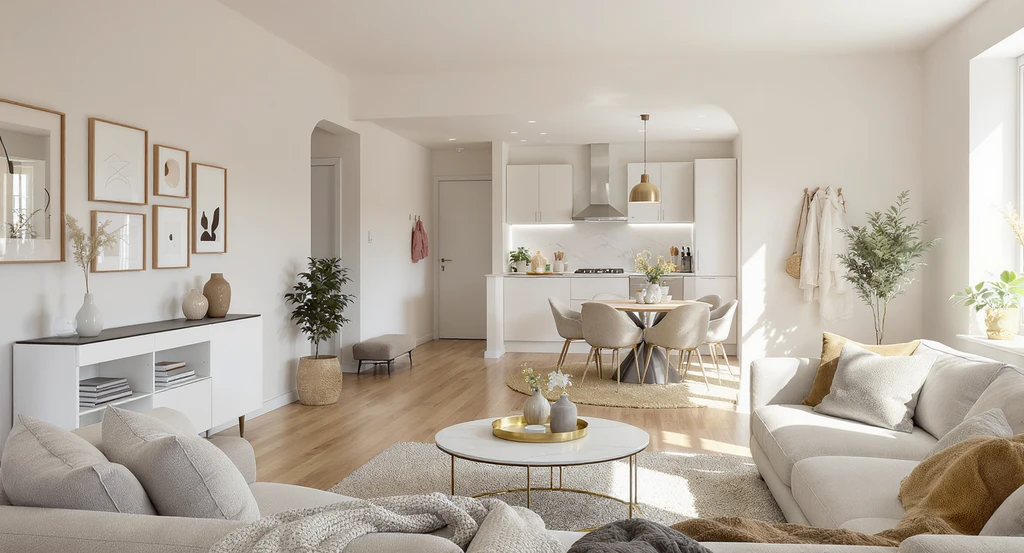
Why Furnishing an Empty Apartment Creates Anxiety and How to Solve It Smartly
Starting how to furnish an empty apartment step by step begins with careful planning—measure, sketch, and visualize the best layout for awkward apartment spaces and blank rooms before buying furniture.
Walking into an unfurnished apartment can be both thrilling and unsettling. The absence of furniture, defined areas, or even a clear starting point leads many renters and first-time homeowners to buy impulsively or overcrowd their blank canvas. The most common driver of regret is rushing to fill a space without measuring or planning. For anyone searching for step-by-step instructions on how to furnish an empty apartment, this guide is structured to reduce uncertainty, clarify priorities, and empower you to visualize outcomes before you buy.
-
01. Measure All Spaces, Including Doors and Walkways, Before Buying
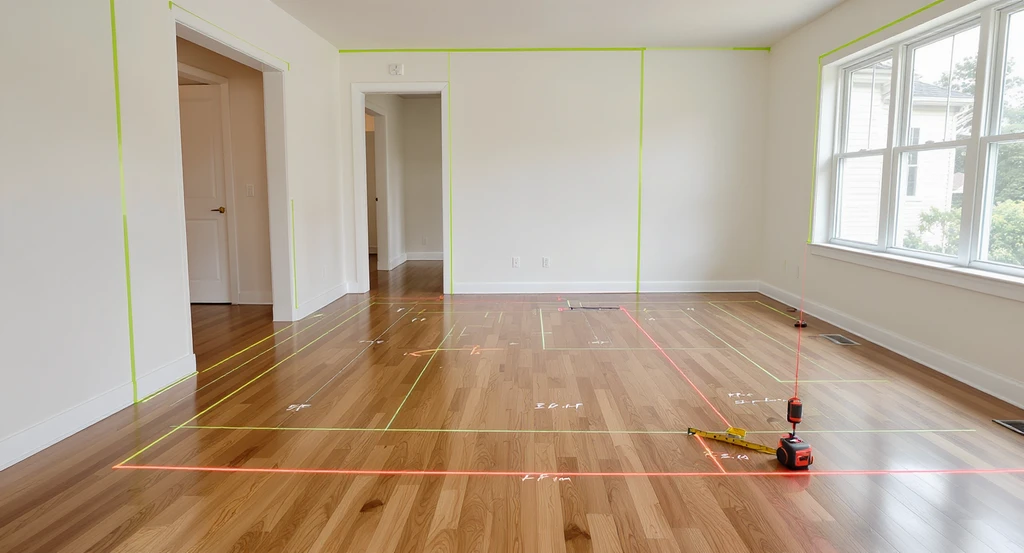
Before furnishing an empty apartment, measure all spaces precisely for the best layout for awkward apartment spaces and successful step-by-step planning.
Always measure room dimensions, door width, window locations, and mark swing clearance before investing in any furniture. Accurate measurements form the backbone of a successful furnishing process, preventing returns and circulation issues. This rule works because spatial misjudgment is the top driver of overcrowded or awkward layouts. According to our Sofa Size & Furniture Style Guide, you should maintain a minimum of 24–30 inches for main walkways and at least 16 inches between a sofa and coffee table. Skipping measurement often leads to blocked doors, cramped movement, and wasted budget. "Overcrowding occurs when anchor pieces are purchased without verifying clearances. It changes both the usable space and the sense of comfort in the room. Most homeowners assume furniture will 'fit' based on visual estimation, but in practice, frustration results from not accounting for walkways and door swings."
Expert Insight
When I moved into my first apartment, I bought furniture to fill every corner in a single weekend. It ended up feeling cramped and mismatched, and I regretted not measuring before buying. The second time, I used a phased approach—placing only anchor pieces first, then testing flow, and visualizing layouts online. The difference in comfort and functionality was immediate, and I avoided costly mistakes.
-
02. Define Essential Functional Zones Before Shopping
Prioritize dividing your blank apartment into functional zones—sleeping, dining, living, work/study, and storage before selecting any furniture. This evaluation structure, which we’ll call the "Functional Zoning Sequence," ensures every activity has an intentional place without overlap. Zoning works because rooms lacking clearly identified functions create confusion and visual clutter. Using invisible boundaries (such as rug placement or furniture alignment), you can set expectations for each area, resulting in better day-to-day usability. Trade-off: In very small apartments, zones may overlap, but clarity on each zone’s primary use adds comfort and reduces missed needs later.
-
03. Anchor With Primary Furniture Pieces First
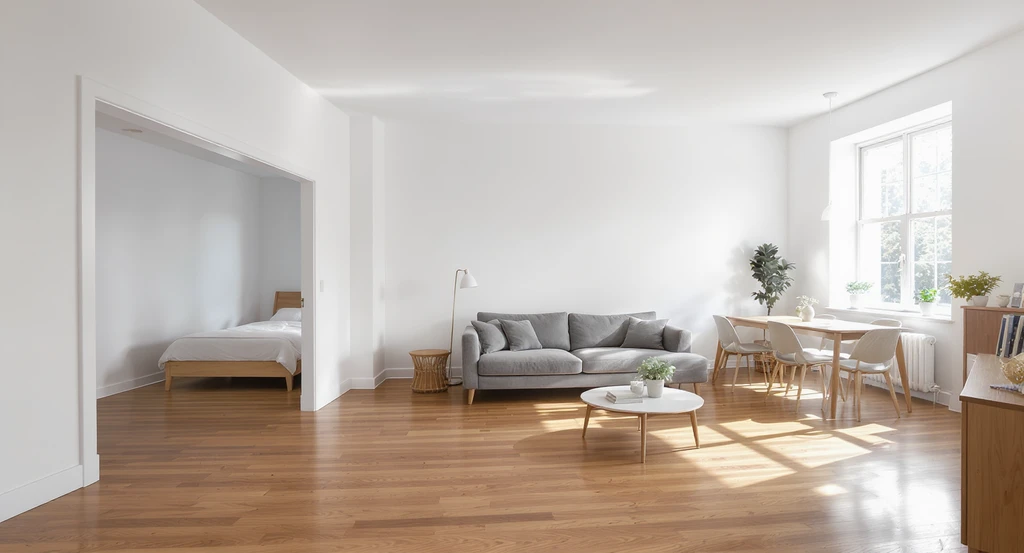
Learn how to furnish an empty apartment step by step: start with major furniture anchors in open-plan rooms for smarter layouts and furnishing ideas for blank living spaces.
Purchase and position major pieces (bed, sofa, dining table) before any secondary or decorative items. Anchor pieces define your main zones, set layout logic, and establish the scale for all remaining items. Placing anchor furniture first prevents common mistakes like crowding out walkways or blocking windows with smaller, less essential items. This approach capitalizes on visual weight distribution, balancing the room before layering details. The primary trade-off: you might be living with blank walls or floors for a few weeks, but the resulting flow and proportion far outperform a room filled all at once for speed.
-
04. Test All Walkways and Door Swings Before Adding More
Walk through your layout after positioning anchor pieces, checking for at least 24 inches of clear pathway and fully opening all doors. Correction at this stage is less disruptive and helps avoid micro-mistakes that create friction in daily life. Good circulation is a result of deliberate clearing. If movement feels blocked or awkward at this stage, adjust or swap pieces before committing to further furniture. "Circulation clarity" is a recurring term in our furniture arrangement guidance—because the freedom to move directly influences how restful and livable your home feels.
-
05. Plan Storage Before Surface-level Style Choices
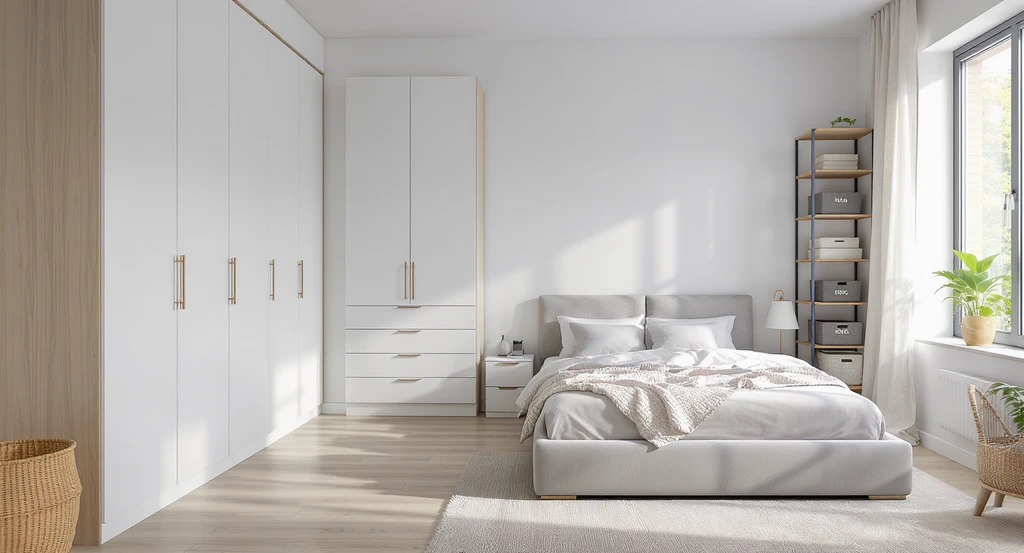
Prioritize storage when furnishing an empty apartment: install wardrobes, dressers, beds with drawers, and vertical shelves first to avoid clutter and layout regret. These step-by-step furnishing ideas for blank living rooms and open-plan spaces ensure you use the best layout for awkward apartment spaces and large empty walls.
Install wardrobes, dressers, or multi-functional storage (e.g., beds with drawers, ottomans) in each main zone before adding decor or secondary tables. Early storage decisions address potential clutter, a top source of unplanned expenses and frustration. Material and budget constraints often surface at this step: larger apartments allow for dedicated storage units; smaller ones require creative solutions like vertical shelving or dual-purpose furniture. Proper planning here prevents the common pitfall of accumulating 'stuff piles' that diminish both aesthetics and function.
-
06. Add Secondary Seating and Work Surfaces Selectively
Integrate coffee tables, nightstands, accent chairs, and console tables only after confirming movement and storage are resolved. Each should serve a distinct function and maintain at least 16–18 inches of clearance from primary pieces. This strategy limits visual noise and leaves your space adaptable. The main trade-off is resisting the urge to "finish" the room quickly. However, allowing space to evolve prevents crowding and leaves flexibility for new needs or style adjustments.
-
07. Use Vertical Walls to Expand Storage, Style, and Perceived Height
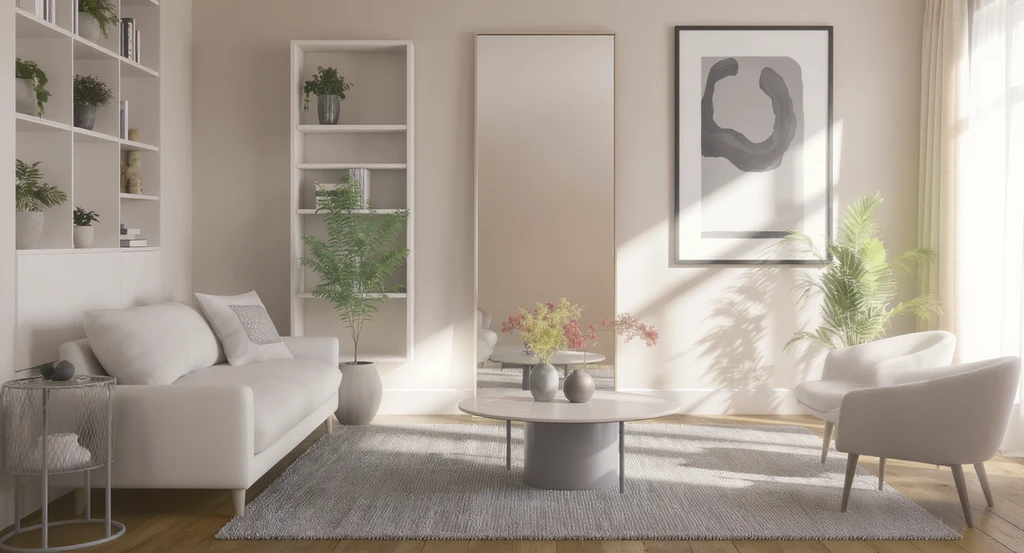
Furnishing ideas for blank living rooms: Tall shelving, mirrors, and art on large empty walls maximize storage and visually expand small apartments.
Install shelves, tall bookcases, mirrors, or art to activate wall space instead of overcrowding your floors. This vertical approach not only maximizes storage but also visually elongates the room, making small apartments feel bigger. Material reflectivity and ceiling height come strongly into play: mirrors amplify natural light and enhance dimension, while tall shelving draws the eye upward. A common misconception is that filling walls makes a room feel boxy when selective, vertical elements create openness and depth.
-
08. Layer Lighting Before Accessories or Art
Prioritize layered lighting overhead, task, and accent before adding décor. Well-planned lighting defines zones, softens empty space, and corrects cold or echoey qualities in new apartments. Lighting decisions should factor window placement and ceiling type. Strategic use of lamps, ambient fixtures, and LED strips can transform a blank canvas quickly, creating warmth and clarity. Trade-off: Without previewing, it’s easy to under-light corners or visually flatten zones. A visual validation method like ReimagineHome can test your lighting layout, reducing costly add-ons and regret.
-
09. Introduce Soft Textiles for Warmth and Quiet
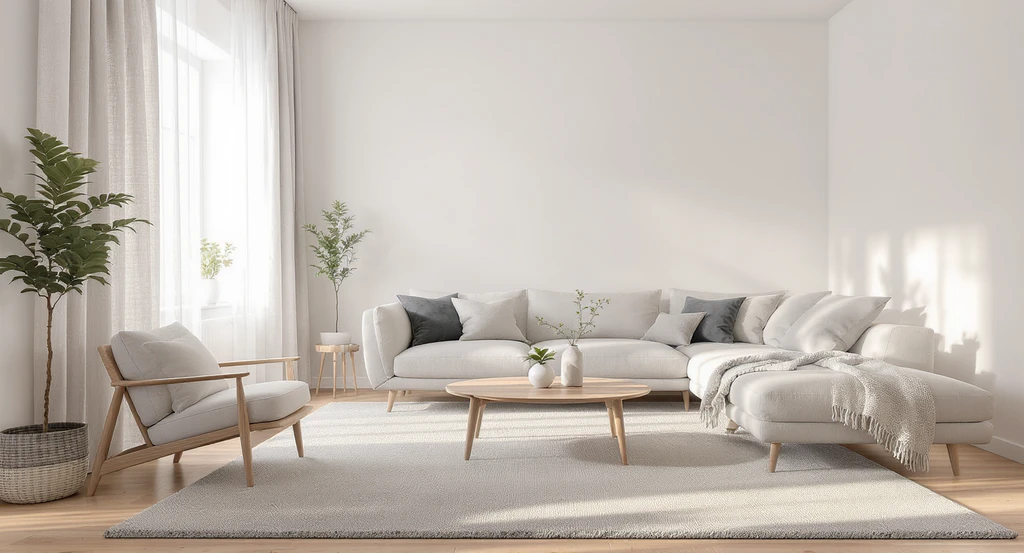
Furnishing ideas for blank living rooms: Layer area rugs, curtains, and soft seating to add warmth, reduce echo, and create comfort in empty apartments.
Use area rugs, curtains, upholstered seating, and bedding as your first layer of decor. Soft elements absorb sound, reduce the echo of bare rooms, and visually balance harder surfaces. Textiles play a key role in comfort and can make minimal layouts feel intentionally inviting rather than cold. According to our minimalist decor guide, adding softness is especially crucial when pursuing a clean look—avoid clutter, but don’t neglect sensory warmth.
-
10. Intentionally Leave Some Space Empty for Flow and Flexibility
Deliberately maintain negative space to enhance flow, prevent overcrowding, and provide room for future needs. Not every corner or wall needs filling for your home to feel finished. Psychological reasoning: Open areas lower visual stress and increase adaptability. The trade-off is the temptation to buy more just to fill gaps, but patience leads to better scale and satisfaction. "Negative space isn't wasted," as seen in our first-home furnishing strategy; it’s an asset for mood, resale appeal, and longevity.
Visualization Scenario
Picture your empty living room: it’s difficult to imagine if a sectional will overwhelm the space, or if two armchairs would block traffic to the balcony. Using a visual preview tool, you upload a photo and test virtual furniture placement. Suddenly, it’s clear where pathways should remain open, how lighting alters mood, and what size coffee table looks proportionate. Visualization makes the invisible—flow, scale, clearance—real, allowing you to commit to purchases with confidence instead of guessing.
FAQ: Stepwise Apartment Furnishing Decisions
Begin by measuring your rooms, mapping out essential zones, and placing main furniture (like the bed or sofa) as anchors before adding secondary items.
Should I furnish the entire apartment at once?
No. Furnish in phases—anchoring, then adding storage, then secondary pieces—to prevent overcrowding and mismatched purchases.
Is it advisable to leave walls or spaces blank?
Yes. Deliberate negative space improves circulation and helps rooms feel larger and more flexible for future needs.
How long does well-paced furnishing usually take?
Thoughtful furnishing typically takes 1–3 months to allow for gradual adjustment and smart purchasing.
A Visualized, Stepwise System Prevents Furniture Regret
Following these ten rules, informed by the Functional Zoning Sequence and evidence-backed spatial reasoning, means fewer costly mistakes and a more satisfying result. Visualization is the solution to uncertainty: before purchasing, preview layouts and lighting options with ReimagineHome or similar tools to see how choices affect comfort, flow, and mood. Don’t rush to fill emptiness—furnish slowly, keeping clarity and flexibility as hallmarks of your new home.