
TL;DR
To fix an overstimulating industrial‑Victorian interior, lead with layout and scale, then edit art, lighting, and color into a cohesive plan you can preview first. Use an AI room designer to test furniture placement, gallery walls, rugs, and paint from one photo before you move or buy a thing. Try your own photo in ReimagineHome.ai for a quick, low‑risk mockup: ReimagineHome.ai. This approach solves decision fatigue and makes maximalism livable without losing personality.
Why This Room Feels “Off” (and Why You’re Not Imagining It)
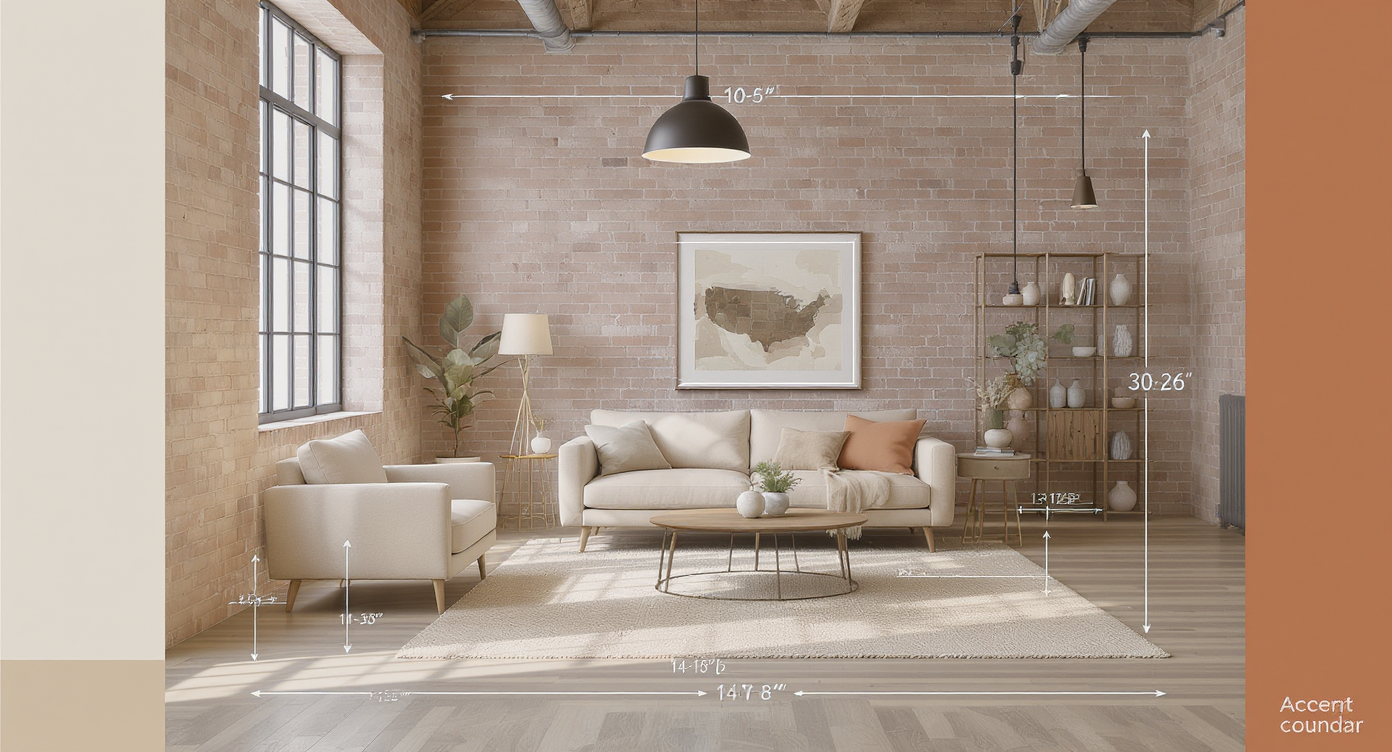
Clear circulation and balanced scale transform chaos into calm in industrial interiors.
Most rooms that feel chaotic are suffering from two things: unclear circulation and mismatched scale. Solve the path through the room and right‑size the big pieces, and even a wall of art or a dramatic staircase starts to feel intentional rather than loud.
- Layout clarity first: where do you walk, sit, read, and gather?
- Scale and proportion: right‑size sofa, rug, coffee table, and dining clearances.
- Maximalist art, edited: fewer, larger anchors; tighter spacing; calmer palette.
- Lighting layers to soften brick and metal: ambient, task, accent.
- Color and texture cohesion: repeat 2–3 materials across the room.
- Thermal and acoustic comfort: rugs, lined drapery, soft seating tame echo and drafts.
- AI previews: test furniture layout, gallery walls, and paint from a single photo.
Before you move a single sofa or pick up a paint roller, upload a photo to ReimagineHome.ai and test a few ideas safely.
If you’re wrestling with tight pathways or long rooms, this detailed guide to small living room layouts shows spacing rules and visual tricks you can apply to larger spaces, too.
Why Interior Design Dilemmas Are Usually About Layout, Scale, and One Wrong Piece
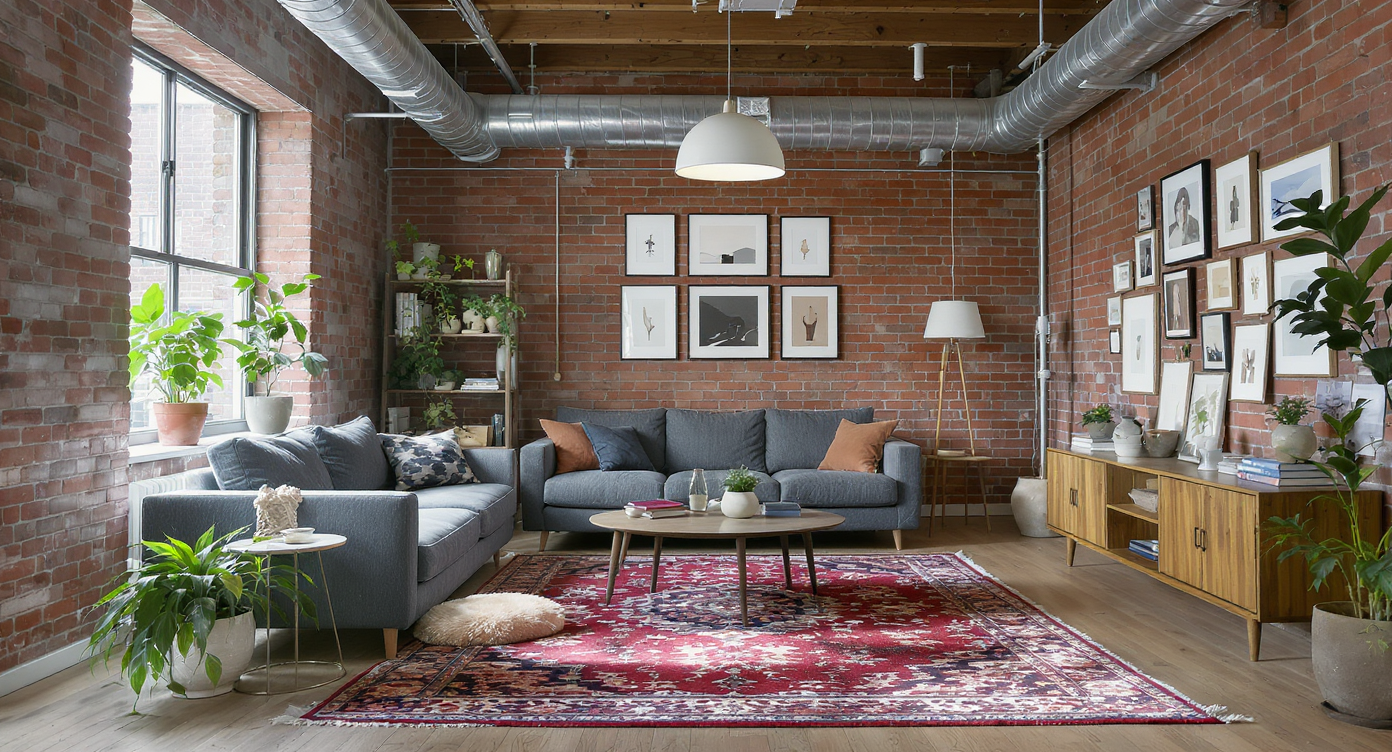
Improper layout and scale create cluttered, uncomfortable living spaces in industrial design.
Most designers recommend keeping 30–36 inches of clear walking space through main paths in a living area. When circulation is pinched—by a too‑deep sofa, a staircase landing, or a table that sits too close to a door—your eye reads the entire room as busy.
In industrial‑Victorian spaces with exposed brick, iron, and tall ceilings, the architecture already carries visual weight. Add a maximalist art collection and the combo can tip from vibrant to overwhelming. Nine times out of ten, the culprit is one oversized piece or a rug that’s too small, not “too much personality.”
Common pressure points:
- Open staircases or mezzanines that dominate the sightline. You can’t move the stair, but you can steer attention with a larger rug, lower sofa profiles, and a calm color field on the longest wall.
- Multiple doorways and off‑center windows. Float seating to respect natural paths; use curtains mounted wide and high to visually balance asymmetry.
- Exposed brick that feels cold or echoey. Layer textiles—8×10 or larger rugs, heavy drapery, upholstered pieces—to warm acoustics and add calm.
If your room is long and narrow, try the “double‑zone” approach—conversation zone plus a reading/desk zone—rather than one giant seating sprawl. See zone templates in our small living room layout guide and scale them up.
Anecdote
That corner where the armchair never quite fits? In one industrial‑Victorian, we simply rotated the seating to run parallel with the staircase, upsized the rug, and swapped a tall chair for a low, wide lounge. Suddenly the stair felt sculptural, not bossy.
Furniture Rules That Quietly Solve Most Room Problems

Applying furniture spacing rules creates effortless flow and balance in maximalist interiors.
Coffee tables usually work best 14–18 inches from the sofa’s front edge; closer feels cramped, farther is impractical. Use rules of thumb like these to calm any busy room fast:
- Rugs: At least the front two sofa legs on the rug; in most living rooms, 8×10 or 9×12 is right. A too‑small rug makes everything else feel scattered.
- Sofa depth and height: 34–38 inches deep is versatile; lower backs keep sightlines open under stairs or mezzanines.
- Walkways: 30–36 inches for main routes; 24 inches minimum around dining tables.
- Dining: Allow 36 inches from table edge to the nearest wall or furniture for comfortable push‑back.
- Art hanging: Aim for a 57‑inch centerline for single pieces; on gallery walls, keep 2–3 inches between frames and let one large piece lead.
- TV: 1.5–2.5× the screen diagonal for viewing distance; wall‑mount to free floor space.
Plug these numbers into a visual test with your own photo—ReimagineHome.ai will generate scaled options so you can compare a 9×12 rug vs 8×10, a round coffee table vs rectangular, or a slimmer sofa vs your current one. For a primer on choosing and testing tools, see this breakdown of AI interior design tools.
How ReimagineHome.ai Helps You Test Layouts, Styles, and DIY Ideas

ReimagineHome.ai enables testing of furniture layouts and style ideas before moving a single piece.
AI tools can show multiple layout and style options in minutes, before you move a single piece. ReimagineHome.ai is designed to restyle rooms from one photo, so you can iterate quickly without measurements.
- AI interior design from a photo: Upload your room and ask for a calmer industrial‑Victorian scheme—fewer pieces, larger rug, warmer lighting, restrained palette. You’ll get room design ideas you can toggle through like a storyboard.
- AI room planner for furniture layout: Prompt for 2–3 furniture arrangements that preserve 30–36‑inch walkways and open the sightline past the staircase. Compare coffee table shapes and sofa sizes side by side.
- Try paint colors and finishes virtually: Soften brick with creamy plaster‑tone paint on adjacent drywall, or test deep moss or charcoal on a feature wall. You can also preview blackened steel vs aged brass on lighting and hardware.
- Global styles, edited: Curious how Japandi, Scandi, or Boho materials read against brick? Generate alternates and note which textures repeat well—oak, linen, leather—then keep just those.
For a visual walkthrough of this workflow, start with this deep‑dive on AI room makeovers and adapt the prompts to your mix‑and‑match style goals.
Step‑by‑Step: Fixing This Room Using AI and Simple DIY Changes
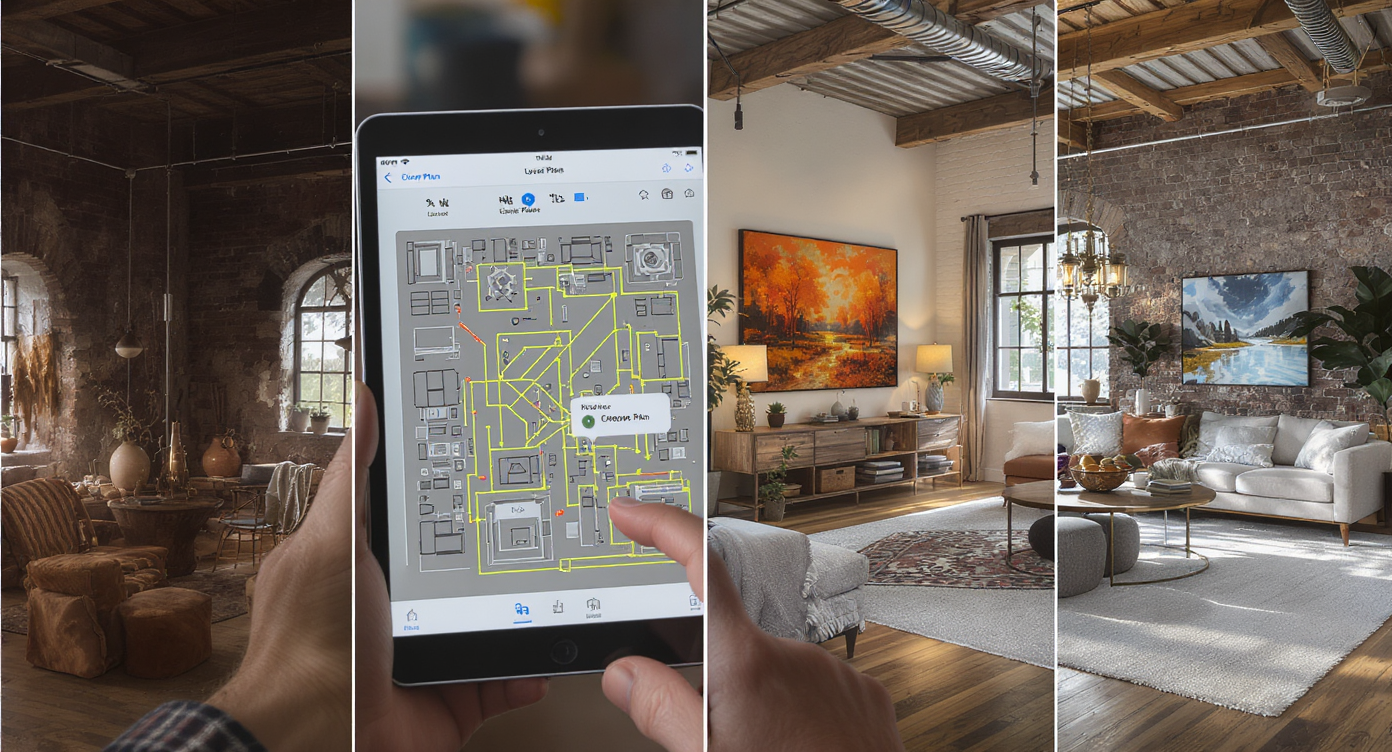
Step-by-step transformation using AI and simple DIY edits balances maximalism with calm and clarity.
For main circulation, aim for 30–36 inches of clearance; if you don’t have it, choose slimmer furniture or re‑zone the room. Here’s a simple plan to go from “too much” to considered and cozy:
- Photograph the room head‑on from each main wall. Upload to ReimagineHome.ai and request: “Industrial‑Victorian, edited maximalism: larger rug, lower sofa, layered lighting, 70/30 neutral‑to‑color palette, highlight brick, reduce art density.”
- Pick a layout that opens the longest sightline. If the stair dominates, keep the sofa back low and parallel to it; place a round table to soften angles.
- Rug first: Test 8×10 vs 9×12 in AI; choose the largest that fits. Bigger rugs instantly reduce visual noise by unifying pieces.
- Edit the gallery wall: Keep one overscaled anchor (over fireplace or main wall), then group 6–9 pieces with 2–3 inches between frames. Hang centers at ~57 inches. Store or rotate the rest.
- Layer lighting: Add a dimmable overhead, two table lamps at eye level when seated, and one picture light or sconce. Warm bulbs (2700–3000K) flatter brick.
- Palette discipline: Choose 2 base materials (e.g., leather + linen) and 1 accent metal; repeat them across seating, pillows, lamps, and frames.
- Thermal comfort: Place heavy, lined drapery on exterior windows and a dense wool rug to cut echo and drafts. If the brick’s been sealed and you suspect moisture issues, consult a local pro before adding interior insulation.
- Reality pass: Remove one more piece than you think you need. In photos, busy rooms look great; in daily life, you need breathing room.
Need more sizing guardrails while you plan? Skim our layout and spacing guide and apply the same numbers to larger rooms.
Visualization Scenario
Upload a photo of your brick‑walled living room and prompt ReimagineHome.ai: “Calmer industrial‑Victorian; 9×12 neutral rug; low camel leather sofa; round black wood coffee table; layered warm lighting; keep one oversized artwork; 70/30 neutral to color.” Compare three versions and note which materials repeat naturally.
FAQ
How do I fix an awkward living room layout without buying all new furniture?
Start by reclaiming 30–36 inches of walking space and unifying pieces with a larger rug. Use a room design AI to test new arrangements with your existing sofa and tables before moving them.
Which AI interior design tool is best for mixing styles in one room?
ReimagineHome.ai excels at AI interior design from a photo, producing multiple style mixes (industrial, classic, Japandi) in minutes so you can compare textures and palettes side by side.
How can I see if a new sofa or rug will fit my room before I buy?
Upload your room to an AI room planner and compare sizes visually—8×10 vs 9×12 rugs, low‑back vs tall sofas, round vs rectangular tables. This prevents scale mistakes and returns.
Can I use AI to plan DIY paint or furniture projects?
Yes—test wall colors, cabinet finishes, and even hardware tones virtually to narrow choices. For workflow tips, see our AI room makeover how‑to.
What’s the easiest way to make maximalist art feel calmer?
Keep one oversized anchor, group the rest with 2–3 inches between frames, and restrict your palette to 2–3 repeating colors/materials. A larger rug and warmer lighting help the whole composition read as one.
Visualize Your Room’s Next Chapter
Most “gaudy” rooms aren’t actually the enemy of calm—the wrong scale and scattered layouts are. When you lead with flow, right‑size the anchors, and repeat a tight palette, your art turns into punctuation instead of shouting.
When you can see the possibilities, it’s easier to move with confidence. Start by uploading one honest photo to ReimagineHome.ai and let the next version of your room come into focus.