7 Key Tests to Decide if Couples Should Choose a King or Queen Bed for Better Sleep and Bedroom Flow

Assessing Bed Size for Couples: Comfort or Clutter?
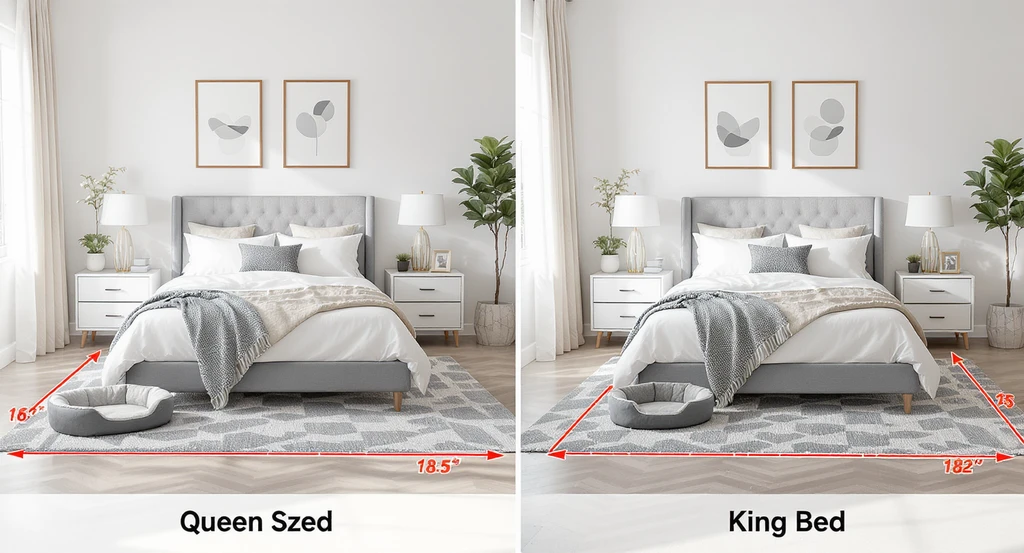
Curious if a king or queen bed fits your bedroom? This image shows how to pick the right bed size, compare space, and factor in pets for couples.
Whether you’re upgrading your primary bedroom or making a rental feel more like home, the choice between a king or queen bed is one of the most lasting and expensive furniture decisions couples face. Factors like room size, sleeping habits, and even pet preferences all shift what ‘comfortable’ means from person to person. This list organizes the logic behind bed size selection, revealing where regret creeps in and how you can preview the future room feel before buying. Using spatial reasoning and measurable rules, the goal is to help you clarify your options, subtract uncertainty, and make sleep more restorative for both partners.
-
01. Reserve 24–30 Inches Minimum Clearance Around the Bed
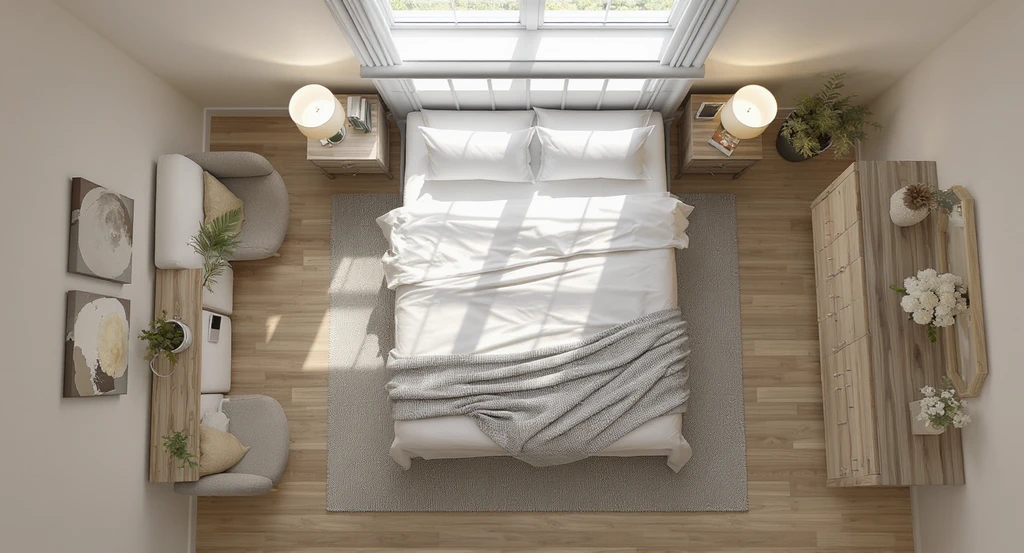
Should couples choose king or queen bed? A queen bed with 24–30 inches clearance shows how to pick the right bed size and if a king bed will fit comfortably.
A bed should leave at least 24–30 inches of open space on each side and at the foot to allow for smooth circulation and reduce stubbed toes or bruised shins. This clearance ensures not only safety but day-to-day convenience, especially if two people need regular access to both sides for storing clothing or using the nightstand. A king bed in a modest bedroom can quickly reduce this clearance below ergonomic minimums, making the room feel cramped instead of restful. According to our anchor on how to maximize storage in a 10x10 room, when square footage is limited, choosing a queen often preserves more walking space and visual flow. Cramped circulation occurs when beds and furniture leave less than a 24-inch path. It changes how stressed and hurried everyday movements feel. Most buyers assume squeezing in a bigger bed will always enhance sleep, but in practice it often trades sleep quality for subtle daily irritation.
-
02. Apply the Bed-Partner Sleep Disturbance Test
If you or your partner are light sleepers, size matters: movement transfer and waking one another decreases as bed width increases. Couples who toss and turn, or get up at different times, often find a king bed provides enough separation to prevent sleep disruption, increasing overall rest quality. However, the trade-off is real estate king beds dominate small bedrooms, making the space less flexible for storage and seating. Test sharing a queen for a few consecutive nights to assess actual disturbance before buying.
-
03. Incorporate Pets and Kids Into the Bed-Use Equation
A queen may fit a couple comfortably, but a king is often needed if children or pets share the bed regularly. As revealed by numerous couples, dogs regardless of size tend to sprawl and crowd human sleep space, making even a queen feel tight. The cost is a reduction in usable floor area, so if your space is already constrained, consider alternatives like dog beds positioned nearby. For pet-free homes or occasional co-sleepers, a queen typically suffices and allows for easier room arrangement.
-
04. Evaluate Bedroom Size with the REimagineHome Visual Zone Method
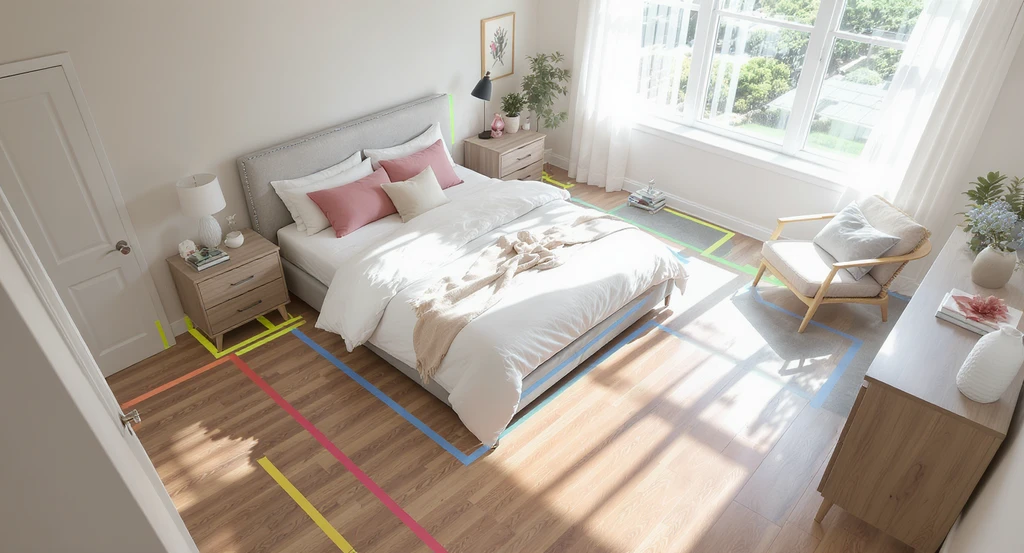
Previewing a king bed and bedroom zones helps couples decide if a king or queen bed fits their space. The REimagineHome Visual Zone Method clarifies how to pick the right bed size and improves confidence in choosing between king and queen for better sleep quality and room flow.
Use the REimagineHome Visual Zone Method to map how the rest of the room will function once the bed is installed, factoring in doors, windows, and main circulation lines. Before visualization, most couples underestimate how a king bed may overwhelm a small-to-medium bedroom obscuring light, constricting access to closets, and making storage solutions harder to implement. After previewing furniture at true scale, you can see if bedside tables, dressers, and even reading nooks will fit comfortably, or if you’re sacrificing too much daily utility just for extra sleeping surface. Visual testing with platforms like ReimagineHome supports faster, regret-free commitment and reduces the likelihood of costly furniture returns. Spatial uncertainty looks like mentally guessing whether the room will "feel right". Visualization tools clarify exactly where constraints and opportunities appear.
-
05. Use the Visual Weight Principle to Balance Scale and Comfort
A king bed will naturally become the dominant element in a bedroom, affecting the perception of space and comfort. If the bed visually monopolizes the room, it can shrink the perceived space, making secondary seating areas, desks, or reading nooks feel like afterthoughts. In smaller bedrooms, reducing bed size (from king to queen) often creates scope for better lighting placement and improved storage, as shown in our article on 2025 small bedroom comfort solutions. When considering resale, balanced room scale is often more universally appealing.
-
06. Consider Resale and Flexibility if Planning to Move
A queen bed is more versatile in typical home layouts and increases appeal for future buyers or renters. When moving or staging a property, king beds may only fit well in large master suites, while queens adapt to primary, guest, and even some secondary bedrooms. Oversized beds can restrict usable options, particularly in urban or historic homes with sub-12-foot walls. If resale or rental is a possibility within five years, choosing a queen can widen your market. For more on furniture scaling, see our guide to furniture arrangement and flow.
-
07. Select Mattress and Bedding Based on Real-Life Thermal and Sleep Needs
Choosing the right bed size impacts thermal comfort, bedding costs, and the ability to layer warmth for each partner. Larger beds require bigger and typically pricier linens and comforters, and may feel cooler (less body heat transfer) in colder climates. Couples with divergent temperature preferences often appreciate the extra space a king provides for separate duvets a solution highlighted by several long-married couples. However, storage for these extras must be planned, especially in smaller bedrooms. Addressing bedroom comfort holistically, warm lighting and scale adjustments can support better sleep as identified in our review of what's missing from bedroom decor.
Frequently Asked Questions About King vs. Queen Beds
Is a king bed always better for couples?
A king bed offers more space, minimizing sleep disturbance—especially important for light sleepers, pets, or restless partners. However, it can overwhelm small rooms and restrict layout flexibility. For moderate bedrooms, a queen is often sufficient and preserves more usable space.
Will a king bed fit in a 10x10 room?
In most cases, a king bed will leave too little clearance in a 10x10 room for comfortable movement. For small or square bedrooms, a queen is recommended to maintain at least 24–30 inches of walkway around the bed. Learn more in our guide on small bedroom layout and storage.
Does bed size impact sleep quality for couples?
Yes, inadequate space can increase movement disturbances and discomfort, while excess size may reduce intimacy or make temperature regulation harder. Matching bed size to sleep patterns and room function often produces the best sleep outcomes.
How do pets affect the choice between king and queen beds?
Pets add to the space demands of a bed. A king is often preferable for couples who regularly sleep with medium-large pets, but may not fit all bedrooms. Alternatives include placing pet beds nearby or adopting separate duvets for better comfort.
Clarifying Your Bed Size Decision
The right bed size for couples is less about preferences and more about practical fit: circulation, sleep patterns, thermal needs, and futureproofing for moves or resale. Visualization platforms like ReimagineHome let you preview these variables at true scale, sharply reducing uncertainty and the probability of regretted purchases. For most couples, matching bed size to both room flow and nighttime realities yields the greatest long-term satisfaction.