9 Editorial Fixes for Living Room Layouts and That Tricky Wall Above the TV
TL;DR
Struggling with awkward living room layout or blank walls above the TV is common, but there are proven design strategies for turning these problem areas into highlights. This editorial list dissects practical, aesthetic, and scalable ideas to help main social spaces feel unified, cozy, and visually intentional. Every tip draws on real-world room layout design, visual transformations, and the kind of subtle styling cues that make a distinct difference.
Why Living Room Layouts and Wall Styling Challenges Matter
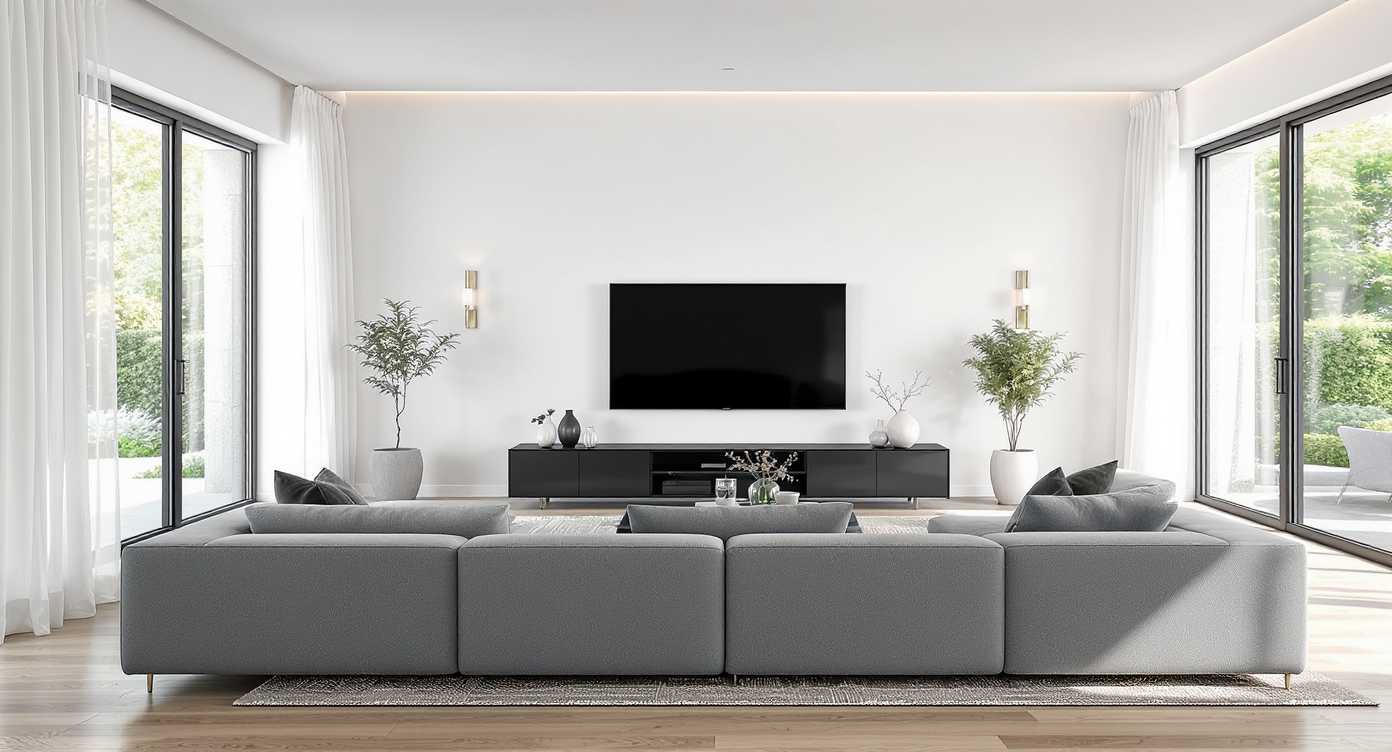
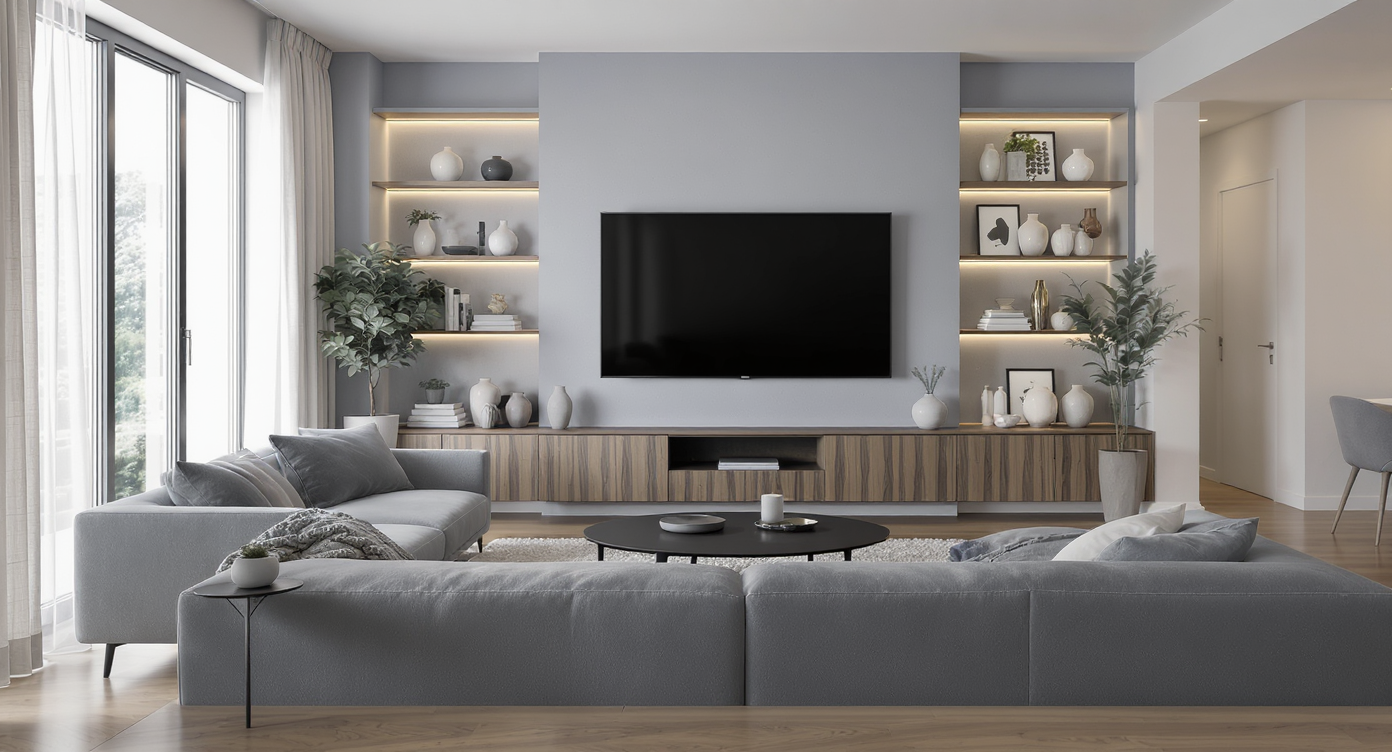
A realistic living room scene highlights the challenge of an awkward empty wall above the TV, setting up layout and styling issues.
A living room is the heartbeat of a home, serving as the main social space where daily routines and special moments unfold. Yet, even well-furnished rooms can feel awkward when the layout lacks flow or large walls hover empty above the TV, undermining the sense of comfort or purpose. These design dilemmas go beyond personal taste; they point to the universal challenge of balancing form and function in high-traffic living spaces. Professional designers and experienced homeowners often agree: success in room layout design is rarely about buying trendier pieces or filling every blank spot. Instead, it relies on thoughtful placement, harmony, and avoiding visual clutter. Whether your main concern is sofa size in relation to the space, or how to make a TV wall feel intentional, targeted fixes can have an outsized impact. This editorial explores nine smart strategies to help you take control of your living room's layout and the styling of its most visible wall, integrating both technical and creative solutions.
-
1. Ground the Space With Proportionate Furniture
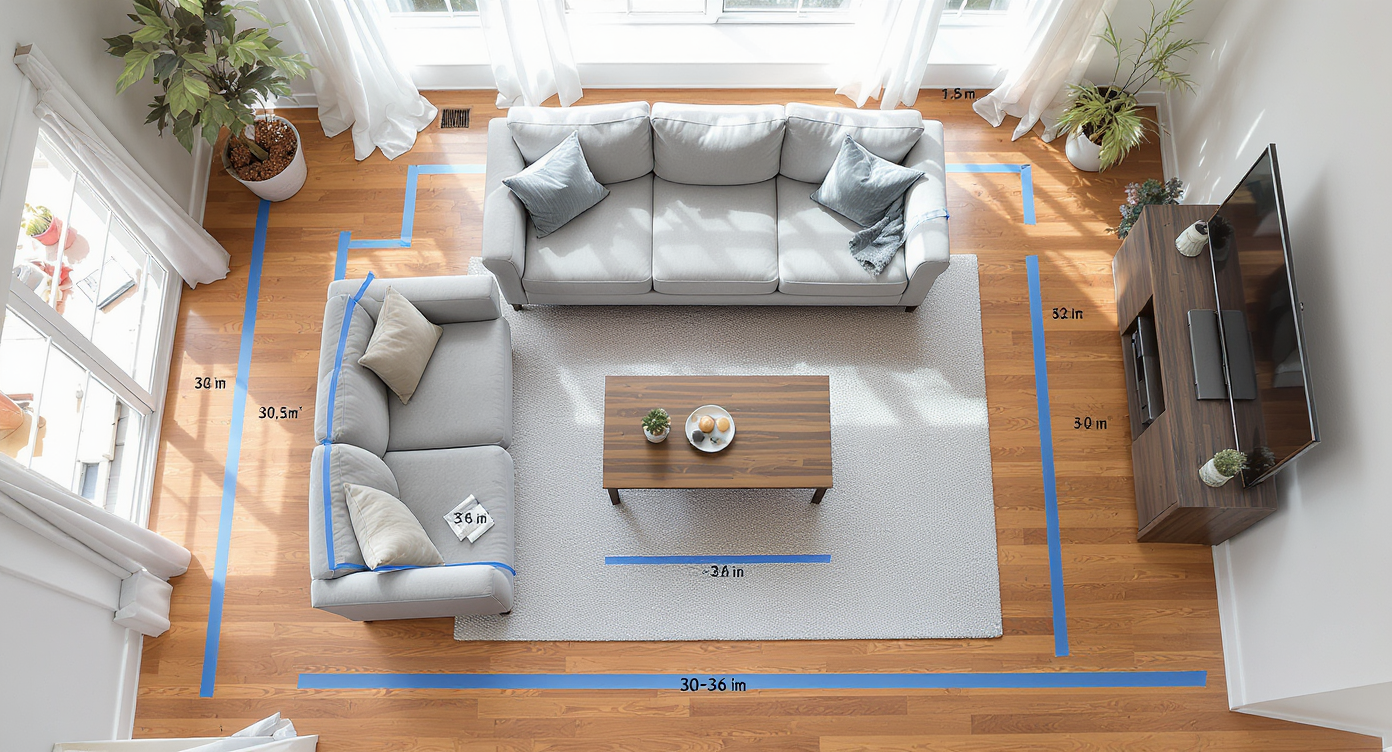
Arranging living room furniture with tape guides ensures balanced proportions and clear, comfortable pathways throughout the space.
The bedrock of a successful living room layout is furniture that fits the space, not just in style but in scale. Overly large sofas or undersized media consoles can throw off proportions and restrict flow. Designers often highlight the importance of leaving enough walkway clearance—typically 30 to 36 inches—around seating zones. Before bringing in new furniture, it's wise to measure and test out arrangements to ensure comfortable movement. For example, if your couch is too large or misplaced, the room feels cramped no matter how well-decorated it is. As detailed in our advice on choosing the right sofa size for your layout, using tools such as photo-based planning platforms or even masking tape on the floor can help avoid costly errors before moving or purchasing pieces. Read more in our guide on sofa size versus living room layout.
-
2. Create a Focal Wall—Not Just a Blank Canvas
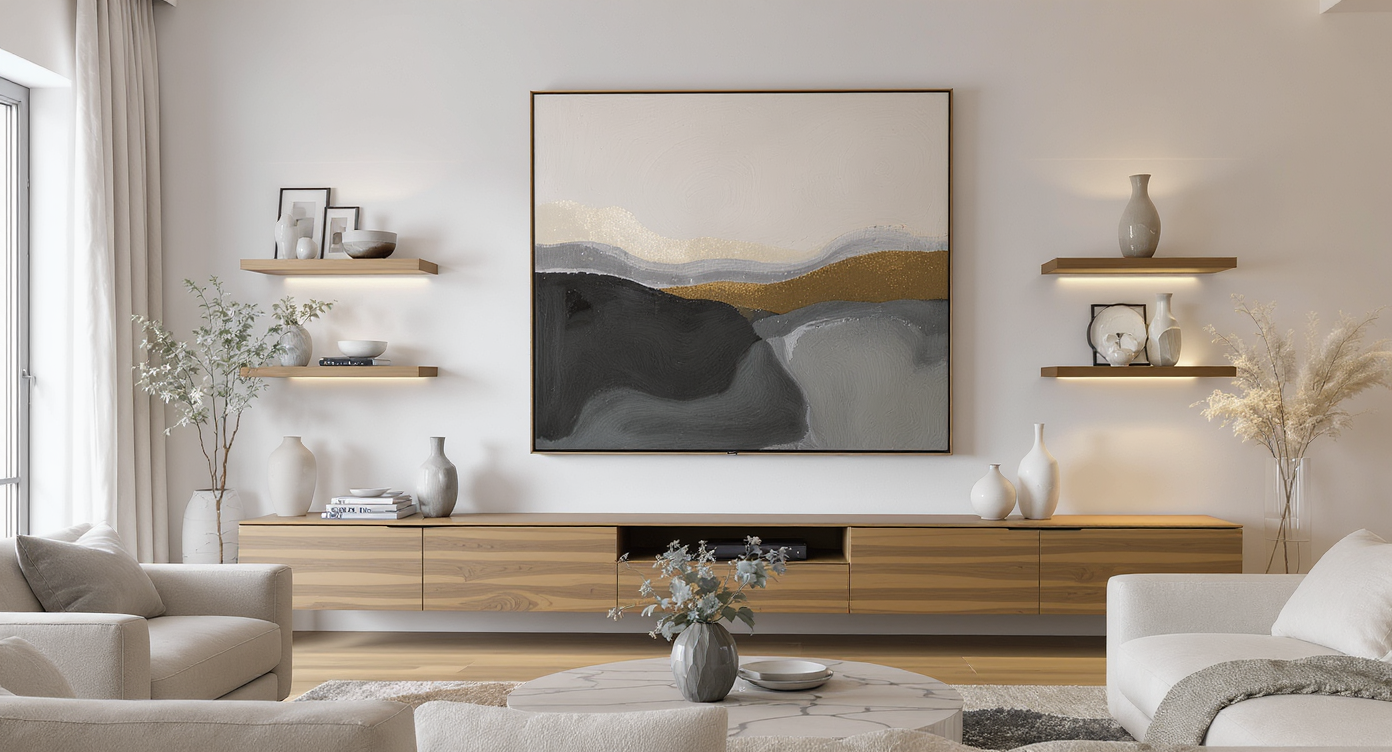
A contemporary living room demonstrates how floating shelves, statement art, and sconces can transform the wall above the TV into a unified focal point.
A wall above the TV often feels like wasted space or an afterthought. Rather than cluttering it with random art, professionals suggest defining a clear focal point that relates to both the TV and adjacent furniture. This can mean installing floating shelves that echo the media stand, framing a single oversized piece of art, or even using sculptural sconces for indirect lighting. Whatever you add should connect visually to furniture below, while respecting the room's main function. For those not ready to commit to drilling or expensive upgrades, strategic placement of art or decor that spans the width of the console can visually anchor the area without overwhelming it.
-
3. Use Vertical Elements for Flow and Balance
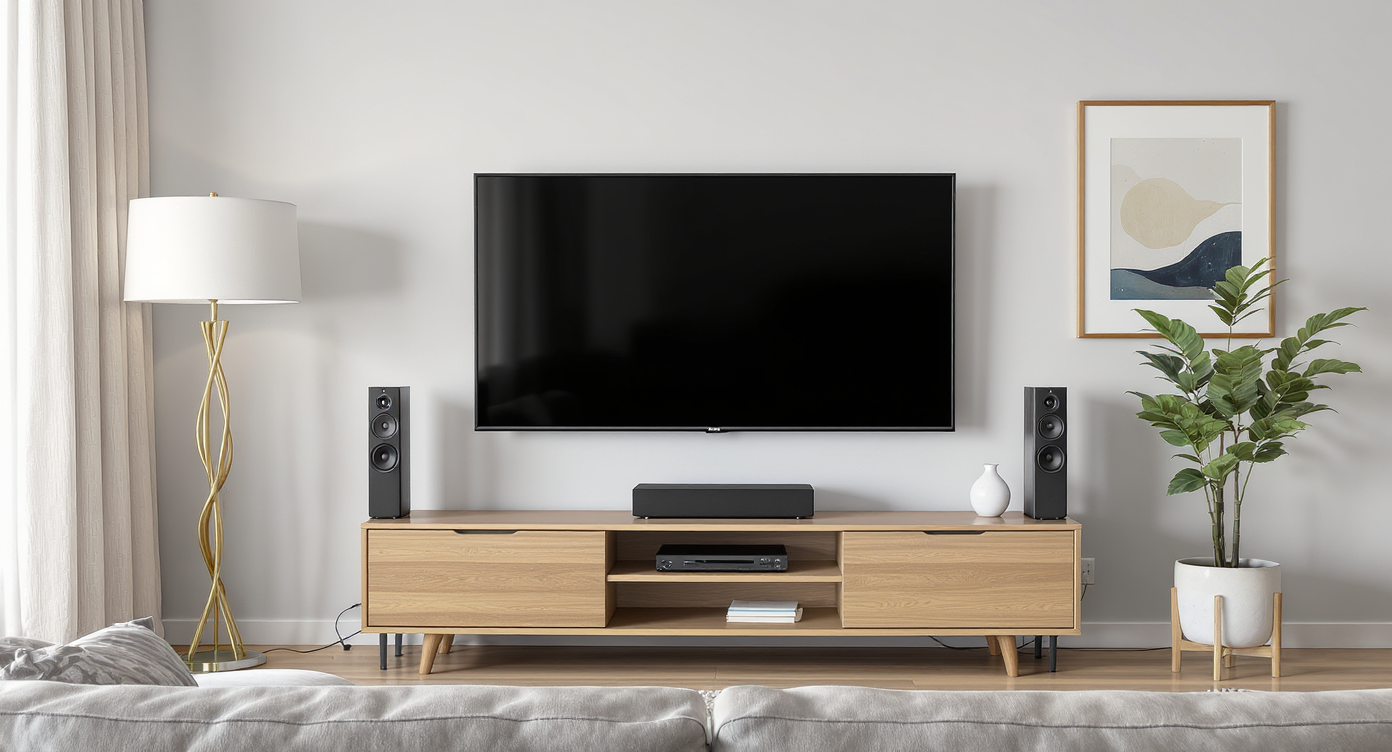
Balanced living room TV wall using tall lamps, a sculptural plant, framed art, and tower speakers for vertical flow and cable concealment.
Tall plants, tower speakers, or standing lamps can provide the missing sense of height and symmetry on either side of a TV wall. Designers frequently use vertical decor to 'ground' artwork and distract from visible cords or equipment. For instance, a medium-sized plant placed beneath a wall-mounted frame, or a tall sculptural lamp, not only disguises cables but also balances weight across the TV zone. According to design experts, this strategy brings a sense of intentional layering and eases harsh edges, preventing the main viewing area from feeling isolated or heavy on one side.
-
4. Layer in Texture, Contrast, and Lighting
Main social spaces thrive when texture and lighting combine to create visual depth and warmth. It is rarely enough to rely solely on paint color or art. Designers often layer area rugs, plush cushions, fluted wall panels, or textured curtains to bring richness to minimalist or modern rooms. On the TV wall, adding picture lights or directional sconces above art can highlight focal points without cluttering the area. In living rooms with pared-back styling, even subtle contrasts—like a soft wool rug with a matte metal lamp—make the environment inviting, as shown in our guidance for warming up minimalist spaces. See how minimalism feels cozy and alive.
-
5. Rethink Your Media Console and TV Placement
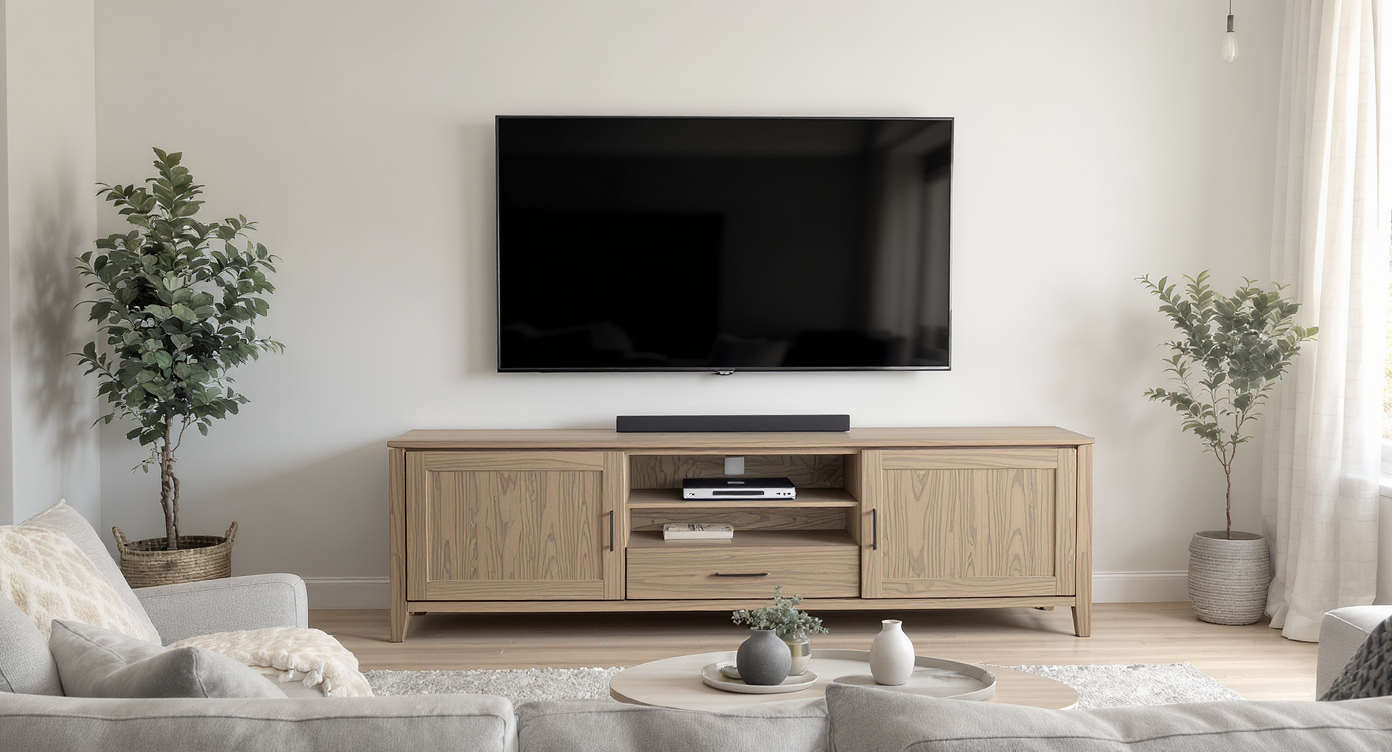
A broad, well-proportioned media console centered below a TV creates a balanced, harmonious living room without extra wall decor.
A common but overlooked issue is disproportionate or off-centered media units relative to the TV and adjacent furnishings. Professionals regularly see how small consoles or oddly-placed televisions can throw off the entire room's equilibrium. Opting for a broader, well-proportioned console can help anchor the space beneath your television, making other wall decor unnecessary or minimal. Installing the TV at the correct height—neither excessively high nor low—further ensures comfortable viewing and a cohesive look. In compact spaces, floating consoles or wall-mounted shelves offer media storage and style without crowding the room.
-
6. Edit Wall Decor to Avoid Visual Clutter
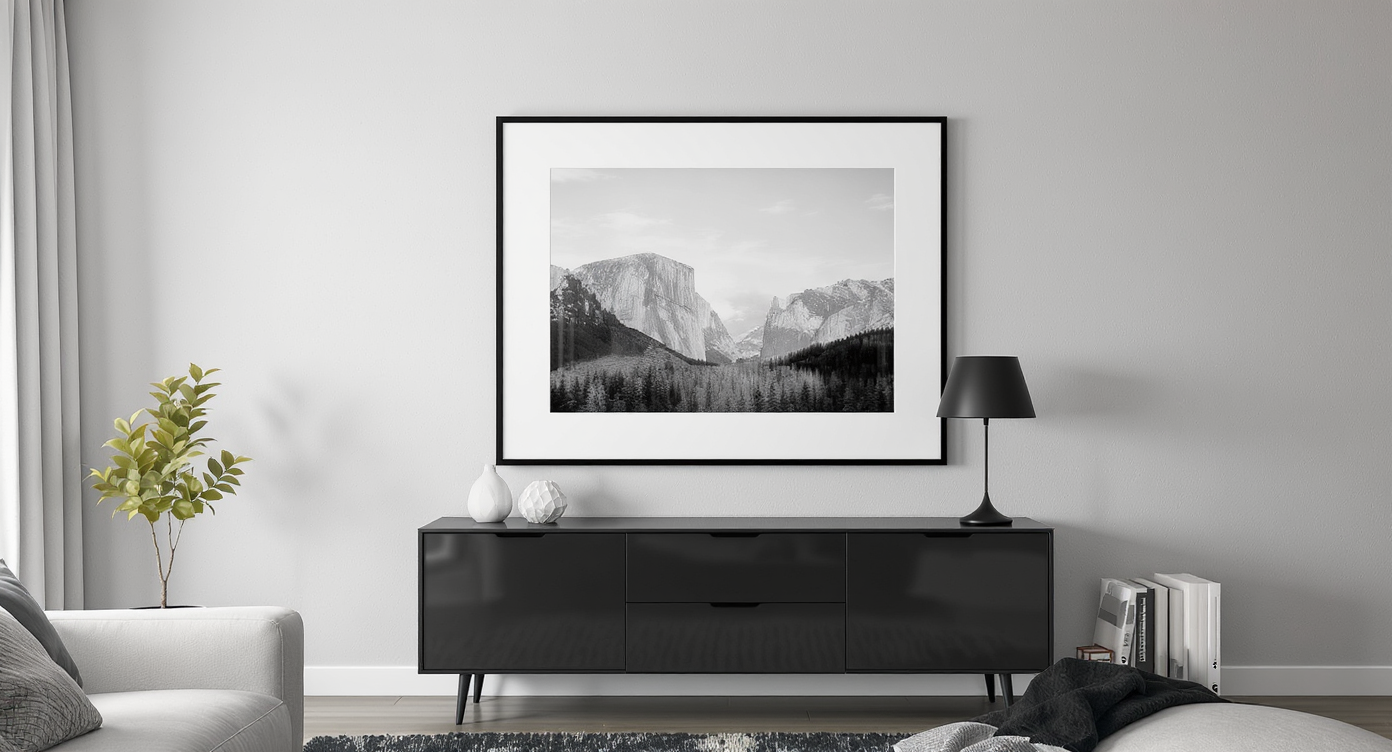
A single large framed photo and matching lamp above the TV create intentional, sophisticated wall decor with minimal visual clutter.
There is a temptation to fill an empty wall above the TV with posters, shelves, or gallery arrangements. Yet, restraint is often more effective for a sophisticated aesthetic. Professionals advise selecting one or two statement pieces that relate in tone or alignment to the furniture below, such as a framed print or a boldly shaped floating shelf. If a theme is desired, cohesion matters most: black-and-white photography with black frames alongside a matching lamp, for example, will always feel more intentional than mismatched decor. Small adjustments in frame spacing or art scale can produce instant improvements, as explored in our list of quick fixes for balanced living room decor. Discover cohesive wall styling strategies.
-
7. Use Room Layout Design AI for Visual Transformations
Modern layout styling has grown increasingly accessible thanks to AI-driven planning tools. Uploading a photo of your main social space to a platform like REimagineHome.ai enables virtual placement of furniture, rugs, art, plants, and lighting before making physical changes. This approach lets you experiment with flow, scale, and contrast visually, reducing the anxiety of trial-and-error decorating. Whether you are deciding on the right size rug or wondering if additional shelving would help the wall above the TV, AI-powered mockups provide clarity and confidence. As demonstrated in our overview of scalable design solutions, AI can help fix layout and finish decisions so that every change serves the larger vision. Explore how AI tools support real rooms.
-
8. Play With Contrast Through Accessories and Soft Furnishings
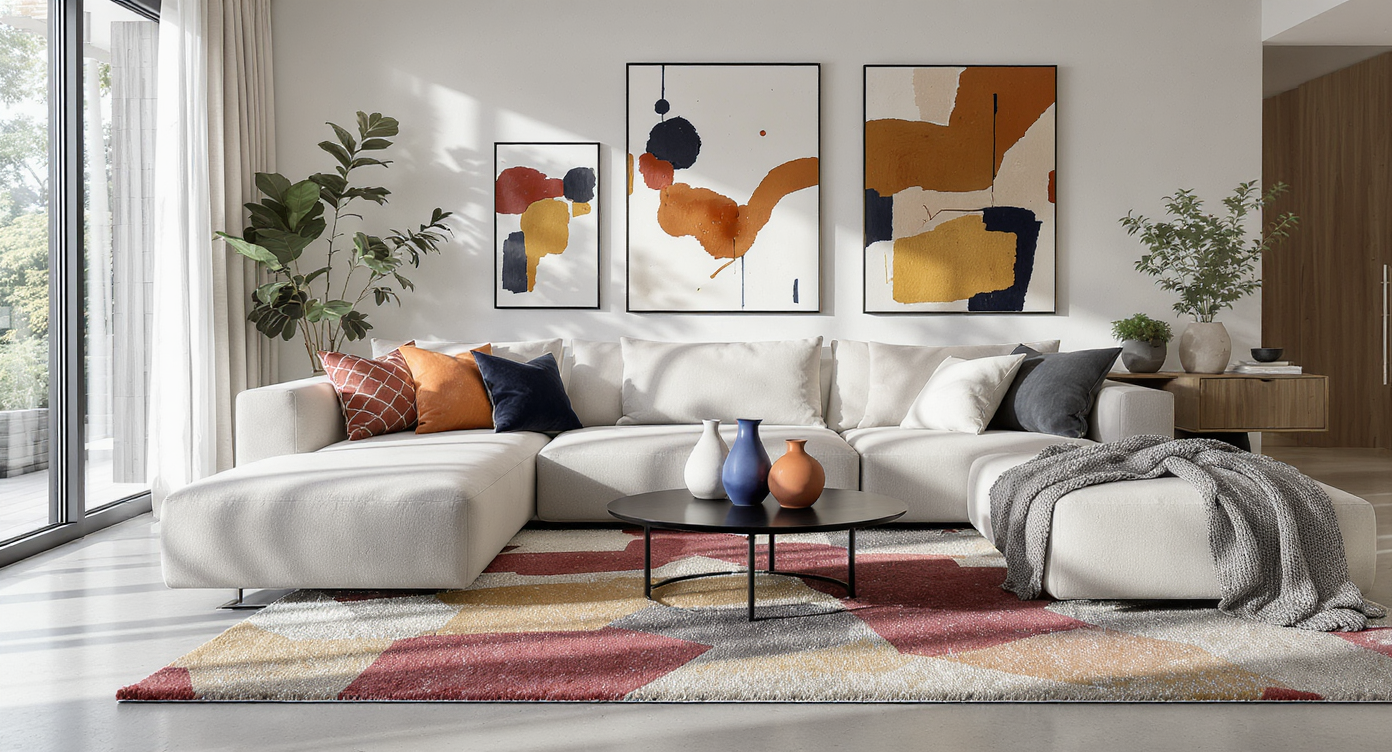
Mixing bold accessories and textiles—like pillows, rugs, and vases—can add contrast and tie a living room’s color story together.
The quickest route to a refreshed living room is often through accessories. Swapping out pillows, choosing a boldly patterned rug, or bringing in a new throw blanket can introduce contrast and warmth. Even updating a few smaller items, such as sculptural vases or geometric lamp shades, can change the entire mood of a room. Professionals often recommend echoing accent colors or shapes from wall decor in your soft furnishings to let the space tell a cohesive story. This strategy aligns closely with best practices for layering, as described in expert advice on finishing touches for living rooms.
-
9. Let the View and Architecture Guide Your Styling
Finally, never underestimate the power of a great window or unique architectural feature. If your living room boasts a sweeping view or an unusual room shape, let it inform both your layout and the wall decor above the TV. This can mean drawing seating arrangements to face outside, or keeping wall styling minimal to highlight natural light or a dramatic skyline. Designers regularly adjust furniture orientation or limit color palettes to support a room's best feature, rather than competing with it. This perspective-driven approach keeps the main social space feeling expansive and authentic.
Living Room Layout and Styling FAQ
Start by defining the wall's purpose within your room layout. Avoid clutter by choosing one statement piece or coordinating shelves that align with your media console. Virtual mockups via platforms like REimagineHome.ai can help you visualize options before committing.
Are floating shelves or framed art better for a blank TV wall?
This choice depends on your available space and style preferences. Shelves are useful for functional display or hiding cables, while art provides an instant focal point. Both can work if they relate in color and scale to surrounding pieces.
What role do plants or floor lamps play in layout styling?
Vertical elements like plants and lamps help ground the space, soften technology, and balance visual weight. They are particularly helpful at framing the TV area and increasing visual flow.
When should I use an AI tool for design planning?
If you feel uncertain about new furniture, colors, or spatial organization, an AI tool can preview combinations in your actual space and help prevent costly mistakes. It is especially useful for testing layout changes and main social space upgrades.
Does the color palette matter in the living room layout?
Absolutely. Cohesive color schemes link furnishings, art, and decor, supporting a harmonious environment. Echoing accent colors from one element to another is an easy way to strengthen visual connections.
Key Takeaways for Cohesive Living Room Design
The most successful living room layouts and wall styling decisions are context-driven and intentional rather than generic or purely decorative. Begin with proportionate furniture, seek visual balance with height and color, and avoid overloading blank spaces with mismatched decor. Remember that AI-powered planning tools like REimagineHome.ai can function as a risk-free test lab for trying out layout and finish ideas before moving a single chair. Whether your goal is to rebalance your TV wall or overhaul your social space, each targeted adjustment can produce dramatic visual transformations.