Unpacking the Allure of the Moody Green English-Inspired Aesthetic
TL;DR
The moody green English-inspired aesthetic blends classic heritage influences, dark and inviting paint colors, and carefully curated textures to create spaces full of character and depth. By combining traditional elements, rich shades, and meaningful collections, you can evoke both comfort and sophistication in modern interiors.
A Modern Fascination with Heritage-Inspired Design
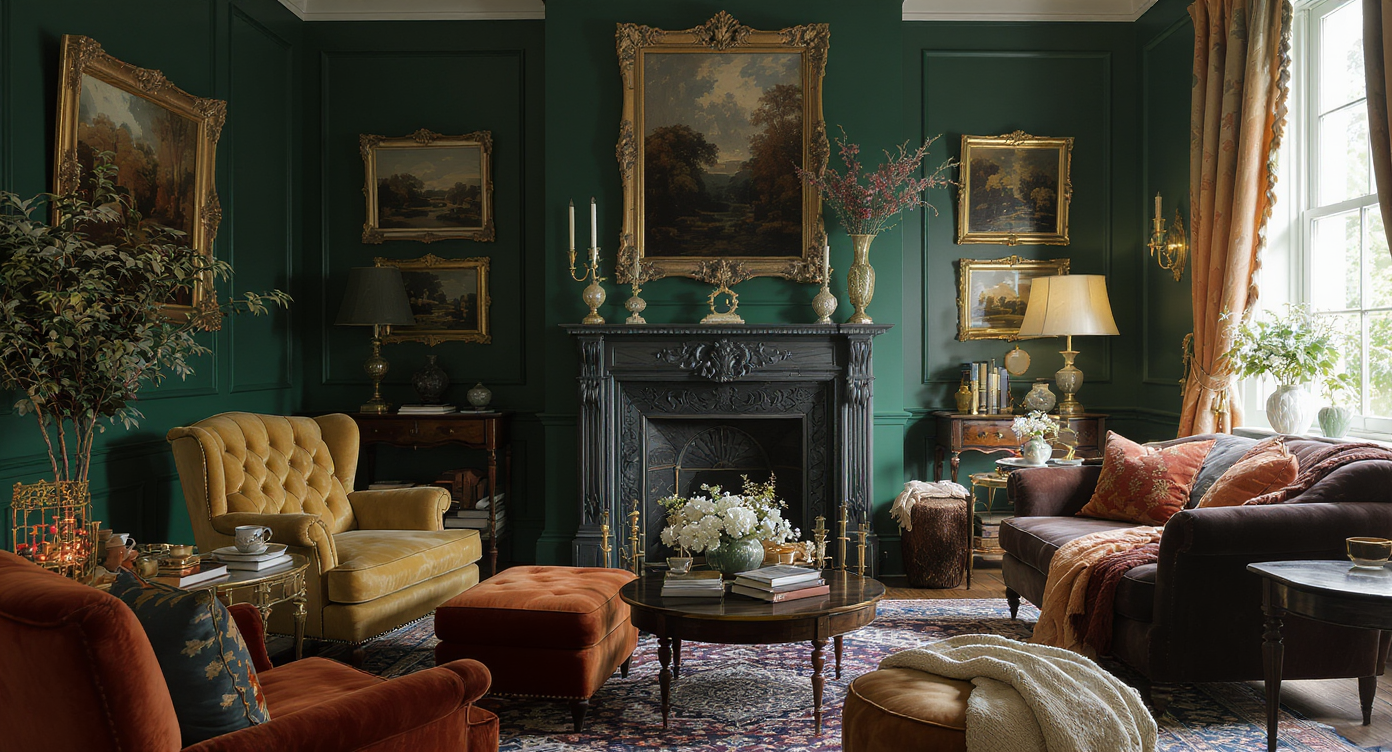
A timeless English-inspired living room in deep green, layered with vintage hardware, curated finds, and rich, opulent finishes.
When people encounter rooms cloaked in deep green paint, filled with vintage hardware, and peppered with personal objects, the reaction is often immediate and visceral. There’s a rising fascination with interiors that evoke an old-world mood—a blend that feels both scholarly and deeply personal. This design approach sidesteps fleeting trends, instead rooting itself in a sense of history and thoughtful materiality. Much of this renewed interest centers on richly painted walls, opulent yet understated finishes, and spaces that narrate a story through texture, color, and collected finds. In a world awash in pale minimalism, these rooms feel like an inviting retreat—a place where classic meets contemporary through careful curation.
-
Defining the Moody Green English Aesthetic
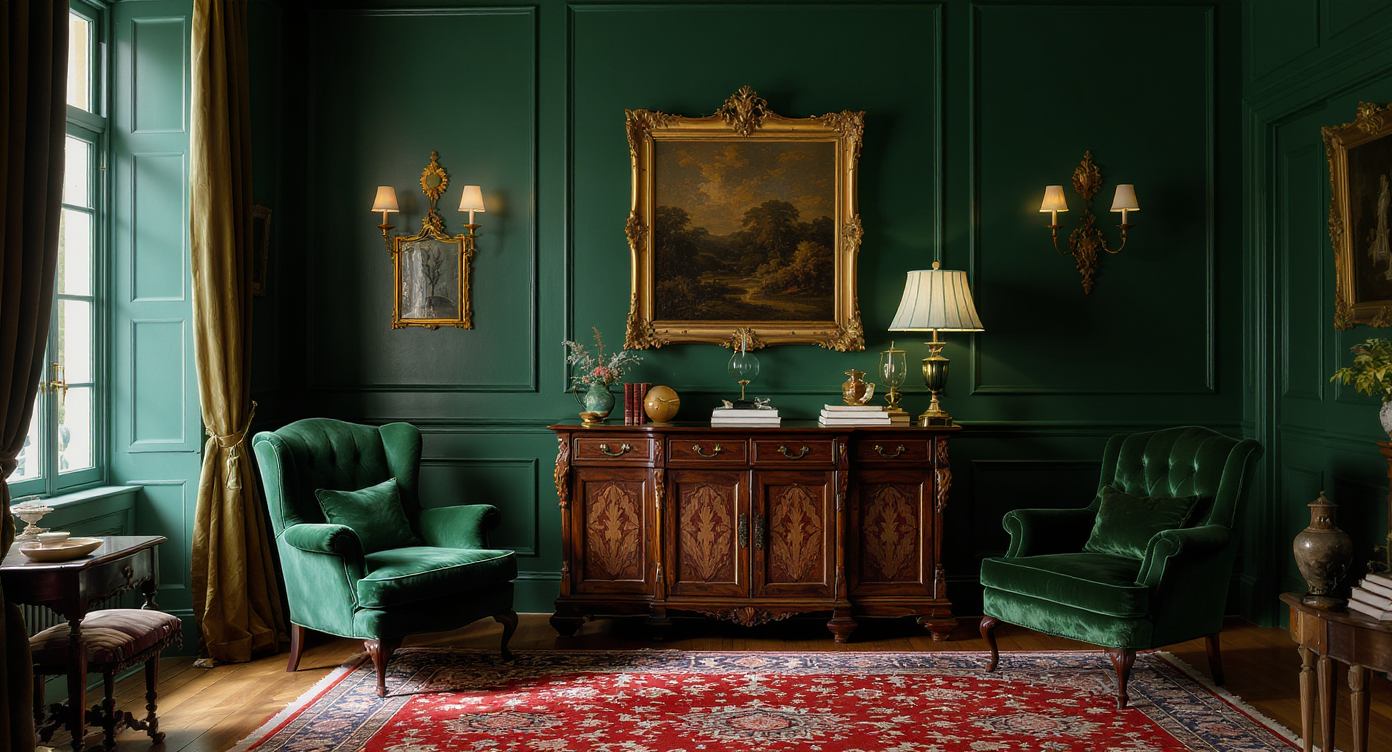
A moody green English-inspired sitting room features painted woodwork, vintage tiles, and classic decor for a layered, heritage ambiance.
At first glance, this style is hard to pigeonhole. Designers and enthusiasts use a sprawling lexicon to describe it—classic English country, modern Victorian, dark academia, and even Edwardian manor. What unites these interpretations is a commitment to heritage. Think painted woodwork in earthy hues, vintage-inspired tile, and accents that could have been plucked from a historic library or apothecary. A signature element is the use of green: ranging from smoky jades to richer, mossy tones. According to popular paint makers, shades like Peale Green, Oakmoss, and Essex Green lend depth while hinting at landscapes beyond the window. This affinity for moodier palettes reflects a broader trend in color forecasting. For example, the 2026 color of the year selections feature nature-inspired greens and warm neutrals designed to impart calm and character.
Expert Insight
A designer recounted how her client's tiny powder room gained new life by experimenting with moody green paint. Together, they chose a deep, atmospheric green for the walls and paired it with antique brass accents and a thrifted art nouveau mirror. The transformation was immediate—the room felt cocooning, personal, and far more luxurious than the renovations budget might suggest. Now, guests always ask for the paint color, and the homeowner swears it’s her favorite space in the house.
-
Heritage Motifs with Modern Function
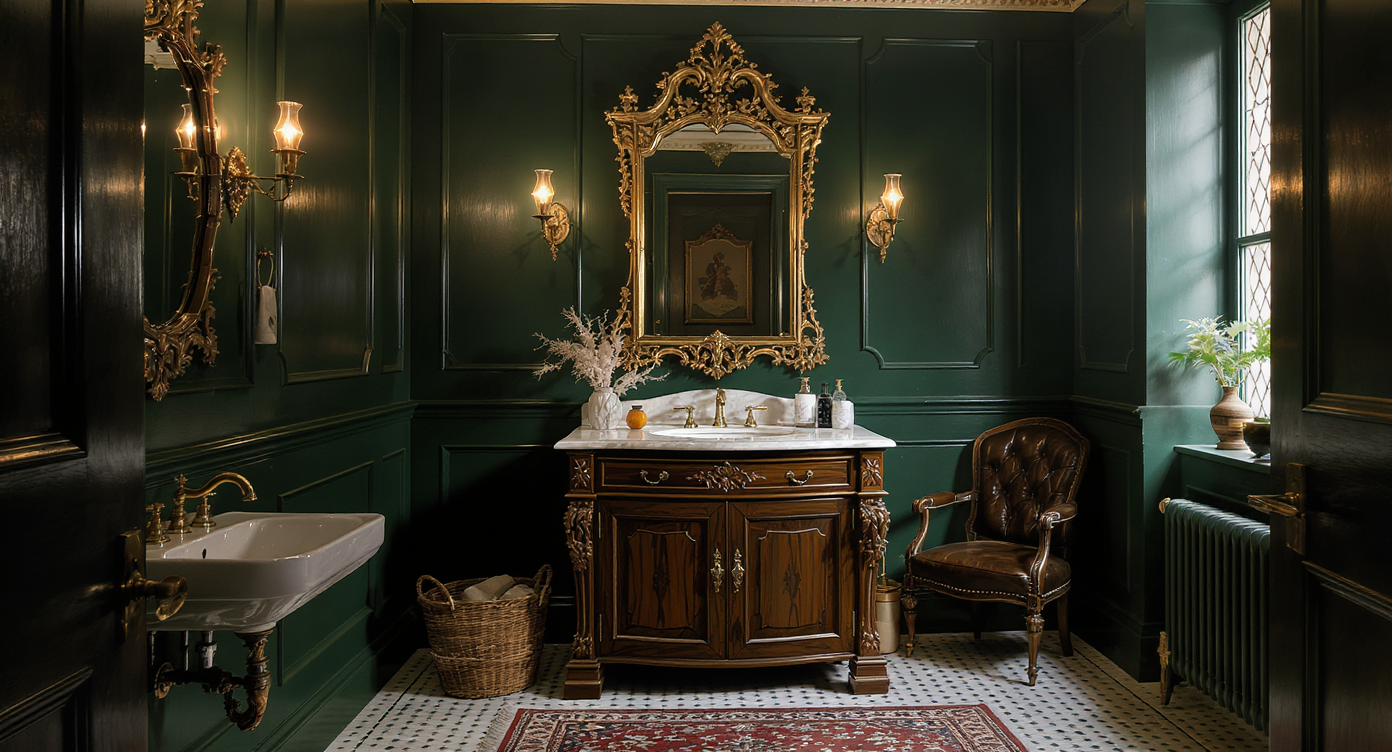
A moody green powder room expertly combines vintage details—like a marble-topped vanity and brass taps—with modern storage and comfort.
The furniture and fixtures in these spaces tell their own story. It’s common to see marble-topped vanities, wall-mounted sinks with brass taps, and deeply detailed mirrors—often reminiscent of art nouveau or early Victorian influences. Yet the rooms are not museum pieces. Modern interpretations frequently integrate practical updates: layered lighting, more generous storage, and comfortable seating. Layered styling is at the core, but so is usability. For example, a moody green bathroom might feature a vintage-style sink but pair it with modern storage for daily essentials. As designers often advise, mixing vintage details with present-day convenience ensures the room remains both beautiful and livable. A practical scenario: an English-inspired powder room, complete with a library chair, invites moments of pause, but includes hidden cabinetry for stowing away necessities.
-
The Role of Paints and Textures
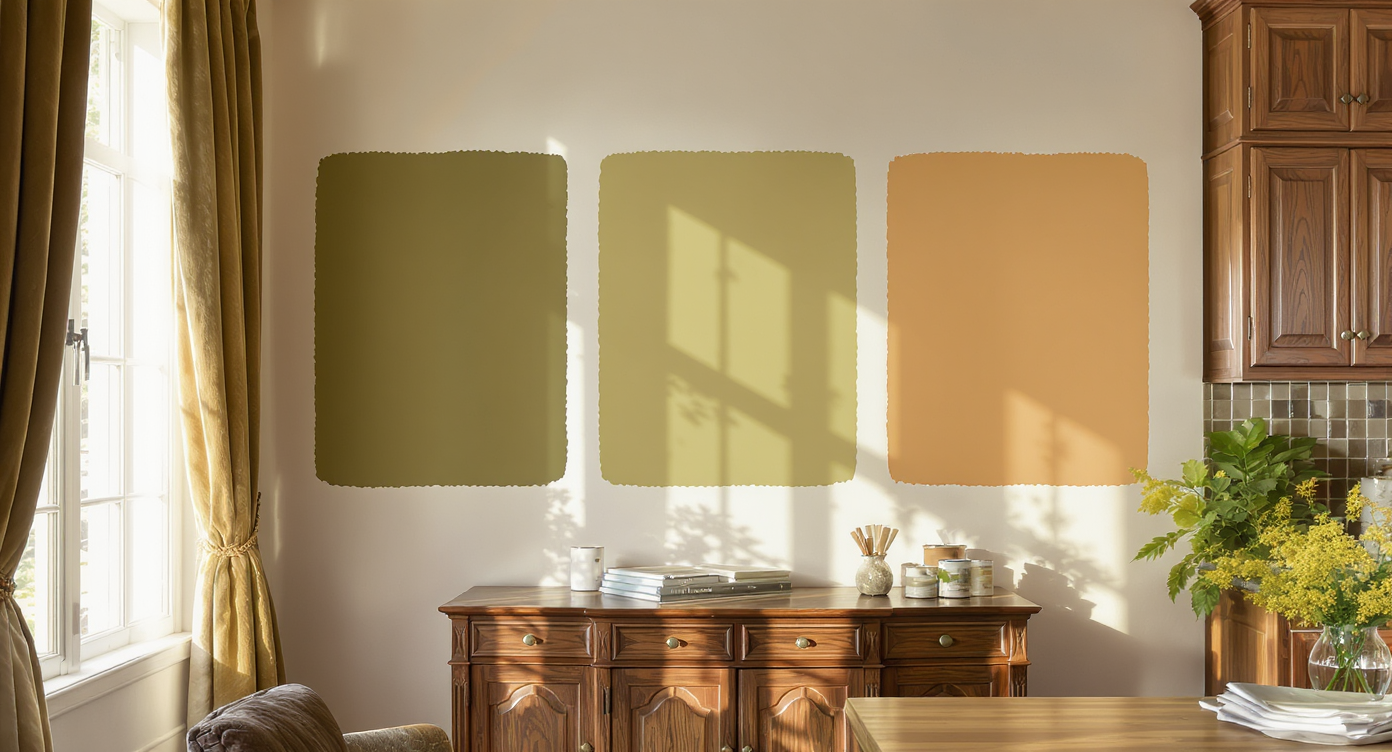
Sampling deep green and earth-tone paints on living room walls alongside velvet drapes, wood cabinetry, and glazed tiles to assess color and texture.
Paint choice is pivotal in crafting a mood-based design. Rich greens, khakis, and other saturated earth tones reinforce the historic tone while offering a striking contrast to brighter fixtures or light streaming through tall windows. The tactile layer comes from textures—velvet drapes, wooden cabinetry, tiles with subtle glazes—which bring a comforting, collected quality. If you’re considering this style for your own home, the color selection process can be daunting, especially with how paint shades can shift under different lighting. A calm, methodical color testing process—starting with a defined mood and trialing large swatches in real-life conditions—will help you commit with confidence. In a living room, for example, try sampling a moody olive in both morning and evening light before making it your backdrop.
-
Bringing Academic and Gentleman's Club Vibes Home
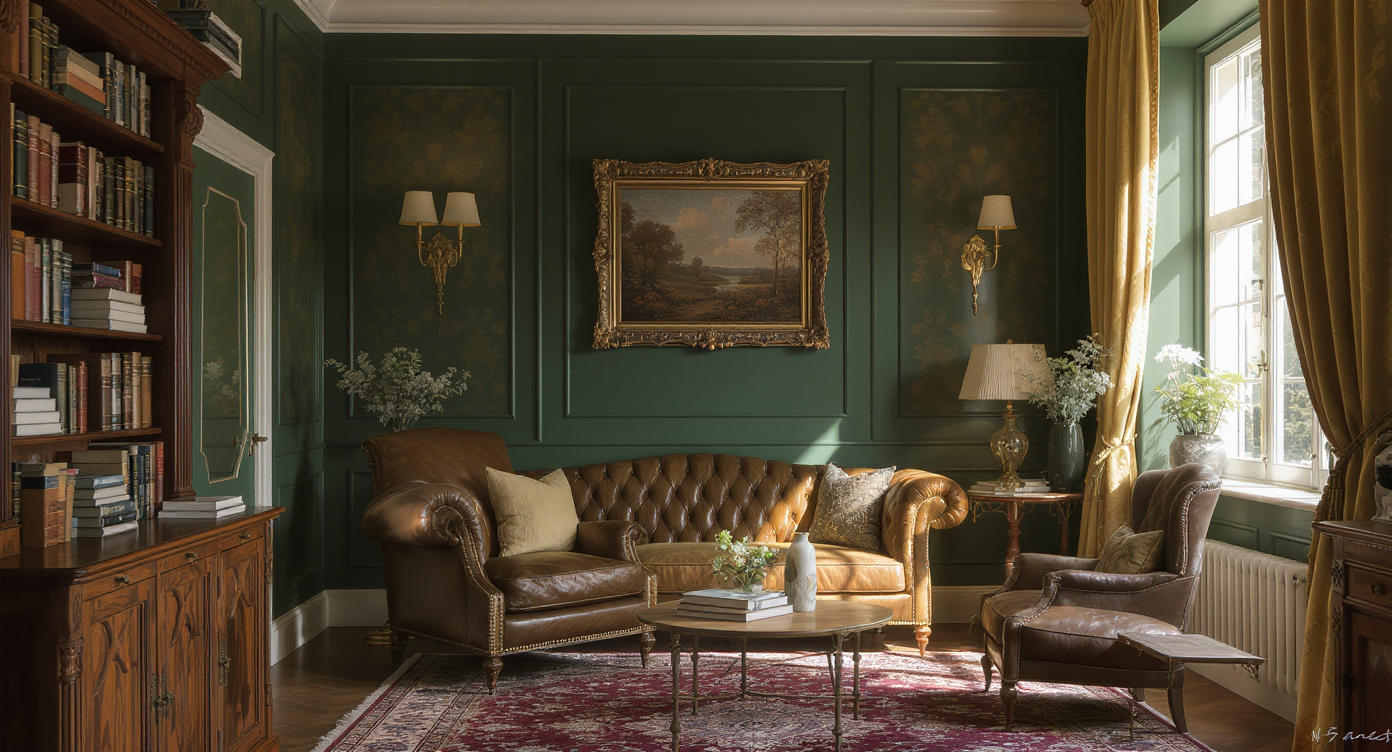
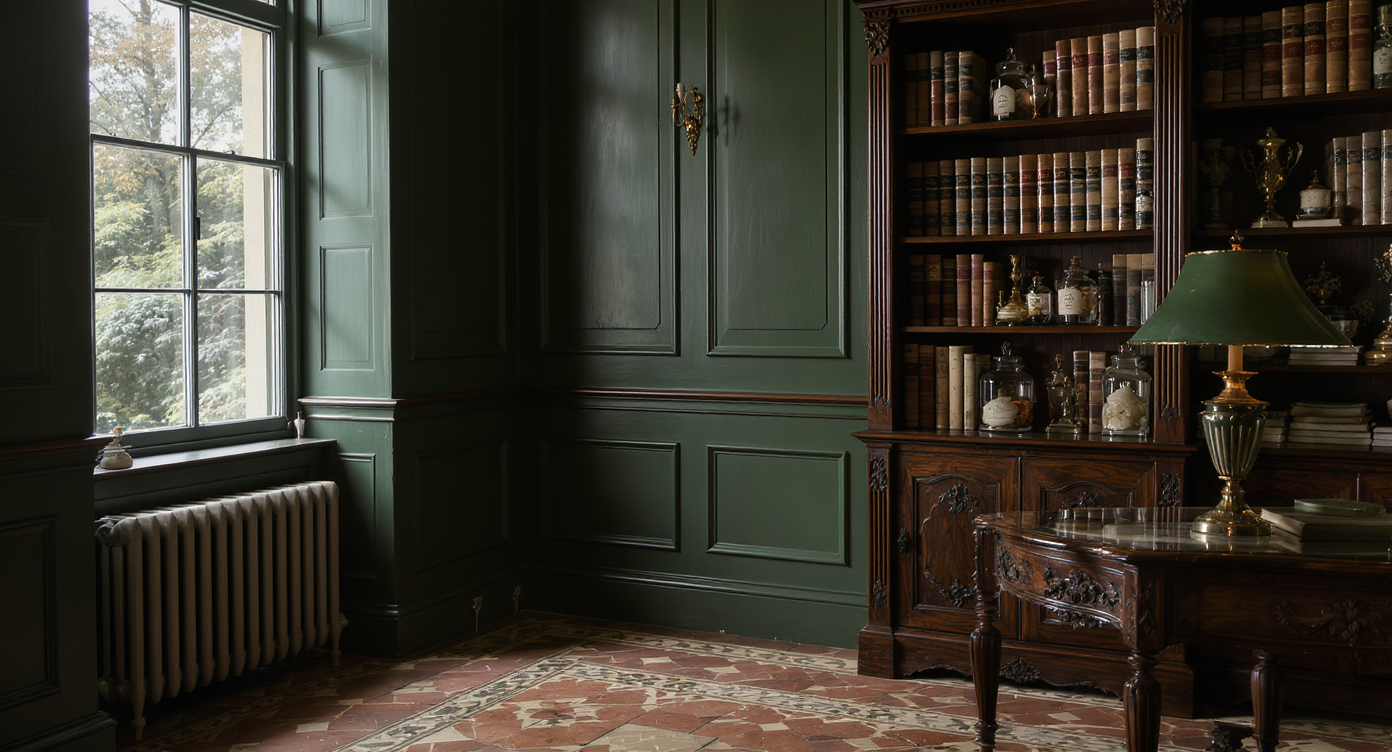
Photorealistic moody green study with paneled olive walls, vintage books, leather seating, and botanical accents in English-inspired style.
Much of the visual language in these rooms borrows from the world of academia and country manors: stacks of leather-bound books, classic artwork, and handsome, inviting seating. There’s a feeling of permanence and personality, as if each object was chosen over time instead of purchased in a single shopping trip. Accents like botanically inspired wallpaper, paneled walls, or vintage hardware channel a scholarly, "barrister chic" mood without feeling stuffy. One apartment might transform a small library with deep olive walls, brass sconces, and a reading nook, creating a cozy spot for thoughtful work or quiet reflection. Another home may soften the look with lighter wood and layered botanicals, referencing the English countryside while keeping the room airy. In contemporary homes seeking to cultivate this mood, details such as generous rugs, large-scale mirrors, and textured window treatments bring the look together, according to expert advice on improving a moody green living room.
-
The DIY Path to Classic Soulfulness
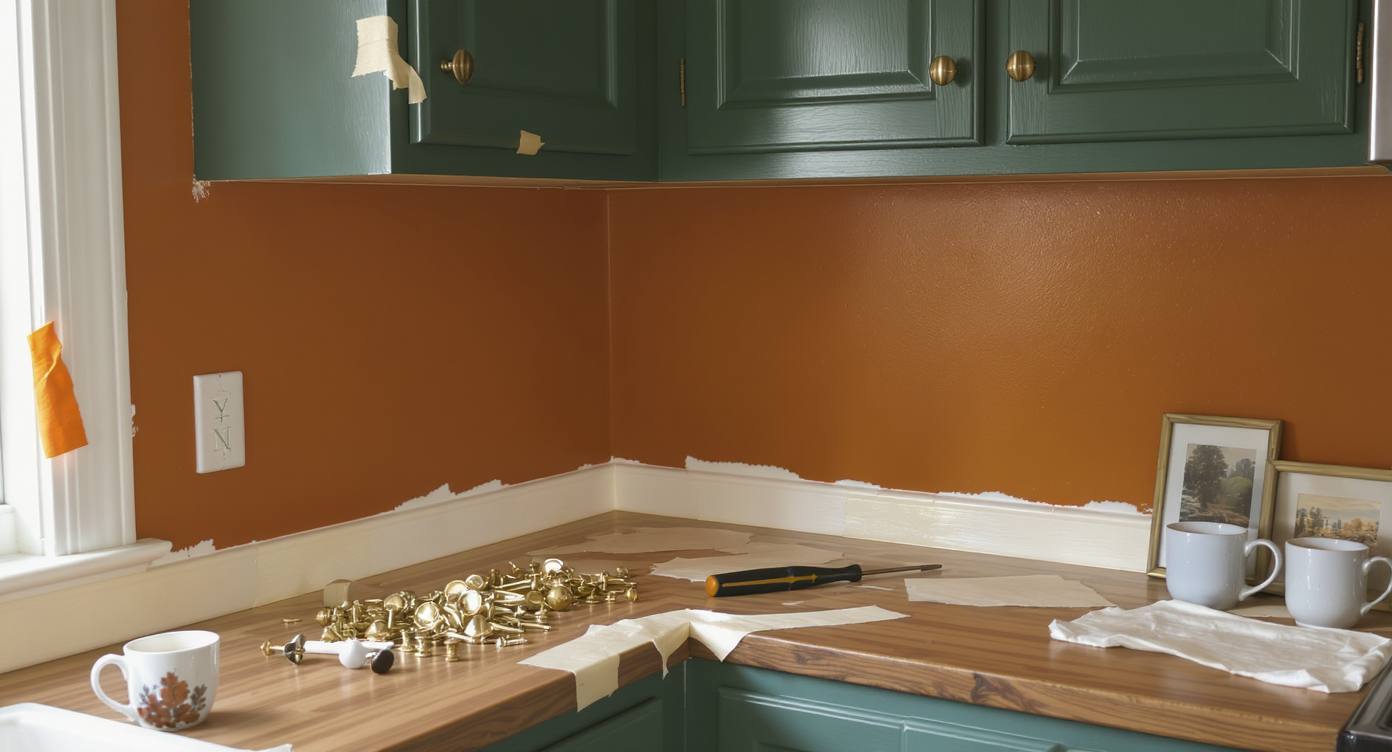
DIY kitchen update in progress—green cabinetry, new brass hardware, vintage finds, and added trim evoke soulful, classic character.
For those looking to create a similar impact without a full-scale renovation, the DIY approach is both practical and rewarding. Over time, small changes—swapping hardware, painting cabinetry, or adding trim—can coalesce into a space rich with soul and history. Real-life transformations show how patience and layering add up, as detailed in this 2.5-year DIY home update. Incorporating vintage finds, meaningful artwork, or even a dramatic paint choice can instantly signal classic character, even in a new build.
Visualization Scenario
Imagine walking into a living room with mossy green walls, natural light streaming through tall windows, and shelves stacked with well-loved books. There’s a large vintage rug underfoot, a velvet armchair in the corner, and botanical sketches framed beside an ornate mirror. The air feels calm and scholarly, as if you might curl up with a secondhand novel or gather friends for an evening of conversation. Every detail tells a story—layered, welcoming, and undeniably unique.
FAQ: Moody Green Heritage-Inspired Home Design
Start by narrowing down a palette based on mood and natural light, then test large paint samples on multiple walls to see the true undertone in all conditions. If you need a color roadmap, the 5-step paint color system is a valuable resource.
Do these heritage-inspired spaces work in small homes?
Absolutely. The layering of classic details and deep colors can make even compact rooms feel intentional and intimate. Strategic lighting and thoughtful furniture placement become especially important in limited square footage.
How do I avoid a space feeling too heavy or dated with dark colors?
Balance rich wall colors with lighter furnishings, mirrors, or metallics. Layer in plenty of texture, and incorporate plants or books for visual movement.
What modern updates can I include without losing the classic vibe?
Embrace streamlined storage, smart lighting, and contemporary art pieces. The key is to keep the soul of the space intact while adapting functionality to modern living.
Where can I get inspiration or visualize the look for my own space?
Platforms like ReimagineHome.ai offer visual tools and ideas tailored to your preferences.
Embrace the Comfort and Character of Classic Styles
Embracing the moody green English-inspired aesthetic is a celebration of color, craftsmanship, and intention. While the look draws from multiple historic influences—Victorian, Edwardian, dark academia—it’s adaptable to modern needs, blending inspiration and practical comforts. Whether through confident paint selection, thoughtful layering of textures, or personal curation, this style offers both refuge and richness. For more tools to visualize your own transformation, platforms like ReimagineHome.ai can help you map out your journey from concept to cohesive haven.