Rethinking Planter Installation: Foundations, Drainage, and Freeze-Thaw Resilience
TL;DR
When constructing a planter attached to your home, proper drainage and waterproofing are crucial, especially in climates with freeze-thaw cycles. Opting to leave the bottom open to the ground often supports healthier root growth and better moisture management compared to sealed floors. Smart, layered planning—like using protection on the house wall and layering drainage materials—can yield a resilient, maintenance-friendly planter.
Why Built-In Planter Design Demands More Than Just Gardening Skills
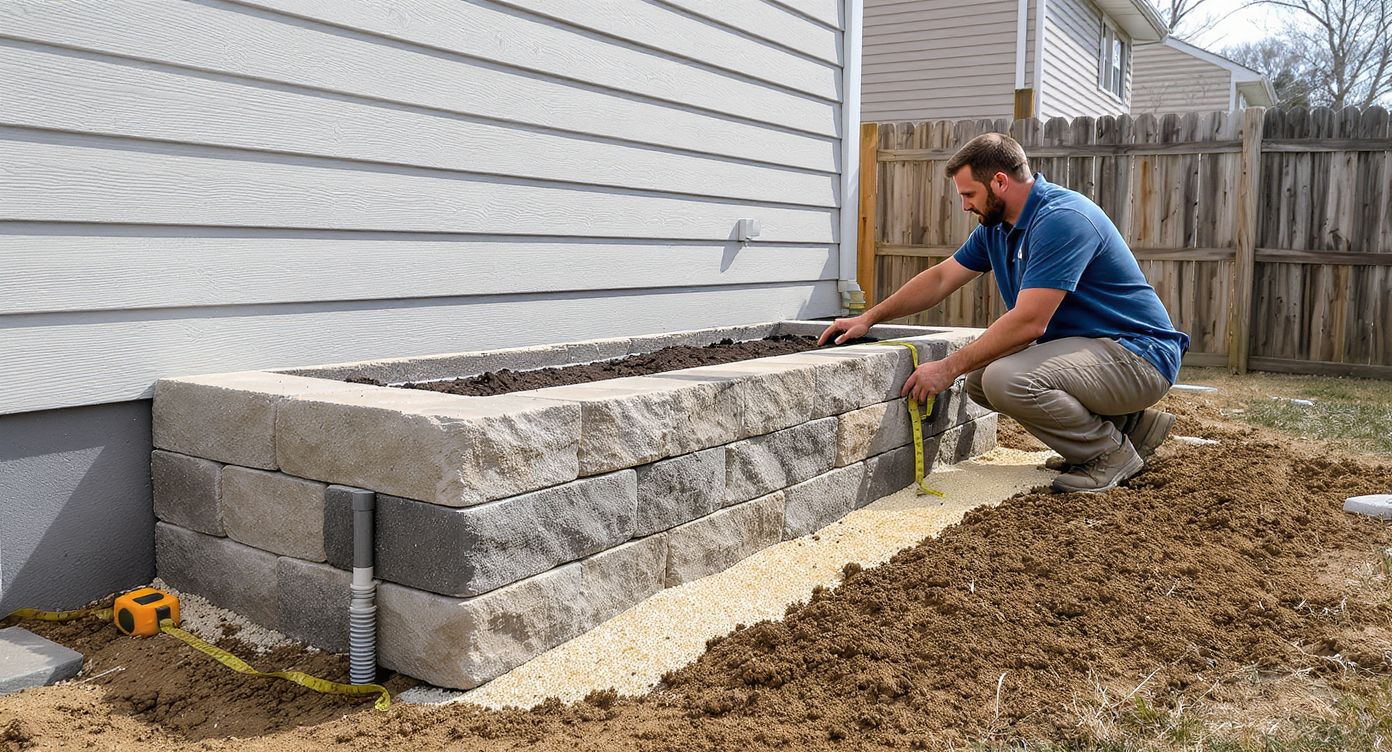
A built-in stone planter with proper drainage, waterproofing, and foundation demonstrates the essentials for year-round durability.
Building an attached planter is a satisfying DIY project but also an exercise in balancing horticulture, weatherproof construction, and long-term durability. For homeowners in regions such as southern Wisconsin, where the climate reliably delivers hard freezes, planter design becomes a test of both craft and climate sensitivity. Many imagine that the toughest part of installing a planter is choosing plants or ensuring the materials look good alongside your home’s foundation. Yet the real work—and the biggest source of regret for many homeowners—often stems from foundational decisions made at the start. Getting drainage and waterproofing right can mean the difference between a lush, low-maintenance garden and a series of costly repairs.
-
The Importance of Drainage in Planter Construction
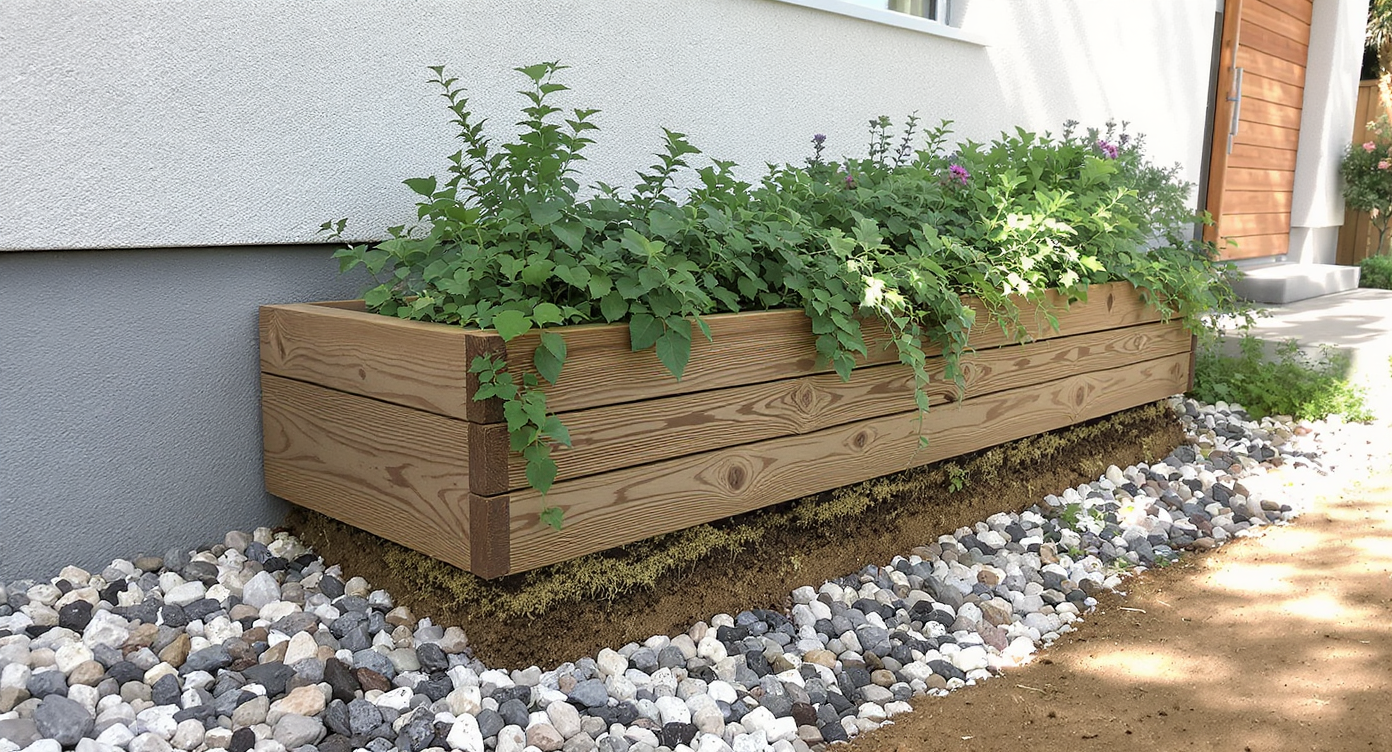
An open-bottom planter on gravel illustrates essential drainage for healthy plants and foundation protection in built-in designs.
Whether you are placing a freestanding bed or constructing a substantial planter box attached to your house, the underlying principles are consistent: water must move predictably through and away from both the soil and your home’s foundation. Poor drainage can lead to saturated soil, weakened foundations, and plant stress—all headaches that could have been prevented with thoughtful planning. An open-bottom design, where the planter is left unsealed at its base, is often recommended by landscape professionals for precisely this reason. Leaving the planter open to the natural ground allows roots to grow deeper and avoids the creation of a perched water table—a scenario where water becomes trapped above an impervious layer. This is critical in regions with clay-heavy soils, which already tend to hold onto moisture. When freeze-thaw cycles arrive, excess moisture can expand and contract, stressing both plant roots and construction materials.
Expert Insight
A neighbor in my Midwest town once transformed the space beside his porch with a masonry planter, eager for an easy-care entryway garden. Initially, he opted to pour concrete at the base, thinking it would simplify things. By the next spring, after several freeze-thaw cycles and relentless spring rains, the soil remained stubbornly soggy—roots languished, and the foundation began to show water stains. Eventually, pulling up the floor to allow native soil contact resolved both issues, and the plants rebounded.
-
Balancing Waterproofing and Healthy Soil
While many first-time DIYers gravitate toward aggressive waterproofing—lining the inside walls, painting with sealants, even considering a solid floor—professionals often urge a balanced approach. Rigid waterproof barriers on the house-side wall of the planter (such as foundation paints and dimple boards) provide an essential buffer, protecting the home from moisture intrusion, especially along vulnerable corners and seams. It’s not about keeping every drop of water away from everything. The goal is to direct excess water down through the soil profile, past multiple layers—a gravel base, landscape fabric, and finally into the subsoil—while keeping standing water away from your foundation. Implementing a practical drainage layer, like 4–6 inches of stone topped with landscape fabric, acts as a filtration zone and supports long-term soil health. According to our overview of 10 landscaping projects boosting home value in 2025, investing in robust outdoor upgrades pays off in curb appeal as well as durability.
-
Climate-Responsive Design for Freeze-Thaw Zones
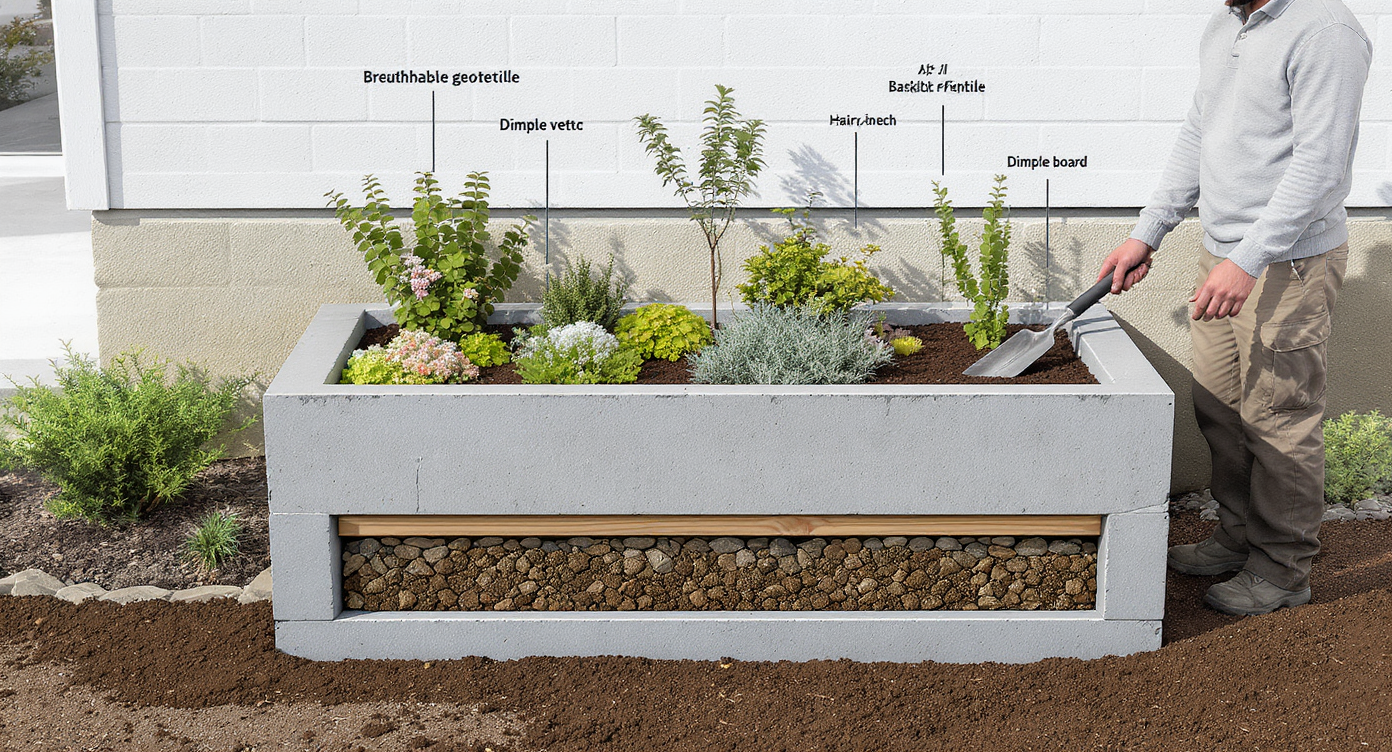
Climate-smart planter construction: open-bottom design, dimple board, and deep drainage prep planters for freeze-thaw resilience.
Garden beds and planters in climate zone 5b, such as southern Wisconsin, must endure dramatic temperature swings. The risk lies not only in rootkill but also in the physical forces exerted by expanding ice. Adding a sealed floor—whether poured concrete or synthetic panels—can inadvertently trap water and prevent deep drainage, increasing the risk of freeze damage. Instead, leaving the bottom open allows for gradual moisture migration and helps buffer root systems from extreme frost. A cold-climate approach blends hardscape strategy and plant-friendly engineering. Using an air gap (via dimple board) against foundation walls, sealing corners thoroughly, and providing sub-bedded stone for drainage all contribute to a planter that resists heaving, rot, and water incursion. These principles are echoed in our examination of cold-climate landscaping and hardscaping ideas, where layered materials and drainage engineering turn harsh winters into an opportunity instead of an obstacle.
Visualization Scenario
Imagine standing on your patio, coffee in hand, watching morning light illuminate a raised planter seamlessly anchored to your home. The bed’s bottom is open to the earth, filled with loamy soil resting on layers of gravel and protected by smart waterproofing along the foundation wall. Summer rains drain efficiently, and with each change of season, your wall of greenery thrives—roots deep, structure sound, house dry.
FAQs on Planter Construction and Drainage
In most cases, especially in climates with heavy freezes, leaving the planter open to native soil is preferred, supporting better drainage and healthier plants.
What is the proper layering inside a ground-open planter?
Generally, 4–6 inches of small stone beneath landscape fabric will promote ideal drainage before adding a high-quality soil mix.
How do I protect my house’s foundation from moisture?
Use waterproof foundation paint and install a dimple board or similar air-gap system against the home-facing wall, securing all seams and top edges.
Is a sealed floor ever recommended?
Planters above finished surfaces (like decks) may benefit from sealed floors, but in most ground-contact scenarios, open bottoms serve best.
Where can I visualize planter layouts before starting?
You can preview custom planter and landscaping concepts through ReimagineHome.ai.
Building for Growth: Letting Soil and Structure Work Together
The most enduring planters are those where thoughtful drainage, climate awareness, and soil biology operate in harmony. By leaving the bottom open and constructing with both waterproofing and airflow in mind, you create a planter that encourages roots to stretch, soil microbes to thrive, and your home to stay protected. The details—gravel layers, dimple boards, landscape fabric—make all the difference. Incorporating these principles, especially in climates prone to freeze-thaw cycles, means your effort will pay off for years to come. For those visualizing raised beds and built-in planters before launch, ReimagineHome.ai can help you see your ideas before you ever buy a bag of soil.