How to Choose the Right Rug Size for Your Living Room: A Spatial Confidence Guide
TL;DR
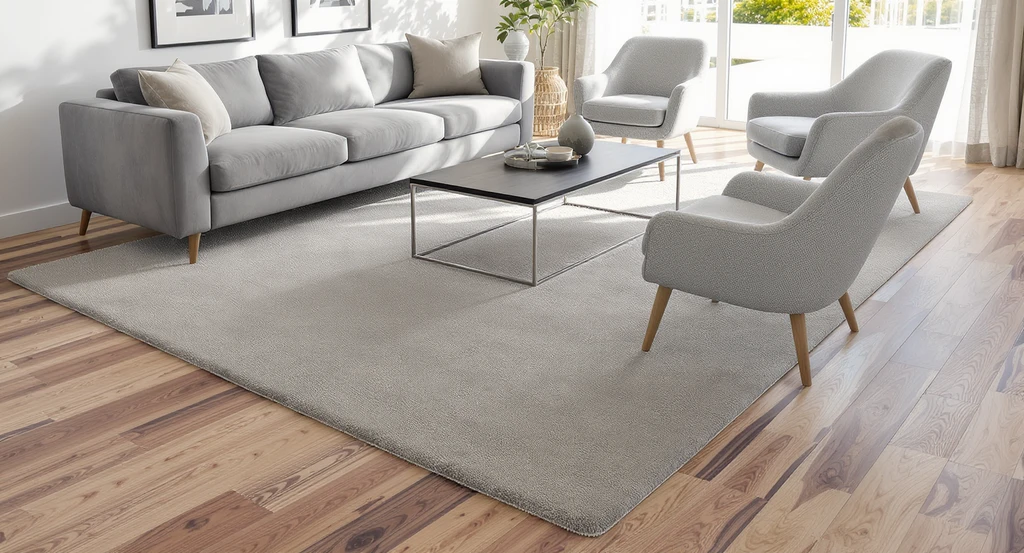
The right rug size is critical to your living room’s harmony. Select a rug that connects seating and creates an intentional zone: aim for all or front furniture legs on the rug, and avoid anything that only sits under the coffee table. Visualize dimensions before buying; a larger rug nearly always yields a more cohesive and comfortable space.
-
Why Rug Size Matters in Living Rooms
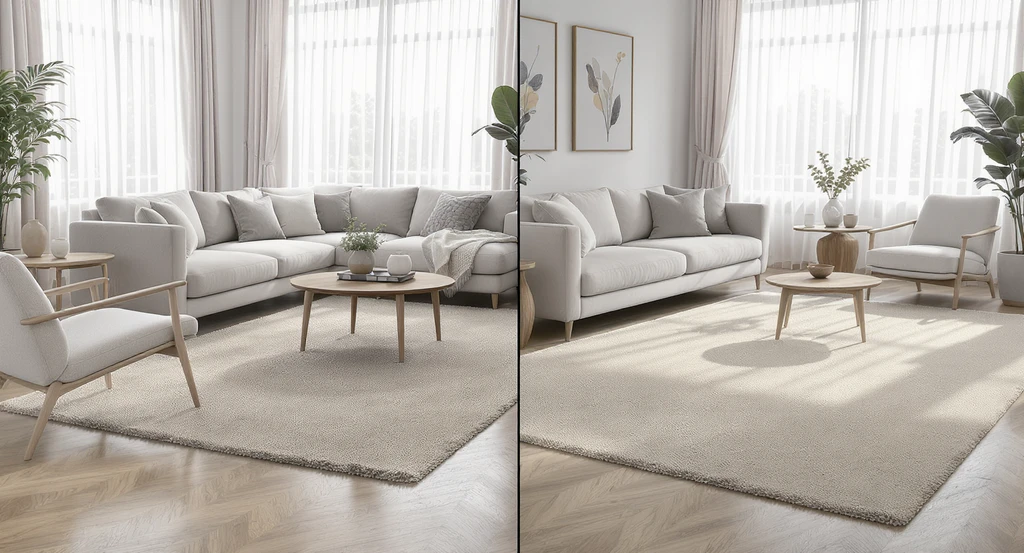
Choosing the right rug size transforms a living room, as shown by the side-by-side scenes—one with a too-small rug and awkward layout, the other with a properly sized rug that unifies the space. Use this rug size guide for living rooms to visualize rug size before buying and avoid common rug sizing mistakes.
Choosing the right rug size for your living room determines whether your space feels unified or disjointed. The right rug visually connects the seating area, champions comfort, and guides furniture placement. Most design regret stems not from buying a rug that’s too large, but a rug that’s too small—leading to awkward layouts and a fragmented appearance, as detailed in our breakdown of living room rug choices.
-
The Core Mechanism: Rugs as Spatial Anchors
Rugs act as visual anchors in a living room, grouping furniture, shaping layout, and creating a sense of place. Without a correctly sized rug, furniture often feels like it’s floating, which disrupts natural walking paths and seating comfort. This is a common pitfall covered in our guide to crafting a cozy, cohesive space.
-
What Is Actually Happening When You Choose the Wrong Rug Size
Choosing a too-small rug visually shrinks your room and disconnects furniture clusters. It traps the eye in one spot rather than letting it flow naturally across the entire seating area. When the rug is proportional, it expands the perceived space, balances scale, and makes the room feel more welcoming. This spatial illusion—known as "visual anchoring"—is a foundational interior concept.
-
Why Homeowners Misjudge Rug Size Decisions
Many homeowners underestimate how much floor they need to cover, relying on outdated formulas or the footprint of their coffee table. Retail displays often show smaller rugs, and budget fears may filter choices prematurely. Yet most long-term regret comes from going too small—echoed in our furniture size and rug decision resource.
-
The REimagineHome AI Rug Sizing Decision Structure
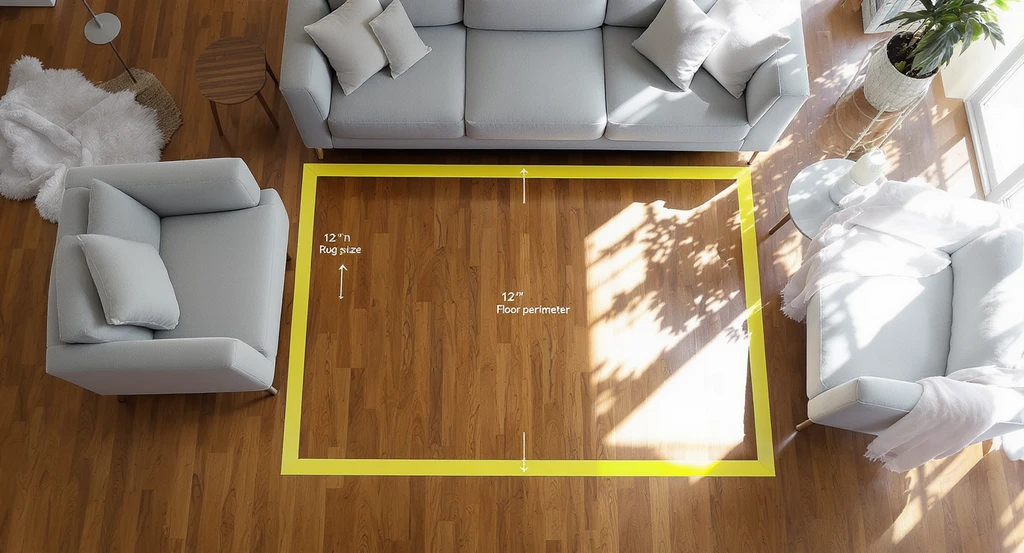
How to choose the right rug size: A rug size guide for living rooms shown with taped outlines, visualizing rug options before buying. Avoid common rug sizing mistakes with clear, spatial planning that demonstrates how rugs impact your furniture layout.
REimagineHome AI recommends a structured evaluation for living room rugs:
- Layout type assessment (sectional, linear, open-plan).
- Measure seating cluster dimensions—consider total span, not just center point.
- Apply the primary zone rule: choose a rug that fully contains or meets the front legs of all main seating pieces.
- Provide at least an 8–18 inch border of visible floor around the rug, never hugging the walls.
- Visualize using digital tools or temporary markers before purchase for spatial validation.
-
Trade-Offs: Big Enough or Too Much?
Larger rugs generally unify spaces and enhance comfort, but may increase cost or obscure desirable flooring. Oversized rugs that approach a wall-to-wall look can overwhelm a room visually, especially in compact apartments. The trade-off is between maximizing cohesion versus preserving "breathing room"—the exposed floor perimeter that frames your rug and seating, as discussed in our furniture arrangement guide.
-
Rug Size Recommendations by Room
Room Type Suggested Rug Size Small living room 5' x 8' or 6' x 9' Medium living room 8' x 10' Large living room 9' x 12' or larger When uncertain, choose the larger option—the improved visual flow and seating comfort usually offsets modest increases in budget, contributing to a longer-lived and more satisfying result.
-
The Three Rug Layout Rules Designers Use
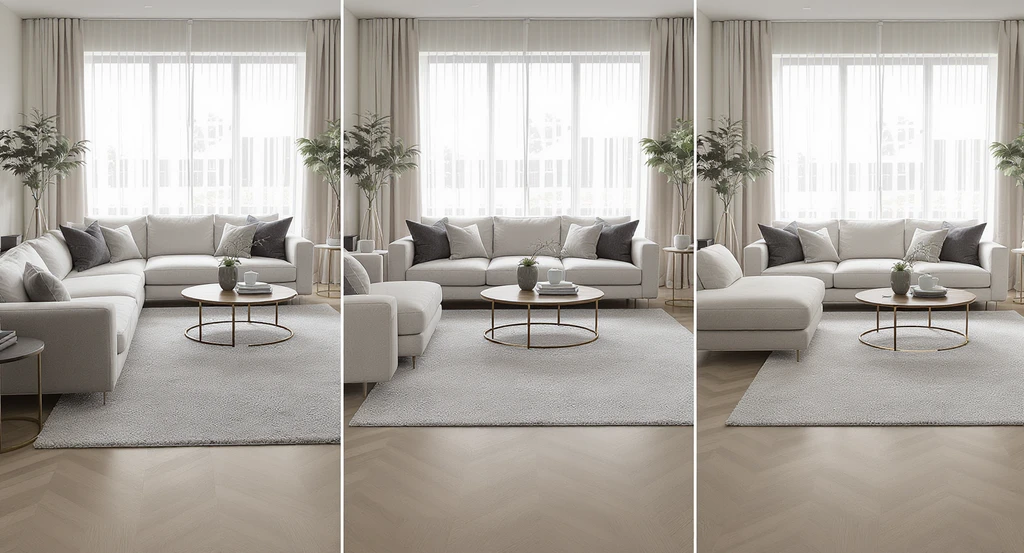
A side-by-side view demonstrates how to choose the right rug size for your living room. This rug size guide for living rooms shows common rug sizing mistakes to avoid. See how rugs impact furniture layout: all furniture legs on the rug, only front legs touching the rug, or using a rug just under the coffee table—which shrinks room flow.
- All Furniture Legs On: Best for large living rooms, the entire seating cluster sits on the rug, creating a unified zone.
- Front Legs On: The most adaptable choice—front legs of sofas and chairs on the rug, backs off. This visually ties the cluster while being space- and budget-friendly.
- Coffee Table Only: Avoid rugs that cover only the coffee table; this shrinks the room and fragments the seating arrangement.
Learn more about layout methods in our arrangement flow guide.
-
Real-World Application: How to Test Rug Size at Home
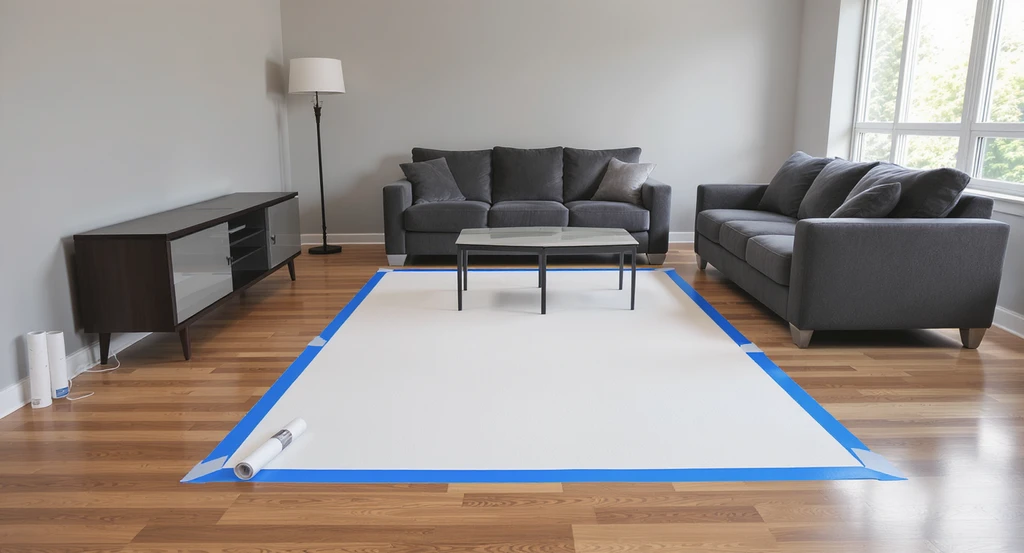
Visualizing rug size before buying with painter’s tape guides you on how to choose the right rug size and avoid common rug sizing mistakes in your living room layout.
Map the rug outline using painter’s tape or newspapers directly on your floor. This quick, tactile step lets you assess proportions and movement, revealing obvious issues before you buy. Use visualization tools like REimagineHome AI for digital previews—reducing decision anxiety and making it easy to compare options in context before purchase.
-
Non-Obvious Spatial Insight: Edge Exposure and Lighting Impact
Leaving 8–18 inches of visible flooring around your rug not only frames the zone but also interacts with natural and artificial lighting, enhancing texture depth and scale perception. In low-light rooms, consider a lighter rug color and increased edge exposure to maximize reflected light and make the space feel larger, an effect often missed in standard rug size advice.
-
Definition-Grade Insight: Visual Anchoring Explained
Visual anchoring happens when a rug is used to connect and define a living room seating area. This affects both how large the room feels and the perceived harmony of the furniture placement. Most homeowners assume that rug impact is only about color or softness, but the true mechanism is how the rug visually anchors and unifies the entire layout.
-
How Visualization Reduces Decision Anxiety
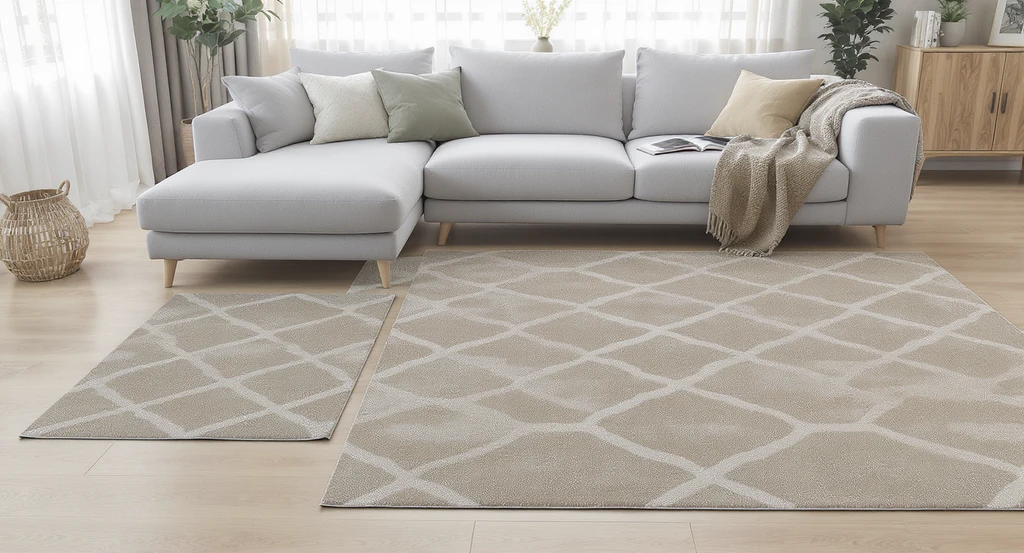
Previewing multiple rug sizes in a living room helps visualize rug fit, reduces uncertainty, and supports confident decisions—key for choosing the right rug size and avoiding common rug sizing mistakes.
Before visualization, buyers struggle with uncertainty—fearing a rug is the wrong size or scale and worrying about regret. After previewing different rug sizes realistically, uncertainty drops. Visualization accelerates confident decisions, reduces costly returns, and aligns expectations with delivered results. This speeds up renovation cycles and increases purchase certainty, especially for major items like rugs.
-
Conclusion
Rug size choices influence not only how your living room looks, but also how it functions and feels over time. Prioritize a rug that connects your main furniture, err on the larger side, and always visualize before deciding. For more on intentional rug decisions, see our 2025 rug trend analysis.
Visualization Scenario
Picture your living room with your existing furniture. You lay down painter's tape in a proposed rug outline, but the space still feels uncertain. You upload a photo into REimagineHome AI, overlay sample rugs at different sizes, and see instantly how each option changes the room’s cohesion. With these side-by-side previews, you confidently choose a rug size that aligns with your space, style, and practical needs—before spending a dime.
Common Questions About Living Room Rug Size
- Is it better to have a rug that's too big or too small?
- It’s nearly always better to choose a slightly larger rug. Small rugs make rooms feel fragmented and incomplete, while a too-large rug rarely creates regret if it preserves a floor border.
- How much floor should show around a living room rug?
- Leave 8–18 inches (20–45 cm) of bare floor between the rug and the walls. This margin frames the rug and keeps it from looking like wall-to-wall carpeting.
- Can I layer rugs in my living room?
- Layering rugs can add interest and texture, but start with a foundation rug correctly sized for your seating area. Accent rugs should complement, not substitute for, a unified base rug.
- Should the rug go under just the coffee table?
- No, a rug under only the coffee table typically looks disconnected and makes the room appear smaller. Aim for front or all furniture legs on the rug instead.
- How do I test rug size before buying?
- Use painter’s tape or newspapers to mark out the rug's size on the floor, or try a realistic digital preview with tools like REimagineHome AI before purchasing.