Visualizing a Shoppable Farmhouse Bedroom Makeover with Real Products Under $2,500
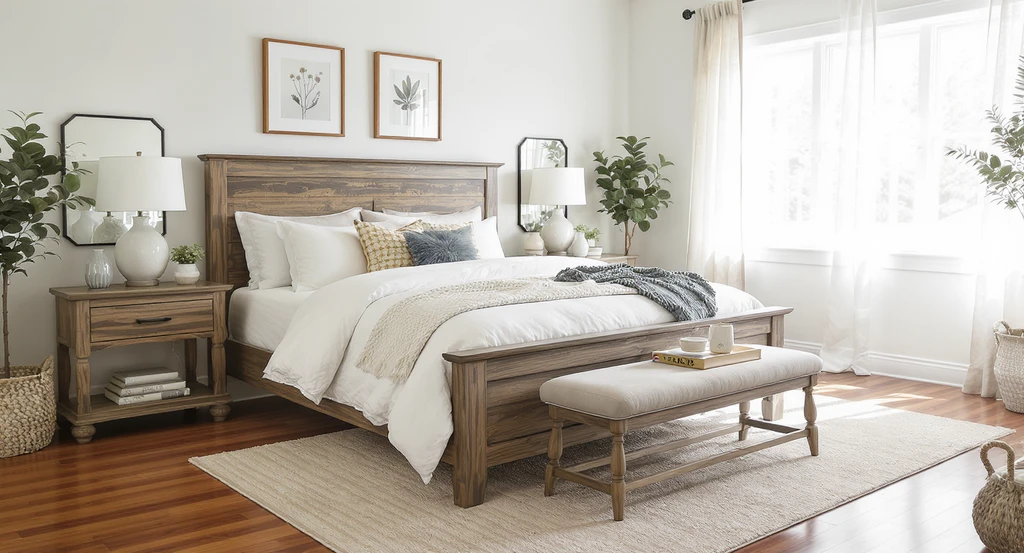
TL;DR
This blog walks through how an empty bedroom was transformed into a welcoming farmhouse retreat using only real, shoppable products for less than $2,500. With options visualized directly in the space and every selection tailored to both style and budget, readers learn precisely how decisions were made—and how to use an AI home design tool to preview and shop their rooms with no guessing.
Transforming a Blank Bedroom with Shoppable AI Visualization
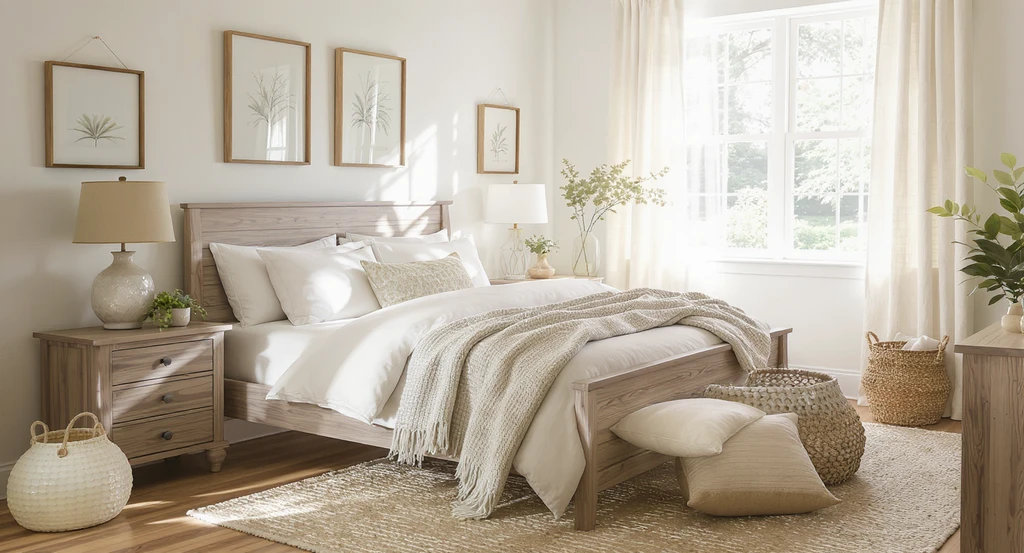
See how an ai home design tool with real products lets you visualize purchasable furniture in a sunlit farmhouse bedroom, compare decor styles, and get the best ai virtual staging features for your own bedroom makeover.
An empty, sunlit bedroom was recently reimagined from scratch using only real, purchasable furnishings—ultimately achieving a photorealistic farmhouse-inspired retreat, entirely within a $2,500 budget. The process began with a clear request: create a serene, modern cottage or farmhouse bedroom, visualize multiple style and product swaps in the real space, and finish with a live shopping collection users could act on immediately.
The main reader question—How can I confidently furnish and decorate a bedroom, compare styles, and ensure items will work before I buy—was fully answered here by leveraging an ai home design tool with real products. In this staging, every item was both visible in the rendered photo and available to purchase directly, with no hidden markups or brand bias in selections. A key insight: combining sample visualizations with shoppable links allowed for iterative design decisions without risk, while anchoring the budget through save-or-splurge tradeoffs—like prioritizing a real wood bed but economizing on lamps and curtains for maximum impact.
-
Room Observations: From Blank Canvas to Layered Farmhouse Style
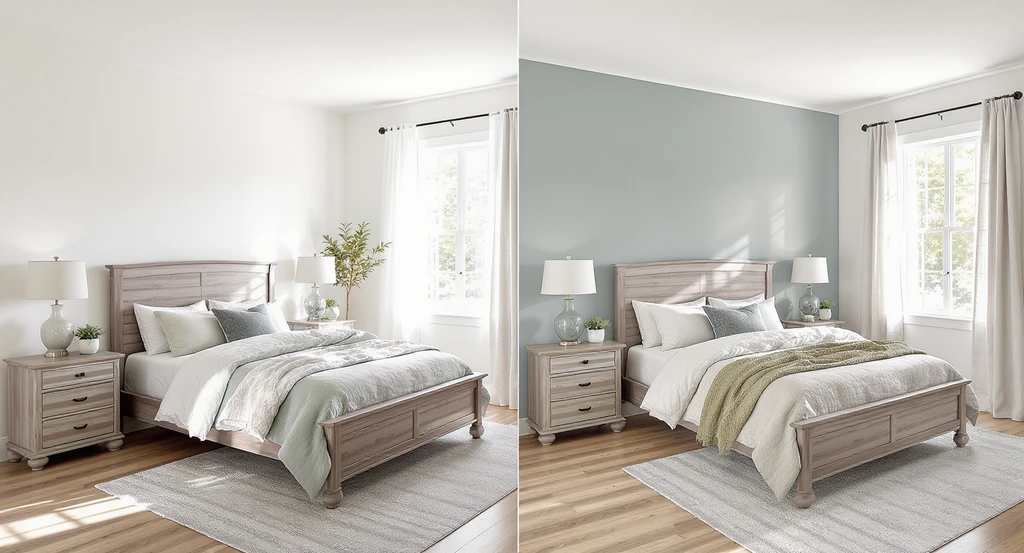
Compare decor styles and visualize purchasable furniture in an ai room: This farmhouse bedroom features real products, bedding swaps, and curtain options, demonstrating the best ai virtual staging features for a risk-free makeover.
The original room, as seen here, offered a standard rectangular shape with ample natural light but zero furniture or decorative structure. There were no existing constraints from prior colors or pieces, making this an ideal testbed for full AI-powered restaging and visualization with real products.
Observing multiple iterations—first with modern cottage, then farmhouse elements, and finally detailed swaps like accent walls and curtain changes—highlighted how photorealistic AI can clarify whether upholstered or wood furnishings, blues or neutrals, and specific layouts harmonize with a room's architecture. Notably, retaining the crisp camera angle throughout allowed direct comparison between design versions, so changes to wall color (Sherwin-Williams Searching Blue), heavier drapes, and bedding could be assessed in exact context. Each tweak, like shifting from sheer to linen curtains or layering sage and blue textiles, was visible before any purchase, reducing risk and bringing clarity to every small decision.
-
Anchoring the Budget: Strategic Splurge and Save Moves
The full redesign was executed for $1,740.60, well under the stated $2,500 target. The largest anchor spend was the rustic wood bed at $499.99, reflecting the farmhouse aesthetic's reliance on substantial, natural-feel case goods. Major storage came from a matching wide wood dresser ($415.21) and a coordinated pair of solid wood nightstands ($281.98), keeping 60% of the budget anchored to pieces that define scale and style for years.
Conversely, recognizable savings moves kept the total affordable and balanced: the texturally rich bedding set ($151.49) and stylish area rug ($200.49) delivered softness and color for far less than premium lines; accessories like linen curtains ($91.22) and a duo of metal table lamps ($100.22) delivered on farmhouse warmth without overspending on signature items. This demonstrates a critical point from our guide on swapping furniture digitally: sharp, realistic previews support risk-free savings because you can see scale and color before investing in higher-end, non-essential decor.
-
Product Selection Logic and Shoppable Visualization
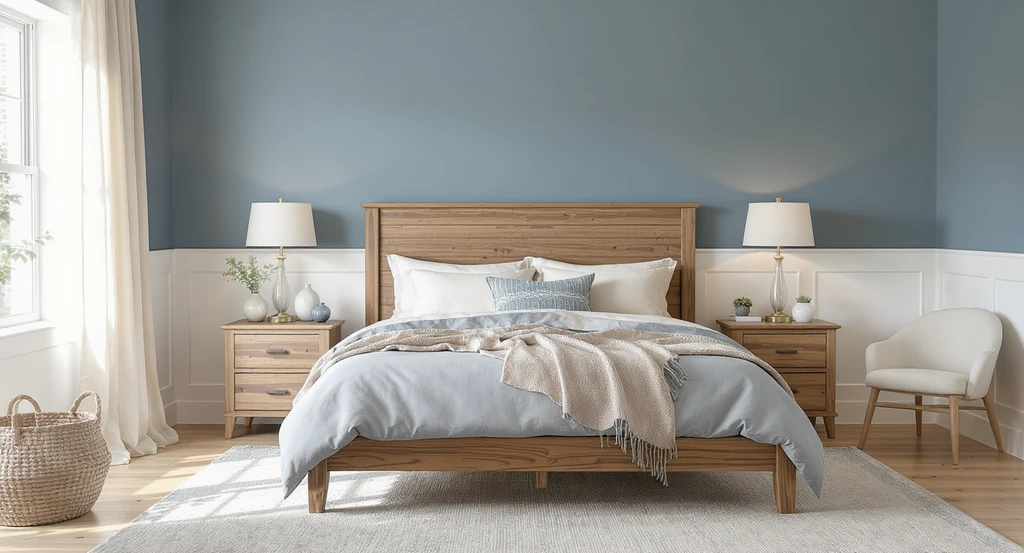
See how an AI home design tool uses real products to visualize a shoppable farmhouse bedroom, compare decor styles, and refine makeovers with photorealistic AI virtual staging features.
This project depended on the ability to visualize purchasable furniture in an AI room, rapidly comparing comparable real items for size, finish, and effect. Each step—informed by ReimagineHome's Real Shoppable Products feature—began with clearing the space, establishing a focal point with a substantial wood bed, and layering the look via color and soft goods. For every major piece, alternatives were previewed: lighter versus rustic woods, cream or blue rugs, sheer versus linen curtains, each time confirming fit and feel through direct AI staging.
To further refine, wall color and textiles were swapped virtually. After defaulting to white walls for light and space, a blue accent wall was applied, followed by updates to window treatments and bedding to harmonize with both architecture and desired mood. According to our detailed exploration of AI add-decor tools, such granular, photoreal updates allow users to trust not only big layout decisions, but also small material and decor swaps—whether comparing curtain heaviness or mixing in blue and sage layered bedding for a fresh, up-to-date look.
-
What Was Avoided—and Why This Solution Works for This Room
Critical to staying under budget and achieving a cohesive look was intentionally avoiding ornate vintage beds, custom window treatments, or trend-driven accent pieces that could overwhelm the room or spike costs. Instead, grounding the space with substantial, neutral elements (real wood, textured linen, subtle color pops) ensured both timelessness and flexibility for future updates. Art was restrained and botanical-themed, intentionally skipping gallery walls or maximalist decor, in line with the farmhouse brief.
This approach also ensured that every major purchase solved for both visual impact and practical need: the wide dresser maximized storage by the window; lamps were selected for scale and symmetry; and the area rug reinforced the zone around the bed. Consistent camera perspective in digital renderings verified that no element encroached on walkways or disrupted daylight, supporting layout choices explored in our checklist for achieving true cottage snugness. The result was a space that balanced simplicity, clarity, and comfort, backed by visual proof every step of the way.
-
Furniture and Decor Used: A Snapshoppable Farmhouse Bedroom Under $1,800
For readers looking to replicate or adapt this solution, each main furnishing was selected for balance across style, price, and delivery feasibility. Here are the exact shoppable products, each previewed in a digital rendering before purchase:
Rustic Wood Bed – $499.99
Wide Rustic Dresser – $415.21
Solid Wood Nightstands (Set of 2) – $281.98Other major elements included a blue and sage bedding set ($151.49), a distressed blue/cream rug ($200.49), oatmeal linen curtains ($91.22), and farmhouse metal table lamps ($100.22)—all selected for US delivery. Each sourcing decision was made to maximize coverage, comfort, and farmhouse character, with all items available to preview, swap, or shop as a cohesive bundle under the Real Shoppable Products workflow.
Frequently Asked Questions
Seeing actual shoppable products at scale in your real room photo lets you test style, color, and arrangement before any money leaves your wallet. According to our in-depth piece on AI-powered object swaps, this reduces costly mistakes and returns.
Yes, the process demonstrated here let users virtually test out Sherwin-Williams blue accents, lighter vs. heavier curtains, and new bedding—revealing instantly what worked, without touching the room or exceeding budget.
The Real Shoppable Products feature can be tailored for any major decor style or spending cap—you simply update your inputs, and the tool serves up purchasable options to match. As we explored in our piece on finishing touches, you can explore endless subtle variations stress-free before committing.
No; the workflow is flexible. You can preview whole bundles or single pieces in context, buy immediately, or return later—there is no pressure and no preferential brand promotion.
Key Takeaways: Shoppable Visualization Empowers Smarter, Risk-Free Room Design
Visualizing a full bedroom makeover with real shoppable products proved not only affordable, but precision-driven and empowering. By leveraging an ai home design tool to preview and compare every major decision—and keeping the budget anchored to high-impact, timeless pieces—this project resulted in a finished farmhouse bedroom ready for real life and easy buying, all without second-guessing or risk.
For anyone seeking to compare decor styles with AI visualization, adapt their space on a defined budget, or move from inspiration to checkout with confidence, this approach—refined with REimagineHome AI—shows exactly how seamless the process can be. The direct preview of every product, swap logic for details like drapes and bedding, and the subtle savings moves all come together to offer genuine peace of mind and a solution tailored to real homes and real budgets.