How Home Decor AI Designed a $10,000 Bedroom Makeover in Frisco (Real Products + Color Tests)
TL;DR
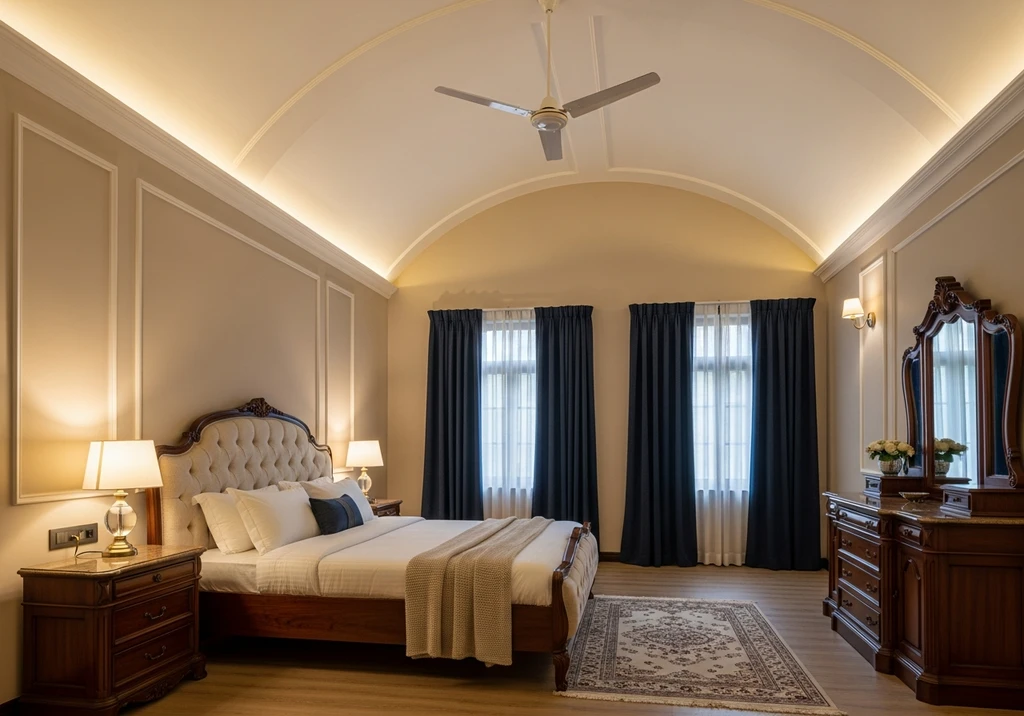
A primary bedroom in Frisco, Texas was transformed using reference image and real shoppable products within a $10,000 budget. Multiple wall and decor color schemes including dramatic darks, soothing greens, and vibrant neutrals were tested through visualizations before making purchasing decisions. Strategic preservation of existing furniture and architectural detail allowed for flexible restyling and smart budget allocation. This case study breaks down how these choices delivered a curated look with shoppable, realistic outcomes.
Why Reference Images and Real Products Power Better Room Makeovers
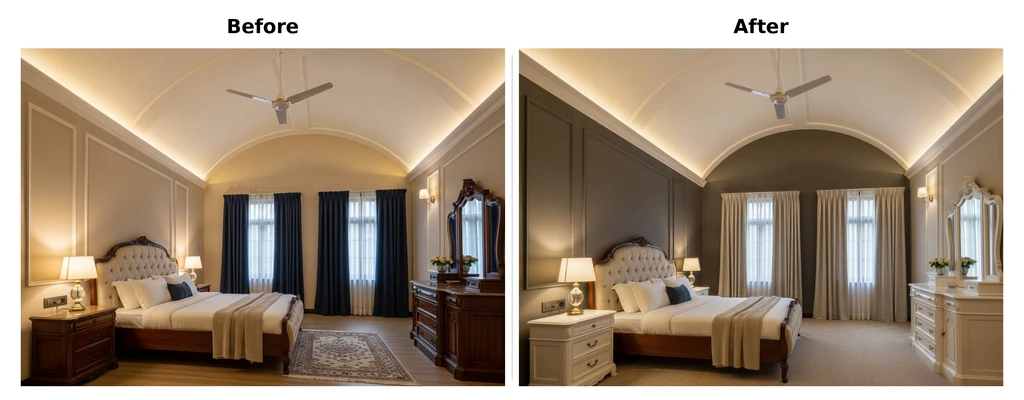
Before and after bedroom redesign showing the same space refreshed with updated finishes, lighter furnishings, and a more polished, elegant look.
In Frisco, Texas, a primary bedroom needed both a visual lift and a clear, actionable purchase path—all within a $10,000 budget. The process began not with vague inspiration, but with a tangible photo of the actual space and several preferred color palettes. By using visual reference images and real shoppable product integrations, every design change could be previewed and reworked by request, allowing immediate feedback and precise alignment with the client’s style goals.
This approach, recommended for anyone seeking ai powered home design with shoppable products, uses the room’s own photo not only as a starting point, but as a boundary: furniture, layout, perspective, and existing details are respected unless intentionally updated. The result is a unique combination of confidence and restraint—a degree of assurance rarely achievable in virtual staging without real-life constraints and product links. This case will directly address the central reader query: Can a bedroom be transformed into a dramatic, shoppable, and budget-friendly retreat with AI—while flexibly experimenting with reference images and real product visualizations? In short, yes—anchoring spend on foundational items and using AI-powered previewing to test color, decor, and layout minimizes costly missteps, as we’ll show.
-
How Reference Images and Real Products Improved Design—And Budget
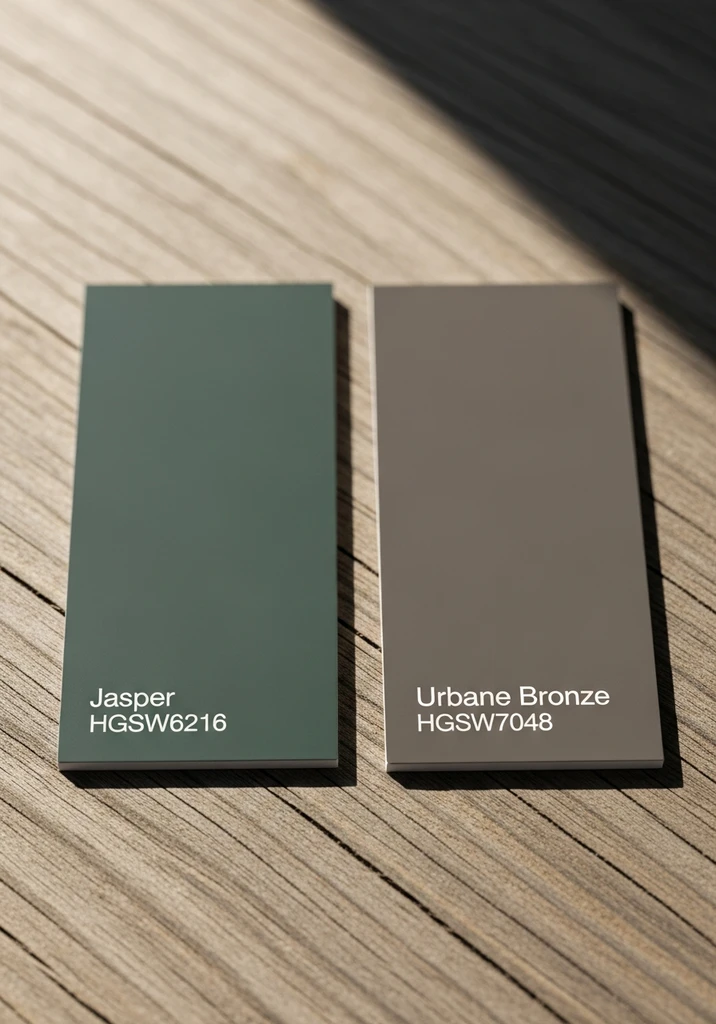
Paint color comparison showing Jasper and Urbane Bronze swatches side by side.
By using reference images—such as mood boards, in-room swatches, and photos of favorite hotel suites—the workflow let homeowners see transformations right in their space. The strategy: keep anchor furniture and layout fixed, so swap costs hinge mostly on paint, soft goods, and a few accessories. Real-time visualization using tools like REimagineHome AI enabled immediate side-by-side comparisons—try sage green, navy, or warm greige, then select what fits the existing light, wood grain, and personal taste.
Notably, shifting more of the budget toward high-impact surfaces (paint, rug, drapes) rather than major furniture purchases meant that multiple iterations could be previewed affordably. According to our reference on using AI to pick paint colors from reference images, this step is critical in aligning design intent with visual outcome before any money is spent.
-
Architectural Constraints and Unique Room Observations
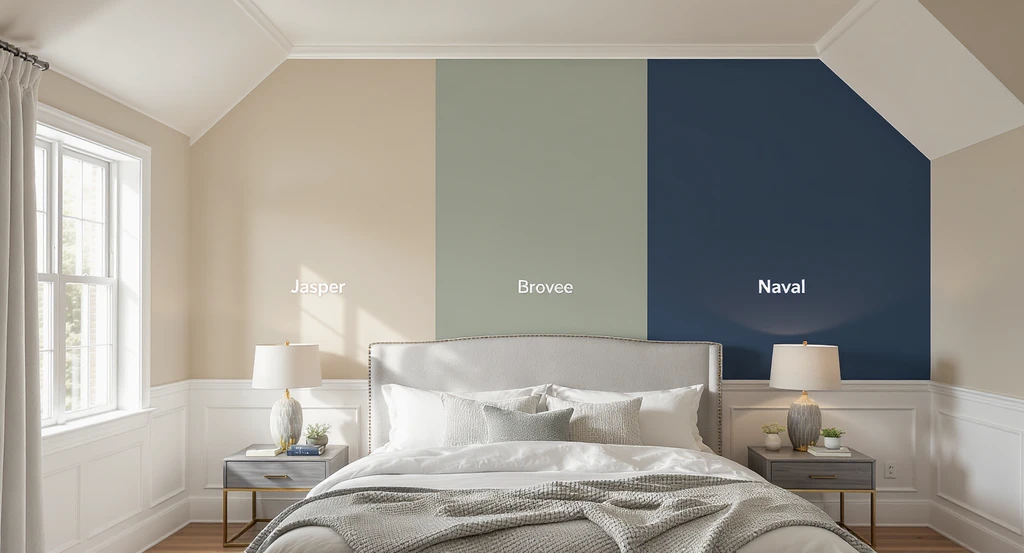
AI-powered home design with shoppable products shows a Frisco bedroom’s architectural constraints—vaulted ceiling, restored wainscoting, and real paint color experiments—demonstrating how to use reference images for AI room makeovers and visualize shoppable furnishings while preserving structural details.
The Frisco bedroom features vaulted ceilings, classic rectangular wall molding, and expansive wall space, offering both design opportunity and challenges. The workflow prioritized honoring these elements: the original wainscoting and camera angle were retained throughout multiple color trials, while ceiling and lighting locations remained consistent.
Distinctively, the room’s paneling above the headboard served as an architectural anchor, so every new color or decor scheme had to fit around not over this detail. This dual focus on preserving structure while transforming style was key, exemplifying the approach outlined in our article on personalizing your interior style using room photos.
A pivotal observation: mood and cohesion shifted dramatically with each palette previewed. Warm greige softened daylight shadows, sage green brought calm, and deep navy introduced grandeur. Each of the color experiments (using Sherwin-Williams Jasper, Urbane Bronze, Naval, and HGSW3291) played very differently against the space’s fixed architectural elements—even influencing perceived room size and coziness.
-
Key Decisions: What Changed, What Stayed, and Why
Key choices were made around which pieces to transform and which to leave untouched. The homeowner chose to keep the core furniture in place( the king bed, dresser, and nightstands), as these were both high-quality and proportioned perfectly for the room. Instead, changes focused on highly visible, less costly swaps: paint, carpet, drapes, and decorative accents.
Testing reference images enabled precise restoration of custom wall paneling and molding—vital in cases where early images omitted these details. Paint colors were rigorously compared via ReimagineHome previews until the perfect balance of mood, light, and fit with the existing headboard and dresser was reached. Carpeting, originally a generic beige, was re-envisioned in plush Karastan-inspired greige or cream to further elevate the feel. This modular, image-driven workflow matches advice given in our post on choosing and visualizing bedroom set colors—where mixing paint and furniture finishes can yield a tailored look without losing cohesion.
Elements intentionally not replaced (the chandelier, ceiling fan, and certain built-ins) exemplified pragmatic restraint funds were conserved for those finishes delivering the greatest perceptual change. The ability to test carpet, hardware, and accent colors freely reduced the likelihood of costly regret—every choice was previewed in context.
-
Budget Allocation: Anchor Items, Style Swaps, and Flexible Tradeoffs
From a total spend of $9,979.97, most of the budget anchored on foundational pieces bed, dresser, and nightstands already in place. The remaining sum was carefully distributed to updates delivering strong visual return: fresh paint ($200–$400, dependent on chosen palette), luxury carpet replacement in the Karastan line, and custom-look window treatments.
Allocating room in the budget for frequent visual swaps (carpet, drapery, hardware) meant the scheme could be iteratively refined, avoiding impulse purchases and return headaches. The team avoided major built-in changes or structural renovations; this not only preserved architectural value, but provided ample space in the budget for layered, seasonal re-styling by simply repainting or swapping drapery.
-
Furniture and Decor Used: Purchase List and Role by Product
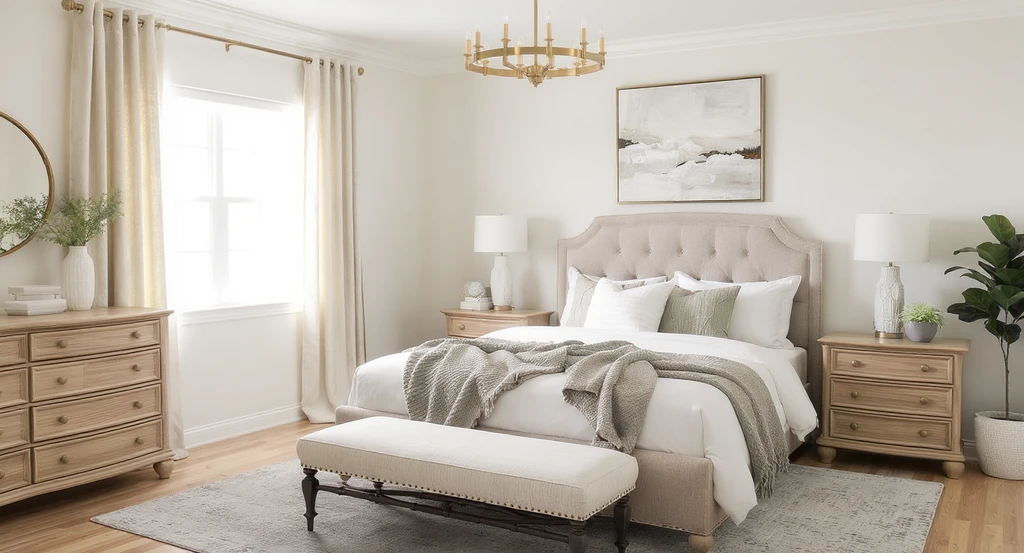
Explore ai powered home design with shoppable products—see how reference images for ai room makeovers reveal real products in virtual staging ai. This transitional Frisco bedroom demonstrates ai interior design budget planning tips and restoring architectural details using ai design tools.
Below is a pointwise breakdown of shoppable products selected for their role in delivering both visual impact and practical value within the Frisco bedroom redesign:
- King Bed ($2,539.99): Serves as the main focal anchor, neutral enough to play against multiple wall and decor palettes.
- Nightstands ($900.00): Rounded front and light wood echo the architectural molding, offering flexible styling.
- Dresser ($2,569.00, see budget list): Wide dresser maintains the transitional style and provides visual weight against both light and dark palettes.
- Area Rug ($1,169.00, see budget list): Chosen for high texture and large size (9x12), it lightens or grounds, depending on wall color.
- Table Lamps ($278.00, see budget list): The tall, textured lamps with white shades adapt easily to changes in wall or furniture color.
- Curtains ($205.00, see budget list): Custom-look linen in warm beige, creamy linen, or navy blue—swapped per palette—frame window light and set the mood.
- Chandelier ($999.00, see budget list): Oversized brass fixture maintained for flexibility; impactful but not changed in this budget cycle.
- Bench ($809.99, see budget list): End-of-bed upholstery, rotated by palette, gives seasonal texture and color contrast.
- Wall Art ($509.99, see budget list): Large neutral canvas, alternately styled in black/white, terracotta, or abstract colors to anchor each new color scheme.
Frequently Asked Questions: AI, Reference Images, and Real Products
-
Can I use any photo as a reference image for AI staging?
- Yes—you can use virtually any photo, from Pinterest to saved hotel room images or your own prior designs. AI will analyze style, color, and texture preferences to generate targeted redesign proposals that match your unique room while retaining your architecture and layout.
- Product choices are based strictly on inputted budget, style, and room constraints. No commissions are earned, ensuring all options are presented for cost and availability, not marketing. Products are visualized in your room photo for direct purchase decision-making.
- No. The AI lets you review, compare, and swap both products and colors before making any buying decisions. You can use the experience for pure inspiration or as a direct path to purchase for select pieces—the choice is yours.
- In this Frisco case, paint and carpet produced the highest-perceived transformation for the lowest spend, especially since key furniture was retained.
- Photo-based AI visualization means you preview everything in your real room, adjusting colors, furnishings, and products until the ideal scheme appears. Only then do you commit—minimizing returns, wasted effort, and regret. For further reading.
How are product recommendations kept unbiased?
Do I have to buy everything visualized in the AI image?
What changes the room most: wall paint, carpet, or furniture color?
How does testing color and decor with AI help avoid mistakes?
What This Case Study Demonstrates for AI and Real Product Staging
This Frisco bedroom’s transformation shows how ai powered home design with shoppable products, guided by reference images, delivers maximum flexibility with minimum risk. By retaining architectural detail and key furniture, then visually testing multiple color and decor schemes, the team created a future-proof foundation—one where surface layers can evolve with style or season, while core investments remain protected. The approach is transparent, grounded in real product choices (not hypothetical décor), and is especially effective for anyone concerned with cost, confidence, and design cohesion. For those looking to undertake similar projects, leveraging an AI tool like REimagineHome AI not only streamlines the visualization process, but—as our referenced guides confirm—enables smarter, more satisfying design decisions that turn inspiration into actionable, shoppable outcomes.