How AI-Powered Staging Created a Modern Farmhouse Bedroom with Shoppable Pieces Under $2500
TL;DR
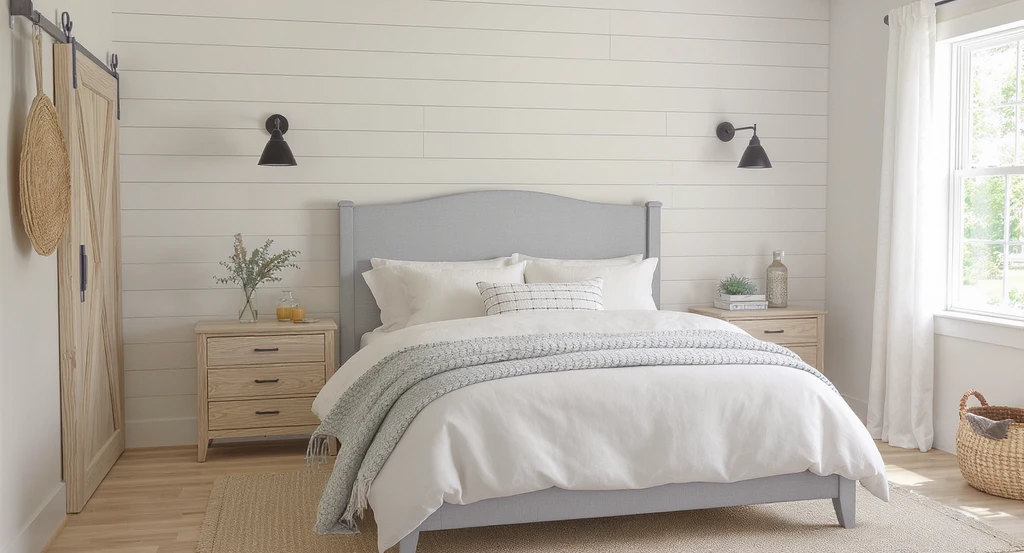
This case study details how a vacant bedroom was reimagined into a modern farmhouse haven using real, shoppable products sourced with REimagineHome AI. See key decision points, budget tradeoffs, and itemized product choices—all while staying well under a $2500 cap in the Mid-Atlantic region.
Transforming an Empty Room with Real, Shoppable Products and AI
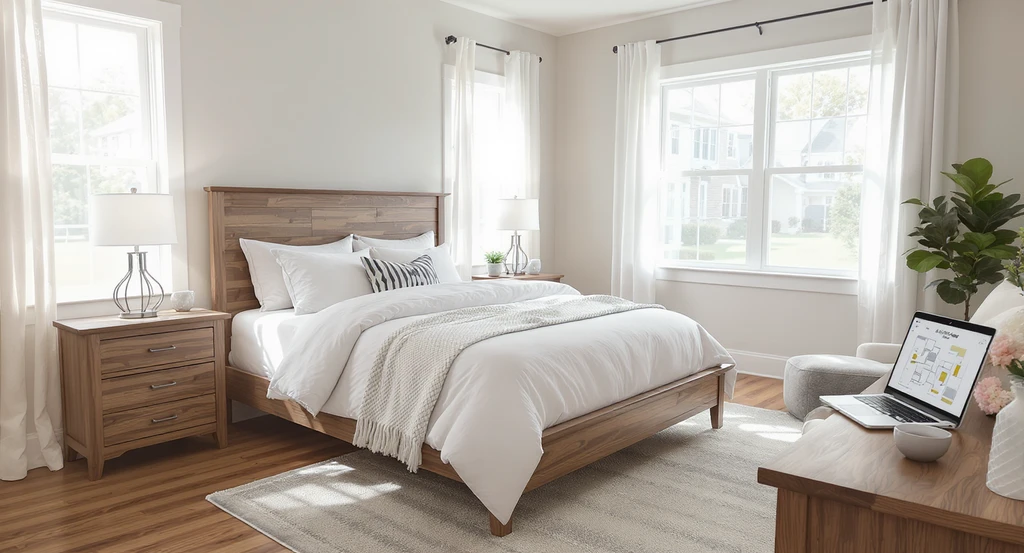
See how ai home design with real products and ai tools help visualize rooms with ai tools and enable a modern farmhouse ai room makeover for shopping under $2500.
Faced with a blank slate in a Mid-Atlantic ZIP, we set out to stage a functional, visually cohesive bedroom under $2500. The goal was to achieve a modern farmhouse style that balances warmth, simplicity, and touches of color. By leveraging AI tools that integrate real, purchasable products directly into design concepts, we could visualize multiple looks, iterate quickly, and arrive at a shoppable, budget-true result.
The primary question here: How can you use AI home design with real products to create a modern, inviting farmhouse bedroom—all within a precisely set budget? In this case, the anchor spend was a substantial portion for a rustic platform bed, while savings came from identifying affordable yet quality options for textiles and lighting. The final effect is a room with layered comfort, natural light, and a distinctly personal style, all sourced from verifiable online retailers.
In design, a "modern farmhouse bedroom" typically combines rustic wood textures, soft color palettes, and clean lines, accented by practical textiles and statement lighting. Using shoppable AI tools allows you to preview these choices at scale, with real products that fit both design and budget, before you make a single purchase.
-
Baseline: Room Characteristics and Visual Constraints
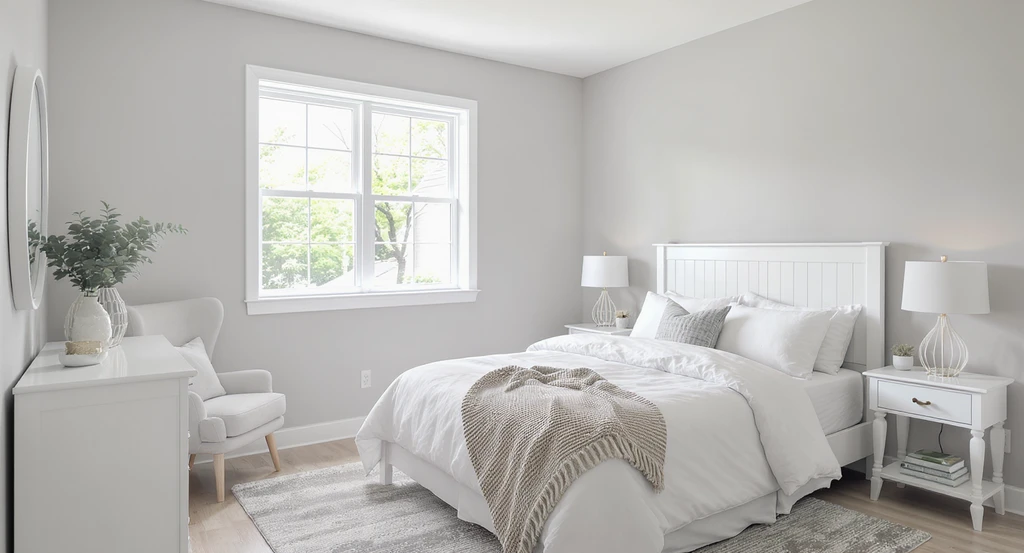
AI home design with real products demonstrates how to visualize rooms using ai tools—optimizing layout, accent walls, and window treatments in a modern cottage style. See how the best ai home design tool helps stage and shop for impact-driven, budget-friendly transformations.
The original room presented an efficiently sized footprint, strong natural light from one wall of windows, and neutral architectural detailing—no crown molding or built-ins. The camera view was wide and direct, ideal for testing scale and furniture placement. Architectural constraints included an uninterrupted back wall (perfect for an accent), modest ceiling height, and window placement that restricted certain bed orientations.
Early AI visualizations made it possible to test several core ideas: clearing the existing finishes, centering the bed on the back wall, and verifying the potential of an accent wall. Because the space contained no original furnishings, every item was chosen for explicit function and impact. Multiple iterations with visual staging AI confirmed the optimal mix of bed placement, storage, and surface area for small decorative touches. Image sequence reviews highlighted the impact of subtle swaps—in particular, how heavier curtains versus thin sheers could alter the perceived width of the window wall without crowding the space.
-
Decision Logic: Style Iterations, Swaps, and Key Avoidances
AI-powered alternatives were trialed exhaustively. Initial designs tried modern cottage and classic farmhouse themes, letting us directly compare light oak, rustic pine, and painted pieces. Ultimately, a hybrid modern farmhouse palette—anchored by a blue accent wall (Sherwin-Williams Searching Blue)—stood out for its vibrancy and calm. Early tests with bold botanicals and busy bedding were scrapped to avoid visual clutter and budget creep. The AI’s ability to experiment with everything from textiles to lampshade style, without risking a misstep, made these decisions tangible and low-risk—as explored further in this deep-dive into practical staging tools.
Key items intentionally avoided included statement headboards (to save on cost), bulky armchairs (for spatial efficiency), and duplicate dressers, ensuring the budget could stretch to generous textiles and layered lighting. The decision to prioritize a queen platform bed and a single wide dresser, instead of splitting costs across multiple smaller items, gave the room a sense of functional simplicity while maintaining real-world usability for end users.
-
Budgeting Out the Transformation: Anchor vs. Savings
With $2500 as the hard cap, budget allocation required discipline. The platform bed (at $499.99) was selected as an anchor piece, promising durability and timeless appeal. The matching dresser ($415.21) and nightstands ($281.98 for two) completed a unified, rustic foundation. After basics, remaining funds targeted textiles and light—areas where change offers the biggest visual return per dollar.
Significant savings came from choosing an under-$200 patterned area rug, which delivered visual warmth and color layering at a competitive price point. The sage-green-and-blue bedding set (at $151.49) echoed the accent wall and brought additional color dimension for less than high-end designer options. Linen curtains and farmhouse lamps, both under $100 per set, added softness and cohesion. By focusing on fewer, larger pieces and sourcing multi-piece sets, we achieved a visually layered result with minimal expenditure per function, meeting the brief for value-driven decorating.
-
Furniture and Decor: Real Shoppable Product Choices
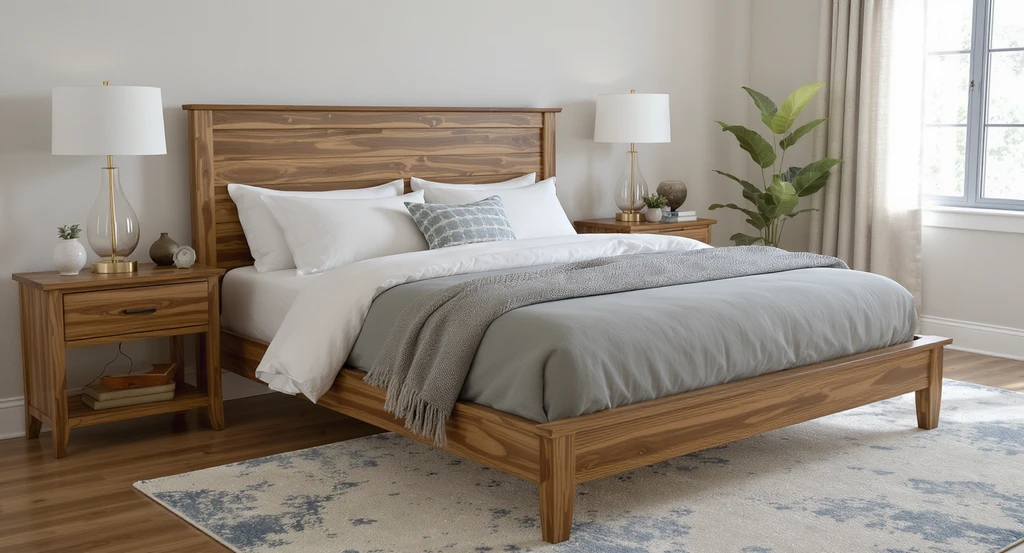
See how ai home design with real products makes it easy to visualize rooms with ai tools—this ai room makeover for modern cottage style uses real, shoppable furniture under $2500.
Every visible piece in the finished design is a real, buyable product, ensuring both transparency and replicability. Centering the room is a rustic wood platform bed, flanked by two solid wood nightstands. A wide matching dresser sits on one wall. Across these pieces, the consistency of finish and form grounds the room visually, and the flat-front edges keep the look comfortably modern.
The decorative glue here lies in the $200 vintage-style area rug, which blends cream, blue, and faded motifs for a subtle era mix. Sage-and-blue bedding adds fresh color and softens the geometric lines of the furniture. Oatmeal linen curtains diffuse daylight, mounted on contrasting matte-black rods for an updated farmhouse touch. Lighting arrives via a pair of brushed metal table lamps—saving on cost, but not on glow. Final styling leans minimal, following insights described in our guide to purposeful finishing details.
-
What Makes It Work: Room-Specific Tradeoffs and Results
Three decisions proved fundamental to this room’s success. First, maintaining a restrained palette allowed the blue accent wall to claim center stage, while natural wood and greens contributed layered comfort without overwhelming the senses. Second, focusing the bulk of spending on scale-correct foundational pieces—bed, dresser, nightstands—avoided the piecemeal look that can happen when budgets are split thinly across too many small objects. Third, product swaps (such as curtain weight and bedding color) were visualized directly with REimagineHome AI, ensuring that every color story and layout read as intentional before committing.
Notably, this solution avoided any decorative overcrowding, leaving space to add art, plants, or further accessories as needed. The ability to preview multiple swaps in context, and to keep all product choices shoppable and region-accessible, kept both process and result efficient and personalized. As echoed in our investigation of color-led room planning, such dynamic, visually grounded staging empowers both designers and homeowners to iterate rapidly within real-world constraints.
Frequently Asked Questions
- How do shoppable AI staging tools help with budget management?
- They allow direct visualization of price-tagged items in your context, so you can swap, compare, and prioritize within your ceiling before making a purchasing decision. Learn more about AI's role in budget-conscious planning.
- Could this style work for other rooms and budget levels?
- Yes, the same decision logic—anchoring on foundational pieces, layering with budget-friendly accents, previewing different colorways—can be scaled up or down and tailored for living spaces, guest rooms, or small apartments.
- Is it possible to try alternative color palettes or furniture layouts before committing?
- Absolutely. With AI-powered design previews, you can visualize and iterate color, furniture, and layout swaps before buying—removing guesswork and reducing costly errors. See how color experimentation works with AI staging.
Key Takeaways from This AI-Guided, Shoppable Room Makeover
This project highlights how using AI home design with real products can streamline the route from empty room to richly layered, functional space—even when cost is tightly controlled. By visualizing furniture and decor swaps in advance, sticking to a disciplined anchor/savings allocation, and leveraging online product sourcing, we created a modern farmhouse bedroom that is stylish, shoppable, and true to its regional context.
Intentional choices—from color experimentation to swapping curtain styles—made possible through REimagineHome AI, demonstrate that design excellence and budget responsibility can align. For anyone seeking to overhaul a space within a set budget, this approach offers actionable transparency and creative confidence, as detailed in the linked reference resources throughout this article.