Evaluating Backfill Choices for Pools: Mitigating Settlement and Water Issues
TL;DR
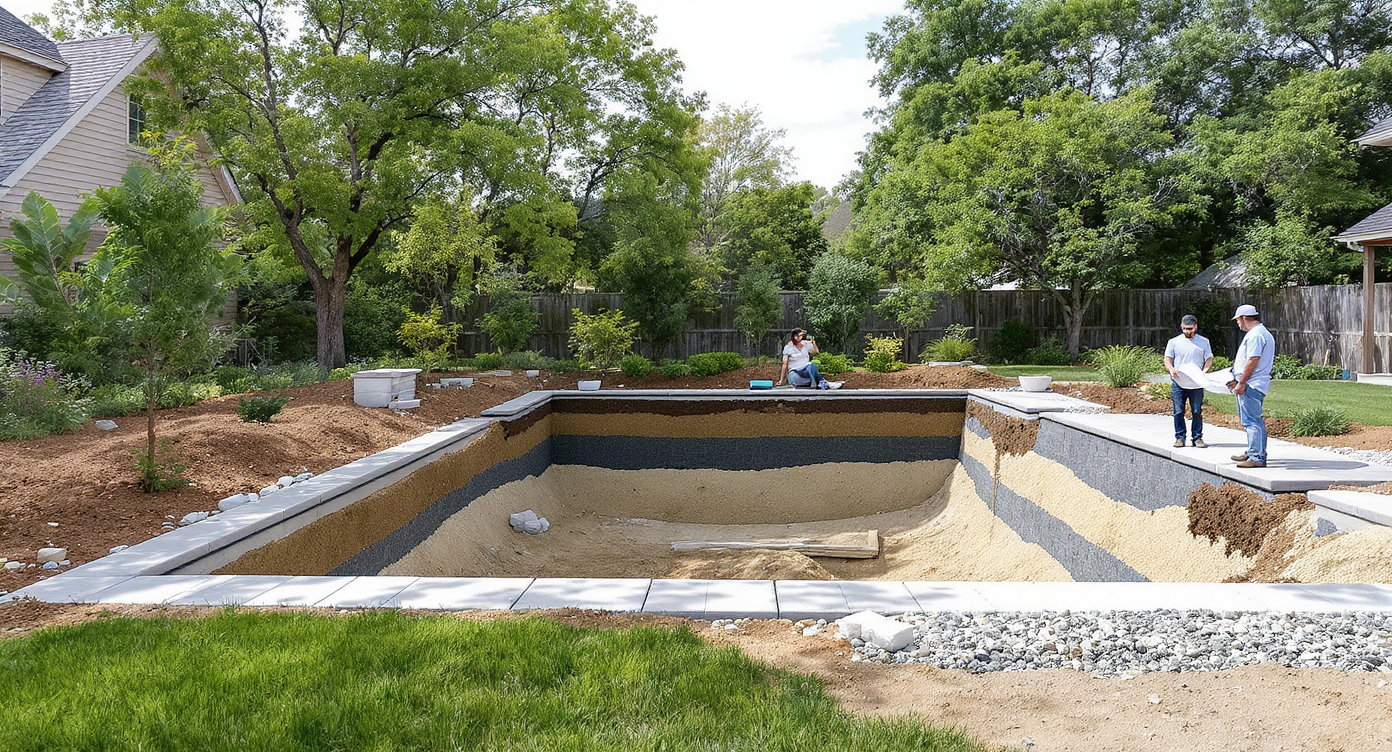
Backfill material, layering, and separation play critical roles in preventing settling and drainage problems around a pool. Using landscape fabric with gravel helps keep soil and stone distinct, reducing unwanted movement and water issues over time. Homeowners often face regrets when shortcuts are taken, but awareness and thoughtful planning can help avoid future headaches.
Understanding Pool Backfill: More Than Just Filling a Hole
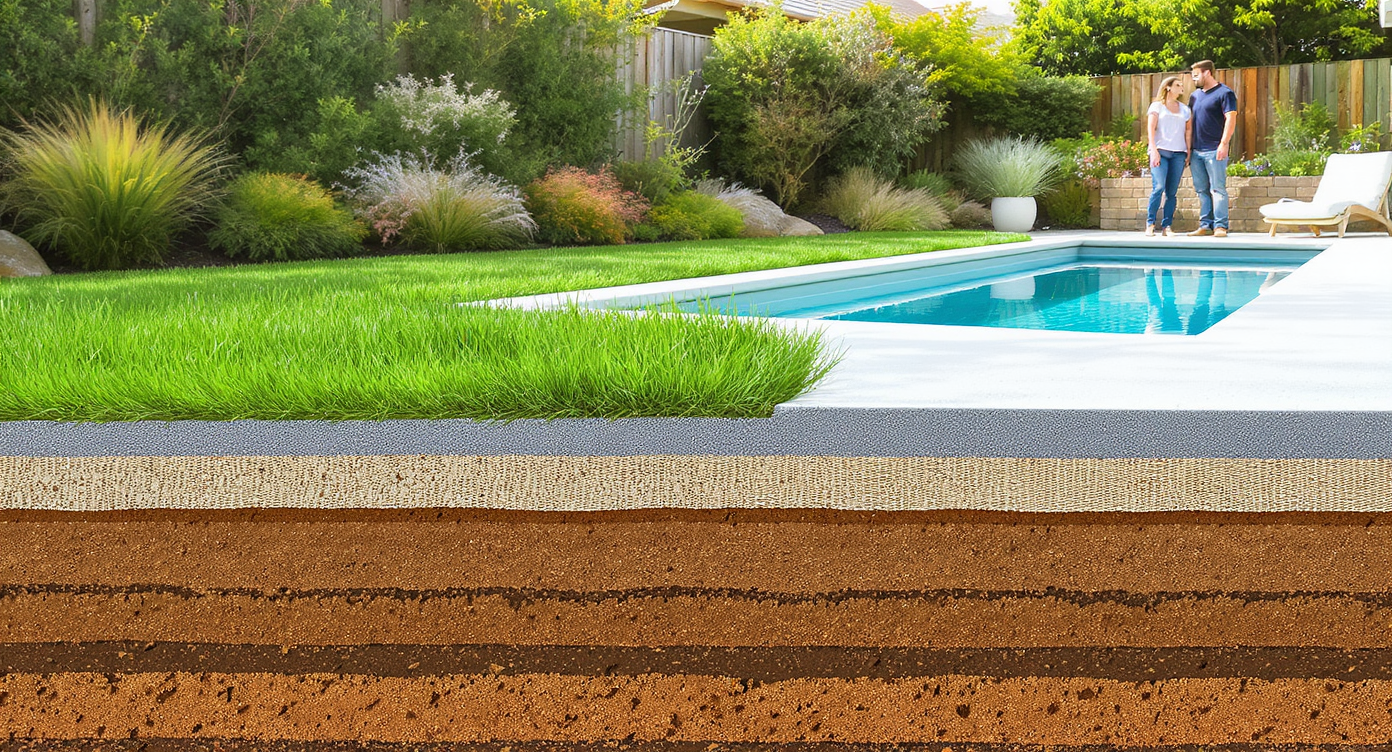
Understanding how backfill choices and separation layers work beneath your pool deck helps prevent settlement and water-related issues.
With pool installations becoming focal points for outdoor living, the details beneath the surface are proving just as important as the shimmer on the water. One decision that can have lasting consequences is the choice of backfill material and the method used to separate it from native soils. Homeowners frequently find themselves questioning whether their yard will hold up—especially when they spot signs of settling, ponding, or unexpected cracks. Recently, debates have heated up online around the use of pea gravel to refill pool access holes, particularly when it’s done without landscape fabric. Some worry about soil migration and long-term stability, especially in areas with clay-heavy earth and variable water exposure. Exploring what drives these concerns, and what practices produce safer, more resilient outdoor spaces, can help anyone planning a new pool or renovating an established one.
-
The Problem with Unprotected Gravel in Pool Installations

Without a separation barrier, clay soil seeps into gravel fill—putting pool stability at risk. Use geotextile fabric for lasting results.
Pea gravel is widely used for its drainage qualities and ease of handling, making it a staple for both pool bases and access repairs. However, if gravel is poured directly into an access hole without any kind of separation barrier, issues can arise—particularly in properties with clay soils. Clay, being fine and easily mobilized by surface or subsurface water, will tend to work its way into open pockets between the stones. Over time, this migration can create pockets of air and slump, which may eventually compromise both the pool’s levelness and any surrounding paving. Designers often recommend a geotextile or landscape fabric along the sides and base before replacing the gravel. This simple layer acts as a membrane, keeping fine soil where it belongs and allowing water to pass through. Without it, the fill can mix, producing uneven surfaces and future maintenance headaches. Some experts point out that, especially in high-clay areas, the absence of fabric between soil and gravel is a classic landscaping mistake that homeowners regret—one easily avoided with a few preventive steps.
Expert Insight
A family in a suburban neighborhood decided to invest in a fiberglass pool to transform their backyard into a summer hub. Weeks after the work was finished, they noticed slight dips forming along the edge of the pool deck, and small weeds pushing up through the pavers—a common complaint from homeowners who later realize the value of using both fabric and the right sand compaction techniques. Thankfully, early action kept repairs minimal, but the episode remains a reminder to treat every sub-layer as a critical part of the final design.
-
Drainage, Settlement, and the Role of Water
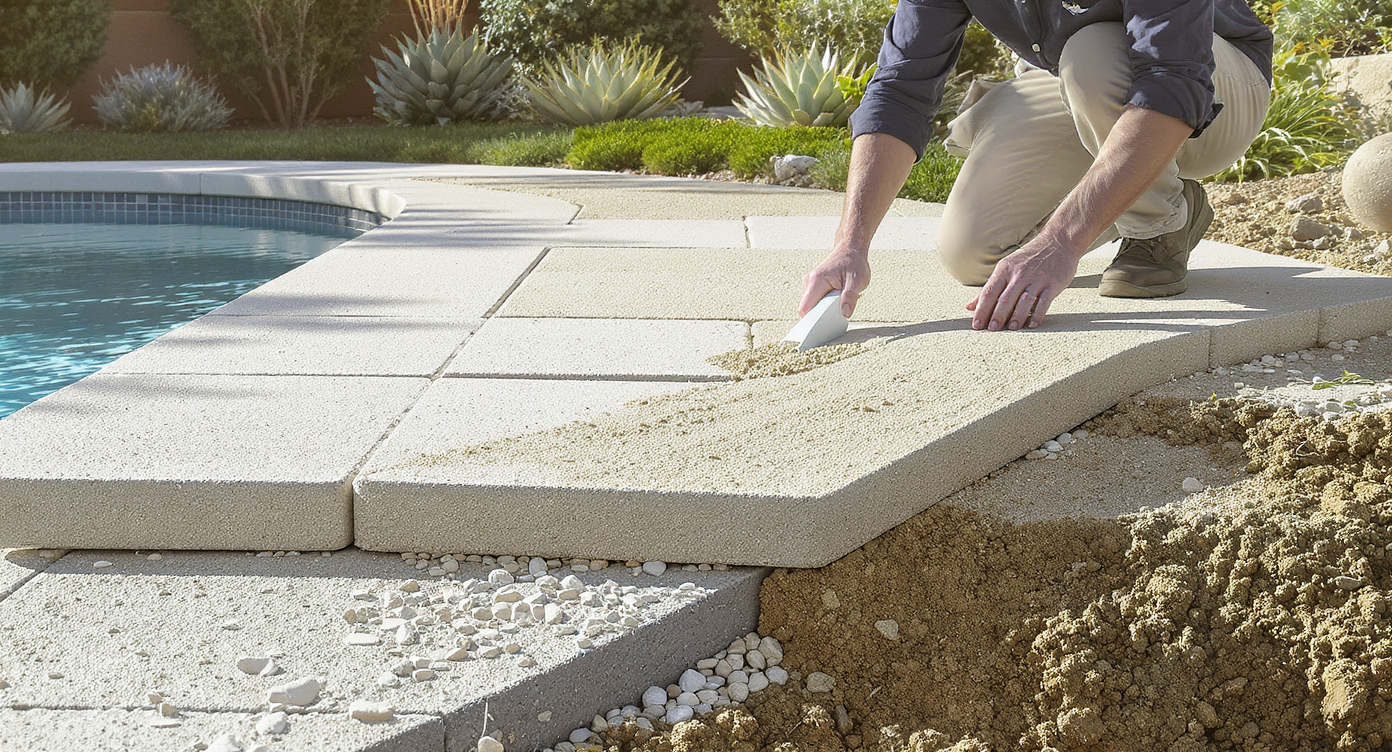
Proper drainage and settlement prevention start with graded pavers, quality underlayment, and smart maintenance—seen here in action.
Good drainage is the silent hero behind every stable pool deck. Water should always flow away from the pool and patio: not just at the surface, but underneath as well. Poorly managed water is among the most frequent causes of paver failure, softening subsoils or pooling under decks. If rain or irrigation water is allowed to filter through loosely packed joints in the patio or open gravel below, it will carry soils with it, leading to settlement as materials wash away. Applying polymeric sand and grading exterior hardscape surfaces prevent much infiltration. According to hardscaping maintenance strategies for weed-free pavers, these steps also help reduce complications like unwanted plant growth and moss, which thrive in persistently damp environments. The same preventative thinking benefits homeowners with clay-heavy subsoils that risk migration into unprotected gravel.
-
Why Material Transitions Matter in Poolside Hardscaping
It’s not uncommon in landscape construction for installers to use leftover gravel from one part of a job to fill another. While this may seem like an efficient use of resources, it can create weak links in the system, especially if the base layer under the pool deck is compacted but the access holes are left loose and unconsolidated. Layering fabric between fill materials doesn’t just reduce soil movement; it creates a more predictable transition for compaction—critical when thousands of pounds of pool or pavers rest overhead. This approach can be further enhanced by compacting new fill in thin, firm lifts, verifying that each layer resists movement before adding the next. The goal is to blend efficiency with long-term stability, a tradeoff at the heart of successful hardscaping.
Visualization Scenario
Imagine a newly installed pool flanked by a patio, where each element feels rock solid underfoot, rain drains neatly away from the deck, and emergent weeds are nowhere to be found. The secret lies out of sight—a thoughtful sequence of layers, starting with protected, tightly compacted gravel over landscape fabric and topped with sealed paver joints. Homeowners who experience this stability rarely have to worry about unsightly settling or repeated repairs, which reflects the quiet success of carefully considered backfill choices.
Frequently Asked Pool Backfill Questions
In most standard landscaping and pool installations, using a geotextile barrier is highly recommended wherever soil meets gravel. This practice minimizes settling by preventing the mixing of fine material and helps channel water where intended.
What happens if I skip compaction during backfill?
Lack of compaction means future settlement is likely, potentially causing pavers or decking to heave and dip. Compacting in thin lifts allows each layer to interlock and resist movement.
Does polymeric sand between patio pavers also help around a pool?
Yes, polymeric sand not only holds pavers firmly in place but also blocks water infiltration that can destabilize subsoils, as explained by maintenance insights for weed-free pavers.
Are there long-term costs to rushing this part of the installation?
Yes, failure to properly separate, compact, and plan backfill materials almost always leads to extra work and expense down the road—lifting, resetting, or even dealing with water problems that could have been avoided.
Can AI landscaping design for homeowners improve complex pool projects?
Absolutely. Modern platforms like ReimagineHome.ai let you visualize and test landscaping scenarios before committing, helping avoid costly mistakes.
Protecting Your Pool Investment Through Smart Backfill
The best poolside environments start below ground, with careful attention to every layer that supports the finished surface. Homeowners looking to avoid common landscaping mistakes often overlooked by rushed crews can borrow from pro techniques: use landscape fabric where different materials meet, compact new fill thoroughly, and always consider where water will go long before it arrives. As AI-driven design tools grow more sophisticated, resources like ReimagineHome.ai offer valuable visualization and planning support, making it easier than ever to get it right the first time.