7 Powder Room Layout Corrections for Better Comfort and High-Impact Style
TL;DR
A great powder room starts with correct layout, scale, and lighting, not just bold finishes. Here are seven design corrections to maximize comfort, visual flow, and guest impression in even the smallest spaces.
Why Layout Logic Matters More Than Decor
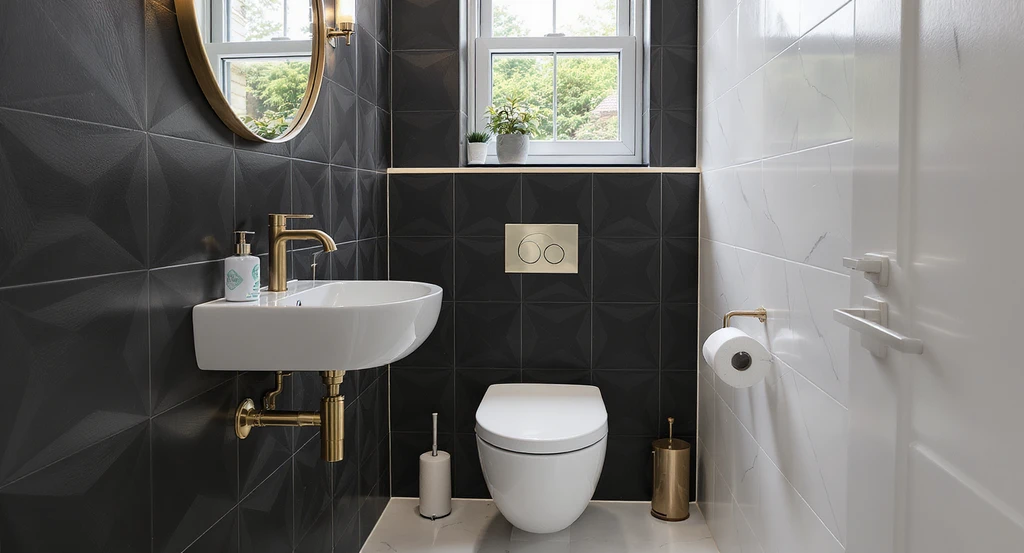
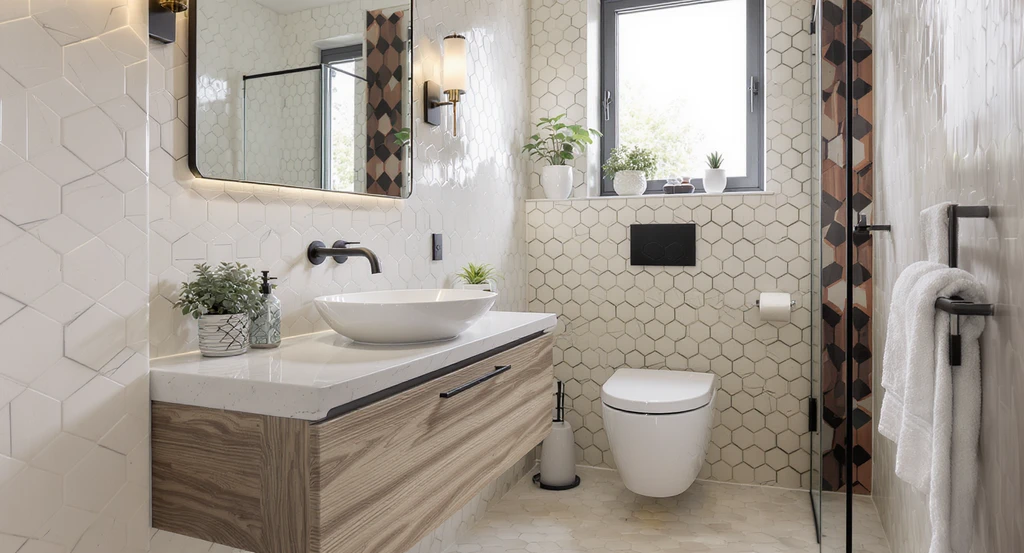
Explore how to visualize powder room remodels with ai powered design ideas. This virtual staging for small bathrooms shows modern powder room styles using ai for comfort and high-impact visuals.
Powder rooms create a first and lasting impression, but their compact size makes layout mistakes especially noticeable. While dramatic wallpapers and designer sinks are memorable, a poor floor plan or incorrect fixture sizing quickly sabotages both function and visual appeal. Think of the powder room as a mini design showcase: every element needs to earn its place.
This practical guide highlights the essential corrections for powder room layouts, based on real-world spatial rules and careful material selections. As explored in our guide to bathroom staging, clarity in small bath design often matters more than surface trends. Here’s how to maximize comfort, flow, and style in your half-bath, step by step.
-
01. Ignoring Minimum Clearances Is the Top Mistake
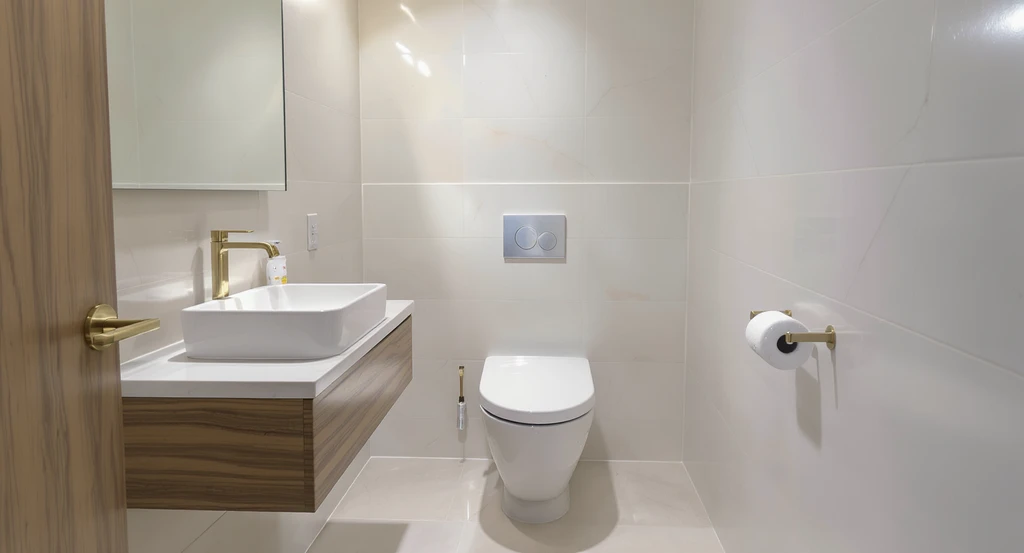
See how ai powered powder room design ideas and virtual staging for small bathrooms can help avoid common layout mistakes by maintaining 21-inch clearances and smart sink choices.
Overlooking basic clearance rules leads to squeeze points at the toilet and vanity. The most common issue: installing fixtures with less than 21 inches of open space in front of the toilet, or crowding the sink into a corner for style.
Always confirm these core measurements: at least 21 inches in front of the toilet, and a minimum of 15 inches from the toilet centerline to side walls. If guests must turn sideways to close the door, the space is undersized or misplanned. Choose a wall-mounted or shallow-depth sink to maintain at least 16–18 inches of usable countertop without overpowering the walkway.
-
02. Blocking the Entry Door or Window
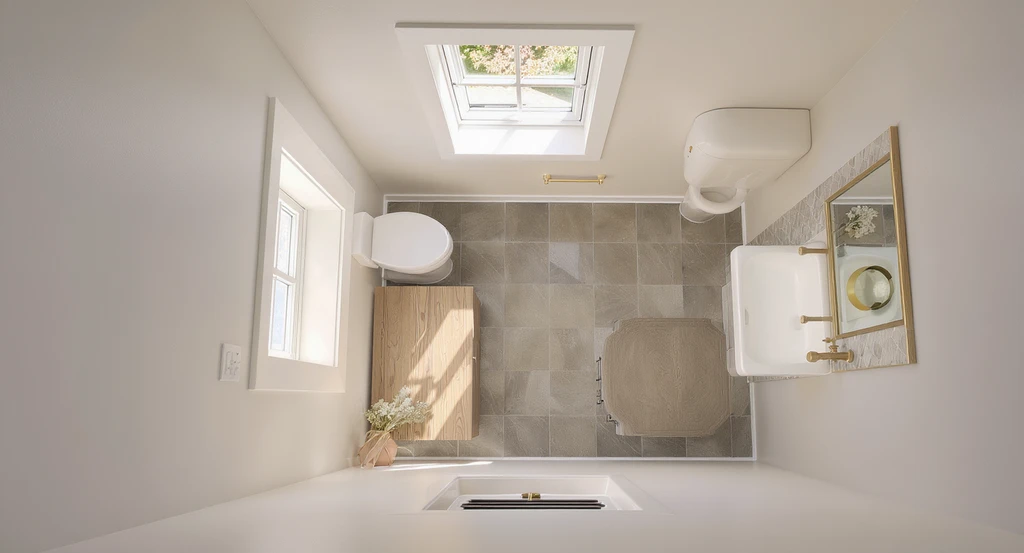
Virtual staging for small bathrooms demonstrates how to visualize powder room remodels with AI design. This layout uses ai powered powder room design ideas to prevent vanities or toilets from obstructing doors or windows, creating a more comfortable, modern space.
Fixtures that obstruct doors or windows restrict movement and airflow. A frequent misstep is placing the vanity or toilet in the door’s swing path, making it awkward to enter or exit, especially in tight spaces.
Before installation, verify the full movement range of the door and any operable windows. In floor plans under 20 square feet, consider a pocket door or sliding door to preserve usable floor area. As seen in many powder room layouts on our bathroom finishing touches guide, comfortable entry always comes before decorative features.
-
03. Oversized Vanity Destroys Proportion
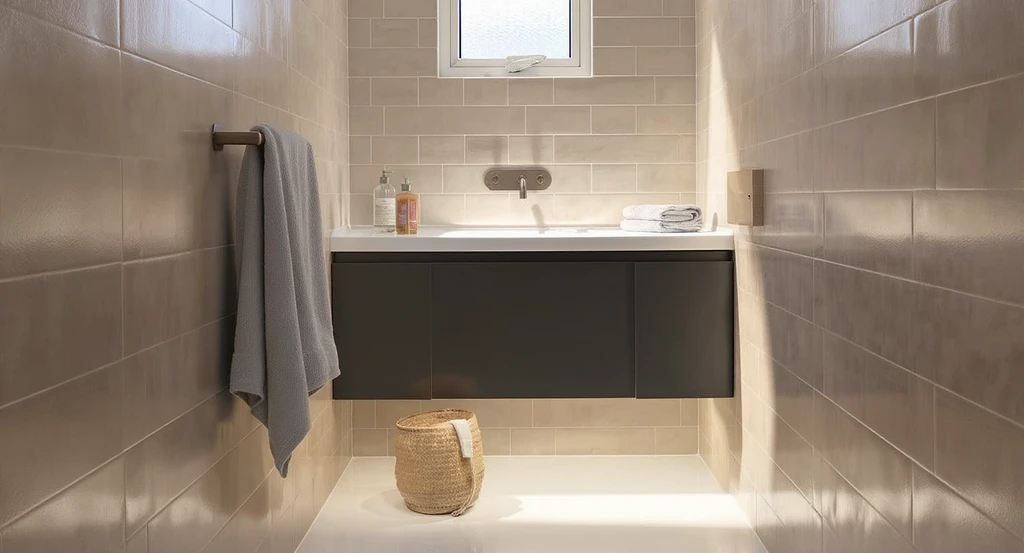
See how ai powered powder room design ideas and virtual staging for small bathrooms can prevent proportion issues by replacing oversized vanities with floating, modern fixtures.
Large vanities dominate small powder rooms, creating visual imbalance and limiting movement. This mistake often happens when homeowners try to add storage or choose fixtures designed for larger full bathrooms.
Correction logic: For rooms under 4 feet wide, use a wall-mounted or pedestal sink, and limit countertop depth to 16–18 inches. Floating vanities are another good option, as they visually expand the floor area. Keep fixture widths in line with the available wall space, if your countertop is only 36 inches, select a sink and storage combination that leaves visible wall clearance on each side.
-
04. Poor Mirror Scale and Height
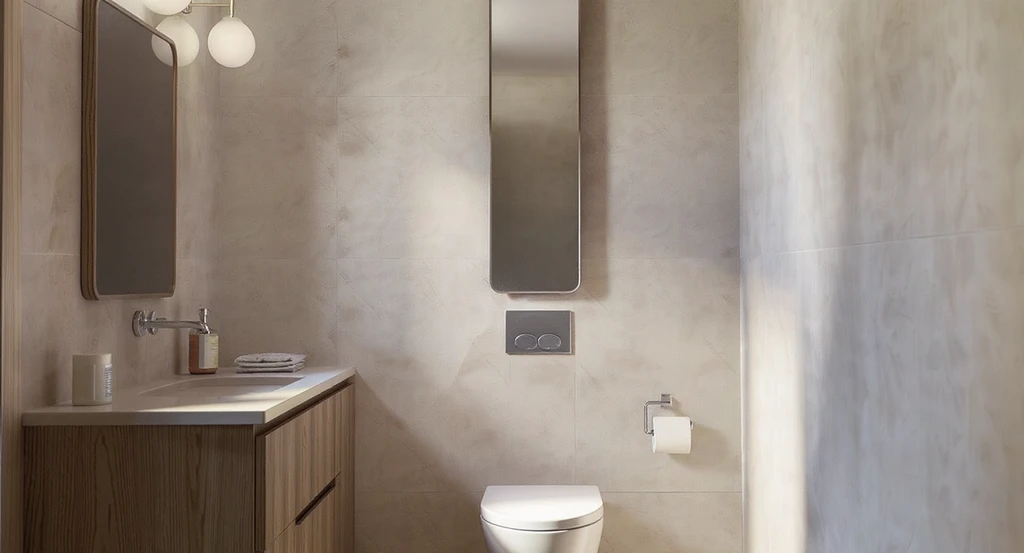
04. Poor Mirror Scale and Height Image
A mirror that is too large or too small destroys spatial balance. Tiny mirrors look lost against wide vanities, while oversized mirrors can overwhelm both users and the room layout.
Correction logic: Match mirror width closely to the vanity, leaving 2–3 inches on each side. Height should align with the average guest’s eye level, typically 60–65 inches above the floor. Arched mirrors can add interest without adding extra width; contrast angular sinks with softer mirror lines, as in the Reddit example, a rectangular onyx sink pairs well with an arched glass mirror.
-
05. Relying on One Overhead Light (Creates Shadows)
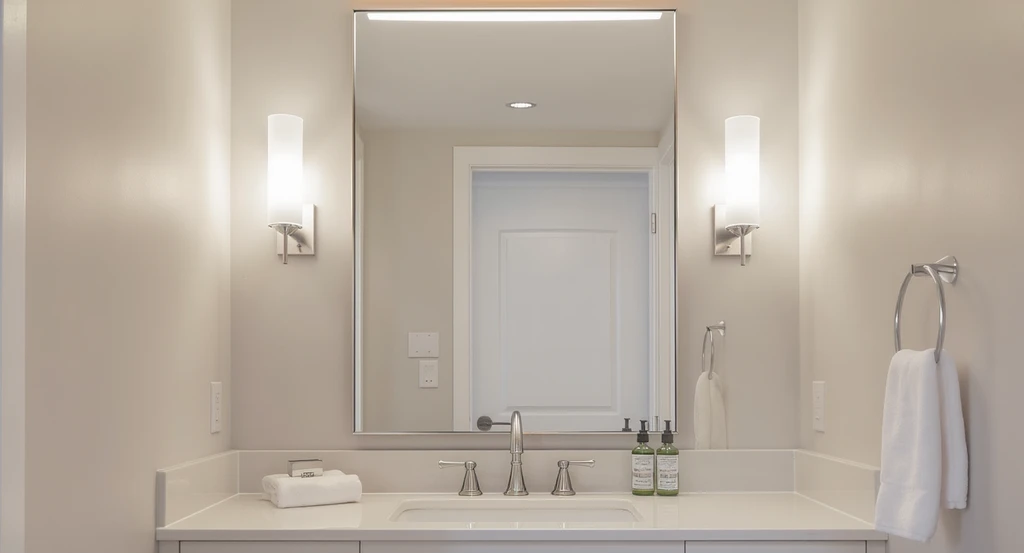
Layered lighting with mirror-height sconces and ambient ceiling fixtures in this modern powder room shows how to visualize powder room remodels with ai powered design ideas for best comfort and style.
Pendant or ceiling-only lighting in a powder room often leaves shadows on faces and corners, making the space feel clinical. Many install only a central light to save cost, but this severely limits both comfort and atmosphere.
Apply a layered lighting rule: two wall sconces at mirror height plus a soft ambient ceiling fixture. Bulb temperature should fall between 2700K–3000K for flattering, warm tones. Use dimmable fixtures if possible. Preview different lighting configurations (for example, using REimagineHome AI for virtual staging) to avoid harshness and confirm even distribution. As highlighted in our small bathroom fixes post, changing light temperature and placement often transforms a bland bath instantly.
-
06. Wasting Vertical Space
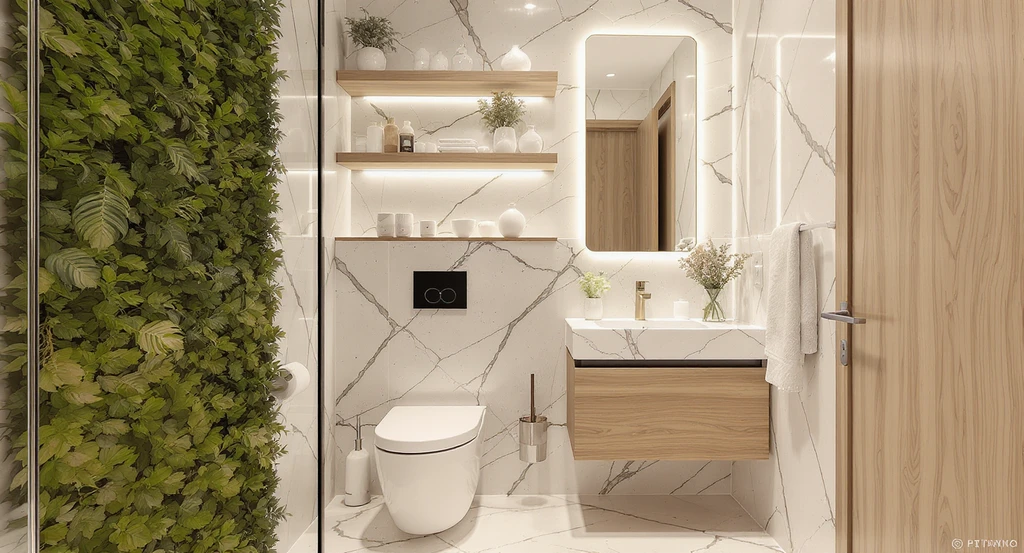
06. Wasting Vertical Space Image
Leaving upper wall areas blank in a powder room is a missed chance for intentional style or storage. This often happens when designers fear "clutter," but a single strong vertical feature can anchor the space.
Create a focal point with a vertical ombré paint effect, textured tile, or a statement wall-mounted shelf. In the Reddit example, ombré gradient walls and glass tile use height to make the compact room feel larger and more considered, while maintaining a peaceful flow. Keep features minimal: one art piece or shelf is more effective than several small items.
-
07. Overdecorating or Mismatching Hardware Finishes
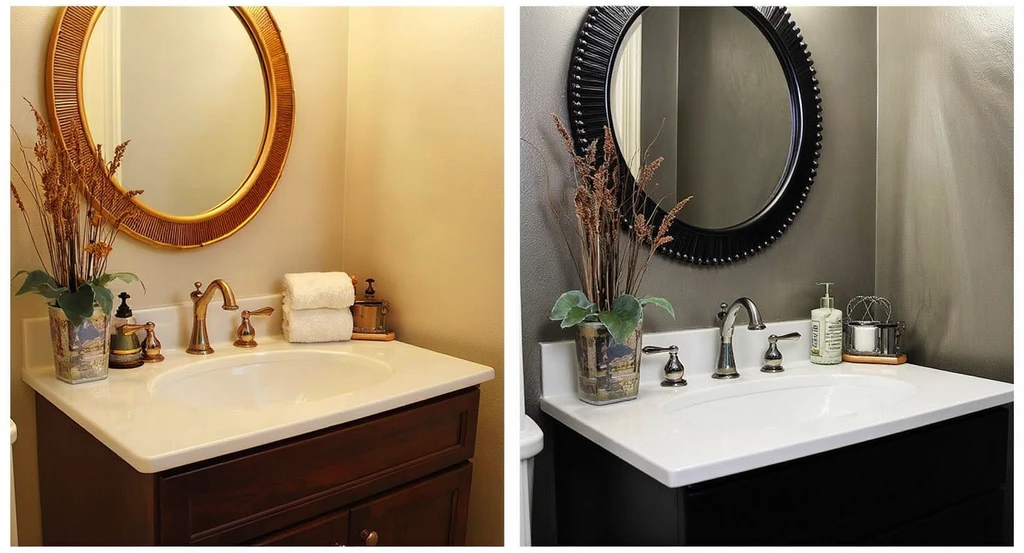
07. Overdecorating or Mismatching Hardware Finishes Image
Piling on accessories or mixing too many metallic finishes makes a small powder room feel chaotic—not curated. This usually happens when every surface needs to "pop" or follow a trend.
Correction: Limit decor to one tray and a single small plant (optional). Select one hardware finish for faucets, sconces, and cabinet pulls, such as matte black or brushed brass. If the wall outlets or switches look ordinary against upgraded hardware, replace them with finish-matched plates for a unified result. Consistent finishes matter more than the most expensive materials. For material inspiration, see our bathroom staging ideas post.
Powder Room Layout FAQ
- Q: What are the minimum bathroom dimensions for a powder room?
A: 3×6 feet is the minimum functional size, with at least 21 inches of clearance in front of the toilet and a 30-inch wide space around it. - Q: Should the vanity be wall-mounted or freestanding?
A: Wall-mounted or floating vanities are best for small powder rooms, as they visually enlarge the floor area and improve circulation. - Q: How do I improve lighting in a windowless powder room?
A: Use layered lighting—a combination of wall sconces at mirror height and a ceiling fixture with warm white bulbs (2700–3000K). - Q: What are the top powder room trends?
A: Function and proportion always come before trends. If you add bold finishes, anchor them with correct layout and consistent hardware.
Key Takeaways for Powder Room Design That Works
A memorable powder room is built on correct clearances, scale-appropriate fixtures, balanced lighting, and restraint in decoration. Even the most striking materials or vessel sinks can't make up for a cramped layout or unflattering shadows. Review every plan using a checklist: comfort, circulation, lighting, scale, and style, always in that order. Visualize changes and test proportions before investing in upgrades. When you follow core layout logic, even a tiny powder room adds real value and refinement to your home.