Small/Narrow Bathroom Redesign: Forest Green Tiles—Inspired Choice or Risky Move?
TL;DR
Thinking of forest green tiles for your small bathroom? The right shade, careful lighting, and balanced finishes all matter more than trends. Visual previews help avoid common regrets, while understanding actual limitations allows for beautiful, practical spaces.
Seeing Dark Green in a Small Bathroom—Smart or Too Bold?
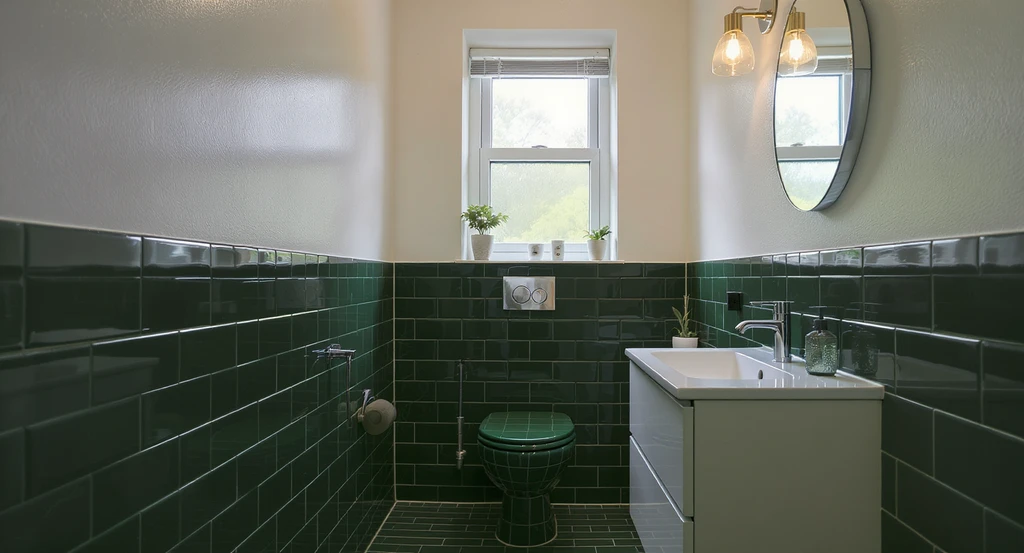
Small bathroom redesign with forest green tiles and a boxed-in cistern, illustrating if dark green tiles are too much in a small bathroom. Modern lighting and an affordable vanity help balance the moody ambiance in this compact space.
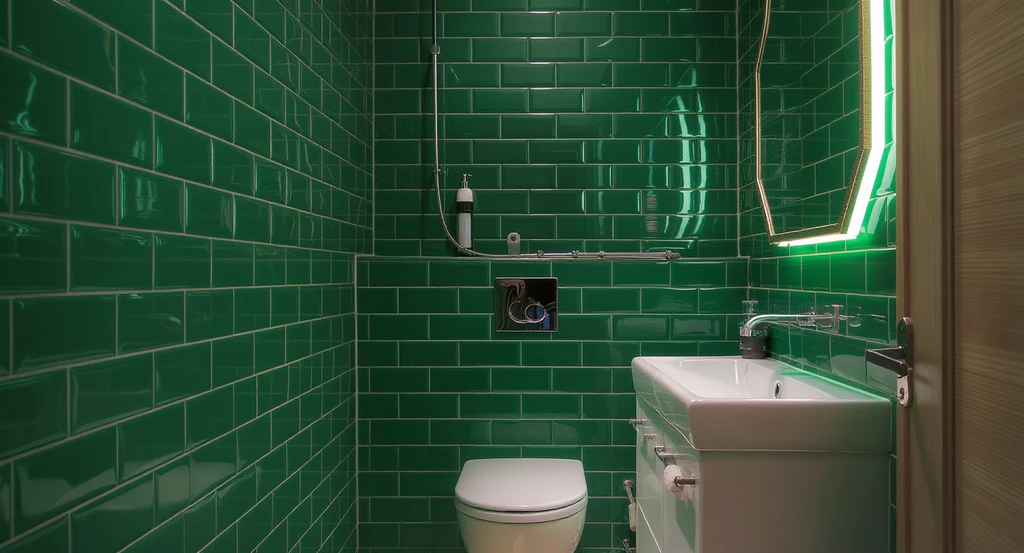
When you picture your future bathroom, you may see a tranquil, moody space filled with deep green tiles—but translating that dreamy AI image into real life brings up valid concerns. Is a forest-like green truly inviting in a compact room, or will it swamp the space? Will a boxed-in cistern help the look, or just make everything feel cramped? These questions are more than just “decor decisions.” They’re about how a small space feels when you bathe, get ready in the morning, or wind down at night. The reality is, photos (and AI-generated images) can mislead—light, color, and scale often shift in translation. Let’s break down what’s actually happening—and how to make confident, satisfying choices for your own bathroom.
-
What’s Really Happening in the Space?
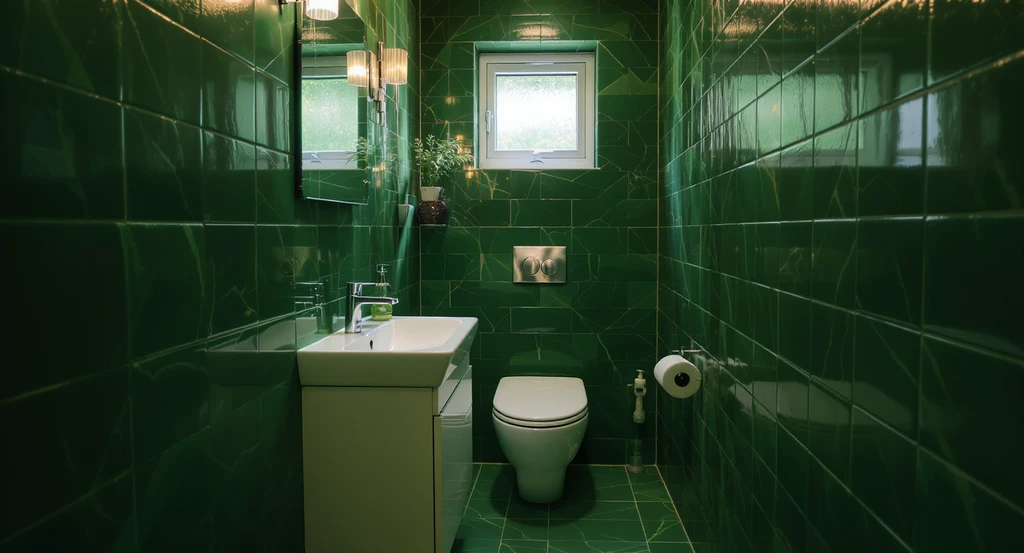
A small bathroom redesign with rich forest green tiles and subtle lighting shows how moody colors impact compact spaces—exploring if dark green tile is too much in a small bathroom, the effect of best lighting ideas for moody bathrooms, and practical solutions like affordable vanity units and boxing in the toilet cistern.
Small or narrow bathrooms naturally magnify every design move. A dark green tile—glossy, varied, and forest-inspired—may look rich in an inspiration shot, but the same hue on a real wall interacts with your specific light, proportions, and tile placement. Lighting in design visuals often “cheats” by making spaces look brighter and more expansive than reality. In practice, strong color on the walls can create a cozy, memorable effect—but if natural or artificial light is lacking, the space can quickly feel closed in rather than calming. Tiles with texture and tone variation help reflect and scatter light, which can offset heaviness, but only up to a point.
Expert Insight
A couple once shared how a forest green tile looked luminous and serene in an AI rendering, but felt flat when installed due to the room’s north-facing window and a warm LED bulb casting yellow light. After switching to layered, whiter lighting and adding a large pale rug, the room finally matched their vision—reminding them how real-world factors can gently shift even the best-laid plans.
-
Are Dark Green Tiles Too Much in a Small Bathroom?
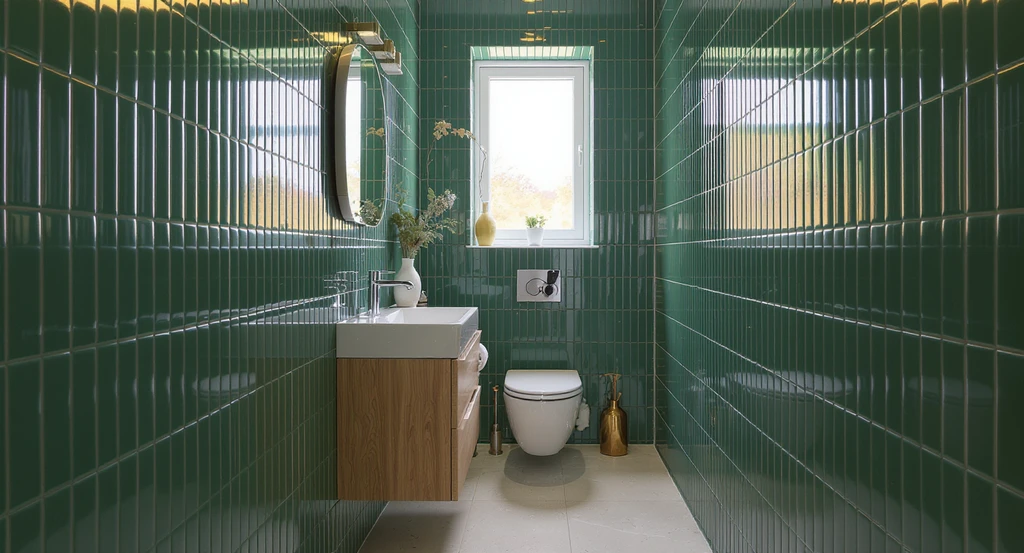
Is dark green tile too much in a small bathroom? This compact redesign artfully balances glossy forest green wall tiles with bright flooring, affordable vanity units, and optimal lighting for a sophisticated, moody charm.
Many expect small spaces to require pale colors for spaciousness, but contrast—used carefully—can actually emphasize character rather than shrink it. As described in our guide on choosing dark vs light green bathroom tiles, a deeper green creates intimacy, especially if it’s balanced with lighter floors, crisp white ceiling, and warm accents. However, the exact shade becomes critical. While a glossy forest green can feel moody yet fresh, a green that absorbs too much light (or lacks tone variation) may feel less inviting. Why does this happen? Human eyes are sensitive to changes in contrast and reflectivity in small rooms. If your tile samples look dramatically darker than your digital preview, trust the sample in your hand. Daylight, bulb color temperature, and even tile layout direction all influence the overall feel. Most importantly, AI imagery often inflates apparent brightness and spaciousness—so previewing actual tile samples in your space is vital.
-
How Lighting and Material Choices Change the Result
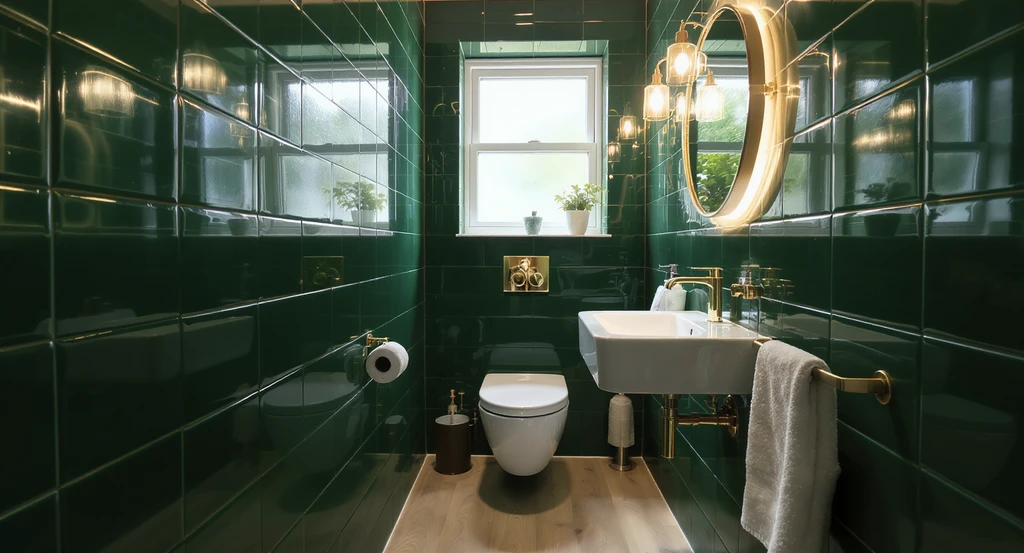
Small bathroom redesign with green tiles features layered lighting and reflective finishes, showing the best lighting ideas for moody bathrooms. Glossy forest green tiles, a boxed-in toilet cistern, and an affordable compact vanity complete this lush, space-enhancing setup.
Lighting is often underestimated. Both natural daylight and artificial fixtures shape the mood, depth, and clarity of green tiles. As explored in our article on finishing bathroom remodels with lighting and hardware, bulbs warmed to 2700–3000K create a relaxing glow, offsetting the coolness of most greens. Layered lighting (overhead, mirror, and ambient) helps avoid gloomy corners, especially in alcoves or near boxed-in features. Gloss or ceramic glaze tiles add reflection—heightening the sense of space—which matters in rooms with minimal daylight. Matching warm metal accents, pale floors, and natural wood further softens intense greens, keeping the effect lush, not heavy.
-
Should You Box in the Toilet Cistern?
Boxing in a cistern (bringing it to seat height or across a wall) promises a neater look but changes both perception and practical use of space. In tight quarters, added boxing can claim vital inches, making a room feel narrower if not integrated thoughtfully. If access for maintenance is limited, ongoing repairs might also become disruptive. Visually, a well-executed box-out can anchor the bathroom’s “spine,” aligning with the bath edge and offering an additional shelf. However, poorly proportioned boxing—especially if it sits higher than adjacent elements or feels bulky beside a tub—can interrupt the flow and risk clutter. Where possible, keep lines minimal and storage recessed. Previewing the ledge with a visualization tool before committing can clarify whether the impact is calming or crowded.
-
Choosing a Vanity for the Next Five Years
Vanity units for compact baths range from budget-friendly prefab options (around $600–$1000) to custom designs upwards of $2500. The main differences are in construction quality, finish, storage design, and hardware. As discussed by homeowners and designers alike, a modest, well-built unit from a reputable supplier is usually sufficient for a stay of five years or less, especially if paired with a stylish faucet and mirror. Look for options with integrated sinks, moisture-resistant finishes, and enough enclosed storage for daily needs. Wall-mounted vanities can help “lift” the room visually, but may cost slightly more to install. Whatever your price point, seeing the unit’s footprint superimposed in your actual space reduces the risk of regret.
-
Underlying Mechanism: Light, Scale, and Mood
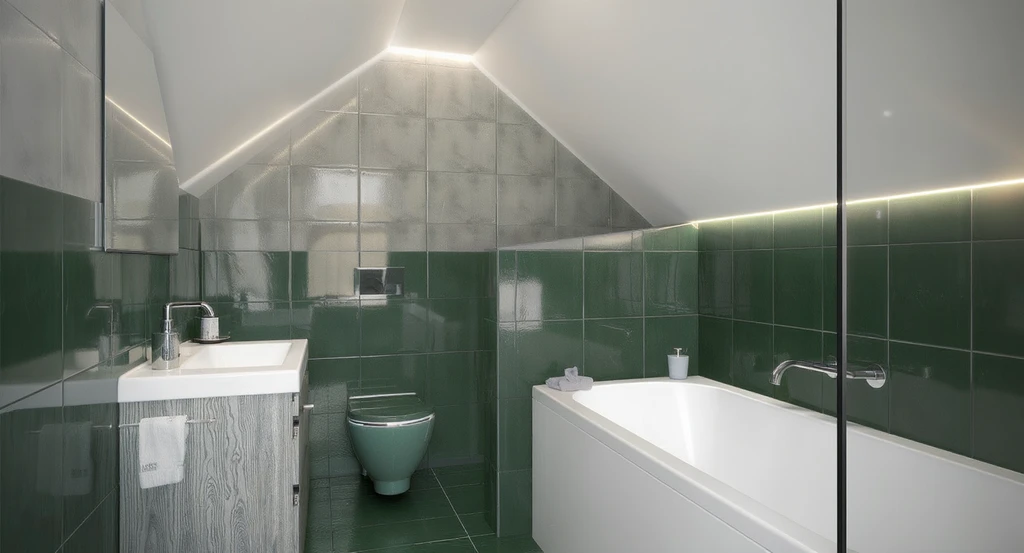
This small bathroom redesign with green tiles demonstrates how dark tone tiles, effective lighting, and boxed-in toilet cisterns can maximize space and elevation. Discover if dark green tile is too much in a small bathroom and view the best lighting ideas for moody bathrooms.
What you notice (or don’t) when you step into a small, deep-colored bathroom is shaped by a trio of mechanisms: - **Light reflectivity:** Glazed and varied tiles bounce back more light. Even in dark tones, this effect keeps corners from feeling closed. - **Perceived boundaries:** Vertical stacks or extending tile to the ceiling can visually elongate walls, while abrupt changes in color or boxed-out elements can interrupt sightlines. - **Fixture-to-wall relationships:** The space between vanity, toilet, bath, and boxed elements determines both comfort and flow. Too little clearance, or mismatched finishes, can make spaces feel tight. Previewing these relationships in a realistic rendering (rather than an aspirational one) reveals proportional truths that photos can obscure.
-
Visualizing Before Deciding: Why It Matters
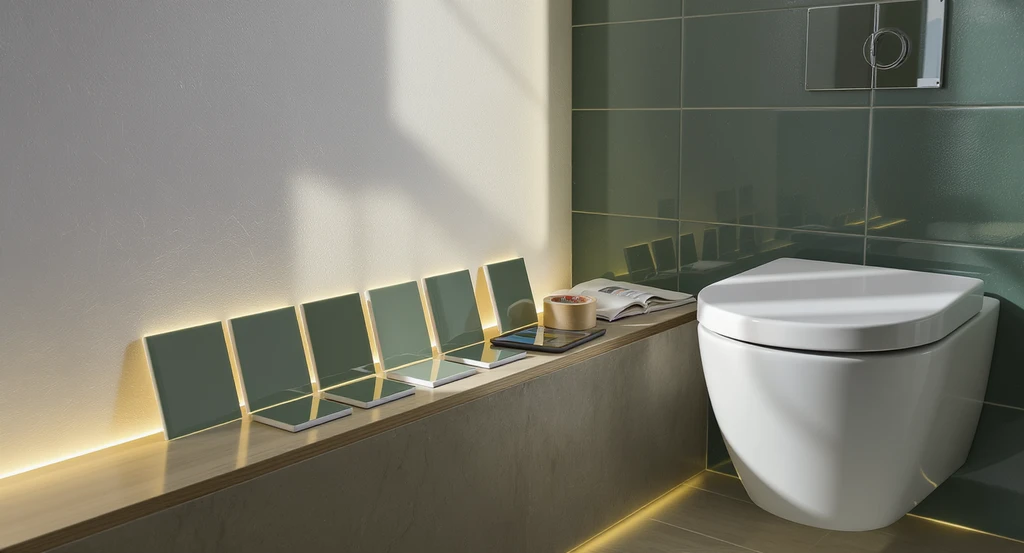
Previewing forest green tile samples in a small bathroom under varied lighting helps determine if dark green is too much in a compact space, while comparing affordable vanity units and boxed-in toilet cistern options supports confident small bathroom redesign decisions.
As many have found, AI aids like those from REimagineHome AI can offer a helpful mental model, but always check the realism of tile color, light, and room dimensions against physical samples and lighting scenarios. As covered in our post on emerging tile trends and visualizing them at home, the process of seeing finishes in your own setting clarifies whether your top pick produces visual calm, warmth, or feels cumbersome. Tiles, ledges, and vanities are less stressful investments when you preview combinations and know precisely what you’re getting—not just what’s trending online.
Frequently Asked Questions
- Will dark green tiles always make a small bathroom feel smaller?
- Not always. With good lighting and balanced finishes, dark green tiles can create depth and sophistication rather than shrinking the space. Try samples in your own light before deciding.
- What’s the best lighting for a moody bathroom with green tile?
- Layered lighting with warm bulbs (2700–3000K), including overhead, mirror, and accent lights, helps prevent gloom and creates a calming atmosphere. Glazed tiles add helpful reflection.
- Should I box in my toilet cistern?
- Boxing provides a neat look but can steal space and complicate maintenance in small rooms. Only box in if it serves as a cohesive feature and doesn’t cramp the layout. Preview the effect before deciding.
- What price should I expect for a compact bathroom vanity?
- Good quality options range from about $600 to $1000 for prefab units. Look for moisture resistance, integrated sinks, and sufficient storage. Custom units cost more, but aren’t always needed.
- How do I know if an AI or visualization image is trustworthy?
- AI images often exaggerate space and light. Treat them as directional, but always compare to real-world samples and true dimensions in your own room before making decisions.
Key Takeaways—Confident Choices for a Cozy Bathroom
A forest green tile wall can work beautifully in a small bathroom—but only if you check its actual impact in your space, under your real lighting, with your real proportions. Test physical samples, plan layered lighting, and pair rich color with lighter surfaces and warm accents. Avoid crowding the room with unnecessary boxing, and opt for practical, well-sized vanities. Look for balance, not extremes, and use visualization as a tool for clarity before you decide. Every room is unique—seeing it before you commit lowers regret and helps create a space you’ll truly enjoy.