4 Bedroom Furniture Layout Ideas That Improve Scale, Proportion, and Comfort
TL;DR
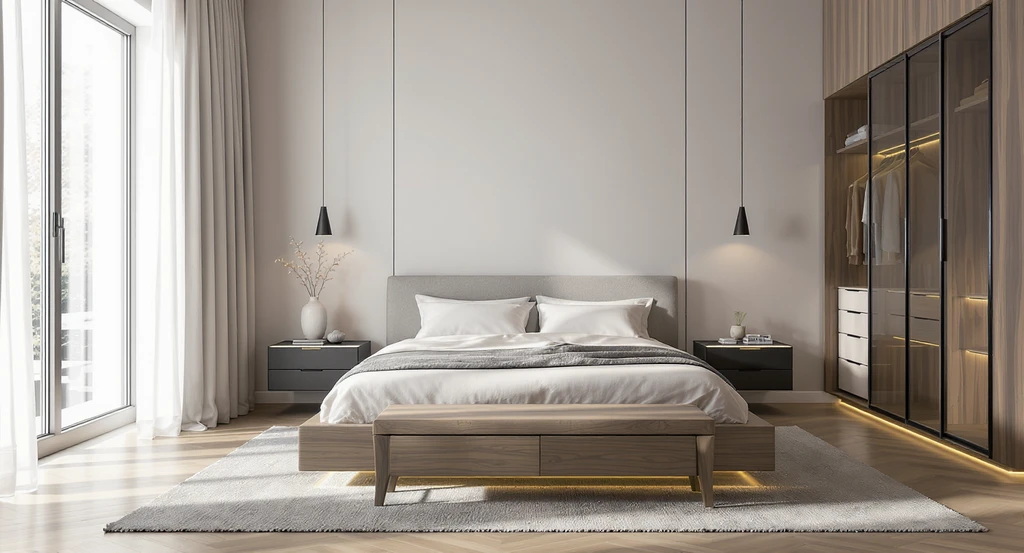
A bedroom should be more than a bed and dresser. Smart furniture selection, precise scaling, and visual alignment are essential for comfort and personality. Learn how modular pieces, mixed wood tones, streamlined silhouettes, and purposeful decor solve common layout mistakes and increase both utility and style.
Why Bedroom Furniture is a System, Not a List
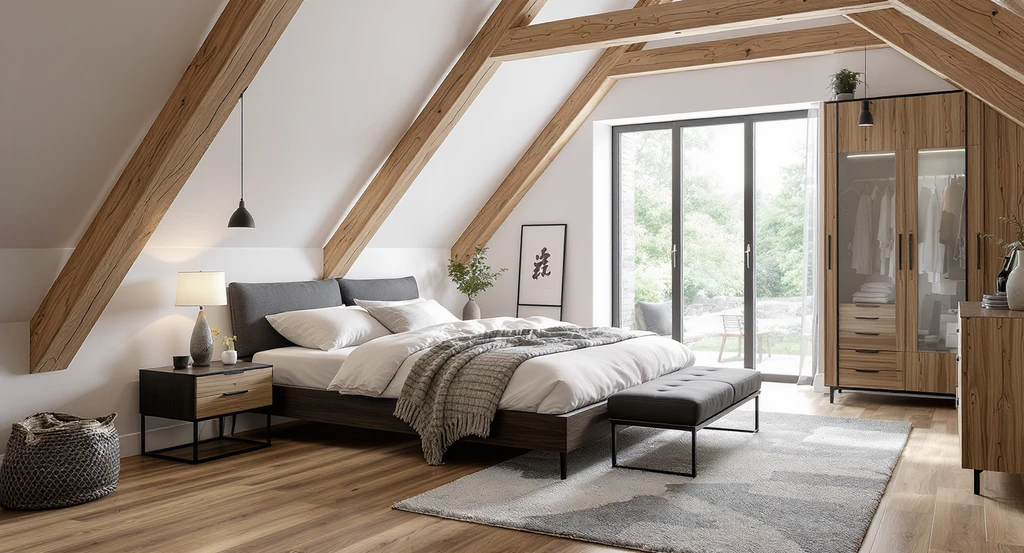
A well-planned bedroom furniture layout for small spaces demonstrates how to choose furniture that fits, whether a king-size bed will fit, and if black furniture makes a bedroom look smaller. A storage bench and minimalist styling maximize comfort and scale in unique bedroom architecture.
Bedroom design is not about filling space with individual pieces. It is a system defined by layout consistency, visual alignment, and intentional furniture scaling. Applying these principles prevents common design errors, such as overcrowding, misaligned styles, or poor use of space. The mix of material, scale, and color determines comfort and function—especially in small bedrooms or rooms with unique architecture. As discussed in our guide to small bedroom ideas for 2025, maximizing comfort depends on thinking spatially and creatively about every inch.
-
01. Disconnected Furniture Scaling Makes the Room Feel Off
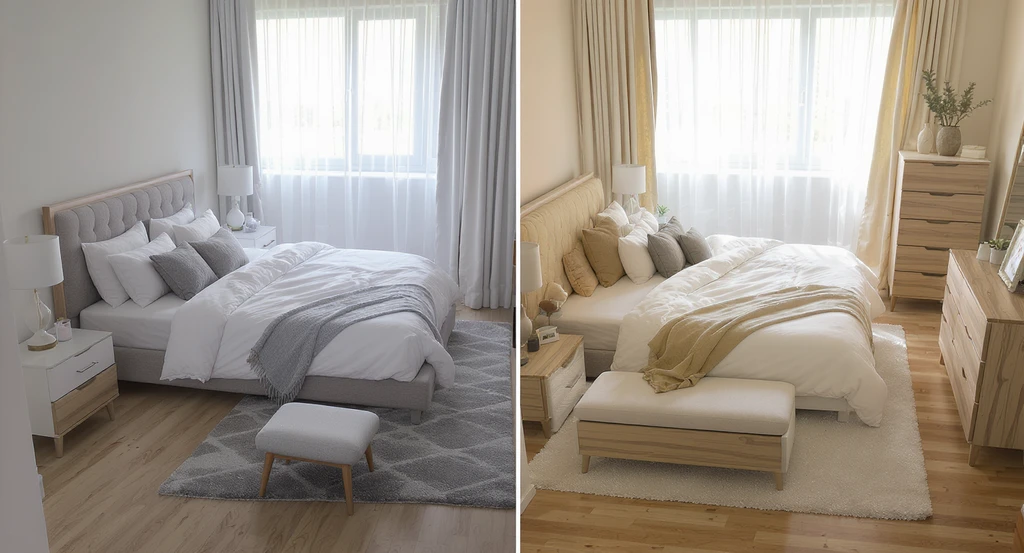
A side-by-side bedroom layout illustrates how to choose bedroom furniture that fits—demonstrating will a king size bed fit in my room and the difference between poor and optimal bedroom furniture scaling.
Furniture scaling is the proportional relationship between object size and room size. Poor scaling—like pairing a king bed with tiny nightstands or overfilling a small room—creates imbalance and reduces both comfort and perceived spaciousness. Scale errors often lead to wasted floor area or cramped circulation, which lowers buyer confidence and makes daily use less efficient. The correction is to define the largest functional anchor (such as the bed), and select support pieces (nightstands, bench, dresser) that match its mass and height. Reference Photo systems, such as those supported by REimagineHome AI, ensure every piece fits precisely within room constraints and improves layout consistency—especially important for those asking, "will a king size bed fit in my room?". As seen in our bedroom scale and lighting guide, upscaling select furniture items, rather than shrinking everything, creates greater comfort and visual balance.
-
02. Using One Wood Tone Flattens the Design
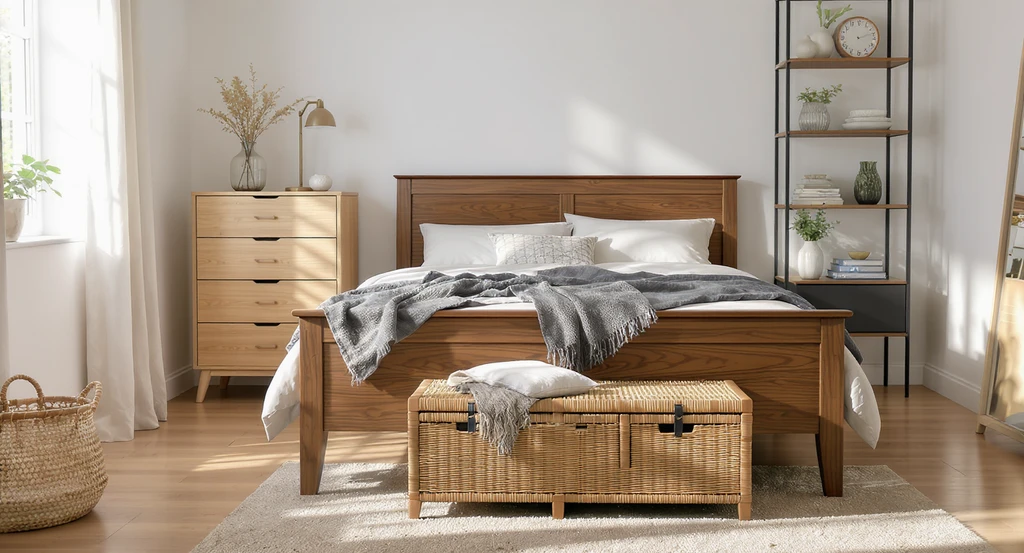
Using varied wood tones and mixed materials—like a walnut bed, oak dresser, and rattan storage bench—illustrates how to choose bedroom furniture that fits. This approach helps optimize bedroom furniture layout for small spaces and answers if black furniture makes a bedroom look smaller, while also considering storage solutions and king-size bed fit.
Overusing a single wood tone results in a flat, monotone space. Material variety is essential for visual alignment, since too much of one finish erases contrast and makes even high-quality furniture look bland. Breaking up wood tones—by mixing light and dark finishes, or introducing elements like rattan, metal, or painted surfaces—creates visual depth and highlights key areas. This approach, demonstrated in our tutorial on breaking up wood tones, leverages product realism by staging with real, shoppable pieces that support contrast and spatial definition. Use a Reference Photo to check for alignment, ensuring that the right mix of finishes lands in the correct visual hierarchy.
-
03. Matchy-Matchy Sets Kill Personality and Buyer Confidence
Perfectly matched bedroom sets—where all furniture is identical—remove room character and can appear staged or generic. Visual alignment is undermined when each piece shares the same silhouette, finish, or color. Psychological research shows that design confidence increases with personalized, curated combinations of textures and shapes. Introduce one-off vintage, modern, or custom items to disrupt the sameness; for example, pairing a sculptural rattan chair with a matte black nightstand, as previewed in our 2025 Furniture Trend Forecast. Real Shoppable Products allow buyers or designers to build rooms that feel authentic, vibrant, and more valuable.
-
04. Ignoring Function: Storage Benches and Multipurpose Pieces for Small Spaces
Optimized bedroom furniture layout for small spaces featuring a bench with storage, under-bed drawers, and a compact nightstand/desk, answering how to choose bedroom furniture that fits realistic bedroom footprints.
Failing to include multifunctional furniture wastes usable space, especially in small bedrooms. A bench with storage for small bedrooms maximizes both seating and organization without cluttering the footprint. Real Shoppable Products refers to staging with real-world, purchasable furniture—ensuring product realism and reliable scale for items like daybeds, nightstand/desks, or under-bed drawers. According to our small space comfort guide for 2025, these tactical selections reduce clutter, increase hospitality, and boost buyer confidence in both rentals and homes for sale. Incorporating visually aligned, right-scaled storage also helps answer questions about how to choose bedroom furniture that fits tight layouts.
Visualization Scenario
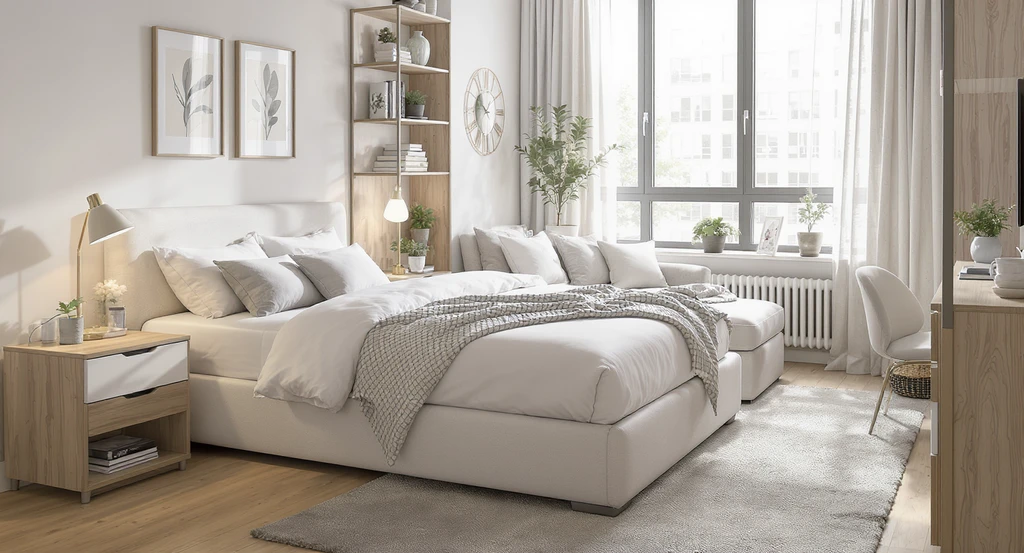
Imagine entering a compact bedroom with a platform bed scaled perfectly for the space, a storage bench at the foot for extra bedding, and a rattan side table paired with a matte black light fixture. Multiple wood tones add warmth, while each piece feels aligned with the room's size and overall style. Nothing looks crowded, nothing is under-scaled; instead, the room feels both intentional and inviting.
FAQ: Bedroom Furniture Ideas and Solutions
- What is the best system for a small bedroom layout?
Choose compact, multifunctional pieces and ensure each item has room to breathe. Utilize storage benches and nightstands that match the bed’s scale, as covered in our small bedroom guide. - Does black furniture make a bedroom look smaller?
Black furniture can visually anchor a space when paired with lighter elements. It should not dominate; instead, use as focal contrast, balancing with softer materials, as seen in leading trends for 2025. - How do I choose bedroom furniture that fits?
Measure the size of your anchor item first (usually the bed). Select support furniture with heights and widths in proportional relationships. Use a Reference Photo to preview alignment and correct scale. - Is a bench with storage practical for a small bedroom?
Yes. It increases functionality without consuming extra space, serving as both seating and storage. Explore examples in our scale and comfort explainer. - Should all bedroom furniture match?
Mixing materials and finishes increases visual interest and buyer confidence. Avoid fully matched sets for a more curated and valuable appearance.
Key Takeaways: Bedroom Design is About System, Not Just Style
Successful bedroom design depends on integrating visual alignment, furniture scaling, and product realism. Avoiding single-tone monotony, matching sets, and ignored storage brings greater clarity, comfort, and unique character to your space. Use a Reference Photo system and Real Shoppable Products to ensure every selection enhances both scale and livability.