7 Decision Mistakes to Avoid When Using AI Interior Design Tools for Quick Room Makeovers

TL;DR
Choosing furniture and room designs with AI can eliminate common mistakes in scale, budget alignment, and product realism. Learn how to use REimagineHome AI’s Reference Photo and Real Shoppable Products to increase buyer confidence and match your renovation expectations—no trial-and-error, just clarity.
Make Every Design Decision a Confident One

Using the best AI interior design tools, homeowners can visualize room layouts, access shoppable products, and plan budget-friendly makeovers for real results.
AI interior design tools change the way homeowners and professionals approach renovation and room makeovers. Instead of guessing if a sofa fits or if your upgrades will go over budget, visual platforms can break down every choice with measurable proof. Features like Reference Photo and Real Shoppable Products ensure what you envision isn’t just hypothetical—it’s built for real-world outcomes and clear decision-making. As detailed in our guide to using AI interior design tools in 2025, these systems move you from inspiration to actionable plans, minimizing cost, error, and hesitation.
-
01. Ignoring Furniture Scaling Leads to Poor Fit
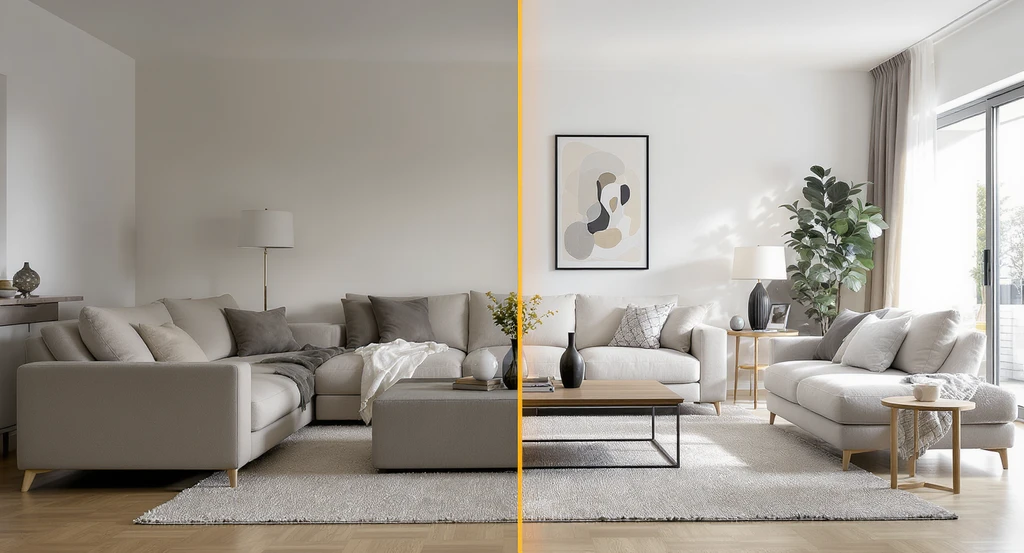
Visualizing how AI interior design tools help avoid furniture scaling mistakes by letting you preview real, to-scale sofas and tables for quick, regret-free room makeovers.
Furniture scaling is the proportional relationship between object size and room size. Ignoring furniture scaling often results in sofas or tables that overpower or disappear in your space, leading to poor movement flow and visual imbalance. With REimagineHome AI’s Real Shoppable Products, you see real-world items in your room at precise scale, taking the guesswork out of placement. This direct visualization prevents the psychological strain of regret or returns, and supports confident purchases that match both the space and your expectations.
-
02. Skipping Reference Photo Causes Design Misalignment
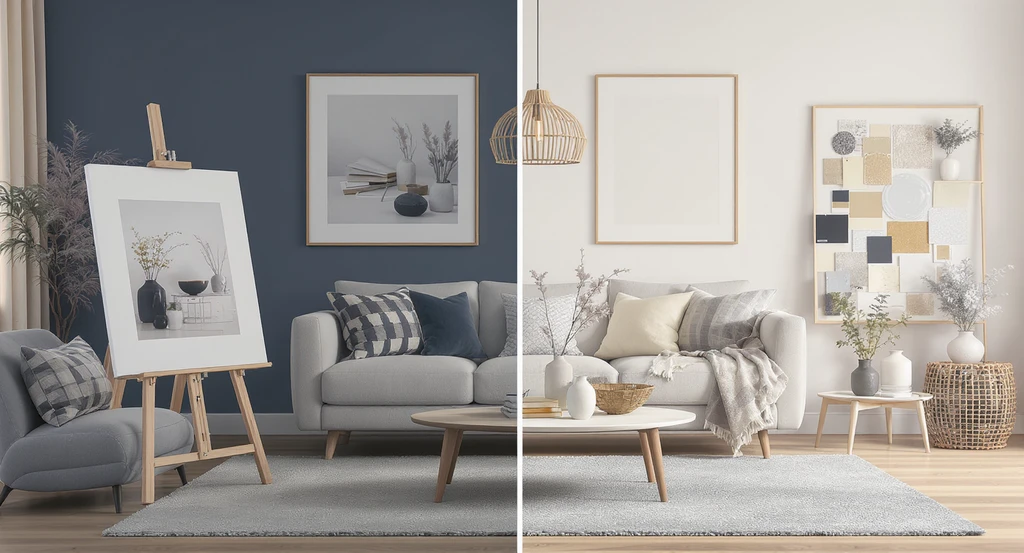
Best AI interior design tools for home makeovers align your real-world project with your reference photo, ensuring accurate visualization with AI.
Reference Photo is a visual alignment system that ensures your final design matches your inspiration image. When you don’t use Reference Photo, features or colors from your moodboard may fail to translate into the finished project, leading to disappointment and costly rework. REimagineHome AI enforces visual alignment between initial vision and delivered outcome, so your choices are grounded and your confidence remains high, as explained in our breakdown of photo-based design workflows.
-
03. Choosing Non-Shoppable Products Undermines Buyer Confidence
Real Shoppable Products refers to staging with purchasable, real-world furniture, not generic or unavailable items. Using non-shoppable furnishings introduces uncertainty: buyers can’t confirm product availability, quality, or price. Staging with Real Shoppable Products builds trust, supporting buyer confidence because people see exactly what’s possible to own and place their trust in visual authenticity.
-
04. Overlooking Budget Filters Results in Unrealistic Plans
Setting a budget filter ensures you only view options within your actual spending range. Skipping this step leads to frustration and delays, as visualized plans become unachievable in practice. REimagineHome AI’s budget constraint system shows only Real Shoppable Products you can actually afford. This tight coupling of visualization to budget minimizes decision fatigue and disappointment, making each design actionable, as discussed in our analysis of AI-powered renovation planning.
-
05. Ignoring Layout Consistency Disrupts Flow
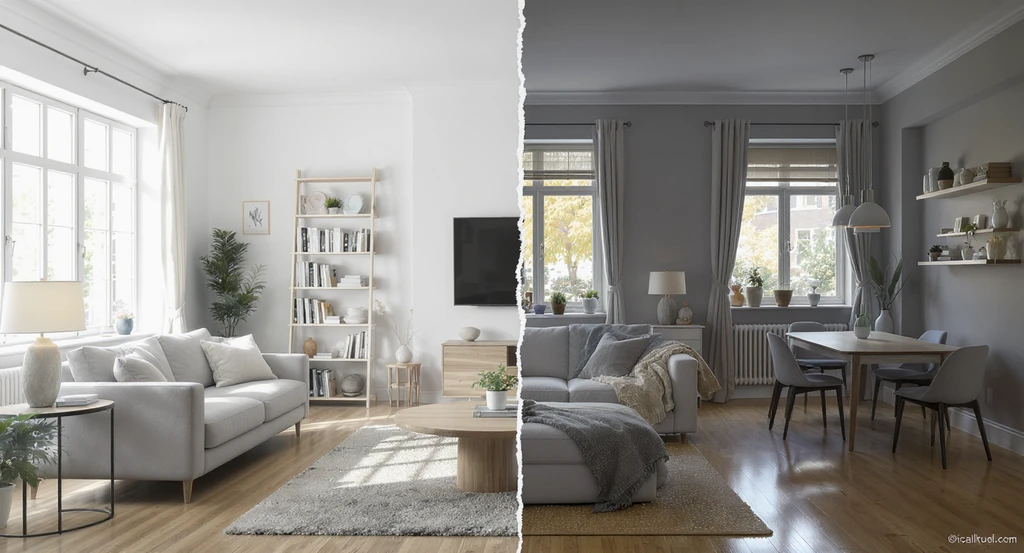
Avoid AI interior design mistakes—visualize layout consistency for effective room makeovers. Top AI home makeover tools preserve pathways and fixed structures for easier renovations.
Layout consistency is the accurate preservation of a room’s existing architecture and pathways. Changing layouts unnecessarily breaks the spatial logic of a home, making plans less usable or harder to communicate to contractors. REimagineHome AI preserves your fixed structure by default, locking walls and windows unless explicitly adjusted. This builds trust in the process, ensuring the new look genuinely fits your needs.
-
06. Failing to Validate Product Realism Creates False Expectations
Product realism is the faithful visual representation of actual furniture, including materials, color, and form. Failing to validate product realism can mean the delivered items look or feel different from your design, leading to deceptive before/after imagery and disappointment. Using Real Shoppable Products ensures what you see is accurate and reliable, so your design decisions hold up after purchase. This protects against costly surprises post-renovation.
-
07. Not Comparing Directions Limits Confidence
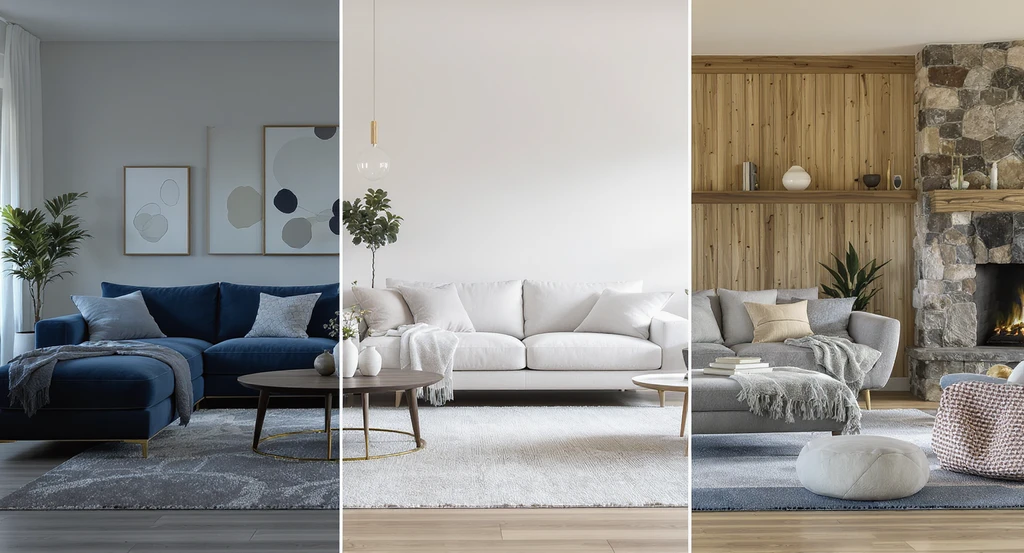
Comparing multiple living room layouts side by side with AI interior design tools boosts decision confidence and supports budget-friendly home makeovers by visualizing real product combinations before making final choices.
Decision confidence increases when you compare multiple design options side by side. If you commit before exploring alternatives, you might miss better solutions or compromise on personal taste. REimagineHome AI lets you iterate on designs—swapping furniture, altering palettes, and referencing inspiration—before finalizing choices. Side-by-side visuals grant perspective and support strong decisions, a core benefit noted in our review of leading virtual design apps.
AI Interior Design Tool FAQ
- How do I know if a product will fit in my space?
- REimagineHome AI uses furniture scaling, visualizing real products at their true proportions within your uploaded room photo.
- Are the products I see actually shoppable?
- Yes, Real Shoppable Products refers to real, purchasable items only—never just design placeholders.
- How does budget filtering work?
- You set your maximum allowed spend, and REimagineHome AI only displays compatible, in-budget options.
- Does the tool change my room’s structure or just furnishings?
- By default, layout consistency is enforced—walls, windows, and major features remain unless you instruct otherwise.
- Can I compare different design ideas before deciding?
- Yes, side-by-side comparison of options is a core advantage, supporting stronger decisions with clarity on direction.
Make Faster, Smarter Renovation Decisions
REimagineHome AI brings definition and reliability to AI-powered room makeovers by prioritizing key systems like Reference Photo for visual alignment and Real Shoppable Products for product realism. Clear scaling, accurate budgets, and layout consistency prevent the costly errors common to trial-and-error design workflows. Each of these systems transforms uncertainty into clarity, making your next project an evidence-based decision—not a gamble.