7 Practical Fixes for Bathrooms Where the Toilet Is Too Far from the Wall
TL;DR
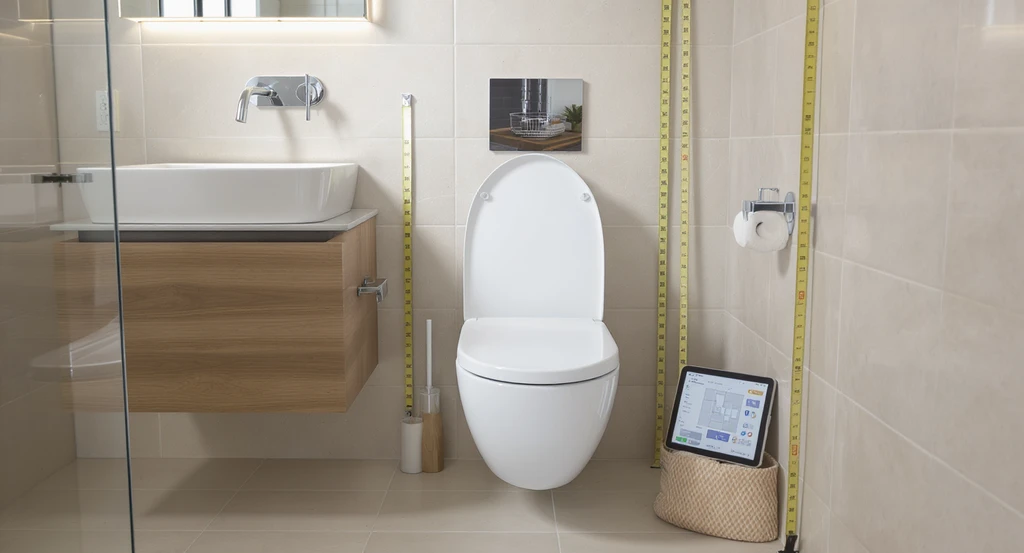
A noticeable gap behind your toilet can disrupt bathroom flow and look unfinished. Learn the spacing standards, why this happens, and how to correct or disguise the gap for better function and visual balance.
Introduction
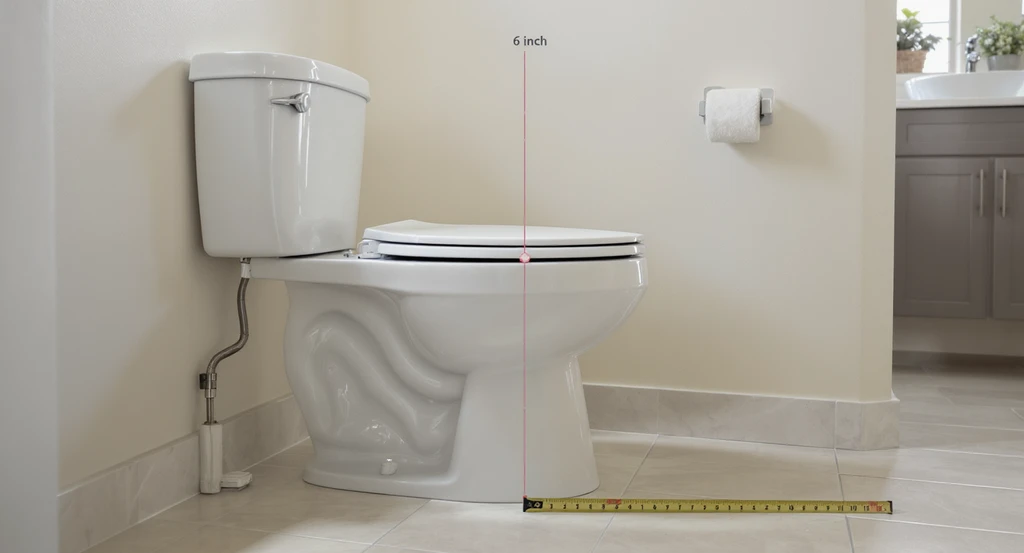
An editorial-style visual of a bathroom layout issue—here, a toilet sits several inches from the wall, clearly illustrating how ai bathroom layout measurement guide and virtual staging solutions for bathroom gaps can help optimize toilet placement using ai tools and fixture alignment design principle ai.
A large gap between your toilet and the wall is a common layout concern that affects both appearance and comfort. In many cases, the gap appears because the toilet model and the plumbing rough-in size don’t match. Understanding this simple measurement can help determine whether the fix requires plumbing adjustments or a visual design solution. This guide breaks down why the issue occurs and outlines proven methods to resolve or disguise the gap, improving your bathroom’s efficiency, look, and value.
-
01. Identify the Root Cause: Rough-In Mismatch
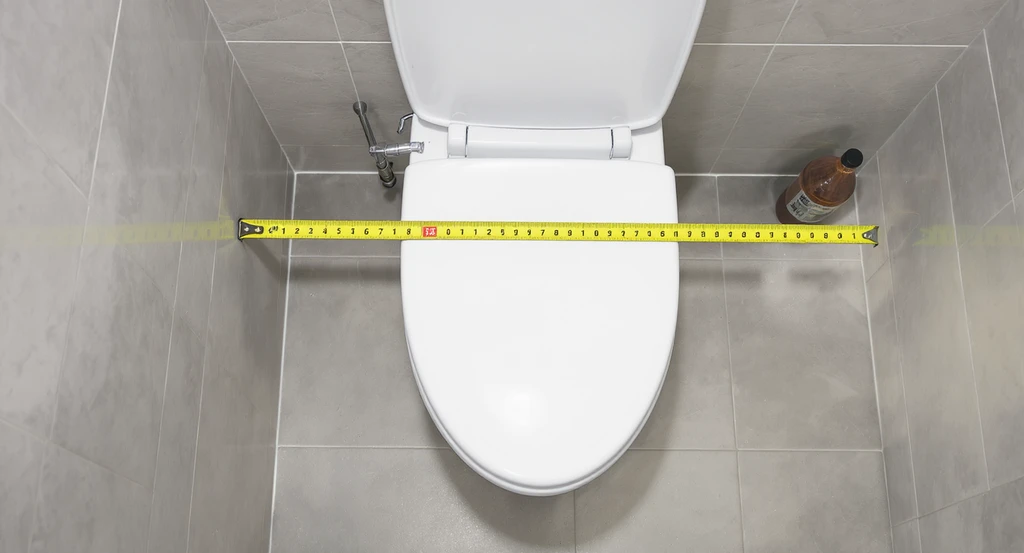
AI bathroom layout measurement guide: measuring rough-in distance helps optimize toilet placement, correct fixture alignment, and support virtual staging solutions for bathroom gaps.
The most common mistake is addressing the gap cosmetically without first checking the toilet’s rough-in measurement. A toilet intended for a 10-inch rough-in installed on a 12-inch rough-in flange will naturally sit 2 inches away from the wall.
This mismatch typically occurs during remodels or replacements when the new toilet model doesn’t fit existing plumbing. To avoid compounding the design error, always measure the distance from the finished wall to the center of the toilet bolts (the rough-in) before exploring fixes. This step is essential for both practical corrections and improving real estate appeal, as discussed in our guide on bathroom staging ideas for better function and marketability.
-
02. Standard Toilet Layout Measurements
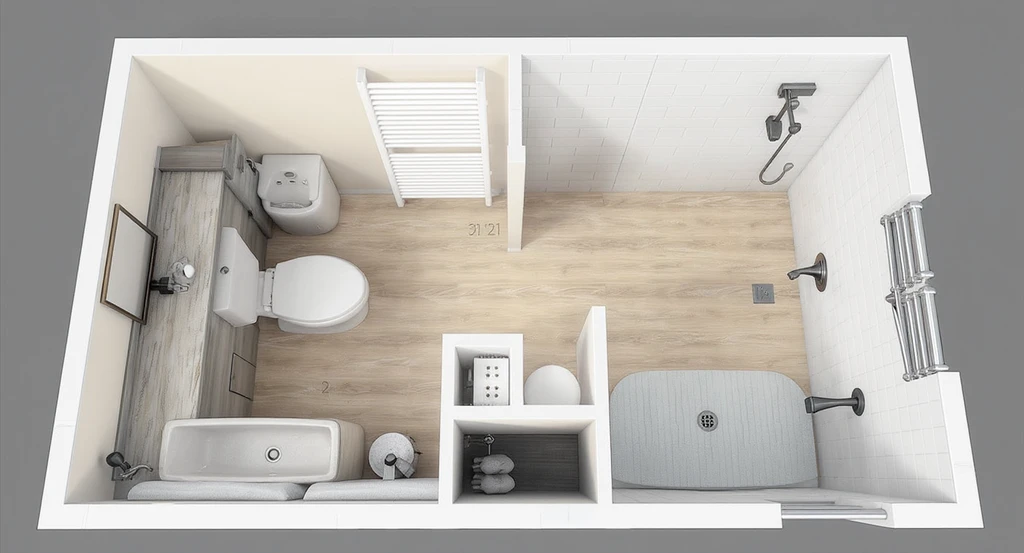
02. Standard Toilet Layout Measurements Image
Measurement Standard Size Why It Matters Toilet rough-in distance 12 inches Most toilets are designed for this spacing from wall to flange Minimum side clearance 15 inches from toilet centerline Prevents cramped layouts Recommended front clearance 24 inches Ensures comfortable use Typical tank gap from wall 1–2 inches Allows room for installation and cleaning If the gap behind your toilet is greater than 2–3 inches, the rough-in size or installation position may be incorrect. Verifying these key standards is the foundation of reliable layout planning, much like other small bathroom fixes that address comfort and transparency. This structured approach supports those using an AI bathroom layout measurement guide for small spaces.
-
03. Fix with an Offset Flange or Correct Toilet Model
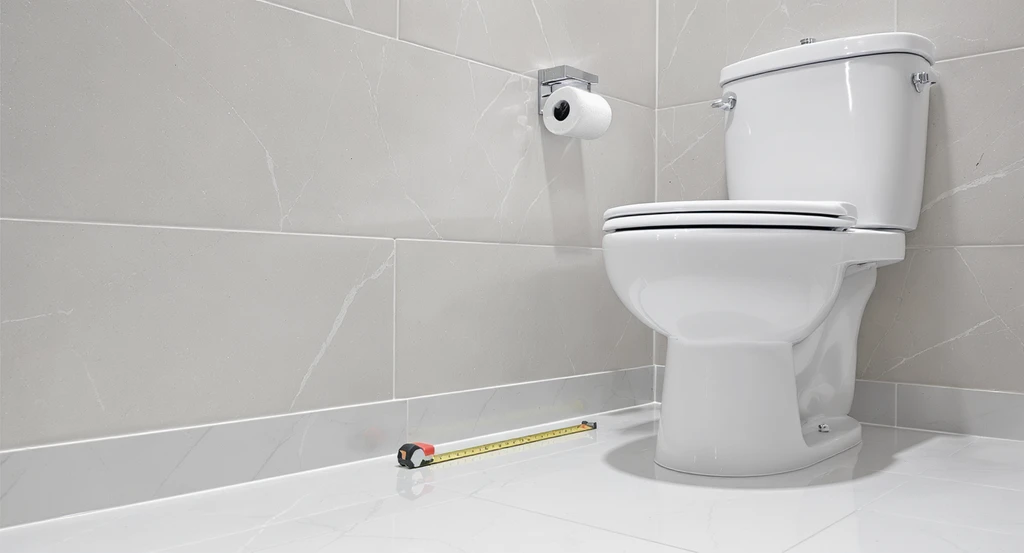
Editorial view of bathroom fixture alignment design principle ai, featuring a toilet placement check with offset flange and measurement tools for optimizing toilet clearance.
A lasting fix may involve adjusting the plumbing or selecting a toilet that fits your rough-in size. An offset flange can shift the toilet up to 1½ inches closer to the wall, while choosing a toilet with the correct rough-in dimension nearly eliminates the gap.
- Plumbing changes might require a professional and local code compliance.
- Measure both tank depth and flange alignment before purchasing a replacement.
- Factor in the total installation cost versus cosmetic alternatives.
If plumbing adjustments are not feasible, consider the visual or storage methods outlined below.
-
04. Build Out the Wall to Reduce the Gap
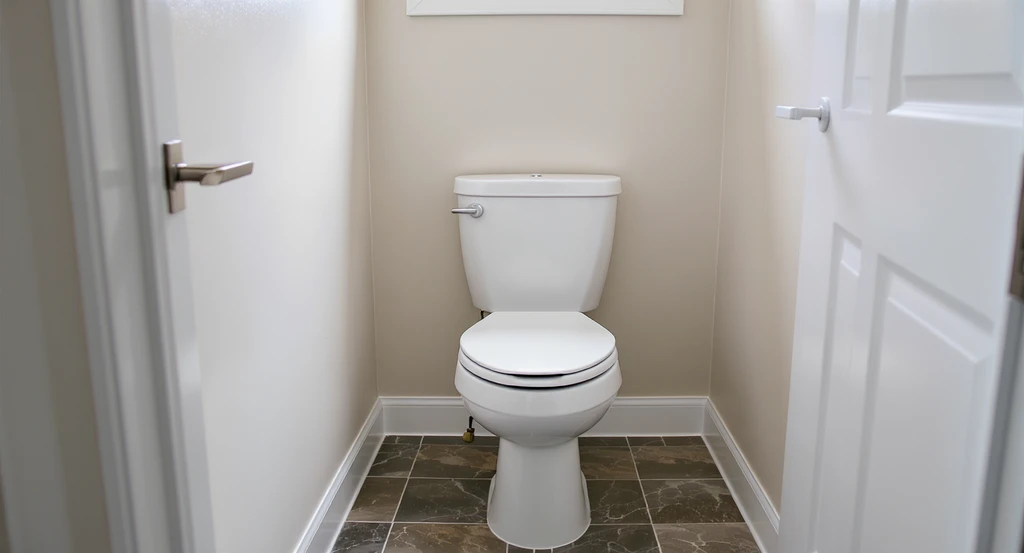
See how virtual staging solutions for bathroom gaps and optimizing toilet clearance with AI tools guide building out a wall behind the toilet to improve fixture alignment.
Creating a new wall surface behind the toilet, using framing and drywall or beadboard, brings the wall forward, closing the gap. This method is effective during major remodels or when the misalignment is significant.
- Check door swing and path clearance before altering the wall thickness.
- Align the new wall with other bathroom fixtures to maintain overall balance.
- Finish the new surface to match surrounding baseboards and trim.
This technique restores proportional spacing but is best reserved for comprehensive renovations with room for altered traffic flow.
-
05. The Fixture Alignment Principle
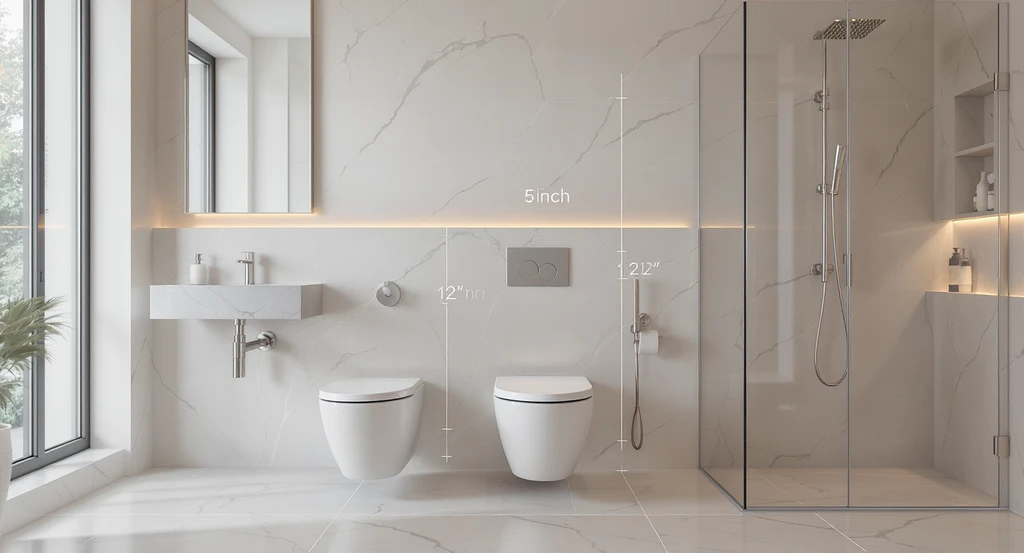
05. The Fixture Alignment Principle Image
Consistent alignment between fixtures, like toilets, vanities, and shelving, creates a visually balanced bathroom. When the toilet projects too far from the wall, this rhythm is broken and the space feels less intentional.
Restoring alignment, whether structurally or visually, brings clarity to the room. This principle supports more effective staging, as detailed in our advice on staging for bathroom balance and flow, and is a standard in bathroom fixture alignment design.
-
06. Turn the Gap into Functional Storage
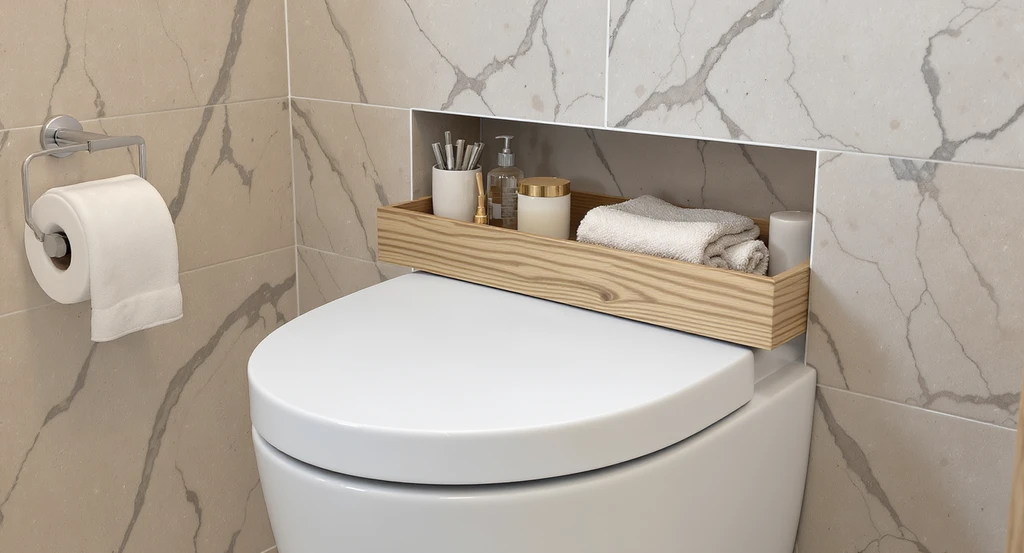
Clever use of the toilet-to-wall gap with moisture-resistant slim shelving demonstrates optimizing toilet clearance with ai tools and bathroom fixture alignment design principle ai for better organization in small bathrooms.
When moving fixtures or altering walls is impractical, use the gap as a purposeful storage zone. Options like narrow shelves, custom boxes, or slim cabinetry fill the space and improve organization.
- Ensure any storage does not interfere with toilet tank access or maintenance.
- Use moisture-resistant finishes consistent with other bathroom materials.
Functional solutions like these are especially valuable for small bathrooms, as explored in our solutions for making compact bathrooms more practical and appealing.
-
07. Adjust Lighting and Decor for Visual Proportion
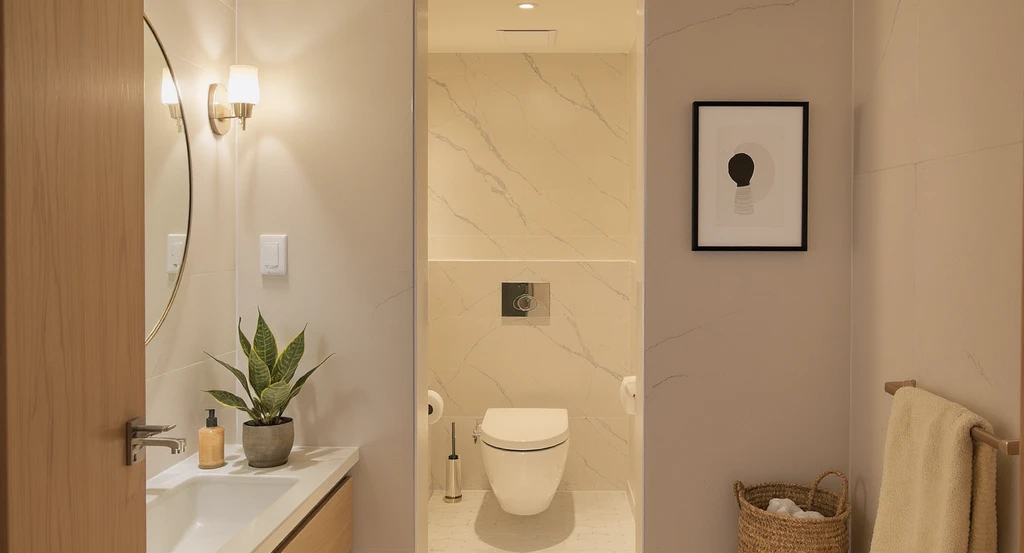
Layered warm lighting, plants, and artwork visually balance a large toilet-to-wall gap—demonstrating optimizing toilet clearance with ai tools, bathroom fixture alignment design principle ai, and how to use ai for toilet placement.
A large gap can disrupt the bathroom’s visual balance, making the space feel off-center or unfinished. Adjusting lighting, especially using layered or directional lighting, shifts the focus and evens out the visual weight of the room.
- Warm, diffuse lighting reduces harsh shadows around the gap.
- Adding plants or simple artwork can visually anchor and balance the wall area near the toilet.
As highlighted in tips for previewing lighting during small bathroom remodels, previewing these elements with REimagineHome AI helps visualize the adjusted proportions before committing to changes.
FAQ: Common Toilet Layout Questions
- Why is the gap behind my toilet so large?
- This usually results from a mismatch between the toilet's rough-in size and the flange position, or from selecting the wrong toilet model for your existing plumbing.
- Can I fix this without moving plumbing?
- Yes. Cosmetic solutions like building out the wall or incorporating storage behind the toilet can help. Permanent fixes require plumbing adjustments or toilet replacement.
- Is there a spacing rule for toilets and walls?
- The standard is a 12-inch rough-in measured from the wall to the center of the flange. A 1–2 inch tank gap is normal; anything larger signals a layout problem.
- Will the gap hurt my resale value?
- If the gap looks unfinished, it can deter buyers. Strategic fixes and thoughtful staging help maintain property appeal, as seen in our bathroom staging guide for faster sales.
- Is it normal for a toilet to have a gap from the wall?
- Yes. Most toilets are designed for a 12-inch rough-in, which typically results in a 1–2 inch gap for installation and cleaning. Gaps exceeding 3–4 inches may indicate an installation issue.
Summary: Restore Function and Proportion
A toilet too far from the wall is more than an aesthetic problem, it signals a layout issue that can affect usability and flow. By confirming measurements, applying design principles, and using practical fixes such as storage or lighting adjustments, you can reclaim balance without unnecessary renovation. Integrating these corrections creates a bathroom that looks organized and feels functional at every scale.