What Is Bauhaus Style? History, Characteristics, and Influence
TL;DR
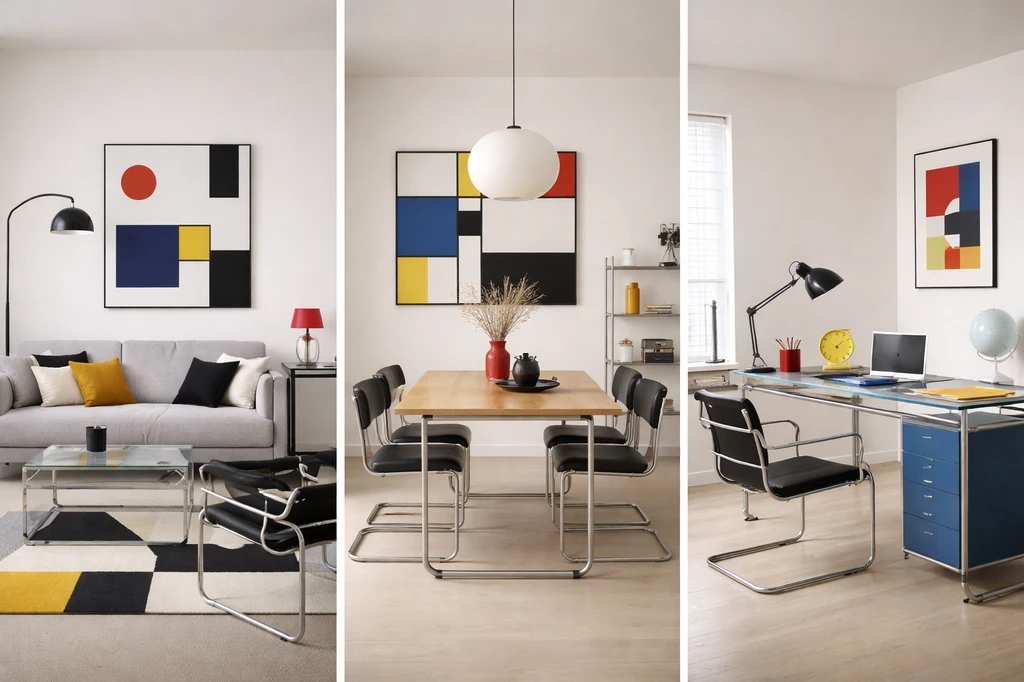
Bauhaus design is a 20th-century movement defined by simplicity, function, and the use of geometric forms and industrial materials. Its rational approach still shapes contemporary interiors through clean lines, reduced ornamentation, and timeless furnishings. Understanding the movement’s core principles reveals both its strengths and limitations, guiding practical choices for today's homes.
-
What Is Bauhaus Design Style?
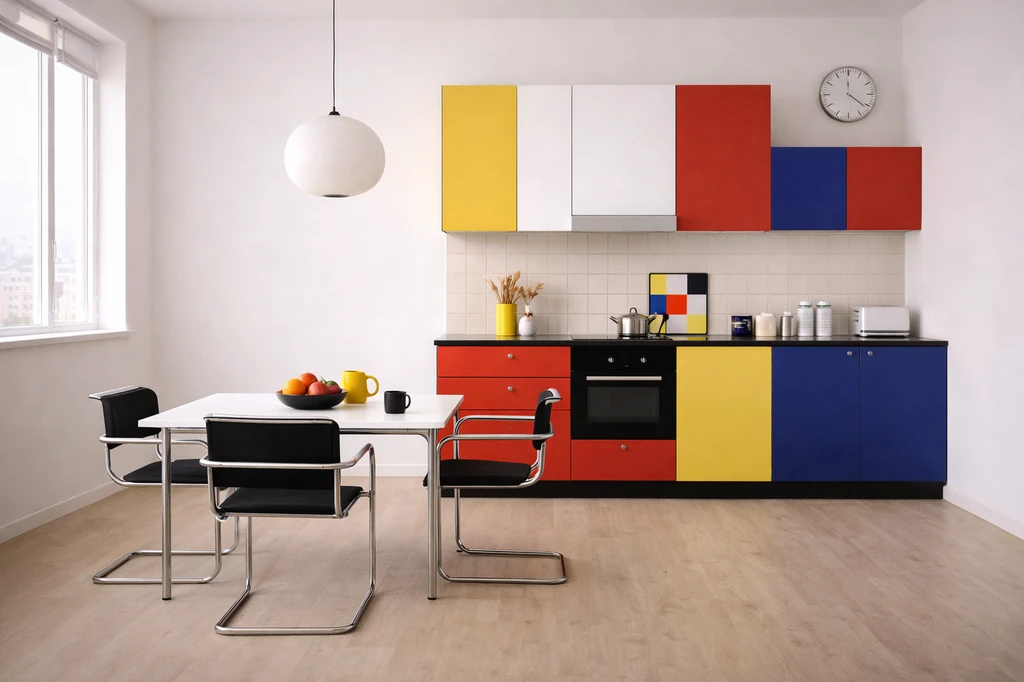
Bauhaus-inspired kitchen featuring geometric color blocking, functional cabinetry, and chrome-framed dining chairs.
Bauhaus design style refers to the architecture, objects, and interiors stemming from the influential German Bauhaus school (1919–1933), founded by architect Walter Gropius. Defining features include the dictum 'form follows function,' primary color accents, geometric shapes, and a preference for unembellished, industrial materials. Bauhaus bridges art, craft, and mass production, creating spaces and products that prioritize use, clarity, and efficiency. Its legacy is visible in iconic furniture as well as the broader trajectory of modern design.
-
The Enduring Importance of Bauhaus in Contemporary Interiors
Bauhaus has outlasted its origins, shaping not only 20th-century modernism but also informing how we live and furnish our homes today. Its central focus on function over decoration means environments remain flexible and unobtrusive, echoing trends such as midimalism and warm minimalism identified in our modern home decor trends analysis.
Because Bauhaus values honest materials and rational forms, it has influenced the rise of accessible, durable furnishings for contemporary living. The emphasis on practicality resonates with current desires for utility, longevity, and psychological comfort in home design.
-
Core Principles and Characteristic Forms
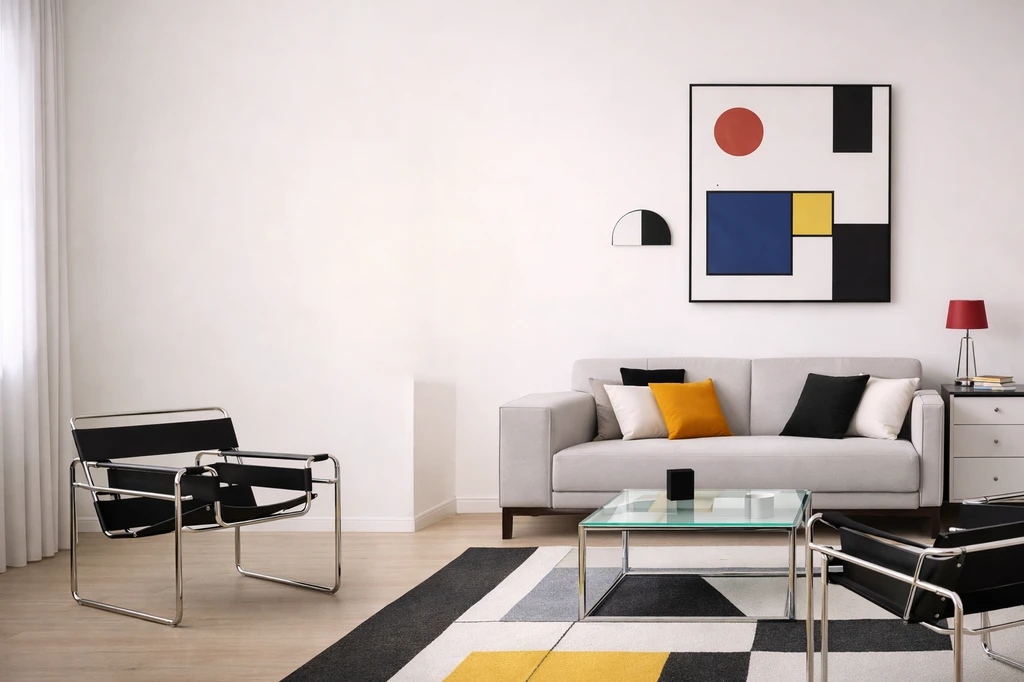
Bauhaus-inspired living room with geometric art, tubular steel seating, and clean modernist lines.
The essence of Bauhaus is found in its guiding principles: Simplicity, functionality, and material truth. Spaces and objects are stripped of excess, often using tubular steel, glass, and plywood in their rawest state. Instead of decorative details, the focus is on essential structure—visible frames, geometric silhouettes (circles, rectangles, squares), and clear sightlines.
Color is introduced through bold but limited blocks of red, blue, or yellow, avoiding visual clutter yet providing moments of vibrancy. Mechanistically, the use of repeated geometry and honest materials permits scalable, affordable production, making well-designed goods accessible to more people. The trade-off is a potentially colder or more austere environment if warmth, texture, or personal layers are not intentionally added.
-
Practical Advice: Incorporating Bauhaus Without Losing Warmth
Applying Bauhaus in a modern home requires balancing its clarity with lived-in comfort. Start with basics: classic Bauhaus-inspired furniture (like the Wassily or Cesca chair) and unfussy storage. Bring in color through a single accent wall or textiles in strong primaries. Use industrial materials (steel, glass) sparingly, softening the room with natural fiber rugs, layered lighting, or tactile upholstery. Avoid over-stripping spaces; add personality through framed Bauhaus prints, sculptural plants, or objects with sentimental value. According to our guide on balancing trends and timelessness, it’s wise to ground your palette in neutrals and let Bauhaus gestures act as punctuation, not the entire story.
-
Non-Obvious Insight and Common Pitfalls
A subtle challenge with Bauhaus in today’s context is psychological: its highly rational framework can produce decision fatigue for those expecting warmth from visual layers. The pronounced focus on function sometimes obscures the need for sensory comfort—a reason many designers now blend Bauhaus basics with biophilic textures, as described in our analysis of upcoming design shifts. Another underrecognized constraint is spatial flow: rigid modular layouts may look efficient on paper but can hinder organic movement or adaptability.
A practical evaluation model: For every high-function, geometric piece, introduce a counterpoint with softer contour, warmer material, or a personal item, ensuring the overall environment serves both body and mind.
-
Bauhaus and the Tools of Modern Visualization
With today’s technology, homeowners can visually experiment with Bauhaus-inspired layouts, materials, and color blocks before making lasting decisions. Platforms like REimagineHome allow users to preview how clean lines and geometric furnishings interact within existing rooms. This reduces both spatial missteps and the psychological barrier of imagining an austere, unwelcoming result—making it easier to strike the right balance between functional clarity and personal warmth.
Bauhaus Design Style FAQ
Is Bauhaus the same as minimalism?
No, but they share traits. Bauhaus focuses on function and geometry, while minimalism emphasizes reduction and visual calm. They often overlap but have distinct histories.
Can Bauhaus work in small spaces?
Yes—its efficient furnishings and uncluttered forms are well suited to compact layouts, but layering texture prevents sterility.
Are Bauhaus colors always primary?
Primary red, yellow, and blue are hallmarks, but Bauhaus can be adapted using neutrals with saturated accents to suit contemporary tastes.
How do Bauhaus and Brutalism differ?
Bauhaus is more restrained and focused on usability; Brutalism tends toward heavier forms and exposed concrete, often on a larger architectural scale.
What’s a good starting point for Bauhaus décor?
Introduce a single signature piece—like a Wassily chair—paired with neutral decor and a touch of bold color to anchor the room.
Key Takeaways: Timeless Principles, Modern Flexibility
Bauhaus design endures because its mechanisms—simplicity, function, and clear structure—address enduring needs for usable, attractive spaces. Yet, true success with Bauhaus comes from adapting its core tenets to the realities of daily living, softening its rigors with comfort and warmth. Use geometry and industrial elements as foundations, not fences, and blend in human-centered details for a home that feels both rational and inviting.