Best Color Choices for Bathroom Blinds: Expert Guidance for a Cohesive, Light-Filled Look
TL;DR
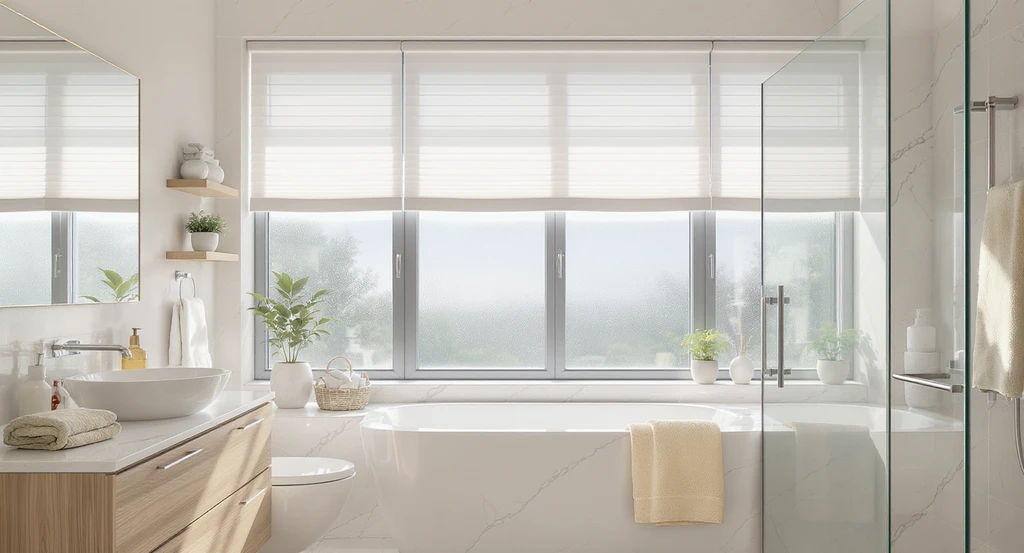
The best bathroom blind colors are light, neutral, or nature-inspired hues like white, cream, soft grey, pale blue, or bamboo for a clean, airy look. Prioritize moisture-resistant materials. In small bathrooms, light colors maximize space and brightness. Visualizing these choices in context ensures the result enhances both function and style.
Bring Confidence to Bathroom Blind Decisions
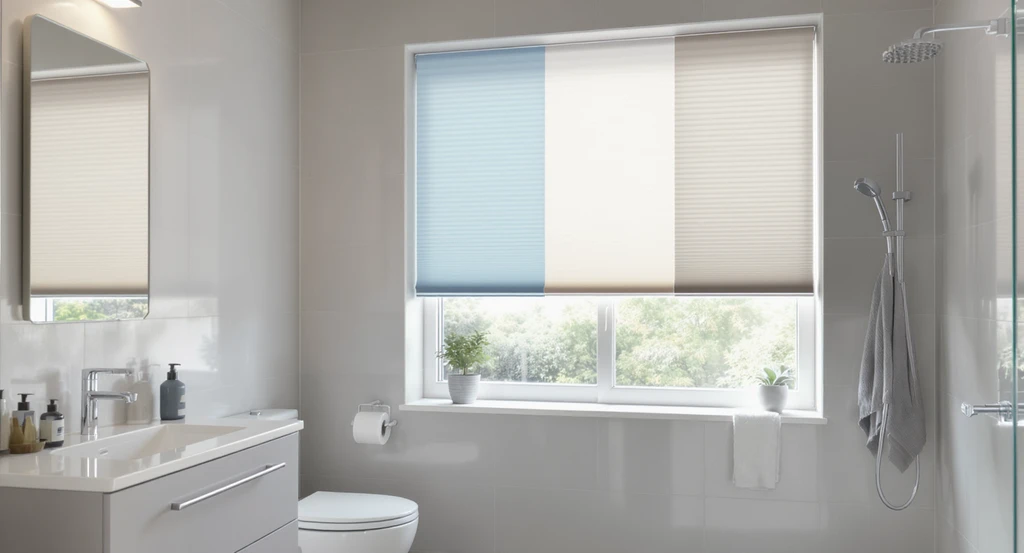
Comparing the best color choices for bathroom blinds in a modern, light-filled space helps illustrate how to match blinds with bathroom decor and select bathroom blind color ideas for small spaces.
Choosing the right color for bathroom blinds is more than a finishing touch. It shapes the light, mood, and perceived space of your entire bathroom. Too bold, and you risk overwhelming the room; too dark, and the space can shrink. At REimagineHome AI, we see color selection not as a guessing game, but as a decision best made in context, combining material needs, design coherence, and the demands of small or awkward spaces so your results are both practical and visually satisfying. As we explored in our guide on bathroom staging, every detail, from the sheen of hardware to the tone at the window, becomes central to how buyers and guests experience the room.
-
Direct Answer: What Color Is Best for Bathroom Blinds?
The safest, most adaptable choices for bathroom blinds are light, moisture-resistant options in white, cream, pale grey, or soft blue. These colors reflect natural light, prevent the room from feeling closed-in, and suit nearly any style, whether your goal is spa-like calm, modern clarity, or visual spaciousness in a smaller area.
Expert Insight
A client with a compact bathroom struggled with cold lighting and mismatched finishes. Using our visualization platform, she previewed both white and bamboo blinds against cool blue tiles, discovering that soft white, not natural bamboo, maximized space and created a harmonious, spa-like effect, all before spending a dollar on materials.
-
Why This Happens
Color decisions in bathrooms carry extra weight because light and proportions are often limited. Lighter colors (white, cream, soft grey) immediately create brightness and enhance visual space, as detailed in our discussion of small bathroom design strategies. Meanwhile, nature-inspired or soft pastels support a sense of cleanliness and relaxation, addressing the psychological need for comfort and order in such an intimate room. As our guide to cozy small bathrooms explains, color and light management are the foundation of every good bath update.
-
What To Do Instead
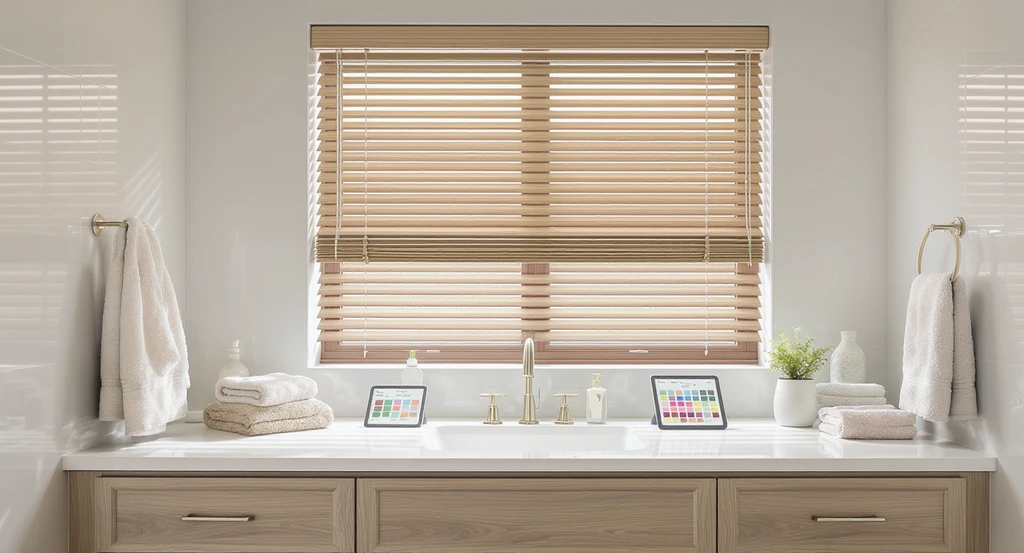
Preview the best color choices for bathroom blinds with digital tools. See how to match blinds with bathroom decor and choose ideas that enhance small spaces.
- Start by evaluating your bathroom's natural light and overall tone, brighter rooms allow for slightly bolder colors; dimmer spaces benefit from whites and cool pastels.
- Choose a moisture-resistant material (PVC, faux wood, treated fabric) as functionality is non-negotiable in a humid environment.
- Match or thoughtfully contrast your blind color with dominant features—tiles, countertops, and fabrics—prioritizing cohesion over trend-chasing.
- Use visualization tools to preview your shortlist in context and avoid surprises; seeing blinds in your specific room is invaluable, as emphasized in our exploration of grey bathroom options.
-
Common Mistakes
- Choosing trendy dark or saturated colors in small/low-light bathrooms, which can make the space feel more confined.
- Ignoring the finish and texture: matte or lightly textured finishes prevent unwanted glare or reflections.
- Overlooking the impact of material, especially using standard fabric that quickly succumbs to humidity and mold.
- Picking blinds in isolation without referencing tile, hardware, or wall tones, resulting in a disjointed look.
-
How Visualization Changes the Decision
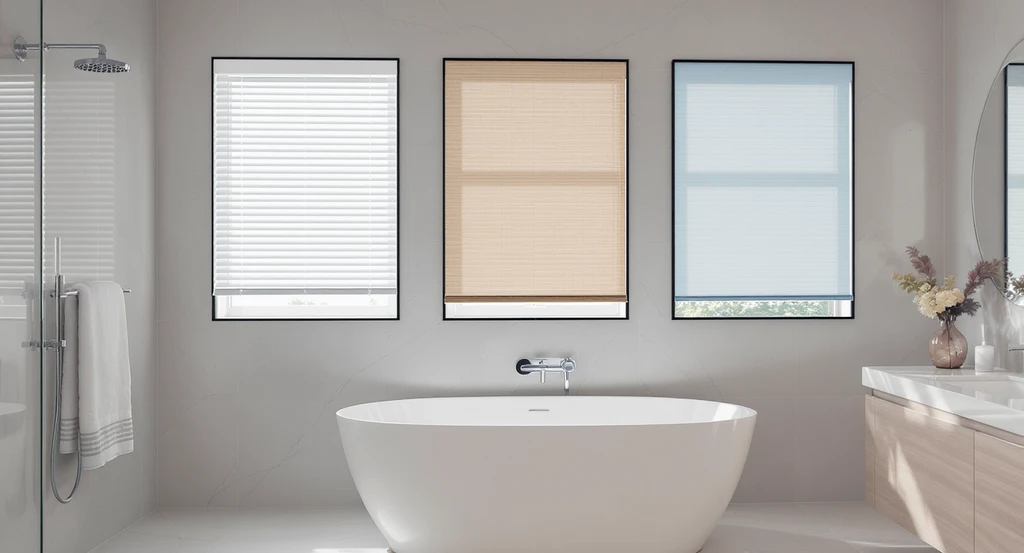
Previewing the best color choices for bathroom blinds—white, bamboo, and pale blue—demonstrates how to match blinds with bathroom decor and make informed color decisions for small spaces.
With digital visualization, you can preview exactly how a shade of white, a natural bamboo slat, or even a pale blue blind changes the way light bounces and colors interact in your actual bathroom, before buying. This reduces guesswork and costly errors. Seeing the color in place, paired with your fixtures, floors, and walls, turns speculation into a clear, data-driven choice. That is the difference between guessing and deciding, and one of the main advantages of services like REimagineHome AI.
-
Integrating Blinds with Bathroom Decor for Small Spaces
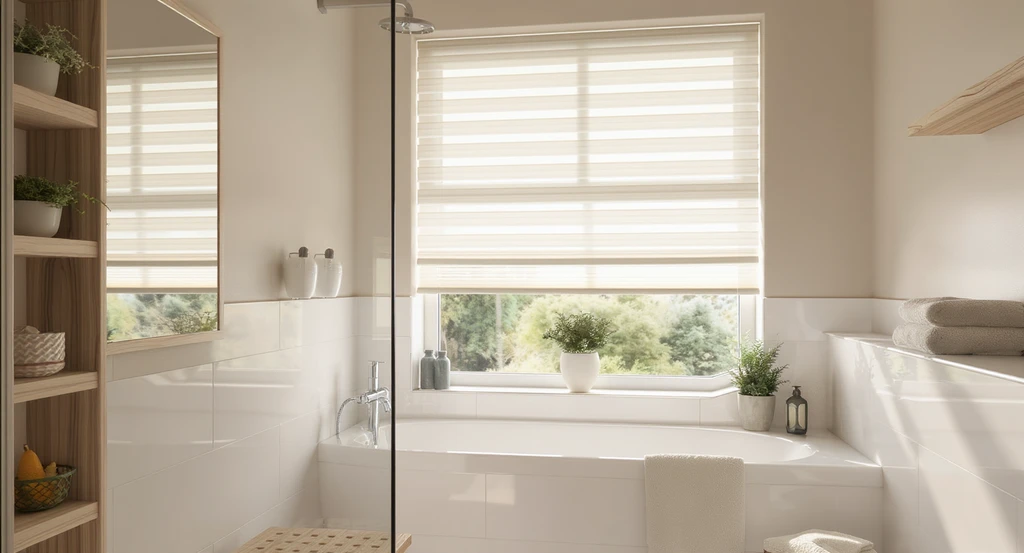
Best color choices for bathroom blinds in small spaces: creamy-white, translucent blinds complement modern decor, offering bathroom blind color ideas that maximize light and create an open, serene atmosphere.
In compact bathrooms, blind color has an outsized influence on perceived size and serenity. According to our small bathroom fixes, clean whites, creamy neutrals, or translucent textures reflect ambient light, visually enlarge the area, and act as a calming canvas for accent pieces or greenery. Patterned or textured blinds in light tones can add personality without sacrificing spaciousness.
-
Coordinating Blinds with Modern Fixtures and Color Palettes
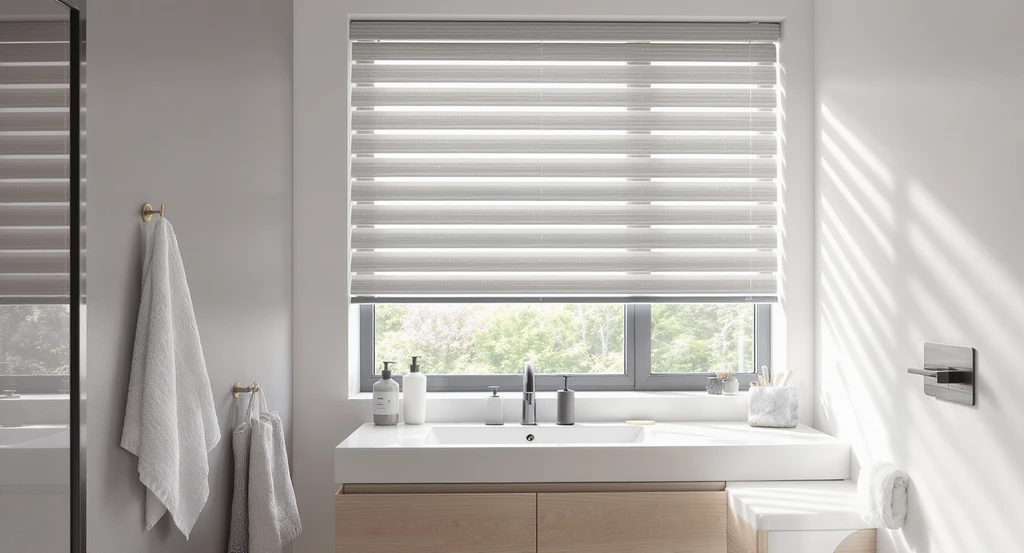
Best color choices for bathroom blinds are showcased with light grey faux wood blinds, perfectly coordinating with white tiles, chrome, matte black, and brushed brass fixtures—a prime example of how to match blinds with bathroom decor for cohesive style in small spaces.
For a modern or transitional bath, shades of grey and crisp white remain timeless, providing a neutral backdrop for chrome, matte black, or brushed brass fixtures. Layering texture (such as faux wood or woven bamboo) can add warmth while keeping with contemporary minimalism. As we highlighted in our grey bathroom color guide, mixed finishes and versatile palettes unlock freedom to refresh accessories seasonally, without redoing core elements like blinds.
Visualization Scenario
Picture uploading a photo of your own bathroom, testing out several blind colors, white, cream, soft blue, textured bamboo. Instantly, you see how each changes the size, brightness, and mood of the room. You pick the winner with complete confidence, knowing the chosen blind will work in real life, not just in the showroom.
Frequently Asked Questions: Bathroom Blind Colors
Should bathroom blinds be light or dark?
Light-colored blinds (white, cream, soft grey) are typically best for bathrooms. They maximize natural light, prevent the room from feeling closed-in, and create a clean, fresh look. Dark blinds can work as a bold accent in larger, well-lit baths, but should be used sparingly in smaller or minimal-light spaces.
What materials are best for bathroom blinds?
Opt for moisture-resistant materials like PVC, faux wood, vinyl, or treated roller fabric. These stand up to the humidity common in bathrooms and reduce mold or warping risk. Fabric or untreated wood blinds are rarely recommended for bath spaces.
How do I match blinds with my bathroom?
Start with your bathroom’s existing colors—tiles, countertop, vanity, and fixtures. Select a blind color that either blends seamlessly or provides subtle contrast. Asserting visual harmony is more important than following trends. See our guide on bathroom staging for more tips.
Are patterned or textured blinds suitable for small bathrooms?
Yes, but keep patterns subtle and colors light. Soft textures or fine patterns in pale shades add visual interest and depth without overwhelming a small room. This can enhance spaciousness, especially if paired with minimal decor and plenty of mirror surface.
Should blinds match the bathroom tiles?
Blinds can match the dominant tile color for cohesion, or softly contrast with tile using a lighter shade from the same palette. Priority is visual unity—avoid stark clashes unless the effect is intentional and supported by other decor elements.
How do I increase privacy but keep light in?
Translucent or frosted blinds allow natural light while obscuring outside views. Top-down bottom-up styles, woven shades, or light-filtering materials are ideal. Visualizing these options in your space is the safest way to check both privacy and ambiance.
What is the trend for bathroom blind colors in 2025?
Warmer neutrals, pale greys, and nature-inspired tones like bamboo or soft blue remain strong in 2025. These hues all support timelessness and adaptability while letting you update accent colors or hardware seasonally. See our grey bathroom inspiration for timeless choices.
Is it worth virtually previewing blind colors before buying?
Yes. Visualization tools, such as those from REimagineHome AI, let you see how specific blind colors interact with your exact bathroom’s light and finishes, increasing decision confidence and reducing wasteful missteps.
Final Takeaway: Choose with Confidence and Clarity
The best color for bathroom blinds is the one that supports light, airiness, and visual comfort within the context of your unique space, most often white, cream, pale blue, or grey in a durable, moisture-friendly material. Always preview colors in relation to your existing bathroom design before making a final decision. Seeing it in your actual space is key to lasting satisfaction.