7 Essential Considerations When Choosing a Free Online Garden Planner for Vegetable Beds
TL;DR
Selecting a free online garden planner for vegetables involves weighing usability, flexibility, longevity, and integration of modern AI features. While some free tools offer basic layout creation, newer options provide photo-based visualizations, making planning both easier and more realistic. The right match will ultimately save time, prevent mistakes, and maximize your garden’s productivity.
Navigating Free Garden Planners: What Home Gardeners Really Need
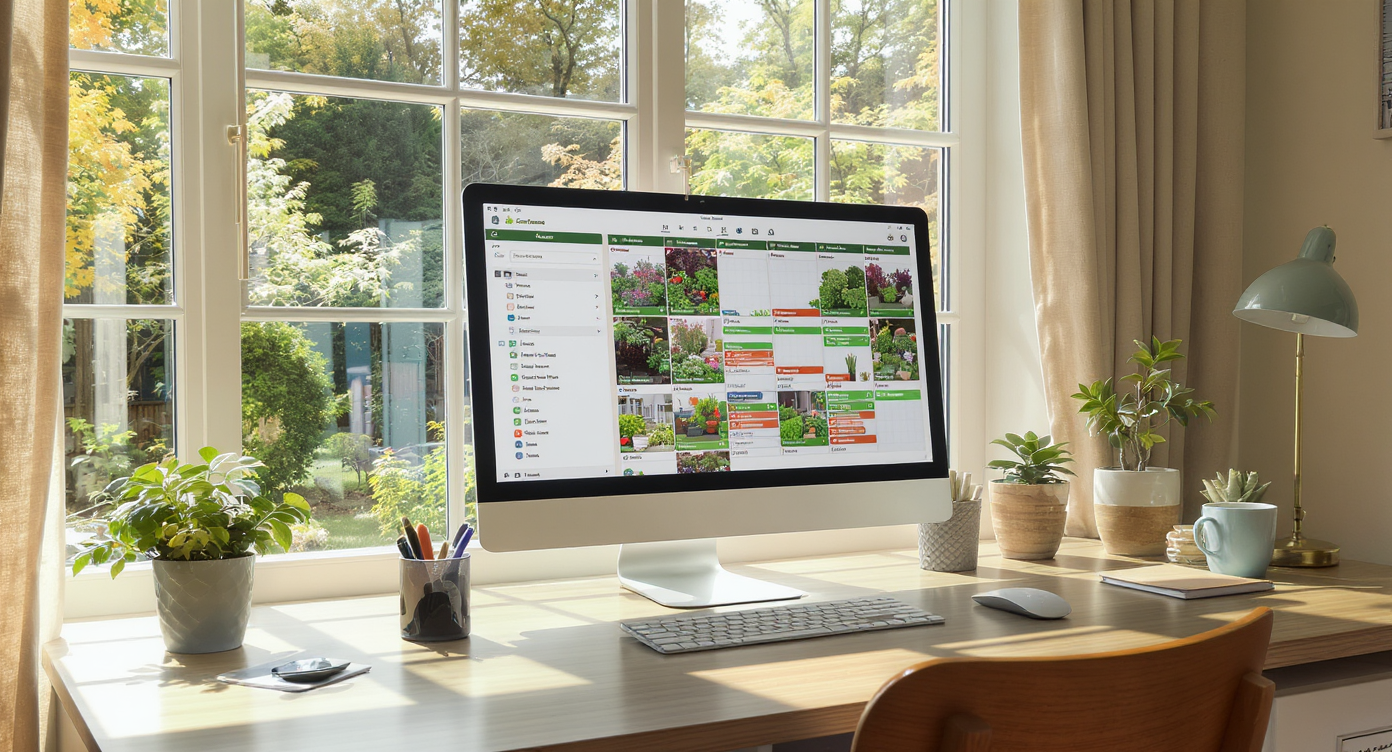
Visualizing a productive vegetable garden: using free digital planners in a real-life workspace for organized, successful growing seasons.
Free online garden planners are increasingly popular for mapping out productive vegetable plots. With a range of digital tools available, from 2D drag-and-drop layouts to AI-powered visualizers, home gardeners can now preview and refine their beds before ever turning the soil. For those who are growing vegetables but want to avoid the complexity of crop rotation, irrigation systems, or tree plantings, these planners can streamline the process and help visualize the end result. Choosing the right software, especially at no cost, requires careful consideration. The appeal of free tools & software lies in their accessibility, but potential trade-offs include limited features, restrictions on saving or sharing, and basic graphics. As technology advances, the rise of the AI landscaping tool for backyard design opens up new possibilities, allowing users to see realistic scenarios tailored to their own spaces. Here are seven key considerations to ensure your chosen garden planner aligns with the needs of vegetable gardeners—whether you’re a beginner or looking to take planning further.
-
1. User-Friendliness for Beginners

Simple, intuitive garden planners with clear visuals help beginners design vegetable beds confidently and enjoyably from home.
For gardeners just starting out, an accessible user experience is essential. Simple browser-based tools often provide intuitive drag-and-drop elements, clear icons for vegetable types, and visual feedback as you assemble your garden plan. Clarity and ease of use help ensure that even those unfamiliar with landscape or garden design can confidently sketch their dream vegetable patch. Designers frequently recommend trialing a tool’s interface to assess whether tasks like adding or deleting beds, spacing crops, or labeling plant types feel straightforward. Especially for an audience searching for an ai landscaping tool for beginners, this practical simplicity can be the difference between implementation and frustration.
-
2. Limitations of Free Versions
Most free garden planners come with constraints, such as restrictions on the size of your garden, the number of crops you can add, or the ability to save and edit plans over time. Many developers offer paid upgrades to their platforms, leaving the free tier with limited maps, session-based plans, or basic export options. Before investing too much time building a layout, check if features like saved garden plans, seasonal reminders, or printable diagrams are locked behind a paywall. This phenomenon is common, as outlined in our review of best free landscape design software alternatives, where even robust tools sometimes offer only partial access without a subscription.
-
3. Customizability and Visual Detail
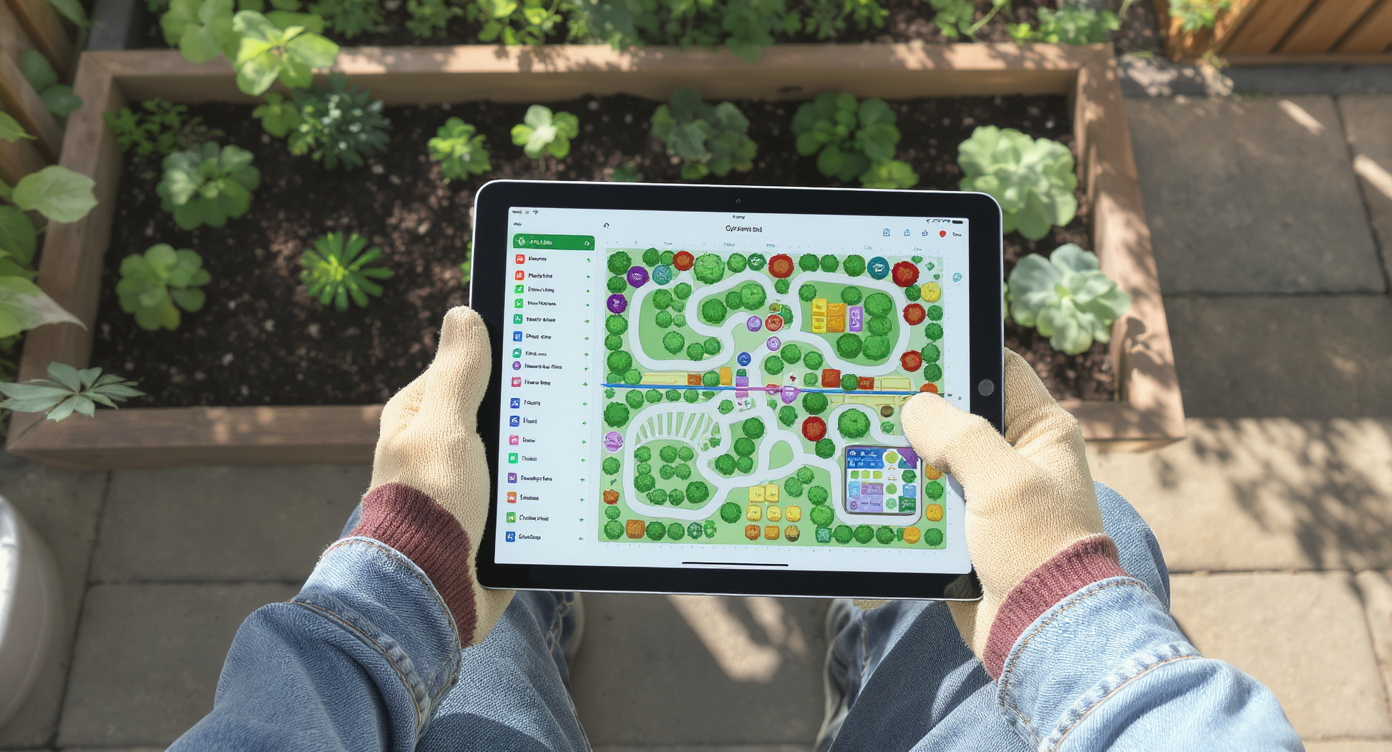
Customizable garden planning tools let you tailor bed shapes and spacing, making it easy to visualize and design productive vegetable layouts.
The effectiveness of any planner depends on its flexibility to mirror your real-life space. Customizability includes the ability to set bed dimensions, add walkways, and adjust plant spacing. Moreover, high-quality visuals—like color-coding crops, adding text labels, or overlaying grid lines—can be instrumental for translating digital plans into the physical garden. If you’re managing an unusually shaped plot or integrating companion planting, strong custom tools can make the design process much smoother. As many vegetable gardeners know, the more closely a tool can approximate your site’s unique quirks, the more informed your planting decisions will be.
-
4. The Promise and Reality of AI Landscaping Tools
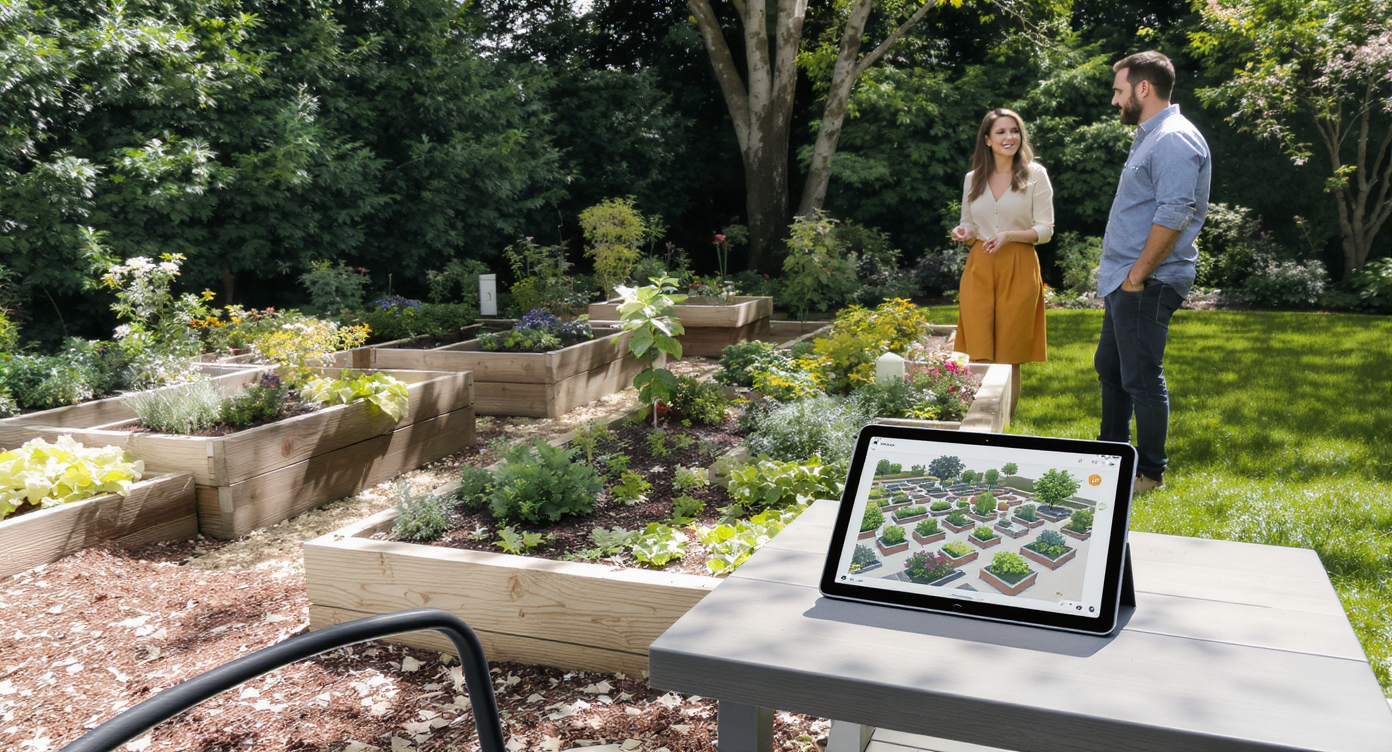
AI-driven garden planning tools help homeowners visualize vegetable bed layouts for better design decisions and achievable results.
Recent advances have brought the question of how to design a garden using AI to the forefront. AI-driven landscaping tools are capable of much more than basic map creation—they can evaluate site photos to generate realistic previews, suggest crop placements, and adapt plant suggestions based on your input. Homeowners experimenting with visualizations will find options like REimagineHome.ai especially helpful, enabling true-to-life previews of potential layouts. According to our homeowner’s guide to a landscape plan and smart design, this visual context supports better choices and reduces installation uncertainties.
-
5. Data Privacy and Plan Permanence
A recurring concern with free or browser-based garden planners is the permanence and security of your designs. Some popular online tools do not allow plans to be saved or require an account for continued access. Others may store data only temporarily, with plans lost after closing your browser. For home vegetable growers planning several months in advance, retention of layouts and notes is crucial. Reading a platform’s terms and testing its saving/exporting capabilities will help avoid unwanted surprises when gardening season arrives.
-
6. Community Support and Ongoing Updates
A planner’s strength is often found in its user community and the pace of software updates. Established tools tend to offer forums, seasonal tips, and active troubleshooting support—handy for tackling practical issues such as plant labeling or adjusting layouts. For new planners, the presence or absence of regular updates may indicate future reliability. As experience shows, gardeners who select tools with an active support base often feel more confident adapting plans as garden needs evolve throughout the growing season.
-
7. Bridging the Gap with Hybrid Planning
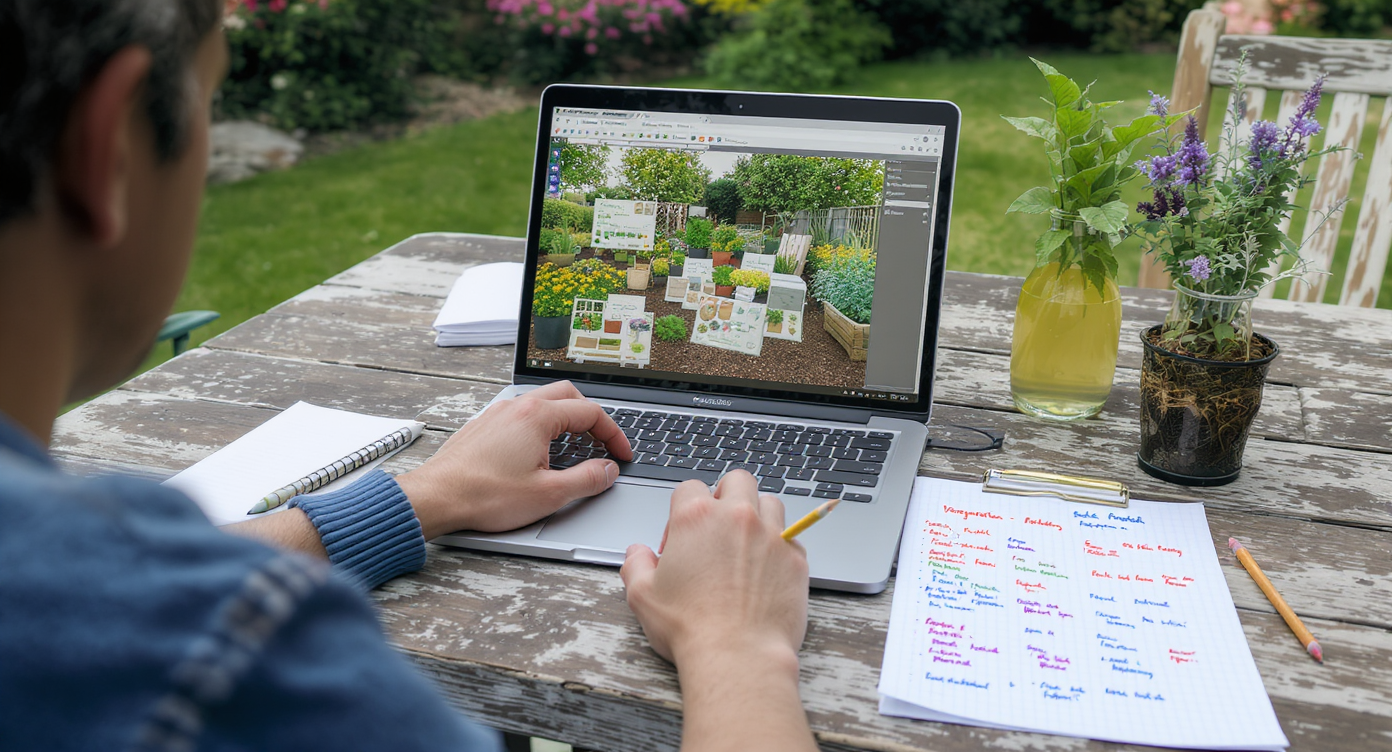
Combining digital planners with hand-drawn sketches helps gardeners visualize and refine vegetable bed layouts for their unique backyard spaces.
Many gardeners find that combining digital planners with real-world sketches or photos delivers the highest degree of clarity. Taking a picture of your yard and uploading it to an AI tool can help overlay proposed beds and paths, while old-school graph paper allows for quick notations and experimental layouts. Hybrid planning maximizes both tech efficiency and tactile visualization. Those balancing hands-on adjustments with digital previews will recognize that the best planners enable flexibility rather than forcing a single workflow.
FAQ: Choosing and Using Free Garden Planning Tools
Search for tools with an intuitive interface, clear icons, drag-and-drop functionality, and simple labeling. These features make the process approachable and reduce frustration for newcomers.
Can AI tools really improve my vegetable garden plan?
AI-driven planners can analyze your yard from photos, optimize space based on planting goals, and suggest layouts that would otherwise be difficult to visualize. Platforms like REimagineHome.ai are increasingly used to bridge the gap between imagination and real-world gardens.
Are there risks to relying on free planners for plan storage?
Some free tools do not permanently save plans or require ongoing access to maintain your designs. Test a platform’s export and storage options before investing significant time into your garden layout.
Do I need a separate tool for designing complex gardens?
For vegetable-only plots, most basic planners suffice. Complex gardens with trees, irrigation, or specialized structures may benefit from more advanced or paid platforms, as explored in our overview of best free landscape design alternatives.
How does hybrid planning work?
Hybrid planning combines traditional methods—like graph paper diagrams—with digital or AI tools to produce more refined, practical results. This approach is especially effective for custom or evolving garden spaces.
Building Your Best Vegetable Garden with the Right Digital Tools
A well-chosen free online garden planner can be invaluable for mapping productive vegetable beds—especially if it balances accessibility, adaptability, and permanence. Whether you prefer traditional layouts or want to leverage an ai landscaping tool for backyard design, exploring reputable software and newer AI-enhanced solutions will broaden your options. As you refine your design and plan, testing visualizations with REimagineHome.ai can provide practical confidence and a preview of the growing season ahead.