Decoding Dining Layouts: Crafting the Space around Your Table
TL;DR
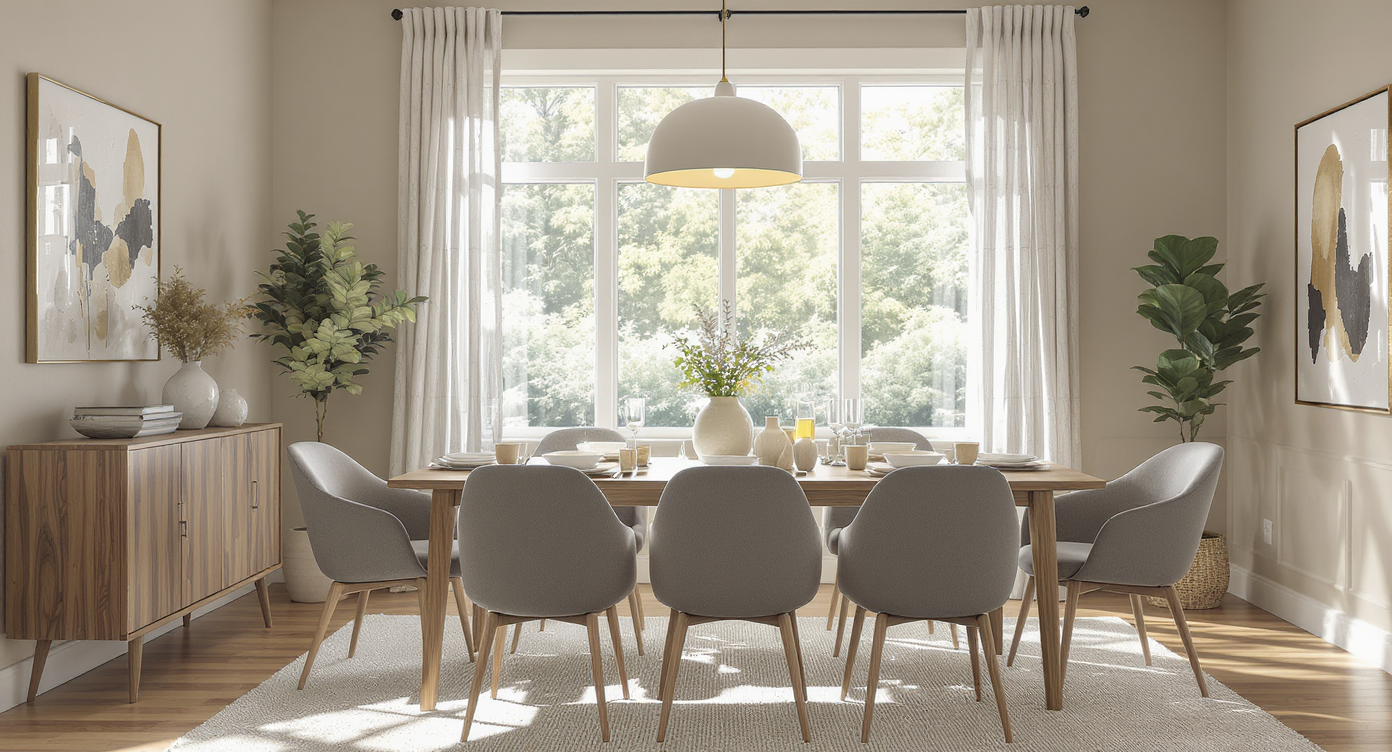
To create a polished dining space, first establish a balanced layout, then define the area with the right rug, lighting, and wall décor. Adding elements like sideboards, large-scale art, plants, or layered lighting brings warmth and usability to the zone, without overwhelming or crowding the room. The most successful dining layouts blend practical movement with an inviting visual story.
Introduction

A thoughtfully styled dining area anchors an open-concept home, blending comfort, organization, and visually inviting details.
The zone surrounding a dining table has the power to make a home feel inviting, organized, and complete—a statement that resonates whether your eating nook sits in an open-concept living space or its own dedicated room. The right arrangement and decorative choices around the table do far more than impress guests: they solve real-life needs, from smooth foot traffic to comfortable conversation and mood-setting ambiance. A thoughtfully styled dining area also complements the flow of adjacent rooms and offers an anchor for everyday gatherings or standout celebrations. What separates a dining spot that looks effortlessly curated from one that feels haphazard or unfinished? It’s not just about furniture or any one color trend. Layered choices about layout, scale, and a handful of purposeful accents determine whether your dining space supports connection and style in equal measure. Let’s break down how to transform the surroundings of your dining table—ranging from art and lighting to layout tweaks—into design moments that resonate daily.
-
Start with Layout: Movement, Balance, and Table Placement
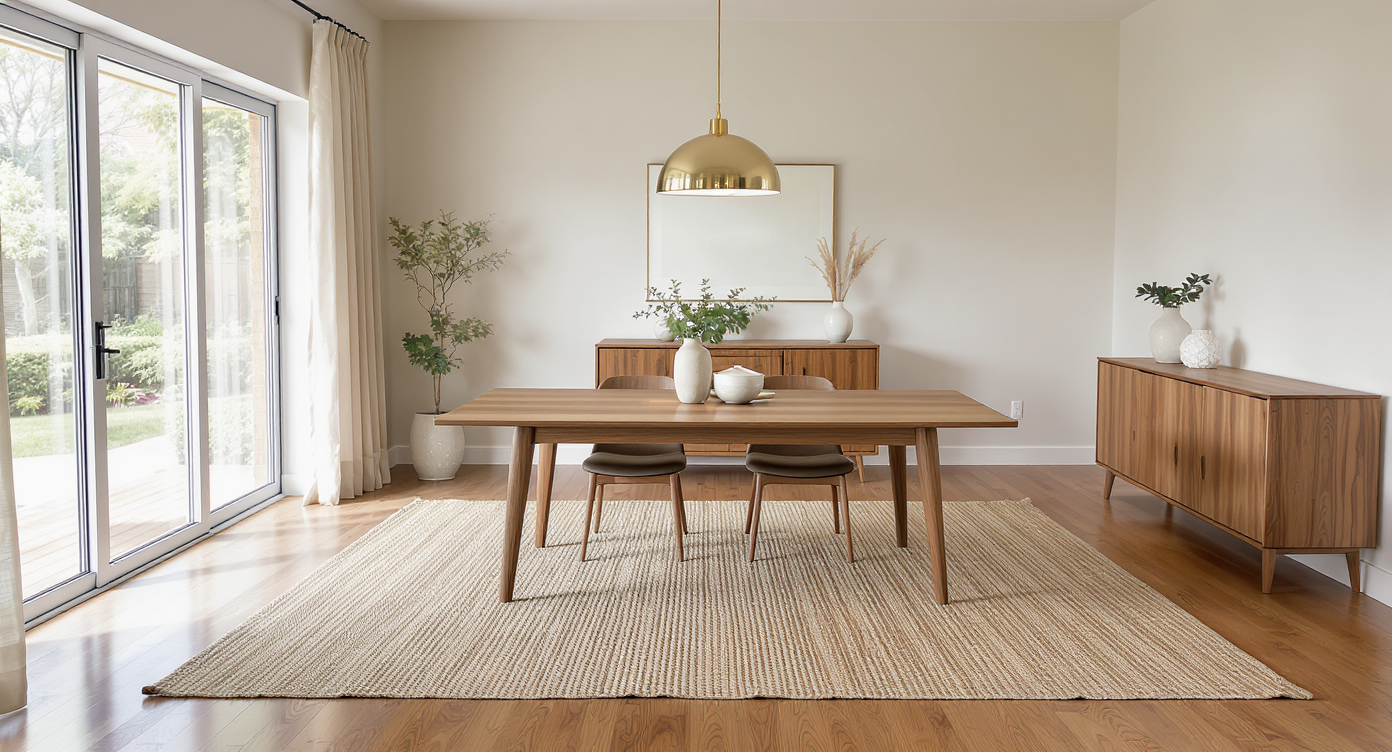
Centering the dining table and providing clear space around it ensures comfort, balance, and smooth movement within the dining area.
A successful dining area always considers circulation first—how people move around the table, pull out chairs, and access nearby entryways or transitions. The table should anchor the space, ideally floating away from walls to avoid a crowded or awkward feel. Many designers recommend at least 36 inches between the table edge and any surrounding wall or furniture to allow guests to move freely. In homes where the table initially hugs a wall for practical reasons (think maximizing room in a small kitchen or creating a dining zone within an open floor plan), experimenting by shifting the table further into the space can be transformative. One real-life example: a young couple realized their rectangular dining table, pressed tightly against one wall, left the entire area off-balance and underused. By floating the table on a generously sized rug and centering it under a new light fixture, they reclaimed enough room for comfortable seating, foot traffic, and even a slim sideboard which provided much-needed serving space. This change, echoed by numerous homeowners, proves that letting your table 'own' the center of the room immediately upgrades the overall impression and utility. For more on layout rules and finishing touches to elevate your dining room, discover our dining room design insights.
Expert Insight
Last summer, a family hosted their first big holiday gathering in a newly built home. Although the oak dining table was beautiful, the space felt incomplete. Guests awkwardly navigated around the chairs pressed close to the walls, and the single overhead fixture left half the room in shadow. After the party, they invested in a broad wool rug, moved the table to the room’s center, and introduced a pair of clustered pendants with dimmers. The result: their next dinner felt more welcoming, guests lingered longer, and the family found themselves using the space for everything from crafts to game nights.
-
Rugs and Flooring: Defining the Dining Zone
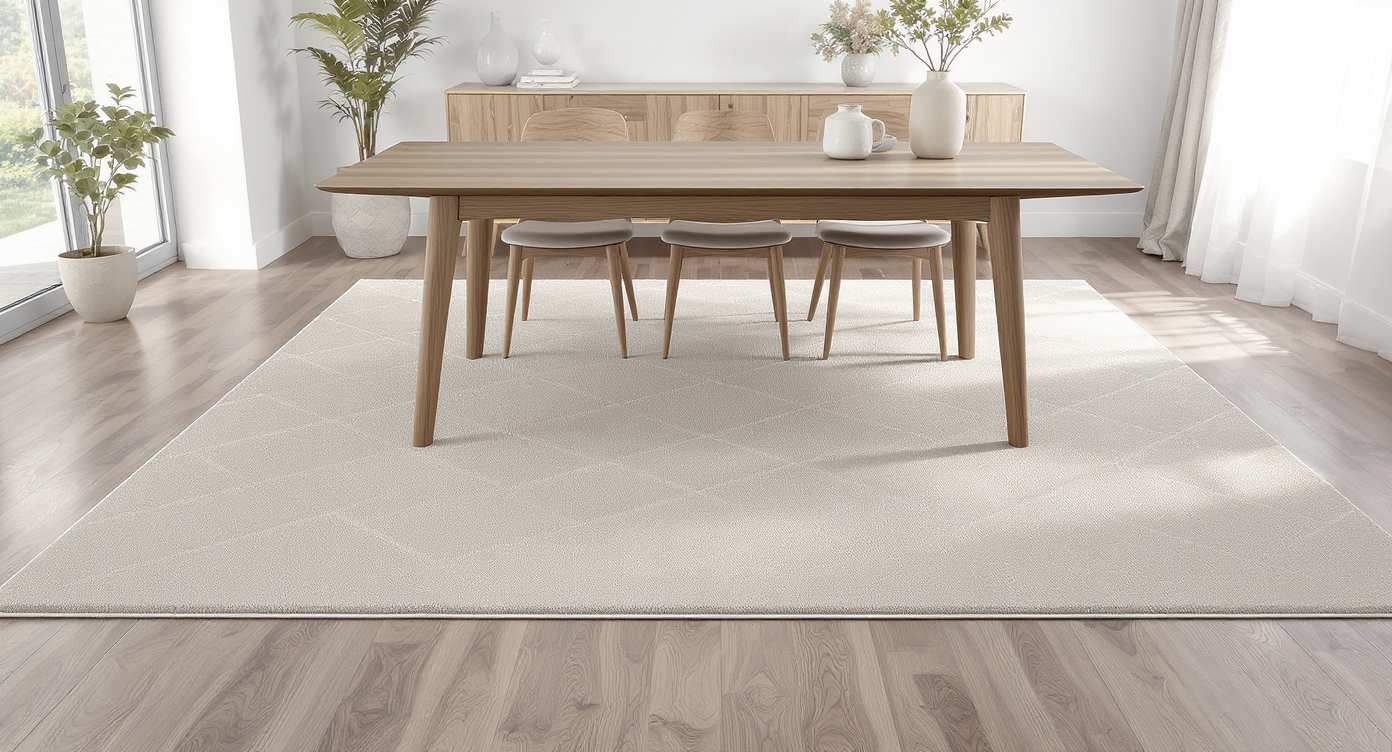
A wool area rug, sized to extend beyond all dining chairs, anchors a modern dining table and enhances the floor’s visual cohesion.
An area rug under a dining table does more than add softness—it visually anchors the space, signals function, and can inject pattern or color into an otherwise neutral room. The best rug size is generous enough that all chair legs rest comfortably on the rug, even when those chairs are pulled out for seating. Standard recommendations suggest choosing a rug that extends 24 inches beyond the table on all sides. This keeps everything proportionate and prevents tripping or half-on, half-off awkwardness, something that has tripped up more than a few well-intentioned hosts. The rug’s fiber matters too. Wool wins praise for durability, easy stain release, and feeling inviting underfoot, far outlasting synthetic polypropylene in look and feel, according to designers and many home stylists. Patterned or low-pile options disguise crumbs and spills, making them family friendly. And if you crave a minimalist look but sense something’s missing, adding a neutral-toned rug can lend cohesion without crowding. See how minimal spaces benefit from just the right touch in our minimalist dining room finishing advice.
-
Lighting: Ambient Glow and Artful Fixtures
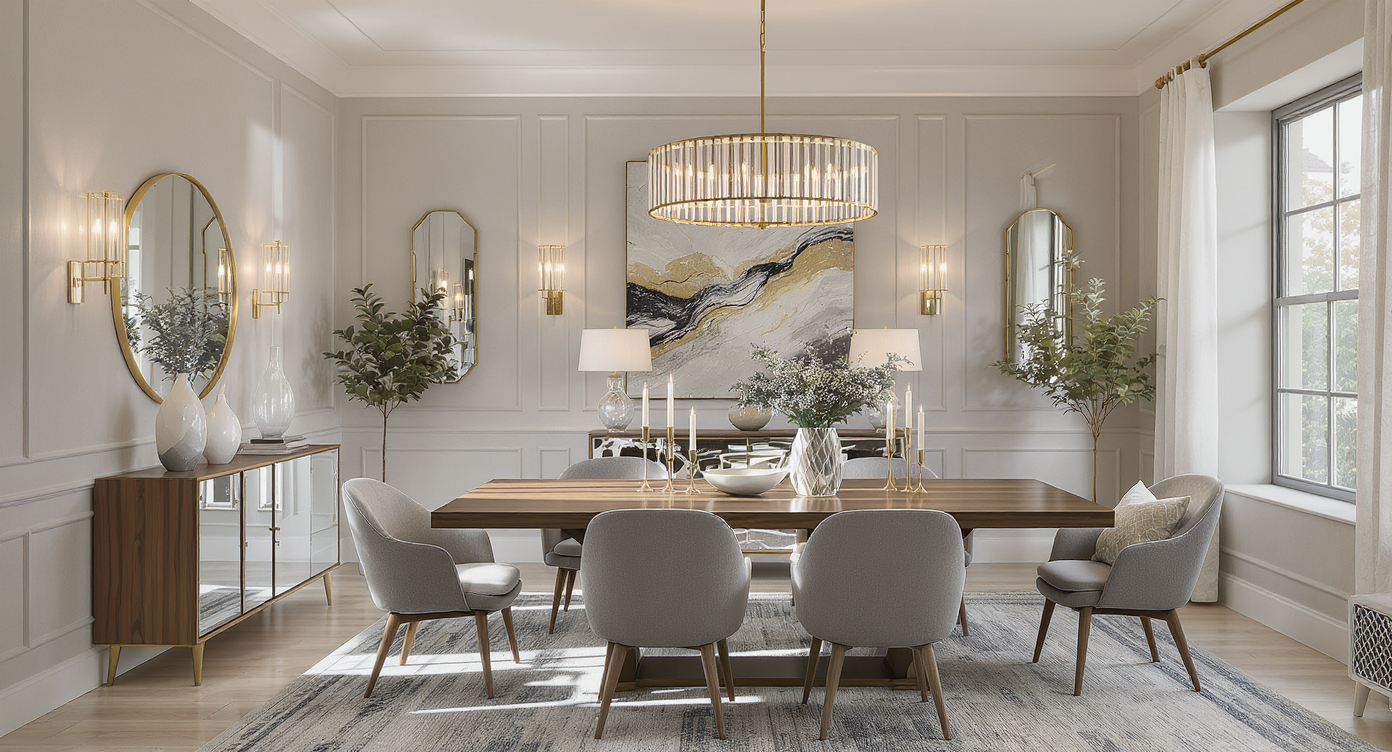
Layered dining room lighting: proportioned chandelier, sconces, buffet lamps, mirrors, and candles for balanced ambient glow.
Good dining room lighting isn’t just about visibility—it’s about creating atmosphere and accentuating design. A pendant or chandelier placed over the table, sized proportionately to the table and hung at the correct height, instantly signals purpose. Experts commonly recommend fixtures roughly one-half to two-thirds the width of the table and mounting them 30 to 36 inches above the surface, nudging slightly higher for rooms with tall ceilings. Beyond the main fixture, think about layered lighting: wall sconces, buffet lamps, and even candles for special meals. Each of these options offers flexibility for both bright family breakfasts and intimate dinners. If your dining room lacks adequate natural light, a combination of reflective surfaces—like a large mirror alongside glass light fixtures—can amplify available daylight and the space’s openness. Explore fixture proportions and placement further in our editorial on solving common dining room lighting problems.
-
Wall Decor: Art, Mirrors, and Storage with Style
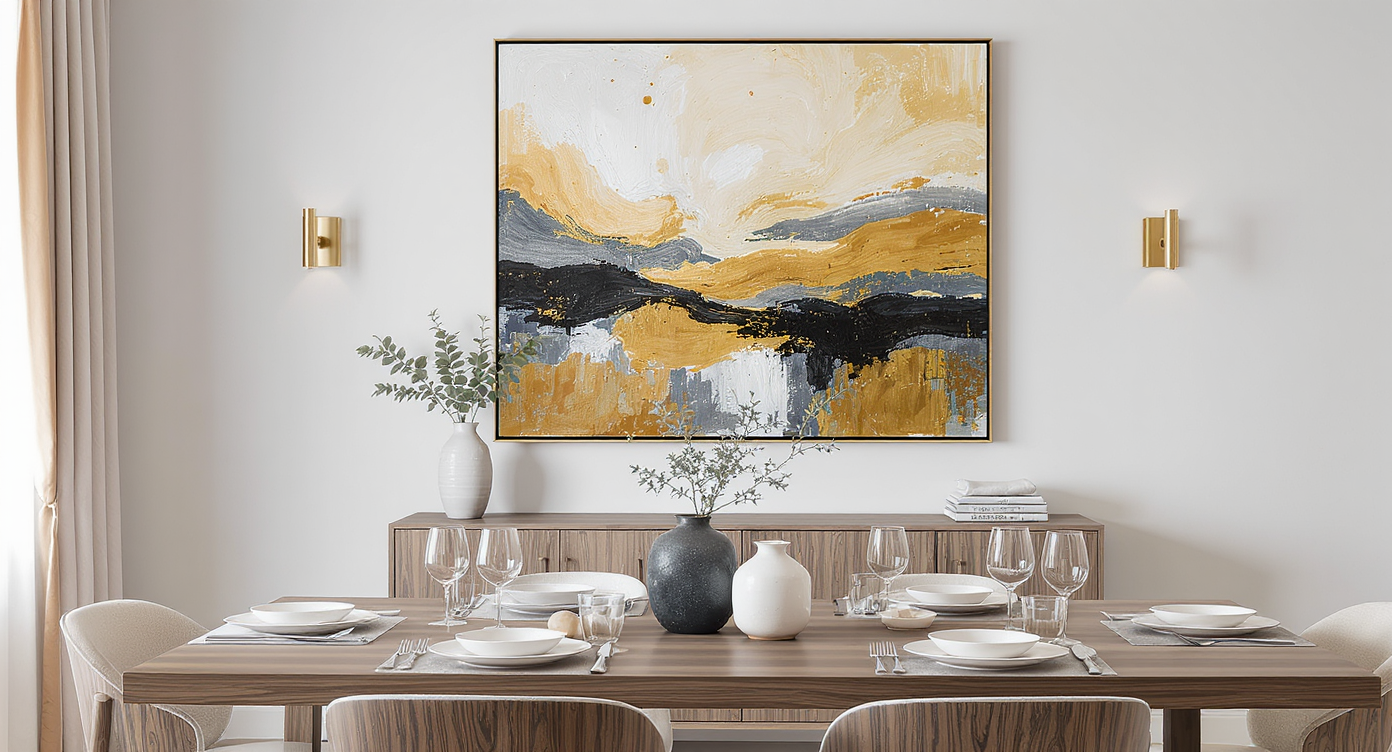
A modern dining space with a bold, oversized art piece, sleek sconces, and functional storage, perfectly illustrating stylish wall decor.
What lives on the walls around your dining table makes a dramatic difference in mood and depth. Instead of a scatter of small frames, many stylists now lean toward one substantial artwork—think canvas or textile, at least two-thirds the width of the table—to draw the eye and set the tone. This single gesture can stand alone or team up with wall sconces for balance and elegance. If you love visual texture or have a collection to showcase, consider a gallery wall directly behind the table. This approach works especially well in open layouts, grounding the dining area within larger living spaces. Mirrors offer another solution, reflecting light and visually enlarging small rooms, while sideboards or slim console tables below a key art piece marry décor with function. For more ideas on transforming blank dining room walls, including the right scale for art and smart placement of consoles and mirrors, visit our visual strategies for blank dining walls.
-
Accents: Plants, Centerpieces, and Personal Touches
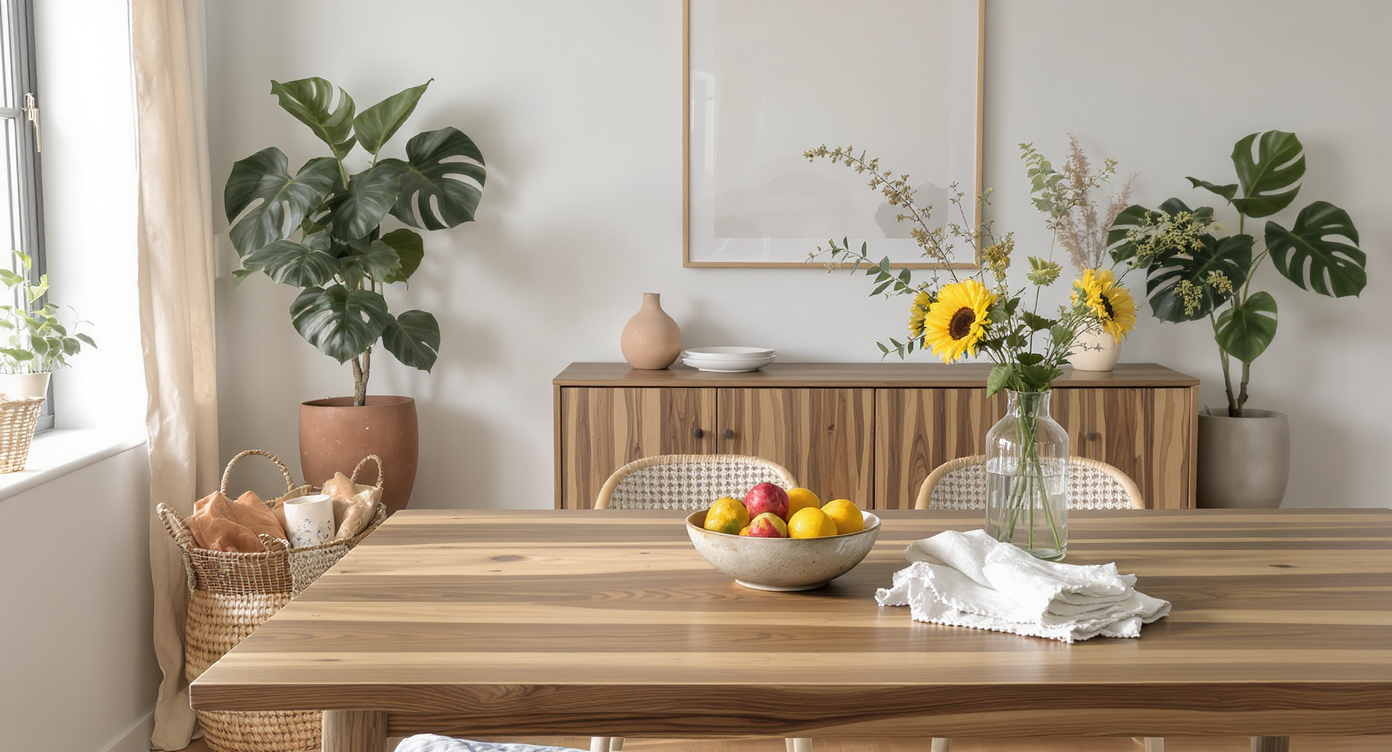
Curated dining area with plants, hand-thrown ceramics, fresh flowers, and layered personal accents, showcasing natural warmth and lived-in charm.
Layering in personal accessories is what moves a dining space from showroom-perfect to genuinely lived in. Lush potted plants soften architectural lines and add biophilic interest, especially in corners or along sideboards. Tabletop vignettes—think: footed bowls, fresh flowers, hand-thrown ceramics—offer color, shape, and a sense of welcome without impeding elbow room. Swapping out benches for additional chairs, as some designers note, can increase comfort for guests who linger through long meals. And for those with a penchant for minimalism, a simple vase and a stack of linen napkins may be all that’s needed. Just as importantly, keep accents in scale with your room dimensions so the overall composition feels intentional. Drawing inspiration from real families who decorate with a mix of thrifted finds, hand-me-downs, and travel mementos, successful dining rooms often tell a layered story unique to their inhabitants.
Visualization Scenario
Picture walking into a sunlit dining area where your table sits centered atop a woven rug, its borders generously framing each chair. A striking abstract artwork anchors the main wall, complemented by a slender sideboard carved from warm wood tones. Overhead, the chandelier glows gently, and in the nearby corner, a leafy potted ficus adds life. The table itself features a sculptural ceramic bowl brimming with seasonal fruit—a perfect, approachable invitation for everyday meals and memorable gatherings alike.
Dining Area Design FAQ
Most designers suggest leaving at least 36 inches between the table and surrounding walls or furniture, ensuring chairs can be pulled out with ease.
What size rug is ideal for a dining room?
Choose a rug that extends at least 24 inches beyond your table on all sides so that chairs remain fully on the rug even when pulled out.
How do I pick the right light fixture for over the table?
Select a pendant or chandelier about half to two-thirds the width of your table, hanging it 30 to 36 inches above the tabletop. For tall ceilings, add a few extra inches.
What if my style is minimalist—won’t more décor feel cluttered?
Minimalist dining spaces benefit from a well-chosen rug, single artwork, or organic centerpiece that brings completeness without excess. To experiment virtually, ReimagineHome.ai helps you refine decor options without overcommitting.
Can wall color or wallpaper be used as decor?
Absolutely. Deep wall colors or bold wallpaper patterns add depth and personality, especially balanced by a large artwork or simple gallery wall. Test placement and proportions before committing to avoid visual overload.
Conclusion: From Blank to Beautiful
Designing the space around your dining table is equal parts science and self-expression. The interplay of layout, rug size, ambient and task lighting, and carefully chosen wall décor creates a room ready for every occasion, from casual weeknight dinners to joyful celebration. Each selection—from the statement lighting down to the greenery in the corner—supports a dynamic, comfortable, and visually anchored space. Whether your aim is minimal, eclectic, or traditional, remember that your design choices should support the way you live, gathering friends and family with ease. If you’re longing for a preview or want to experiment digitally, ReimagineHome.ai offers tools to visualize these changes long before you rearrange a single chair.