How to Divide a Room into Two Zones: Functional & Stylish Solutions Explained

TL;DR
Dividing a single room into two zones can transform awkward, multifunctional spaces into highly usable areas. Choose between sliding doors, lightweight partitions, furniture, curtains, or sliding panels based on your light needs, flexibility, and layout. Visualization tools reveal how each option changes space and daylight, reducing regret before you spend.
Mastering Room Division: Fast-Track Decision Logic
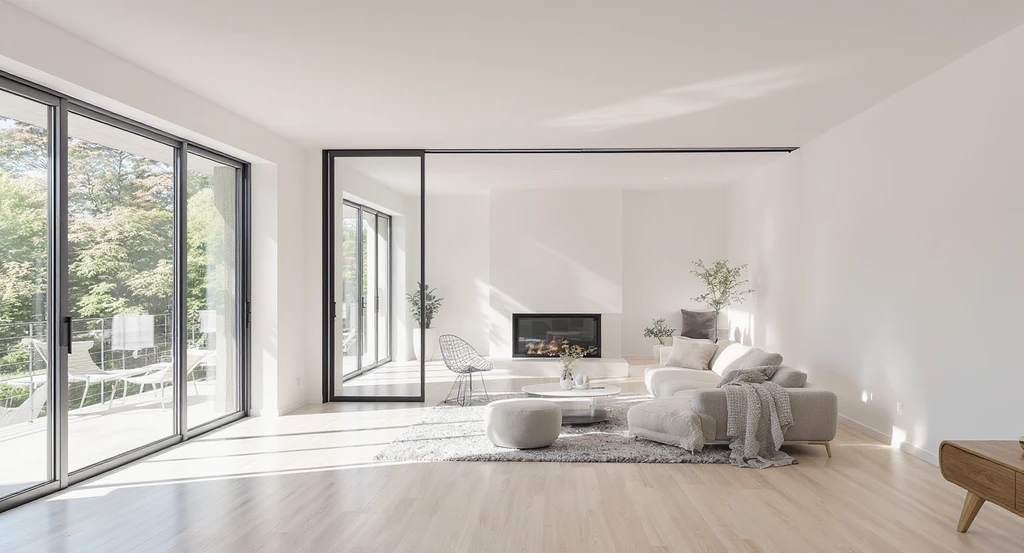
How to divide a large empty room—this modern open-plan living area demonstrates creative ideas for empty living room zones and best ways to separate open-plan spaces using room divider solutions for small apartments.
To divide a room into two zones, use sliding doors, partitions, bookcases, curtains, or sliding panels—each offers a unique balance of privacy, light, flexibility, and style. The right divider can create extra functionality, boost privacy, or carve out workspace in even the smallest apartments.
Selecting how to divide a room into two zones depends on your light sources, layout flow, and lifestyle priorities. This guide explains practical, stylish room divider solutions, when to use each, and why seeing a realistic preview makes all the difference before you start building or buying. Read on to find the division method that works best for your home.
-
The REimagineHome AI Evaluation System
Our list is structured by core spatial mechanics: daylight access, flexibility, privacy, acoustic control, and impact on resale or lease value. We weigh the merits and trade-offs that most affect function in both small apartments and larger homes. Each division method is matched to its best-fit uses, drawing on experience from renters, homeowners, and design professionals alike. As detailed in our apartment design guide, space division should enhance—not restrict—how you live and work.
-
1. Sliding Doors: Seamless Division with Light Preservation
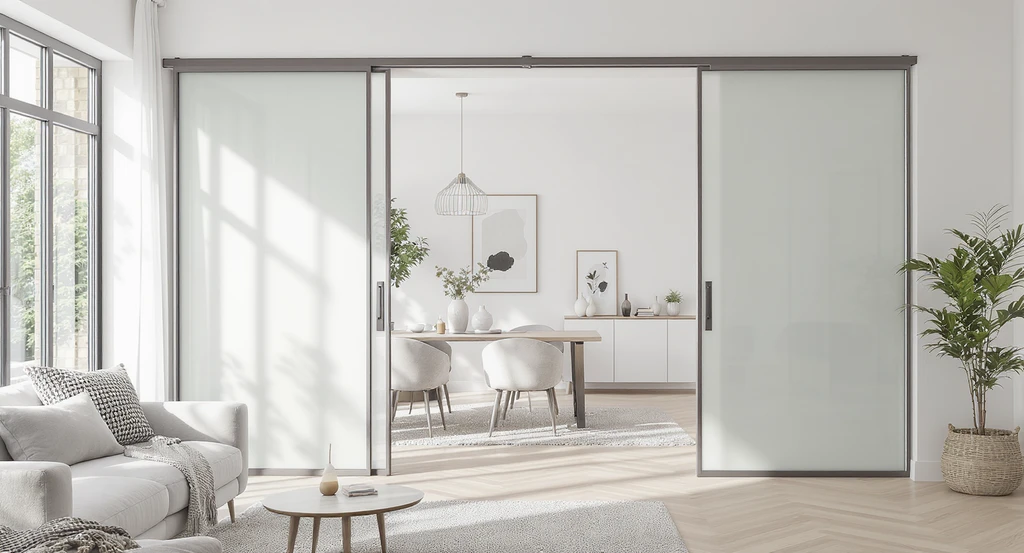
Sliding doors with frosted glass offer one of the best ways to separate open-plan spaces, showing how to divide a large empty room while preserving light and flexibility.
Sliding doors allow you to separate areas while maintaining light flow, making them ideal for shared spaces that need both privacy and openness. They work particularly well where swing doors waste space or block sunlight.
- Why it works: Modern sliding systems glide cleanly along walls or into pockets, keeping layouts flexible and visually minimal. Frosted glass keeps light moving without sacrificing privacy.
- When it fails: If wall space is limited or acoustics are a major concern, sliding doors may provide only modest sound separation.
- Spatial insight: A single window's reach extends deeper with translucent dividers, crucial for studios and long rooms.
-
2. Partition Walls: The Permanent Divider
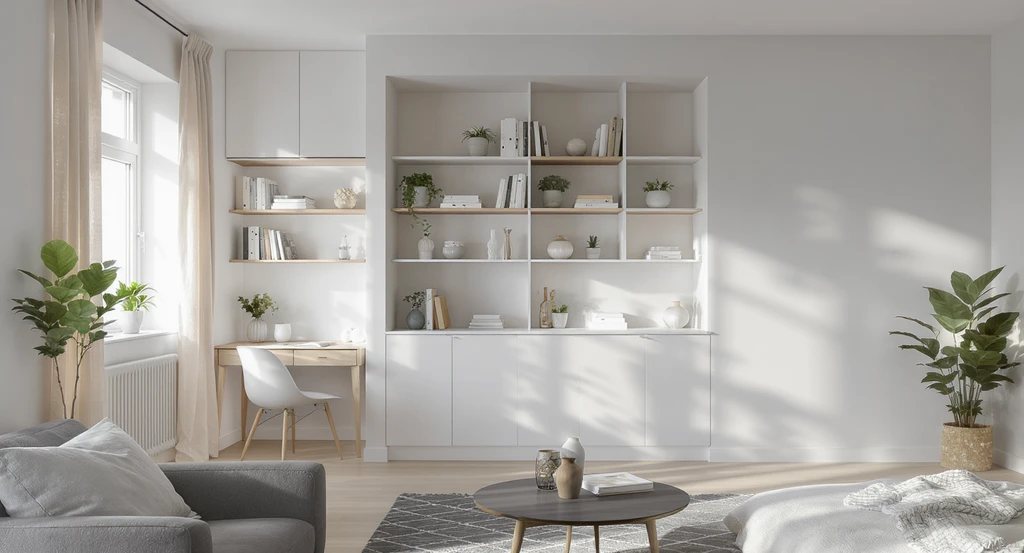
Smart ways to divide a large empty room: a stylish built-in partition wall separates living and work spaces—ideal for creative zoning ideas and open-plan layouts.
Lightweight, built-in partition walls (such as gypsum or modular panels) create a lasting division—ideal for families, sibling rooms, or where work zones require separation.
- Why it works: It delivers true privacy for sound and sight and allows for decorative finishes or built-in shelving.
- When it fails: Loses flexibility—removal requires demolition. Can block natural light if poorly placed.
- Spatial insight: Use in rooms with multiple windows or clear light sources on both sides to avoid one zone feeling dark or compressed.
-
3. Furniture as Dividers: Storage Meets Space Zoning
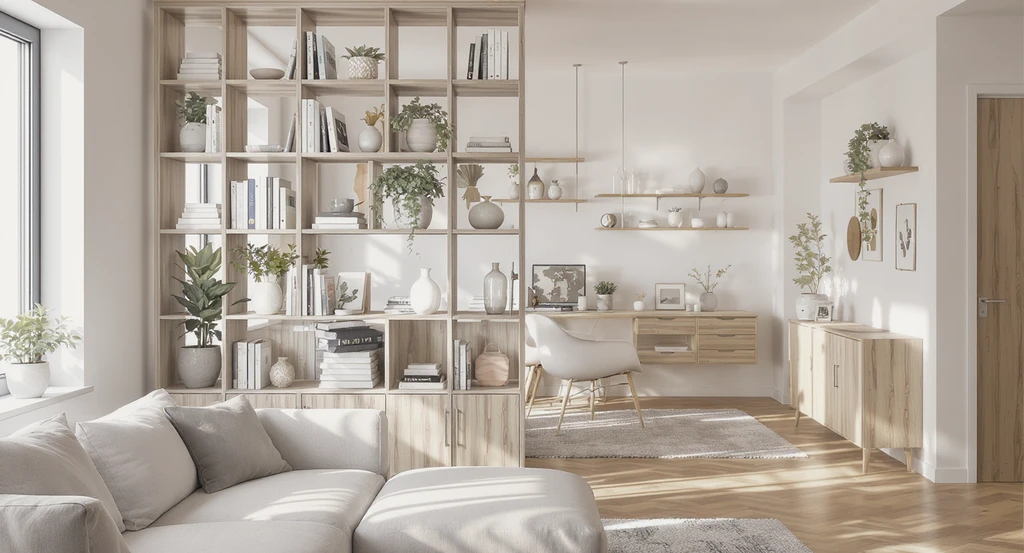
See creative ideas for empty living room zones: open-back bookcases offer the best ways to separate open-plan spaces and furnish an awkward layout from scratch without sacrificing light. Room divider solutions for small apartments maximize both style and storage.
Large bookcases, wardrobes, or back-to-back sofas can act as visual and functional partitions. This approach is favored in small homes where every inch and every dollar counts—as reflected in our budget apartment guide.
- Why it works: Adds storage without permanent alteration, which is ideal for renters or temporary needs.
- When it fails: Opaque, deep furniture can steal daylight and compress small rooms if not placed mindfully.
- Spatial insight: Opt for openwork designs to preserve light and prevent over-cluttering the visual field, especially important in studio layouts.
-
4. Curtains: Flexible, Budget-Friendly Room Dividers
Floor-to-ceiling curtains are an affordable, removable solution suitable for renters or for frequently changing needs. They excel where temporary division is desired, as we discussed in our small studio zone guide.
- Why it works: Quick install and easy reconfiguration, with a soft visual presence that doesn’t dominate a room.
- When it fails: Offers minimal sound insulation or privacy; can tangle or wrinkle easily in busy rooms.
- Spatial insight: Works best near windows to filter rather than block sunlight—choose lighter fabrics for minimal shadowing.
-
5. Sliding Panels: Modern Aesthetic with Adaptable Layout
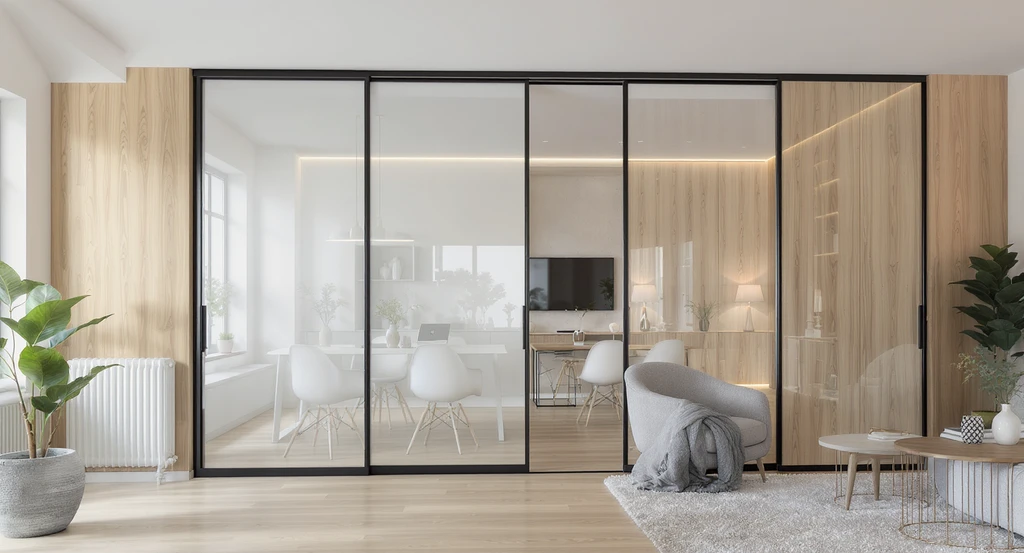
Sliding wall panels deliver a flexible and contemporary way to divide a large empty room, perfect for separating open-plan spaces or creating zones in small apartments.
Sliding wall panels—mounted ceiling or wall—deliver a flexible partition with a contemporary edge. Available in materials like glass, wood, or acrylic, these panels suit open-concept living areas needing part-time separation.
- Why it works: Allow you to quickly open or close off zones, adapt layouts for entertaining, or block clutter without construction.
- When it fails: Requires a ceiling or wall track and some planning; less effective for strong acoustic division.
- Spatial insight: Panels can curve or segment rooms, helping delineate open-plan zones (e.g., work/live) without reducing perceived area.
-
Definition: What Defines Room Zoning?
Room zoning occurs when a single space is separated into distinct functional areas using physical, visual, or material boundaries. This enhances usability and personal comfort. Many believe zoning is only about privacy, but in reality, effective zoning also influences natural light reach, spatial orientation, and adaptability—elements essential for small apartments, as highlighted in our budget design guide.
-
How Visualization Changes the Room Division Decision
Uncertainty with room division starts with not knowing how furniture, dividers, or walls will affect light, flow, and perceived space. Using a platform like REimagineHome AI, you can upload a photo of your room and instantly preview divider options—curtains, sliding doors, bookcases—before building or buying. Seeing the result visually corrects scale mistakes, shows the effect on daylight paths, and reveals storage impacts. This dramatically reduces decision regret, as we explored in our guide to flexible bedrooms, and helps clients, renters, and owners move from hesitation to confident action, shortening the decision cycle.
-
Trade-Offs and Real-World Application
Permanent, solid dividers excel in privacy and acoustics but risk blocking light and require higher investment. Temporary or transparent solutions protect adaptability and daylight but often sacrifice sound control. The best method depends on daily use-patterns, light direction, window count, and your willingness to change the layout over time. According to our visual zoning guide, renters often favor curtains and open furniture, while homeowners may invest in sliding doors or panels for resale sensitivity. Always pilot options visually to validate your shortlist before purchase.
Room Division FAQ: Fast, Decisive Answers
What is the cheapest way to divide a room into two zones?
Curtains or open-back bookcases are generally the cheapest room division options. They require no construction, are reconfigurable, and let you adapt zones without permanent changes. Try previewing both in your own layout using visualization tools before buying.
How do I divide a bedroom for two children without losing light?
Use open shelving, partial partitions, or sheer curtains. These methods visually separate spaces while still letting daylight reach both sides. Avoid solid, floor-to-ceiling divisions unless both zones have windows.
Will dividing a room hurt resale value?
If the divider is flexible (removable or stylish), it usually boosts appeal by showing functional potential. Permanent walls should be well-designed and reversible if possible, especially in homes where open layouts are desirable for buyers.
Can I divide a rental apartment without drilling or major changes?
Yes—curtains on tension rods, freestanding screens, and modular shelving are all rental-friendly. For more on this, see our apartment division advice.
What’s the fastest way to visualize room division before I decide?
You can upload a photo of your room and digitally apply divider styles using REimagineHome AI—the fastest way to preview changes before building, buying, or rearranging.