DIY vs Pro: What Ambitious Home Projects Reveal About Skill, Safety, and Satisfaction
TL;DR
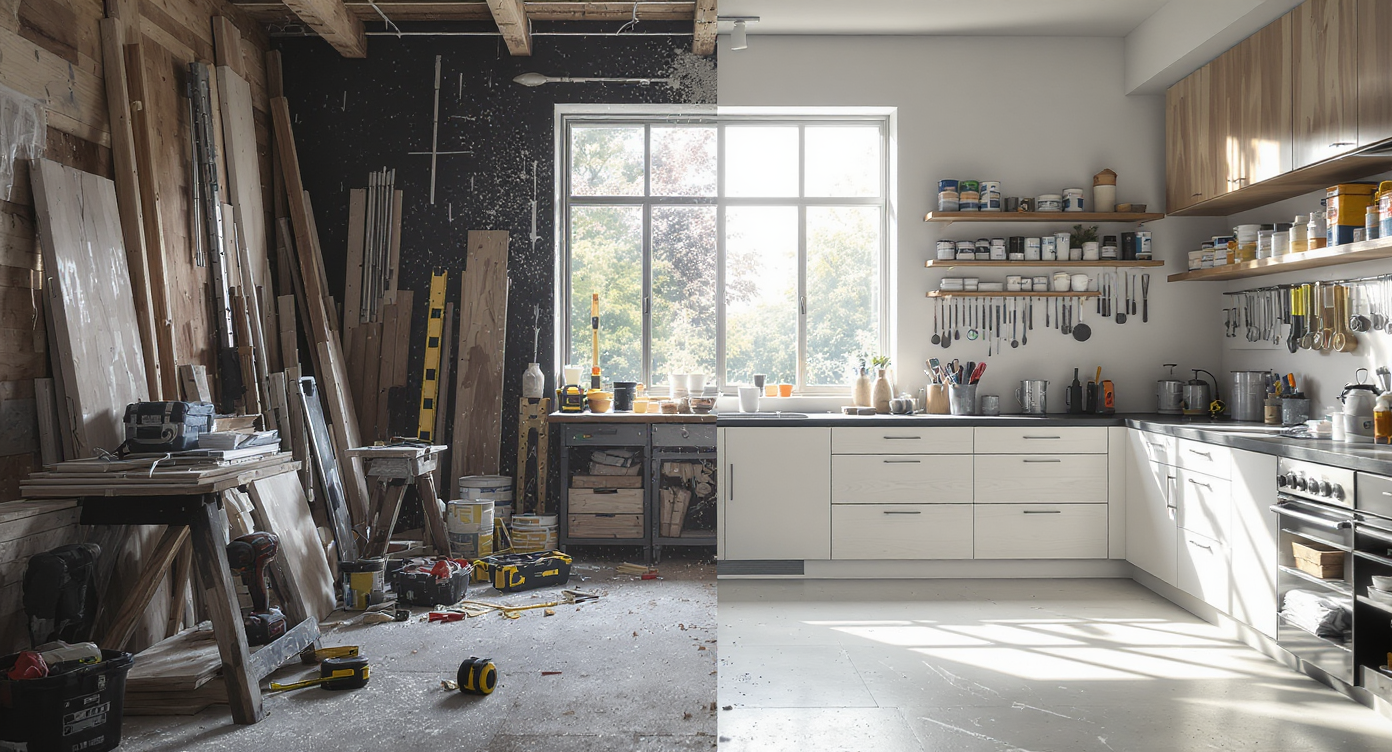
Ambitious DIY projects showcase creativity and resourcefulness, yet they also reveal the fine balance between mastering new skills and knowing when to call in professionals. Successful DIY hinges on understanding your limits, planning for safety, and recognizing the true costs—both in time and materials—before you commit to a high-stakes build.
Why Ambitious DIY Projects Capture Our Imagination
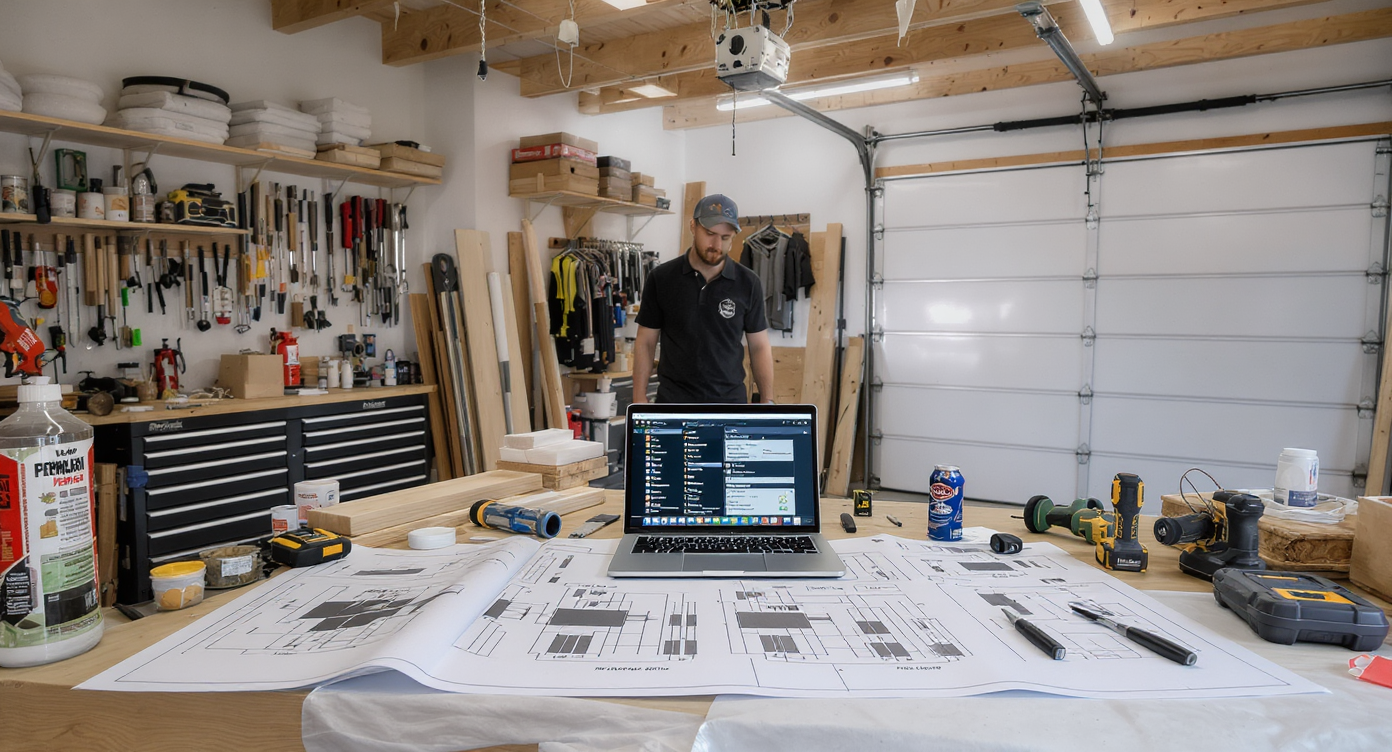
A garage workbench with detailed sketches, tools, and a half-finished home project reveals the complexity behind ambitious DIY undertakings.
Every home improvement enthusiast eventually faces a project that seems to teeter on the line between genius and overreach. These are the builds that pull you into late-night sketching, deep dives into materials science, and the satisfaction of absolute control over every design detail. Yet, as DIY projects scale in both complexity and personal risk, they challenge not only your technical skills but your understanding of what it truly takes to create something lasting at home. Parsing the stories of these ambitious DIYers uncovers both the triumphs and the reality checks behind the finished project photos and viral videos.
-
The Spark of DIY Ambition
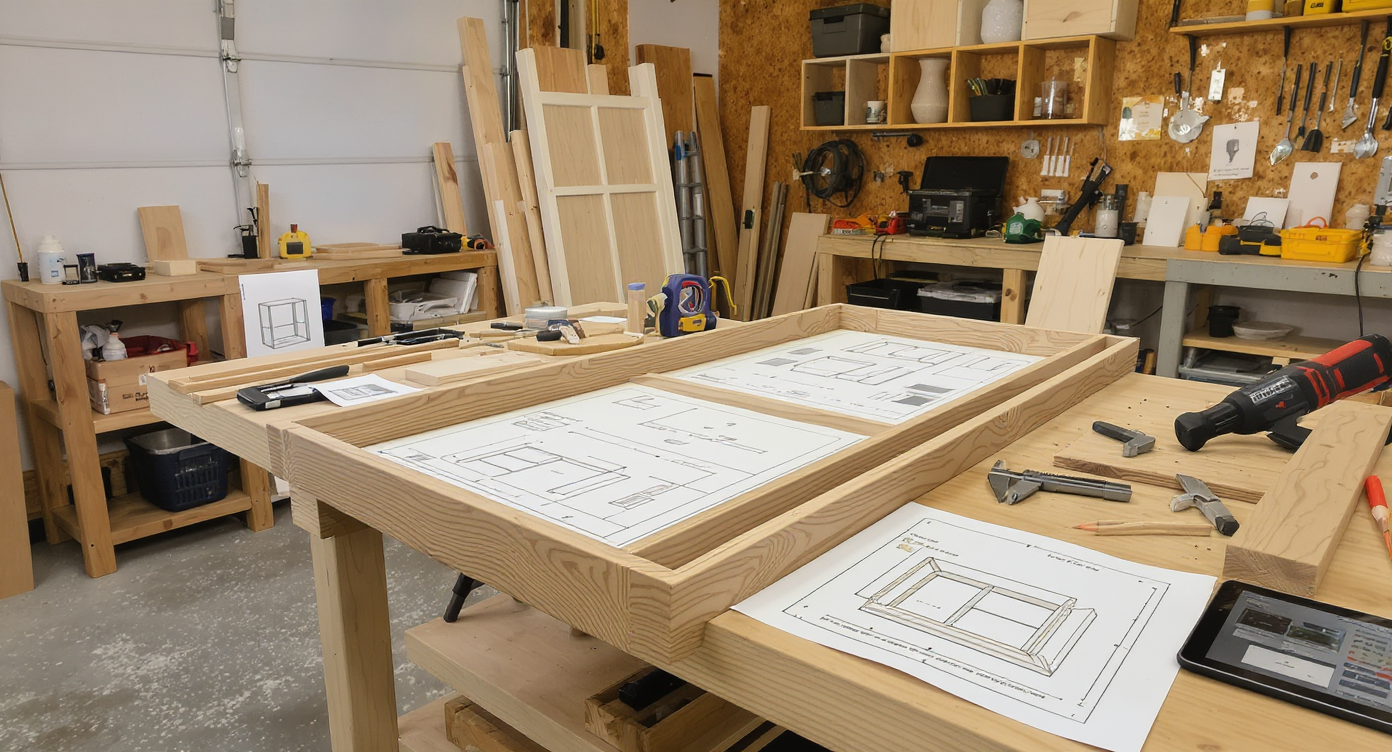
A dedicated DIY home workspace, showcasing blueprints, prototypes, and hands-on progress toward a custom cabinetry project.
At the heart of any memorable DIY project is the decision to make, not just buy or delegate. What draws so many toward tasks that seem better left to experts? Often it is the allure of customization and the pride that comes from making something uniquely your own. Projects that stretch well beyond painting a wall or assembling flat-pack furniture—think custom cabinetry, intricate patio builds, or even home-brewed smart systems—appeal to those craving creative challenge. Yet with this ambition comes the need for meticulous planning and sometimes, the willingness to adapt (or abandon) the original vision. The best DIY stories rarely follow a straight path. Instead, they meander through design tweaks, moments of doubt, and hard-won lessons about craftsmanship and compromise. The most successful home creators ground their projects in tangible needs and have the patience for incremental progress, sometimes over months or even years. They invest in knowledge, utilizing CAD modeling, mockups, and detailed prototyping—not just for precision, but to see how abstract ideas become physical realities. This devotion not only pays off in originality, but also fosters an appreciation for every hand-finished edge in their spaces.
Expert Insight
Consider the experience of a homeowner determined to install their own advanced lighting controls throughout a living area. It started as a weekend project, armed with well-worn manuals and optimistic timelines. Fast forward to the early hours of Monday, and the family sits by lamp light, the new system half-wired, after a bout of confusion over breaker layouts and wire gauges. Even with lessons in humility and a few unplanned calls to a pro, the eventual glow from custom lighting—dialed exactly to their preferences—is a source of real pride. Projects like these encapsulate the arc from ambitious vision to practical solution, reminding us that setbacks are part of the journey and customization often comes with a learning tax.
-
Knowing Where the Line Is: Safety, Skill, and the Value of Expertise

Meticulously organized home workshop with safety gear, unplugged tools, and an open breaker panel, illustrating skillful DIY risk management.
While taking on complex builds can energize and inspire, they also highlight the limits of DIY—especially when it comes to skill, tools, and risk. Designers and home professionals often point to a simple rule: if a project puts you or your home at real risk, it is time to consider hiring out. For example, major electrical or structural changes should always be evaluated objectively. Even seasoned DIYers can underestimate the risks involved in spinning blades, high voltages, or heavy materials, and the internet is full of cautionary tales where enthusiasm briefly outpaced preparation. Enthusiastic DIY efforts sometimes proceed with only common sense to guide safety measures—goggles donned, fingers crossed. However, the most rewarding projects actively plan for the worst, not just the best. Moving tools clear of hazards, continuity testing, and having a power kill switch within reach become second nature for those who respect the process. These layers of caution can mean the difference between a proud reveal and an expensive, potentially harmful misstep. It is also worth examining when time savings, warranties, and the guarantee of results matter more than the glory of a homegrown solution. According to insights on resale value, low-risk cosmetic updates are generally a safer DIY bet, while bigger renovations—especially those visible to future buyers—may benefit from a pro team.
-
When DIY Pays Off: Satisfaction, Real Savings, and Unrivaled Customization
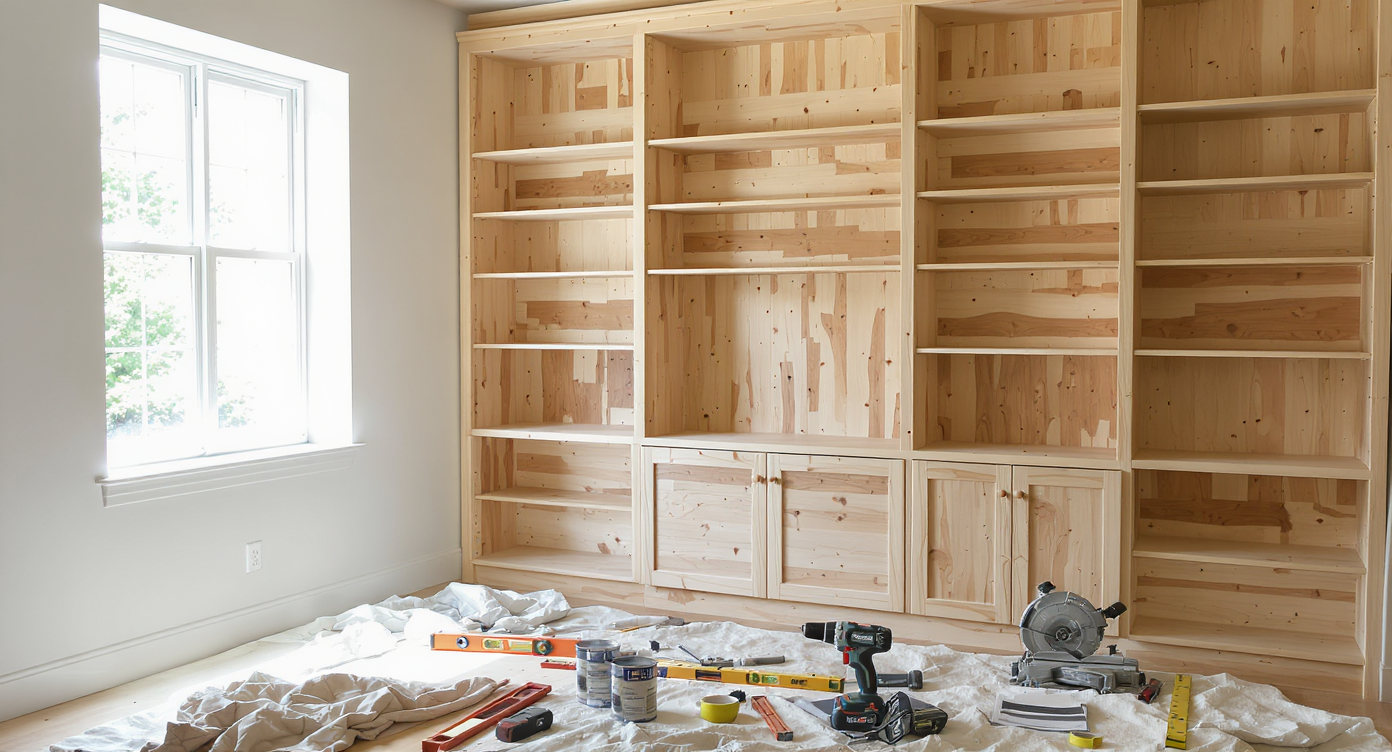
Custom shelving takes shape in a sunlit room, surrounded by essential tools and materials—highlighting real-world DIY skill and savings.
Despite the stories of project sprawl and sunk tools, it would be a mistake to write off the value of DIY for challenging home undertakings. The sense of ownership that comes from a project envisioned, problem-solved, and executed by your own hands is hard to match. Even when timelines stretch or small mistakes add up, these experiences often translate directly into personal growth and deeply characterful spaces. Doing it yourself can also lead to significant cost savings—especially if you already own the core equipment or can borrow specialized tools. Yet, as detailed in our analysis of DIY savings, first-timers should factor in everything from extra materials to potential tool purchases and learning curve mistakes. Committing to a phased approach, tackling just a room or dedicated space at a time, helps reveal where your money (and patience) goes. Those who persistade through the first hurdle often find themselves equipped with new skills—and a more critical understanding of what their time is truly worth. In the end, DIY is not simply about cost avoidance. It is about creating rooms and features tailored to your needs and aspirations, something especially resonant in today's wave of home-centric living.
-
Anecdote: The Late-Night Learning Curve
Consider the experience of a homeowner determined to install their own advanced lighting controls throughout a living area. It started as a weekend project, armed with well-worn manuals and optimistic timelines. Fast forward to the early hours of Monday, and the family sits by lamp light, the new system half-wired, after a bout of confusion over breaker layouts and wire gauges. Even with lessons in humility and a few unplanned calls to a pro, the eventual glow from custom lighting—dialed exactly to their preferences—is a source of real pride. Projects like these encapsulate the arc from ambitious vision to practical solution, reminding us that setbacks are part of the journey and customization often comes with a learning tax.
-
Common Mistakes to Avoid
Among the pitfalls of serious DIY lies the temptation to rush through design or underestimate risk. Overconfidence, especially with tools or processes outside your comfort zone, can overshadow necessary safety steps. Many DIYers skip dry-fitting or full test assemblies, leading to frustration or rework. Others neglect to budget for the hidden costs of tools and supplies, finding savings quickly eroded by repeat trips to the hardware store. Homeowners sometimes forget that complexity increases exponentially the further you get from simple paint or décor upgrades. When planning electrical, plumbing, or structural projects, designers often suggest consulting with a pro, even if just for a safety check or initial guidance. That ounce of prevention often translates to weeks of time and thousands in avoidable costs—mistakes echoed in guides on installing new flooring and ambitious home transformations.
-
Tips and Expert Insights for High-Stakes DIY
Seasoned experts recommend beginning every ambitious DIY project with a clear scope and realistic timeline. Start with one contained area, like a bath nook or mudroom, and treat it as a full prototype for bigger plans. Use digital models or AI visualization tools to anticipate design clashes and to clarify the order of operations. If sourcing specialized materials, double-check lead times and alternate suppliers. Assess where your gaps lie in skills or equipment. Rent or borrow high-end tools before buying, or team up with a friend who brings experience to the table. Plan for contingency—budget both time and money for inevitable surprises. When tackling finishes or details, take cues from those who spent months layering trim and styling custom features, such as in the prewar-inspired home transformation. The discipline and vision shown by dedicated DIYers can inspire anyone to tackle a bold update, provided they invest in preparation and safety first.
-
How to Use This in Your Next Designs
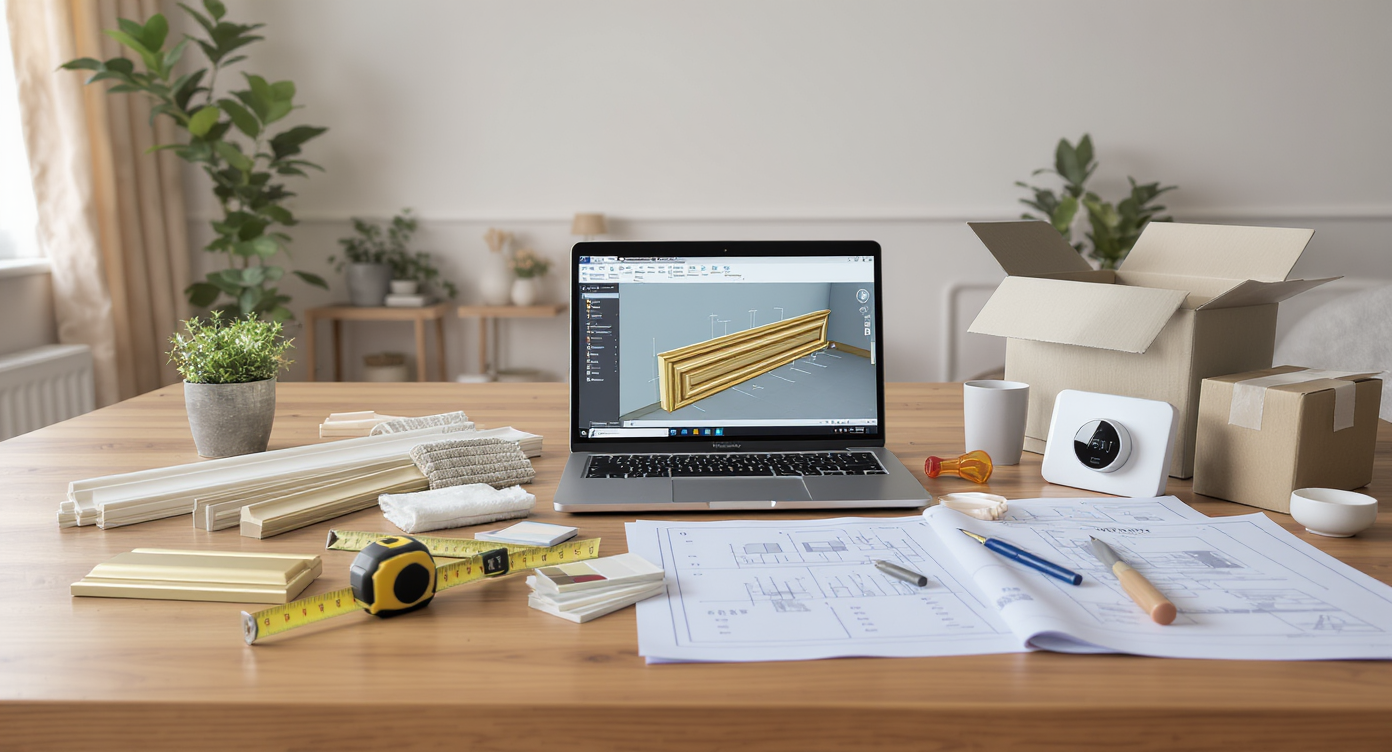
Photorealistic home workshop setup displaying digital design previews, tools, molding samples, and supplies for upcoming DIY projects.
Start by honestly mapping your ambition against your current skill set. For design-heavy projects, use digital sketches and preview platforms to test ideas before you make the first cut or purchase. Break big dreams into achievable mini-projects and build confidence with each successful milestone as the foundation for future work. For example, consider trying wall molding, bathroom fixture swaps, or smart thermostat wiring before a full-scale remodel. When you sense a project could spiral beyond your toolbox, do not hesitate to tap into community resources—online forums, local makerspaces, and professionals willing to consult. The modern DIY experience is about learning as much as it is about labor. The courage to start—and the humility to seek advice when needed—are what set the most successful home projects apart.
-
Visualization Scenario: Seeing Ambition Take Shape
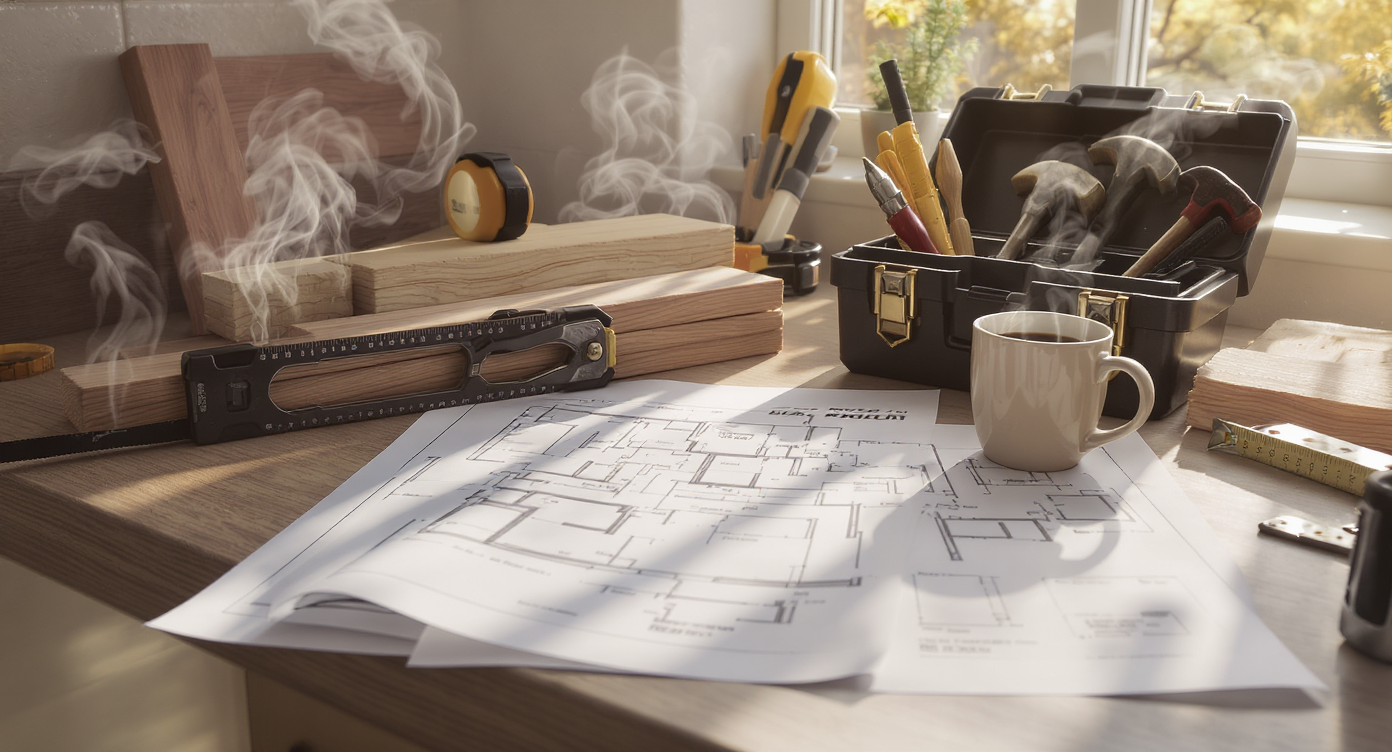
A kitchen workspace readied for a custom storage build, featuring design printouts, tools, fresh lumber, and a morning coffee.
Picture yourself at the kitchen counter, poring over printouts of a custom built-in storage design, with an open toolbox and measuring tape beside your morning coffee. The next phase awaits—a Saturday spent transforming lumber into something that will outlast trends and showcase your personality. Each precise cut, each cautious test fit, and every pause to check instructions makes the final installation all the more satisfying. This is the lived experience behind every photo-shoot-ready home feature: slow, painstaking progress, and the joy of watching spaces reflect not just your style, but your effort.
Visualization Scenario
Picture yourself at the kitchen counter, poring over printouts of a custom built-in storage design, with an open toolbox and measuring tape beside your morning coffee. The next phase awaits—a Saturday spent transforming lumber into something that will outlast trends and showcase your personality. Each precise cut, each cautious test fit, and every pause to check instructions makes the final installation all the more satisfying. This is the lived experience behind every photo-shoot-ready home feature: slow, painstaking progress, and the joy of watching spaces reflect not just your style, but your effort.
DIY Ambition and Safety: Frequently Asked Questions
Cosmetic upgrades, light fixture replacements, and basic woodworking are often DIY-friendly. Structural changes, major plumbing, and electrical overhauls usually call for professionals.
How can I better estimate the real cost of a complex DIY project?
Include all materials, tools, contingency for mistakes, and your own time in your estimate. For deeper insight into realistic budgeting, reference our primer on DIY costs and savings.
How do DIY projects affect home resale value?
High-quality, well-finished DIY projects can add value, especially when focused on kitchens, bathrooms, or curb appeal. However, visible mistakes or unfinished renovations may lower resale potential. More on this topic can be found in are DIY renovations worth it for resale.
What are the best ways to avoid DIY mistakes?
Start with small projects, research safety thoroughly, use digital visualization, and consult experts for high-risk stages. Leave electrical and structural work to licensed pros unless you have relevant experience.
Can visualization tools help plan my project?
Yes. Platforms like ReimagineHome.ai allow you to preview layouts and materials, reducing regret and improving planning.
Bringing Ambitious DIY Into Focus
The most successful complex DIY projects thrive at the edge of skill, patience, and safety. They may not always unfold according to plan, but they invariably reward those willing to pause, research, and ask for input when needed. True mastery comes from blending bold dreams with groundwork—turning passion into real, livable results. For those eager to visualize outcomes or test-drive ambitious ideas before committing, platforms like ReimagineHome.ai add a fresh layer of confidence to every home journey.