10 Easter Decorating Tips for a Cheerful and Easy Spring Refresh
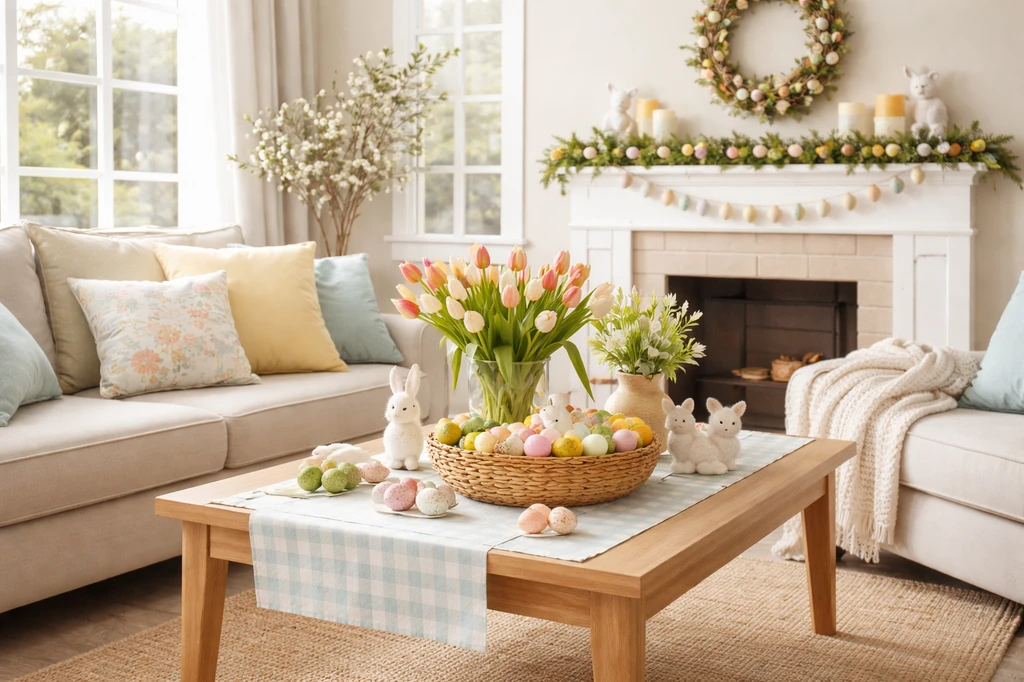
Rethinking Easter Decor: Beyond Cute, Toward Cohesive
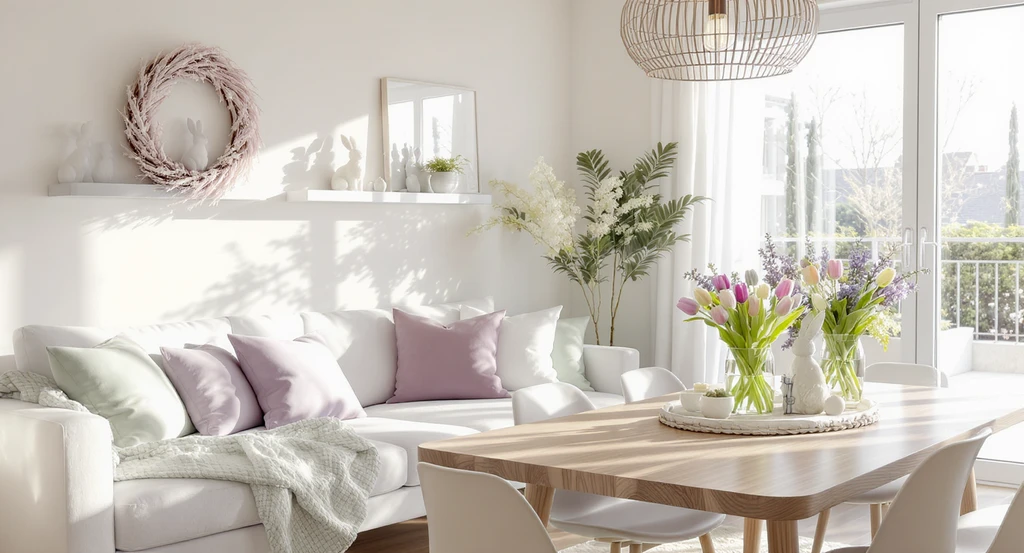
Editorial-worthy living and dining spaces styled with intentional Easter decoration ideas for every room, including DIY Easter centerpieces and apartment-friendly decorating tips—demonstrating how to create a joyful, low-stress look for spring.
Easter decorations easily veer into the overly precious or scattered: bunny figurines, pastel everything, DIY crafts multiplying faster than you can display them. But making your home feel festive and spring-ready doesn’t require an aesthetic free-for-all or a marathon of craft projects. Instead, it’s about choosing intentionally and with clarity, a few principles that make the season’s spirit feel real, welcoming, and stress-free. This guide doesn’t just stack up ideas; it delivers visual reasoning and practical frameworks, clarifying not just how but why to decorate for Easter in ways that feel joyful, personal, and harmonious. Whether you’re staging a showstopping table, wrangling kids’ crafts, or trying to avoid post-holiday regret, these are the rules that underpin a confident, low-stress spring look.
-
01. Limit Your Easter Color Palette for Cohesive Impact
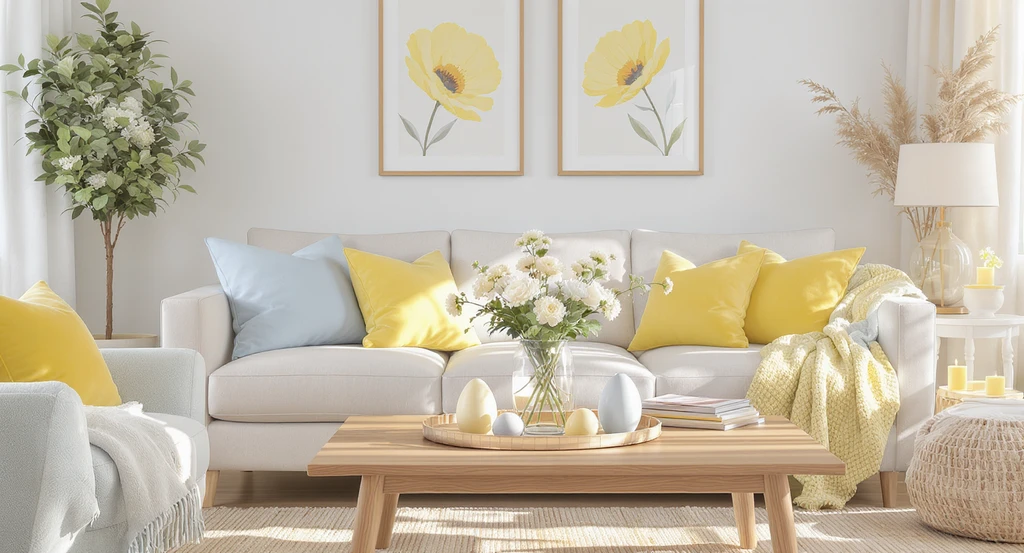
Limit your Easter color palette to just two or three spring shades for cohesive, joyful decorating ideas in every room, from DIY centerpieces to stylish living areas.
A restrained color palette anchors Easter decor and reduces visual clutter.
Choosing two or three spring shades think classic pastels or bold brights and repeating them throughout your space creates continuity that feels pulled together, not scattered. A tight palette lets you layer personality without chaotic results. The mechanism is simple: repetition builds rhythm and grounds even whimsical elements.
- Pick a main color, then support with one or two accent tones
- Apply these colors to eggs, textiles, and florals for flow between rooms
-
02. Use Fresh Flowers and Greenery for Life and Movement
Living elements like fresh flowers or wheatgrass inject energy and movement into Easter spaces. A single vase of tulips, a wheatgrass centerpiece, or potted violets feels instantly springlike and lifts the whole room. Fresh greens whether sculptural palm leaves, ferns, or snipped backyard branches soften synthetic décor and unify disparate items. Real botanicals add scale, natural irregularity, and a psychological sense of renewal that fake elements often miss.
-
03. Choose One Statement Centerpiece Over Many Small Objects
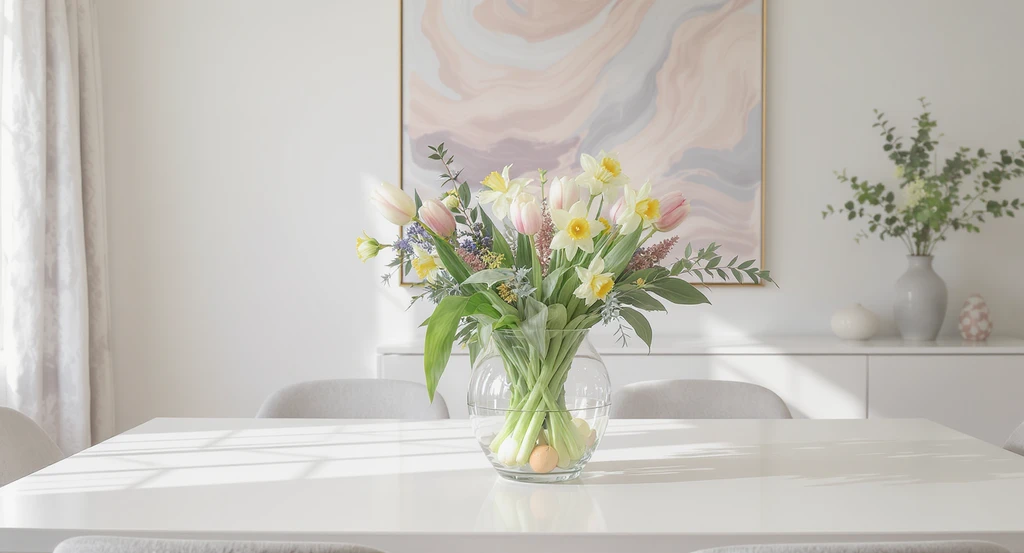
A single, dramatic floral Easter centerpiece on the dining table—showing how to decorate a living room for Easter with clutter-free, apartment-friendly ideas.
A single, impactful centerpiece on the dining table or mantel prevents distracting clutter and anchors the eye. Multiple small items—mini bunnies, scattered eggs, tiny baskets—fragment sightlines and shrink perceived space. Instead, opt for one lush arrangement, sculptural wreath, or dramatic display. This principle, also emphasized in our festive table decoration checklist, avoids decision fatigue and ensures spatial clarity.
The centerpiece should relate to your palette and season (flowers, dyed eggs, or produce). Think about sightlines when arranging for guest comfort and table conversation -
04. Mix Natural and Playful Elements for Balanced Whimsy
Balance nature-inspired materials with playful, kid-friendly details to prevent over-the-top cuteness or sterile formality. Think: rattan baskets and linen napkins alongside yarn-wrapped eggs or bunny-shaped cookies. This mix keeps things grounded, not gimmicky. The visual rule is contrast, soft, earthy, and tactile elements make bright decorations or whimsical shapes feel more sophisticated and less fleeting.
Pair moss, real grass, or wood details with pastels or metallics. Limit plastic or novelty pieces to avoid cheap clutter effect
-
05. Prioritize Function—Decor Should Not Interrupt Flow
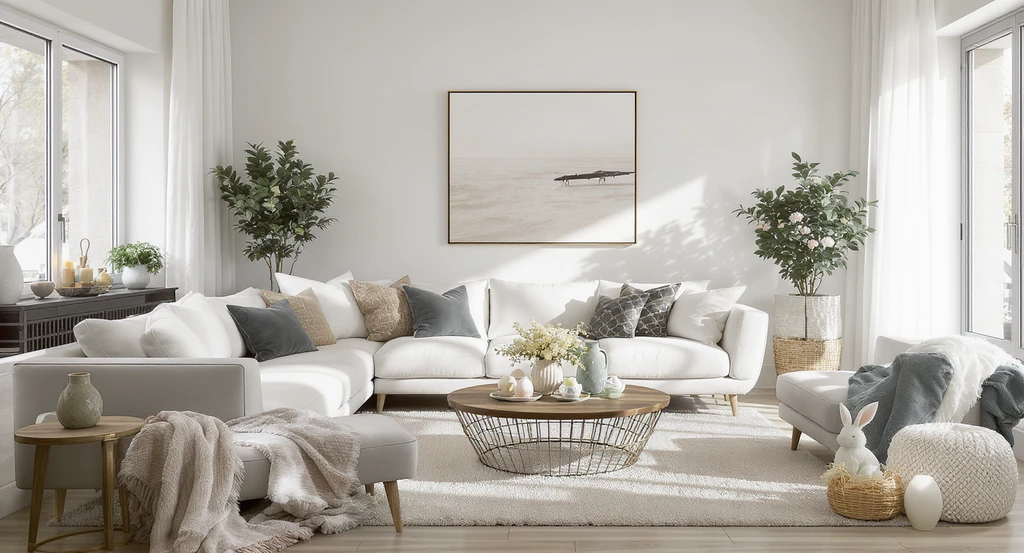
Maximize small spaces with vertical Easter decorating ideas—elevate your living room or dining area using DIY egg trees, hanging garlands, and stylish spring wreaths.
Easter décor must support day-of activities, not block them.Avoiding oversized centerpieces that interfere with passing dishes or arranging low containers to preserve sightlines at meals ensures both guests and hosts feel at ease. Seating and circulation matter for gatherings, and so does durability for anything involving children. Every element needs a reason to exist beyond looks
-
06. Include a DIY Element for Personalization and Memory-Making
DIY crafts make the Easter experience more personal, meaningful, and fun for guests—especially families. Consider simple projects like fabric-wrapped eggs, Mod Podge crafts, or homemade wreaths. When chosen strategically, a single hands-on element is more memorable than a room of store-bought décor. As explored in our DIY home decor advice, prioritizing easy, high-impact crafts prevents project overload and lets everyone feel included.
Choose one DIY project that suits your skill, budget, and available time. Opt for heirloom-quality or reusable DIYs to avoid next-year regret
-
07. Embed a Play Zone or Activity Space for Kids
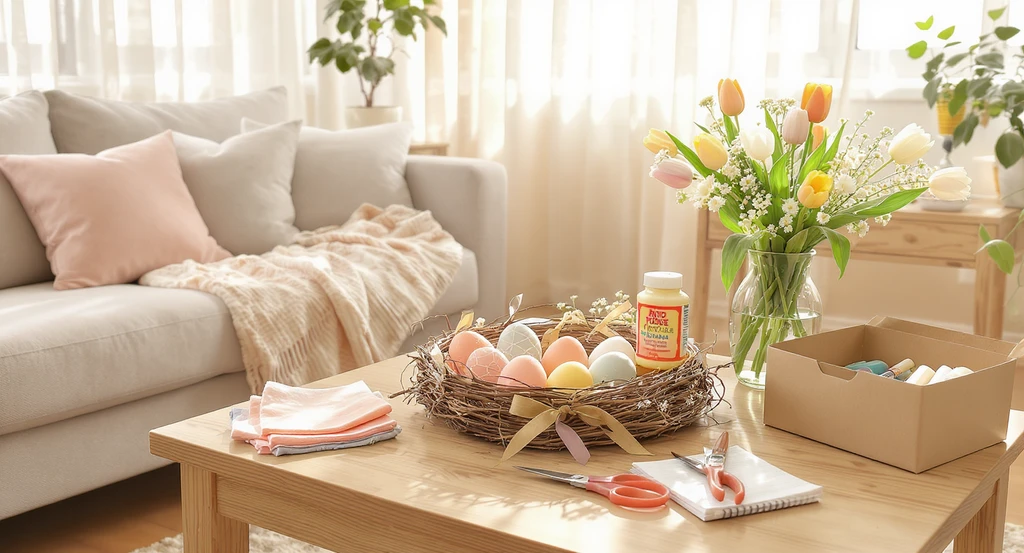
Discover how to decorate a living room for Easter with simple, apartment-friendly DIY Easter centerpieces and spring craft ideas for memorable gatherings.
Designate a special area for kids’ activities rather than spreading crafts and games throughout adult spaces.
Whether it’s a dedicated kids’ table with sturdy dishes and coloring stations, or a small outdoor scavenger hunt setup, separating spaces reduces chaos and lets adults relax. This decision also protects delicate or sentimental decor from accidental mishaps and allows playful mess without stress.Use washable decor and labels for the kids’ area. Plan age-appropriate projects and seat heights
-
8. Layer Textures and Materials for Spring Richness
Mixing textures—matte ceramics, woven baskets, cut glass, soft linen, glossy eggs—creates dimension and a sense of abundance without visual noise.
Layering is the underpinning of memorable tablescapes and vignettes. Integrate natural and made elements (grass, moss, velvet, paper, metal) for tactile depth. The eye registers variation as richness, making even simple decor feel generous and thoughtfully composed.
-
9. Plan Decor with Set-Up and Take-Down Simplicity in Mind
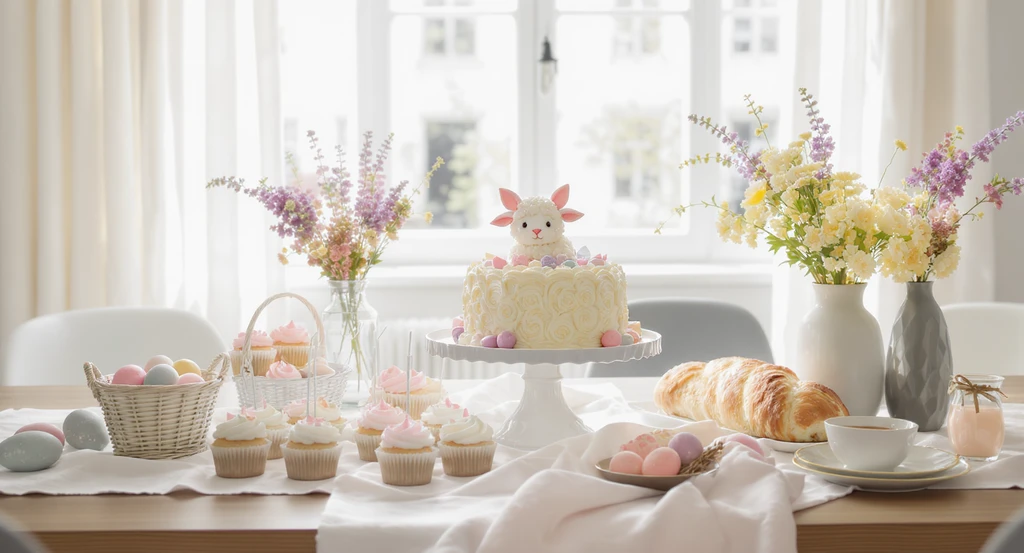
Showcase signature Easter treats like a lamb cake, pastel sweets, and festive breads as edible centerpieces. Creative DIY Easter centerpiece ideas for dining tables and living rooms blend style with effortless, apartment-friendly spring decorating.
The best Easter decorations are easy to assemble and painless to store or disassemble after the big day.
Ask yourself: How much time and energy do you want to spend setting up and, more importantly, packing away? Designs that double as everyday spring decor or can be composted (flowers, produce) yield higher long-term satisfaction and less post-holiday clutter. Prioritize systems over single-use spectacle.
Choose decorations that transition easily to generic spring use. Limit “fragile” or one-time-use items that cause take-down dread
-
10. Anchor Everything in Spring’s Spirit: Renewal, Light, and Togetherness
The most successful Easter decorating resists gimmicks and instead channels the season: fresh growth, optimism, and shared joy. Let daylight, garden textures, and communal rituals (from egg hunts to shared meals) set the tone over decor that chases trends or commercial excess. This principle helps clarify decisions and prevents overdecorating—your home should support real experiences, not just seasonal photos. Allow natural light and living elements to take center stage. Use sentimental or tradition-based items as finishing touches
FAQ
How do I pick an Easter color palette that feels grown-up?
Limit yourself to two or three hues—such as pale blue, blush, and white—and repeat them in flowers, eggs, and napkins for a look that’s fresh but unified. Refer to designer palettes recommended in our guides for visual flow and confidence.
What’s an easy way to make Easter decor feel less cluttered?
Consolidate displays using a single impactful centerpiece or motif. This prevents overcrowded surfaces and lets individual items shine, according to our festive table decoration strategies. Previewing with a design tool like ReimagineHome helps edit down distractions.
Are there Easter DIYs that don’t require advanced skills?
Yes—fabric-wrapped eggs, Mod Podge crafts, or simple floral arrangements are easy, high-impact, and customizable. Prioritize one or two projects so crafting feels fun, not overwhelming. Explore more high-value, low-effort ideas in our DIY home decor guide.
How do I avoid regretful seasonal purchases?
Repurpose everyday vessels for arrangements, lean on fresh flowers, and limit novelty items. Previewing your layout with what you already own (or virtually, with a tool like ReimagineHome) helps prevent waste and post-holiday clutter.
Bring Your Easter Ideas to Life Before You Decorate
Easter decorating feels more rewarding when you can picture the look before you start buying, styling, or rearranging your space. Instead of relying only on inspiration boards, you can use reference images to explore different Easter decorating ideas in a way that feels more realistic for your own home. With REimagineHome AI, you can visualize seasonal colors, table settings, spring accents, and festive styling directions before making decisions, which helps you create a space that feels cheerful, cohesive, and easy to pull together.