Making Sense of Short-Term Home Price Dips and the Path to Recovery

TL;DR
Housing prices have softened in many regions, but most analysts expect only modest declines over the coming year, followed by gradual recovery. Uncertainties remain, yet with supply lagging behind demand and shifting buyer behaviors, national home values appear poised for stabilization—not freefall—over 2026. Local volatility does persist, making close observation of regional markets and practical, timing-driven decisions essential.
A Shifting Landscape—And What Drives the Narrative

Photorealistic living room, staged for sale, displaying property market reports and data visualizations to illustrate current home price trends.
Speculation around where home prices are heading can stir both anxiety and opportunity among buyers and sellers. As attention focuses on forecasts suggesting temporary dips followed by rebounds, it’s crucial to distinguish short-term volatility from longer-term patterns—and to recognize how variables like lending, buyer psychology, and inventory levels shape both outcomes and experiences on the ground. Slower price growth has taken hold across much of the United States going into 2026, as detailed in recent analysis of metro-by-metro value shifts. While national averages mask meaningful local differences, most credible forecasts now converge on the likelihood of small, regionally uneven value decreases, rather than widespread declines. As we move into a more balanced market cycle, practical context and on-the-ground scenarios prove more useful than sweeping national predictions.
-
Short-Term Dips Versus Lasting Value: Separating Fact From Alarm

A well-maintained home with a "Price Reduced" for sale sign illustrates gradual, rational market adjustments, not crisis.
Fluctuations in home prices naturally prompt concern, especially when headline-grabbing forecasts suggest a potential dip. Yet, the current environment is less about dramatic swings than about incremental, measured corrections. According to recent housing data, metropolitan home values have slipped by 1–3 percent in select areas, but the broader market continues to demonstrate stability overall. This measured softening—marked by additional days on market and more frequent price adjustments—is, in many ways, a rational step back after years of outsized appreciation, not an indication of crisis. Economic and market watchers have pointed out that inventory growth and eased mortgage rates are giving buyers leverage again, allowing for more negotiation and less urgency than characterized the previous run-up—a shift highlighted in the 2026 housing market forecast. In this new reality, price corrections are both slower and less severe than some feared, reinforcing the importance of resisting panic and maintaining realistic expectations.
Expert Insight
In the spring, a young family searching for their first home watched headlines warn of sharp price corrections. Hesitant, they paused their search, only to notice friends securing deals with minor discounts and lenders offering more flexible terms. Shortly after, the family found a home that checked all their boxes and negotiated a reasonable price thanks to softer market conditions—reminding them that readiness matters more than trying to predict the perfect trough.
-
What Drives These Price Adjustments? The New Fundamentals

Suburban row of homes with for-sale and price-reduced signs, plus a paused construction site, illustrating nuanced market adjustments.
Price shifts arise not just from economic headlines but from a confluence of more grounded, everyday realities. Mortgage rates, still elevated but easing, create short windows of opportunity where buying becomes more attractive for households that had paused their searches. Sellers, meanwhile, recognize that the urgency and quickfire bidding wars of previous years have faded, leading some to adjust list prices or leave the market altogether if expectations aren’t met. Additionally, the supply-demand equation remains nuanced. Construction of entry-level homes continues to lag, which keeps inventory tight at many price points. Even as sales volume softens temporarily, a growing (albeit selective) pool of buyers still faces competition, especially in suburban and mid-tier markets. Regional disparities further complicate the picture, as markets heavily dependent on tourism or specific industries feel price pressure more acutely than diversified metros. This mosaic of influences largely explains why current corrections are modest and why long-term erosion in home values remains unlikely, as supported by 2025 housing value data.
-
Buyer Psychology, Lifestyle Shifts, and the Rebalancing of Priorities

A modern home office with expansive windows and access to a landscaped patio—reflecting buyer priorities for more space and flexible living.
Beyond economics, evolving attitudes about home ownership and living spaces play a critical role in shaping demand. Years of pandemic-era remote work and lifestyle reevaluation have altered what buyers seek: more space, outdoor access, and the flexibility to move further from urban cores. These shifts influence both the type and location of homes in demand, often supporting values in previously overlooked markets, while tempering growth in luxury condos or densely populated downtowns. It’s worth noting how perception and reality intermingle, too. When buyers expect steep price drops, many hold back, contributing to softer demand. Yet, as homes remain out of reach for some would-be buyers due to still-tight lending or employment uncertainty, the supply side also contracts—offsetting demand lulls and keeping prices relatively stable. This complicated dance has been observed in cities where, despite news of price dips, actual value declines are slight or short-lived, a phenomenon examined in recent metro market analyses.
-
Forecasting Recovery: Gradual, Regionally Varied, and Far From Uniform

Editorial aerial view illustrating varied regional housing markets, focusing on real-world differences in home values, inventory, and recovery pace.
Looking ahead, most major forecasts suggest that any ongoing softness in home values will be both measured and temporary. The likeliest scenario involves continued small corrections or flatlining in high-cost, overheated cities, with most areas returning to pre-dip price levels by late 2026 or shortly thereafter. Such expectations align with macroeconomic outlooks pointing to slow but steady gains in the years ahead, with annual price increases in the low single digits as affordability and rental alternatives gain prominence. Strategists increasingly emphasize that the pace of recovery depends on local economic health, available housing stock, and buyer sentiment—factors that can diverge widely from one metropolitan area to the next. Some regions may see new appreciation earlier due to population inflows or job growth, while others lag behind. As highlighted in housing market predictions through 2029, investors and home seekers alike should prepare for a market defined by patience, strategy, and locality-driven opportunities.
-
Anecdote: When Perspective Changes Everything
In a mid-size city, a couple spent months scanning listings, waiting for a dramatic drop that never materialized. They watched homes linger a few days longer on the market, sometimes with modest price cuts, but nothing close to the headlines. Meanwhile, a friend leapt at a house after seeing the seller reduce the price by two percent, locking in a mortgage rate before a predicted climb. The couple eventually realized their own expectations were shaped less by regional data and more by media narratives. Their decision to purchase was ultimately guided by personal readiness and the confidence that, while timing mattered, finding the right space for their life stage outweighed waiting for an elusive price low.
-
Common Mistakes to Avoid
One recurring error buyers make is assuming national predictions will dictate local outcomes. Market conditions often diverge dramatically even between adjacent zip codes, as regional industries, local inventory, and shifting demographics play out in real time. Overreacting to national headlines without tracing conditions on the ground can lead to missed opportunities, such as holding out for a substantial dip that never arrives—or making rushed offers in fear of further gains that don’t materialize. Another mistake is discounting the influence of personal timing. For example, buyers who delay needed moves for months or years in the hope of marginally lower prices can lose housing stability, miss favorable mortgage windows, or wind up in less suitable homes. Sellers sometimes err by clinging to pre-dip price expectations, turning down solid offers and then watching further softening unfold. Successful participants emphasize flexibility, local research, and timing solutions to actual needs rather than speculation.
-
Tips and Expert Insights
Designers and real estate advisors frequently advise prospective buyers to focus on fundamentals instead of short-term trends: scrutinize the quality of the home, match location to long-term lifestyle goals, and work closely with local professionals who track neighborhood sales activity. For those considering investment, strategic patience beats speculative timing—especially as rental demand is projected to remain strong and mortgage rates remain above pandemic-era lows. In practical terms, keep financing options open and monitor local listings for signs of longer days on market and price reductions. If selling, be ready to adjust expectations based on current demand and ensure presentation is impeccable to stand out in a more discerning market. Above all, remember that real estate remains a fundamentally local business, driven by factors far removed from nation-wide averages.
-
How to Use This in Your Next Designs
Whether buying, selling, or simply updating a home in anticipation of future moves, align decision-making with the current mood of the market: flexibility, value, and adaptability resonate with today’s buyers and renters. For sellers, minor renovations, staging, and highlighting adaptable spaces—think home offices or enhanced outdoor areas—can lift appeal and differentiate listings as inventory grows. Buyers and designers should look for homes with features that support evolving needs, from multi-purpose rooms to energy efficiency upgrades that protect both comfort and value during periods of modest price fluctuation. Planning for the long term pays off most reliably. Incorporate elements that stand the test of time, and prioritize improvements with real lifestyle benefits over those calculated purely on projected resale.
-
Visualizing the Shifting Market: What Buyers and Sellers Experience
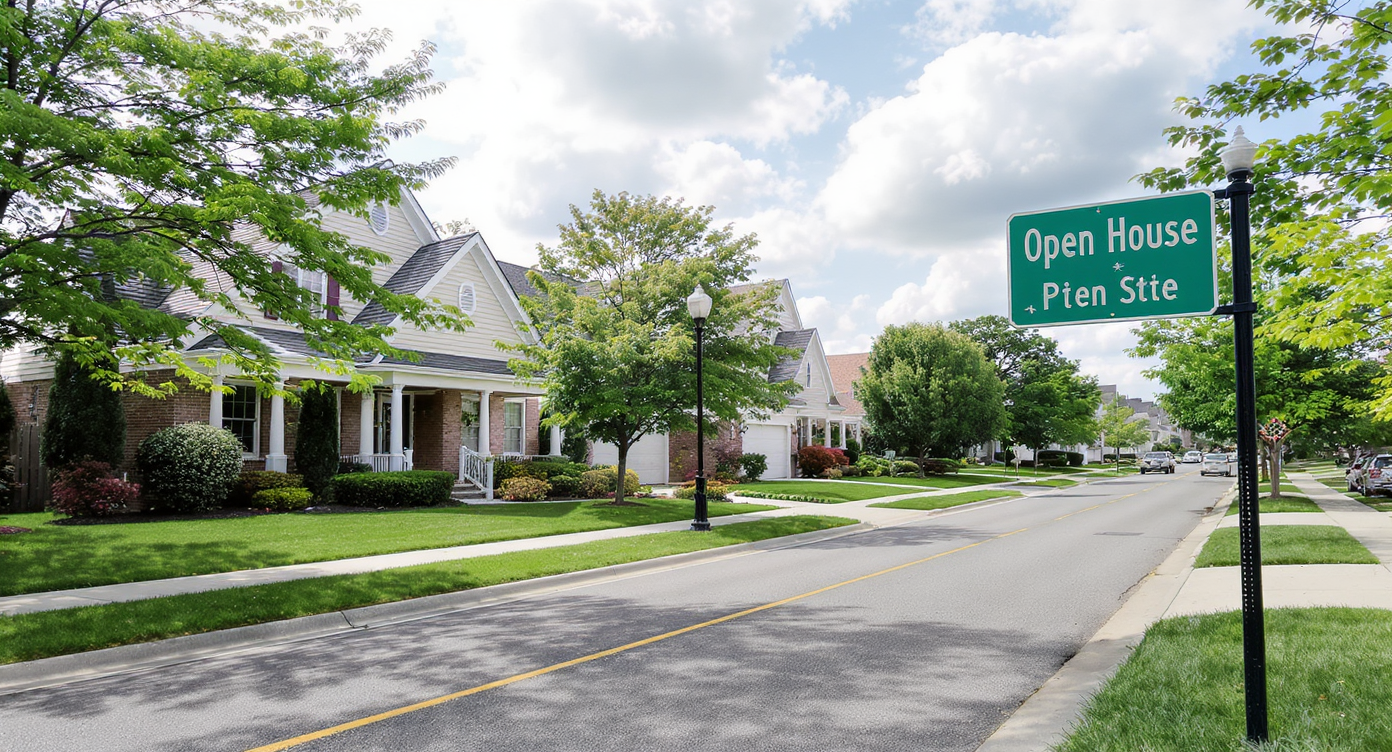
A suburban open house features a price adjustment, refreshed landscaping, and a new backyard work nook—reflecting nuanced market changes.
Picture an open house weekend in a suburban market: fewer cars line the street than in years past, but those attending ask more targeted questions. One family notices the asking price has been reduced by 2 percent, and their agent points out similar trends in nearby listings. The seller, having stayed flexible, negotiates on timing and some closing costs, making the sale attractive for both parties. In another neighborhood, a seller decides to refresh the landscaping and add a small work-from-home nook, resulting in the home moving after several weeks off-market. Each scenario underscores a reality far more nuanced than the initial forecasts, shaped by calculated adjustments and lived experience rather than sweeping shifts.
Visualization Scenario
Imagine entering a tranquil cul-de-sac where for-sale signs no longer vanish overnight. Instead, homes linger, their staged interiors inviting, their list prices subtlety revised. Prospective buyers tour at a comfortable pace, asking about remote work setups or backyard potential. The atmosphere is measured—not frenetic—signaling a transitional season for both buyers and sellers.
Frequently Asked Questions
Most regions are seeing only modest declines in value, typically between 1–3 percent, with notable local exceptions. National averages suggest stabilization over the coming year.
How can I tell if my local market will dip further?
Watch for days on market, the number of listings, and local employment trends. Regional data is more reliable than national predictions for practical decision-making.
Is it better to wait out a dip or buy now?
Timing depends as much on your personal circumstances and market-specific data as on national trends. Flexible buyers may benefit from increased inventory and slower price gains, but trying to perfectly time a market bottom is rarely practical.
What about mortgage rates—will they help buyers?
With mortgage rates easing from 2024–2026, affordability is marginally improved. Buyers with solid credit may find more favorable terms, further encouraging selective home shopping.
Where can I find curated design ideas and local market perspectives?
Visit ReimagineHome.ai for design ideas contextualized to today’s evolving real estate landscape.
The Case for Perspective—And Knowing Your Market
Amid the flurry of predictions and shifting data, one pattern has emerged: the U.S. housing market, even in the face of rapid change, displays a resilience rooted in local fundamentals and evolving buyer needs. Modest corrections, extended listing timelines, and growing inventory signal a move toward greater balance—an environment where informed decision-making thrives. Whether entering the market or simply keeping an eye on trends, a grounded, flexible approach yields far more clarity than chasing either panic or euphoria. For more perspectives and emerging design inspiration tuned to evolving market realities, ReimagineHome.ai offers fresh resources for bringing vision and strategy together.