6 Practical Rules for Hanging Coastal & Aerial Beach Art, Sand Up or Down?
TL;DR
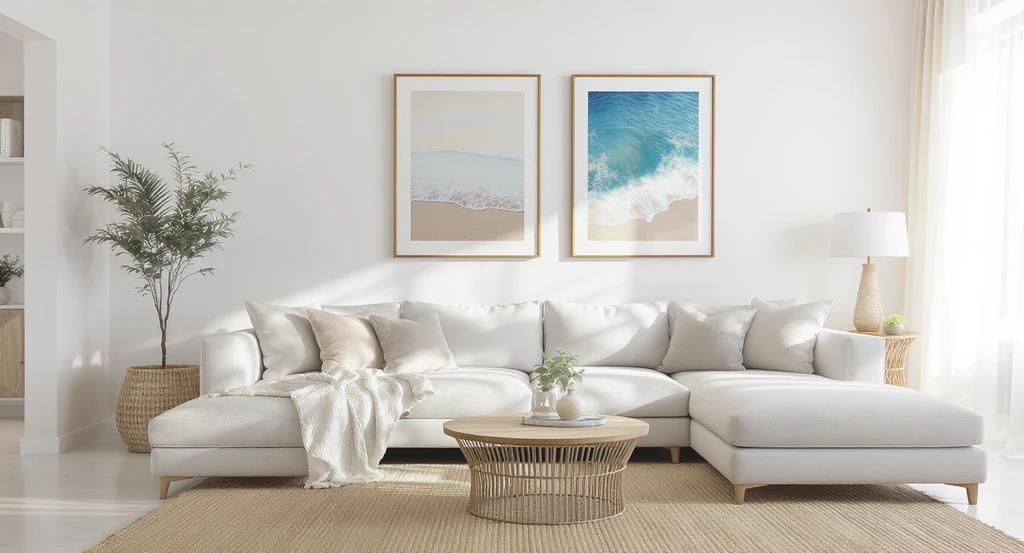
The way you hang coastal or aerial beach art, sand up or sand down, plays a key role in how the room feels. Learn which orientation works where, why, and the layout rules that prevent a design misstep. Space, lighting and alignment matter more than you might expect.
Should Sand Be Up or Down? Why Orientation Matters for Beach Art
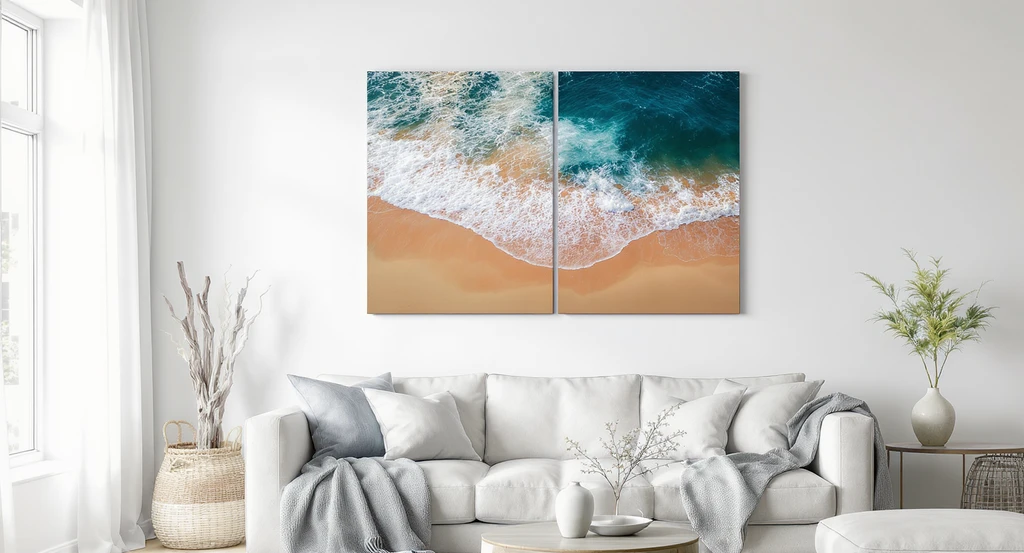
A curated living room demonstrates how choosing sand-up or sand-down aerial beach art alters room layout and spatial balance—key for deciding artwork orientation, especially if you can’t visualize it intuitively.
Beach art brings a calm, open feeling to a room, but before you hang that aerial or coastal print, pause and consider its orientation. The simple choice of whether sand sits at the top or the bottom of the artwork isn’t just visual; it can influence mood, balance, and even how spacious the room feels. Many homeowners hang their art without thinking about how sand-up or sand-down placement affects spatial harmony and scale. This article breaks down the practical rules, common mistakes, and correction techniques to ensure your coastal art always feels intentional, not accidental. You'll learn how room size, lighting, and alignment with furniture all play into your decision.
-
01. Mistake: Ignoring Real-World Perspective (Default to 'Sand Down')
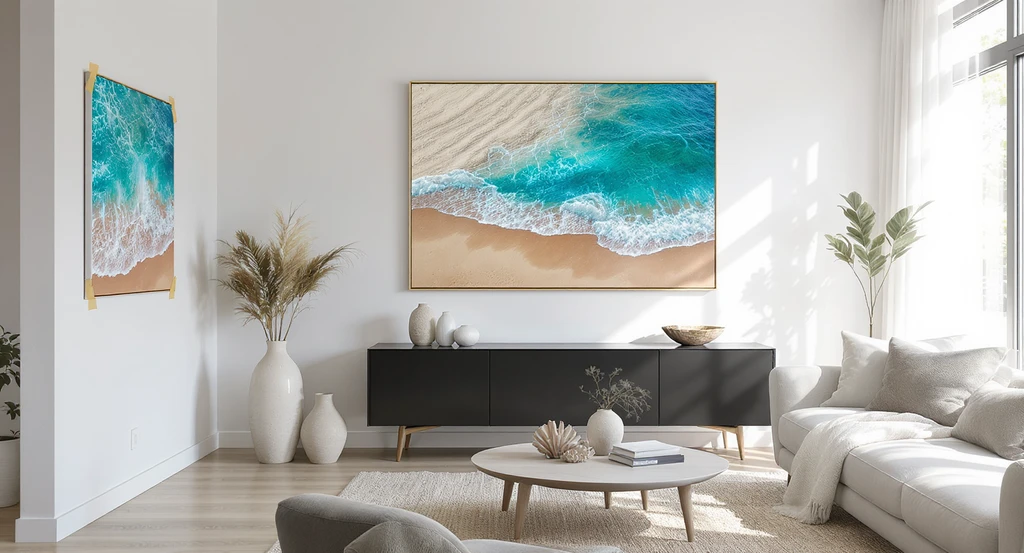
Previewing coastal art both ways, with and without tape, helps determine proper orientation even if you can't visualize room layout. This method ensures beach wall art aligns naturally, anchoring your space and reducing uncertainty for those with aphantasia or visualization difficulties.
The most frequent error is hanging beach art with sand at the top, reversing the orientation you naturally observe from the shore. This happens when art isn’t previewed on the wall or when people assume any direction works. Hanging the piece with sand at the bottom and water above aligns with how our eyes expect to see a coastal view, grounded and expansive. This orientation anchors a room and avoids the floating or uneasy effect some people experience with 'sand up'. If you are unsure, temporarily tape the art both ways. Most rooms benefit from sand-down placement for a calming, classic effect, as we explored in our guide on dining room art placement which also applies to wall art orientation generally.
-
02. Mistake: Using Sand-Up in the Wrong Spaces
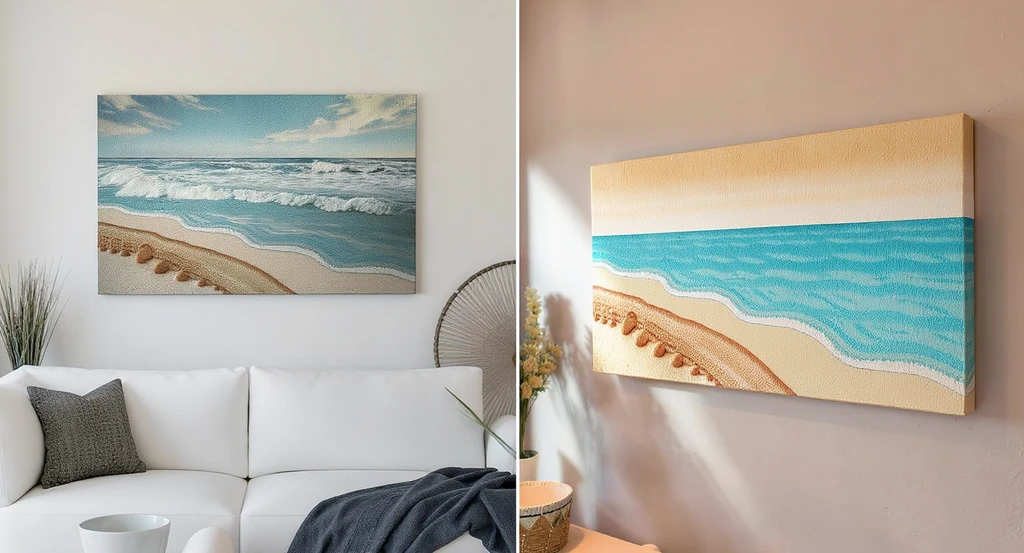
02. Mistake: Using Sand-Up in the Wrong Spaces Image
Choosing 'sand up' (with sand at the top and water below) without spatial logic can make a room feel visually confusing or even stressful. 'Sand up' is best suited for small, tight corners, hallways, or nooks where you want an intimate or abstract feel. In larger rooms, this orientation can shrink the sense of openness. Instead, reserve sand-up placement for spaces where breaking the horizon line adds visual intrigue, such as above a console table in a hallway. Always consider room dimensions and the overall effect. In most average-size interiors, sand-down is the safer, more expansive choice.
-
03. Rule: Align Artwork Height to Eye Level
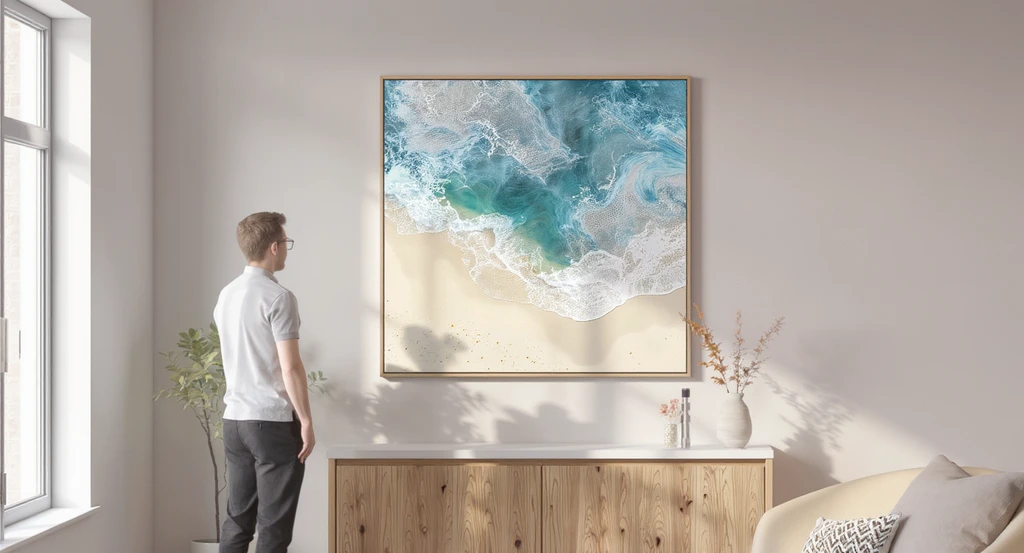
03. Rule: Align Artwork Height to Eye Level Image
A common mistake is hanging art either too high or too low, resulting in awkward negative space or crowding with furniture. For best results, the artwork’s center should sit at approximately 160 cm (63 inches) from the floor. This is a grounded visual rule that keeps coastal art comfortable to view and connected to other elements in the space.
- When placing above sofas or beds, leave 15–30 cm (6–12 inches) from the top of the furniture to the bottom of the frame.
- Too much gap makes the artwork feel disconnected, too little feels forced or cramped.
-
04. Error: Ignoring Scale and Breathing Space
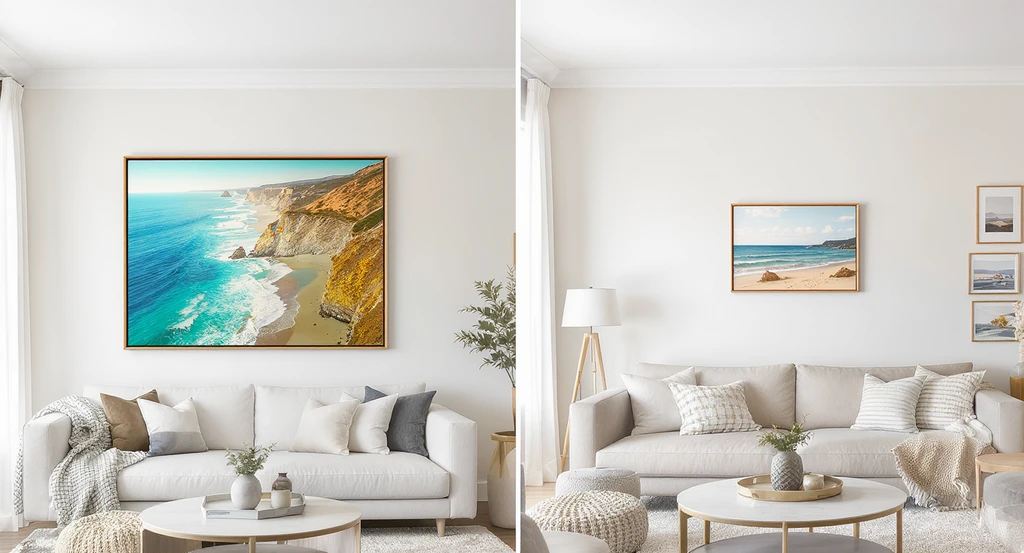
Visualize room layout and artwork arrangement for coastal and aerial beach art: see the impact of ignoring proper scale and breathing space, and practical ways to optimize wall art balance.
Undersized or oversized art disrupts visual balance. Beach art should fill the wall area sufficiently without overwhelming it. For most coastal or aerial pieces, allow at least 8–12 inches (20–30 cm) of clearance from the art edge to adjacent walls or ceiling, especially for larger pieces.
- If hung too small, the artwork feels lost and doesn’t anchor the room.
- If too large, it visually crowds the space and may make the area feel smaller.
-
05. Overlooked Factor: Lighting and Reflection
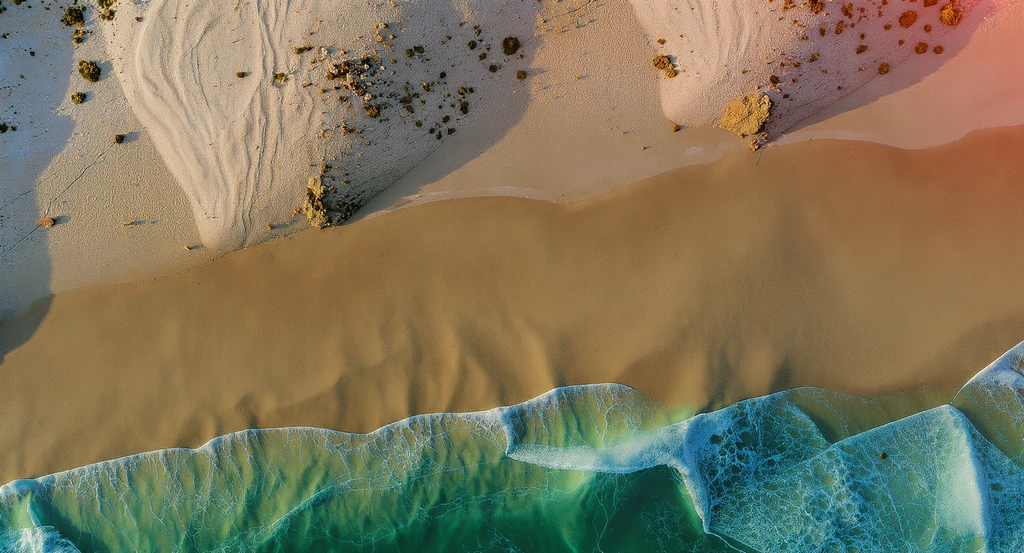
05. Overlooked Factor: Lighting and Reflection Image
Many people forget to test how daylight or lamp light interacts with their art’s orientation. The direction of natural or artificial light can emphasize the sand’s texture or make certain colors appear flat. Poor lighting may create unwanted glare or shadows, especially on glass-fronted works. Position the art temporarily and check the effect at multiple times of day. Side or top lighting will highlight the texture differently, and you may find that sand-up placement makes shadows more pronounced, a detail sometimes only noticed after installation. Previewing before securing hardware allows quick corrections without wall damage.
-
06. Key Checklist: How to Hang Beach Art So It Feels Intentional
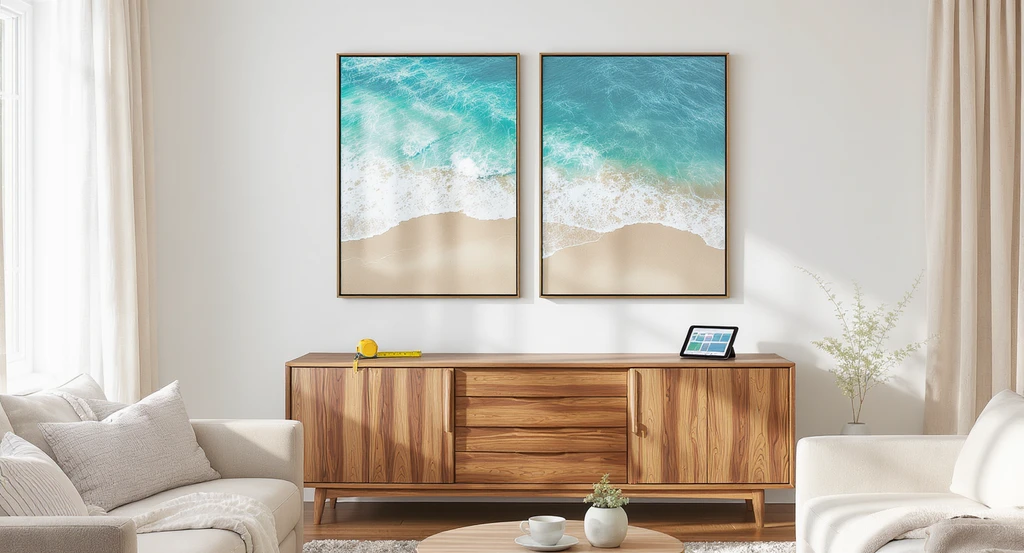
Previewing sand up versus sand down artwork orientations with measuring tools and visualization apps shows how to decide artwork orientation without visualization. This example highlights how to visualize room layout if you can’t picture it and best practices for scaling and spacing in furniture arrangement.
For a quick, error-free process, use this checklist:
- Orientation: Default to sand down unless a cozy or abstract feeling is needed for a small space.
- Height: Center should sit at 63 inches from floor, 6–12 inches above furniture.
- Scaling: Ensure artwork fills ⅔ to ¾ of the wall width above major furniture pieces.
- Spacing: Maintain at least 8–12 inches clearance to edges; 2–4 inches between art in a grouping.
- Lighting: Check how natural and artificial light hits the artwork in both orientations before fixing it in place.
- Preview: Temporarily mock-up, or use visualization tools, to compare sand up vs. sand down in your actual space.
FAQ: Orientation and Placement for Coastal Beach Art
- Should I always hang coastal art with sand at the bottom?
Not always. While sand down is usually more natural and expansive, sand up can work well in small or abstract settings. - How high do I hang beach artwork over a sofa?
Hang so the bottom edge is 6–8 inches above the sofa back, and center the piece to the sofa, as detailed in our art height guide. - What do I do if my artwork feels too small for the space?
Add companion pieces or a gallery wall, and maintain proper spacing. Prioritize scale, as explained in our decorating guide. - Does lighting matter when deciding sand up vs. sand down?
Yes. Lighting changes how textures and colors are perceived and may affect your final preference. Check art at different times of day before final hanging.
Conclusion: Get the Most from Your Beach Art, Intentionally
Choosing sand up or sand down isn’t arbitrary, the right orientation, placement, and scaling are practical layout choices that strongly affect how your home feels. For most rooms, sand down keeps things grounded and open. In tight spots, sand up can add intimacy. Always check your lighting and try both directions before making it permanent. By following these layout guidelines, your coastal art will feel like a deliberate part of your space, not an afterthought.