Navigating MLS Media Changes: What Realtors Need to Know About Virtual Tours in 2026
TL;DR
Recent changes to media hosting rules have upended how agents showcase listings online, particularly those relying on MLS media processing AI and virtual staging for real estate listings. As platforms limit the use of certain 3D tours, professionals must plan for flexibility, transparent disclosure, and the right AI real estate marketing tools to ensure listing photos attract buyers, not confusion.
The Shifting Landscape of Real Estate Media

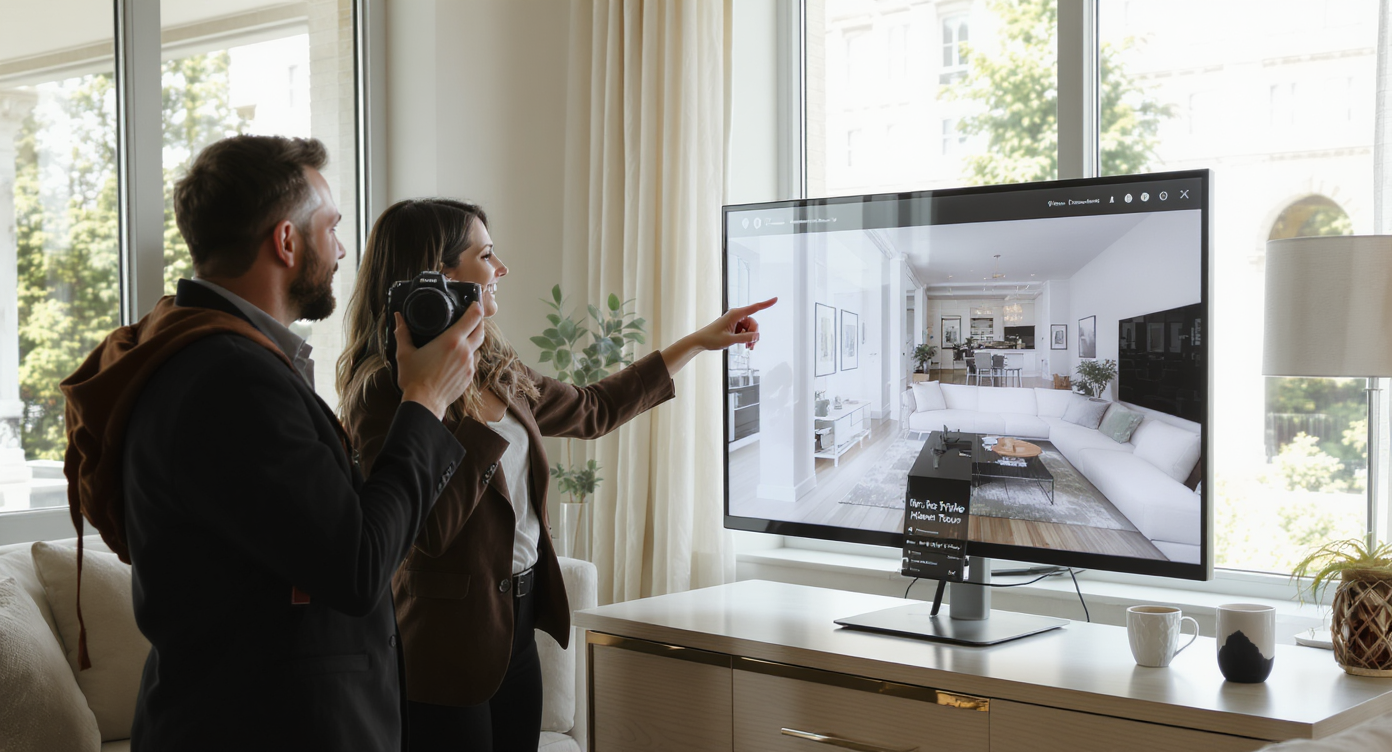
Agents and homeowners review new digital tools for home listings as MLS media policies and virtual tour options evolve in 2026.
In 2026, real estate professionals face constant adaptation as digital tools and platforms evolve. The latest disruption—removal of popular Matterport virtual tours from certain property websites after changes in platform policy—has left agents, photographers, and sellers questioning how best to present listings and serve client expectations. These developments underscore the importance of selecting MLS media processing AI and virtual staging tools that can withstand industry flux, offer legal clarity, and ultimately make a property's first impression count. Buyers increasingly shop at scroll speed, expecting to see homes presented with clarity and style. When listing photos look empty and unattractive, opportunities are missed. Yet restrictions and shifting terms of service can suddenly alter what content remains visible online, challenging long-established workflows. Staying ahead now means understanding not only today's marketing options but also the broader business strategies behind their evolution.
-
Why Media Hosting Shifts Are Disrupting Real Estate Marketing

The sudden disappearance of hosted virtual tours disrupts agents’ marketing efforts, leaving critical visual assets unexpectedly absent.
For years, agents and real estate photographers have leaned on a constellation of platforms—ranging from Aryeo to matterport, Show and Tour, and various MLS integrations—to create vibrant web presences for listings. These platforms did more than merely display photos; they acted as distribution hubs, seamlessly publishing everything from immersive 3D walkthroughs to AI-generated staging directly onto property pages and listing networks. The abrupt removal of certain embedded tours in late 2025, particularly the unexpected disappearance of Matterport-hosted content from some property sites, illustrates just how intertwined technical policies and business rivalries have become. In many cases, platform mergers and changing parent-company priorities—not always regulatory demands—are driving what media gets seen. As detailed in AI-edited listing photos vs. virtual staging legalities, the forces shaping online real estate marketing extend past technology and into questions of disclosure, user trust, and competitive dynamics. For agents, the result has been confusion—having to explain to clients why a paid-for tour is suddenly missing, and rapidly weighing alternatives to deliver promised value. In a world where visual marketing drives clicks and bookings, every missing asset can translate to a missed opportunity.
Expert Insight
Several months ago, a boutique agency invested heavily in Matterport tours for their highest-end listings, believing the immersive experience would set them apart. When those tours abruptly disappeared from their property websites during the height of spring sales, calls flooded in from disoriented sellers. The team scrambled, ultimately creating custom web pages and supplementing with new AI-generated staging. Some sellers missed out on extra traffic, but the agency’s quick pivot to transparent communication and flexible technology prevented a lasting reputation hit.
-
The Role of Virtual Staging and MLS Media Processing AI

AI-powered virtual staging transforms empty rooms, offering flexible decor options and real-time adaptation for MLS listing compliance.
When listing photos look empty and unattractive, first impressions falter. Virtual staging for real estate listings—now powered by increasingly sophisticated MLS media processing AI—has emerged as a flexible solution, filling vacant rooms with style and potential at a fraction of the cost and logistics of physical staging. After platforms restrict or reconfigure which types of media are allowed, the benefits of AI-powered tools are even clearer. They enable rapid adaptation: virtual furniture and décor can be added, changed, or removed according to platform compliance without requiring new photography sessions. As explored in virtual staging versus empty photos, such visual enhancements directly correspond to increased engagement and perceived value—as long as they are clearly disclosed and accurately reflect what's possible in the space. Open communication is key, both to maintain trust and ensure that MLS and third-party listing feeds do not raise red flags or introduce confusion for buyers. Partnering with platforms and AI real estate marketing tools that excel at transparency, and that remain responsive to changing regulations, is now a fundamental part of listing strategy.
-
Choosing Flexible Tools When the Landscape Keeps Changing
Real estate teams choosing photo and media management platforms must look for durability and flexibility above all else. This is especially true for those managing multiple listings across different markets or platforms, where legal requirements and third-party integrations may shift with little warning. Media should remain accessible, portable, and transferrable whenever possible to prevent disruption. Some realtors and photographers have started diversifying their delivery systems—using multiple hosting services, sending direct property website links, or even bundling digital assets for manual delivery. These practical approaches ensure listings remain visible regardless of third-party content decisions, avoiding frustration for both professionals and clients. The experience of switching platforms is seldom seamless; as recounted by industry peers, every change comes with the risk of client confusion or lost business. Yet, as explored in the differences between virtual and real staging, each method offers distinct advantages depending on how—and where—buyers will first encounter the listing. Flexibility also allows agents to tap into new trends. For example, personalized staging tied to specific buyer demographics and styles is gaining traction, with AI-driven platforms leveraging data insights to recommend furnishing and decor that resonates on first sight. More on how this approach wins online attention can be found in personalized virtual staging insights.
Visualization Scenario
Imagine logging in to update a listing only to find the virtual tour tab missing, the expected walkthrough blinking out as if it never existed. A seller, expecting to see their meticulously staged online experience, instead sees only static photos. In response, you reach for your virtual staging toolkit, pairing clean photos with new styled visualizations and transparent labels. Buyers browsing Zillow, Redfin, and multiple agent sites now see coordinated, attractive imagery across every channel, restoring confidence on both sides of the table.
Frequently Asked Questions
Disclose any alterations or virtual staging within the image or in the property remarks to maintain buyer trust and meet MLS requirements.
Can I still showcase 3D tours if my usual platform removes them?
You can often use direct links to tour providers or alternative media hosting services, but take care to follow the guidelines of each listing platform and MLS.
Is AI-powered virtual staging accepted on all MLS systems?
Most MLSs now allow virtual staging if alterations are disclosed and permanent features are not misrepresented. Review current rules before uploading.
What if my clients' tours vanish from property sites?
Communicate changes early, offer direct links or alternative access, and document the situation to manage expectations and minimize confusion.
Where can I find more robust and future-proof visual marketing tools?
For evolving solutions in staging and media processing, consider options like ReimagineHome.ai.
Key Takeaways for Media Strategy in 2026
The way homes are presented online is under constant negotiation—between platforms, tech providers, and legal frameworks. For agents and real estate photographers, preparing for rapid change is not just practical, but essential. Prioritize MLS media processing AI and virtual staging tools that allow nimble adaptation, clear disclosure, and portability across evolving platforms. Above all, commit to transparency with clients about what marketing assets are possible, where they will appear, and how permanent those links really are. Doing so keeps trust at the center of your strategy and preserves your value, even amid industry uncertainties. For reliable and adaptive visual solutions, learn more at ReimagineHome.ai.