7 Landscape Privacy Ideas for Narrow Modern Courtyards
TL;DR
Narrow courtyard spaces with glass walls can pose privacy challenges, but well-planned plantings deliver sleek screening, year-round greenery, and walkable access. This guide explains how to combine strategic plant choices, modern design principles, and AI landscaping tools for attractive and sustainable privacy all along a 40-foot stretch.
Privacy for Modern Courtyards: The Design Challenge
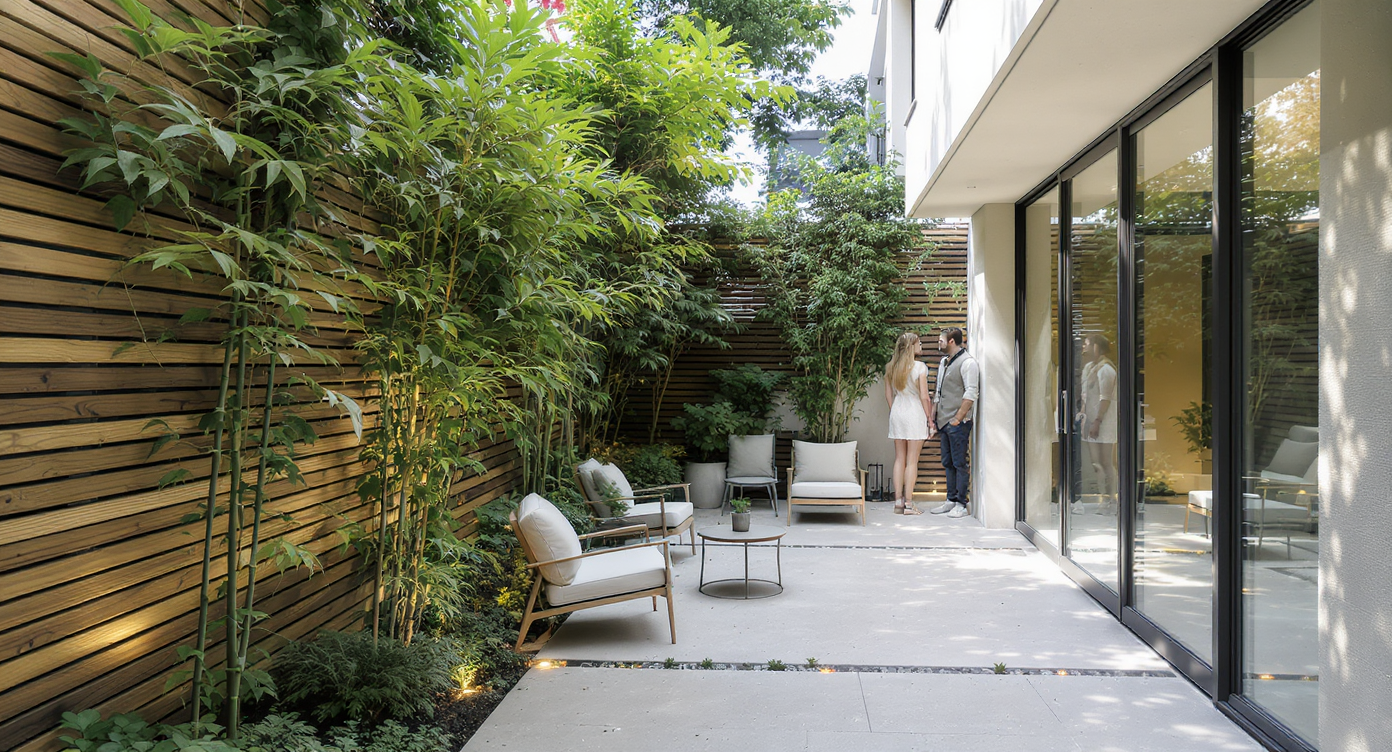
Smart greenery and sleek fencing create privacy and style in a narrow courtyard, turning tight side yards into serene outdoor retreats.
Many modern and midcentury homes feature generous glass walls and minimalist fencing, bringing light and flow but also unwelcome sightlines from neighbors. Homeowners tackling interior renovations often discover the urgency of exterior privacy too late in their remodels, when clear glass reveals every detail of courtyard life. For narrow side yards—especially where space is limited to six feet—the traditional approach to privacy shrubs runs into constraints of scale, growth habits, and access. This list distills professional strategies for screening a long, narrow space while supporting both aesthetics and practical needs. Each tip balances plant performance, long-term maintenance, and modern design values, and integrates advances like AI landscaping platforms to help homeowners visualize and refine ideas before digging in. Whether you crave total coverage or a soft green backdrop, these solutions can transform "worst views" into focal points for everyday enjoyment.
-
1. Choose Narrow and Upright Evergreens
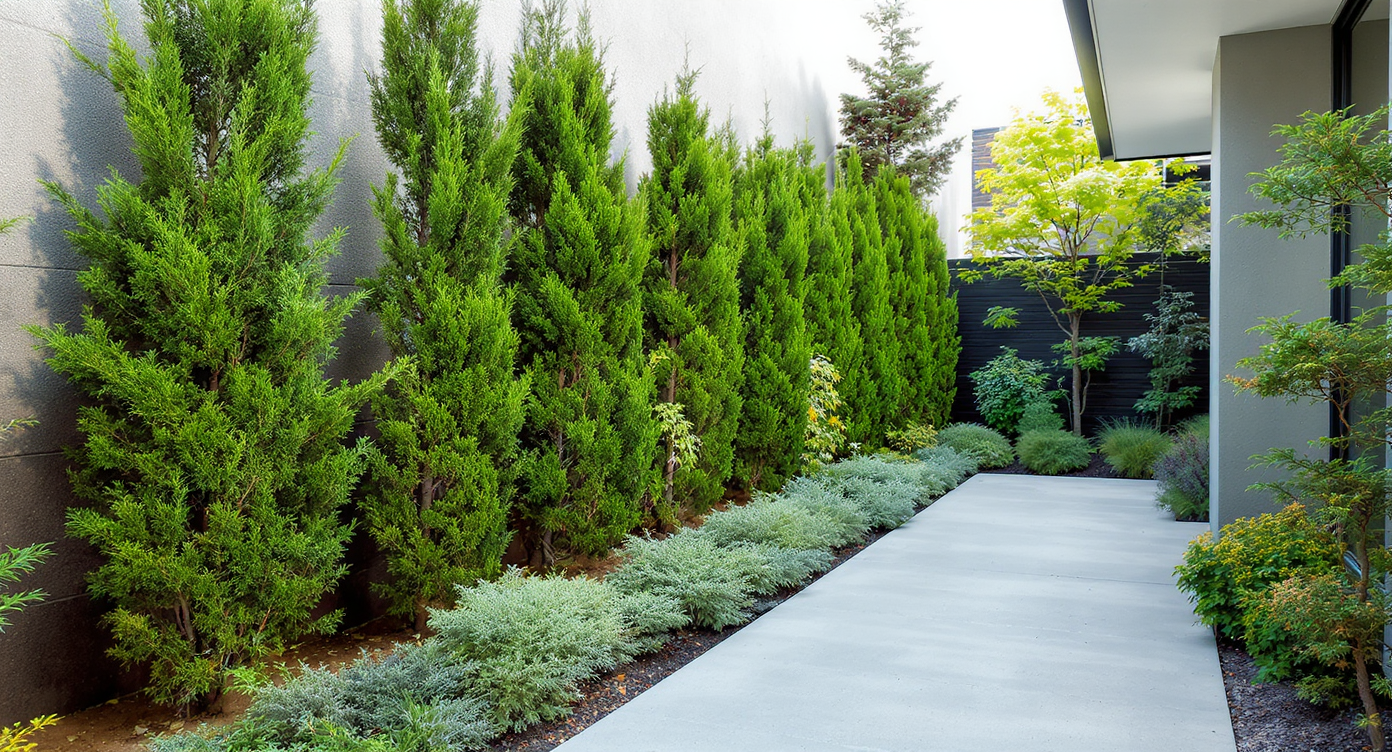
Upright evergreens provide dense privacy screening in narrow modern courtyards while maintaining clear pathways and visual interest.
Tall, columnar evergreens—such as Italian cypress, Spartan juniper, or Emerald Green arborvitae—are proven privacy workhorses in narrow courtyards. Their vertical growth habits provide maximum screening with minimal horizontal sprawl, helping maintain clearance from both the wall and your walkway. Designers often recommend spacing these evergreens about two to three feet off the wall and allowing at least a foot on either side for air circulation, avoiding overcrowding as plants mature. For year-round coverage, consider layering different varieties for varied color and texture. This approach can be explored further by analyzing the styles in winter privacy landscaping suggestions.
-
2. Embrace Layered Greenery for a Dynamic Look
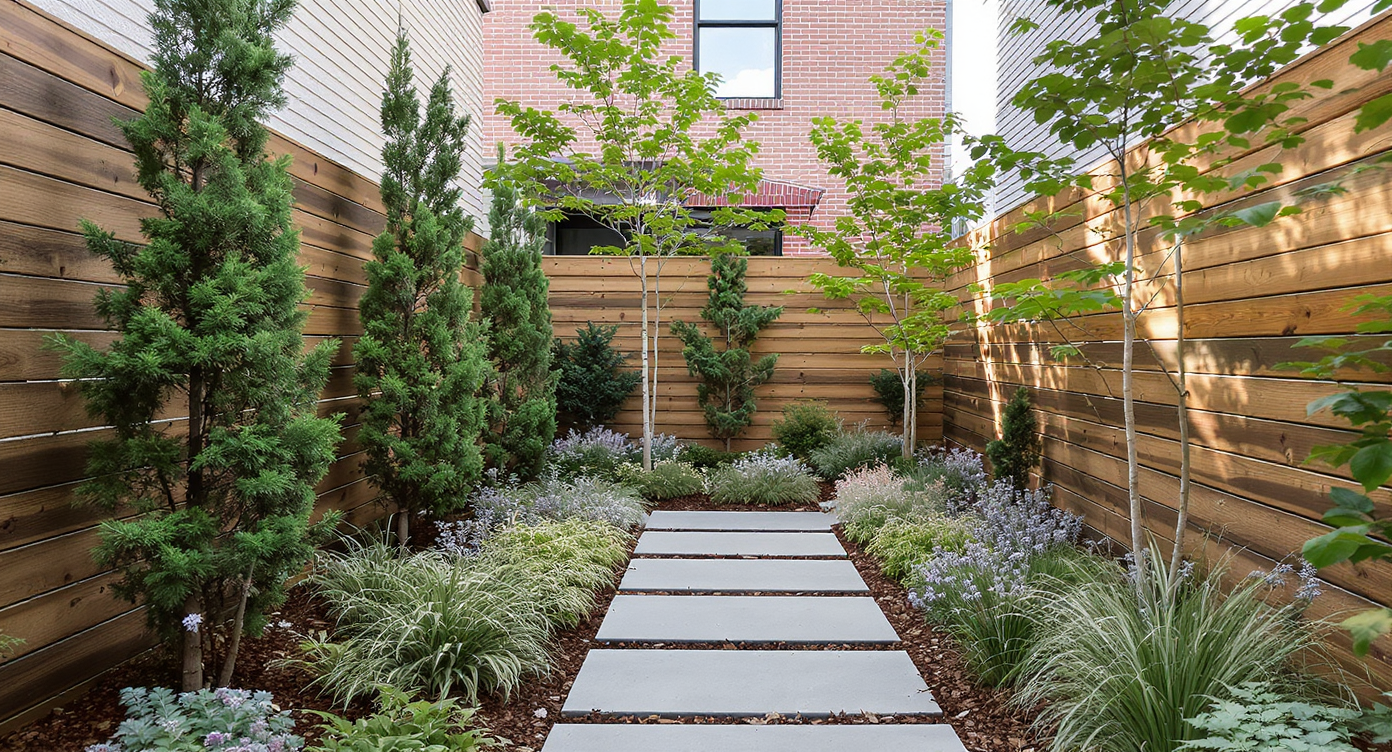
Layering upright evergreens with low groundcovers like liriope creates a lush, low-maintenance green screen in narrow modern side yards.
Rather than relying on a single row of shrubs, experienced landscape architects use layers—combining narrow trees with shade-tolerant groundcovers or hardy perennials closer to the house. In a six-foot-wide side yard, this might mean upright evergreens a few feet from the fence with low-growing liriope, ferns, or mondo grass at their feet. This layered effect creates depth and minimizes maintenance, and is especially effective when visualized using modern AI landscaping with plant recommendations. Layering also discourages weeds and allows for seasonal interest right outside your glass walls.
-
3. Select Plants with Manageable Root Systems
Space limitations and proximity to structural walls make root behavior critical. Opt for hedging species known for non-invasive roots, such as certain holly cultivars or bamboo alternatives like clumping Fargesia. This reduces the risk of future wall damage or walkway upheaval. Professional guidance, along with AI landscaping for modern homes, can help filter options to ensure both form and function are addressed. For maximum peace of mind, always account for long-term size at maturity and avoid planting too close to existing block walls.
-
4. Visualize Before You Plant with AI Tools
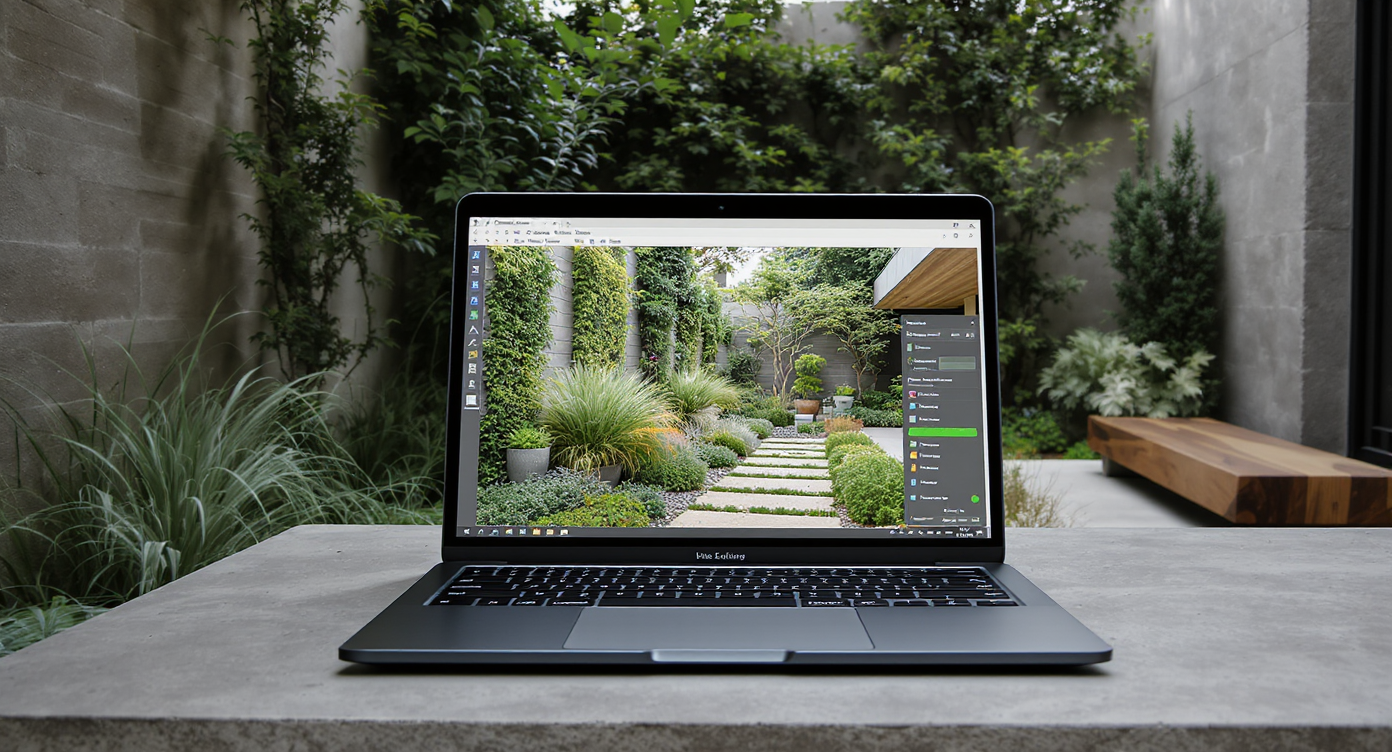
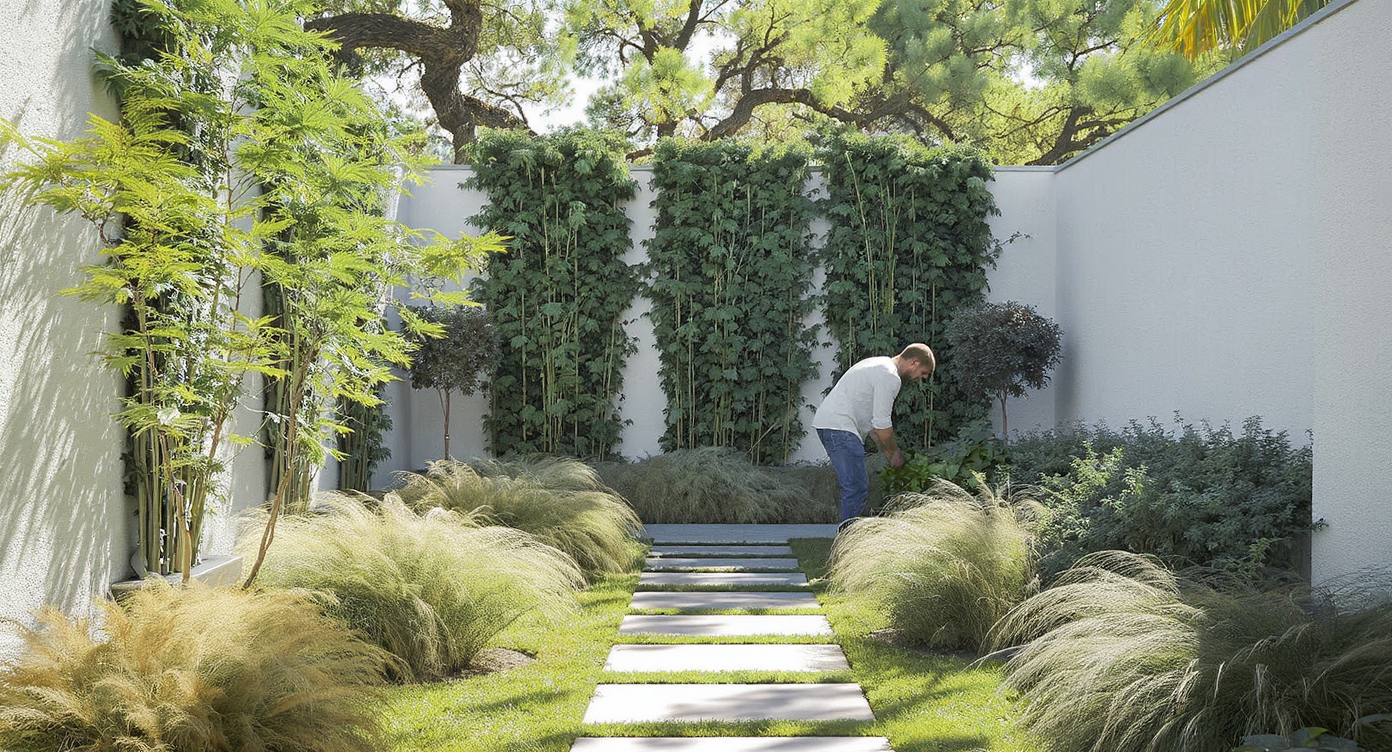
A homeowner uses AI landscape visualization to preview plant choices in a narrow modern courtyard before planting, ensuring a tailored fit.
Until recently, envisioning the impact of new plantings along a tight courtyard was left to imagination or pen-and-paper sketches. Now, platforms like REimagineHome.ai allow homeowners to upload photos of their space and test plant combinations, privacy heights, and pathway widths virtually. This saves money and time by revealing potential mistakes—like overcrowding or mismatched styles—before any trenches are dug. Many find this especially useful when designing eco-friendly, low-maintenance landscaping to balance privacy and sustainability, as explored in discussions on efficient modern landscapes.
-
5. Account for Maintenance and Accessibility
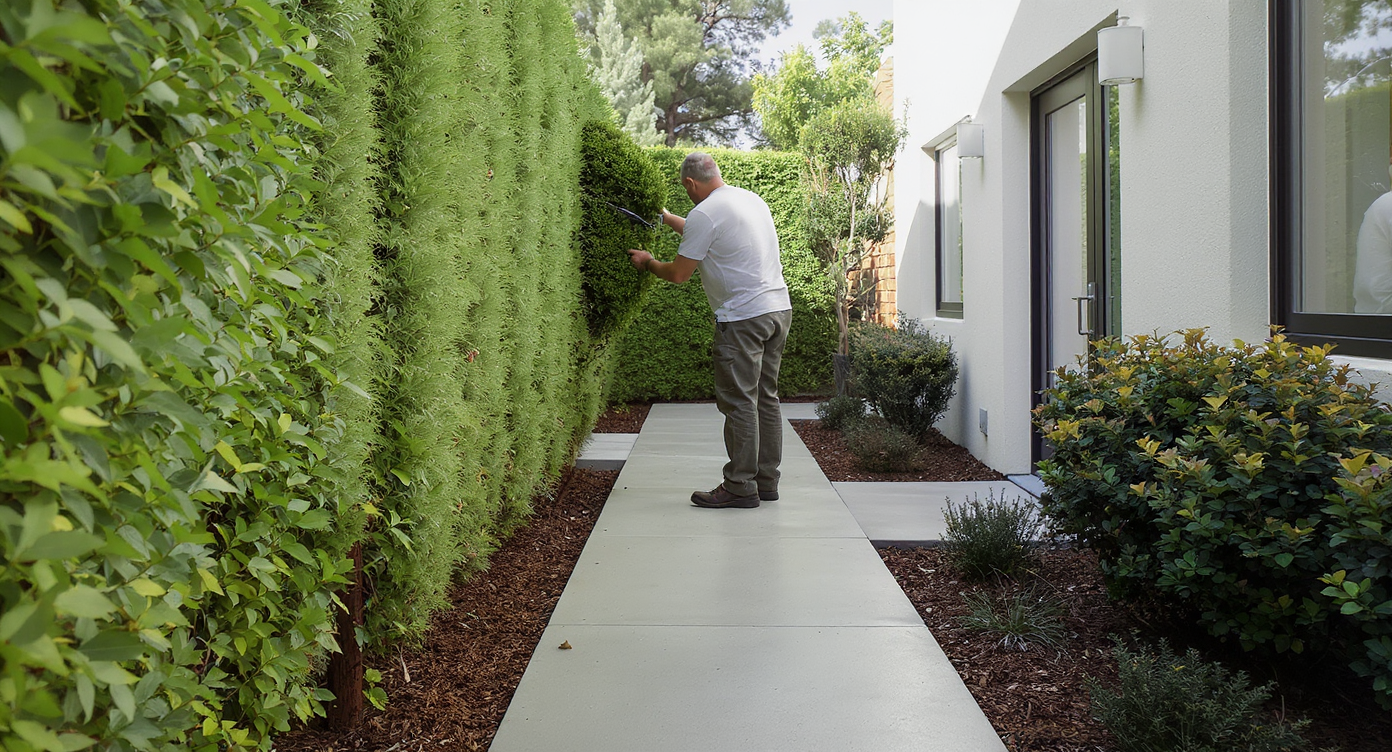
Trimmed privacy plants and a defined walkway ensure easy maintenance and walkability in a modern, narrow courtyard design.
Screening plants that grow out of bounds can choke a side yard and make routine upkeep difficult. Prioritize species that respond well to pruning, such as privet or photinia, and consider the minimum clearance needed for foot traffic along the house. Modern landscape design always factors in walkability—ideally, at least two feet of unobstructed passage remains after mature growth. According to advice on projects that add value and curb appeal, a well-defined, low-maintenance border is more desirable than a labor-intensive jungle.
-
6. Mix Hardscaping Elements for All-Season Privacy
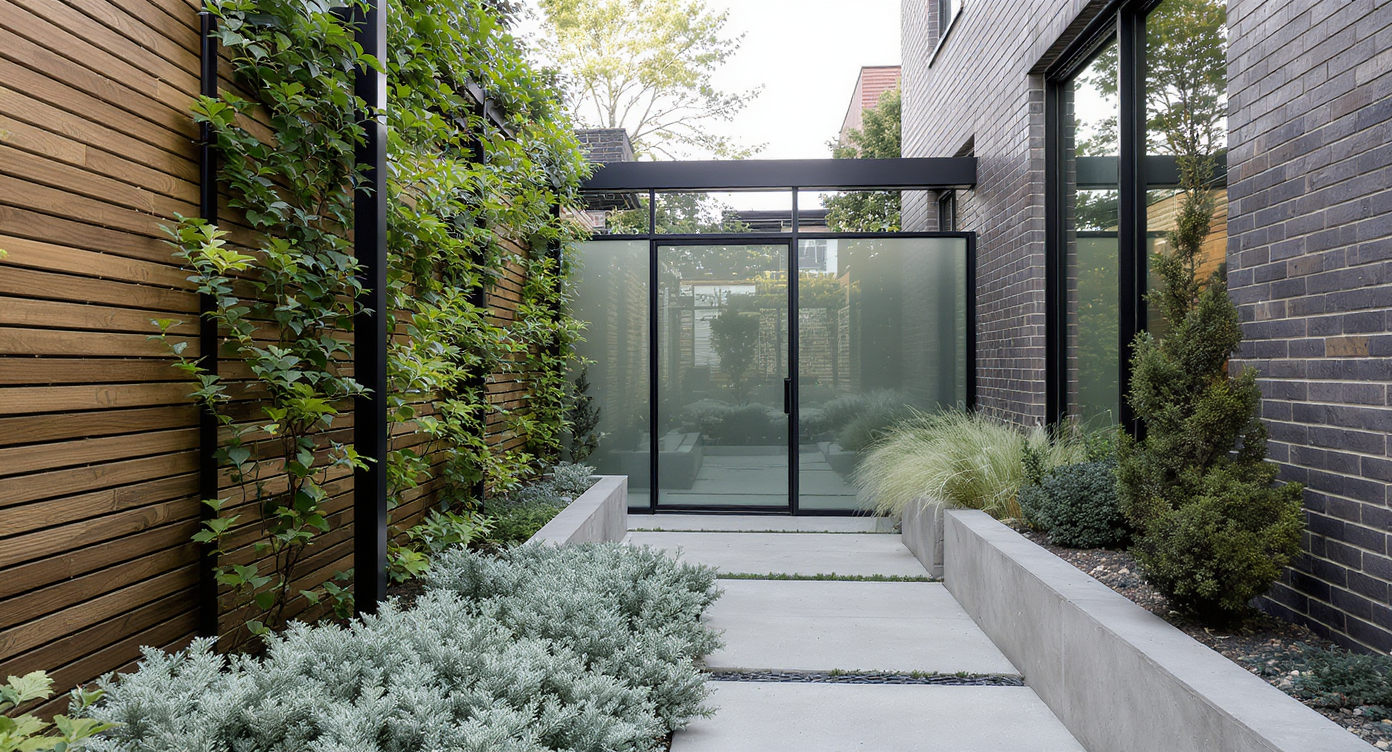
Mixing hardscape privacy screens with living greenery ensures consistent privacy and style in narrow modern courtyard spaces year-round.
Living green screens can lose density or go dormant, especially in colder climates. To ensure year-round privacy, professionals often combine plants with structural elements such as slatted wood screens, steel trellises, or privacy glass. These hardscape features blend seamlessly with modern architecture and allow for greenery to be trained or planted in pockets, maintaining both aesthetics and security. This mix of living and built elements supports both the quick establishment seen in valuable landscape projects and flexibility if plant choices shift over time.
-
7. Plan for Growth: Start Right, Avoid Headaches
The temptation is strong to dig a trench and plant the tallest, quickest-growing shrub you can find. Yet the most successful privacy solutions result from careful spacing, initial staking, and ongoing monitoring during the first few years. Consider consulting a local nursery or horticulturalist to validate plant choices and initial placement. For homeowners mapping out long-term return on investment or aiming for landscape improvements that truly boost home value, this extra planning step can yield dividends for both beauty and function for years to come.
Frequently Asked Questions
Columnar varieties like Italian cypress, Sky Pencil holly, and Emerald Green arborvitae provide tall screening without overwhelming limited space. Using a visualizer like REimagineHome.ai helps see how different varieties will look year-round.
How much space should I leave between landscaping and my house or wall?
Experts recommend a minimum of two feet clearance on each side of a mature plant, but always check the mature width on plant tags as root spread and access needs can vary based on species.
Can AI landscaping platforms suggest low-maintenance and drought-tolerant privacy solutions?
Yes, AI-powered plant selectors, including those available with REimagineHome.ai, can filter for low-maintenance options. For inspiration, see strategies in eco-friendly landscape planning.
How do I combine hardscape and softscape for year-round privacy?
Pairing narrow evergreen shrubs with privacy panels or trellises ensures lasting coverage, as discussed in our winter screening guide.
Will adding a privacy hedge along a 40-foot wall improve home value?
Multiple studies and real estate experts affirm that well-maintained privacy landscaping adds curb appeal and marketability, especially when combined with other thoughtful improvements outlined in our guide to value-boosting landscaping projects.
Key Takeaways for Modern Courtyard Privacy
Designing privacy for a 40-foot courtyard requires balancing aesthetic ambition with practical realities—especially in narrow footprints typical of modern homes. Success comes from selecting upright evergreens, layering for depth, committing to manageable root systems, and leveraging digital tools like REimagineHome.ai for planning. Integrating smart hardscaping secures four-season coverage, while proper spacing and maintenance planning keep the area pleasant and accessible. By taking a measured approach, you can turn any side yard into a lush, private retreat that complements your home's architecture.