How Do You Plan a Furniture Layout? 9 Practical Tips for Rooms That Work
TL;DR
A well-planned furniture layout creates balance, comfort, and function for any room. To get it right, clarify the space’s purpose, measure precisely, arrange largest pieces first, maintain sufficient walkways, and balance visual weight. Testing layouts virtually or with simple sketches ,prevents regret and leads to a room that feels great.
-
How Do You Plan a Furniture Layout?
Effective furniture layout planning involves first clarifying the room’s primary function, then measuring the space and strategically placing core pieces to balance flow and visual weight. This approach prevents crowding and ensures your room supports both comfort and daily activities, making it adaptable for relaxation, entertaining, or work.
The tips below use a system prioritizing purpose, size, and movement patterns. The result is a practical guide that reduces the common regret of buying ill-fitting pieces or living with awkward furniture arrangements. Measuring, testing layouts, and considering visual flow are essential to making any room feel intentional.
Expert Insight
A homeowner recently struggled to fit a new sectional into their living room. After virtually testing several layouts, they realized the previous arrangement was blocking the walkway and overwhelming the space—switching to a corner configuration improved both traffic flow and comfort, underscoring the importance of previewing layouts before moving heavy furniture.
-
How REimagineHome AI Evaluates Spaces
Our evaluation system for furniture layout decisions centers on three core factors: 1) Room function-select pieces that serve daily needs. 2) Movement routes-protect clear pathways for comfort and accessibility. 3) Visual scale-choose sizes and placements that balance the room. By applying these steps and using realistic previews, you increase layout clarity and reduce uncertainty, as discussed in our guide on matching sofa size to living room layout.
-
1. Start With the Room’s Purpose
Define how the room is most often used-relaxation, work, dining, or socializing; before considering any layout. Purpose drives what furniture you genuinely need and what you can skip. Why it works: It stops you from overcrowding the room with non-essential pieces. When it may fail: In highly multipurpose spaces, over-defining use can limit flexibility. Spatial insight: Purpose-first layouts keep circulation open and help anchor zones.
-
2. Measure the Space First
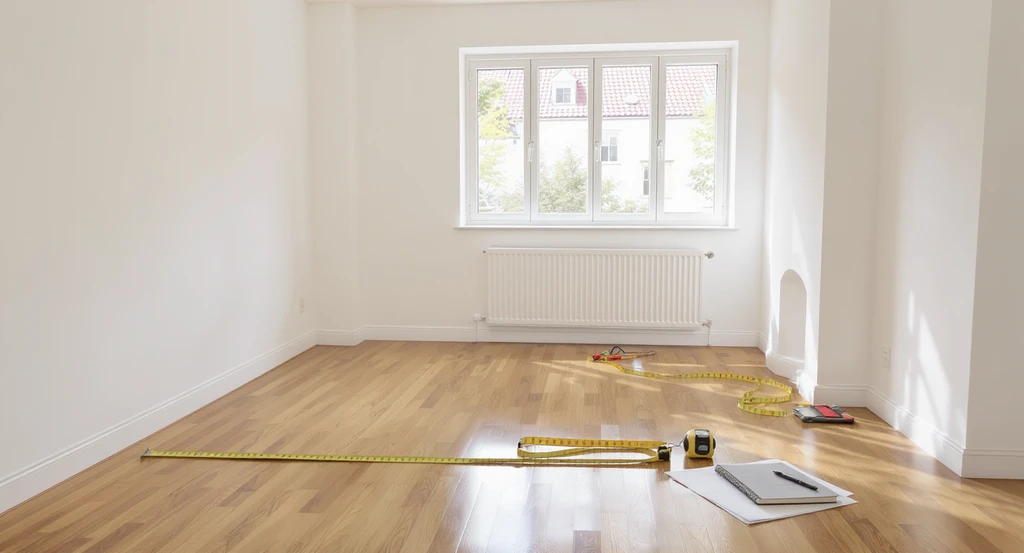
Measuring your living room’s dimensions—including entryways, radiators, and wall bumps—is key in how to plan a furniture layout around scale and flow.
Always measure your room’s dimensions, entryways, and existing large furniture before arranging anything. Why it works: It prevents placing items that overpower or barely fit. It fails if measurements miss windows, radiators, or wall bumps. Spatial insight: Scale and clearance determine not only fit, but also flow—learn more about fit and scale in our furniture arrangement guide.
-
3. Identify the Focal Point
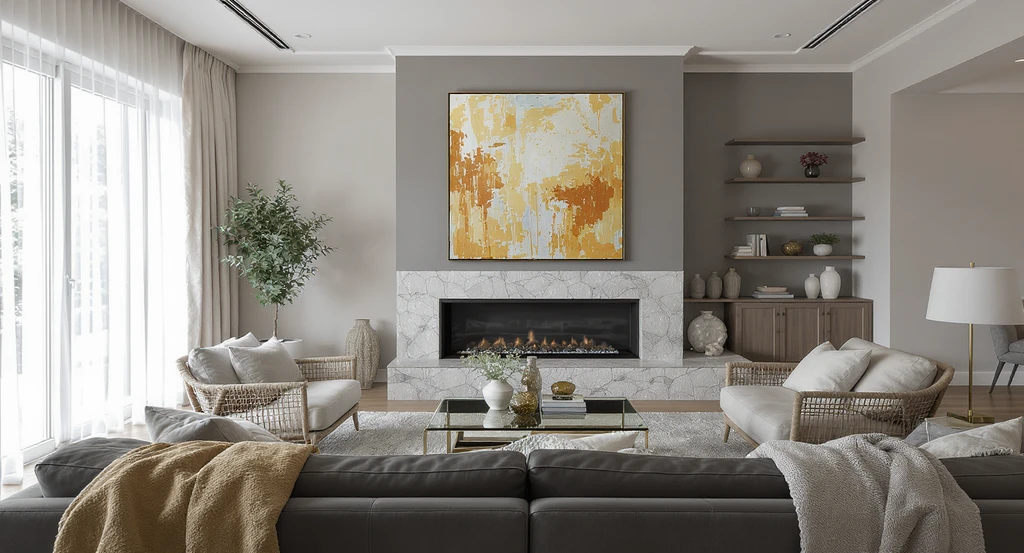
3. Identify the Focal Point Image
Spotlight the room’s main attention-grabber: fireplace, window, TV, or artwork. Orient principal furniture pieces toward or around it. Why it works: Focal points organize layout and amplify the space’s character. Where it fails: For rooms with no natural anchor, creating a focal point can feel forced. Spatial insight: Centering on a focal point guides visual flow and movement.
-
4. Place the Largest Furniture First
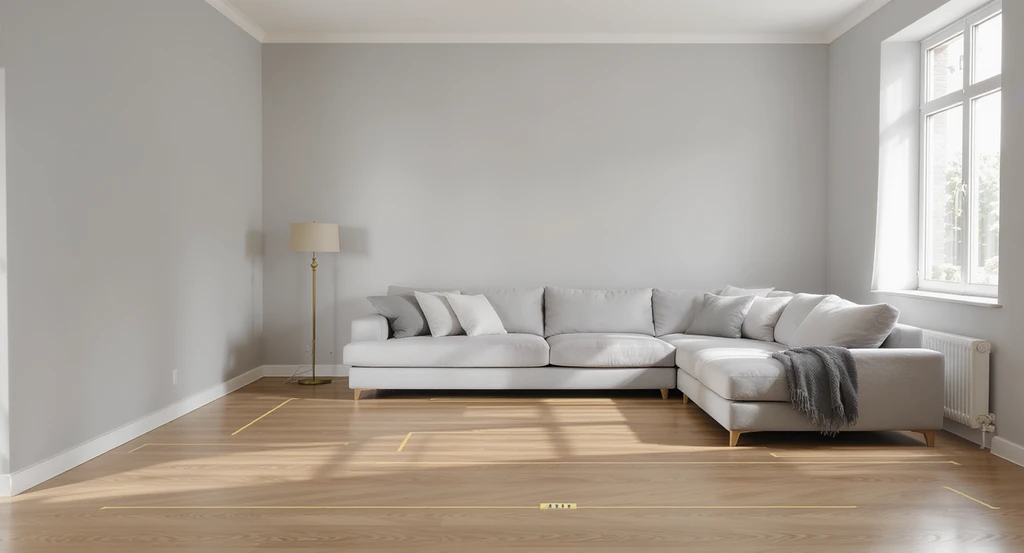
Placing the largest furniture first—like this sectional sofa—anchors your layout, clarifies remaining space, and supports best practices for how to plan a furniture layout.
Anchor your main layout with the largest item—sofa, bed, or dining table—so everything else supports that piece. Why it works: It clarifies remaining space for smaller items. When it fails: Oversized pieces limit options if not sized to room scale. Spatial insight: Too-large items compress smaller rooms, while undersized pieces can feel adrift. See our sofa size and style guide for more details.
-
5. Maintain Comfortable Walking Space
Maintain at least 30–36 inches (75–90 cm) for main pathways and 18 inches (45 cm) between seating and tables. Why it works: Ample clearance lets people circulate easily, avoiding bottlenecks and stubbed toes. Where it fails: In tiny rooms, this may require reducing furniture. Spatial insight: Clear paths make small rooms feel larger and bring ergonomic flow.
-
6. Create Conversation Areas
Arrange seating so people face each other instead of the walls—bring sofas and chairs closer and avoid alignments that isolate guests. Why it works: It encourages interaction and comfort. When it may fail: Extremely narrow rooms can restrict truly open setups. Spatial insight: Furniture grouping alters social energy and the way sound travels.
-
7. Balance the Visual Weight
Avoid clustering all large or heavy furniture on one side. Distribute mass with pairs of chairs, shelving, or low cabinets. Why it works: Visual equilibrium relaxes the eye and grounds the space. Where it fails: Very asymmetrical rooms can make true balance tricky. Spatial insight: Visual weight directly affects layout stability and mood perception.
-
8. Leave Breathing Space
Purposefully leave some areas open-don’t feel duty-bound to fill every corner. Why it works: Negative space amplifies light, creates calm, and highlights major pieces. When it fails: Too much empty area can read as unfinished unless styled mindfully. Spatial insight: Airy layouts help natural light travel and reduce visual clutter.
-
9. Test the Layout Before Finalizing
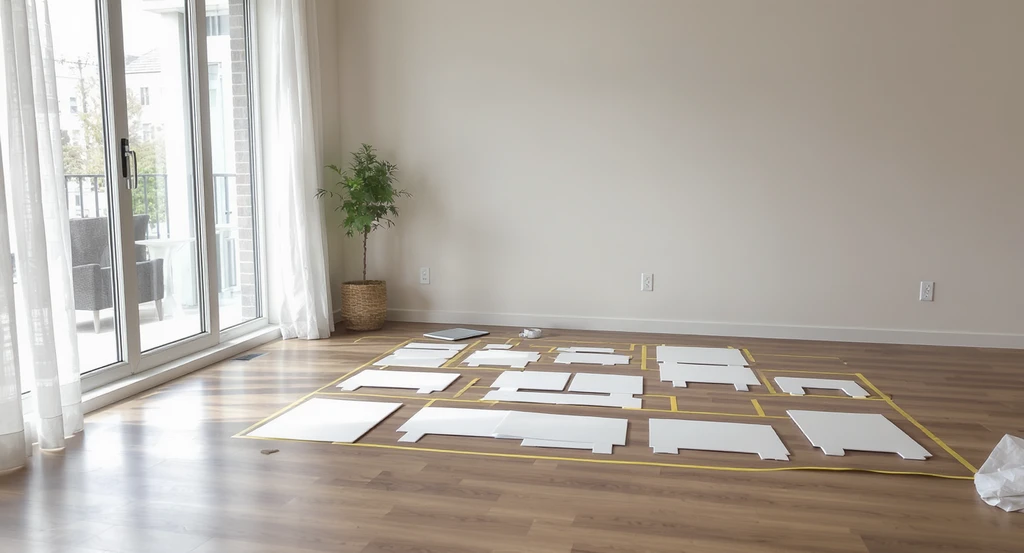
Exploring how to plan a furniture layout, furnishing an empty living room from scratch with painter’s tape, paper cutouts, and a tablet planner before moving heavy furniture.
Use painter’s tape, paper cutouts, or virtual floor planners to preview different arrangements before moving heavy furniture. Why it works: Testing prevents regret and last-minute frustration. When it fails: Relying only on floor plans may miss lighting or movement quirks. Spatial insight: A visual trial highlights scale mismatches and improves final comfort.
-
How Visualization Changes the Decision
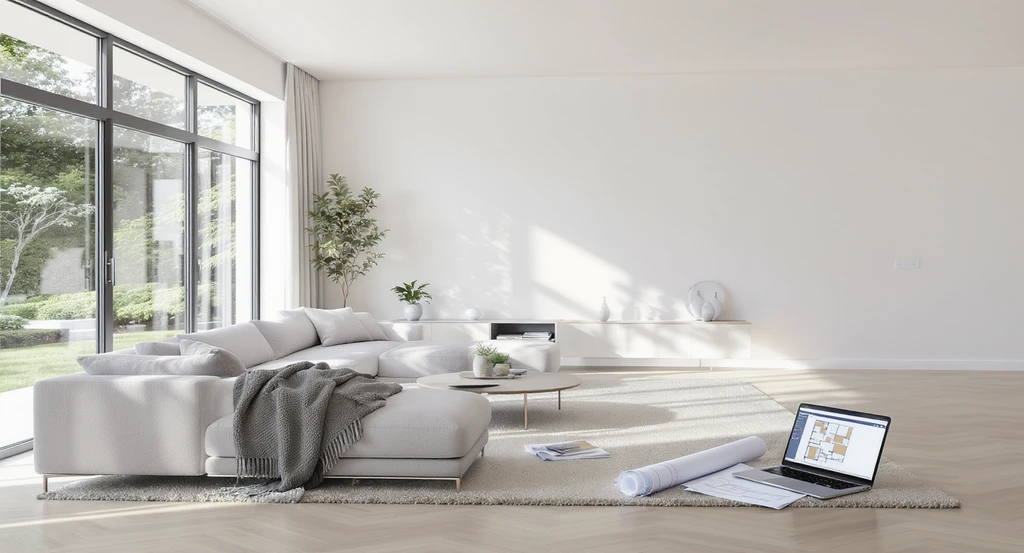
Using digital visualization tools helps when furnishing an empty living room from scratch and planning how to make a large empty wall work in an open space.
Layout uncertainty looks like hesitation: you’re unsure what fits, worry about crowding, and second-guess purchases. Realistic previews eliminate guesswork by letting you see scale, flow, and balance before committing. Tools like REimagineHome AI help you avoid common pitfalls, discover overlooked issues (like window obstruction or traffic bottlenecks), and finalize layouts that work in real life.
-
Furniture Layout: What It Means
A furniture layout is the spatial arrangement of pieces within a room designed to maximize comfort, function, and flow. It affects how people move, interact, and perceive scale. Many homeowners think layout issues are about style, but they’re usually caused by placement mismatches, pathway blockages, or poor size selection—problems best solved by measurement and planning.
-
Trade-Offs and Practical Advice
Every layout involves trade-offs. Large furniture brings comfort but eats space; generous walkways keep rooms airy but may limit seating. Consider your real priorities,sometimes less furniture creates a more usable room. For more tips on achieving practical and stylish layouts, review our complete arrangement guide.
-
Conclusion
The core of a successful furniture layout is intentionality: define the room's purpose, measure carefully, balance visual weight, and plan flow. Visualization removes design regret and enables confident decisions. Explore the REimagineHome AI hub for more spatial reasoning guides, or learn how layout and fit are intertwined in this in-depth analysis.
Frequently Asked Questions About Furniture Layout
Measure both the room and your furniture. If clearance drops below 30 inches in main walkways or furniture blocks doors and windows, the pieces are likely too big. Test layouts virtually before committing.
Do all rooms need a focal point?
No, but having a focal point (like a fireplace or window) helps organize the layout. In rooms without a natural focal anchor, use a striking piece of art or a statement light as a visual center.
What’s the best way to start planning a layout?
Begin with the room’s main function, then measure and anchor your design with the largest necessary piece. Fill in around that, testing for walkways and balance before finalizing.
Can I push all furniture against the wall to create space?
Not always. Pulling furniture away from walls and grouping for conversation often makes a room feel cozier and helps flow. Review our advice on maintaining walkways and conversation zones.
How does natural light affect furniture layout?
Natural light changes how spacious and inviting a room feels. Avoid blocking windows with bulky pieces; use open layouts to let light circulate and reflect.