7 Practical Ways Homeowners Afford Renovations in 2026 — Without Regret or Debt Stress
TL;DR
Renovation affordability in 2026 relies on disciplined cash use, phased upgrades, strategic equity loans, and selective DIY. Match funding to project size, maintain cost buffers, and prioritize projects that deliver long-term value. Avoid debt-driven regret by balancing savings, equity, and practicality.
Why Renovation Financing Needs a Smarter Strategy in 2026
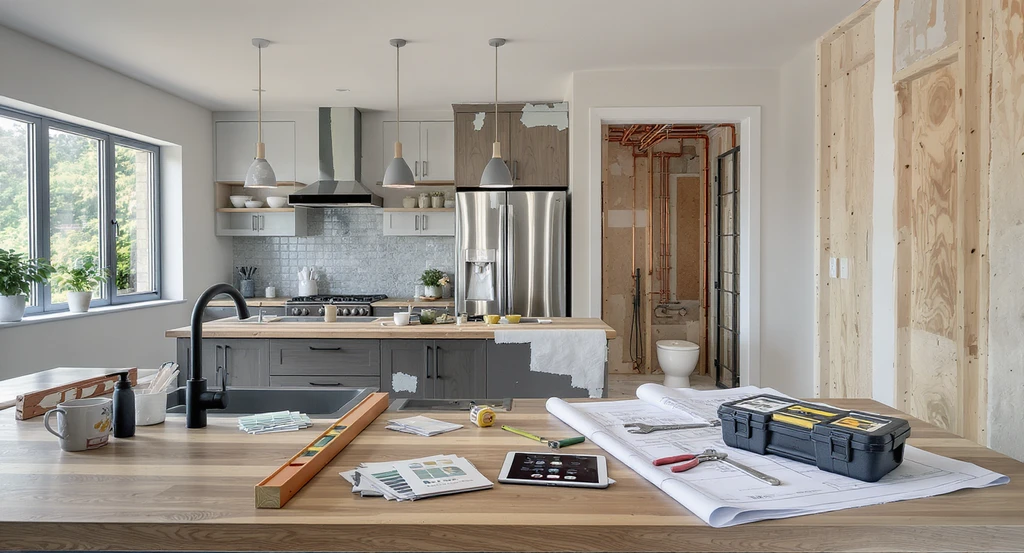
A partially upgraded kitchen and living space in 2026 demonstrates how to afford home renovations with phased renovation strategies for homeowners. Careful planning, visible project staging, and budgeting for kitchen and bathroom remodels help avoid regret and debt stress when deciding between DIY and professional renovation.
Affording home renovations in 2026 is harder than it was a few years ago, mostly due to persistently high interest rates and rising material costs. Instead of delaying upgrades altogether, most homeowners must refine their funding strategy to avoid financial mistakes and future regrets. This means matching each project to the correct financing approach—considering project size, risk level, and the real ROI. The most common renovation regrets stem from mismatched funding, underestimated costs, and insufficient buffers. In 2026, a disciplined plan using phased renovation strategies, equity options, and safe DIY is the safest route for avoiding remodel regret and debt stress. Let’s walk through the most practical layout and funding rules to keep you in control.
-
01. Rely on Cash Savings for Small, Controlled Projects
Paying cash remains the safest way to fund minor renovations such as painting, switching fixtures, or staging updates. The main mistake is spending too much and dipping into emergency reserves, leaving your financial safety net too thin to handle real emergencies.
Why does this happen? Homeowners often underestimate project costs or forget to add a buffer for surprise expenses. The logical fix is to create a separate budget for renovation, set a strict upper limit, and leave your 3–6 months of essential savings completely untouched. Always include a 10–20% contingency buffer in your calculations. If cash savings aren’t enough for sustained financial health, scale back project scope, or phase the work—read our advice on smarter DIY and budget planning in DIY costs vs. real savings. -
02. Use HELOCs for Flexible, Ongoing Renovations
A Home Equity Line of Credit (HELOC) lets you borrow against your home’s value, drawing funds only as needed over the course of the project. The most frequent mistake is using a HELOC for loosely scoped jobs—this leads to overspending as rate adjustments can make borrowing more expensive over time.
To avoid this, restrict HELOC use to projects with clearly defined phases (e.g., kitchen or bathroom upgrades broken into stages). Only draw funds when you have an itemized phase plan and set a spending cap for each stage. HELOCs favor improvements with measurable functional or resale value, so resist the urge to fund casual decor or fleeting trends this way. For workflow sequencing, refer to our guidance on planning a renovation timeline. -
03. Pick Home Equity Loans for Predictable, Single-Scope Projects
Fixed-rate home equity loans are best for one-time, well-defined projects requiring a lump sum—such as remodeling a bathroom or replacing all windows. The top mistake is underestimating costs and failing to lock in quotes before filing the loan application, which can leave you short on funds during execution.
To correct this, request signed, written contractor estimates, include permits and finish allowances, and always add a 10–15% cost buffer. Begin only when you have a firm, guaranteed price for the work. This approach prevents rushed, high-interest top-ups and helps you finish your project without scrambling for extra financing. -
04. Refinance or Mortgage Top-Ups for Structural, High-Value Upgrades
Refinancing or topping up your mortgage can provide the lowest rate for large, essential upgrades—such as roof replacement or full HVAC overhauls. The chief error is using this form of long-term debt for short-lived, trend-based renovations, resulting in high interest paid over many years on non-essential improvements.
Use refinance funds only for work with clear structural benefit or ROI: foundation repairs, major system upgrades, or significant energy efficiency improvements. Review total new monthly payments, closing costs, and projected mortgage duration before signing, and avoid including cosmetic wish-list items in your refinance. For guidance on which upgrades yield greatest return, check the tips in our guide for resale-focused projects. -
05. Leverage 0% APR Credit Cards or Personal Loans for Fast, Small-Scale Needs
Credit cards with introductory 0% APR rates or short-term personal loans can help with emergency fixes or rapid replacements (think burst pipes or broken appliances). Mistakes arise when these quick loans are used for larger, longer projects—the high rates that kick in after the promo period can quickly erase savings and build up risky balances.
Fix this by using unsecured credit only for time-limited, small jobs (under $15,000), with a clear payoff plan set before work starts. Automate payments and avoid stacking card balances. Never use credit cards or personal loans to fund large-scale, structural, or value-critical jobs. -
06. Phase Renovations to Spread Costs and Minimize Regret
Many homeowners regret trying to tackle whole-home upgrades at once, often due to cost overruns or life changes that stall progress. A strategic, phased renovation divides the work into bite-sized chunks—a layout correction that not only makes budgeting manageable, but preserves home function and flexibility.
Always map out a realistic project timeline with clear phases (e.g., Phase 1: structural repairs; Phase 2: kitchen layout; Phase 3: final finishes). This phased approach lets you reassess your strategy, adjust budgets based on current needs, and reduce the strain on your cash flow. For more on how to use phasing and careful planning to stay on track, see our guide on affordable renovation tips. -
07. Combine DIY Labor with Selective Professional Help
DIY can save a substantial portion of renovation costs—typically 30–50% of the total—if you stick to safe, controllable jobs like painting, basic demolition, and small tiling projects. The mistake is blurring the line between what’s manageable and what requires a licensed professional—tackling electrical, plumbing, or structural work you’re not qualified to do can be dangerous and costly.
- Assess your skills honestly and choose tasks that don’t require permits or specialist equipment.
- Always hire licensed pros for regulated or safety-critical trades.
- Factor in learning time and tool costs before starting any major DIY.
Renovation Affordability FAQs
- What is the safest way to fund a renovation?
- For small projects, cash savings are safest. For larger renovations, carefully planned home equity loans or HELOCs work best—with a 10–20% buffer, as described in our guide on DIY costs and savings.
- How do phased renovations help affordability?
- Phasing lets you separate upgrades over time, adjust as you go, and avoid overcommitting. See our advice in the affordable renovation planning guide.
- Should I DIY or hire a pro?
- DIY is best for safe, surface-level labor. Always hire a licensed pro for regulated or risky work, as explained in our analysis of when to DIY or hire.
- How do I avoid cost overruns?
- Always plan a 10–20% buffer above estimates and get fixed-price contracts when possible.
- How can I keep my renovation on schedule?
- Begin early, lock in materials, and plan projects in sequenced phases. For a detailed process, review our renovation timeline tips.
Customizing Your Renovation Plan for True Affordability
Affording renovations in 2026 is never about picking just one approach. The most successful homeowners combine phased planning, disciplined savings, smart funding choices, and targeted DIY. By matching project scope to the right financing, preserving buffers, and avoiding trendy, low-value splurges, you can comfortably update your home without overspending or risking debt regret. Focus on end-to-end planning, scalability, and measurable value in every upgrade.