8 Steps to Create a Functional 3-in-1 Small Room Layout Without Losing Comfort
TL;DR
Smartly dividing a single compact room into lounge, workspace, and sleeping zones is possible with thoughtful layout, proper scaling, and clear circulation. Use multi-functional furniture and vertical storage to keep the space organized and comfortable.
Introduction: Designing for Multifunctionality in One Room
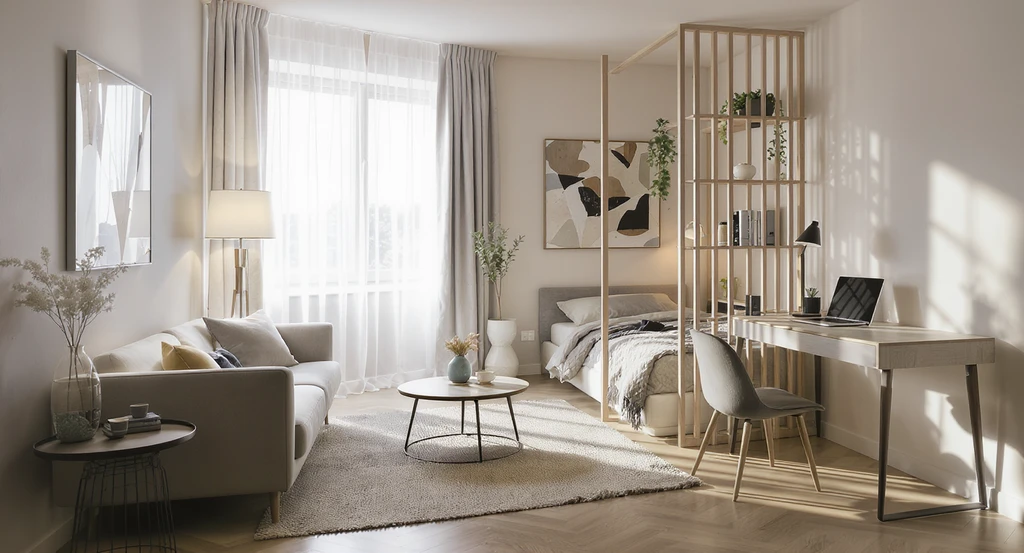
A photorealistic example of ai small room design ideas, using virtual staging for multifunctional spaces and ai visualization for maximizing small spaces. This layout demonstrates how best ai tools for room optimization create balanced, functional zones without sacrificing comfort.
Modern living often means making one small room do the work of many. Whether you’re in a studio apartment, a shared home, or outfitting a guest space, combining lounging, work, and sleep in a limited area can quickly turn into a crowded, uncomfortable puzzle. Most mistakes come from treating the entire space as a single open area, resulting in furniture overlap and poor flow. The goal is not to squeeze three functions into a box but to create coordinated zones that work together. By focusing on layout logic, zone boundaries, and spatial balance, your lounge, workstation, and bed area won’t compete—they’ll complement each other.
-
01. Overlooking Clear Zoning and Pathways
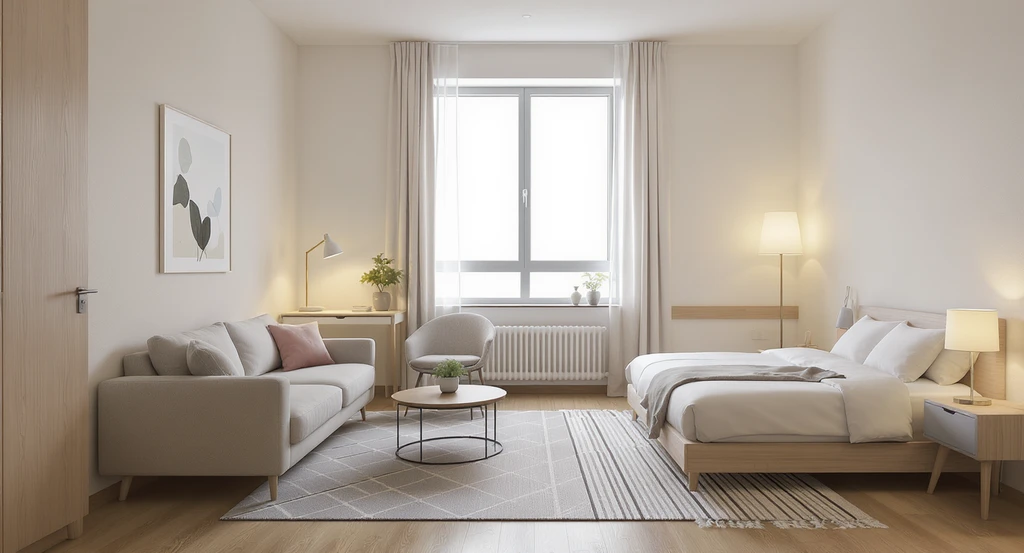
Explore ai small room design ideas using virtual staging for multifunctional spaces—distinct zones for lounging, working, sleeping ensure best room optimization and smooth circulation.
Trying to blend every function together often leads to a crowded, undefined space where movement feels awkward and boundaries are unclear.
This happens when you place furniture wherever it fits or use oversized pieces that block walkways. The primary correction is to give each function—lounging, working, and sleeping—its own zone, even if boundaries are mostly visual. Maintain minimum clearances: 30 inches for walkways, 24–30 inches for bed access, and 30–36 inches behind your desk chair. According to our guide on maximizing small bedroom layouts, treating zones like distinct territories keeps the room calm and functional. Map out your zones first, then fit furniture to the circulation, not the other way around.
-
02. Using the Wrong Furniture Scale
Large sectionals, bulky bed frames, or big desks can overwhelm a small room and leave no space for traffic flow.
This mistake typically happens when choosing furniture for comfort without considering room proportions. Select pieces scaled for small rooms: compact sofas, a 40–48 inch wide desk, and low-profile beds or mixed-function furniture. Position the bed along a wall, opt for a love seat or accent chair in the lounge area, and use slim, ergonomic desk chairs that fit under the desk. Scaling furniture to the room’s width and length prevents it from visually shrinking the space and improves usability in every zone.
-
03. Ignoring Vertical Storage & Placement
Floor-level storage and furniture clutter up precious square footage, stalling both movement and visual openness.
This often arises from a lack of wall-mounted shelving or stackable storage ideas. Utilize vertical space by mounting shelves above desks, choosing tall bookcases, and using wall lighting (rather than lamps that eat up surface area). As explored in our best small bedroom ideas for 2025, tall, shallow storage frees up floor area and keeps each function accessible without crowding the room.
-
04. Merging Workstation and Relaxation Zones
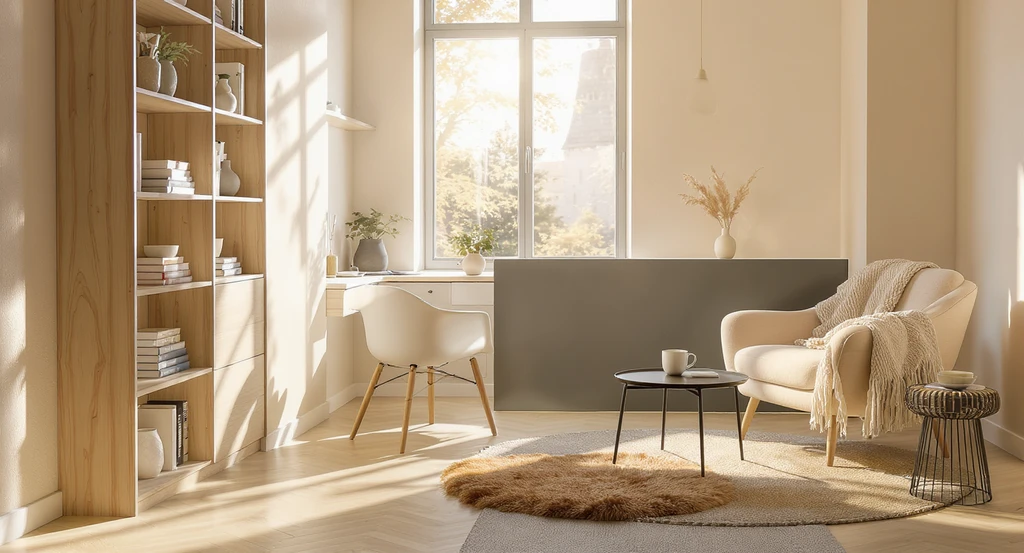
See how ai small room design ideas and the best ai tools for room optimization can create distinct workstation and relaxation zones using virtual staging for multifunctional spaces—demonstrating practical ai visualization for maximizing small spaces.
Allowing the desk to bleed into the lounge or bed zone causes productivity distractions and disrupts rest.
This mistake often occurs when workspaces aren’t clearly separated. Use a corner desk or place the workstation against a window for daylight, keeping at least a partial visual break (like an open shelf, tall dresser, or simple curtain) between zones. For example, separating a lounge nook from your desk with a bookshelf or rug gives each area its purpose and prevents overlap—something our home office setup guide highlights for small spaces.
-
05. Forgetting Layered Lighting for Each Zone
Relying on one overhead light creates a flat, uninspired room and makes tasks uncomfortable.
This often results in glare at the workstation, dark lounge corners, and an uninviting atmosphere. Correct it by layering three lighting types: ambient (main ceiling), task (desk or reading lamps), and accent lighting (wall lights or under-shelf LEDs). For desk lighting, a monitor lightbar or adjustable lamp minimizes eye strain without adding clutter. Place soft floor or wall lamps in the lounge, and consider subtle under-bed lighting for the sleep zone. Check for unnecessary shadows or hotspots—consistency supports focus and relaxation in each part of the room.
-
06. Overdecorating and Color Overload
Too many styles, colors, or decorative objects reduce calm and make breaks between zones visually jarring.
This usually happens when zones get themed separately or display collections in every corner. Use a cohesive, neutral color palette across all zones—soft whites, light grays, or muted pastels—to tie the room together and reflect light well. Accent colors work best as small highlights repeated through textiles or accessories. Simple, unified decor avoids visual chaos, supporting both sleep and productivity—as covered in our affordable design guide.
-
07. Not Using Multi-Functional Furniture
Single-purpose furnishings eat up valuable real estate when every inch matters in a 3-in-1 room.
Common examples include standard beds without built-in storage, separate coffee tables and ottomans, or heavy nightstands. Instead, look for bed frames with drawers, storage ottomans that double as extra seating, and desks that can serve as vanities or craft tables. Foldable tables and nesting side tables offer workspace and lounge solutions without clutter. As shown in our small-room storage guide, every item should earn its keep with more than one use.
-
08. Missing the 'Invisible Divider' Principle
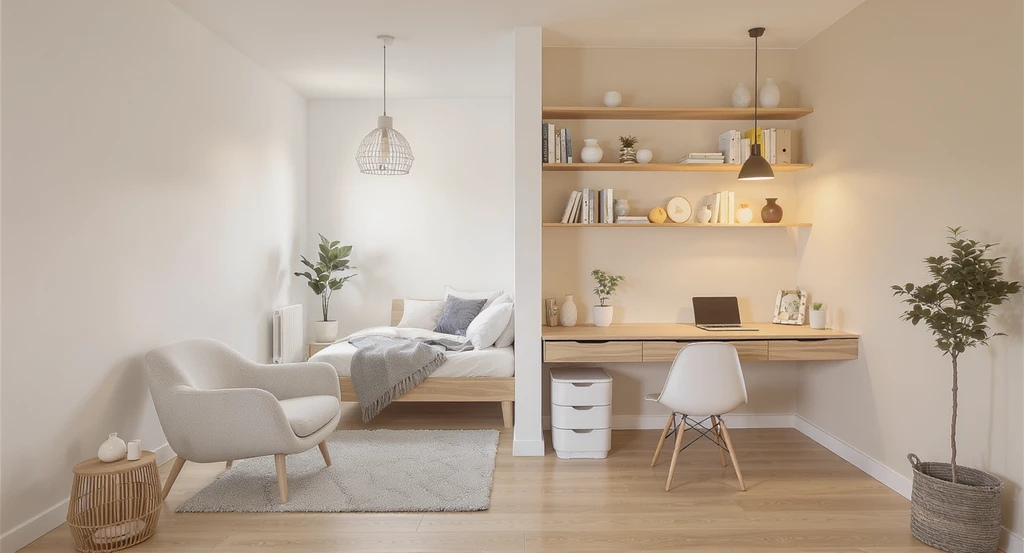
Virtual staging demonstrates ai small room design ideas, using open shelves, area rugs, and subtle paint shifts for invisible dividers—showcasing the best ai tools for room optimization and multifunctional spaces.
Physically dividing a small room with full-height partitions or screens closes off light and makes it feel even smaller.
This mistake occurs when people reach for solid barriers instead of more subtle separation. Employ visual zoning: area rugs, subtle paint color shifts, open bookcases, or pendant lighting to mark transitions. For example, place a rug beneath the lounge chair, shade the workstation wall a slightly different neutral, or hang open shelves between bed and desk. These techniques organize the room by function but keep lines of sight open, preserving spaciousness.
3-in-1 Small Room FAQ
- How do I keep a 3-in-1 room from feeling crowded?
- Plan clear zones, use scaled furniture, and keep walkways open (at least 30 inches). Rely on vertical storage and subtle dividers.
- What bed works best in a multi-functional space?
- Low-profile platform beds with storage drawers or a fold-out sofa bed save room and boost hidden storage.
- How can I maximize my small home office area?
- Set up a compact desk near natural light, use wall-mounted shelves, and keep only work essentials in the main zone. See more in our small-space home office guide.
- What’s the easiest way to prevent clutter?
- Use multi-functional furniture (like ottomans with storage, or beds with drawers) and edit possessions regularly.
Conclusion: Key Principles for a Well-Organized 3-in-1 Room
Combining lounging, working, and sleeping in one compact space can feel seamless when you approach design with zones, clear walkways, and adaptable furniture. Always plan before placing, check comfort clearances, use light and vertical storage to your advantage, and unify with color rather than dividing with bulky barriers. For more guidance on space-maximizing principles and layout tips, review our posts on small bedroom design and smart home office ideas.