
TL;DR
For a 10‑foot span in USDA Zone 5b, the best small trees and tree‑form shrubs balance mature width (6–10 ft), canopy clearance (6–8 ft), and low mess near a walkway. Top picks: a tree‑form panicle hydrangea, dwarf ginkgo ‘Mariken,’ columnar juniper (if you don’t also want serviceberry), or a narrow serviceberry cultivar where cedar/juniper rust pressure is low — all easy to visualize in ReimagineHome.ai before planting.
2 facts: −15 to −10 °F winters and 10 ft width set the design rules

Key layout measurements for a tidy, functional south-facing front entryway.
At a Glance - Mature spread target: 6–10 ft max for a 10‑ft bay by the front door (keeps branches off siding and sightlines open from the patio). - Canopy clearance: 6–8 ft over the walk to avoid face‑level branches and keep snow shoveling easy. - Sun aspect: South‑facing entries can support flowering choices; add light mulch to protect roots from heat. - Foundation setback: 5–8 ft from trunk to wall is a safe range for air flow and gutter maintenance. - Walkway width: 36–48 in for primary paths; 2700–3000 K for warm outdoor lighting design. Try your own layout, furniture style, or celebrity-inspired room transformation on a photo of your space in ReimagineHome.ai. A homeowner in a northern climate has a classic dilemma: fit a small ornamental near the entry without blocking views, shedding fruit on the walk, or overwhelming the facade. Here’s how to choose a right‑sized tree or tree‑form shrub — and how to see the exact silhouette, clearance, and night lighting with AI landscape design before you dig.
50–70%: hardscape drives maintenance — keep entries clean and visible
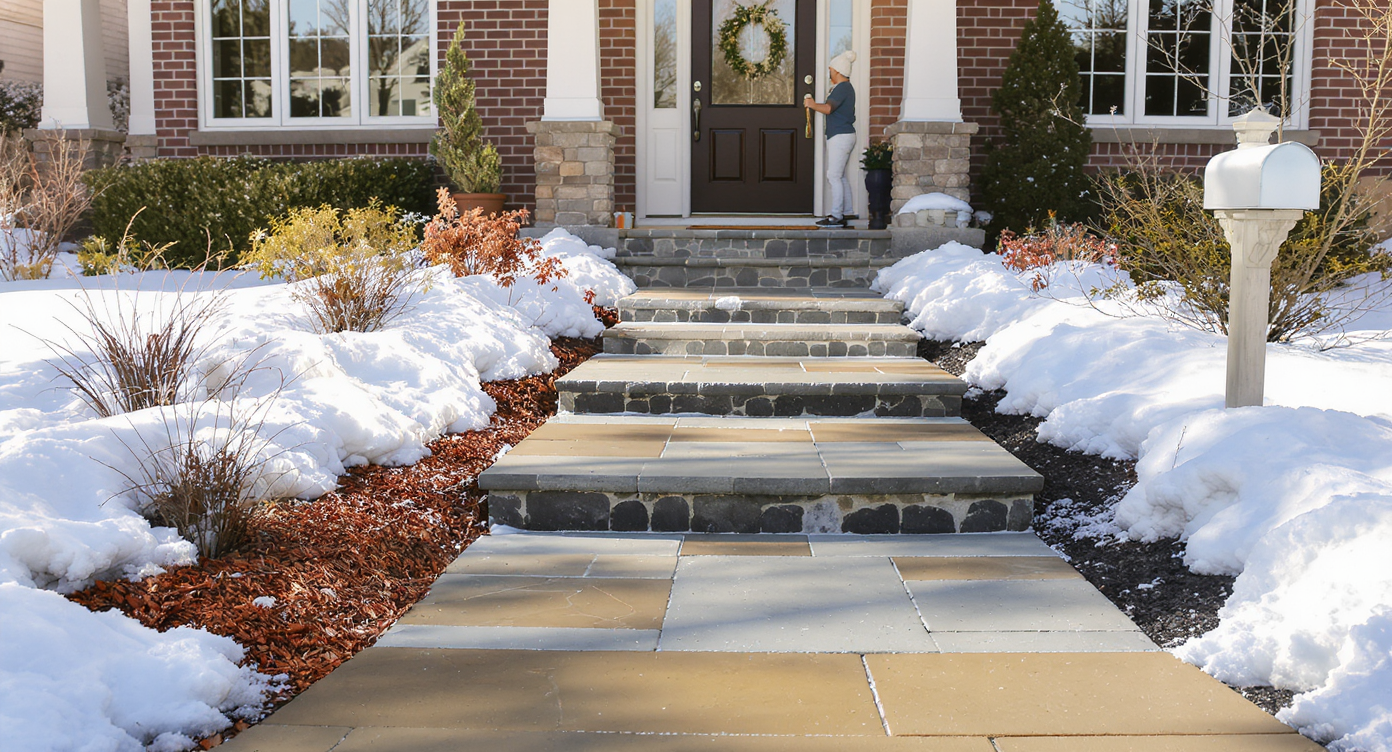
Hardscape-driven front entry keeps walkways clear, reducing maintenance needs.
Why Landscaping & Hardscaping Are Changing Most front yards succeed because they’re easy to use: clear walk, dry feet, safe steps, and a focal plant that behaves. Hardscape elements (walks, steps, landing, edging) often make up 50–70% of low‑maintenance yard budgets, so it pays to design the path first, then plant to frame it. In a snow state, that means a 36–48 inch walkway, grippy textures, and a plant that won’t droop into the shoveling zone. For curb appeal, choose a form that reads cleanly from 20–30 feet away: upright‑oval, vase‑shaped, or a tidy lollipop canopy. If you’re weighing where a feature tree belongs relative to a porch, this overview on tree placement for curb appeal and hardscape harmony explains how to align trunk position with steps, rails, and lighting so the whole entry feels intentional. Budget or climate on your mind? Planning sequences that start with walkways, shade, and water-wise planting tend to stretch dollars. See how that hierarchy plays out in budget‑friendly landscaping ideas that prioritize shade, xeriscape, and walkways — the principles translate well even far from the Southwest. And before you commit to any new patio step, seat wall, or landing stone, skim 10 hardscaping upgrades that actually get used. It’s a practical filter for what belongs in a small front yard versus what to skip.
Anecdote
A homeowner in Milwaukee wanted spring bloom but dreaded sticky fruit on the stoop. After previewing options in AI, they chose a tree‑form ‘Limelight Prime’ hydrangea with a 42‑inch paver walk and two 2700 K path lights. Winter was kinder, and the front window view stayed open.
6–10 ft: the sweet‑spot canopy for small front‑yard trees in Zone 5b

Optimal canopy height and root care for small front-yard trees in colder climates.
Key Trends 6–10 ft: the sweet‑spot canopy for small front‑yard trees in Zone 5b - Tree‑form panicle hydrangea (Hydrangea paniculata on standard): Most cultivars can be maintained at 6–8 ft tall with a 5–8 ft spread; they flower in full sun, hold a neat canopy, and drop petals rather than messy fruit. ‘Limelight Prime,’ ‘Bobo’ (smaller), or ‘Pinky Winky’ are reliable choices. - Dwarf ginkgo ‘Mariken’: Typically 6–8 ft wide and tall over time on a short standard; blazing gold fall color; male (fruitless) clones avoid mess; very cold‑hardy. - Narrow serviceberry: Where cedar/juniper rust isn’t an issue within roughly 100–200 yards, look to upright forms like ‘Rainbow Pillar’ that stay tighter (about 8 ft wide) while delivering spring bloom and berries for birds. If junipers are part of your screening plan, consider skipping serviceberry to avoid rust. - Columnar junipers (e.g., ‘Blue Arrow,’ ‘Blue Point’): Elegant vertical punctuation at 2–3 ft wide; excellent for a south‑facing entry in Zone 5b. Use one as a corner marker — but again, avoid pairing with serviceberry. - Weeping redbud on dwarf rootstock (e.g., ‘Ruby Falls’): Can be kept under 8–10 ft with thoughtful, annual structural pruning; best where you’re comfortable maintaining a form tree. Two more looks if you prefer shrubs you can see over from the patio: fragrant witch hazel (late‑winter bloom; check mature widths) and compact viburnum (white spring flowers and red fall color). Both can be limbed up lightly to create a tree‑like outline without the long‑term size pressure of true trees.
3–5 steps: use ReimagineHome.ai to test form, clearance, and light

Use ReimagineHome.ai to visualize entry clearance, form, and lighting before landscaping.
How to Use ReimagineHome.ai 3–5 steps: use ReimagineHome.ai to test form, clearance, and light - 1 photo: Upload a straight‑on shot of your entry and walk. The home design AI reads architecture, sun, and scale so you can try multiple landscaping ideas in minutes. - 36–48 inches: Set your walkway width in the prompt and test edging lines; a slightly flared landing often improves snow‑shovel turns. - 6–8 ft clearance: Ask the room design AI (yes, it excels outdoors too) to keep canopy height above eye level, and test the silhouette of a hydrangea standard vs. a ‘Mariken’ ginkgo vs. a columnar juniper. - 2700–3000 K: Preview warm outdoor lighting design for a single uplight at the trunk or two path lights spaced 5–8 ft apart. Night views sell a design. - 2–3 options: Save variations — one flowering, one evergreen, one architectural — and compare side‑by‑side before you buy. It’s a free AI landscape generator from photo when you need quick confidence. Alt: “South‑facing entry with a tree‑form hydrangea, 42‑inch concrete walk, and two 2700K path lights, visualized in ReimagineHome.ai.” Caption: “See canopy clearance and petal drop zones before planting.”
2 case studies: south‑facing entries that stay tidy year‑round
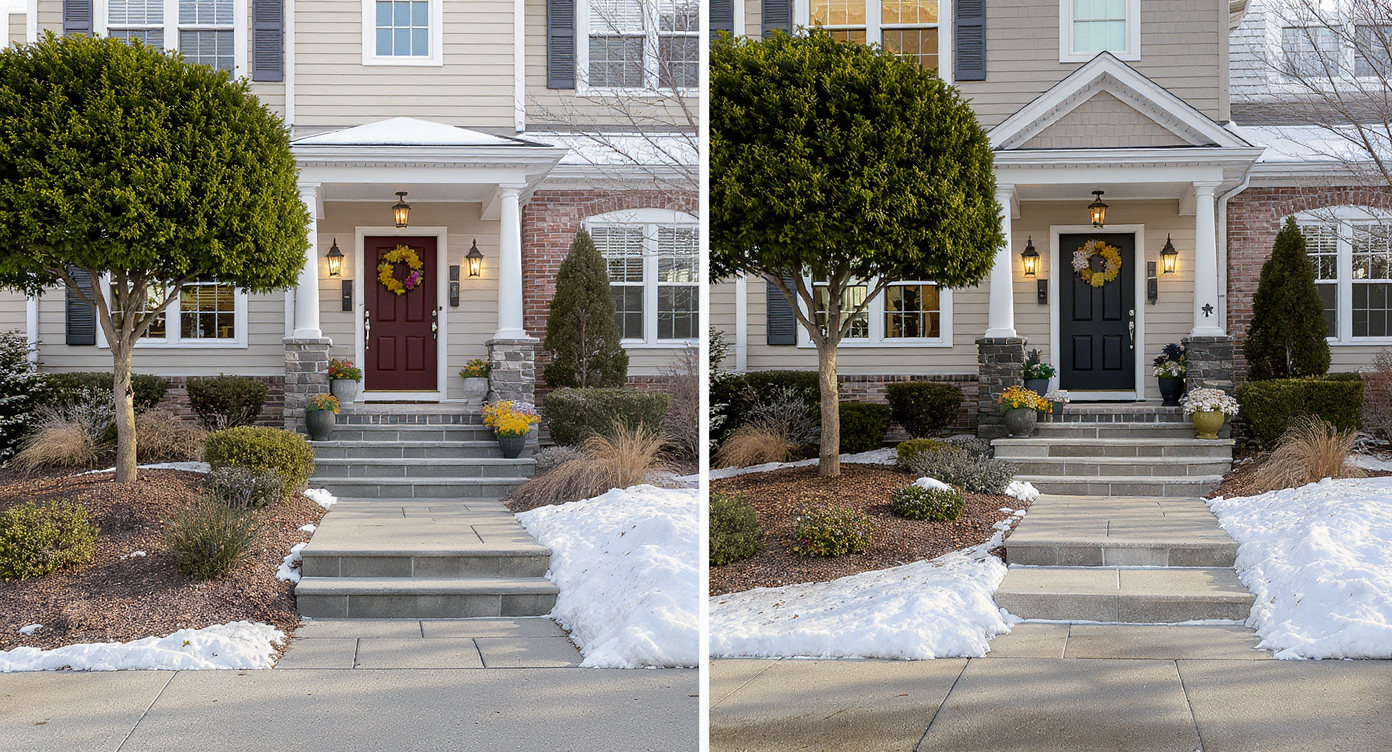
Case studies of south-facing entries that stay tidy and functional through all seasons.
Real‑World Stories 2 case studies: south‑facing entries that stay tidy year‑round - Wisconsin 5b bungalow: The owner loved serviceberry but planned a juniper privacy screen. We used AI yard design to test conflicts, then chose a ‘Bobo’ hydrangea on standard, set 6.5 ft off the siding with a single 2700 K uplight. Snow shoveling stayed simple, and the dried panicles carried the facade through winter. - Chicago two‑flat: A 10‑ft bay near the stoop needed height without width. A ginkgo ‘Mariken’ on a 4‑ft standard read like living sculpture above low sedge groundcover. The stone patio step remained clear, and fall color punched up curb appeal without fruit drop. Alt: “Dwarf ginkgo ‘Mariken’ on standard flanked by granite cobble edging and fine fescue, rendered in ReimagineHome.ai.” Caption: “Architectural foliage is a low‑mess way to frame a front entry.”
Visualization Scenario
Upload a daylight photo of your porch and walk. Prompt ReimagineHome.ai to “keep a 42‑inch path, set canopy at 7 feet, test hydrangea standard vs ‘Mariken’ ginkgo vs columnar juniper, add one trunk uplight at 2700 K,” and compare the three outcomes side‑by‑side.
5 quick answers: Zone 5b small‑tree and hardscaping questions
FAQ - What are modern landscaping ideas for small front yards in cold climates? Answer: Use one sculptural focal (tree‑form hydrangea or dwarf ginkgo), a 36–48 in path with crisp edging, low groundcover to reduce mulch, and warm 2700–3000 K lighting. Test materials and layouts first in ReimagineHome.ai for a low‑risk backyard makeover feel at the front door. - How do I design low‑maintenance hardscaping by the entry? Answer: Prioritize drainage, grippy textures, and a straight or gently curved walk sized to your shovel. See a prioritized checklist in these upgrades that get used in real life. - Which small trees fit a 10‑ft space in Zone 5b? Answer: Tree‑form panicle hydrangea (6–8 ft), dwarf ginkgo ‘Mariken’ (6–8 ft), narrow serviceberry ‘Rainbow Pillar’ (~8 ft where rust risk is low), columnar juniper (2–3 ft wide, strong vertical), and select weeping redbuds maintained to 8–10 ft. - Can I plant serviceberry if I also want junipers for screening? Answer: It’s risky in rust‑prone areas; Gymnosporangium can cycle between Amelanchier and Juniper within roughly 100–200 yards. If junipers are essential, pick hydrangea standard, dwarf ginkgo, or viburnum instead. - How far from the house should I plant? Answer: 5–8 ft from trunk to wall is a good starting range; keep canopy 6–8 ft above the walk. This aligns with guidance in tree‑to‑hardscape placement for curb appeal. - Can AI help me redesign my yard from a photo? Answer: Yes. ReimagineHome.ai offers AI landscape ideas from a single image; it’s effectively a free AI landscape generator from photo to test forms, lighting, and materials before you commit.
Before you rearrange a room or invest in new furniture, explore a celebrity-inspired version of your space in ReimagineHome.ai — a low-risk, high-creativity way to preview ideas before committing in real life.
36–48 in: right‑sized paths make small landscapes feel generous
Common Mistakes Trees within 5 feet of the foundation risk gutter clogs and siding wear - Planting too close: Keep 5–8 ft from trunk to wall; plan for 18–24 in of air between foliage and siding at maturity. - Ignoring utilities: In the U.S., call 811 before you dig. Locate water/sewer laterals so roots and trenching don’t collide. - Betting on “it stays small if I prune”: Annual topping on non‑hedge trees weakens structure. Choose cultivars with mature sizes that truly fit. - Mess over walks: Avoid fruiting trees along primary paths; petals are fine, sticky fruit is not. - Rust triangle: Planting serviceberry within ~100–200 yards of cedar/juniper invites cedar‑apple rust. If you love junipers, skip serviceberry (or separate them by distance and airflow). - Planting too deep: Keep root flare at or slightly above grade; dig 2–3× the root ball width and only as deep as the ball. Pro Tips 36–48 in: right‑sized paths make small landscapes feel generous - Start with the walk. Lay out your ideal curve in a hose, then let the plant be a punctuation mark, not a barricade. - Choose one strong form. A single focal plant reads better than three small ones in a constrained bay. - Mulch to 2–3 in, never against bark. Drip irrigation or a soaker hose reduces splash and disease. - Mix evergreen structure (juniper, boxwood) with a seasonal star (hydrangea standard) for four‑season presence. - Test by photo. ReimagineHome.ai is a landscaping AI tool free to try; it’s fast to swap plant forms and hardscape textures without lifting a shovel. Visualize Your Home’s Next Chapter 1 photo + AI landscape design = fast clarity Small front yards reward precision. Upload your entry photo, set a 36–48 inch walk, and audition a hydrangea standard, ‘Mariken’ ginkgo, or a columnar juniper. You’ll see how the canopy aligns with your door lite, how a 2700 K uplight grazes bark, and whether that 6–8 ft clearance keeps the patio view wide open. When form and function click on screen, planting day gets easy.