How ReimagineHome Helped Transform a Spare Room Into a Modern Prayer and Meditation Space
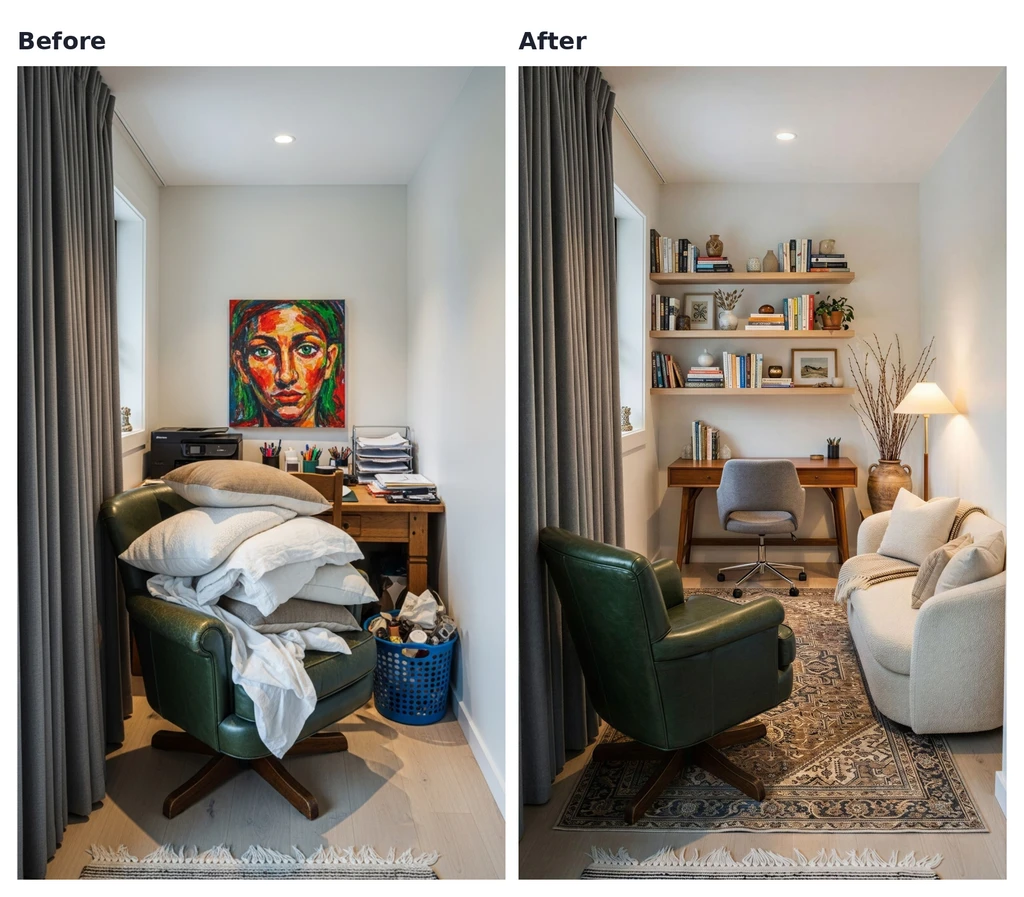
From Overflow to Oasis: A Spare Room Reimagined
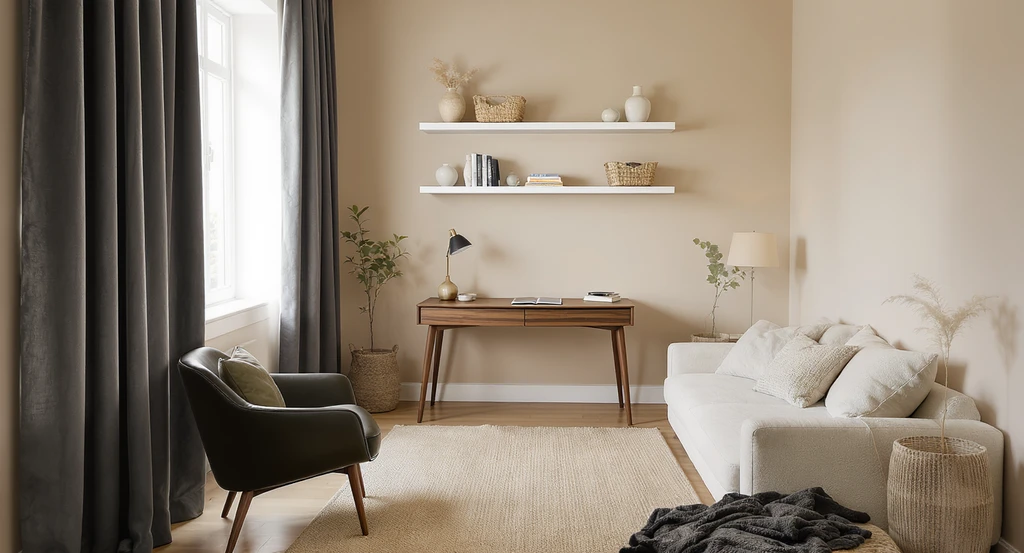
Compact prayer and meditation room design with floating shelves, a desk setup, a dark accent chair, and soft neutral seating.
Turning a cluttered spare room into a peaceful meditation and prayer space requires more than style inspiration—it takes iterative planning, testing real product fit, and a careful respect for existing features and personal routines. This case study documents how precise constraints, reference imagery, and shoppable furniture turned one crowded room into a flexible, modern sanctuary, all while balancing a clear budget. The result is a space that now feels tranquil and inviting, designed for both spiritual reflection and everyday usability.
The main challenge was creating a multifunctional prayer and meditation room that preserves user-selected pieces (notably a blue chair and desk), allows no furniture to block a large curtained window, adds functional shelving above bed-leg level, and incorporates practical, modern majlis seating—all for under $1,000 per final bundle. Direct fit checks and shoppable links replaced guesswork, while savings were secured by trimming low-priority items and prioritizing adaptable, modular pieces.
-
Anchoring the Layout: Constraints that Shaped the Design
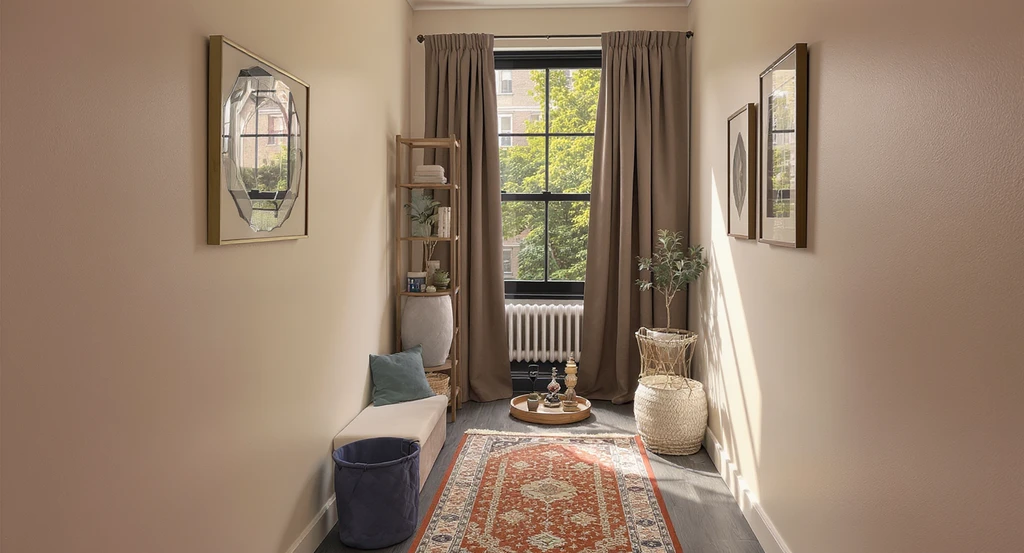
Compact prayer and meditation room design with simple seating, soft light, and a calm, space-efficient layout.
The original room was defined by real limitations: it contained a blue chair to be kept, a desk that could not be removed in later versions, and a large window shielded by a curtain along the left wall. The design mandate strictly prohibited any shelving or furniture from leaning on or blocking this window, which dictated a clear circulation path and excluded many common storage solutions. The user also insisted that all shelving be above the level of bed feet forcing a move from standard bookcases to higher, floating configurations, especially to avoid visual clutter at floor level.
Additional decisions followed from the room’s 7-foot width—prohibiting oversized sofas and driving careful scrutiny of seat depth and walkway space. Majlis-style floor seating was required, both for cultural significance and for creating a flexible zone suitable for prayer, reading, or meditation. The bed in the adjacent room faced the door, so maintaining a serene, unobstructed central zone was essential, making every design move particularly specific to this compact layout.
-
Iterative Refinement: How Design Evolved through Real Reference Images
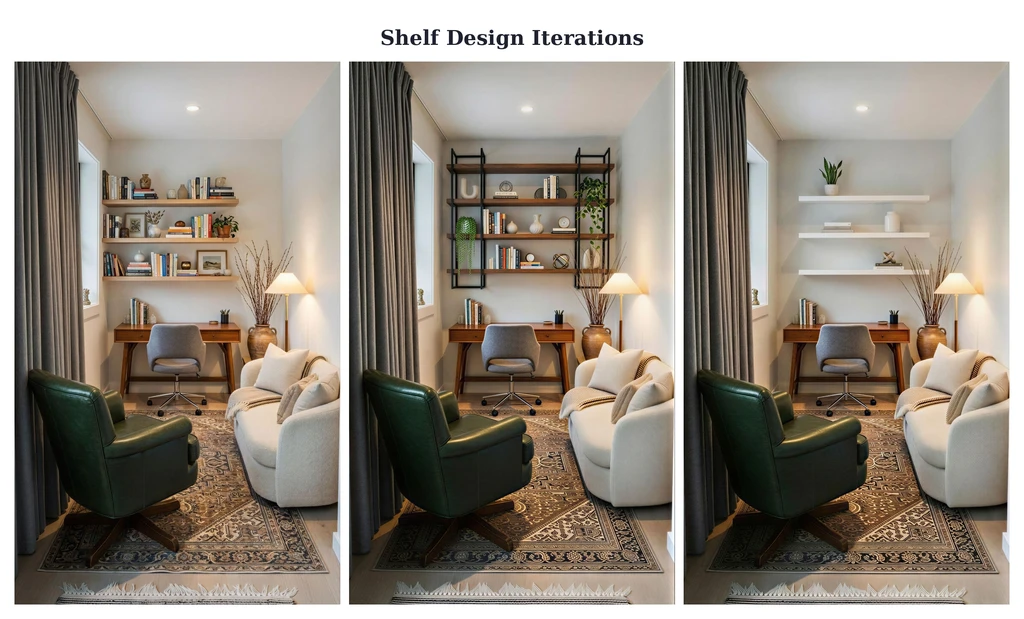
Shelf design iterations showing three storage directions for the same small prayer and meditation room.
What set this redesign apart was the progressive use of reference images and layout adjustments, a process highlighted in our guide to visualizing change on your own photos. At first, the aim was simple: declutter, keep the blue chair, and replace excess with a modern bookshelf and floor majlis sofa. As iterations continued, the need for higher shelving led to floating wall-mounts rather than traditional bookcases. Visual fit was checked each time, with user-supplied style references and product swaps to zero in on a harmonious modern look.
Larger shelving units, geometric shelves, and even wall cabinets were tried and replaced until the proportions worked for the user’s spatial and stylistic needs. At each step, the potential impact on flow and spiritual practice was tested by viewing changes in the actual room. The result was not just a Pinterest-inspired space, but one rigorously aligned with daily habits, room geometry, and aesthetic preferences.
-
Budget, Tradeoffs, and the Power of Real Product Fit Checks
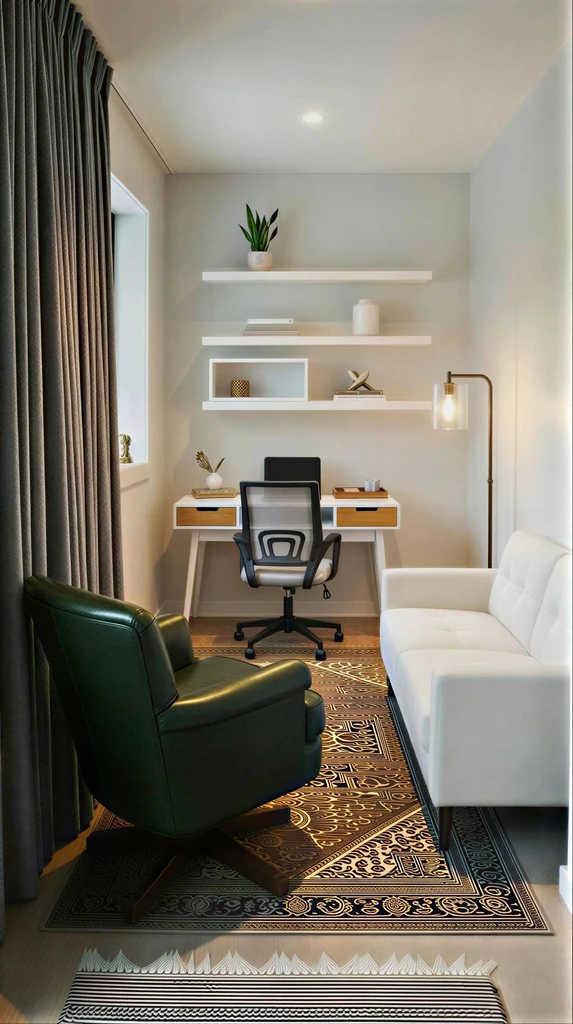
Final redesign of the spare room with floating shelves, workspace seating, and a compact prayer and meditation layout.
Early product bundles approached the $1,000 mark, with anchor pieces like a modular floor sofa (majlis) and tall bookcases. When further edits cut out shelves on the right wall and prioritized multipurpose, neutral seating, the total spend per bundle dropped to around $850—proof that strategic removals and product swaps allow style and function without excess. Anchoring spend in one or two high-impact items (such as a floor-level sofa and quality shelves) freed up budget to choose better-made, visually calm accessories like elegant prayer mats and minimal desk chairs.
This method allowed for iterative, reference-backed layout changes while still testing every new product visually and for fit. Critically, moving from visual concept to shoppable plan revealed whether the space could truly function day-to-day, not just look harmonious online. This approach echoes the philosophy of modern small-space design: prioritize core, adaptable furnishings and make every inch count, as discussed in our small-space trends feature.
-
Translating Inspiration into a Buyable, Practical Plan
Using the Real Shoppable Products feature, the design was brought to life with current, purchasable items anchored to each new layout. For instance, one final configuration paired a low, modular floor sofa with neutral upholstery as the majlis centerpiece, a set of sleek wood floating wall shelves above the desk for display and book storage, and a minimalist desk chair all staying well under the $1,000 cap. Removing surplus shelves avoided crowding and left a protected walkway by the window. Product fit was verified through direct questioning, with final seat depths (around 24–28 inches) validated against the exact 7-foot room width to ensure comfort and functionality for both prayer and movement.
The final links provided below reflect the shoppable solutions that best supported this compact, dual-purpose space, aligning layout, comfort and spiritual utility with real-world budget boundaries.
-
Furniture and Decor List: Real, Shoppable Modern Meditation Essentials Under $1,000

Product bundle showing the chair, floor sofa, and shelves used in the redesigned prayer and meditation room.
Below are the actual shoppable selections from the finalized design iterations, each chosen for scale, style, and practical value for compact spiritual spaces:
- Modern Low Profile Floor Sofa – $529.99: Shop the modular floor sofa
- Sleek Wood Floating Wall Shelves – $129.00: Shop the floating shelves
Every decision was anchored by direct visual testing and measurement confirmation—ensuring major pieces did not crowd the room and maintaining the free flow essential for meditation and prayer. Small additions like a neutral desk chair or soft prayer mat were often chosen for quality and subtlety, but always within the financial framework set by the user.
FAQ: Modern Meditation and Prayer Room Planning
-
How do you make a multifunctional prayer room both modern and uncluttered?
- By prioritizing modular floor seating, floating shelves, and keeping all major circulation zones clear, the space remains serene but practical for daily use—ideas reflected in our recommendations for small-space design trends.
- In very compact or narrow rooms, floating shelves add storage and display options above the main field of view, limiting clutter and maximizing floor area for mat placement and movement.
- Reference photos—whether from mood boards or previous design attempts—let you set a clear stylistic direction, which is crucial for AI visualization tools.
- Absolutely; the platform enables both shoppable product visualizations and iterative layout fit checks, helping users verify both esthetics and real-world function before purchasing or rearranging furniture.
Are floating wall shelves better than bookcases for small meditation spaces?
How can I use reference photos to guide design?
Can REimagineHome be used for shopping and layout testing?
What Makes This Approach Work for Purposeful, Compact Spaces
This room’s transformation demonstrates that modern meditation and prayer rooms require more than style—they need close attention to fit, refined through direct constraints and real product validation. By moving from reference images to shoppable plans and testing fit at every step, the design process supported both serenity and usability—proving that even a narrow, constraint-laden room can become a calm, inspiring retreat.
Designing with REimagineHome AI allowed for iterative layout testing and confident product selection, translating vision into practical, purchase-ready solutions. For anyone wrestling with multifunctional prayer space challenges—especially in city apartments—this approach ensures every design move is both intentional and achievable.
For more strategies on collaborative renovation and visual decision support, see our exploration of renovation planning tools.