Strategic Stair Nose Transitions in Large Open Rooms: What To Know

TL;DR
When installing engineered flooring in open-plan areas, a stair nose transition at the edge where levels change must balance structural integrity, expansion gaps, and aesthetic continuity. Proper planning allows for safe movement, mitigates unsightly gaps, and ensures your flooring investment remains beautiful and functional.
Navigating Challenging Flooring Transitions
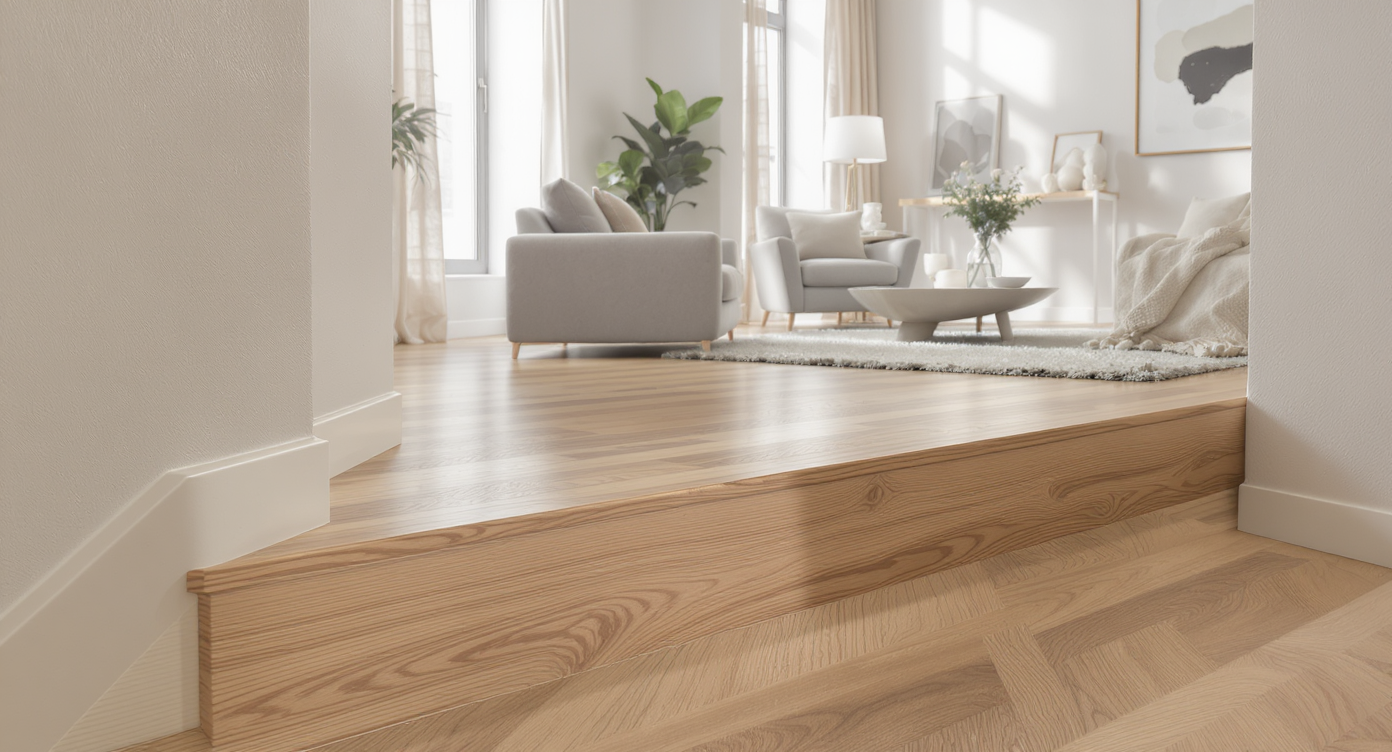
Seamless stair nose transitions ensure both visual continuity and durability in large open areas with changing floor levels.
Flooring transitions often go unnoticed—until you’re faced with a change of elevation or a room boundary that demands a precise solution. For those installing engineered floors in large, open spaces, the edge of a step down into another room creates a particularly thorny design challenge. The right stair nose profile can mean the difference between a seamless, resilient surface and a source of future headaches, both visually and structurally. Understanding how stair noses interact with expansion needs and long room layouts is essential. Many homeowners assume the solution is as simple as placing the stair nose against the flooring, but subtleties around movement, material compatibility, and room scale make this transition uniquely complex.
-
Understanding the Role of a Stair Nose
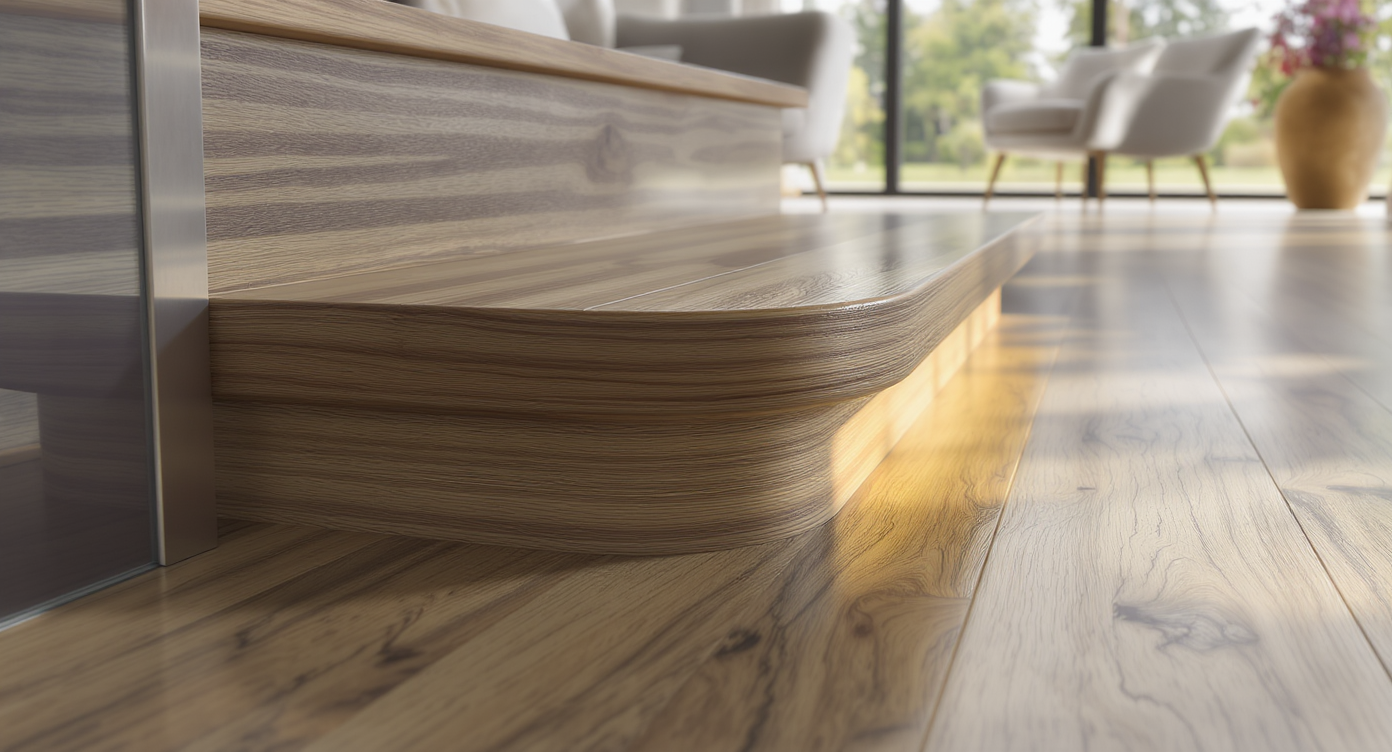
A seamless stair nose in engineered wood protects edges and disguises plank ends, balancing safety and visual harmony in open spaces.
The stair nose isn’t only a finishing piece. At any edge where flooring meets a drop, such as a step or the threshold to a lower room, its rounded profile protects the plank ends from damage and provides a safe, ergonomic edge for foot traffic. Importantly, it disguises the raw, cut ends of engineered flooring, which tend to reveal their layered construction and unfinished core. A well-chosen stair nose blends with the main surface, maintaining visual flow while serving a functional purpose. In open-plan interiors that span more than fifteen feet, expansion and contraction become significant factors. The stair nose must accommodate these movements without compromising safety or appearance. If this expansion is constrained—or the stair nose absorbs too much force—cracks, buckling, or visible gaps can develop, diminishing the overall effect of the design.
Expert Insight
During a loft renovation, a designer once faced a step-down into a sunken lounge framed by twenty-foot engineered planks. A matching stair nose was unavailable, so she worked with a local carpenter to fabricate a custom profile from leftover floorboards, carefully reinforcing the back with hardwood fillets so it could flex with the main surface. Several years later, the edge remains secure and seamless, blending artistry and engineering.
-
Material Selection for Interiors: Why It Matters at Transitions
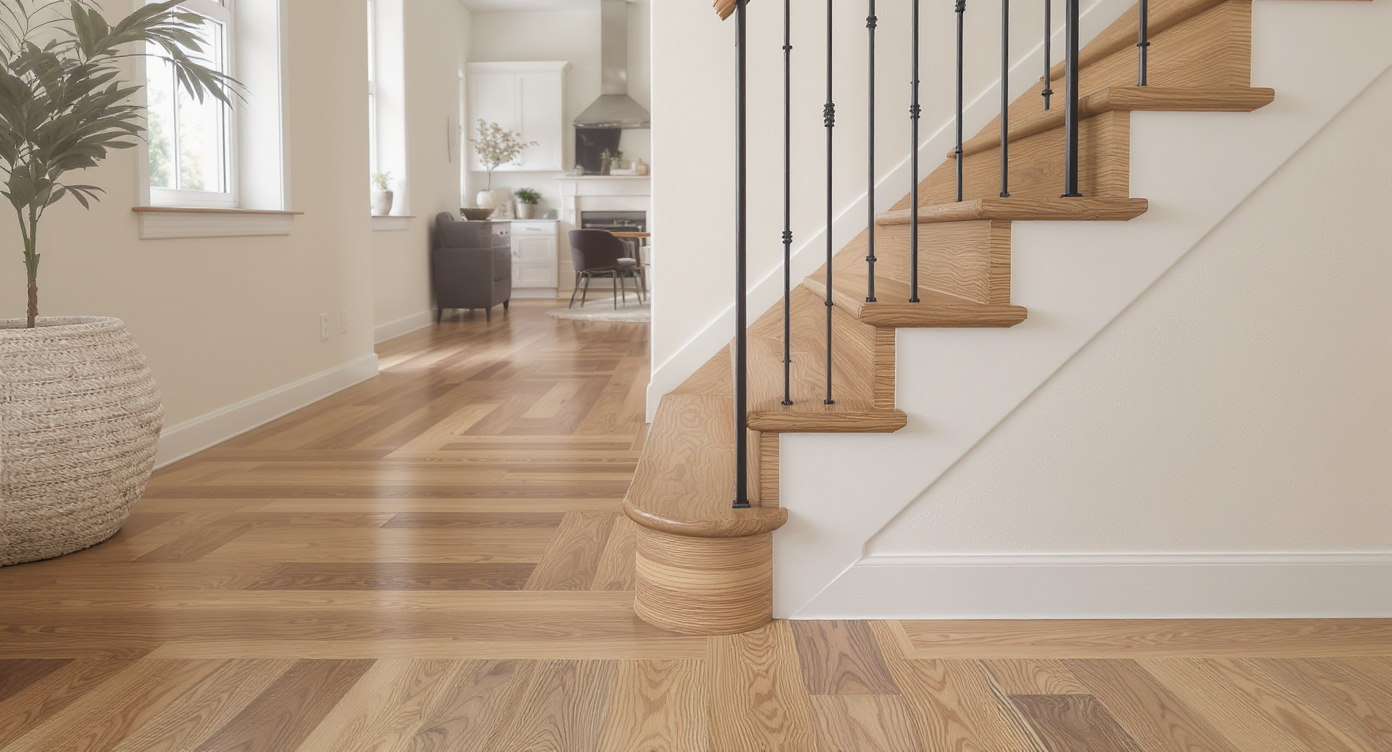
Material selection at floor transitions is critical—detailed stair nose profiles here highlight structure, durability, and designer care.
Flooring transitions are most successful when they match both the visible surface and the underlying structure. A mismatch can call attention to the join and undermine durability. This is particularly relevant for engineered floors, where some stair noses are solid wood while others are engineered or even laminate. Each behaves differently during seasonal changes in humidity, a factor designers often warn is the root cause of common interior design mistakes. If the stair nose is not designed to sit flush with a floating floor, modifying it can create weak points. Removing too much material compromises strength, especially in high-traffic doorways. Ideally, the manufacturer provides a compatible stair nose profile. If not, adaptation requires careful reinforcement beneath and strategic placement of shim layers so that both expansion and structural integrity are preserved.
-
Planning for Expansion: The Hidden Key
Floating engineered floors move in response to temperature and humidity, expanding and contracting throughout the year. Manufacturers often require a gap—sometimes half an inch—at all fixed edges. This expansion gap is deceptively simple along straight walls, where it vanishes under baseboards, but becomes a distinct challenge at openings and steps. A common mistake is to butt stair noses tightly against cut plank edges, especially when dealing with a large room. On a small step or landing, this may work, but as the room’s width increases, so does the magnitude of movement. For transitions only as wide as a doorway, with floating floors bracketed between heavy appliances and cabinets, designers recommend monitoring seasonal patterns before final installation. Where contraction is likely to be visible, staining the cut edge can make inevitable gaps less obvious.
-
Aesthetic Choices and Practical Outcomes
Owners must weigh aesthetics against long-term function. A profile that closely matches the tone and finish of the floor helps the transition disappear visually. Yet, if visible expansion gaps emerge over time, especially with darker floors that contrast with a lighter core, the join may catch the eye. Some opt to avoid additional transition trim for a cleaner look, but this moves the risk to future repairs—removing a tightly butted stair nose can prove daunting if remedial work is ever needed. Tradeoffs between beauty and ease of maintenance should be considered early in the planning process. Designers frequently suggest that, for most homeowners, discreet performance outweighs perfect camouflage.
Visualization Scenario
Picture a wide, open-plan living area where smooth engineered planks stretch from the kitchen to a sunken family room. At the step, a perfectly color-matched stair nose rounds over the edge, visually uniting the floors at both levels. There are no awkward lips or visible seams—just an uninterrupted surface that feels natural underfoot, even as the seasons change.
FAQ: Engineered Flooring Transitions and Stair Nose Applications
Stair noses provide a finished edge at steps or level transitions, protecting the exposed ends of engineered planks and creating a safe, rounded boundary.
How can I allow for expansion at a stair nose transition?
While stair noses often butt closely to cut planks, it is critical to verify manufacturer instructions and local humidity trends. Where possible, a small gap or a staggered, supported installation can provide expansion space without weakening the trim.
Are solid wood and engineered stair noses interchangeable?
Not always. Each reacts differently to humidity and pressure. Using a stair nose matched to your specific flooring type helps ensure consistency and durability.
What’s the risk of removing material from a stair nose to fit an expansion gap?
Altering the stair nose structure can reduce its strength, making it susceptible to cracking under regular use. If modifications are essential, reinforce the trim from below and ensure full support.
Can digital tools help visualize difficult floor transitions?
Digital platforms like ReimagineHome.ai can preview how different stair nose options or transition treatments will look in your unique space.
Takeaways for Confident Floor Design
Approaching stair nose transitions in large, open rooms requires a blend of practical engineering and thoughtful design. Compatibility, expansion space, and user safety must all be weighed alongside visual harmony. Proactively considering how flooring will shift seasonally—and how modifications may impact strength—can help you avoid costly interior design mistakes. Smart, subtle material selection at transitions creates a home that feels as well-constructed as it looks. For more visualization ideas, try ReimagineHome.ai.