Deciding if Virtual Staging Is Right for Your Rental Listing Strategy
TL;DR
Virtual staging uses AI to enhance vacant property photos, offering striking listing visuals that appeal to today’s digital-first renters and buyers. While cost-effective and flexible compared to traditional staging, its success depends on realistic execution, transparency, and matching online images to in-person expectations. For many, virtual staging offers a practical balance between efficiency and impact.
Listing Photos that Work Harder: The Rise of Virtual Staging
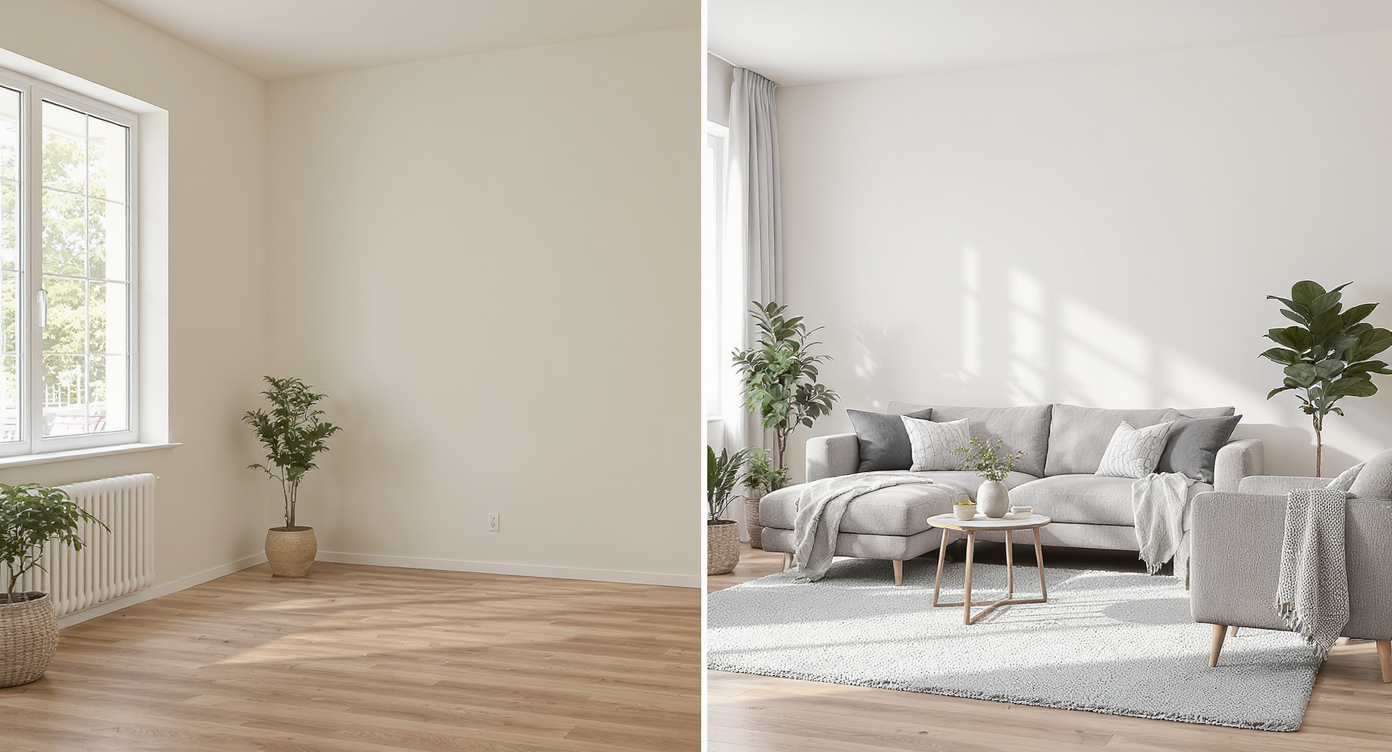
A modern rental living room shown both empty and virtually staged, illustrating digital transformation in online property marketing.
The way we show and see homes has changed dramatically in the digital age, with virtual staging moving from the fringe to mainstream real estate marketing. Digital tools can transform a bare, echoing unit into a warm, furnished retreat with just a few clicks, creating an immediate emotional connection for prospective tenants and buyers. Yet for owners and agents, the question is not simply whether to use virtual staging, but how to do so responsibly—and whether it’s the right fit for every listing. The promise is clear: more eyes on your property and a faster path to lease or sale. The risk? Misrepresenting space, style, or features, which can backfire if not handled thoughtfully.
-
Why Virtual Staging Has Become a Rental Mainstay
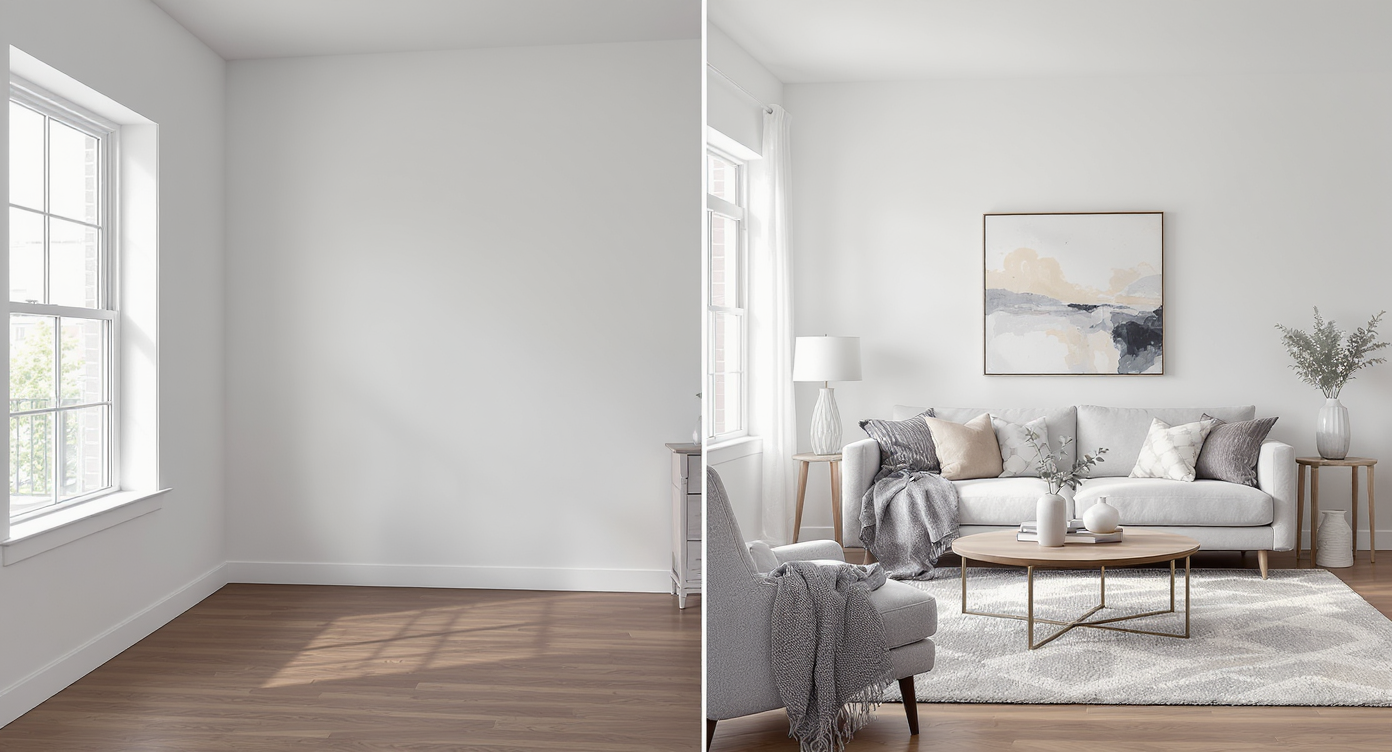
Virtual staging instantly transforms an empty rental, turning a bare room into an inviting, fully furnished space for impactful online listings.
When faced with an empty property, landlords and agents have traditionally grappled with bland listing visuals and the high cost of physical staging. Digital alternatives fill this gap. By leveraging virtual staging AI, empty units are instantly brought to life for online audiences, often at a fraction of the cost of moving in actual furniture. What’s driving this shift is more than just savings. In crowded markets where prospective renters make snap decisions on their smartphones, it’s the first impression that counts. According to our review of traditional versus virtual staging for rentals, landlords report quicker turnaround times and an uptick in qualified inquiries when listings include professionally staged images. The digital approach also grants owners newfound flexibility, with the ability to refresh styles, upgrade furnishings, and appeal to different demographics without ever unlocking the front door.
Expert Insight
A leasing agent in a bustling rental market shared a scenario where she relied on virtual staging AI after a vacant unit struggled to attract applicants. By presenting both staged and empty images in her listing, the traffic doubled overnight. Renters commented on their appreciation for seeing both versions, which expedited decision-making and helped her secure a qualified tenant in record time.
-
What Makes Virtual Staging Work—and Where It Falters
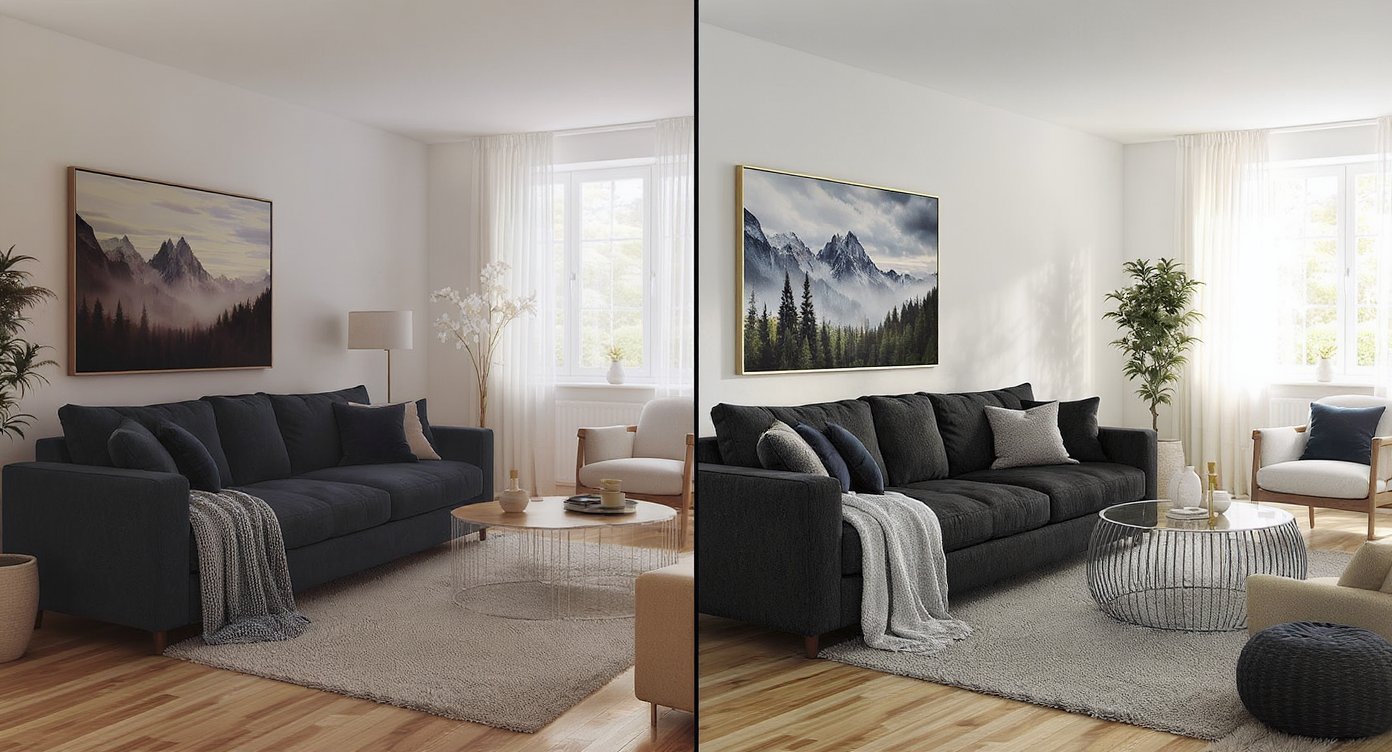
A realistic side-by-side of virtual staging quality: professionally staged furnishings versus obvious virtual staging flaws in the same living room.
While the technology has evolved, not every virtually staged photo is a home run. Quality makes all the difference. When staging flow is handled by skilled designers who understand lighting, proportions, and realistic textures, the result can be nearly indistinguishable from a physically staged space. These images don’t just fill rooms with furniture—they suggest how the space can function, spark imagination, and reduce guesswork for viewers. On the flip side, a rushed or poorly executed job stands out immediately. Pixelated chairs, oddly floating tables, or textures that don’t play well with the real features of a room can erode trust just as quickly as they’re meant to foster it. Clients and agents alike have seen both ends of the spectrum, echoing broader concerns about transparency in virtual staging. As explored in the boundaries of good virtual staging, altering permanent features or hiding flaws crosses an ethical and legal line—an important distinction in winning long-term confidence.
-
Balancing Impact, Honesty, and Buyer Expectations
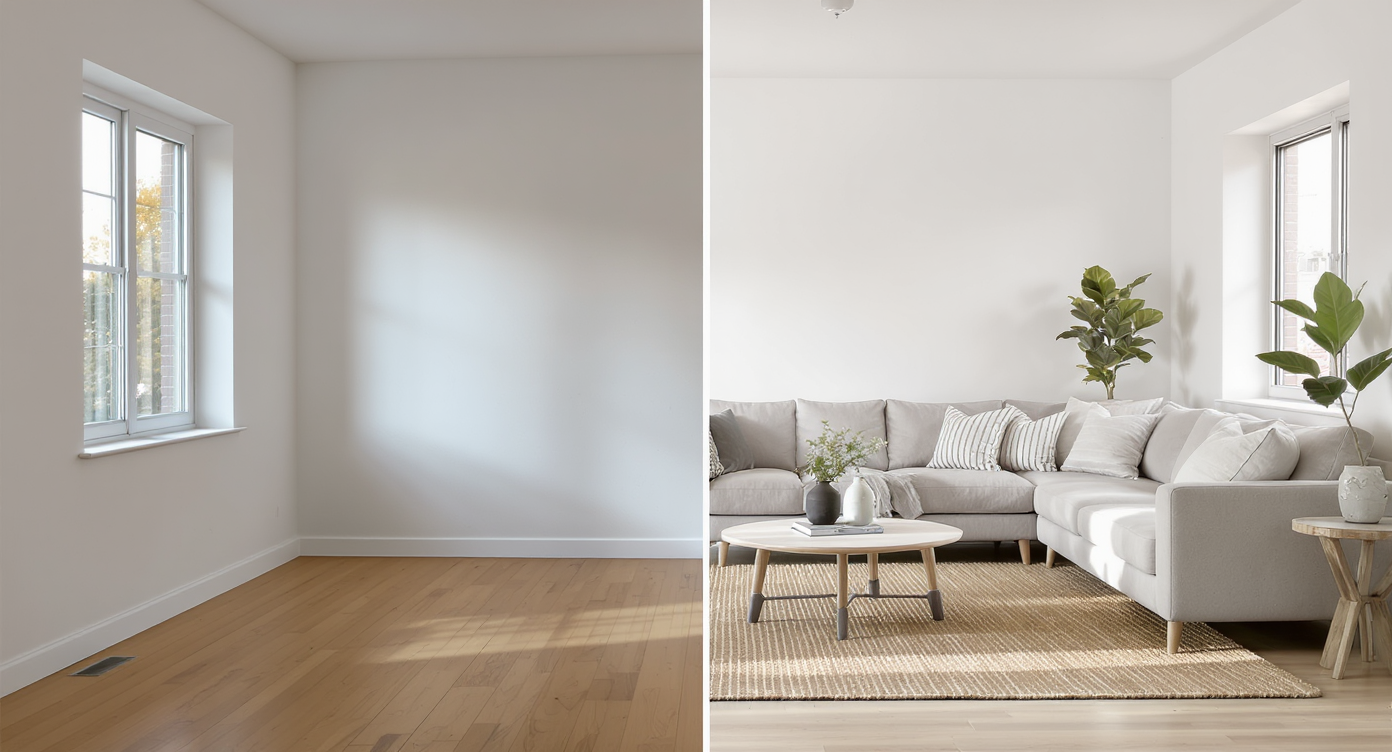
A side-by-side of one living room: left empty and untouched, right virtually staged, both showing true details and honest transparency.
The real success of virtual staging isn’t measured by beautiful photos alone, but by how well those images match up with reality at a showing. Responsible virtual staging includes clear disclosure, visible labels, and easy toggling between vacant and staged photos. This transparency signals integrity and sets realistic expectations for prospective tenants or buyers as they transition from digital to in-person viewing. For owners who want to harness the power of virtual staging and avoid its pitfalls, combining staged imagery with original, unedited photos works best. As covered in our discussion on what’s allowed and what could mislead buyers, the golden rule is to inspire, not deceive. This means avoiding editing out flaws, resizing rooms, or masking architectural details. Instead, use virtual staging to showcase potential and let in-person visits fill in the rest.
-
Anecdote: Digital Transformation on a Tight Timeline
A property manager in a competitive urban market faced an all-too-common dilemma: a vacant rental sitting for weeks with low engagement. Rather than bringing in costly staging furniture, she tried a virtual staging AI service. The difference was night and day. Listing traffic jumped, multiple prospective renters raved about the style shown in online images, and after just one weekend of showings, the property was leased. The manager appreciated how she could offer both staged and empty views, allowing prospects to visualize the potential while maintaining trust with full transparency.
-
Common Mistakes to Avoid
While it’s tempting to push virtual staging capabilities to their limits, there are some clear missteps to avoid for long-term success. Over-staging with unrealistic furniture arrangements, choosing styles that clash with the property’s architecture, or forsaking disclosure all erode buyer and renter trust. Experts warn against using AI to erase flaws, change permanent fixtures, or mislead about window views. Skipping the step of pairing virtually staged images with original photographs can leave prospective tenants disappointed at walkthroughs. Ultimately, cutting corners on realism or transparency is a strategy that rarely pays off.
-
Tips and Expert Insights
Designers often suggest matching virtual staging styles to a property’s location and likely tenant profile, creating spaces that feel aspirational but within reach. Renters looking in city centers may respond to sleek, minimal furniture that maximizes space, while family-sized homes fare better with inviting, comfortable arrangements. In all cases, investing in high-quality rendering ensures staging flow feels authentic. According to recommendations from strategies that win buyer trust, always label staged images, and when possible, offer virtual tours and 3D walkthroughs that align closely with what visitors will see on site.
-
How to Use This in Your Next Designs
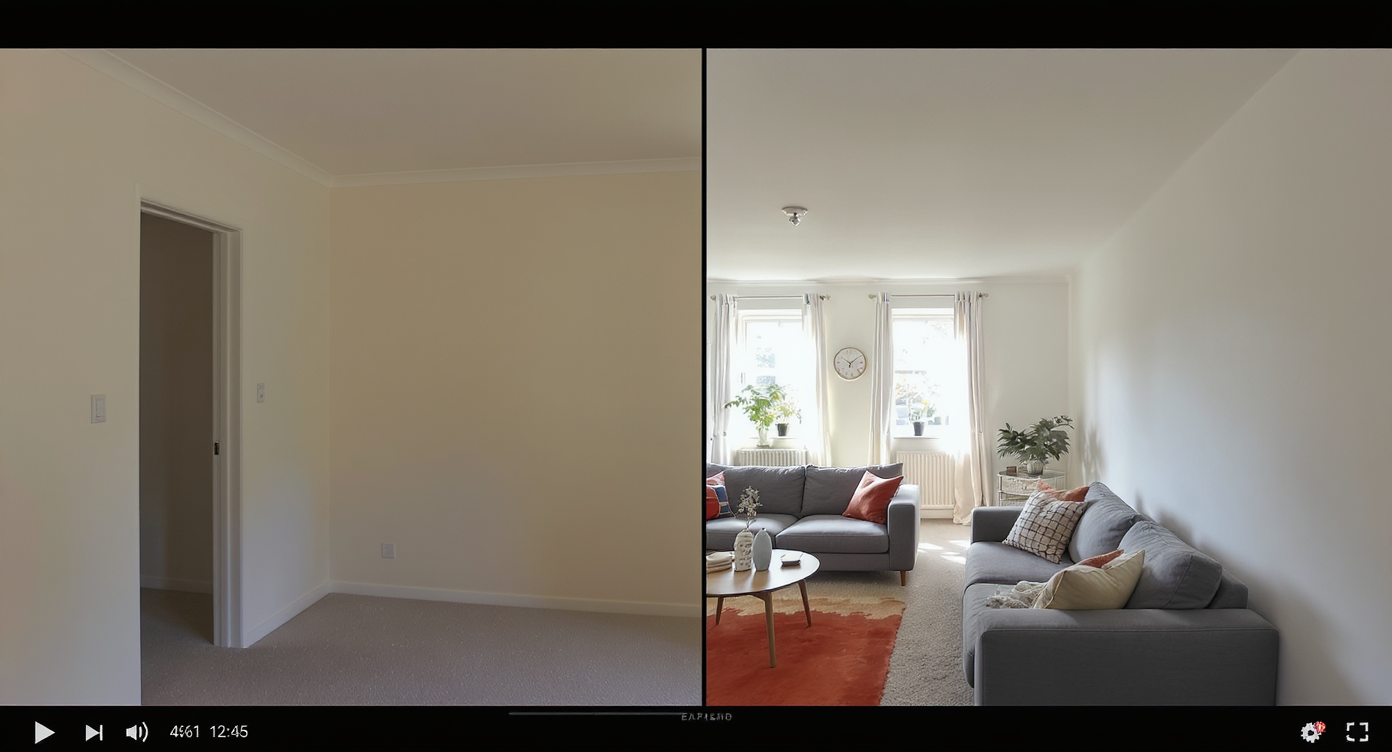
Split image shows an empty living room and the same space virtually staged, illustrating a transparent rental listing approach.
Integrate virtual staging thoughtfully into your upcoming listings by establishing a workflow: gather high-resolution, well-lit photos of empty spaces, select furnishings that suit both the architecture and likely tenant preferences, and use virtual staging AI platforms with a track record for photorealistic results. Do a final pass to ensure digital staging supports, rather than distracts from, genuine features. For best results, present both virtually staged and original images in your gallery, ensuring prospective renters can imagine themselves both with and without the enhancements. This approach balances marketing impact with transparency and builds trust right from the first online impression.
-
Visualization: Picture a Strongly Staged Listing
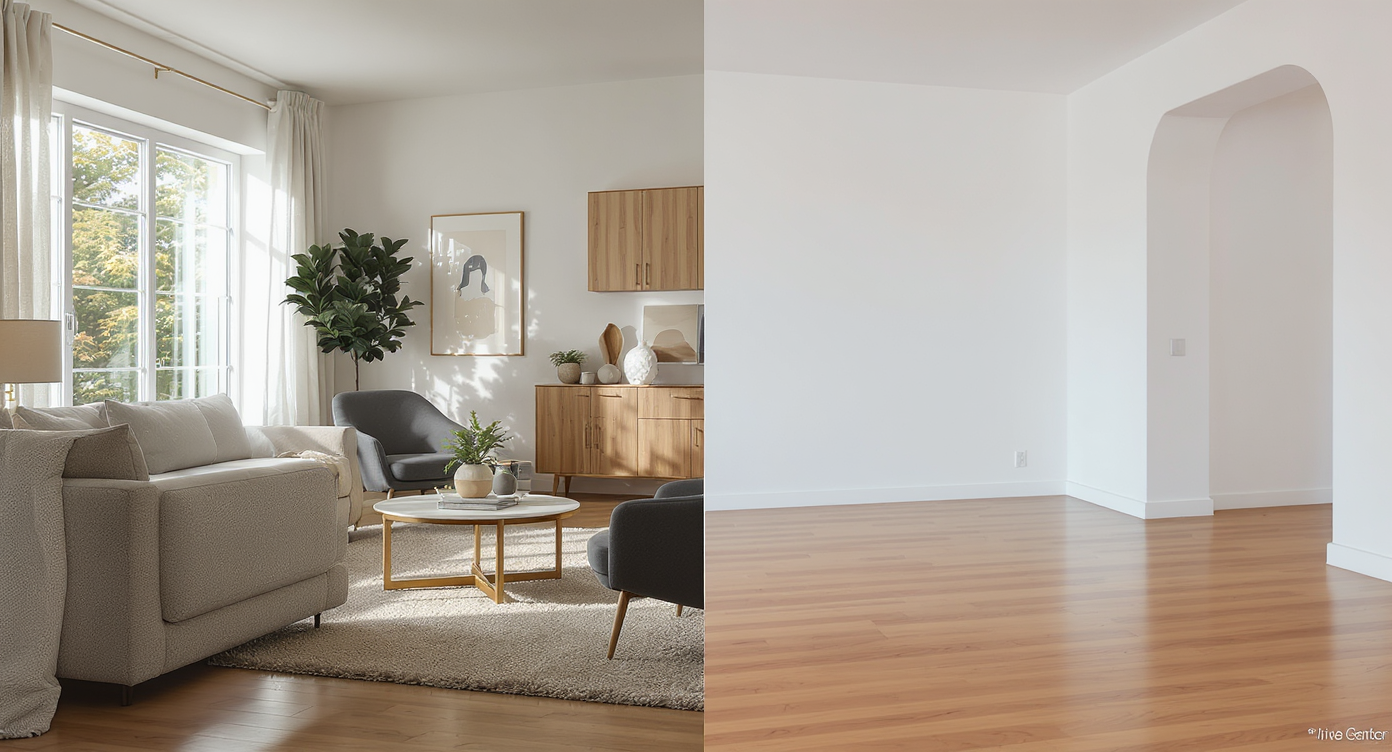
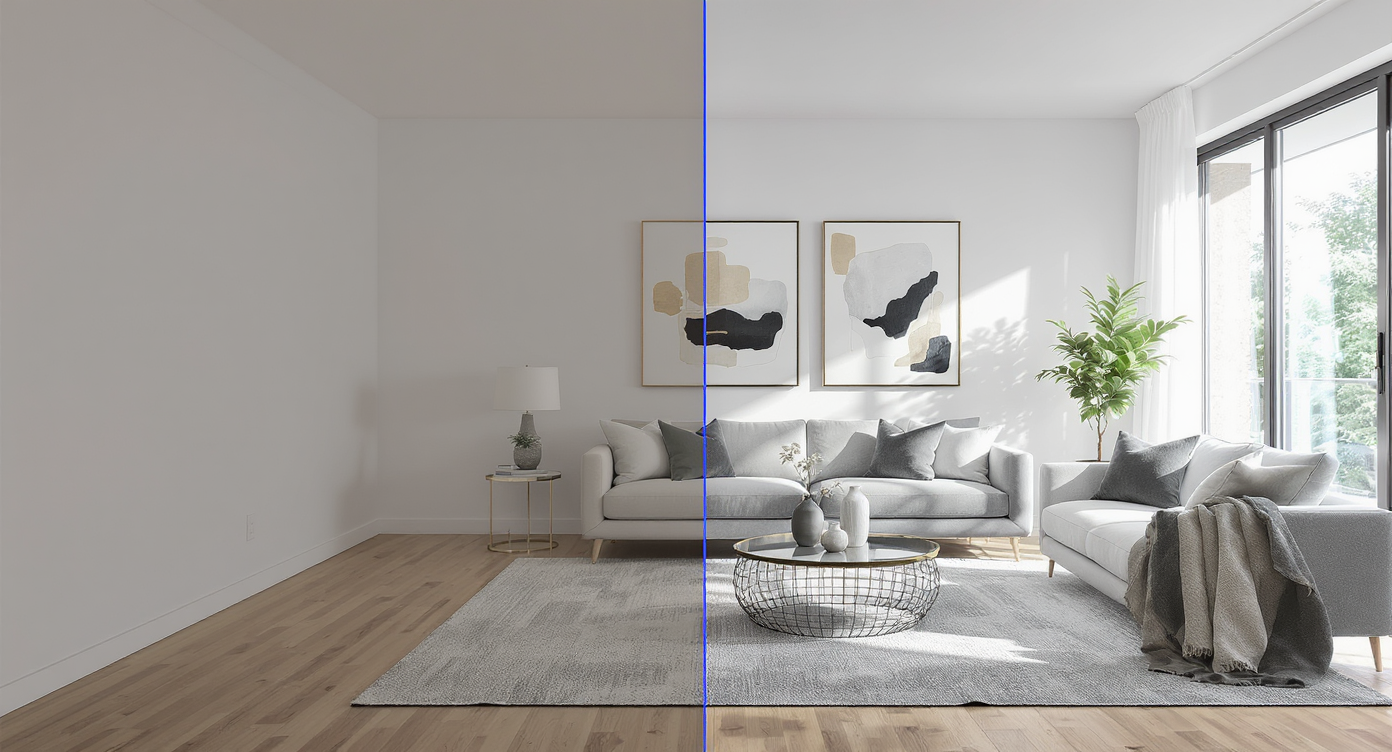
A split-screen living room comparison captures the real impact of virtual staging—warm, inviting furnishings on one side, the vacant layout on the other.
Imagine logging onto your preferred rental site. Among dozens of listings, your eye catches on one with warm light pouring in, tastefully placed furniture arranged to highlight the generous living area, and intelligently staged accents that suggest a sense of home. Clicking through, you see both beautifully staged scenes and the true, vacant layout, leaving no doubt what you’ll find at a showing. This is virtual staging at its best: transforming potential into palpable appeal while maintaining credibility.
Visualization Scenario
Visualize a set of rental listing images where thoughtfully chosen furnishings and subtle accents bring out the best in a sunny living room, a compact bedroom, and a modern kitchen—each shown first virtually staged, then empty. The narrative this creates lets viewers dream, compare, and make faster, more confident decisions.
Frequently Asked Questions About Virtual Staging for Rentals
Numerous landlords report that properties staged virtually attract more online views and qualified inquiries, reducing vacancy time and helping listings stand out in crowded markets.
Is it legal to use AI or virtual staging in listing photos?
Yes, with proper disclosure and ethical guidelines. Avoid altering permanent features or dimensions. Learn more about the legal and ethical distinctions in this detailed overview of best practices.
What makes virtual staging different from traditional staging?
Virtual staging creates digital images that enhance vacant spaces online, whereas traditional staging brings in physical furniture. Each approach has pros and cons. For a full breakdown, see this staging comparison.
How do I avoid misleading potential renters?
Always label every virtually staged image and pair it with unstaged originals. Avoid digitally removing flaws, changing architectural features, or resizing rooms.
Where can I learn more or find the right platform?
Explore the latest visual marketing tools for rentals at ReimagineHome.ai.
A Forward-Looking Approach to Rental Marketing
Virtual staging has earned its place as a powerful tool for landlords, property managers, and agents ready to optimize their listing visuals and attract the widest pool of qualified prospects. When handled responsibly, with attention to detail and full transparency, it transforms vacant properties from overlooked spaces into top contenders. As the technology continues to improve, so does the need for honest, design-driven execution. For those looking to stay competitive in the rental space, finding the right virtual staging partner and process can make all the difference. For more on leveraging visual tools for next-level listings, visit ReimagineHome.ai.