7 Smart Steps to Visualize a Queen Bed in a 10x10 Bedroom Before You Buy
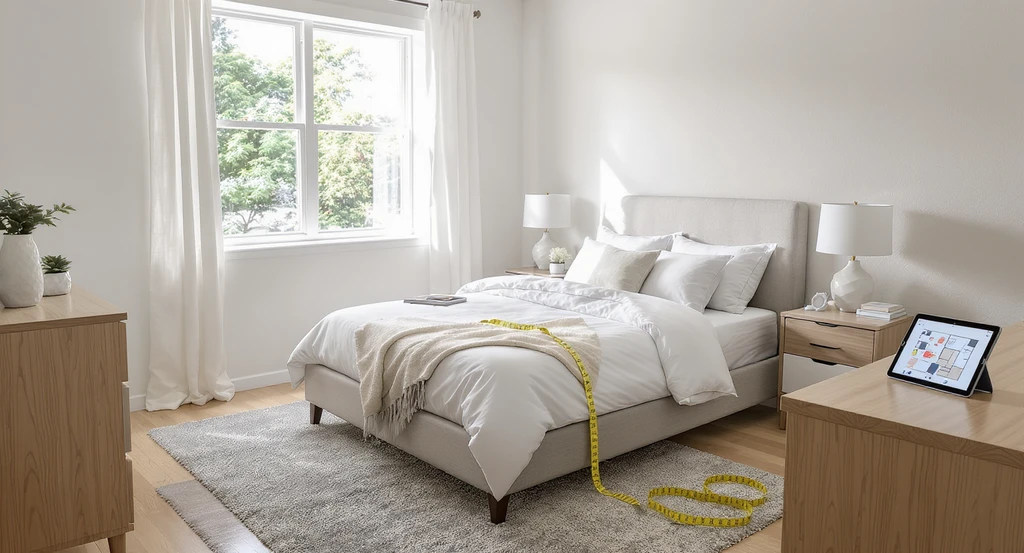
Visualizing a Queen Bed: The Key to Bedroom Confidence
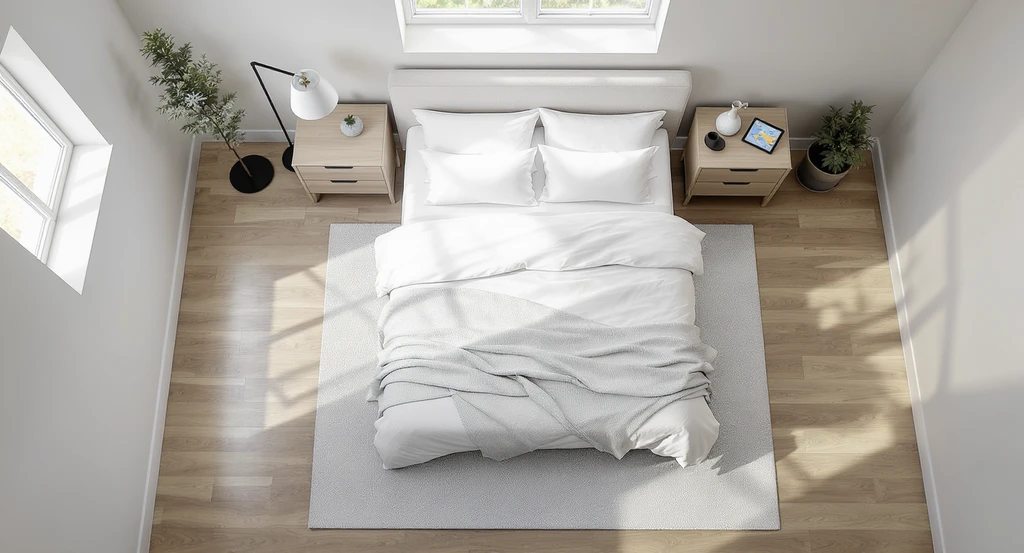
Learn how to visualize a queen bed in a 10x10 bedroom using tools for picturing furniture layout, ideal for those who can’t imagine bed size in room.
Many homeowners find themselves asking: is a queen bed too big for a 10x10 bedroom? The core challenge is not just measurement—it’s truly visualizing the impact on circulation, comfort, and style before you commit. This uncertainty increases the risk of choosing the wrong size, ending up with a cramped feel, or regretting your investment. Fortunately, today’s visualization tools and proven layout strategies can give you near-instant clarity, reducing anxiety and helping you make a confident decision.
-
01. Prioritize Bed Placement Using the Clear Path System
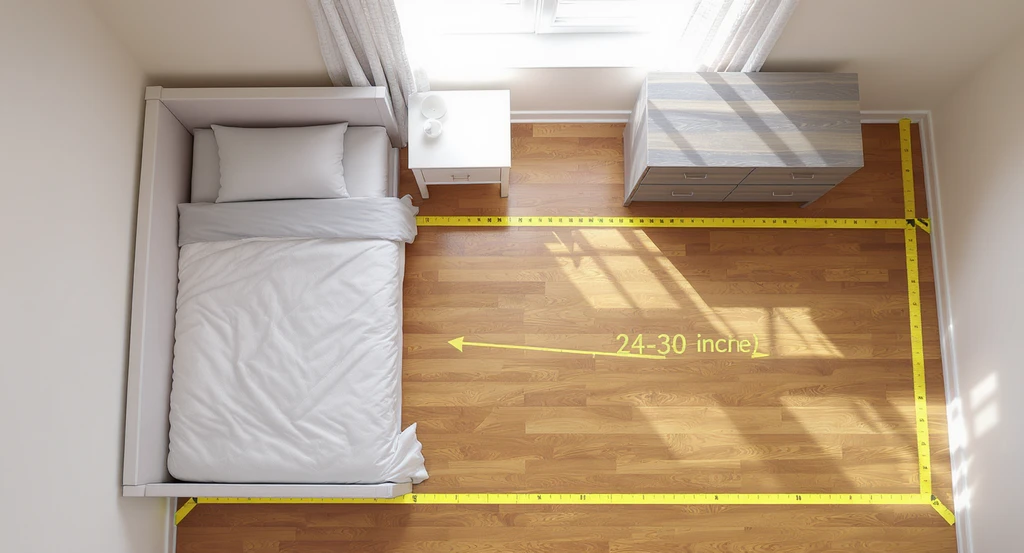
See how to visualize a queen bed in a 10x10 bedroom by applying a 24–30 inch circulation path—an essential strategy for planning bedroom design with furniture placement tools.
The first step for assessing fit is to ensure a clear 24–30 inch walking path on at least one side of the queen bed. Rooms feel restrictive when this minimum is ignored, both in practical movement and in visual openness. Using the Clear Path System—a spatial reasoning method focused on circulation lines—helps you avoid layouts that look good on paper but fail in daily use. As explored in our 10x10 bedroom layout guide, this circulation margin not only eases movement but also impacts perceived spaciousness. The trade-off: adding larger dressers or multiple nightstands frequently erodes this much-needed clearance.
-
02. Map Actual Queen Bed Dimensions to Your Floor Plan
Mark the exact 60x80 inch footprint of a queen bed on your floor with painter’s tape or string before any purchase decision. This physical outline transforms abstract numbers into a concrete frame of reference, flagging scale issues or tight spots that static measurements miss. Many assume that if a bed technically fits, comfort and flow are guaranteed; in reality, lack of hands-on mapping often leads to blocked doors, awkward corners, or surprise crowding.
-
03. Use Visualization Apps to See Real Scale and Proportion
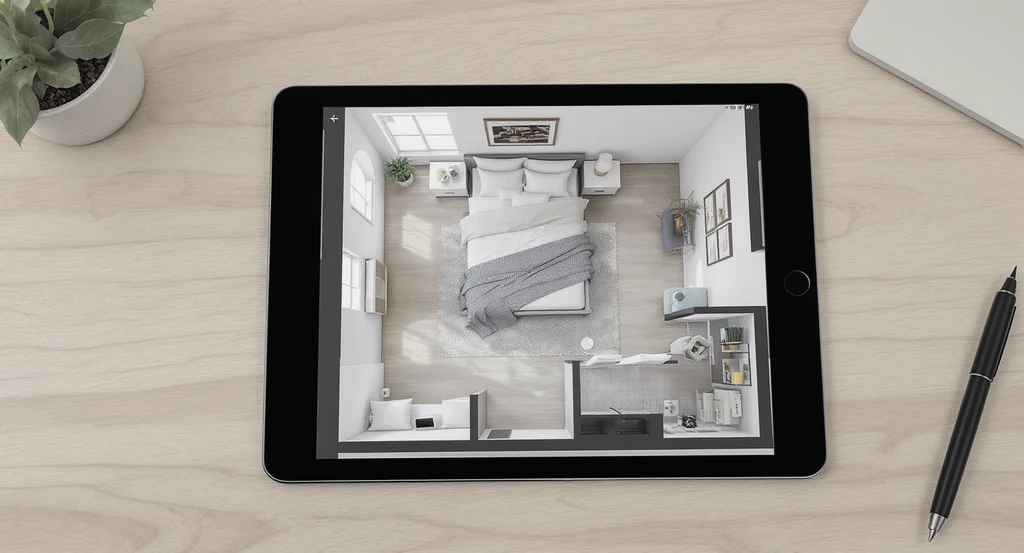
Use advanced visualization apps to see the real scale of a queen bed in a 10x10 bedroom—essential tools for picturing bedroom furniture layout. These solutions help users who can’t imagine bed size in room or need aphantasia strategies for planning bedroom design by providing the best apps to visualize furniture placement before investing.
Digital tools bridge the gap between imagination and outcome, giving you a preview of different layouts with true-to-scale furniture. Advanced apps, such as ReimagineHome, allow you to drag and drop queen beds, nightstands, and storage on a virtual floor plan, clarifying what will visually dominate the room before you invest. Visualizing layouts reduces regret probability by making sightlines, furniture scale, and traffic flow immediately clear, particularly for those who struggle with spatial imagination or aphantasia. The main trade-off is the learning curve—but the confidence payoff almost always outweighs setup time.
-
04. Consider Bed Frame Style and Visual Weight
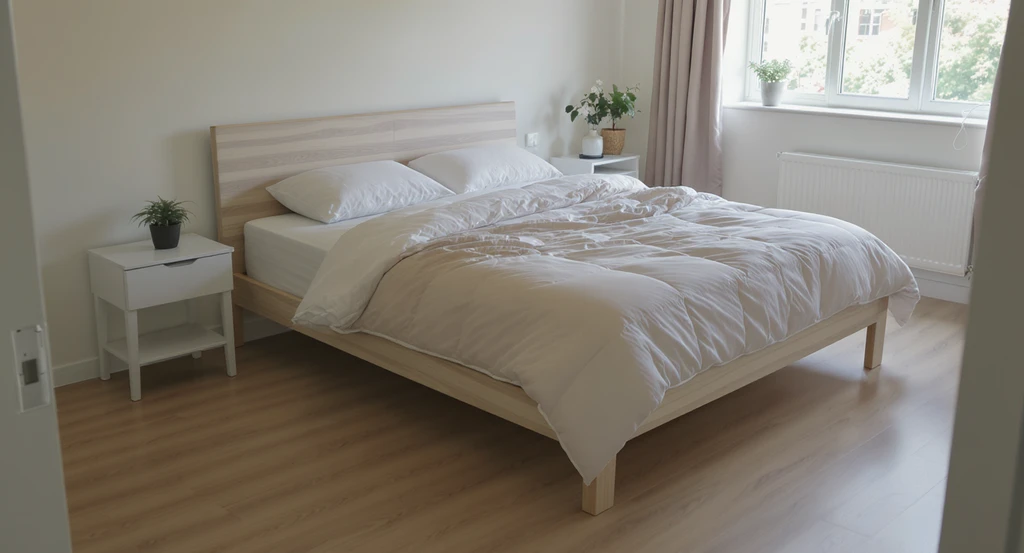
Discover how to visualize a queen bed in a 10x10 bedroom by choosing a slim bed frame style. Use these tools for picturing bedroom furniture layout and maximizing small spaces.
Opt for slim, low-profile bed frames without footboards to preserve as much visible floor space as possible. Bulky, ornate, or high headboards add psychological and visual weight that can make the entire room feel smaller, regardless of actual clearance. Lighter bed frames also reflect more light—useful in compact bedrooms where every inch of visible space matters. The key trade-off is aesthetic: some may prefer a dramatic frame, but for 10x10 rooms, minimalism typically boosts both physical and perceptual spaciousness.
-
05. Adjust Surrounding Furniture for Balanced Flow
Keep nightstands to a minimum width (ideally 10–12 inches) and swap wide dressers for vertical storage or wall shelving. According to our 2025 small bedroom comfort guide, freeing up floor area around the bed not only improves movement but also enhances natural light bounce, creating a calmer, airier effect. The trade-off: you may sacrifice some traditional storage types, but in return, the space gains both function and psychological comfort. A non-obvious insight—mounting lighting or using shelf-bridges above the bed opens up bedside space without reducing accessibility.
-
06. Preview Lighting and Color Choices for Perceptual Openness
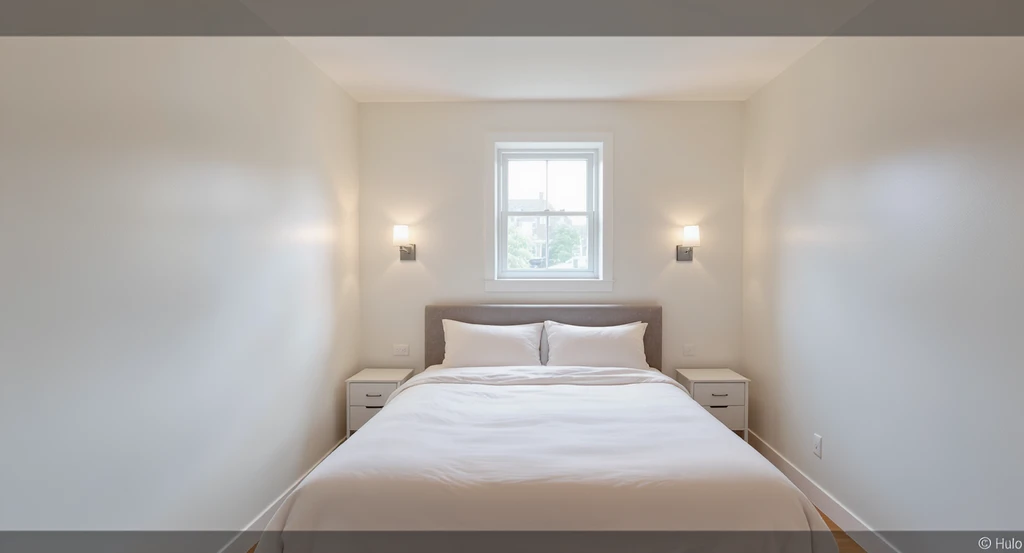
Preview how to visualize a queen bed in a 10x10 bedroom using light colors and wall-mounted lighting for perceptual openness. Explore tools for picturing bedroom furniture layout and discover aphantasia strategies for planning bedroom design with the best apps to visualize furniture placement.
Sample light, neutral color palettes and strategically positioned lighting (especially wall-mounted) to maximize reflectivity and perceived volume. As discussed in our budget bedroom staging guide, even small changes in paint and lighting can transform how large a queen bed feels in tight quarters. A low ceiling or north-facing window requires more careful planning; lighter walls and fewer dark furniture pieces visually expand the room and reduce buyer anxiety. The trade-off: visually lighter palettes might be less dramatic but almost always improve spaciousness in compact bedrooms.
-
07. Test the Full Furniture Scenario in a Virtual Render Before Committing
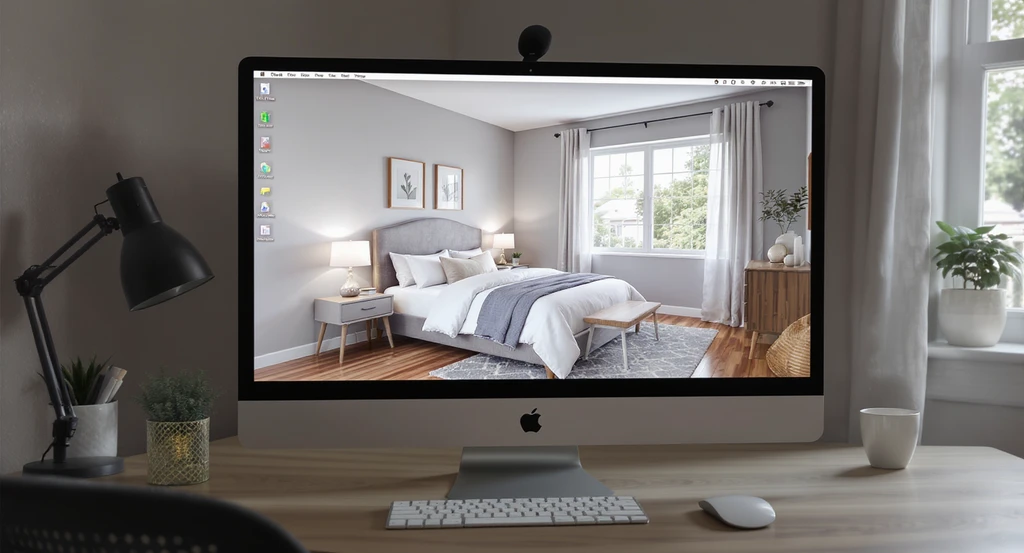
Discover how to visualize a queen bed in a 10x10 bedroom with tools for picturing bedroom furniture layout—ideal for aphantasia strategies and smart planning.
Many buyers underestimate how all pieces will coexist. Use a visual validation approach—such as uploading a photo or sketching your actual space into a tool like ReimagineHome—to preview the queen bed plus nightstands, storage, and lighting together. Before visualization, uncertainty often appears as doubts about crowding, clearance, or the ability to fit essentials. After previewing, the precise layout, space for circulation, and compatibility of styles become clear—significantly reducing the probability of regret and supporting a faster, more confident purchase decision. This is particularly vital when space and budget limitations make mistakes harder to reverse.
Visualization Scenario
Imagine standing in your empty 10x10 bedroom, painter's tape marking out a queen bed's footprint. At first, the room feels full even before furniture arrives—a common uncertainty for many buyers. Now load a photo of this space into a visualization tool, layering your ideal bed frame, slim nightstand, and vertical storage. Instantly, you see openings by the windows, clear paths on both sides, and how natural light plays across lighter bedding and walls. The intimidating unknown shifts to confidence—you can picture everything fitting and moving comfortably, well before any purchase.
Frequently Asked Questions
How can I tell if a queen bed will fit in my 10x10 room?
Start by marking out a 60x80 inch area on your floor. Ensure there's at least 18–24 inches of clear space around key pathways. Use digital visualization tools for added clarity.
Which bed frames work best for small bedrooms?
Choose slim, low-profile frames or platform beds without footboards. Avoid thick or ornate headboards, as they add visual bulk and reduce perceived space in tight rooms.
What if I can't imagine bed sizes or layouts?
Visualization apps like ReimagineHome let you preview true-to-scale furniture. This helps anyone—especially those with aphantasia—plan bedroom design before committing.