11 Ways AI Transforms Home Design Decisions from Guesswork to Clarity
TL;DR
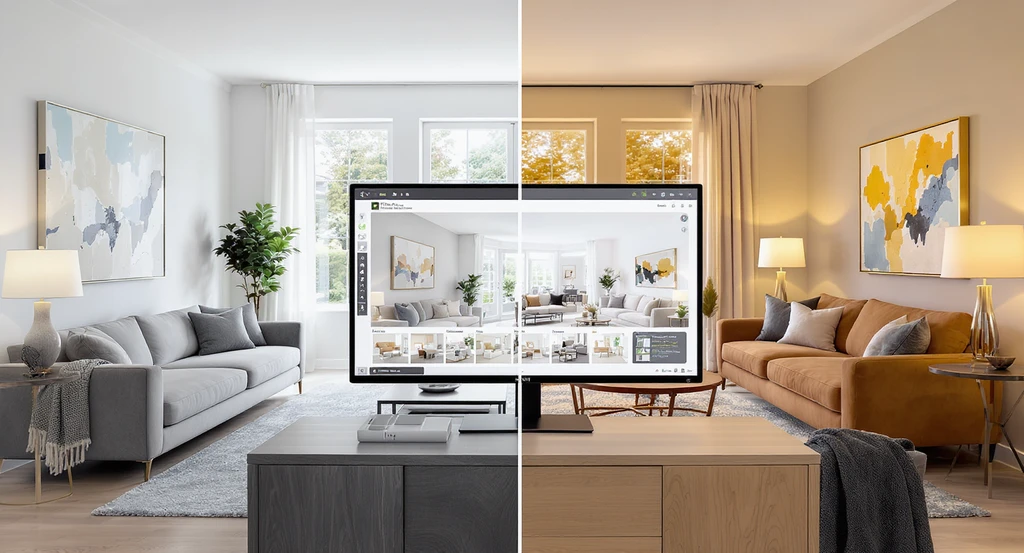
AI empowers homeowners to preview design decisions realistically, compare styles easily, and plan improvements with confidence. Today, you can visualize paint, furniture, layouts, and staging in your actual room, reducing regret and streamlining choices for everyone from DIYers to real estate pros.
How AI Removes Uncertainty from Home Design Decisions
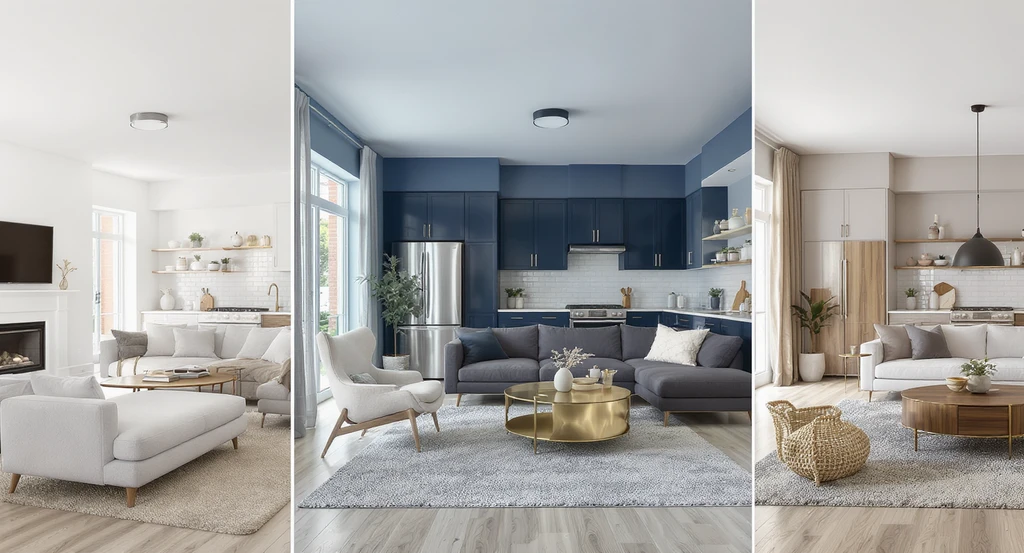
AI visualization for interior redesign transforms home design decisions by previewing wall colors, kitchen finishes, and staging styles in realistic, side-by-side comparisons—empowering home sellers or buyers to confidently compare interior design styles with AI tools before making decisions.
If you're struggling to decide between wall colors, kitchen finishes, or staging styles, the simple answer is this: AI-driven visualization is the clearest way to preview changes before you commit. Instead of hoping for the best, you can see options tailored to your own space, making every design choice easier and more accurate.
For years, home design decisions relied on imagination, inspiration photos, or expert advice without real certainty about how a choice would work in your actual room. Now, realistic AI visualization gives homeowners, renters, and property professionals a practical way to preview, compare, and refine ideas, so you can move forward with confidence and fewer regrets.
-
01. Relying on Imagination Alone Led to Unpredictable Outcomes
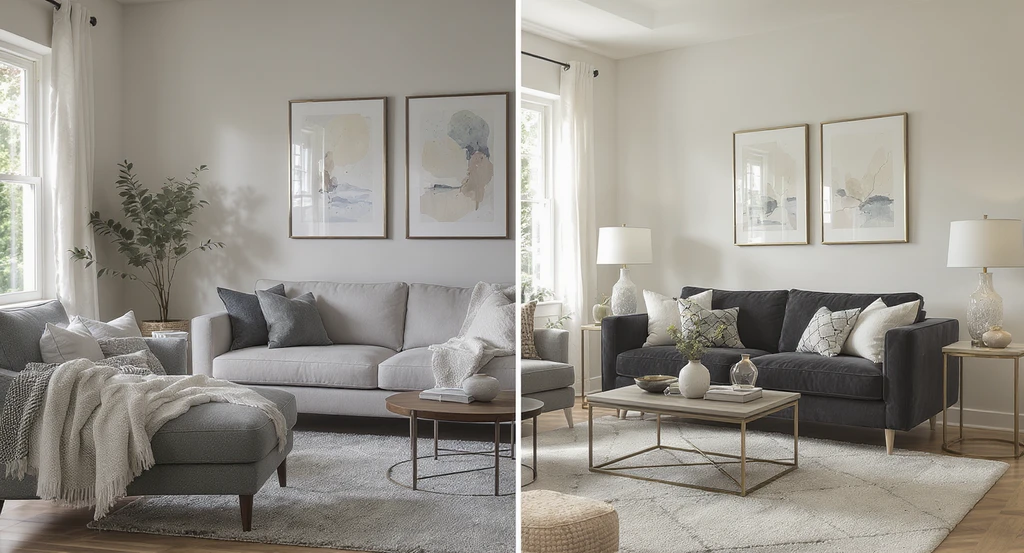
See how AI transforms home design decisions: a side-by-side look at imagination-based and AI visualization for interior redesign highlights the clarity and confidence enabled by virtual staging and AI tools.
Before the rise of AI visualization, most homeowners made design decisions by collecting inspiration images and trying to mentally picture how those ideas would translate to their unique rooms. This approach was unreliable because differences in lighting, room size, ceiling height, and window placement often caused results to disappoint.
To correct this, seeing accurate previews of design options in your actual space is essential. As we discussed in our look at transforming low-energy rooms with AI visualization, technology now bridges the gap between creative ideas and real-world fit, making decisions easier and more grounded in reality.
-
02. Style Comparisons No Longer Require Guesswork
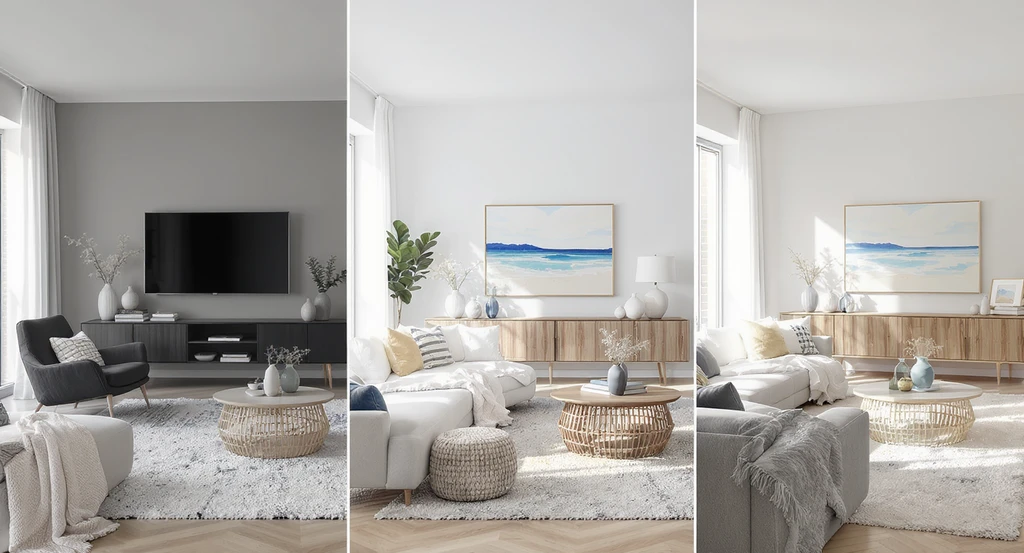
AI tools for home design enable homeowners to compare interior design styles side-by-side using their own space, providing clear, realistic visual previews and transforming how design decisions are made.
Homeowners often hesitate between different design styles, modern, coastal, Scandinavian, because it's hard to visualize the impact in their own space. Relying on mood boards or generic room snapshots doesn't account for your architecture or existing finishes.
AI tools allow you to create side-by-side style previews using photos of your own room. This structured comparison makes it easy to identify which look genuinely works, often surprising families with results that weren't expected at first. For a practical approach, try generating at least three distinct style options before making a final decision.
-
03. Renovation Planning Is Far Less Stressful with Visual Previews
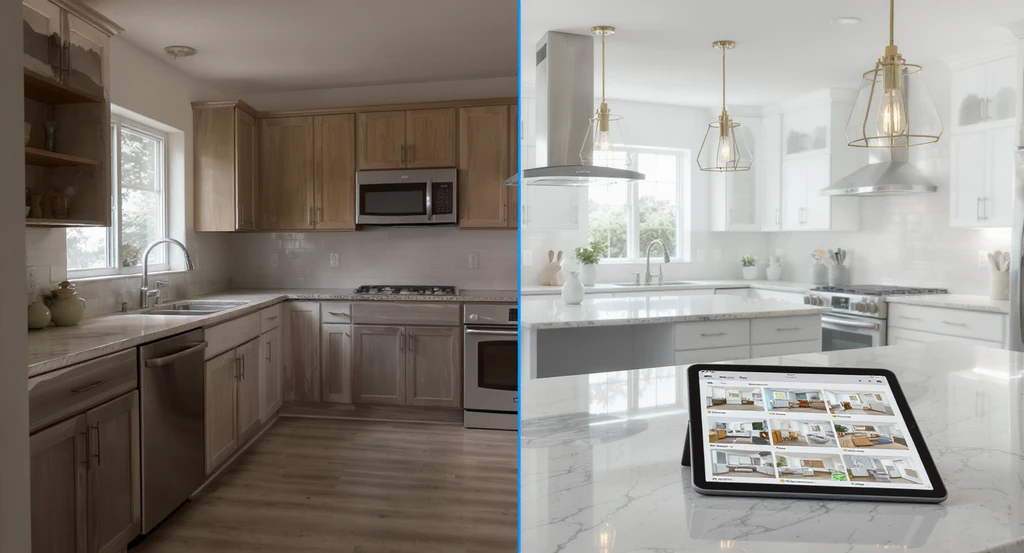
See how AI transforms home design decisions with realistic visual previews—compare interior design styles, layouts, and finishes before renovations.
Major home improvements like kitchen remodels or bathroom overhauls used to involve risky decisions: Would that island fit? Would new cabinets make the space feel cramped? Guesswork led to renovation regret and extra costs.
By using AI to visualize multiple layouts, finishes, and configurations, families can collaboratively review solutions before spending on construction. Step-by-step improvement checklists, like previewing circulation space, daylight access, and fixture scale, help avoid common mistakes and increase project satisfaction. For further tips on making confident renovation decisions, see our real case study on visual planning.
-
04. Paint and Color Choices Are More Reliable
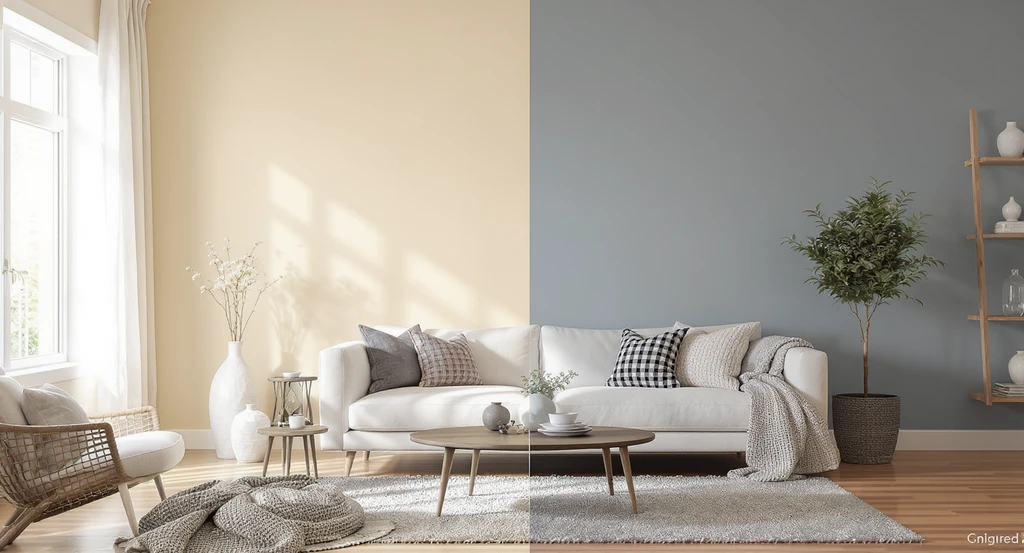
Previewing multiple paint colors with AI visualization tools allows homeowners to confidently choose the best shade, improving home design decisions.
Paint is among the simplest yet most fraught decisions in home design. Tiny swatches rarely predict how an entire room will look under actual lighting conditions or with your furniture.
AI-powered visualization allows you to preview full-wall paint colors and see their effect in the context of existing floors, windows, and furnishings. To avoid repainting, evaluate at least two shades for each wall, testing brightness, undertone, and contrast in both daylight and evening. This makes color choices both practical and regret-free.
-
05. Furniture Shopping Is Guided by Scaled Visuals, Not Just Tape Measures
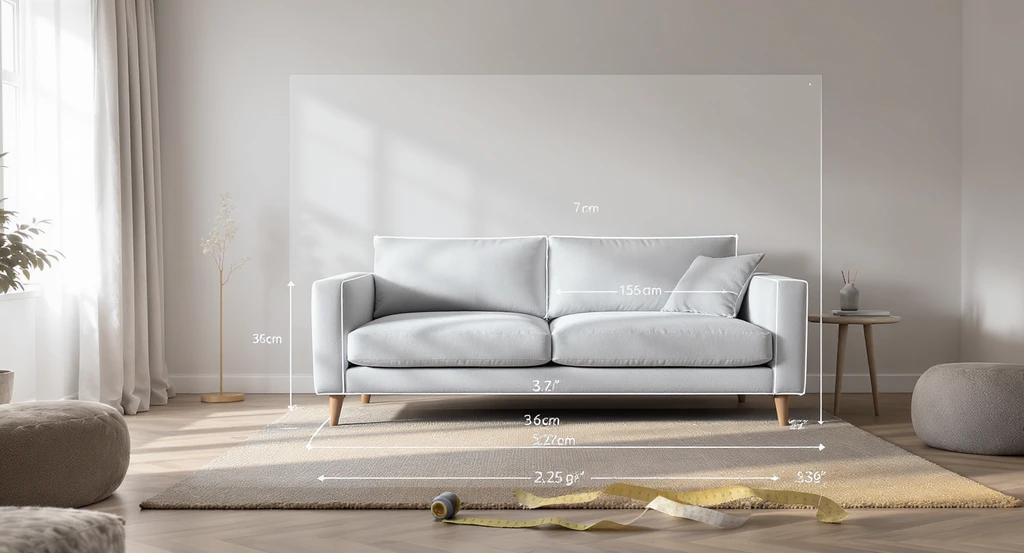
AI visualization for interior redesign showcases how AI tools for confident furniture shopping let homeowners preview true-to-scale sofas, ensuring style and fit before purchase.
Online furniture purchasing has long carried a risk of scale mistakes: sofas arriving too large, tables looking lost, or items clashing with floors. Measurements alone can't guarantee visual fit or style harmony.
Virtual placement using AI lets you see how a piece, at its true proportions, will interact with your room’s dimensions and other features. As highlighted in our article on making confident furniture purchases using visualization tools, previewing in context is highly effective for avoiding both scaling and style errors.
-
06. You Can Experiment Freely Before Finalizing Designs
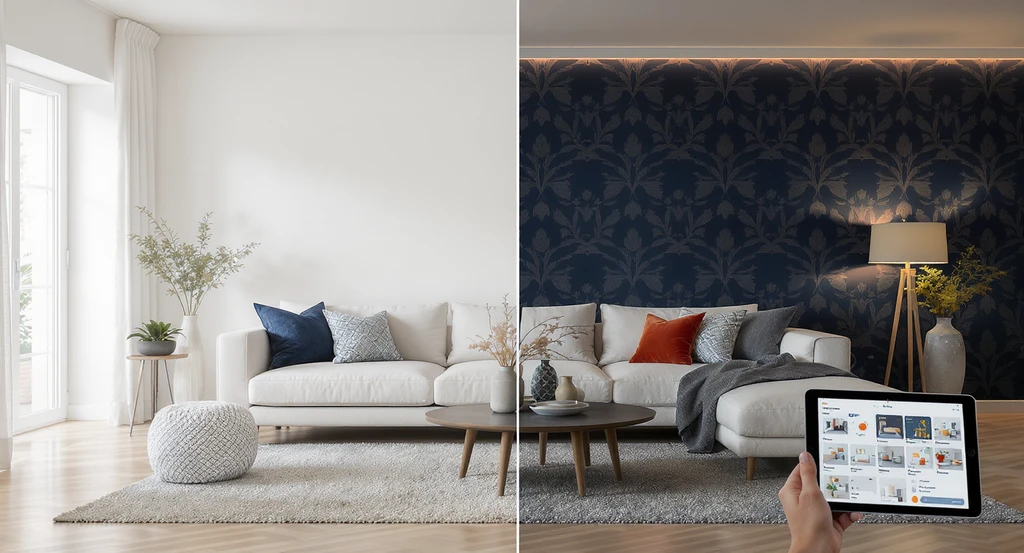
AI visualization for interior redesign empowers homeowners to experiment freely with interior design styles, from safe choices to dramatic, bold statements—demonstrating how AI transforms home design decisions and removes hesitation for confident, creative outcomes.
Many homeowners steer clear of bold ideas (like dark accent walls or dramatic wallpaper) for fear of costly mistakes. This leads to safer but uninspired results.
AI visualization lets you try out dramatic changes without commitment. Test unexpected paint, lighting, or feature elements and see them in your actual room; if it doesn't work, revise until you find an option that fits both taste and context. This reduces hesitation and supports more creative, yet grounded, outcomes.
-
07. Decision-Making Becomes Collaborative and Transparent
Family design decisions used to involve long, unresolved debates about individual preferences, especially when trying to imagine results. Without a shared visual, it was difficult to build consensus.
Today, AI-generated renderings provide a common reference, allowing everyone to review and discuss options visually. In practical terms, this means faster agreement, everyone can see the same direct comparison and give informed feedback. This method is particularly useful for layout changes or style overhauls.
-
08. Home Staging and Listing Preparation Are Streamlined
Preparing a property for sale has always involved staged guesswork, will neutral decor attract more buyers, or is a family-friendly setting better? Without a preview, the staging investment was risky.
AI-powered virtual staging allows sellers and agents to see multiple presentation styles on the same room photo. This approach helps decide what will resonate with target buyers and prevents wasted effort on ineffective setups. For example, experiment with both minimalist and luxury previews before setting up; this can increase appeal and listing performance.
-
09. Empty Spaces Are No Longer a Visual Challenge
Empty rooms are hard for buyers, and even owners, to evaluate. They often seem smaller and lack functional clarity in photos, leading to missed potential or overlooked usability.
With AI visualization, vacant spaces can be virtually furnished or styled for different uses, such as guest bedrooms, home offices, or play areas. This technique demonstrates the space's possibilities and improves both planning and marketing impact.
-
10. Early Planning Means Improved Project Outcomes
Many design projects failed in the past because decisions were rushed and only minor planning was done upfront. As a result, choices were made piecemeal and often didn’t work together.
AI tools are now part of a structured planning routine, helping people evaluate upgrades, coordinate finishes, and build a stepwise improvement roadmap before purchase or renovation starts. As detailed in our guide on confident home renovation planning, this leads to more harmonious, regret-free results.
-
11. AI Makes Interior Design Accessible to More People
Professional design services can be a luxury, but AI has opened up high-quality visualization to first-time homeowners, renters, DIYers, and small investors. Rather than relying on trial and error, more people can explore renovation, decorating, and staging ideas confidently and within their budgets.
For example, even small-space gardeners can benefit from tailored visual planning, as discussed in our blog on adapting soil solutions for indoor gardens. The principle holds true across all home improvement tasks: previewing ideas leads to better, clearer design decisions for everyone involved.
Frequently Asked Questions
Is AI replacing interior designers?
No. AI visualization is a planning tool that streamlines decision-making. Professional designers remain vital for complex planning, custom solutions, and deep expertise.
Does AI visualization really work for all room sizes?
Yes. Whether you have a studio or a large home, AI can help preview layouts, colors, or staging, increasing clarity for every type of space.
Should I rely only on AI to make major renovation choices?
AI is best as a visualization and planning guide. Final decisions should consider budget, materials, and professional advice to ensure real-world success.
Can these tools help for furniture shopping?
Yes. By virtually placing scaled furniture in your room, AI greatly reduces the risk of purchasing items that do not fit or match. Learn more about visualizing furniture purchases with AI.
AI Empowers Smarter, More Confident Design Decisions
Artificial intelligence is not about replacing creativity; it’s about empowering anyone to make better, data-informed choices at home. By using clear visualization, structured planning, and collaborative tools, design projects become less about hope and more about practical results. As more people adopt these AI-driven strategies, the home design process will continue to get easier, more accurate, and less stressful for all.