Small Room Design for Therapy Spaces: Real Staging Under $5000
TL;DR
See how a challenging small therapy room was staged for comfort and privacy on a $5000 budget. Every choice, from ergonomic seating to neutral art, serves the client experience and long-term durability.
A Calming Private Practice Room, Reimagined
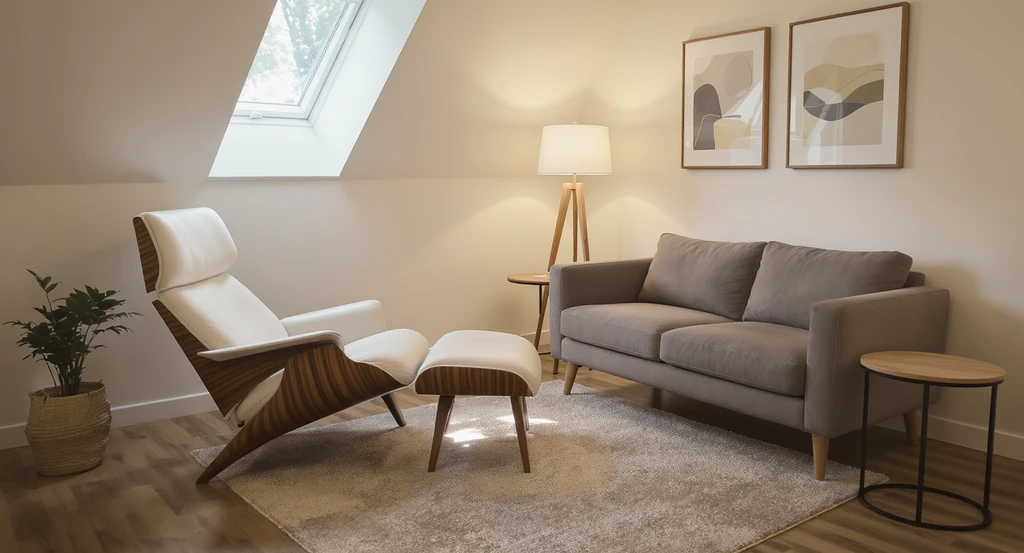
How to choose furniture for small therapy rooms: A staged triangle-shaped therapy space demonstrates how the best chair for therapist back support, smart rug and lamp sizing, and careful furniture placement create comfort and warmth, even in an oddly shaped room.
Transforming a small, triangle-shaped room into a warm, modern therapy space required a careful mix of new and preserved elements. Working with a $5000 budget, this room moved from cluttered and uneven to an inviting, neutral retreat.
The result feels open and cozy despite the footprint, with every piece—from the sculptural lounge chair to the understated art—chosen for comfort, flexibility, and longevity. This project offers a grounded look at how to choose furniture for small therapy rooms without losing sight of design or client needs.
-
Architectural Baseline: Embracing the Odd Shape
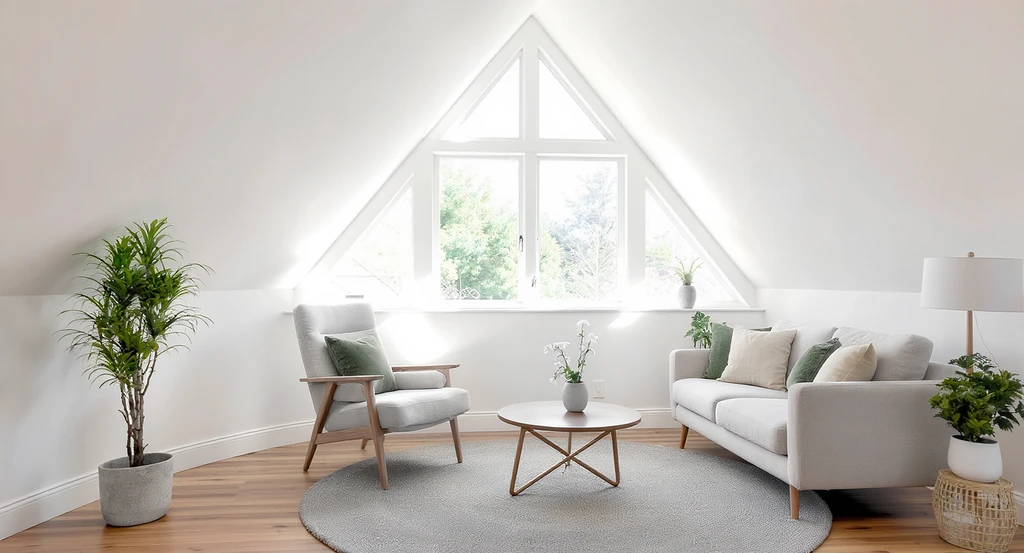
This triangle-shaped therapy room demonstrates how to choose furniture for small therapy rooms—using a round rug, best chair for therapist back support, and careful couch placement to optimize flow and make odd shapes welcoming.
This project began with a non-rectilinear, triangle-shaped room in need of both clarity and calm. Large windows on two sides meant natural light but also meant wall space for furniture was limited. The main usable area spanned approximately 10 by 13 feet, narrowing to one side.
The triangle footprint can make furniture placement tricky, often forcing pieces into awkward corners. Design limitations like these are ideal for layout validation tools—REimagineHome AI played a crucial role in previewing scale, clearances, and avoiding crowding before a single item was ordered.
Retaining the original round rug and lamp grounded the design, allowing the budget to be directed toward just a handful of core, high-impact upgrades. As our guide on flow-first layouts for small spaces notes, circulation and visual openness outweigh bulky furniture, especially in therapy environments.
-
Budget Choices: Where We Spent and Saved
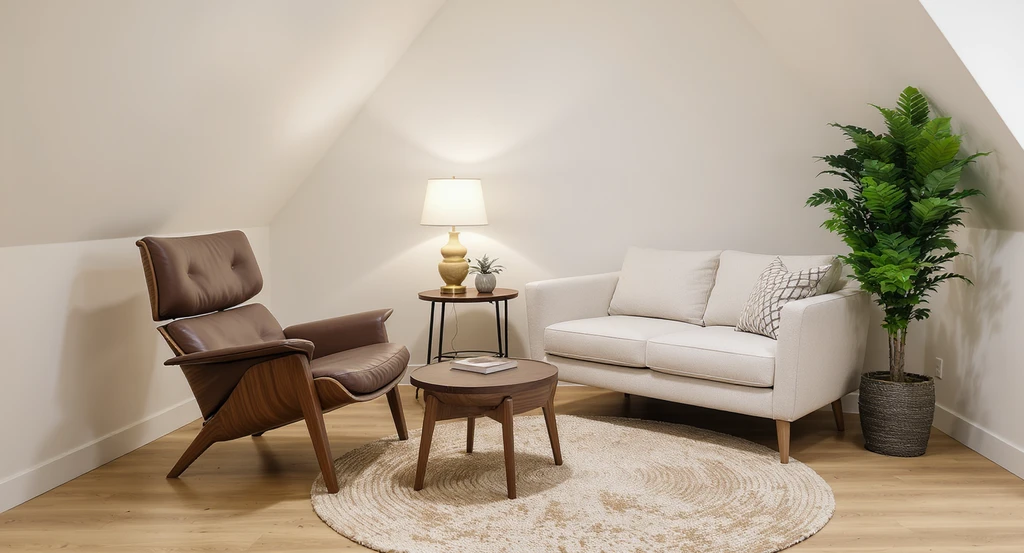
This realistic therapy room highlights how to choose furniture for small therapy rooms, showing best chair for therapist back support and strategic furniture placement. Use of a sculptural chair, neutral loveseat, and thoughtful details demonstrates how to fit a couch in an odd shaped room, optimize a limited budget, and create a calming, functional therapy space.
With a clear $5000 ceiling, anchoring the budget in the therapist's chair and client loveseat was essential. The sculptural lounge chair—leather-upholstered and walnut-framed—was selected for both ergonomic back support and visual character ($1821.98). This was the highest-costing item, chosen for its impact and comfort during long sessions, as recommended in best chair for therapist back support discussions.
The neutral upholstered loveseat ($1472.88) offered enough width for couples while keeping a low profile, helping the space feel open. Selecting compact, clean-lined seating helped control both visual and physical clutter.
By retaining the original lamp and rug, savings funneled into a real wood side table ($369.99), a tall faux plant ($249.99), and framed botanical prints ($229.98). These details provided warmth and grounded the room without jeopardizing major anchor pieces, echoing advice from our finishing touches guide—right-sized art and greenery lift a space without overwhelming it.
Material choices, durable upholstery, and resilient surface finishes ensured longevity, stretching every dollar and delaying future replacement costs.
-
Material and Flexibility: Durable, Warm, and Adaptable
For therapy rooms, every material faces frequent use and high standards for comfort. The lounge chair combines hardwood and top-grain leather—resisting wear and supporting shifting postures, important for therapist ergonomics over long hours. Walnut wood provides visual weight and mid-century warmth, preventing a clinical feel.
The loveseat's tightly woven synthetic blend ensures stains don't become permanent, while a neutral beige hue maintains the calming palette. The compact footfall allows for walk-around space, even when the door opens or clients arrive as a pair.
The solid walnut side table bridges warmth and practicality, offering a home for tissues, tea, or notepads. Its small footprint allows easy repositioning as layouts evolve. The tall faux plant and framed prints add height, absorbing sound and softening hard edges—a strategy explored more in how to warm up minimalist rooms. By using resilient faux greenery (no shedding or maintenance) and framed art behind glass, the room stays easy to maintain.
-
Fitting Furniture to Odd-Shaped Rooms: Placement Decisions
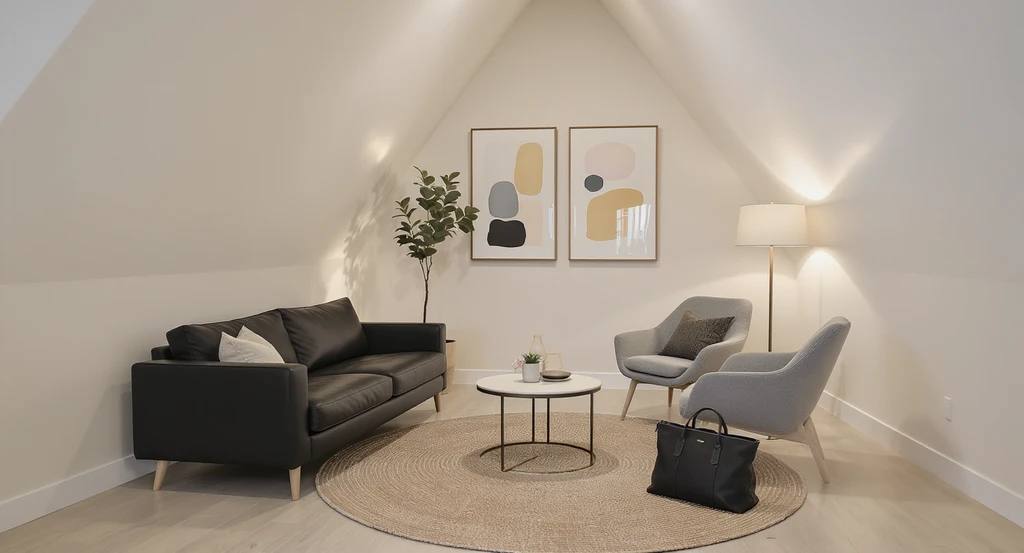
How to choose furniture for small therapy rooms: Fitting a loveseat and best chair for therapist back support in an odd shaped room maximizes placement and comfort. Thoughtful rug and lamp choices enhance therapy room feel and function.
Therapy spaces thrive on nonverbal cues—clear sightlines, safe perimeters, and flexible seating arrangements. In this triangular room, furniture placement centered on the longest wall for the loveseat, with the sculptural chair occupying the former black bag's position. This created both conversational intimacy and maximized the scant floor area.
The lamp and side table clustered between seating to form a cozy, well-lit zone. Art and a potted plant flanked the seating, balancing vertical lines without eating into precious walkways. The round rug, already in place, further helped visually unify angled furniture lines, a trick highlighted in advice on how to fit a couch in an odd shaped room and our room-by-room size guide.
Test fits in REimagineHome AI validated clearances before anything shipped, demonstrating that even small changes—like swapping a window for a mirror or shuffling art placement—can preserve function and calm in the smallest footprints.
-
Furniture and Decor Used in This Design
Mid-century leather and walnut lounge chair, sculptural and ergonomic
Visualization Scenario
Imagine easing into a walnut-framed lounge chair, daylight filtering through sheer curtains—quiet, comforting, every detail tailored to let conversations flow free of distraction.
FAQ: Staging Small Therapy Spaces
How does furniture placement affect a therapy room's feel?
Placement determines how safe, open, or intimate the room feels—especially in a small, angled space. Group core seats for conversation and ensure clear sightlines to the door.
What's the best chair for therapist back support in a long session?
Look for lounge chairs with ergonomic lumbar support, real wood frames, and dense, supportive foam or leather upholstery. Match the seat height to your working position.
How do I fit a loveseat or couch into an odd-shaped room?
Choose compact, clean lines and place against the longest wall. Round rugs help unify irregular layouts. Previewing options virtually, as with REimagineHome AI, avoids costly placement mistakes.
What should I know about rug and lamp sizing for therapy rooms?
Rugs should anchor the seating zone—round shapes (like here) work well for angled rooms. Lamps should be reachable from seats without cluttering walkways.
Balanced, Lasting Comfort for Small Practice Rooms
This staging project proves that with clear priorities—comfort, durability, visual warmth—a challenging small therapy room can honestly serve its purpose within a moderate budget. By anchoring the spend in ergonomic, timeless seating and saving on supporting decor, the space delivers both function and sanctuary to clients and practitioners.
For more real-world small space layouts and material strategies, explore our other visual design walkthroughs on REimagineHome.ai.