Dining Room Accent Walls: Dramatic Color, Subtle Texture, and Visual Impact
TL;DR
A dark accent wall in the dining room can instantly elevate the space, introducing depth and sophistication while creating a memorable visual anchor. The success of this design move relies on thoughtful coordination—pairing color with lighting, balancing wall treatments with art and furnishings, and embracing a tailored sense of drama that suits your home’s style.
Why Dining Rooms Come Alive With an Accent Wall
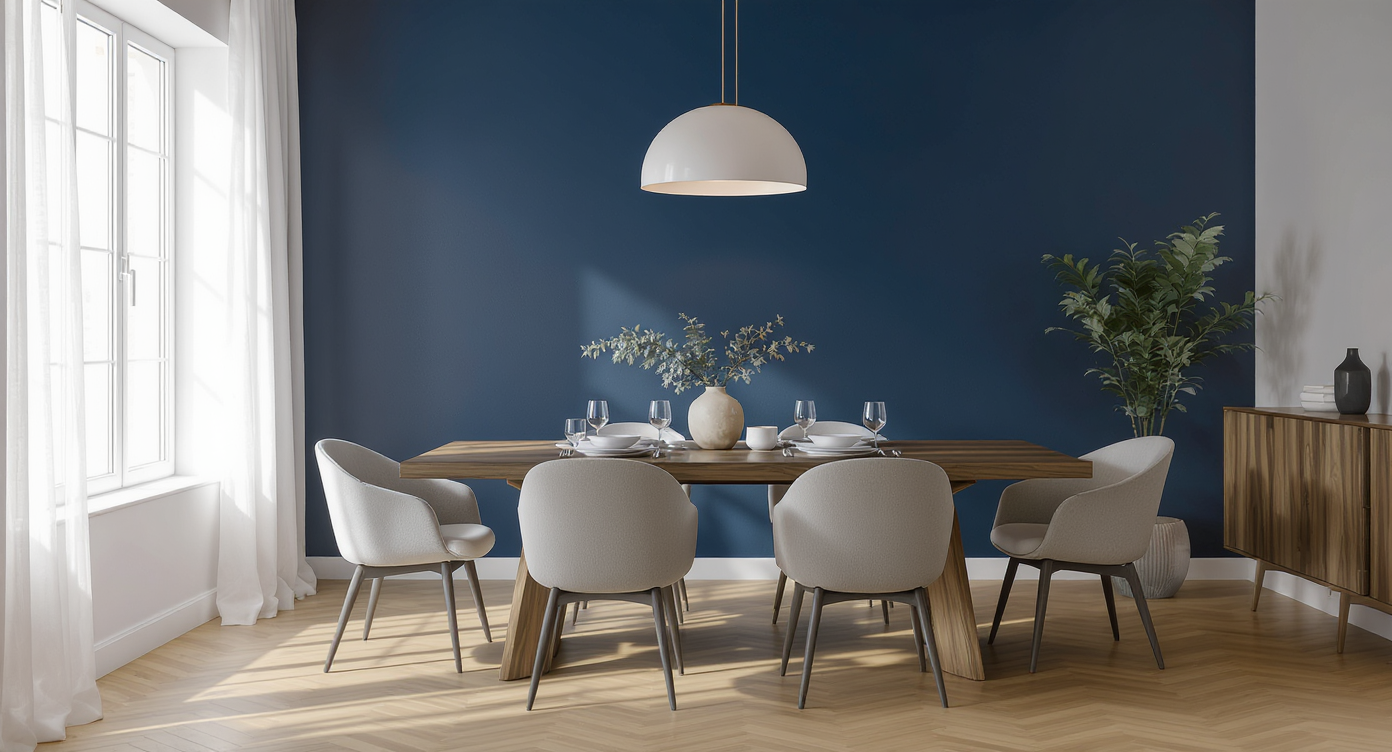
A modern dining room with a dramatic navy accent wall and sophisticated décor, showcasing how bold color creates a memorable focal point.
Dining rooms have always held a dual purpose: they gather people for daily meals and host occasions worth celebrating. The right design choices can shift a dining room from a pass-through space to one where guests linger and memories are made. One of the most impactful yet approachable strategies? The accent wall—a statement of color, texture, or material that sets the tone for the entire room. Designers often choose accent walls to break up monotony, anchor the furniture, and showcase art or statement lighting. In recent years, bolder hues, especially rich navies and chocolate charcoals, have appeared with increasing frequency. But the effect goes beyond color. It’s the way light interacts with paint finishes, art, mirrors, and millwork that brings a dining room to life. According to expert advice on layering lighting, choosing rugs, and adding art, a polished dining area often starts with a transformative focal point.
-
Creating Definition and Drama With Color
A matte navy accent wall adds depth and drama to a dining room, making metallic accents and lighting fixtures the visual focal points.
A well-chosen dark accent wall gives a dining room an immediate sense of depth. From classic navy to deep olive and near-black, these colors enrich the volume of the room and allow other elements—such as metallic mirrors, lighting fixtures, and artwork—to take center stage. Dark walls do not inherently make a space feel smaller. Instead, they inspire a cocooning effect, enveloping the table in warmth for intimate dinners, while remaining sophisticated during lively gatherings. For best results, consider the orientation of your windows and how natural light will play across the surface. A north-facing room can benefit from a softer, less saturated dark, while sun-drenched spaces handle deep tones with ease. Matte, eggshell, or velvety finishes often yield the most inviting texture. Learning which paint and wall treatments affect light and mood is invaluable when choosing your palette.
Expert Insight
Not long ago, a couple in a compact city apartment wanted to reinvigorate their rarely-used dining nook. The space was defined by beige walls and lacked visual focus. Rather than starting with furnishings, they painted the main wall in a smoky indigo, then added a vintage mirror and a branching pendant. Within weeks, the room became the go-to setting for working lunches by day and candlelit dinners by night. Friends began to compliment not the wall color itself, but the feeling it created—it felt intentional, inviting, and just dramatic enough to spark conversation.
-
Balancing Bold Walls With Furnishings and Decor
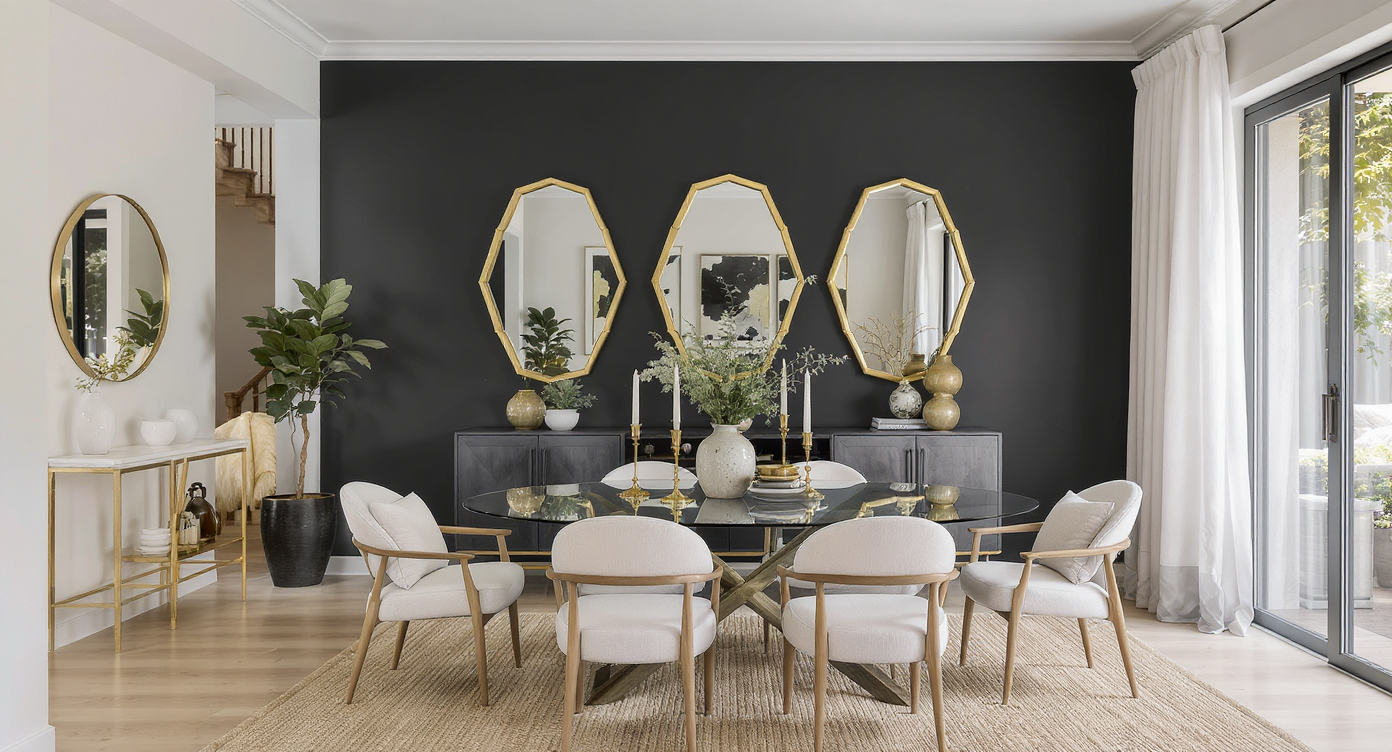
A deep charcoal accent wall balances with glass, wood, brass, and mirrors, showing how layering textures and finishes enlivens a dining room.
The most praised dining rooms with accent walls achieve more than a color pop—they choreograph every layer, from the chairs to the centerpiece. In spaces where dark walls set the backdrop, reflective elements like glass, mirrors, or metallic finishes instantly break up the visual weight without becoming overpowering. Even a single large piece of art, or an arrangement of geometric mirrors, draws the eye and offers contrast. Textures play a crucial role as well. For example, pairing a painted wall with natural wood, woven rugs, or brass details creates interest without clutter. Designers like to explore depth through subtly varied shapes, such as tall candlesticks or grouped ceramics along the sideboard. Clients often notice how these choices echo throughout other areas, like stairwells or entryways adjacent to the dining room, creating a narrative and flow. Find further details on balancing finishes and textures in dining layouts and decor approaches.
-
The Power of Visual Transformation: Paints, Texture, and Lighting
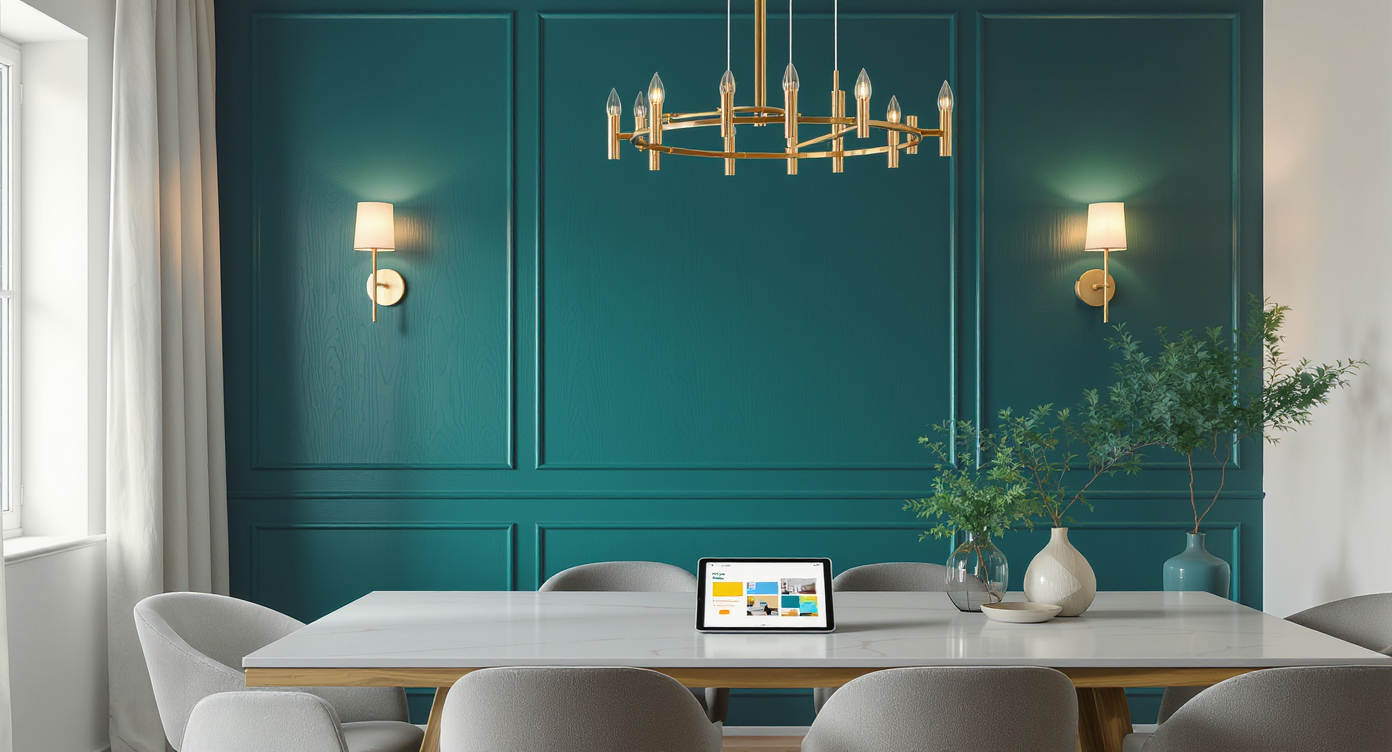
A dining room showcases a textured teal accent wall, moody lighting, and a tablet displaying digital accent wall preview options.
Paint alone is powerful, but the impact grows when paired with deliberate lighting and tactile wall treatments. Sconces and chandeliers can create dramatic shadow play, softening strong colors and spotlighting features. Even in otherwise neutral rooms, a single wall in a saturated hue or adorned with paneling becomes the visual pulse. Layering color with texture is on the rise for 2026, with many homeowners turning to digital preview tools to see options before committing. Technologies now let you preview accent walls in multiple placements and finishes using a photo of your actual space—making it easier than ever to test bold ideas without hesitation. Previewing bold accent walls digitally, such as with resources highlighted in tools for digital repaint and accent color testing, empowers you to make choices confidently and avoid costly do-overs.
-
Anecdote: When One Wall Changes Everything
Not long ago, a couple in a compact city apartment wanted to reinvigorate their rarely-used dining nook. The space was defined by beige walls and lacked visual focus. Rather than starting with furnishings, they painted the main wall in a smoky indigo, then added a vintage mirror and a branching pendant. Within weeks, the room became the go-to setting for working lunches by day and candlelit dinners by night. Friends began to compliment not the wall color itself, but the feeling it created—it felt intentional, inviting, and just dramatic enough to spark conversation.
-
Common Mistakes to Avoid
Even striking accent walls can misfire if other elements compete for attention. One common pitfall is adding too many statement pieces—mirrors, art, and wall sculptures—alongside bold paint, resulting in visual clutter. Another is ignoring how the color shifts with changing daylight or artificial lighting. Additionally, it’s tempting to choose accent chairs or drapery that echo the same saturated color, but a lighter or textural contrast tends to keep the mood airy and layered. Finally, skipping small sample tests of paint can lead to costly repaints, especially with deeper colors. Many designers suggest painting a large swatch and living with it through day and night before deciding.
-
Tips and Expert Insights
Start with the wall most naturally positioned to become a focal point—often the wall behind the table. Experiment with various shades by taping up paint cards and watching them under morning, afternoon, and evening light. If using a dark wall, introduce lighter touches through a pale rug, metallic accessories, or glass pendants. Designers generally advise balancing a single statement wall with more muted treatments elsewhere. Echoing materials—such as repeating a brass finish from sconces in your table’s centerpiece—can tie everything together. For open-plan spaces, a well-coordinated accent wall helps visually zone the dining area without physical divisions. For more tailored direction, explore deep-dive advice on wall paints and treatments.
-
How to Use This in Your Next Designs
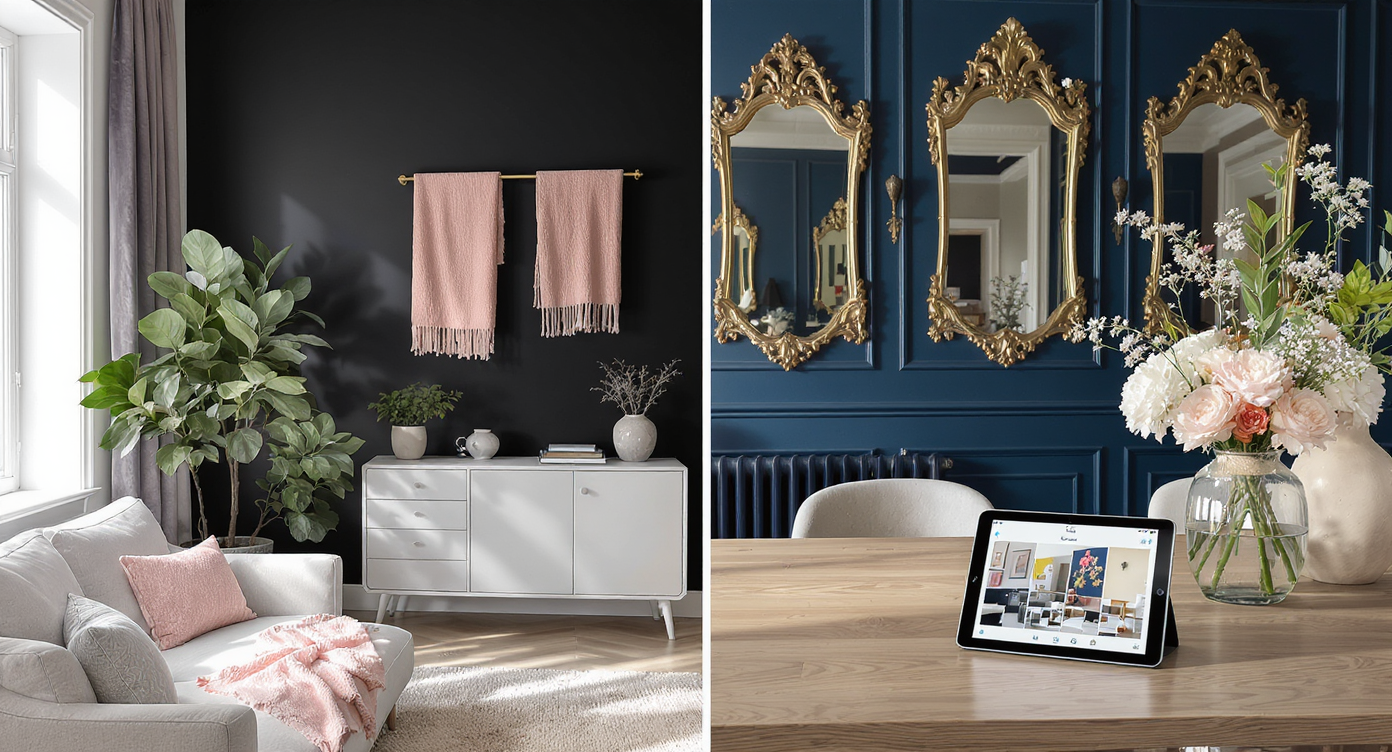
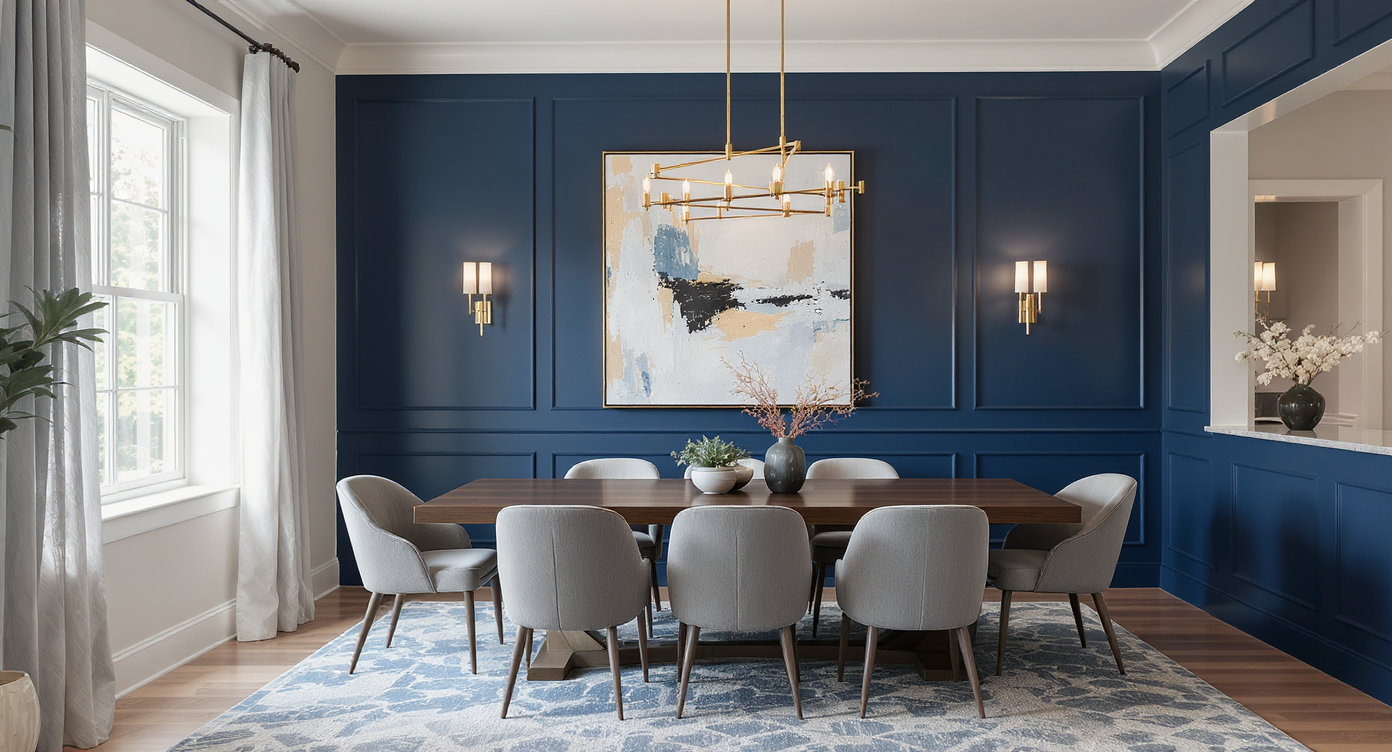
Visualizing two dining rooms: one with a matte black accent wall and blush details, the other featuring navy paneling and gold-framed mirrors.
Begin by identifying what role your dining room plays. For everyday breakfasts, a deep color that feels comforting in natural light can turn a practical space into a highlight. Entertaining regularly? Allow a dramatic wall to serve as a backdrop for bold florals or rotating art. Picture a minimalist apartment with a matte black accent wall softened by blush textiles and greenery—just as vivid as a traditional space with classic navy paneling and gold-framed mirrors. If you are hesitant to commit, digital visualization lets you see changes instantly. Upload a photo and test different paint colors, sheens, and accent locations. Making the transformation virtually first lets you sidestep paint regrets and quickly uncover your ideal combination of color, lighting, and layout.
-
Visualization: From Blank Wall to Dining Showpiece
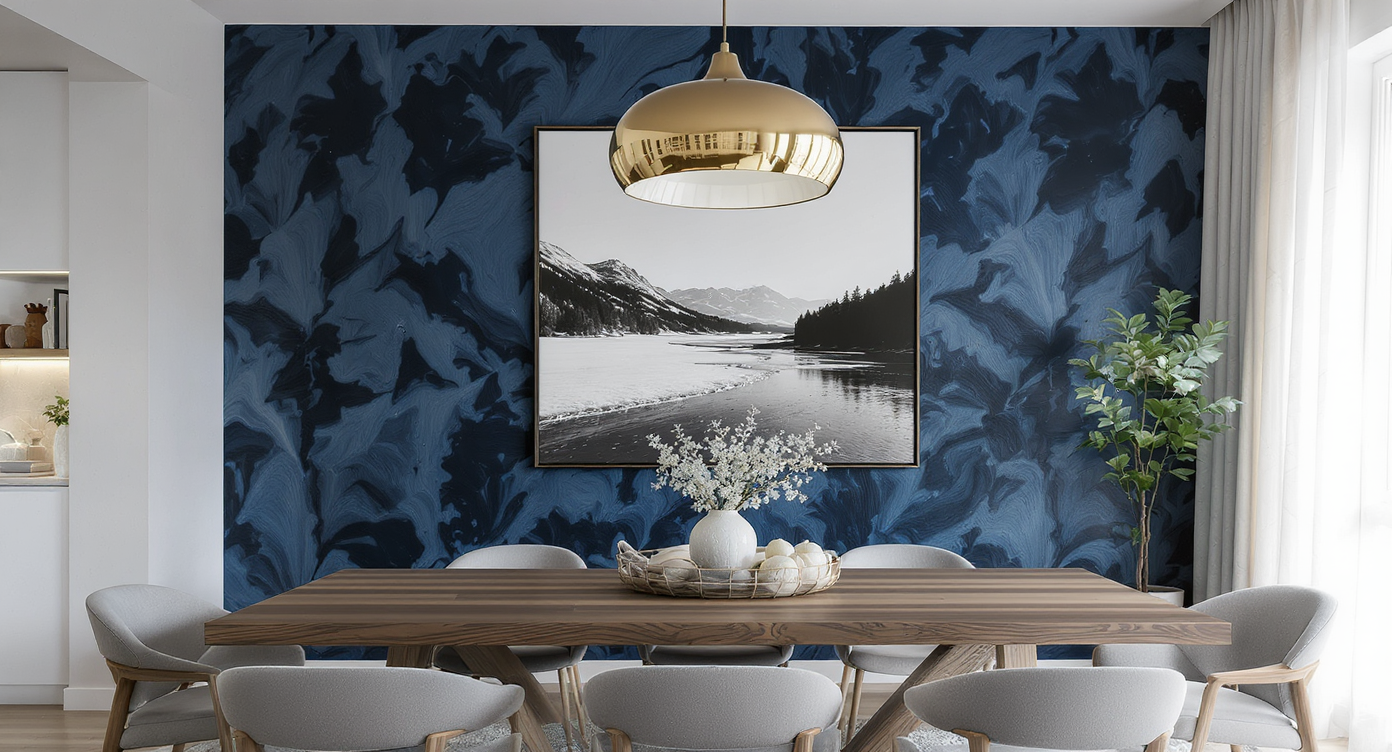
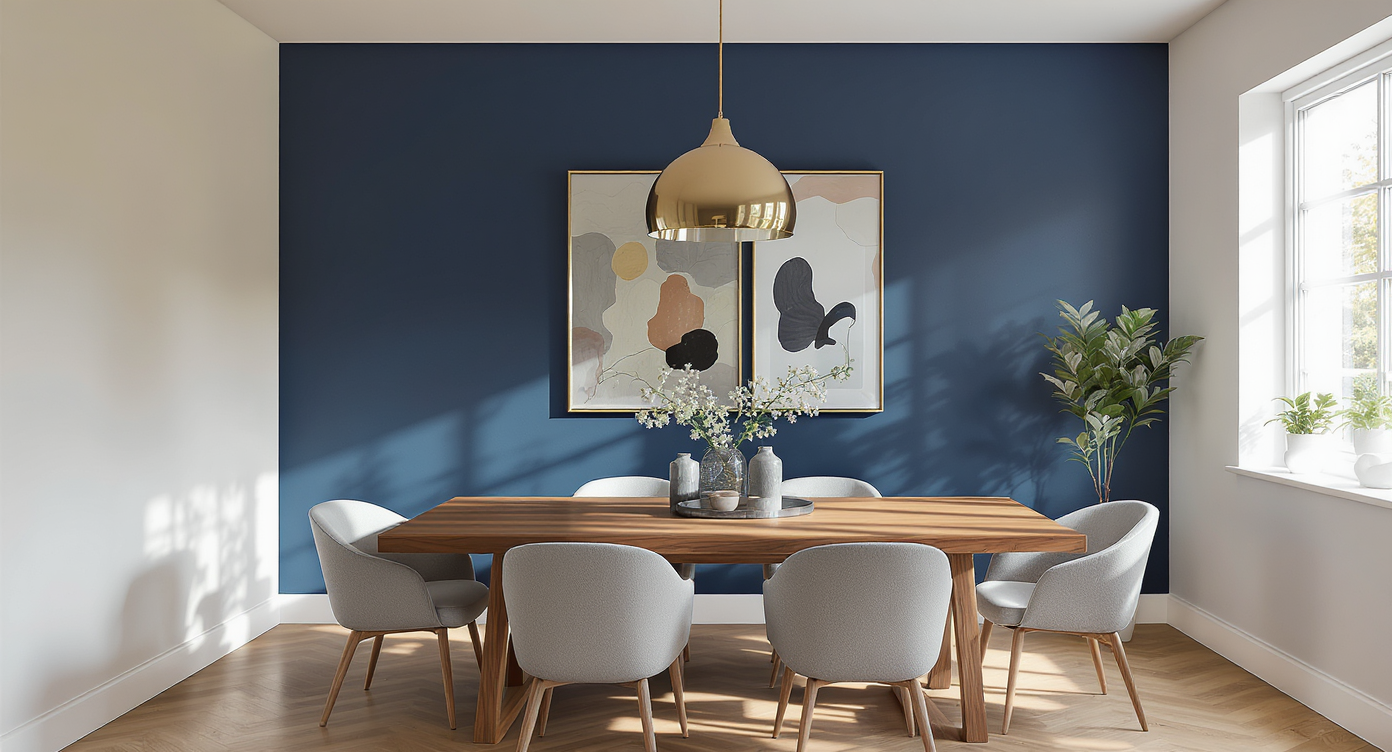
A dramatic ink-blue accent wall, art, and brass lighting transform a dining room, shown alongside peel-and-stick samples and digital color tools.
Imagine walking into your dining room after a long day. Where a bland wall once faded into the background, there is now a moody, ink-blue expanse reflecting the warm glow of a brass fixture and the shimmer of glassware. A single, large-scale photograph provides focus, while the rest of the furnishings softly echo lighter hues. In the evening, candles cast subtle patterns across the textured surface, anchoring the table and making the space feel purposeful and finished. Even casual meals acquire a sense of occasion. Those without painting experience can use peel-and-stick samples or digital renders to envision and tweak the result before picking up a brush—creating confidence with every decision.
Visualization Scenario
Imagine walking into your dining room after a long day. Where a bland wall once faded into the background, there is now a moody, ink-blue expanse reflecting the warm glow of a brass fixture and the shimmer of glassware. A single, large-scale photograph provides focus, while the rest of the furnishings softly echo lighter hues. In the evening, candles cast subtle patterns across the textured surface, anchoring the table and making the space feel purposeful and finished. Even casual meals acquire a sense of occasion. Those without painting experience can use peel-and-stick samples or digital renders to envision and tweak the result before picking up a brush—creating confidence with every decision.
Dining Room Accent Wall FAQ
Rich charcoals, saturated navy, and earthy greens remain popular for their cozy yet contemporary feel. These hues work well with both modern and classic designs and can be customized with matte or light-reflective finishes.
Should I use paint, wallpaper, or paneling for my accent wall?
All three have their merits. Paint is the simplest to apply and alter, while wallpaper or wood paneling can add dimension and tactile appeal. Explore digital options on ReimagineHome.ai to preview combinations in your own home.
Does a dark accent wall make the dining room look smaller?
Not necessarily. With balanced lighting and coordinated decor, a dark wall creates depth and intimacy, often making the space feel more welcoming rather than cramped.
How do I coordinate lighting with a dark wall?
Use layered lighting: a central chandelier, sconces, and even candles. Metallic or glass fixtures add sparkle and prevent the wall from absorbing too much light.
Can I preview my accent wall before committing?
Yes, digital repaint tools such as those on ReimagineHome.ai allow you to upload a photo and test wall colors, finishes, and placements in minutes.
Making Dining Rooms Memorable—One Wall at a Time
Accent walls remain one of the simplest ways to inject personality and drama into a dining room—no renovation required. By mindfully pairing dark hues with textural decor, statement art, and the right lighting, you create a layered space that welcomes guests and transforms everyday meals. Whether testing ideas digitally or using traditional samples, embracing this visual shift is a timeless move. Discover the possibilities with tools like ReimagineHome.ai and make your next dining room redesign as intentional as it is inspiring.