8 Interior Design Trends That Will Look Outdated by 2029—And How to Avoid Common Mistakes
TL;DR
Many current interior trends—like all-white interiors, heavy boucle, and fast furniture—are fading fast. Learn what makes these styles age poorly and how to correct common spatial, scale, and layout mistakes for a more lasting, functional home.
Introduction
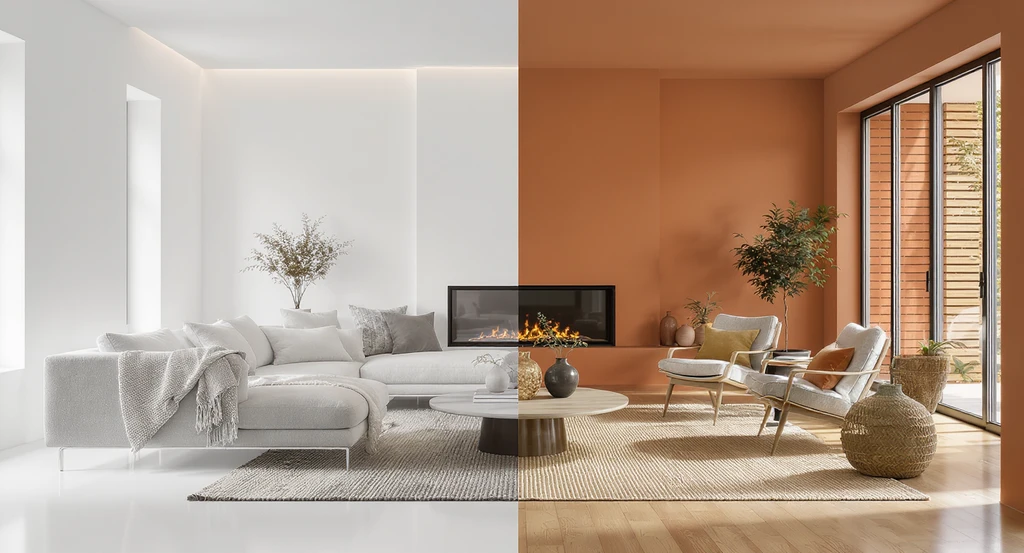
See how to visualize interior design changes in your home: this split-room image illustrates interior design tips if you can’t picture it and highlights common aphantasia challenges in home renovation by contrasting an outdated white space with a timeless, warmer alternative.
Design trends always evolve, but some choices can make a home look outdated faster than others. Over the coming years, sterile whites, mass-produced furniture, and trend-driven finishes are making way for warmer, richer, and more personal spaces. Understanding which trends are on their way out can help you avoid costly updates and choose improvements that feel intentional and timeless. Here’s how to recognize fading trends and tackle their most common layout mistakes with practical corrections. As seen in our review of the 2025 interior design trends, layering character and personal meaning is replacing the generic, one-size-fits-all approach. Below, find eight soon-to-be-dated trends and structured ways to update your space for lasting style and comfort.
-
01. All-White Kitchens and Interiors: The Sterility Trap
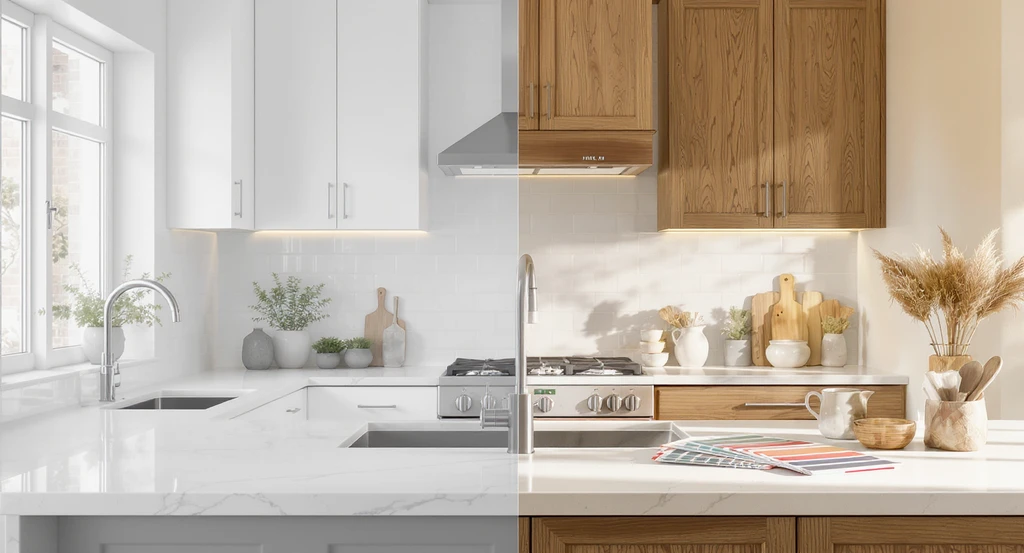
See how to visualize interior design changes in action: preview paint swatches digitally to avoid the sterile all-white trend and find the best tools for visualizing room makeovers, even if you face aphantasia challenges in home renovation.
All-white interiors once promised a clean and fresh look but now risk creating spaces that feel cold, impersonal, or even institutional. This usually happens when homeowners prioritize trend-based finishes without considering natural light, window direction, or the actual use of the space.
Correction: Integrate layered color by adding mid-tone or deeper shades—on cabinetry, trim, or walls—to break up the visual monotony. Assess the room’s natural light: in north-facing or shaded rooms, all-white can exacerbate gloom. Swap in warmer neutrals or darker accents for depth, and anchor the space with natural woods or meaningful antiques, as suggested in our guide to timeless interiors. For a clear before-and-after, preview paint swatches digitally to understand how changes impact light and layout before committing.
-
02. Excessive Bouclé and Oversized Curves: Overloaded Texture
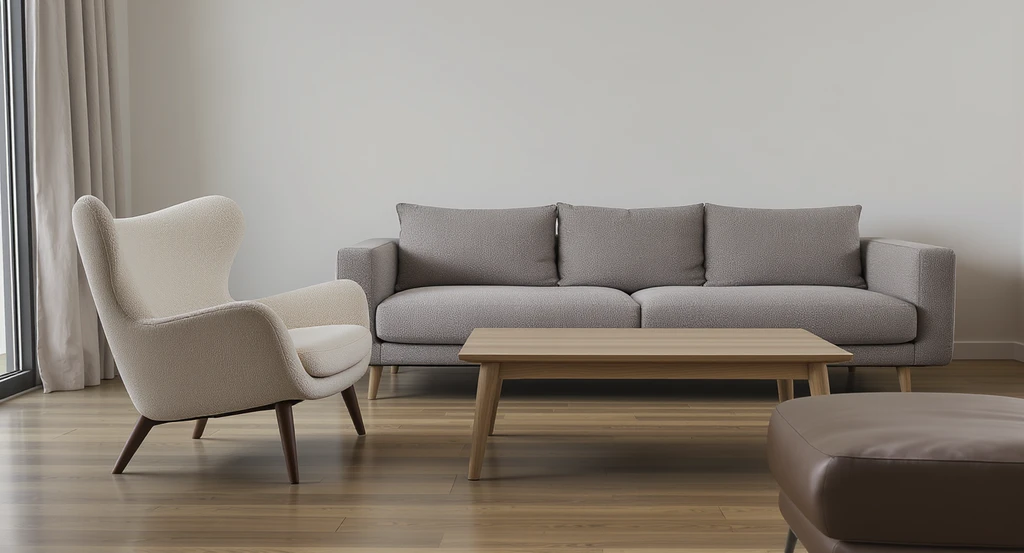
To visualize effective interior design changes, mix one bouclé piece with sleek, scaled seating and 36-inch walkways for practical, balanced room makeovers.
Heavy use of bouclé fabric and exaggerated curvy furniture dominated recent years. However, these choices quickly overwhelm spaces—especially small rooms—by disrupting flow and making furniture feel bulky or impractical.
Correction: Apply the visual balance rule: keep no more than one major texture or standout silhouette per seating zone. Choose pieces with modest curves and mix with flat-woven or smooth upholstery. Ensure a minimum walkway of 36 inches around large furniture to maintain access and avoid overcrowding. According to our breakdown of fading trends, mixing textures carefully and prioritizing scaled pieces prevent a cluttered or dated look.
-
03. Fast Furniture and Generic Minimalism: Disposable Design
Flatpack or "fast" furniture looks outdated quickly and lacks the durability or personality to withstand time. This often happens because it’s a simple solution for quick makeovers, but it introduces scaling errors—items that are too small or large for the room—and can leave the space feeling cookie-cutter.
Correction: Prioritize quality over quantity. Replace one or two key pieces with secondhand or vintage finds that offer character and proper scale. Use the focal zone guideline: measure main seating areas and select anchors (sofas/tables) that are roughly two-thirds the width of that area. Avoid splitting a room visually with too many mismatched, light-weight items. Personalize with a story: display functional heirlooms or local artwork for lasting impact.
-
04. Painted or Wallpapered Accent Walls: Disruptive Focal Points
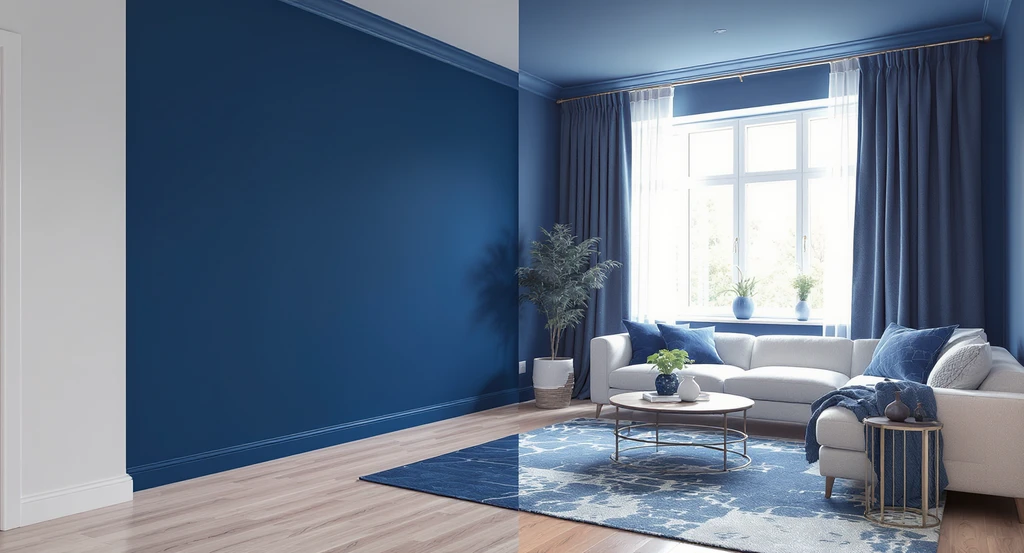
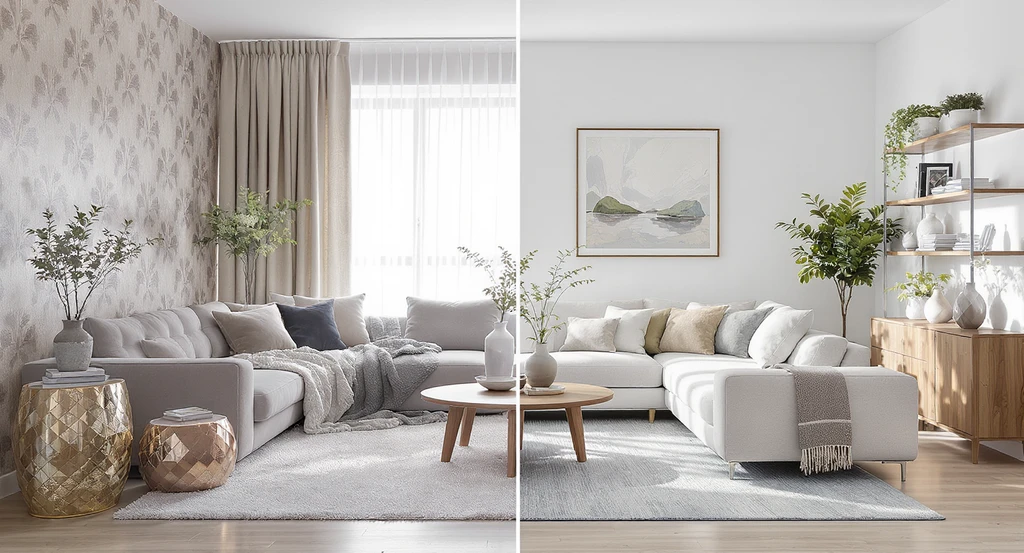
See how to visualize interior design changes: A single accent wall disrupts flow, but color drenching and balanced accents create a harmonious, modern room.
Accent walls—usually painted or wallpapered a bold color—break up visual continuity and can make rooms feel unbalanced, especially if paired with neutral everything else. The mistake is focusing attention on one plane instead of supporting the room’s overall rhythm.
Correction: Embrace color drenching: carry your wall color onto trim, doors, or even the ceiling for a consistent, enveloping effect. If you prefer contrast, distribute it by repeating accent tones in a rug or curtains. Consistency reduces visual clutter and helps even small spaces feel cohesive, as explored in our trends analysis.
-
05. Light Oak and Washed Woods: Washed-Out Floors and Surfaces
Once-popular white oak or whitewashed woods are losing ground to bolder, darker stains. Overusing pale wood can make rooms read as bland and one-dimensional, particularly in spaces lacking strong natural light.
Correction: Transition flooring or shelving to medium or dark woods, or add depth with walnut, cherry, or painted cabinetry and trim. Apply the contrast principle: pair a lighter floor with richer furniture or art, or vice versa. This layered approach defines zones and prevents the monotone effect, which multiple designers warn against in our round-up of incoming and outgoing finishes.
-
06. Modern Farmhouse and Exposed Shiplap: Loss of Context
Shiplap, barn doors, and "modern farmhouse" details have become overused, often applied in spaces that do not suit their origins. The mistake is forcing rural or industrial elements in suburban or urban settings without balance or revision.
Correction: Use paneling or textured walls where it suits the house’s bones—such as classic wainscoting in period homes. Retire barn doors in favor of pocket or traditional doors for privacy and better space usage. Limit shiplap to a single, functional wall or remove altogether. For a modern update, add weight through wrought iron, dark metals, or moody paint for a "modern medieval" vibe, as shown in tips from our practical trend visualizations.
-
07. Gray LVP and Heavy Faux Marble: The Cool-Toned Trap
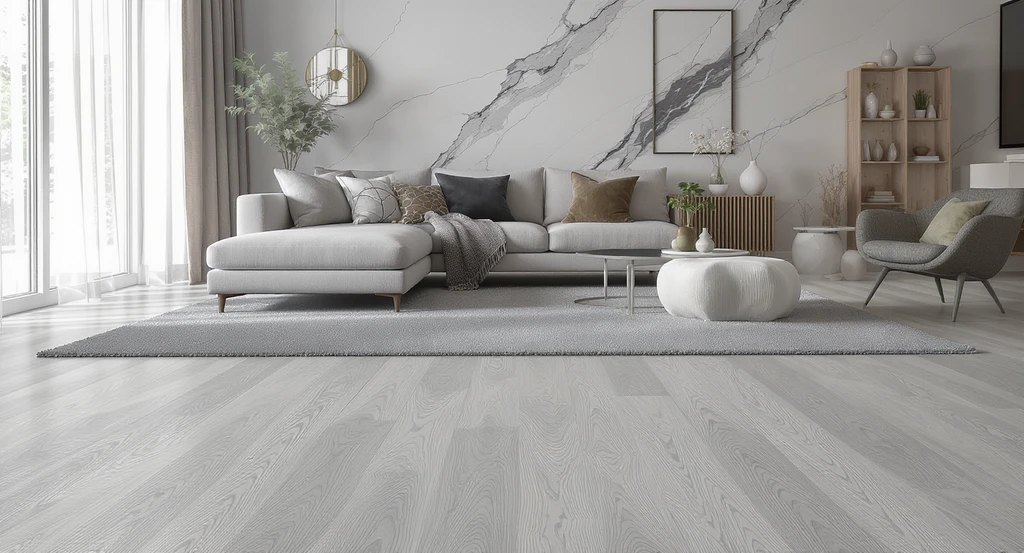
Interior design tip: transition from gray LVP flooring and faux marble to authentic materials, like real stone and warm rugs, for long-lasting style.
Gray luxury vinyl plank and large-scale faux marble veining quickly signal a recent renovation—rather than lasting style. The issue is using cool, artificial-looking surfaces in bulk without balancing warmth or authenticity.
Correction: Introduce authentic materials or warmer surfaces. Mix real stone or smaller-run quartz with natural imperfections. If flooring can’t be replaced, add large-scale rugs in rich earth tones or muted jewel shades. Follow the material transition rule: shift from gray to browns and terra cotta, which better resist visible wear and feel cozier, according to our coverage of design trend solutions.
-
08. Harsh Wafer Lighting: Poor Light Layering
Excessive wafer lighting—those ultra-thin, glare-heavy ceiling LEDs—flatten a room’s character and can cause discomfort due to harsh shadows or uniform brightness. This is a common result of skipping layered lighting planning or choosing fast fixes during renovations.
Correction: Apply the three-layer lighting framework: combine ambient (overheads), task (lamps, under-cabinet), and accent (wall sconces or art lights) sources, all with warm dimmers. Opt for deeper recessed or shaded fixtures and keep direct lighting to specific zones (kitchen prep, reading corners). This not only solves light balance but also provides functional flexibility and mood, a shift supported in future-forward lighting advice.
FAQs About Fading Interior Design Trends
- How can I tell if my space is too trend-driven?
- If your room relies on one major style or material used everywhere, or if it resembles recent listings and social media posts, it’s likely trend-heavy. Try adding personal pieces and varying materials for longevity.
- What’s the best way to update an all-white kitchen?
- Add warmth through wall color, deeper countertops, or mixed metal finishes on hardware. A single swap—like painting cabinets—often brings instant depth.
- Is small-scale furniture always better?
- No: always measure both your open walkways and primary seating zones. Furniture should fit the room’s function, with at least 36 inches of circulating space for comfort.
- How do I improve lighting in a room with only ceiling wafers?
- Add table or floor lamps, under-cabinet LEDs, and sconces. Dim all sources. Mix light layers for a comfortable, functional effect.
- Are dark, moody colors just another trend?
- If used thoughtfully and balanced with materials and light, rich colors provide timeless appeal—especially paired with authentic wood and layered textiles.
Conclusion
Outdated trends often result from sacrificing spatial logic or timeless proportions for the sake of momentary style. To future-proof your home, layer colors, mix authentic materials, and maintain thoughtful balance—avoiding monotony, over-saturation, or poor function. Remember, as we found in our ongoing reviews, quality, individuality, and structure always outlast fast trends.