Making Modern Minimalism Feel Complete: Filling Out a New Living Room
TL;DR
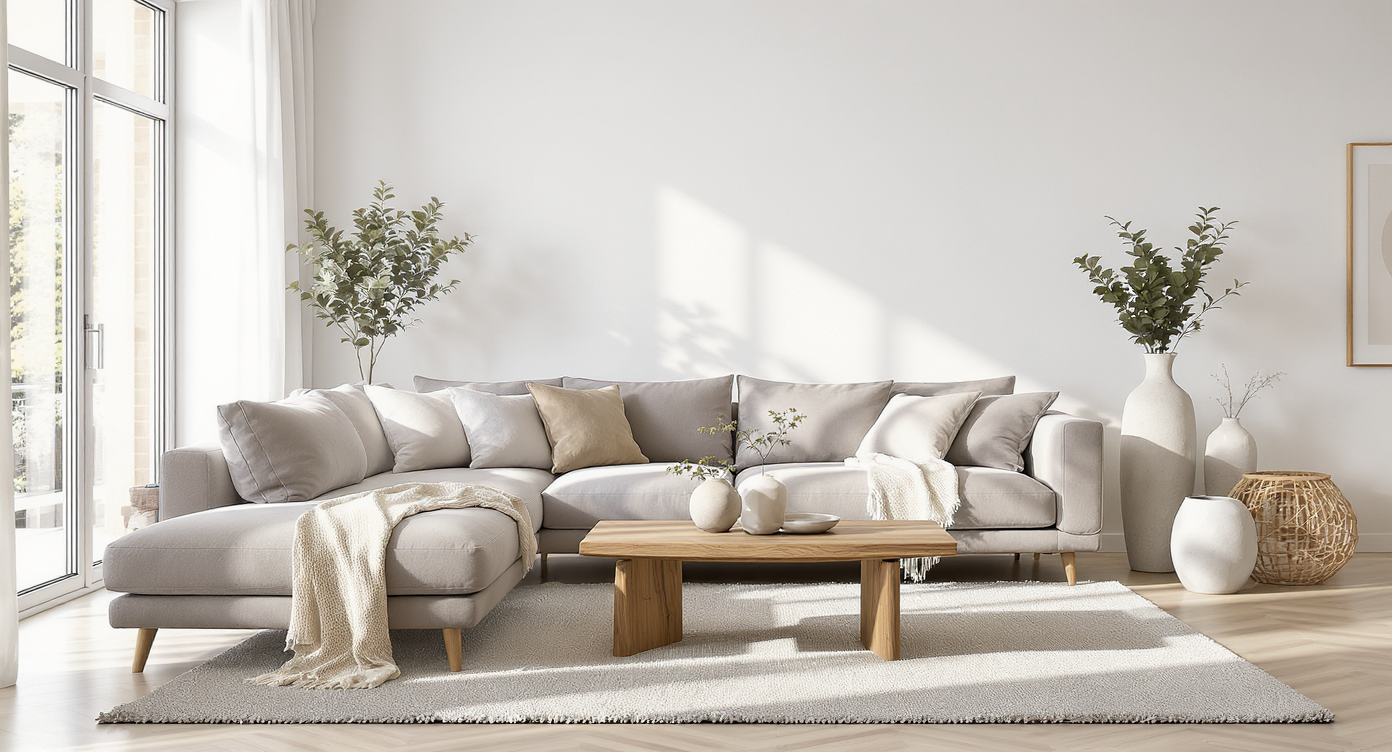
A modern minimalist living room can sometimes feel unfinished, especially when expanding into a more spacious apartment. The difference between a room that looks sleek and one that feels welcoming often comes down to careful color coordination, thoughtful layout styling, and curated accessories. Small changes in decor, textiles, and color can bridge that gap, making a minimalist scheme feel personal—without adding clutter.
What Makes a Modern Minimalist Living Room Feel Finished?
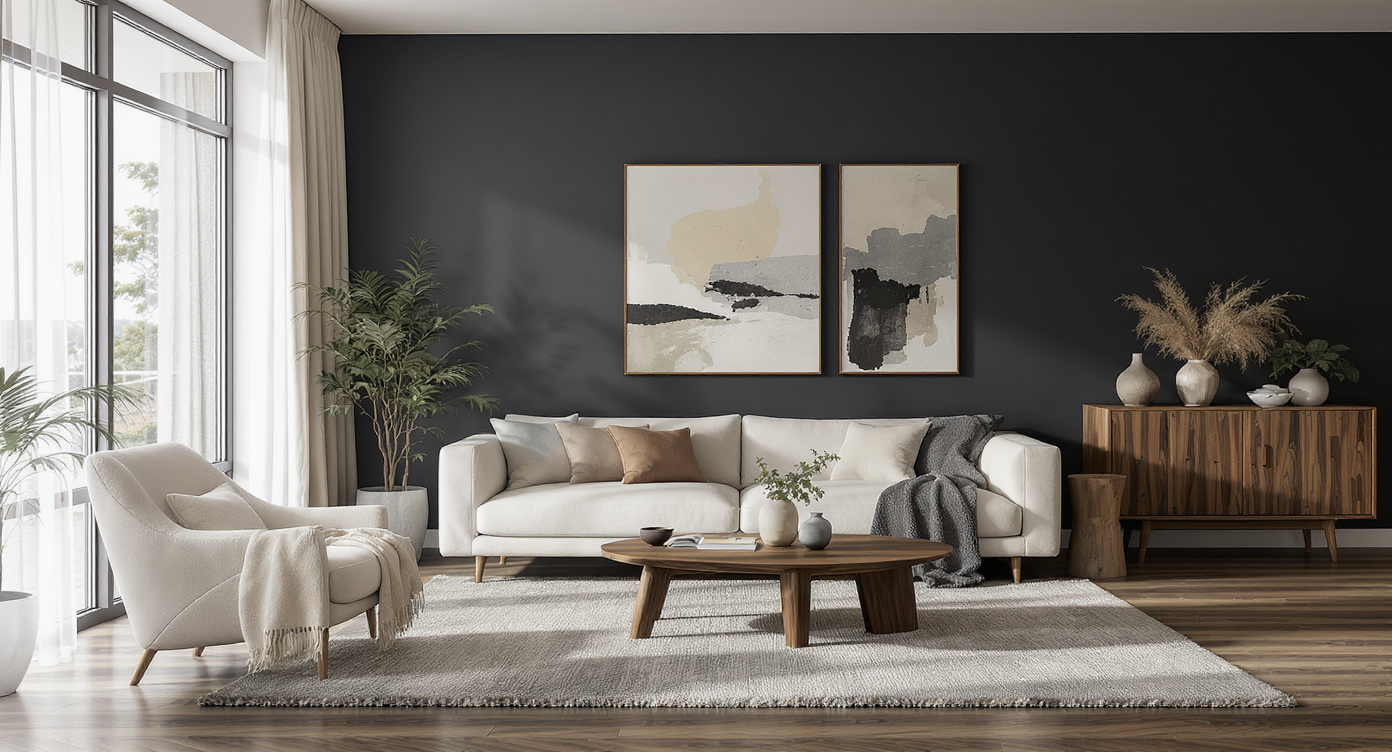
A modern minimalist living room feels complete through layered textures, personal items, and natural light—bridging the gap between stylish and inviting.
A new apartment offers a blank slate—open space and infinite possibilities for experimentation. Yet, many modern, minimalist living rooms end up feeling more like a showroom than a home. Even when the foundation feels right—affordable furniture in neutral tones, clean lines, well-balanced proportions—something essential may be missing. The difference between a space that simply functions and one that truly welcomes you is usually found in the understated details: nuanced color coordination, considered layout styling, and an intentional layering of pieces for warmth. This challenge becomes more pronounced when moving from a smaller, all-white setting into a larger living room with darker, richer finishes. Suddenly, wall space stretches out, the ambiance shifts, and the quest for a cohesive, inviting atmosphere becomes both exciting and perplexing. Understanding how to select, place, and personalize pieces can help bridge that gap between minimal and meaningful.
-
Color in a Minimalist and Modern Context
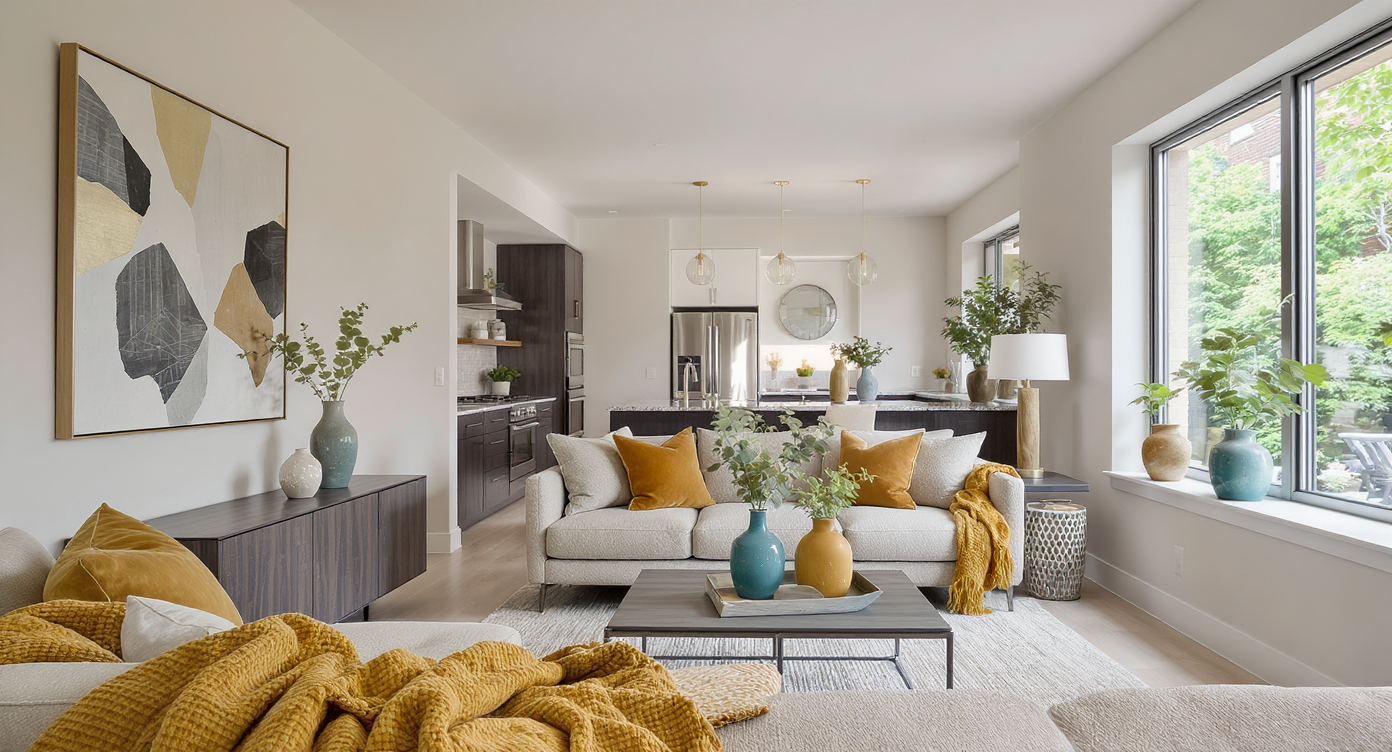
A modern minimalist living room uses subtle neutrals, selective bold accents, and layered textures to achieve balance and inviting warmth.
Modern minimalist design celebrates restraint, yet color still plays a leading role—just more selectively. In rooms with dark wood cabinetry and granite counters, as seen in many contemporary apartments, the interplay between deep tones and lighter hues becomes critical. Walls can remain neutral, using soft tans or cool grays to add subtle contrast against the richness of the kitchen, avoiding a static transition across open layouts. A single accent color used in measured amounts—a teal blue vase, warm ochre textiles, or a geometric statement piece—draws the eye and enlivens a pared-back palette. According to our guide on making a minimalist living room feel warm, introducing one or two bold elements prevents a space from feeling sterile, while layering with varied textures, such as boucle cushions or a handwoven throw, keeps the aesthetic both curated and approachable. Personal items need not disrupt the serenity. If you have foliage in the room, consider switching plain terracotta pots for ceramic vessels in colors lifted from your art or accent pillows. Even picture frames can be spray-painted to harmonize with your artwork, ensuring every chosen element feels cohesive within the broader palette.
Expert Insight
Last spring, I visited a friend who had just moved into a spacious apartment with dark wood cabinetry and granite counters. While their living room furniture—mostly neutral, all minimalist—was impeccably tidy, the space still felt unfinished. Over the next few weeks, adding a single, vibrant blue sculpture, repainting a few old frames, and introducing a bold, patterned area rug brought warmth and personality without erasing the calming order they loved. Now, the same room feels inviting, with every detail intentional.
-
Layout Styling in Expanded Spaces
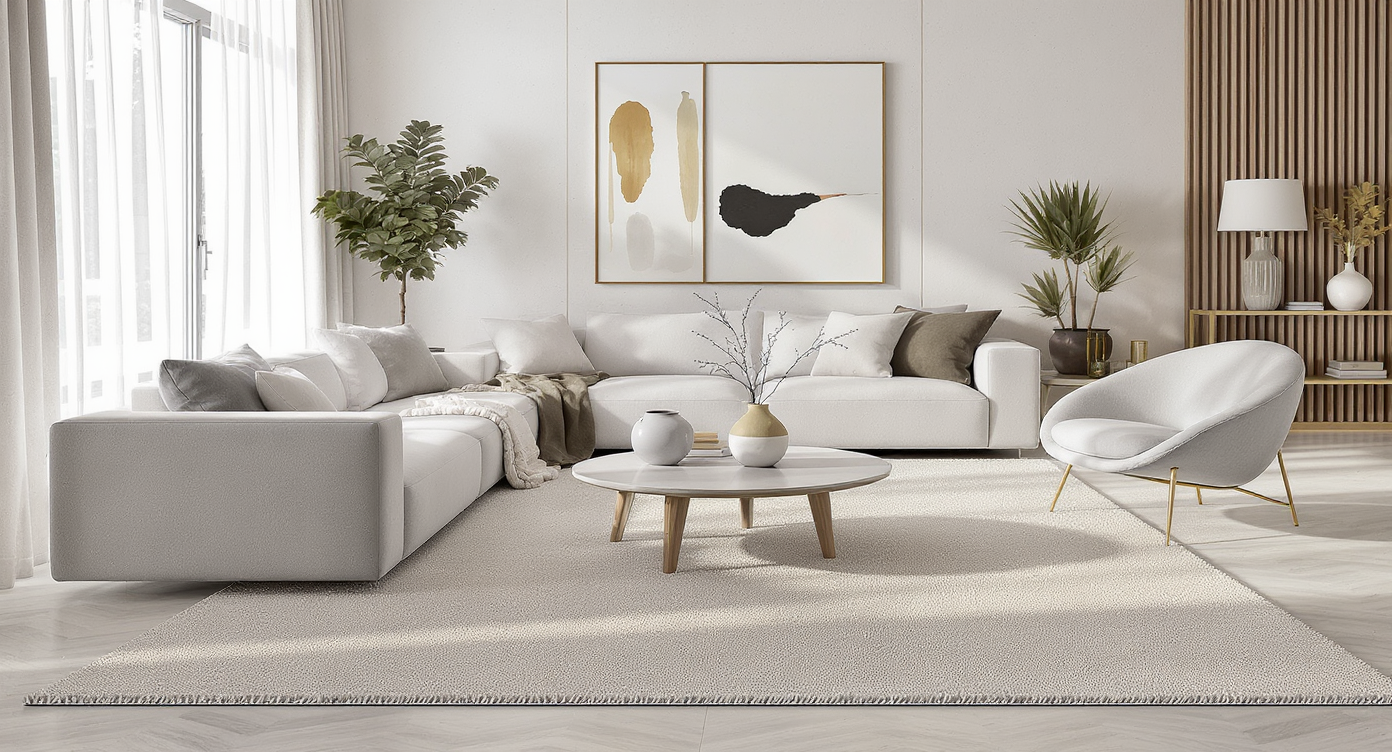
A modern minimalist living room uses furniture zoning, oversized rugs, accent lighting, and curated wall art to create balance and warmth.
Minimalist design shines through thoughtful restraint, but large living rooms can quickly look underfurnished if not approached with care. Instead of filling the floor plan for the sake of occupying space, aim for generous negative space paired with zones—one for seating, one for reading, another as a soft visual link to the kitchen. Modern IKEA basics lay a clean foundation, but finishing touches—an oversized rug anchoring floating furniture, or a sculptural coffee table—signal intention. The way you layer furniture and decor affects everything from traffic flow to emotional ambiance. Experts suggest maintaining 30 to 36 inches of walking space around primary seating. Place your sofa to define the main zone, leaving room for movement, then position accent chairs at conversational angles for balance. Floored by empty walls? One gallery cluster of petite frames, or a bold singular wall sculpture, can complete the space. For visual fullness, floor lamps and layered lighting work double duty as decor and functional accents. Learn more about finishing a living room with art and flexible seating layouts.
-
Elevating Affordability with Character
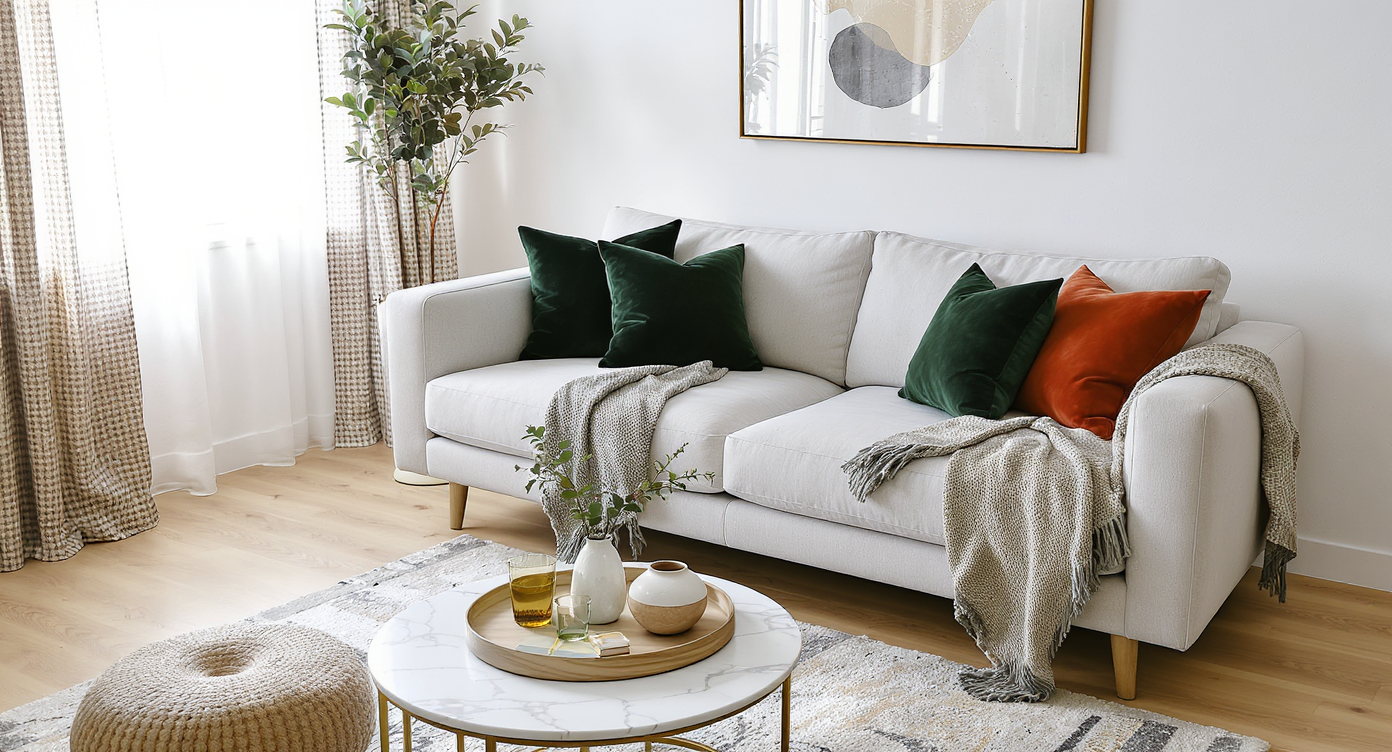
Affordable upgrades like colored glassware, patterned curtains, and tactile textiles add bespoke warmth to a modern minimalist living room.
There’s a delicate art to creating a modern space that looks bespoke, even when its bones are budget-friendly. Affordable design flourishes in the details: swapping out basic hardware, painting planters, sourcing tactile throws, or adding a patterned curtain for visual softness. Every practical upgrade is an opportunity for subtle luxury—think velvet pillow covers, a striking marble tray, or smooth wood accessories, all at accessible price points. If your rental restricts major changes, focus on what you can swap, layer, or update. Rental-friendly upgrades such as peel-and-stick wallpaper, decorative mirrors, and colored glassware offer personality while staying within the minimalist framework. Studios and small apartments particularly benefit from these choices because they build layers of meaning into even the simplest setting. For more inspiration on adding warmth to minimalist apartments without clutter, see our strategies for layering comfort and character.
-
Layering for Cohesion, Not Clutter
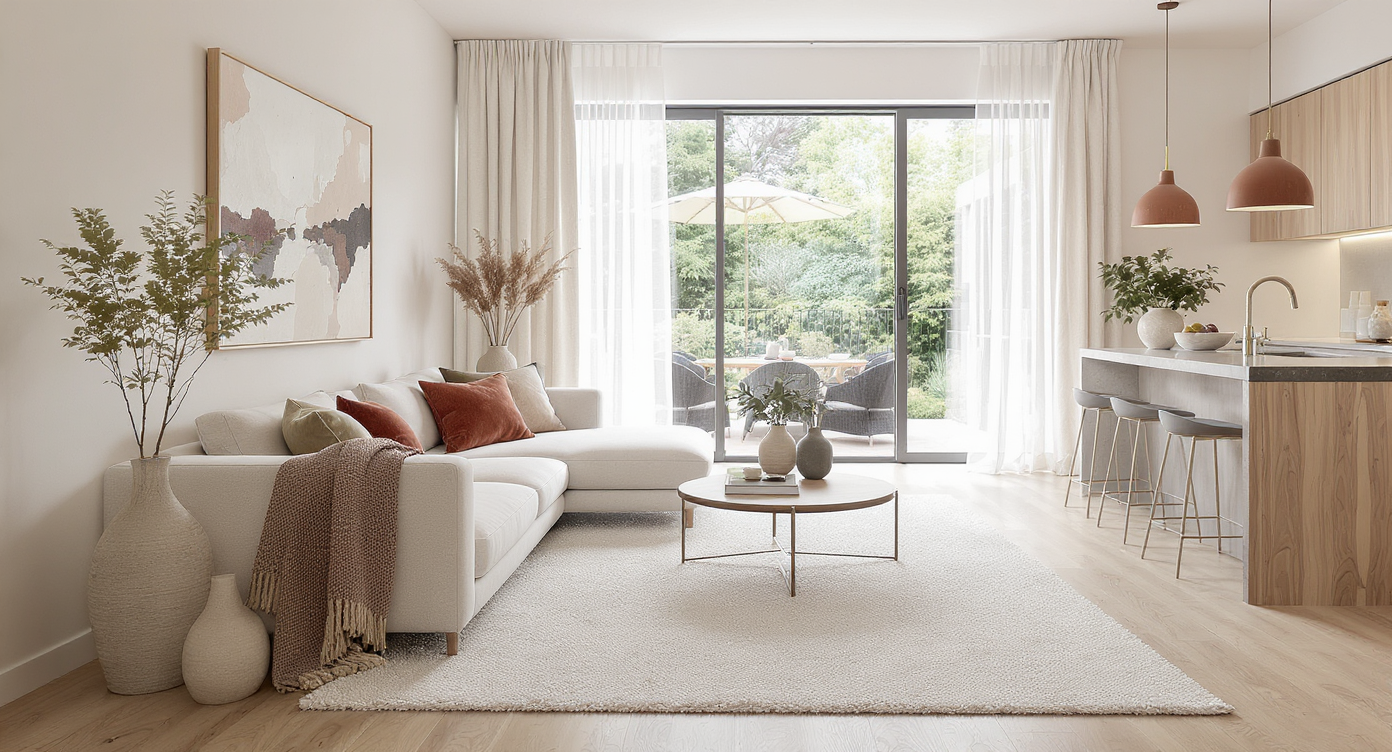
Layering mixed textures and accent colors in a minimalist open-plan living room brings warmth while maintaining visual harmony.
Striking the perfect minimalist balance means editing with intention rather than striving for perfect emptiness. Too little decor can leave a space looking unfinished, while too much disrupts visual calm. Designers often suggest repeating two or three accent colors and layering mixed textures—plush rugs, linen curtains, smooth ceramics—across different zones. This approach unites living and kitchen areas without sacrificing a clean look. Cohesion can also come from spatial relationships: aligning the kitchen island with the living room rug, echoing wood finishes, or threading a recurring motif through both rooms. This creates an inviting, integrated environment that feels harmonious and distinctly lived-in. For practical ways to identify missing pieces and bring everything together, see simple fixes for a cozy, cohesive living room.
Visualization Scenario
Imagine walking into a living room suffused with soft natural light. The lines are clean and the furniture restrained, but a textured ochre throw is tossed over a gray sofa. A handful of artfully mismatched ceramic planters line the windowsill, each echoing a color from the adjacent kitchen. A singular teal glass sculpture gleams atop a walnut sideboard, drawing both rooms into a quiet conversation. The look remains modern and restful, yet now the space radiates warmth and individuality.
Frequently Asked Questions
Choose one or two accent tones and repeat them sparingly through art, pillows, pottery, or textiles. Layering varied textures in a controlled palette brings warmth while preserving clarity.
What should I prioritize when my living room feels incomplete?
Start with lighting and layout adjustments, then add a statement rug or wall art. Editing and curating your selections is key—avoid filling space just to fill it.
Which affordable pieces have the biggest impact on modern living rooms?
Textured throws, oversized pillows, unique planters, and patterned curtains offer high character with minimal investment.
Do I need to buy everything new to achieve cohesion with my kitchen?
No. Adapt existing pieces by painting or refinishing them to echo hues from your kitchen. Repeating two to three accent shades in both rooms unifies open-plan spaces.
Where can I experiment with layouts and color before committing?
You can use ReimagineHome.ai to visualize living room arrangements and palette shifts before buying.
The Joy of a Finished Living Room
Bringing modern, minimalist intentions to life is less about surface finishing and more about curating quietly personal touches within an uncluttered frame. Affordable pieces can feel luxurious when layered and styled thoughtfully. The interplay of color, layout, texture, and light transforms an empty expanse into a gathering place, reflective of both your practical needs and aesthetic values. Embracing nuanced color stories, flexible layouts, and the right accessories ensures that your new living room is not just visually pleasing, but also memorable and welcoming. For those unsure about their next step, platforms like ReimagineHome.ai help you visualize, experiment, and refine ideas before making a single commitment.