Navigating the First Weeks of Homeownership: What Surprises and Delights New Owners
TL;DR
Closing on your first home is as thrilling as it is daunting. New homeowners encounter a whirlwind of emotions and immediate tasks, from managing financial logistics to settling into an unfamiliar space. Expect practical decisions about upgrades, storage, and affordable design to shape these crucial first weeks, setting the tone for a confident and fulfilling start.
Stepping Over the Threshold: More Than Keys and Contracts

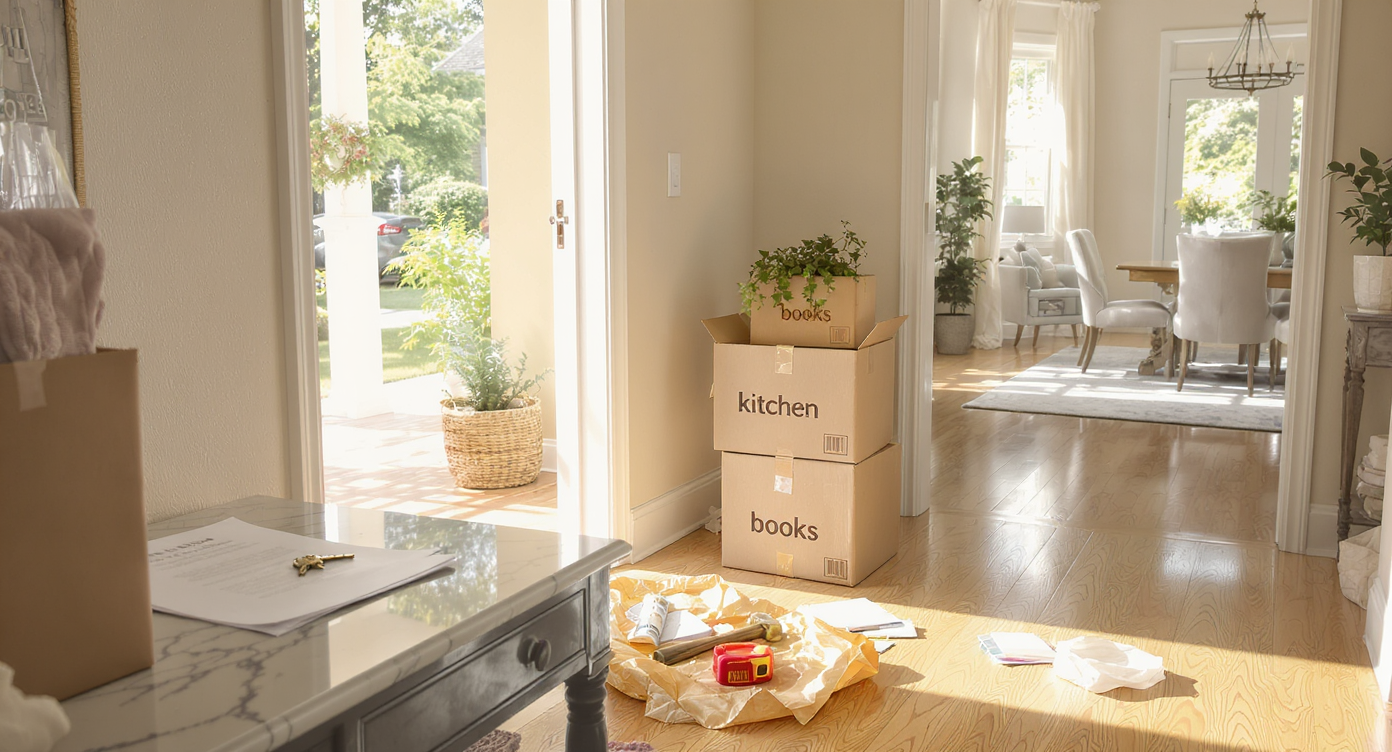
Freshly unpacked living room with moving boxes, new keys, and DIY tools—capturing the realities of the first days in a new home.
Becoming a homeowner transforms life in an instant. There’s a deep sense of accomplishment that settles in the moment you walk past the welcome mat with your own set of keys, yet beneath the elation lies a current of uncertainty. Every corner, switch, and square foot suddenly becomes a canvas for your next chapter, but also a to-do list punctuated by repairs and upgrades. For many, the path to that first purchase is complex, often involving clever financing, a dash of luck, and quick navigation through a volatile market. What unfolds after signing those papers is a reality check—packing, moving, and discovering what it truly means to care for a space that is entirely your responsibility. These early days aren’t just about ownership, they’re about transforming a house into a home, one practical decision at a time.
-
Financial Triumphs and Market Surprises

Realistic view of home closing paperwork, loan documents, and financial planning essentials, highlighting financial triumphs and market surprises.
Many new buyers find their journey to homeownership marked by negotiation, vigilance, and a bit of relief when the final offer is accepted below the asking price. For some, local or state programs offering down payment assistance or favorable second mortgages make the dream feasible, requiring savvy research and patience. These resources, often geared toward first-time buyers, can offset the shock of closing costs or allow for smaller upfront payments, especially in regions where prices remain within reach for younger households. In today’s fluctuating real estate landscape, securing pre-approval and working with an experienced escrow agent can make the difference between a seamless closing and a stressful ordeal. As highlighted by both seasoned homeowners and real estate professionals, understanding what you can truly afford is as important as securing a good deal. Practical budgeting extends far beyond the purchase price. Planning ahead for taxes, insurance, and year-one improvements provides a much-needed cushion—as emphasized in our advice for estimating mortgage obligations and preparing for closing costs.
Expert Insight
One homeowner reminisced about their move-in, realizing all they owned for their first place was a battered mattress and a futon. The echo of empty rooms at first felt daunting but soon shifted into a sense of possibility. Each weekend brought a small triumph: a successful Craigslist find, a freshly painted nook, refinished wood floors gleaming after decades in hiding. Slowly, their sparse home began reflecting both their needs and their personality, showing that progress is as much about intention as it is about investment.
-
Packing Up, Moving In, and Facing the Blank Slate

Early homeownership often begins with a blank slate: minimal furniture, open moving boxes, and essential items scattered in a bright, empty living room.
The logistics of moving, especially for those transitioning from rentals or family homes, often reveal just how little one actually owns. Many early homeowners find themselves with basic furnishings—perhaps a mattress, a futon, or an inherited sofa—while staring down empty rooms with more echoes than warmth. This blank-slate feeling grows into an opportunity, letting owners define their home’s comfort and style from scratch. Sourcing affordable furnishings is rarely a one-and-done task. Experienced newcomers recommend starting small: focus on essential pieces, measure consistently, and accept that décor and storage solutions will evolve over time. Secondhand shops, hand-me-downs, and budget-friendly online options help stretch early budgets while imparting character. These lessons echo throughout our approach to furnishing a home without overspending and making the most of every square foot.
-
Design Decisions and the Urgency of Upgrades

Upgrading an older home's entryway: refinishing floors, testing outlets, managing paint samples, and strategizing storage for immediate needs.
Stepping into ownership also means facing a long list of potential upgrades, from refinishing wood floors to updating decades-old outlets. The newness of autonomy brings both opportunity and responsibility: there’s no landlord on call when a water heater sputters or a switchplate cracks. Early adopters of DIY projects find themselves managing everything from paint samples to estimating the costs of professional repairs. Prioritizing affordable design and strategizing storage is critical in these early stages. Improvements that maximize square footage and address immediate functional needs take precedence. Those moving into older homes often discover latent character—original flooring, quirky layouts, and generous outdoor space—balancing maintenance with modernization. Thoughtful upgrades not only enhance comfort but, when chosen wisely, can increase the home’s future market value. Avoiding common first-time buyer blunders, such as neglecting inspections or underbudgeting for repairs, can be the difference between a smart investment and an ongoing source of stress, as covered in our recommendations for steering clear of avoidable home buyer pitfalls.
Visualization Scenario
Picture a newly closed home: the boxes are still stacked in corners, and sunlight spills across hardwood floors. In the kitchen, you hesitate before choosing where to store the rarely used mixer versus the daily cookware. A faded living room couch sits across from an open window, awaiting its eventual upgrade. With each measured decision—hanging a first photo, mapping out closet storage, or selecting the right white paint for the hallway—you see your vision take shape, one affordable project at a time.
New Homeowner FAQ
Successful homeowners track costs beyond the sale price, planning for ongoing expenses like maintenance, insurance, and yearly upgrades. Leveraging tools for budgeting and exploring mortgage terms in local programs can offer additional financial comfort.
How should I approach furnishing my home with a limited budget?
Start with essentials such as a bed and seating, using secondhand and neutral basics to fill out your space. Visualize arrangements before buying and build slowly, as described on affording a cohesive layout.
What common mistakes should I avoid as a first-time buyer?
Missing inspections, overlooking closing costs, or failing to set aside a maintenance fund are some of the most frequent errors, according to our breakdown of buyer mistakes.
What early upgrades or projects matter most in the first year?
Focus on repairs and design upgrades that most impact daily comfort, as well as solutions for efficient storage and energy efficiency. Prioritize what fits your lifestyle and budget.
Can digital tools such as ReimagineHome.ai help with the process?
Visualization platforms like ReimagineHome.ai allow you to test out colors, layouts, and even storage upgrades before committing, reducing both risk and expense.
Settling In: The Start of an Ongoing Journey
The first few weeks in a new home are a whirlwind of activity, adjustment, and discovery. Each task—whether replacing a faulty fixture, wrestling a new sofa through the front door, or painting over a bold color left by previous owners—serves as a marker of progress. Seasoned homeowners often remind newcomers that the journey is rarely straightforward, but the investment in effort, planning, and design always yields a sense of belonging. Remember, homeownership does not demand perfection on day one. Instead, it rewards persistence, curiosity, and a willingness to adapt. As long as every decision, from remodeling and upgrades to affordable storage, aligns with your day-to-day needs, your house will steadily become unmistakably yours. For those embarking on this transition, resources like ReimagineHome.ai can offer visualization and support, empowering each homeowner to chart a path that feels both intentional and inspired.