Why Does My Kitchen Feel “Off”? How to Decode an Unsettling Space
TL;DR
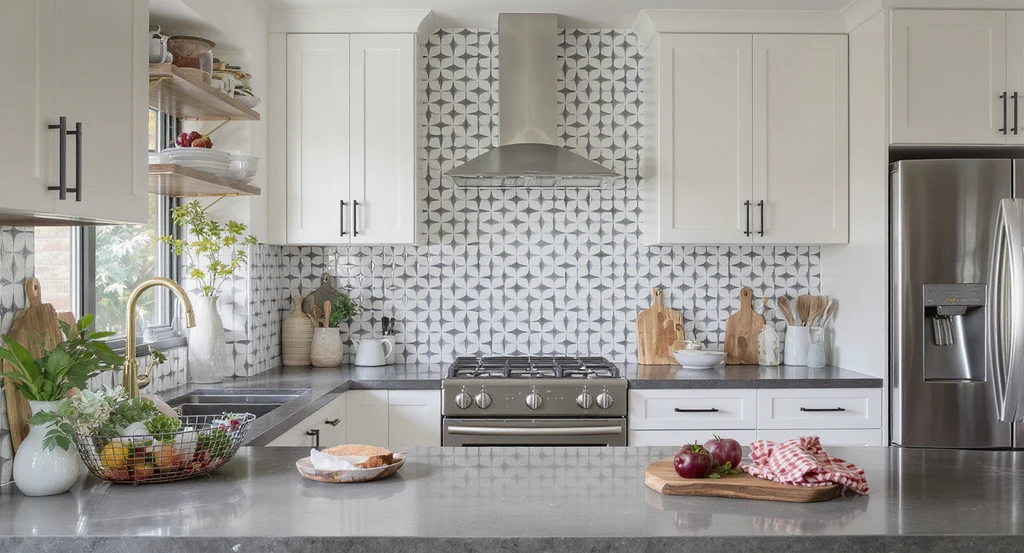
Sometimes a kitchen feels fun, bold, and creative yet still a bit wrong. The problem is rarely a single object. It's more often a subtle clash of undertones, pattern interactions, or a break in visual logic. This guide helps you spot what's actually off and make real sense of kitchen confusion.
Recognizing That Unsettled Feeling in Your Kitchen
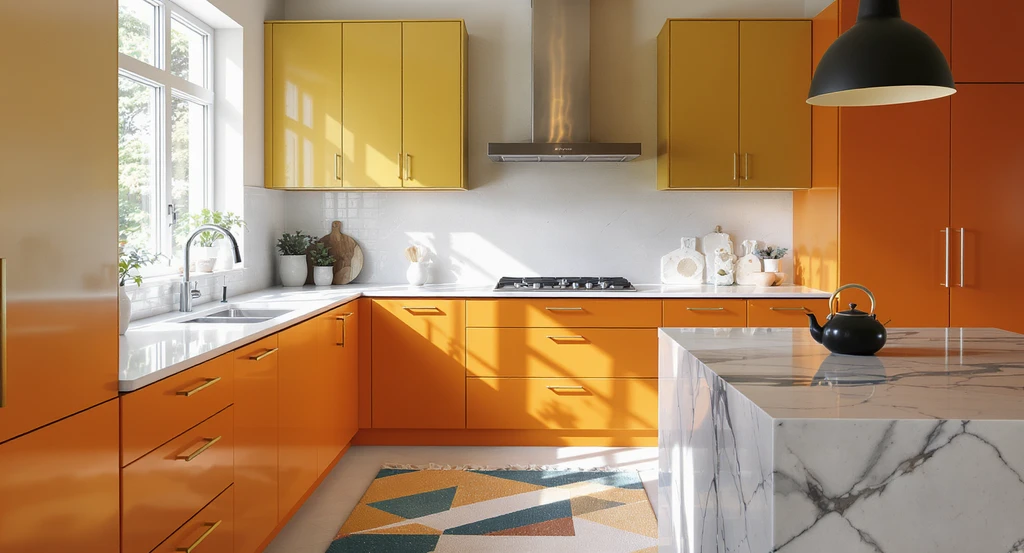
Editorial-quality kitchen scene reveals a bold yet unbalanced mix of colors and décor. Discover tips for people who can’t imagine spaces and tools for visualizing home décor changes.
You walk into your kitchen maybe it's wild with color, maybe it's quiet and neutral but something just doesn't sit right. Friends are either captivated, confused, or quietly uncomfortable. You’re proud of your style, but you can't shake the suspicion that the overall effect is off. Why? This isn’t about not following a trend or needing a “magazine look.” Kitchens can delight or disconcert for reasons that are rarely obvious, even to experienced eyes. Many people over-focus on objects a teapot, a rug, a piece of quirky art but it’s usually the undercurrent of spatial decisions and visual relationships that define how a space feels. Through careful observation, you can move past confusion and understand exactly what’s happening in your room.
-
What’s Actually Happening When a Kitchen Feels Off
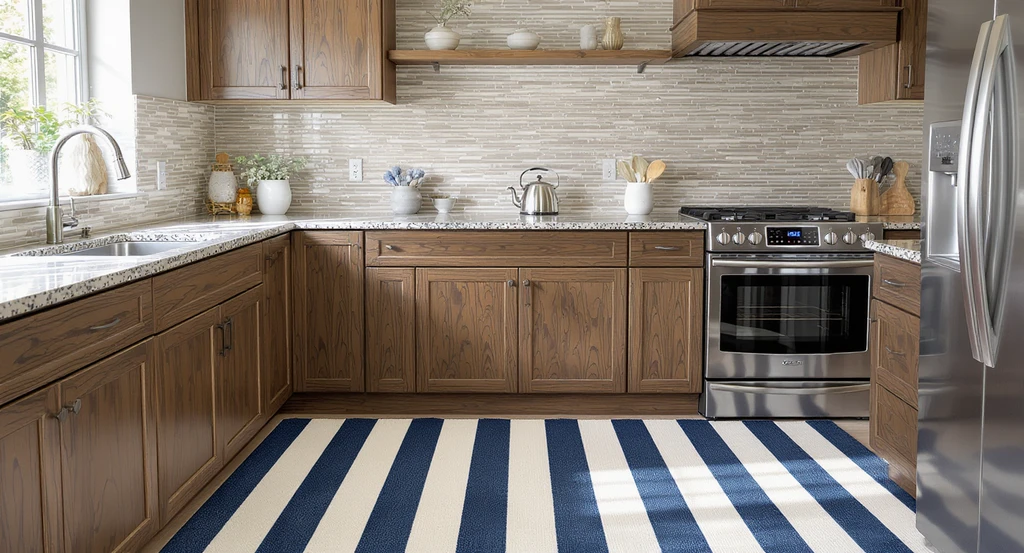
A kitchen with competing stripes and busy cabinetry highlights how visual logic breakdown can disrupt comfort—use tips and tools for visualizing redesign ideas.
A kitchen that sparks comments even jokes often sits at the intersection of comfort and visual friction. Sometimes a space feels exhilarating in photos but overwhelming in daily life. Sometimes it’s the opposite: a technically balanced space can feel oddly lifeless in person. The reason is rarely a single object, no matter how outspoken a stainless steel kettle or a striped rug. It’s almost always an interplay of pattern, hue, reflectivity, and flow. Underlying Mechanism: Most often, a kitchen feels off when visual logic breaks down. For example, stripes running in divergent directions across counters and walls can cause the eye to leap rather than travel smoothly. Loud floors paired with busy cabinetry magnify this effect, creating a push-pull that unsettles even when all the colors technically match. The result is both visual fatigue and spatial awkwardness.
-
Why the Eye Calls Out Certain Details (and Ignores Others)
In kitchens full of bold graphics, animal prints, or wild stripes, different people react to different elements: a clashing teapot, a plain paper towel holder, a random power outlet. Yet when viewers online or in person call these out, it’s often a stand-in for a larger disruption of pattern or color sequence. Your mind notices when an element breaks the established visual 'rules' even if those rules are playful or avant-garde. The subtle truth: The brain is wired to seek visual rhythm and rest stops. When everything competes for attention with no pauses like a relentless mix of stripes, prints, bright shapes, and contrasting knobs—the gaze ricochets instead of relaxing. Elements that don’t participate in the dominant pattern, even everyday items like appliances or holders, stick out much more.
-
What Most People Assume Is the Problem—And What They Miss
Most advice (and reactions online) singles out the loudest or most unique element: 'The teapot doesn’t match'; 'The paper towel holder is too plain'; 'That rug screams.' In reality, these details only draw attention because the spatial or chromatic logic around them is already unsettled. A bold kettle can be a highlight if the rest of the room gives it context. But in a space with no “quiet”, antithetical pieces become scapegoats for deeper issues: conflicting undertones, misplaced zones of color, or pattern fatigue. As explored in our guide on refreshing dated homes with intent, not trends, it's not about making everything match but about deliberate relationships between what you keep and what you change.
-
What Actually Changes When You See the True Source of Discomfort
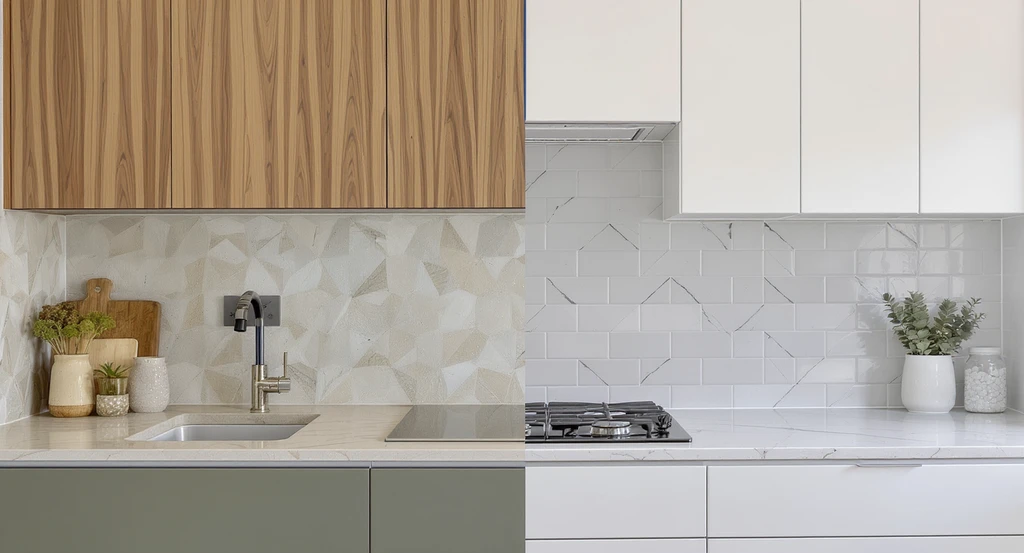
This side-by-side kitchen scene shows how to visualize kitchen redesign ideas by identifying visual flow issues, offering tips and tools for people who can’t imagine spaces and demonstrating ways to picture room transformations without seeing.
When you can name that unease comes from, say, a break in visual flow (like floor tiles ignoring all the energy above), you stop blaming individual objects. You gain vocabulary to explain why some colors vibrate uncomfortably or why stripes look lively on a backsplash but dizzying on a floor. Key insight: The moment you catch the underlying issue whether it’s pattern direction, lighting balance, or conflicting shapes you can decide what truly matters to you. Sometimes, a single adjustment (like swapping a beige floor for one echoing the room’s palette with more pattern or color) brings the space into focus. Other times, restraint—creating intentional “visual breathing room”—makes your chosen focal points pop instead of getting lost.
-
Where Pattern, Color, and Flow Create Trade-Offs
A high-energy kitchen with stripes, animal prints, or strong Memphis-style references always walks a fine line between energetic and exhausting. The most overlooked trade-off? Every new layer especially one with strong direction or color raises the visual volume, requiring greater discipline elsewhere. Too many competing focal points can drain the thrill from even the most creative schemes. Changing just one major element floor, backsplash, or dominant cabinetry often transforms how every accessory, from a kettle to a paper towel holder, is perceived. If you want the room to be fun and immersive, let the big gestures (like bold tiled floors or graphic counters) be supported by calm, solid features elsewhere an idea also supported in our discussion of modernizing with layered light and unified flooring.
-
Practical Adjustments: Calming an Off-Balance Kitchen Without Losing Personality
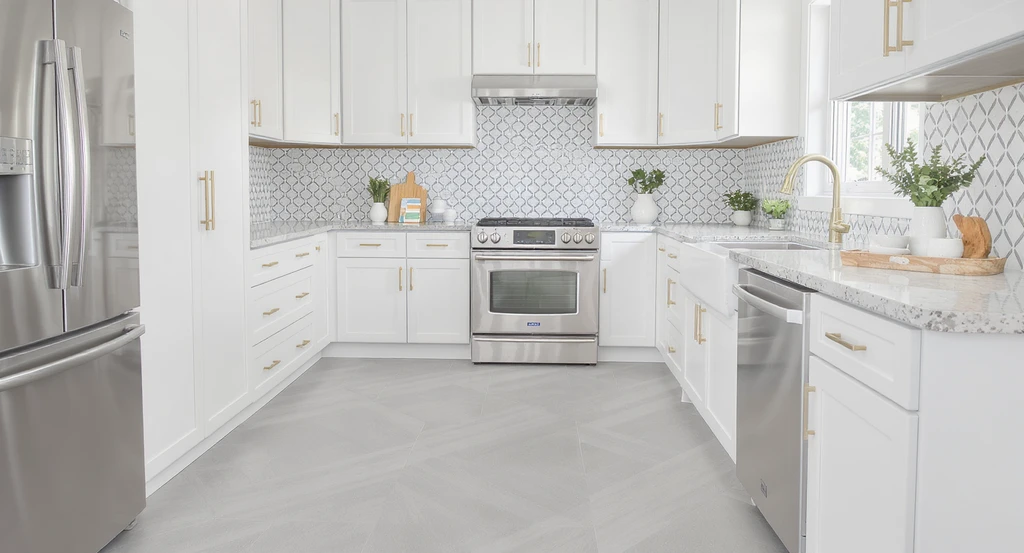
Explore how to visualize kitchen redesign ideas with sample hardware, digital mockups, and cohesive color schemes—essential tools for visualizing home décor changes. Great for people who can’t imagine spaces and seeking the best apps for aphantasia interior design.
Practical adjustment doesn’t mean erasing everything unique. Instead, identify where patterns or colors are randomly interrupted or themes left unfinished. Most kitchens benefit from at least one area where the eye can rest: a stretch of solid floor, a consistent run of cabinetry, or a simplified ceiling. Try:
- Echo a key pattern from backsplash onto the floor or vice versa, but avoid doubling up on stripes plus animal print plus color blocks.
- Map out where pattern directions run aligning stripes rather than letting them battle each other across surfaces.
- Choose hardware, small appliances, or organizers in finishes that tie into your dominant theme—so nothing reads as “afterthought.”
- Preview your ideas virtually before you commit to paints, contact papers, or tiles. Seeing combinations in a digital mockup lets you spot where attention gets yanked in too many directions. For example, our guide to visualizing a DIY backsplash shows how digital previews catch potential mistakes—like undertones clashing or light direction making bold surfaces jarring—before they’re real regrets.
-
How Visualization Prevents Decision Regret
Trying out changes visually before you commit by uploading a photo to a virtualization tool or sketching over a floor plan removes much of the emotional guesswork. Previews reveal how proposed patterns interact with light at different times of day, and where contrast might unexpectedly fatigue the eye. Visualization helps you judge scale: sometimes a pattern that looks thrilling in isolation will overpower when repeated on multiple surfaces. Using visualization tools, you can safely test flooring, cabinet fronts, even placement of outlets and small accessories, giving you time to edit what feels out of balance. Committing only after you “see it” is the surest way to avoid both overshooting the fun factor and letting the result feel chaotic instead of joyful. As seen in our kitchen design trends overview, the most satisfying kitchens allow your eyes—and your mind—to travel at a calm pace.
-
Definition: Visual Breathing Room
Visual breathing room is the intentional use of unpatterned, calm space like plain flooring, solid cabinet runs, or a muted ceiling to allow your bold design choices to stand out instead of collide. This principle controls fatigue by giving the eye intervals of rest between energetic moments, and is as important in playful, driven kitchens as in minimalist ones.
FAQ: Understanding and Fixing Off-Balance Kitchens
- Why does my kitchen feel off even though it’s colorful and bold?
- Too much pattern, color, or direction can overwhelm the senses. The key is balance—introduce visual resting spots and let a few design elements lead while others support.
- Is it better to match everything or embrace contrast?
- Deliberate contrast can be energizing, but mismatched elements need a clear visual logic or purpose. Unplanned clashing feels random and unsettling; intentional contrast feels lively and intentional.
- How do I decide what to change first?
- Start with the element that most breaks visual flow or color logic. Often, unifying floor, cabinetry, or backsplash patterns calms the entire space, making smaller details fall into place.
- How can I know if a design risk is worth it?
- Visualize it first. Digital previews demystify whether a bold idea will feel exciting or simply chaotic when the whole space comes together—helping you avoid both regret and blandness.
Key Takeaways: Making Sense of an Unsettled Kitchen
The unease you feel in a vibrant kitchen usually isn’t about a single object out of place it’s about overall rhythm, flow, and logic. Creating breathing room lets personality shine instead of overwhelm. The path to a kitchen you love begins with clear-eyed observation, not trend-chasing or over-correction. Visualizing changes first empowers you to tune the space with confidence, so fun never turns frantic.