9 Insights Every First-Time Homeowner Should Know About Paver Patio Costs and Options
TL;DR
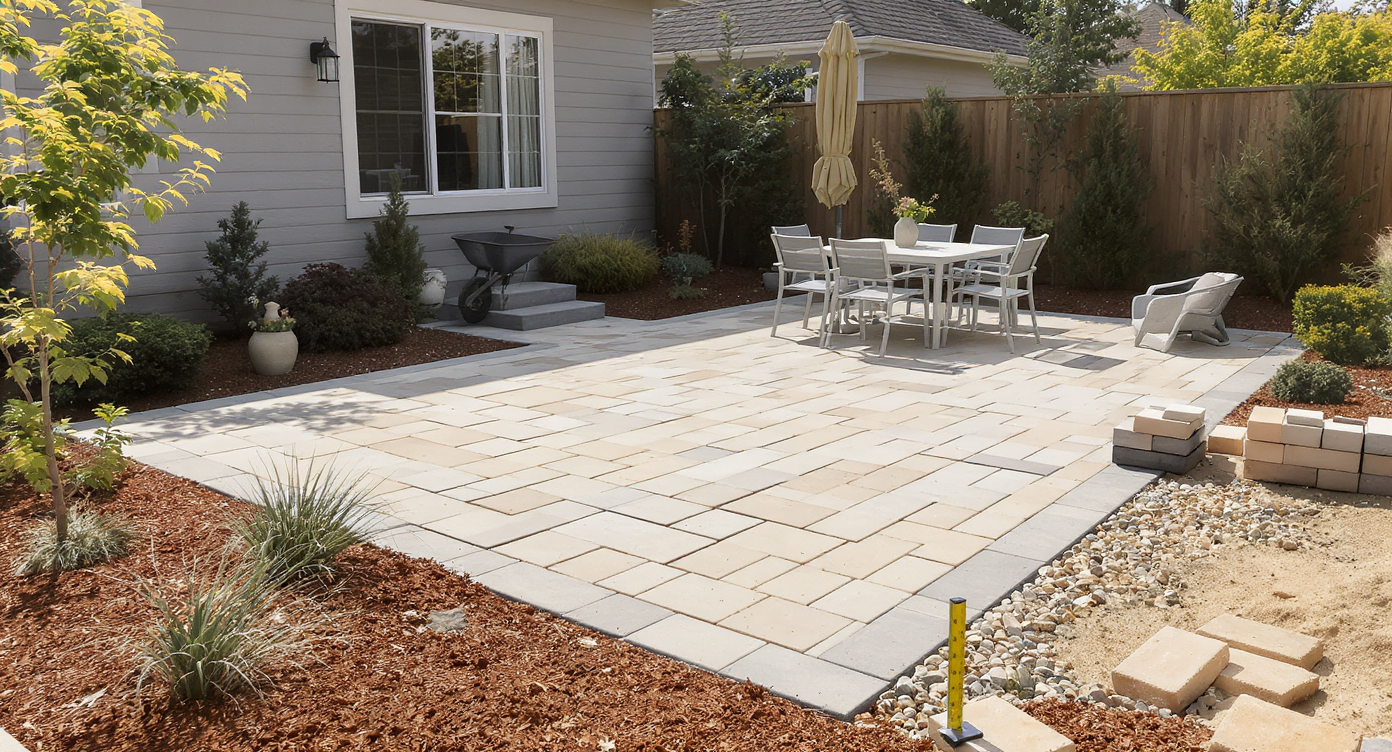
Paver patio costs vary widely, with regional labor and material prices, layout choices, and site factors all influencing your bottom line. Homeowners should weigh the long-term usability, maintenance, and durability of various designs before choosing features like pea gravel fillers. Proper planning and clear, cost-aware prompts can help avoid common missteps, and smart use of digital tools streamlines decision-making.
Why Understanding Patio Costs Is Essential for First-Time Homeowners
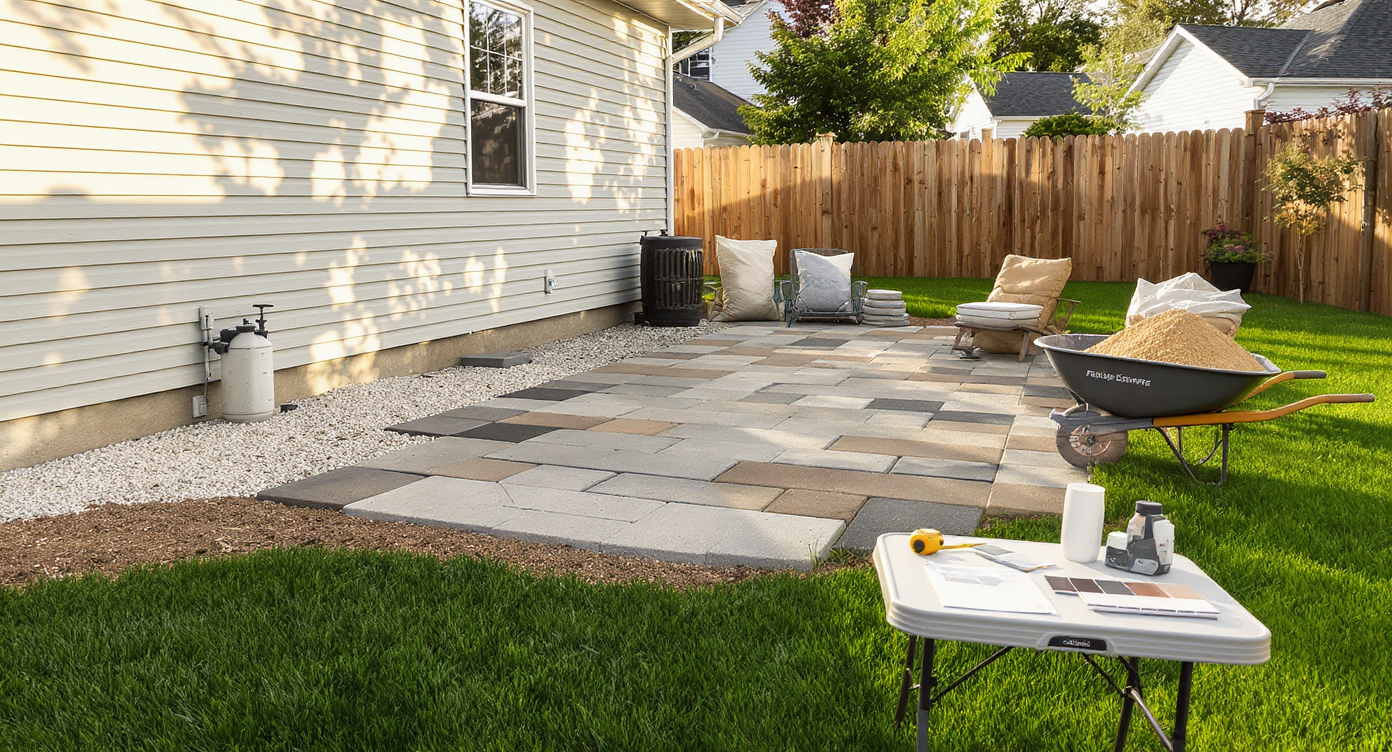
A real backyard shows a half-completed paver patio, material samples, project plans, and supplies—an authentic glimpse into patio planning decisions.
Choosing the right outdoor flooring for your first backyard can set the tone for years of enjoyment and low-stress maintenance. For many homeowners, a new paver patio sits at the intersection of design, function, and financial investment. Decoding the true costs and drawbacks of popular options, while weighing local factors and upkeep realities, is crucial before you break ground or sign a contract. With trends shifting and prices fluctuating post-2024, understanding how square-foot estimates unfold into actual project totals is more complex than simply taking a quote at face value. Practical insight into material choices, labor, region, and long-term maintenance needs will help you navigate both DIY and professional installs—especially as cost-aware prompts, like those offered by ai landscape design platforms, become part of the planning process.
-
1. Average Price Ranges and Itemized Costs Demystified
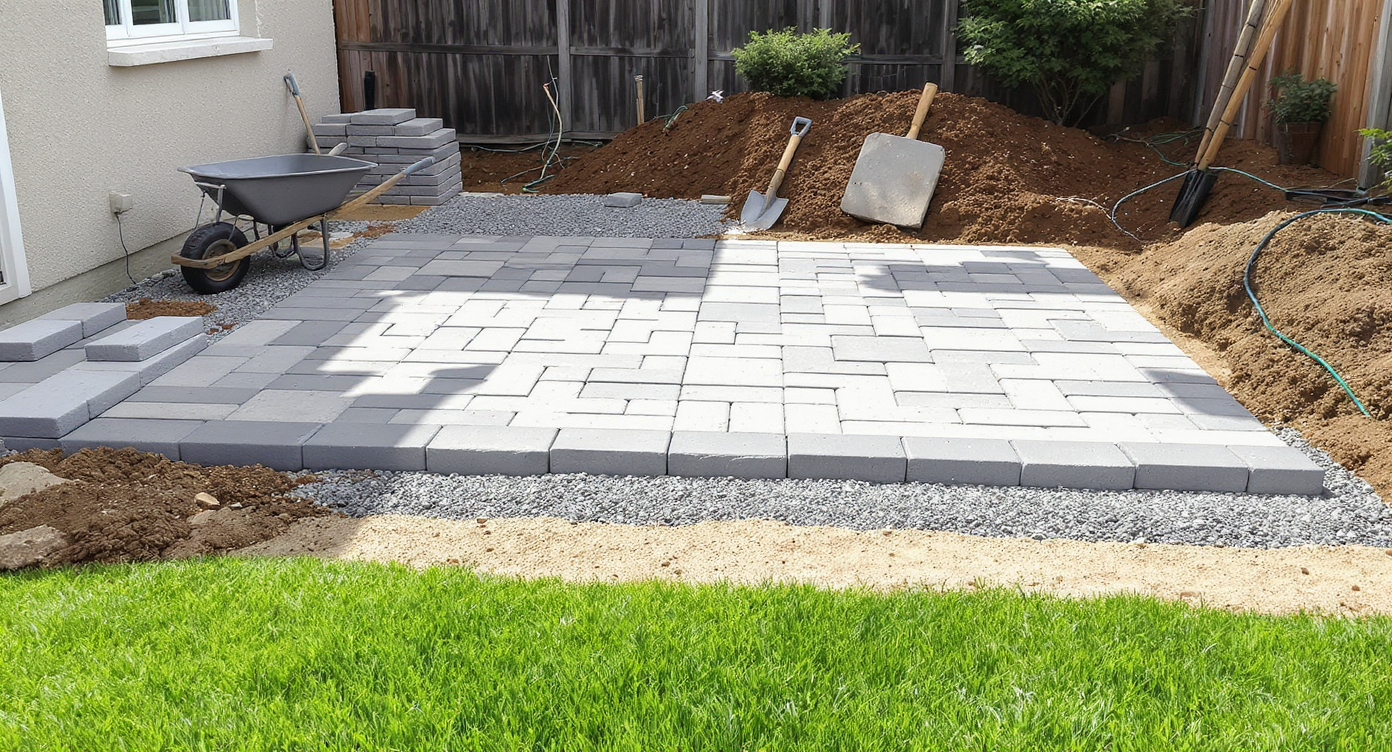
A suburban paver patio installation reveals cost factors: excavation, base prep, sod removal, material staging, and layered construction.
There is no universal answer to "What should a paver patio cost?" but most new installs quoted in major metropolitan areas regularly land between $18 and $45 per square foot. These prices factor in not just the pavers themselves but labor, site removal, excavation, base materials, drainage, and finish work. For example, removing existing grass or rerouting sprinkler lines can add measurable expense. In the Pacific Northwest or West Coast markets, contractor bids around $36 per square foot are widely considered typical for full-service jobs, according to numerous homeowner experiences. For a 316-square-foot patio, a total in the $10,000 to $12,000 range is consistent with comprehensive projects quoted and completed in 2025. For a deeper look at real-world numbers and what influences them, see the cost breakdown in hardscaping costs in 2025.
-
2. DIY vs. Professional Install: Labor, Exercise, and Long-Term Value
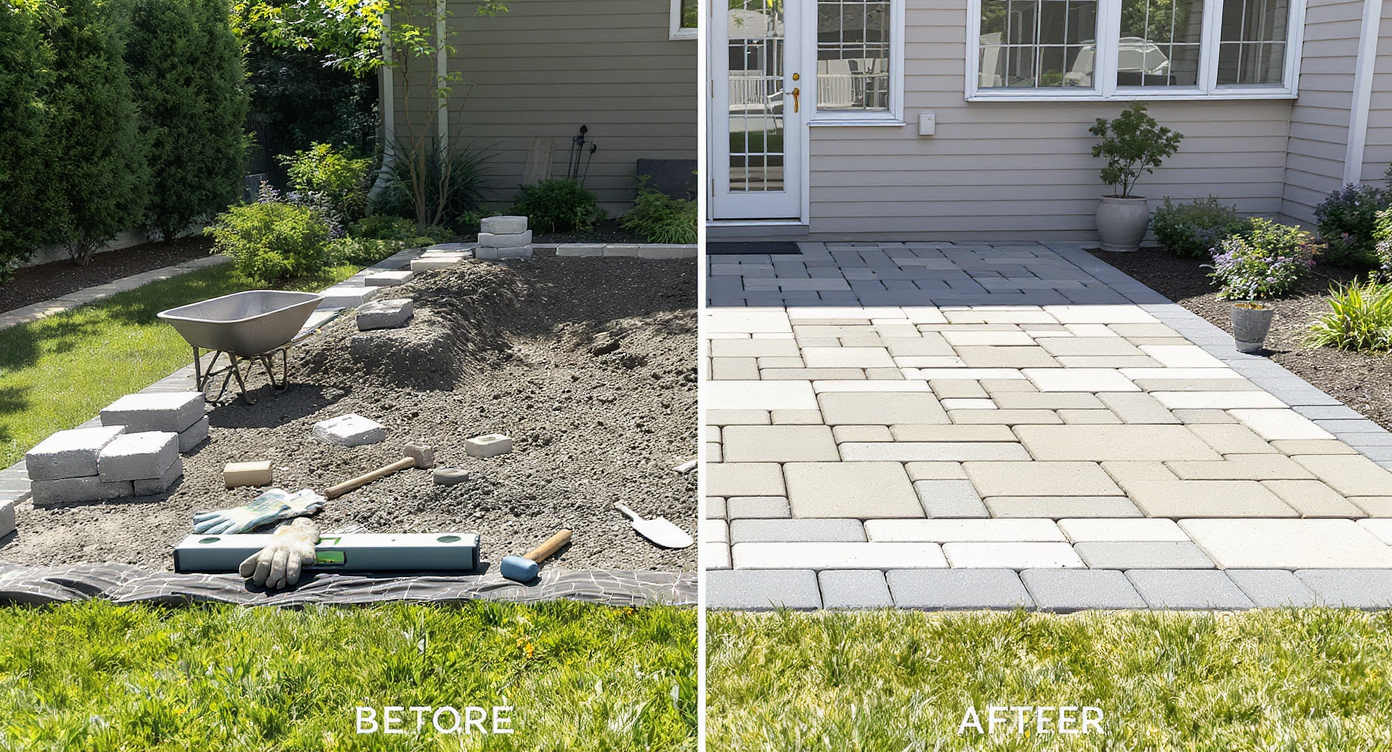
Side-by-side view of a DIY paver patio setup and a professional installation, highlighting tools, material prep, and quality differences.
DIY savings can be considerable—materials for an average paver patio may run $8 to $16 per square foot if sourcing and installation are handled personally. However, labor is where the challenge and hidden costs emerge. Homeowners with the time, tools, and motivation have built 300-plus-square-foot patios for as little as $1,500 to $3,500 out-of-pocket, but this approach demands weeks of work and a solid grasp of excavation, base compaction, and drainage. By contrast, hiring a professional ensures proper grading, alignment, and durability for variable sites, especially those with clay soil or heavy rainfall. Many first-timers opt to contract out complex portions, like site leveling or base prep, even if they handle the finishing details themselves. For a step-by-step breakdown of essential DIY techniques, explore the guide to creating a DIY paver patio.
-
3. Pea Gravel vs. Solid Pavers: Functionality Makes a Difference
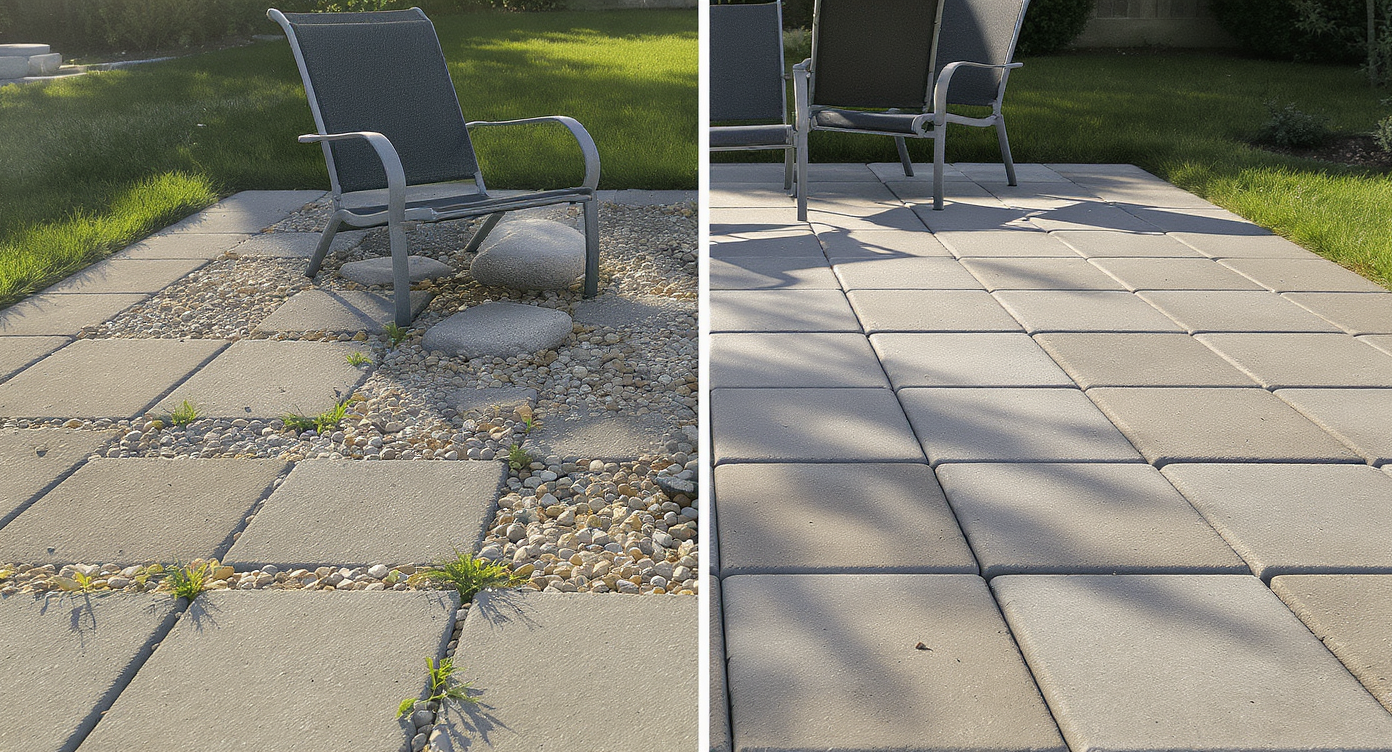
Realistic backyard patio comparison showing usability differences between pea gravel steppers and fully paved, solid paver surfaces.
While mixed-material patios using 24x24 concrete "steppers" with pea gravel between them are visually popular, they come with hard-learned usability drawbacks. Multiple homeowner interviews and industry experts repeatedly flag issues: shifting stones underfoot, scattered gravel into lawns, awkward furniture placement, and ongoing tripping risks. Angular chip stone or "minus" types (such as blue trap fines) hold together better, but for patios intended for frequent seating, dining, or entertaining, the stability of a fully paved surface is unrivaled. Choosing solid paver coverage or minimal, tightly packed joints dramatically increases comfort and makes the area more accessible for guests with mobility concerns.
-
4. Maintenance and Weed Control: Upkeep Realities of Outdoor Flooring
Maintenance may be the hidden cost that determines long-term satisfaction with any patio. Gravel-filled gaps attract windblown seeds and dirt, often leading to infuriating weed invasions, as many have noted after a season or two. Even with weed barrier fabric, seeds settle atop gravel and germinate. Solutions like polymeric sand for paver joints, powerful compacted bases, and regular sweeping keep weeds at bay and the surface walkable. Smart maintenance can extend patio lifespan and reduce major repairs—practices like refilling sand and occasional spot-treating with a propane torch or boiling water are cited in the maintenance strategies we share in weed-free patio maintenance.
-
5. Region, Labor Rates, and Project Complexity
Local conditions move the needle on paver patio price. Urban areas with high demand, expensive labor, or stringent permitting often see the highest per-square-foot costs. Features such as sprinkler relocation, extra grading, multiple finish materials, tight site access, or removing old hardscape drive up the quote. On the flipside, a simple flat layout on accessible soil and a straightforward design can bring costs down. Asking for an itemized breakdown from each contractor is a smart strategy for transparency. As we explored in the guide to evaluating landscaping quotes, get multiple bids and clarify the full scope to avoid budget creep and surprise fees.
-
6. Choosing the Right Materials: Cost, Aesthetics, and Durability
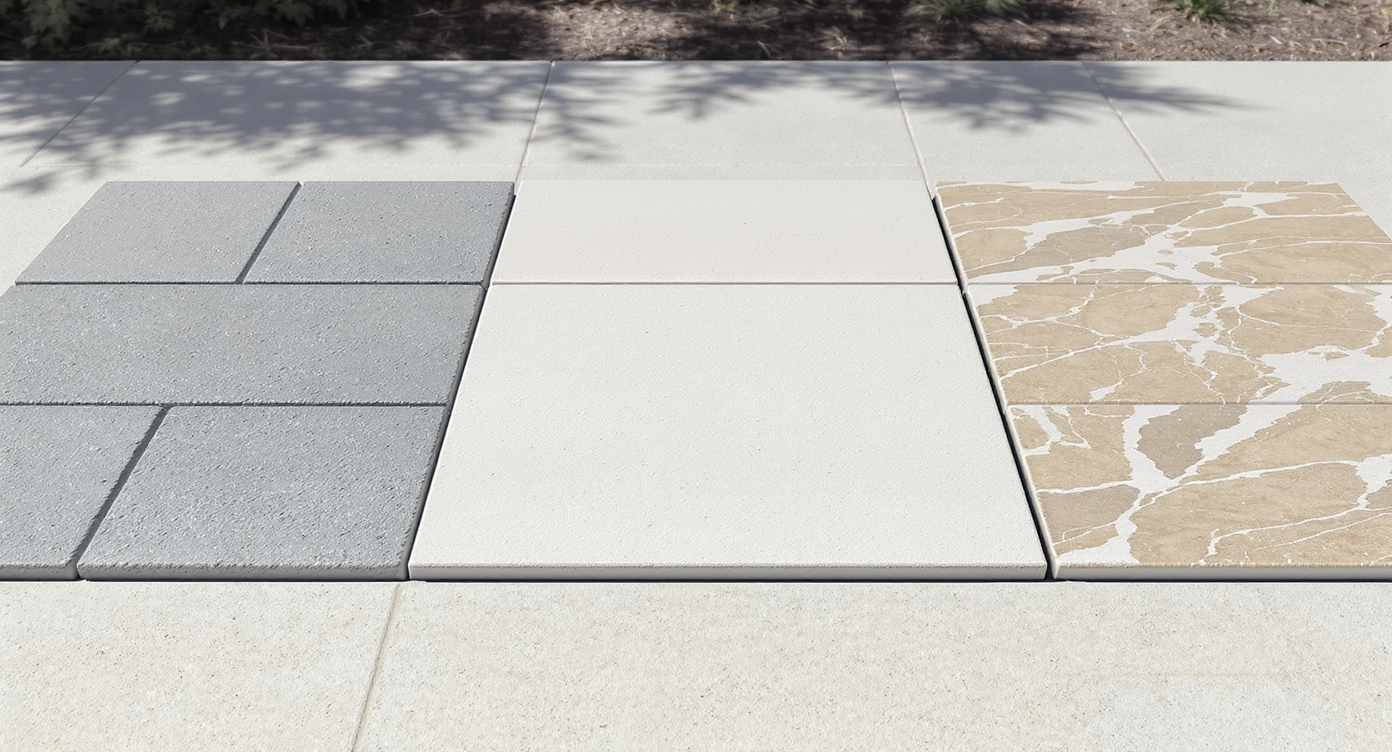
Side-by-side comparison of concrete, large-format slab, porcelain, and natural stone patio pavers, highlighting cost and durability differences.
From budget concrete pavers to higher-end porcelain or natural stone, the choice of materials impacts both price and performance. Larger-format slabs (like 24x24s) typically cost more per square foot and may be more prone to breakage during installation than smaller pavers. Porous, value-focused options can be lighter and easier to handle but may age more quickly. Many professionals suggest investing in sturdy, well-rated pavers, compatible edge restraints, and proven base products for a patio that looks sharp over time and withstands heavy use. When using cost-aware prompts in an ai landscape design tool, comparing side-by-side renderings helps homeowners visualize outcomes and predict future needs.
-
7. Concrete vs. Pavers: Debunking Durability and Maintenance Myths
Some homeowners debate pouring a concrete pad instead of laying pavers, citing the potential for lower upfront costs and simplified cleaning. Stamped or colored concrete can mimic stone at a discount, but it brings its own risks. Concrete will almost always develop cracks—control joints can mitigate but not eliminate this. Pavers, if installed on a compacted, well-drained base, are less likely to heave or crack and are easier to repair by lifting and resetting. The debate ultimately comes down to desired aesthetics, maintenance tolerance, and how you plan to use the space. Aesthetically, a true paver surface is often seen as a higher-value upgrade, especially for resale appeal and design flexibility.
-
8. Planning for the Unexpected: Permitting, Drainage, and Water Management
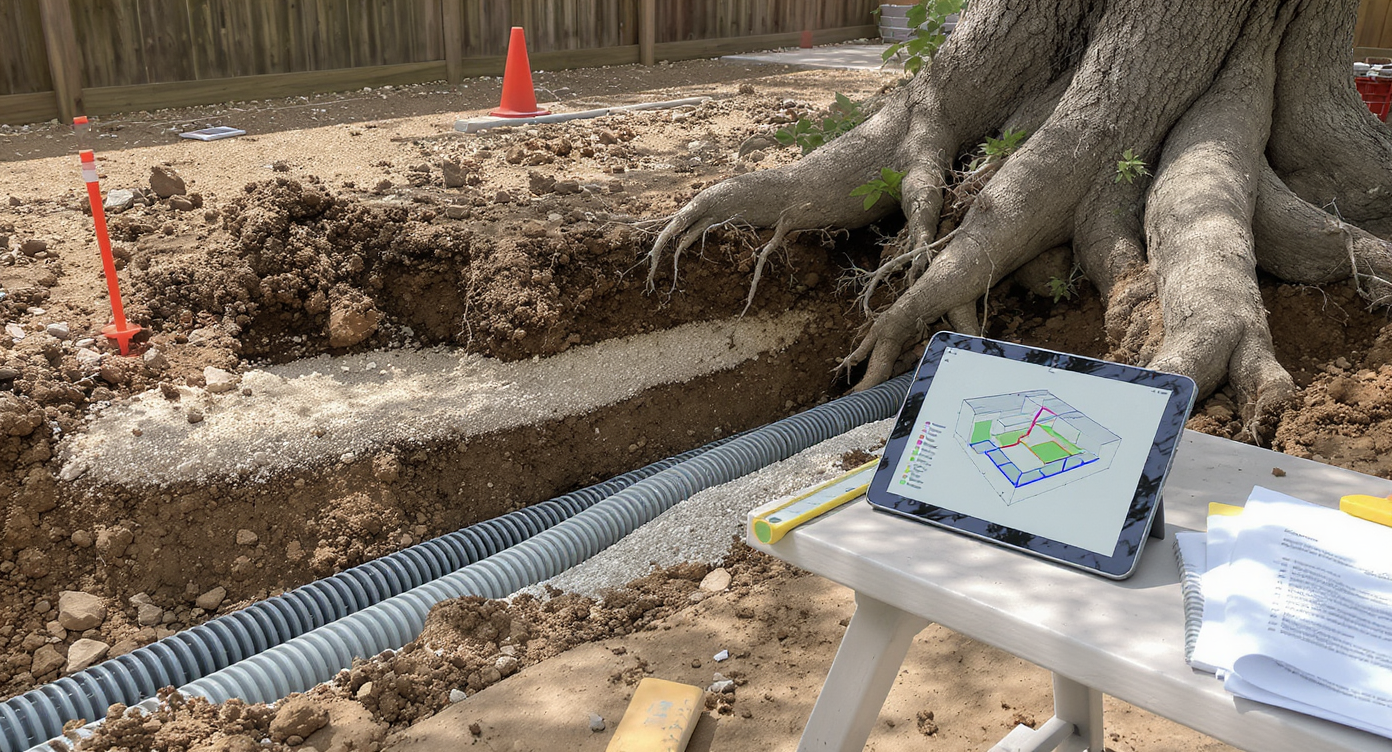
Paver patio site prep showing layered base, drainage pipe, intruding roots, a 3D planning tablet, permits, and flags marking utilities.
Invisible site challenges such as poor drainage, tree root interference, or difficult soil dramatically impact both cost and project success. Improper slope means water pooling or damage to foundations, while incorrect base installation can shorten patio life. Factoring in possible permit fees or required inspections upfront avoids costly surprises. Using digital planning tools like REimagineHome.ai allows you to test different layouts, slopes, and drainage solutions in a virtual model before construction begins, giving peace of mind and potential cost savings.
-
9. Getting the Best Value: Communication, Quotes, and Final Checks
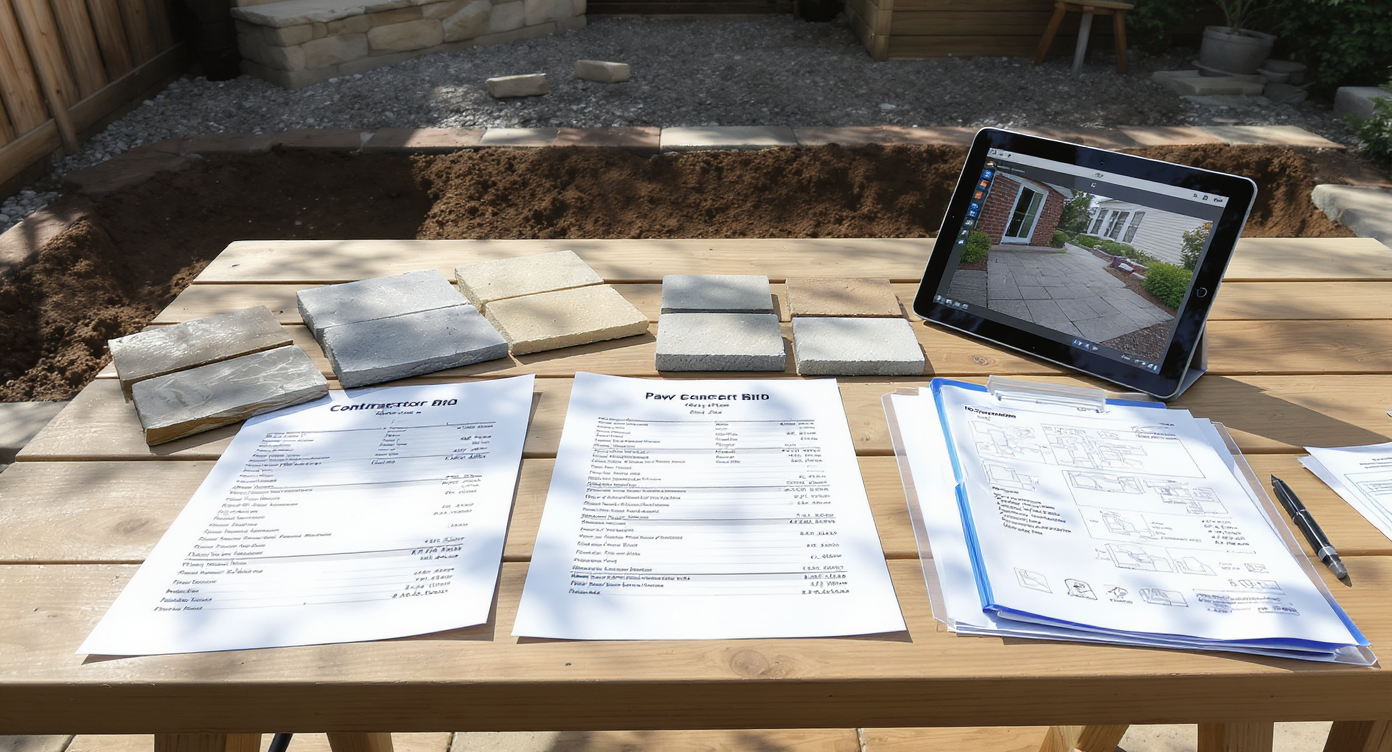
Comparing written bids, material samples, references, and digital designs helps first-time homeowners get true value for their paver patio investment.
The best outcomes come from clear cost-aware prompts and thorough comparison shopping. Solicit at least three to five bids, ask for references or visual portfolios, and ensure each quote includes all site prep, materials, labor, and cleanup elements. Choosing the lowest bid does not always yield the lowest lifetime cost. Professionals warn that cutting corners on base prep or material quality can backfire quickly. Use ai landscape design or visualizer tools to clarify options and align on priorities before you commit. For case studies and insider advice, review our recommendations on hardscaping and landscape budgeting in the comprehensive cost guide.
Frequently Asked Questions
Consider doing some site preparation or demolition yourself, opting for value-graded pavers, and simplifying the layout. Always prioritize a properly engineered base over premium finishes, as it dictates long-term durability. Refer to proven hardscaping tips for actionable cost-saving ideas.
Is pea gravel ever a smart option for patios?
Pea gravel can be attractive visually but tends to migrate easily, complicates chair and table placement, and is prone to weed growth. Most professionals suggest switching to tightly packed base materials or full paver coverage for high-traffic patios.
Which lasts longer: pavers or concrete?
Pavers last decades with proper installation and maintenance. Concrete slabs are initially easier but are more likely to crack and can be more challenging to repair.
Should I visualize my project before hiring a contractor?
Yes. Using digital planners such as REimagineHome.ai to test layouts, materials, and finishes yields more accurate bids and can reveal potential issues earlier in the process.
How do I prevent patio weeds for good?
Choose compacted, polymeric sand-filled joints, sweep regularly, and maintain drainage for the best long-term results. More strategies can be found in this maintenance article.
Smart Planning Brings Clarity—and Lasting Enjoyment—to Patio Projects
Budgeting for a paver patio is as much about cost transparency as design aspirations. Weighing approach, materials, and site complexity alongside usage expectations sets homeowners up for satisfaction without regret. Leveraging digital planning through REimagineHome.ai supports smarter decisions and minimizes surprises, ensuring outdoor investments pay off in lasting comfort and value.