7 Essential Strategies for Smarter Landscaping Planning with Digital Tools

TL;DR
Effective landscaping planning now blends photo-driven visualization, plant-specific databases, and multi-dimensional layouts. By combining practical applications and new digital approaches, homeowners can personalize outdoor spaces for both impact and maintenance ease.
Why Digital Landscaping Planning Matters Today

Digital tools empower homeowners to bridge inspiration and reality, allowing hands-on control over every phase of landscaping planning.
Transforming a simple idea into an outdoor sanctuary requires more than inspiration. Many homeowners find themselves stuck between beautiful images and the technical realities of how their projects might unfold. The key is moving from wish lists and boards to tools that enable real customization and worry-free planning. Advancements in digital landscaping design, ranging from traditional planning software to emerging AI visualization tools, have made it easier for anyone to experiment with layouts, plant choices, and even climate considerations before a single shovel breaks ground. For those who crave both creative freedom and realistic planning, these tools can bridge the gap, offering much more than static, bird’s-eye diagrams.
-
1. Moving Beyond Inspiration Boards to Interactive Planning

Interactive landscape planning software bridges the gap between inspiration and action, giving homeowners real-time design control.
While platforms offering inspirational images are excellent for idea generation, truly effective planning begins when you can act on those ideas interactively. Homeowners often reach a point where pins and screenshots are no longer enough—especially when unique site conditions or personalized plant choices come into play. Transitioning to a landscape planning app or software means gaining control over tangible elements such as layout, scale, and maintenance needs. An interactive planner allows you to draft paths, patios, and planting beds to match your available space. Many modern solutions have user-friendly interfaces that reduce guesswork, making the leap from vision to action far less intimidating.
-
2. Harnessing AI Landscaping Design for Homeowners
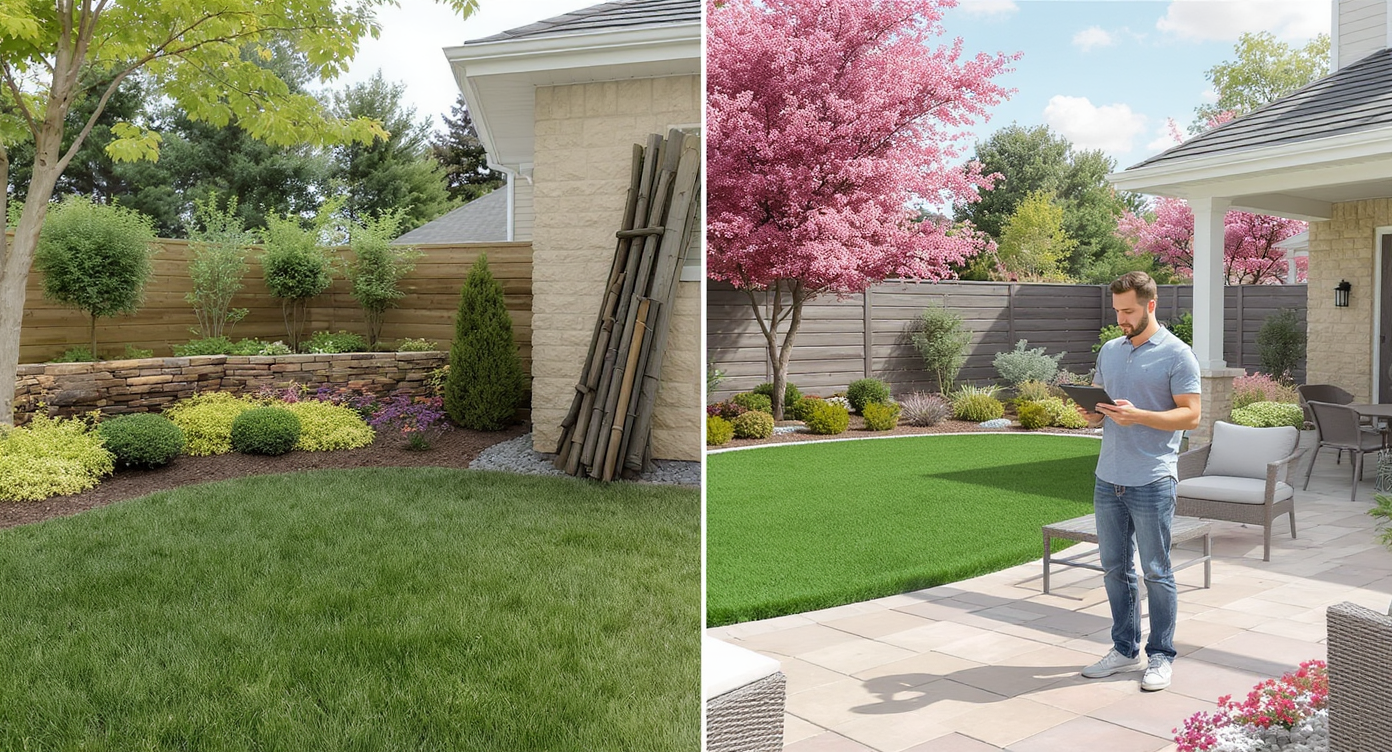
AI-driven tools now let homeowners visualize and compare landscaping changes on their own property before starting a project.
Recent advances in AI landscaping design for homeowners are changing how projects get visualized. AI-driven platforms analyze a photo of your actual yard, then generate realistic previews showing new hardscaping, planting options, or lawn redesigns that fit your specific context. This kind of technology is especially valuable for those struggling to visualize changes in three dimensions, overcoming the limitations of traditional top-down diagrams. Instead of imagining how a new patio or garden bed might look, you can see it rendered directly onto your own property, which helps prevent costly mistakes. As covered in our guide to smarter landscape software alternatives, integrating AI tools helps homeowners plan confidently with fewer unknowns.
-
3. Leveraging an AI Landscaping Tool with a Plant Database
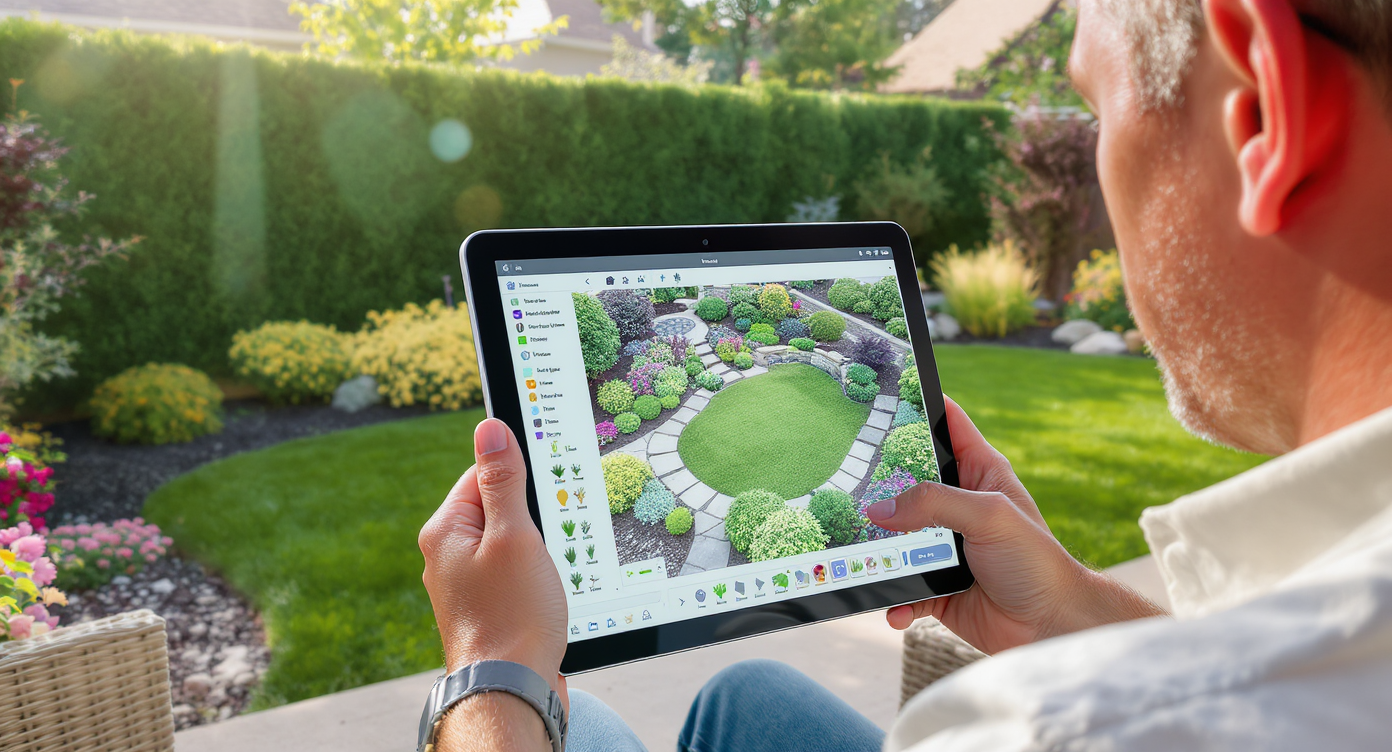
AI landscaping tools with detailed plant databases let you visualize exact varieties—making smarter, site-specific design decisions easy.
One common frustration with early landscaping apps was their limited plant lists and generic placeholders. Today, the most valuable tools offer detailed plant databases, allowing homeowners to specify actual varietals—such as a climbing jasmine, dwarf conifer, or native grass—instead of vague categories like 'tree' or 'flower.' Whether you want to check how mature shrubs will screen a neighbor or explore the look of perennial borders year-round, an AI landscaping tool with plant database features streamlines the process. Enhanced databases also offer guidance on placement based on sun exposure, soil type, and regional conditions, moving your plan closer to what will thrive and last in real life.
-
4. Combining 2D Layouts with 3D Visualizations
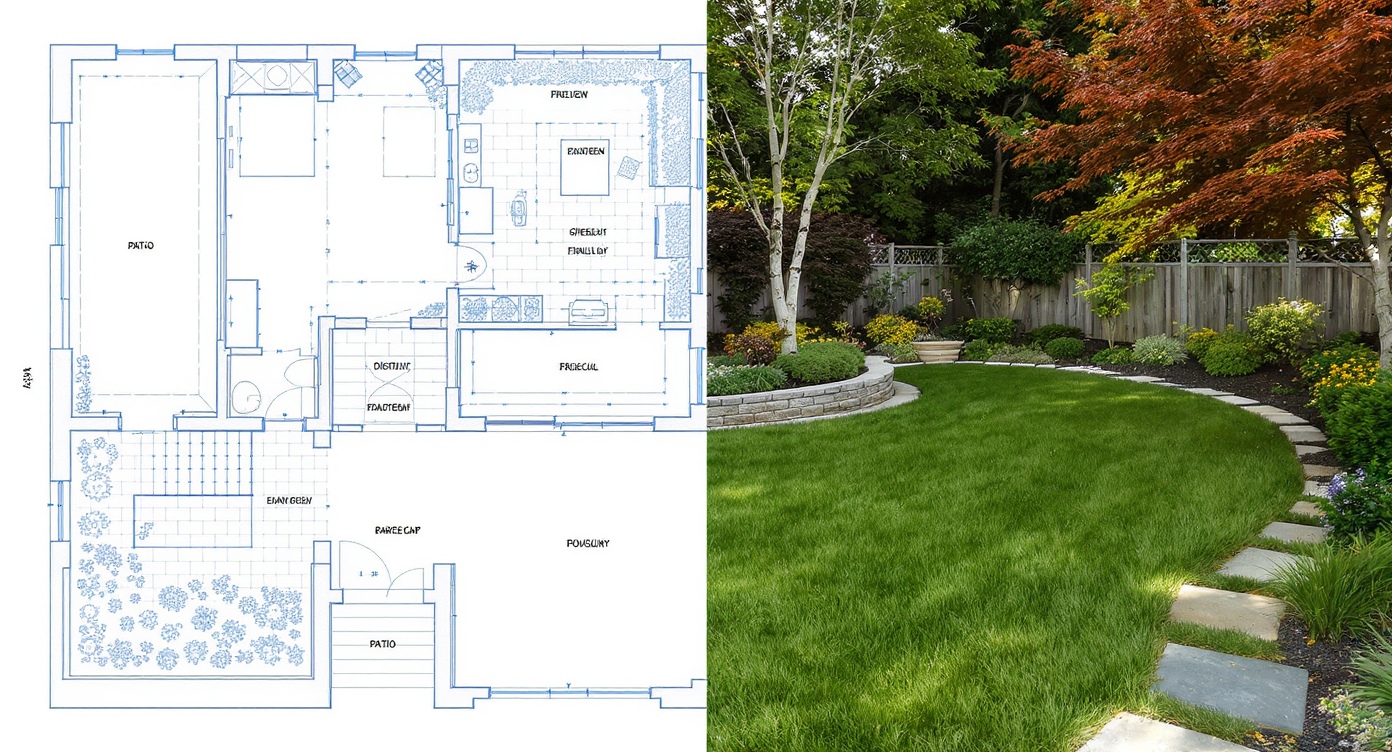
Merging 2D plans with 3D visuals brings your landscaping ideas to life, helping spot key design and usability details early.
Many entry-level landscape planners still rely on 2D layouts, which serve a purpose for rough mapping and basic spatial organization. However, integrating these plans with 3D or photo-based visualizations gives a deeper sense of scale, elevation, and real-world context. Layering these approaches allows you to experiment with path widths, wall heights, or lawn shapes before committing. As detailed in this landscape planning guide, visualizing your design using real photographs and digital overlays uncovers practical issues with access, shade, or privacy that do not appear on a flat plan. This fusion of technical and pictorial methods supports informed decisions, balancing creativity with project realities.
-
5. Considering Hardscape and Functional Elements Early
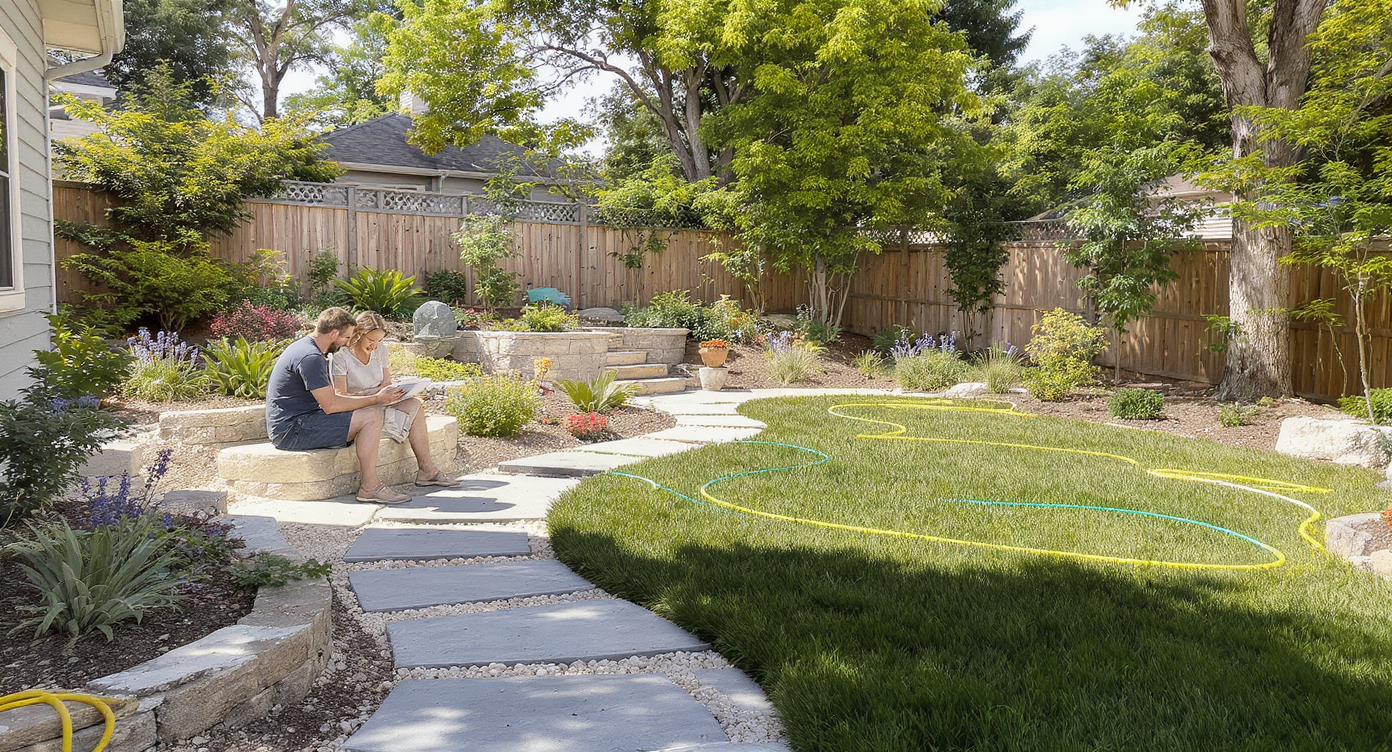
Early planning using digital tools integrates hardscape features like paths and patios, ensuring both function and design work together.
Successful landscapes integrate hardscaping—such as paths, retaining walls, raised beds, and patios—at the earliest stages of planning. Digital tools make it simpler to sketch and adjust these structural elements in tandem with plant selections. Early integration ensures that circulation, access, and grading challenges are visible before you finalize decorative layers. In practice, this helps minimize surprises mid-build and leads to better long-term functionality. For example, experimenting with the placement of a retaining wall virtually can reveal potential drainage concerns or guide how you frame outdoor living zones.
-
6. Testing and Comparing Multiple Design Scenarios
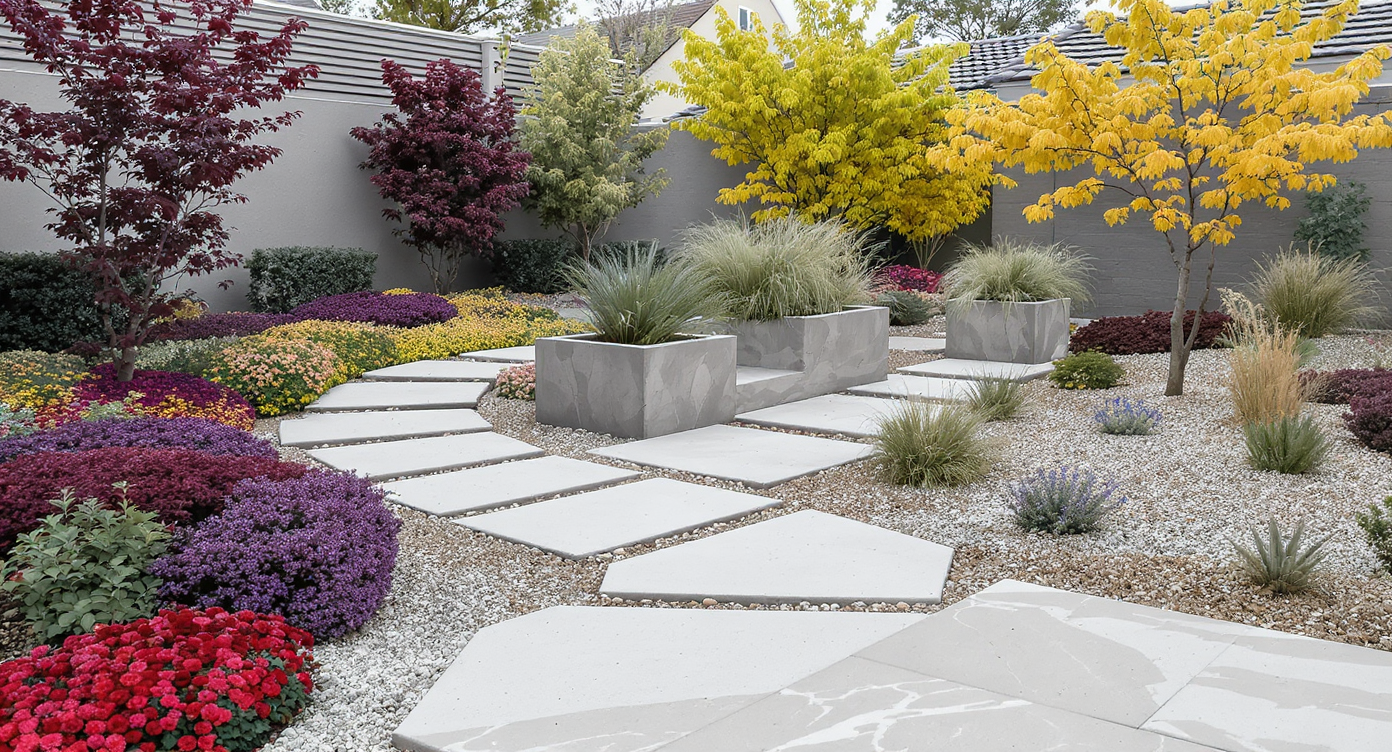
Testing multiple landscaping design scenarios lets homeowners visualize various options and choose the best balance of style and function.
A major benefit of digital landscaping tools is the freedom to test and compare different layouts or finishes with minimal effort. Changing the curve of a path, swapping one planting palette for another, or experimenting with lawn alternatives can be done in minutes without commitment or physical labor. This flexibility leads to designs that better reflect your real needs and style preferences. Tools like REimagineHome.ai let you preview several versions using your own photos, which is especially useful for households deliberating between traditional and modern looks or negotiating maintenance levels among family members.
-
7. Saving Costs and Preventing Regret with Photo-Based Visualization

Photo-based visualization tools let homeowners preview and refine landscaping plans, helping prevent regret and control renovation costs.
Perhaps the most significant impact of these technologies is in preventing costly missteps. Homeowners often invest prematurely in plants or materials, only to find the result does not match their expectations. When you can see projected outcomes directly on a photo of your own yard, surprises and impulse errors diminish. As explored in this review of photo-driven design software, visualizing changes in advance not only sharpens your plans but also helps prioritize projects and investments, saving both time and money over the course of a renovation.
FAQ: Smarter Landscaping Planning and Tools
A basic landscape planner offers simple layouts and templates, while AI landscaping design for homeowners uses image recognition and intelligent algorithms to generate personalized previews using actual yard photos.
Can I input specific plant types into modern landscape design tools?
Yes, many advanced platforms now feature robust plant databases, letting you select species, cultivars, and even placement based on sun and climate conditions. Tools such as REimagineHome.ai streamline this process as part of the design workflow.
How can I visualize landscaping with my own photos?
Upload a current image of your yard into a compatible tool that supports photo-based visualization. The AI will overlay new designs, hardscaping, or planting options, providing a realistic sense of the finished product.
What are the cost benefits of digital landscape planning?
Previewing your plans digitally reduces the risk of mistakes, prevents unnecessary purchases, and often leads to a more efficient use of materials and resources.
Where can I learn more about combining hardscape, plant selection, and layout planning?
Explore detailed steps and examples in this comprehensive landscape planning guide.
Key Takeaways for Modern Landscaping Planners
The transition from inspiration to implementation calls for more than just good taste—it requires tools that offer flexibility, specificity, and realism. Digital advances such as AI photo visualization, robust plant databases, and multi-dimensional planners give homeowners the confidence to create lasting outdoor environments that work in everyday life. Previewing changes with solutions like REimagineHome.ai empowers informed choices, reduces waste, and aligns projects with your vision from the very start.